Cacti and Succulent Gardens That Thrive With Almost No Upkeep
- Cacti and Succulent Gardens That Thrive With Almost No Upkeep
- Key Takeaways
- Why Cacti and Succulents Need So Little Care
- Choose a Sunny Spot for Container Growth
- Bright Light Placement
- Sun-Loving Plant Choices
- Pick the Best Cacti and Succulents
- Best Low-Care Varieties
- Match Plants to Light
- Use Well-Draining Soil in Every Pot
- Plant Your Container Garden Step by Step
- Water Only When the Soil Is Dry
- Keep Pots Safe From Rain and Soggy Soil
- Choose Fast-Draining Mix
- Shield Pots From Rain
- Prevent Root Rot Risks
- Add Rocks for Better Pot Drainage
- Grow Flowering Cacti in Containers
- Plant Hens and Chicks in Small Pots
- Easy Care In Small Pots
- Colorful Gift Container Ideas
- Fast Multiplying Rosettes
- Use Hanging Baskets for Trailing Succulents
- Choose Pet-Safe Cacti and Succulents
- Protect Tender Succulents in Winter
- Move Indoor-Only Plants Before Frost
- Match Plants to Their Botanical Names
- Solve Common Cactus Care Problems
- Create Easy Gifts and Window Boxes
You can build a cactus and succulent garden that barely asks for anything: give it a sunny spot, gritty cactus mix, and a pot with drainage holes, then water only when the soil’s bone-dry. Easy picks like hens and chicks, burro’s tail, or bunny ears cactus keep things cheerful, even if you’re busy. In winter, cut back watering and skip fertilizer. Stick around, and you’ll see the clever little tricks that make upkeep even simpler.
Key Takeaways
- Choose low-maintenance succulents like Bunny Ears Cactus, Star Cactus, Burro’s Tail, or Hens and Chicks for easy care.
- Give plants bright, sunny light for 8–10 hours daily to keep growth compact and healthy.
- Use gritty cactus mix in pots with drainage holes to prevent soggy roots and rot.
- Water only when soil is completely dry, then soak deeply and let it dry again.
- Reduce watering in fall and winter, and watch for pests or mushy stems after wet spells.
Why Cacti and Succulents Need So Little Care
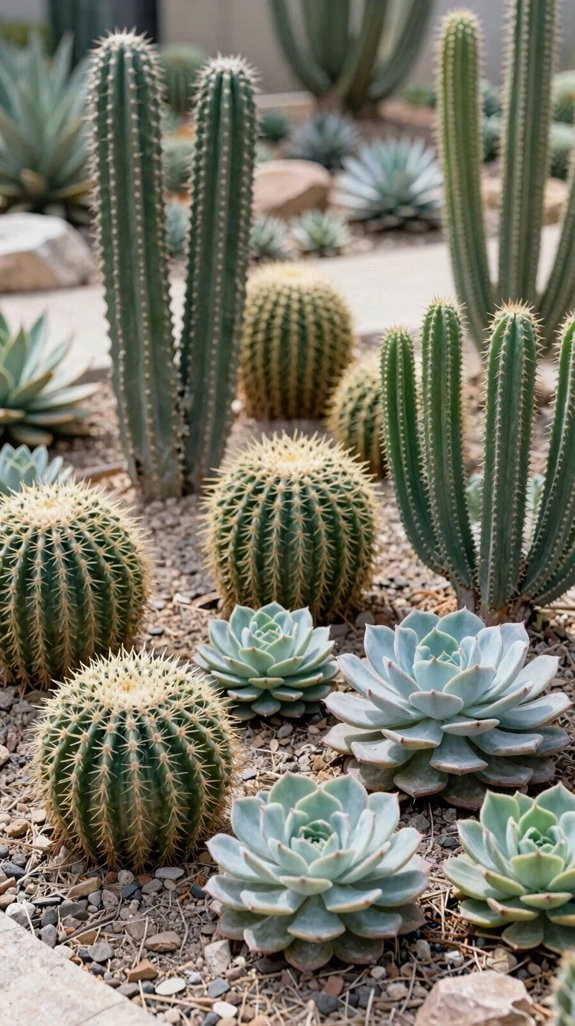
From the start, cacti and succulents make life pretty easy because they’re built to hold water in their thick stems and leaves, so they can shrug off a little forgetfulness like tiny plant camels.
You’ll do best with Seasonal watering, meaning you wait until the mix is truly dry, then soak and let it dry again. That simple rhythm helps you avoid soggy roots and nasty rot, yay!
During winter dormancy, they slow down and need even less water, so you can relax.
Keep doing pest monitoring, though, because little bugs love a quiet, cozy plant party.
Choose a Sunny Spot for Container Growth
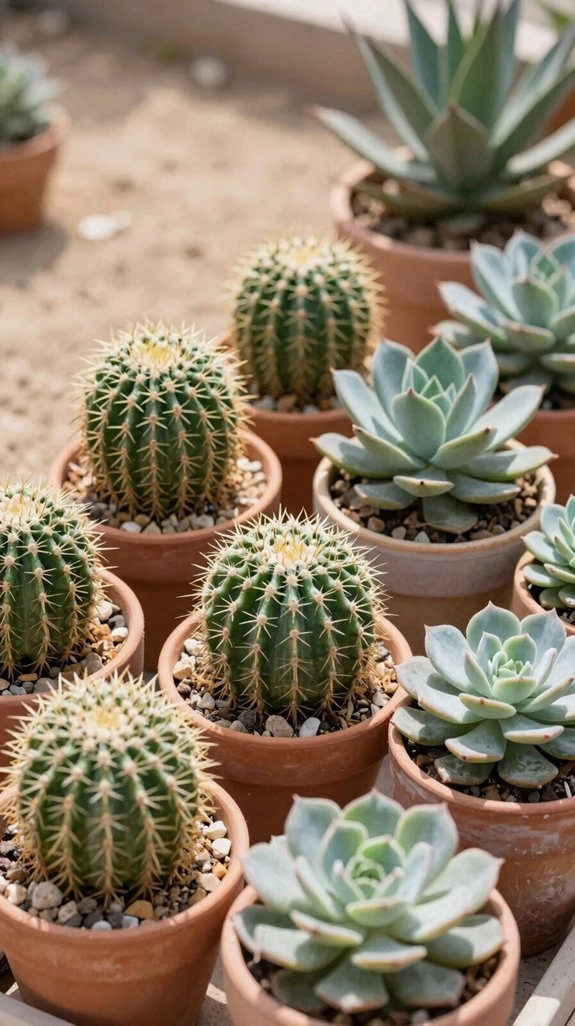
Pick a bright, sunny spot for your container cacti and succulents, like a south- or west-facing window, and they’ll grow with way less fuss—nice, right?
Give them several hours of direct light each day, and rotate the pot now and then so they don’t lean like they’re trying to escape.
If your home feels a little gloomy, no worries, a grow light can step in, and you’ll want to match plants with similar sun needs so everyone stays happy and low-maintenance.
Bright Light Placement
Give your cacti and succulents the sunniest seat in the house, because bright light is what keeps them sturdy, compact, and looking like tiny desert champs!
Park them in your brightest south- or west-facing window, and if the room feels dim, add a grow light so they stay happy through fall and winter.
Group pots with pals that want similar light, so nobody gets shaded and grumpy.
Bright spots also help with watering frequency, since plants dry faster, and seasonal stress protection, because you can ease outdoor containers into stronger sun without a dramatic leaf meltdown.
Sun-Loving Plant Choices
Now that your cacti are sitting pretty in the brightest spot you can find, it’s time to choose plants that actually *like* that kind of spotlight!
Pick sun-lovers like bunny ears cactus, sedum, or burro’s tail for a cheerful, low-drama crew that fits right in.
Keep everyone in the same container on the same light schedule, because mixed growth rates can cause one plant to sulk.
Use well-draining soil, and if you grow indoors, grab the brightest south- or west-facing window.
Seasonal Light Checks help too.
Looking for Pet Safe Alternatives? Try carefully chosen, compact succulents!
Pick the Best Cacti and Succulents
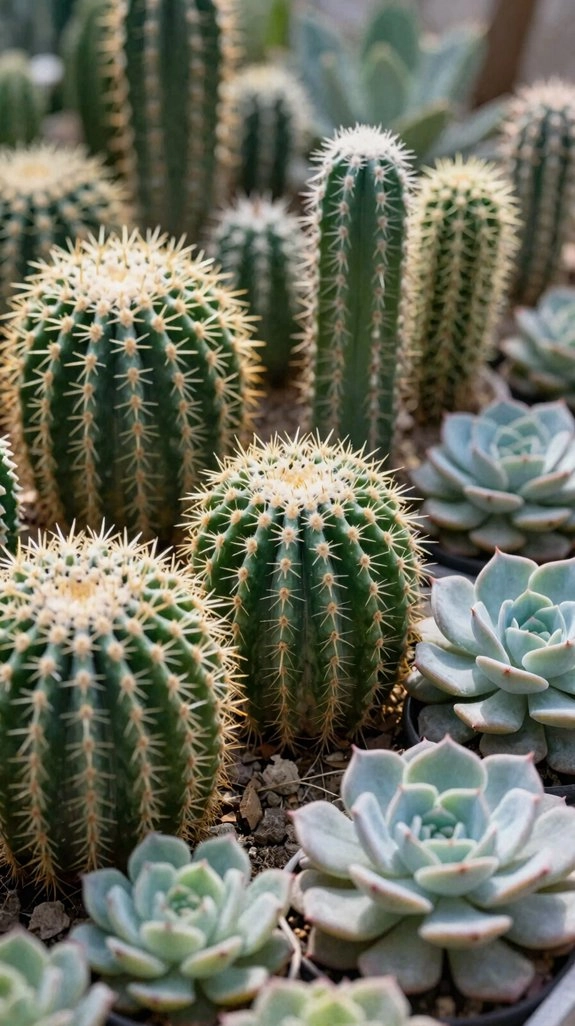
Start by picking low-care stars that match your light, like Bunny Ears Cactus, Feather Cactus, or Blue Hens & Chicks—easygoing plants that won’t throw a fuss if you treat them right!
Use a well-draining cactus mix, since wet soil can spell trouble fast, and remember cacti usually want less water than succulents, so a soak-and-dry routine works best.
If your spot gets tons of sun, keep an eye out for a showstopper like Star Cactus, because that little sun-lover can reward you with a big payoff when you give it the bright, dry home it wants.
Best Low-Care Varieties
If you want a garden that looks cool without acting like a needy houseguest, the right plants make all the difference! Try Bunny Ears cactus, Blue Hens & Chicks, Star cactus, Burro’s Tail, and Feather cactus for easy wins.
These stars fit your crowd, and you’ll feel right at home with them.
Use simple propagation methods, choose seasonal maintenance that’s mostly quick check-ins, and focus on pest prevention before trouble starts.
Watch repotting timing, then move plants only when roots crowd the pot.
Star cactus stays dry, Burro’s Tail trails like a green waterfall, and Feather cactus adds soft-looking charm with a sneaky spine surprise!
Match Plants to Light
The easy-care plants you picked still need the right light to really shine, and that’s where the magic happens!
First, evaluate indoor light intensity at your south-, east-, or west-facing window.
In bright, dry spots, Bunny Ears cactus and Blue Hens & Chicks fit right in.
Got gentler sun? Try Easter cactus, and choose humid microclimates near a bathroom or kitchen.
Pair plants with similar water needs, use gritty mix, and avoid temperature swings.
If the pot gets sun all day, let it dry really dry; in softer light, halfway dry works better.
Rotate plants regularly, so everyone stays cute, not crooked!
Use Well-Draining Soil in Every Pot
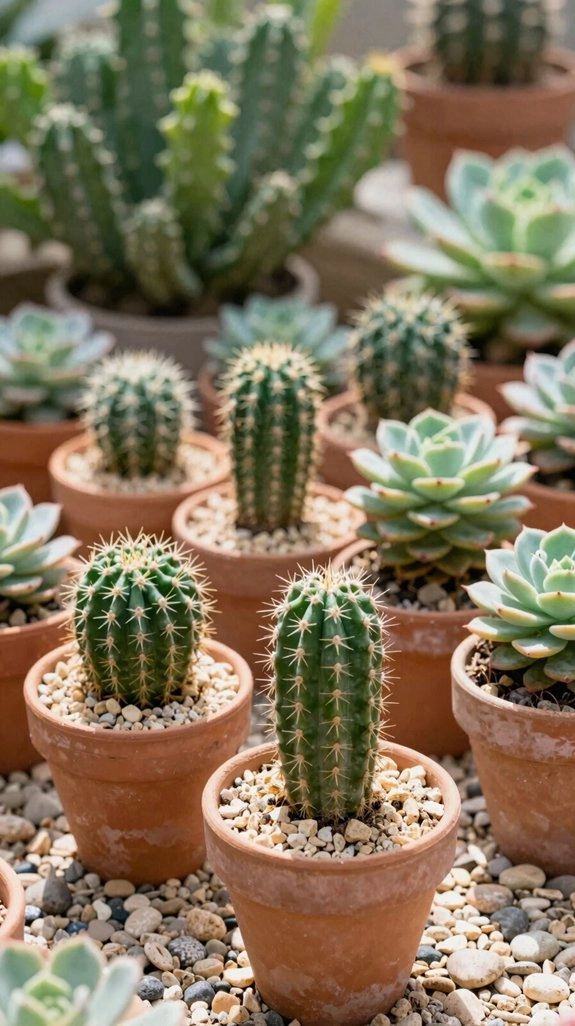
In every pot, give your cacti and succulents soil that drains fast and doesn’t stay soggy, because wet roots are a fast track to sad, mushy plants—yikes!
Choose a cactus mix for cacti, and for succulents, use regular potting soil only if you amend it well.
Soil texture tips: aim for a gritty, crumbly feel, not a heavy mud pie.
Drainage layer benefits show up when you add a little rock or grit at the bottom, helping water move on out.
Keep pots with holes, and water only when the mix feels truly dry.
That’s the cozy, low-drama secret!
Plant Your Container Garden Step by Step
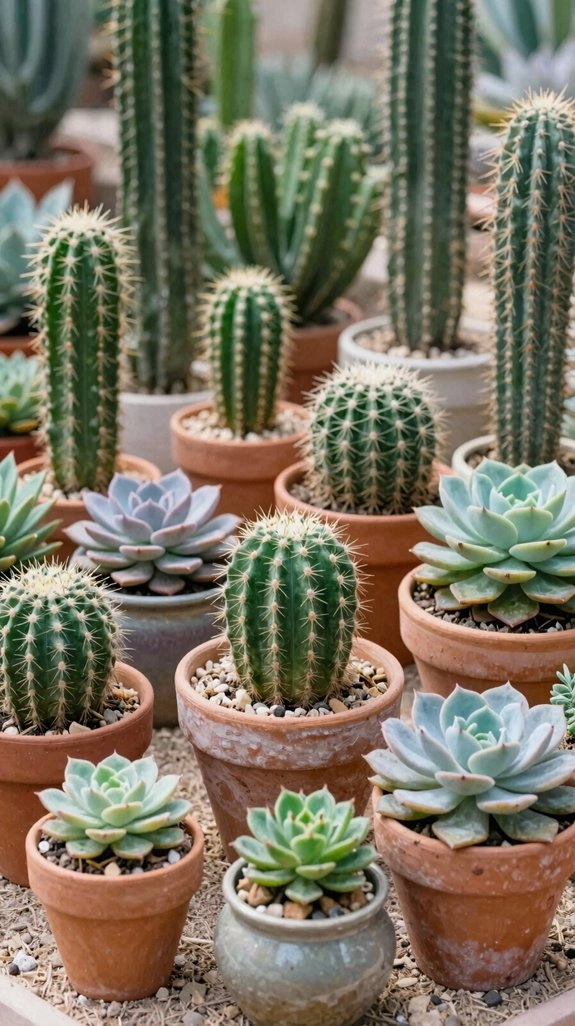
Once you’ve got your gritty, fast-draining soil ready, it’s time to build the pot like a tiny desert home!
Pick a container with drainage holes, then add a thin drainage layer of small rocks. Scoop in soil, set your cactus or succulent, and use root spacing tricks so each plant has room to breathe.
Fill around them, pressing gently so roots stay supported, not squished. Those soil settling tips help too: tap the pot lightly to settle mix without making it muddy.
Finish by placing your mini oasis where it gets bright light, and enjoy the desert vibe!
Water Only When the Soil Is Dry
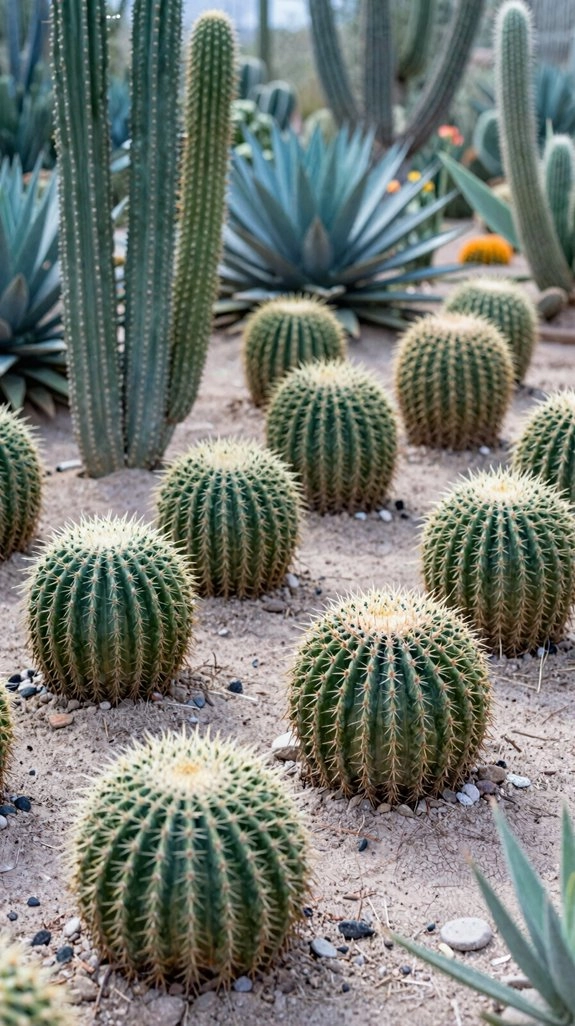
A thirsty-looking cactus can fool you, but don’t grab the watering can just yet! Check the soil first, because your plants want a soak only when the mix feels fully dry.
For many succulents, that means about every 3–5 weeks, and your Seasonal watering schedule should change with the light and weather.
Water deeply, then let the pot dry out again, simple and satisfying!
If you spot signs of dehydration, like wrinkling or shrinking, give a drink sooner.
In winter, stretch the time between waterings, since growth slows.
You’ll avoid soggy roots and keep your plant crew happy.
Keep Pots Safe From Rain and Soggy Soil
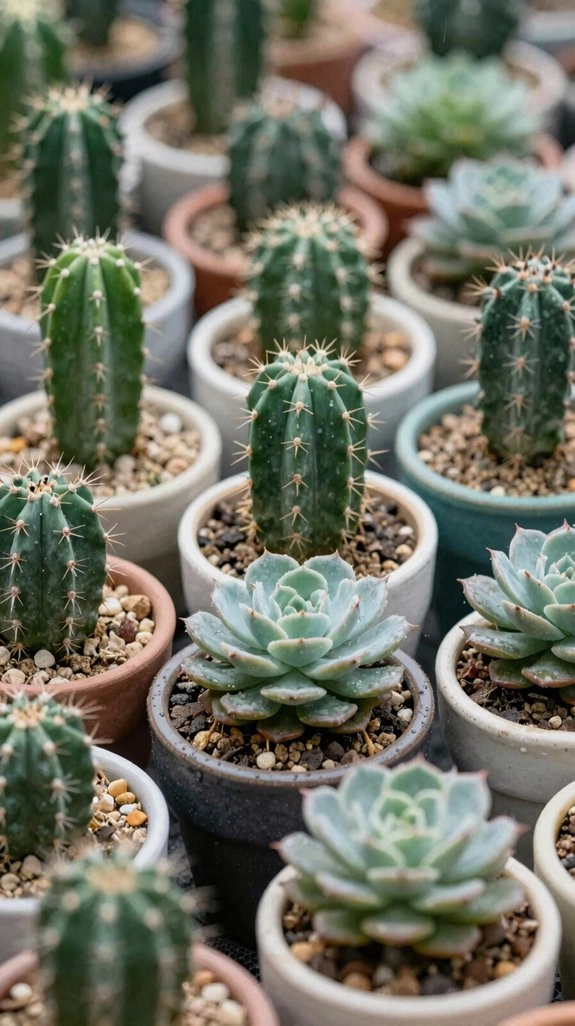
Pick a fast-draining cactus mix, use pots with drainage holes, and your plants won’t have to sit in a puddle after a surprise rainstorm—nice and easy!
If heavy rain keeps crashing the party, move those pots under cover or into a bright, airy spot so the soil can dry out faster.
And here’s the big one: soggy soil is cactus trouble with a capital T, so it’s way better to stay a little too dry than give roots wet feet and risk rot.
Choose Fast-Draining Mix
Under rainy skies, your cactus pot mix can make or break the whole setup! For real rain protection, choose a cactus or succulent blend with a gritty texture, because wet soil is the fastest way to lose a plant. You want soil dryness to return quickly, not stay soggy like yesterday’s oatmeal.
Make sure every pot has drainage holes, and skip gravel-only tricks—they don’t move water out fast enough.
For cacti, use tighter cactus soil; succulents can handle a little more mix.
A few small rocks at the bottom help, but fill the rest with fast-draining soil.
During rainy stretches, water less, and only when the mix is dry.
Shield Pots From Rain
When rainy skies roll in, your pots need a little backup plan, because soggy soil is cactus kryptonite! You’re in good company here, and a few small moves can keep your plants happy.
- Park pots under an overhang. Cheap, easy, and great for stormy Southeast summers.
- Keep drainage holes clear, and use a proper cactus mix.
- Add rocks only as support, not as the main fix.
- Use Watering technique control: water less, and only when soil is dry.
These Root rot prevention tips help you dodge wet feet, and a shield cover or quick move indoors makes rainy days less dramatic!
Prevent Root Rot Risks
To keep root rot from sneaking up on your cacti and succulents, start with the soil itself, because wet soil is the fastest way to cause trouble!
Use a gritty cactus mix, or blend potting mix with coarse sand, so water drains fast and roots breathe easy.
Choose pots with drainage holes, and toss in a small gravel layer to help runoff escape.
During rainy spells, tuck containers under cover, and water only when they’re truly dry.
That’s smart fungal disease prevention, and your little desert crew will thank you!
Do quick root inspection tips if soil lingers damp.
Add Rocks for Better Pot Drainage
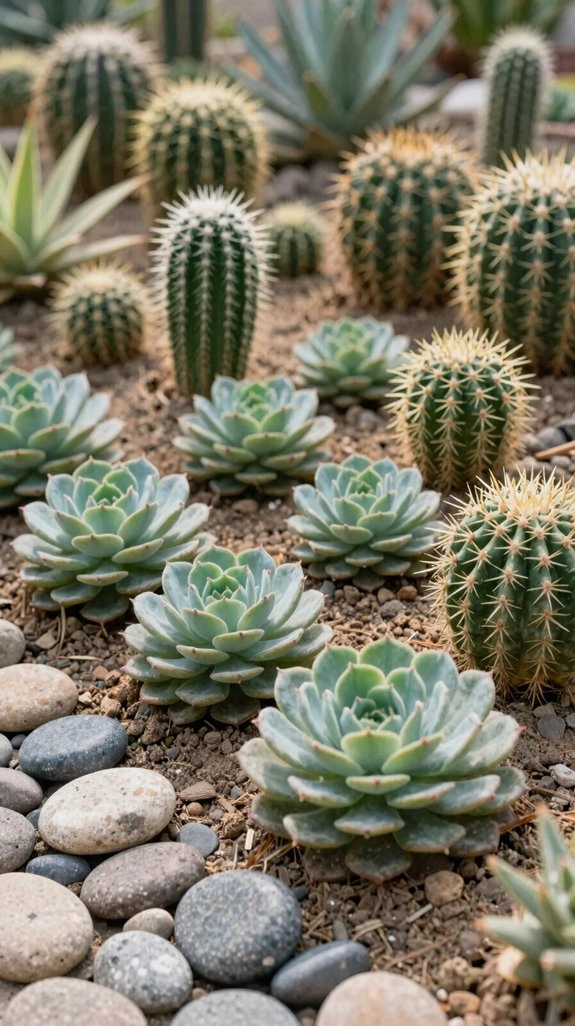
A little rock layer at the bottom of your pot can make a big difference! It helps water move fast, so your cactus crew stays comfy, not soggy.
For Rainfall management tips and Soil mix troubleshooting, try this:
- Pick small rocks or gravel.
- Add a thin layer, not a giant heap.
- Use a cactus-friendly mix above it.
- Choose a pot with drainage holes.
That combo keeps roots from sitting in wet soil after summer downpours.
Rocks alone won’t save a bad pot, but they do help airflow and cut down on those annoying wet-feet moments.
Your plants will thank you!
Grow Flowering Cacti in Containers
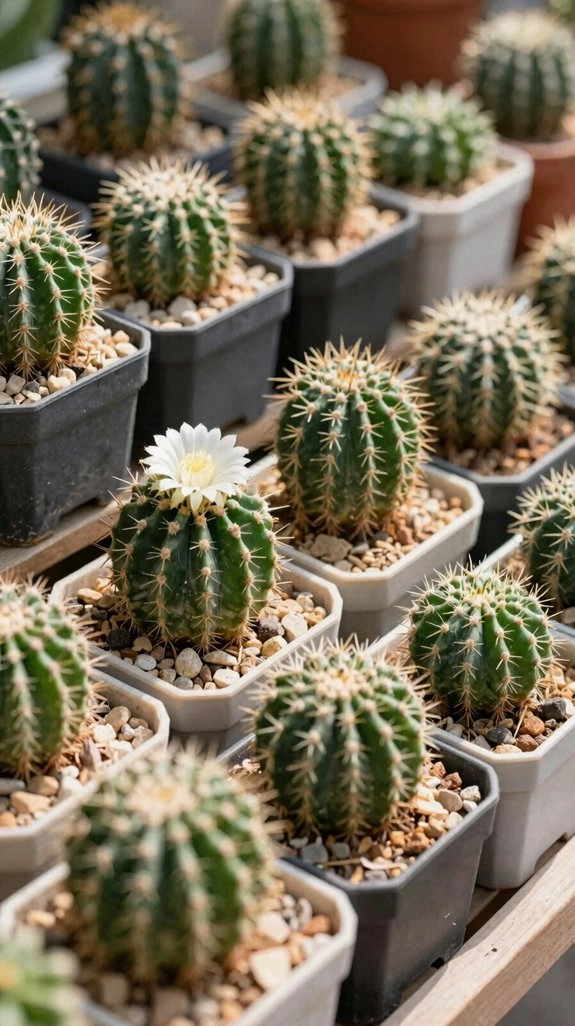
Start with a small pot, cactus mix, and a spot that stays bright and warm, then let the roots settle in without crowding them.
Pick flowering cacti like Easter lily cactus or a Notocactus, and they’ll often bloom again and again in window boxes or raised planters—pretty neat, right?
Water only when the mix is bone dry, then soak it well and let it drain.
Fertilize sparingly, and prevent pests organically with a quick check and gentle treatment.
In winter, move yours indoors, give strong light, and keep them a bit drier, not thirsty enough to wrinkle.
Plant Hens and Chicks in Small Pots
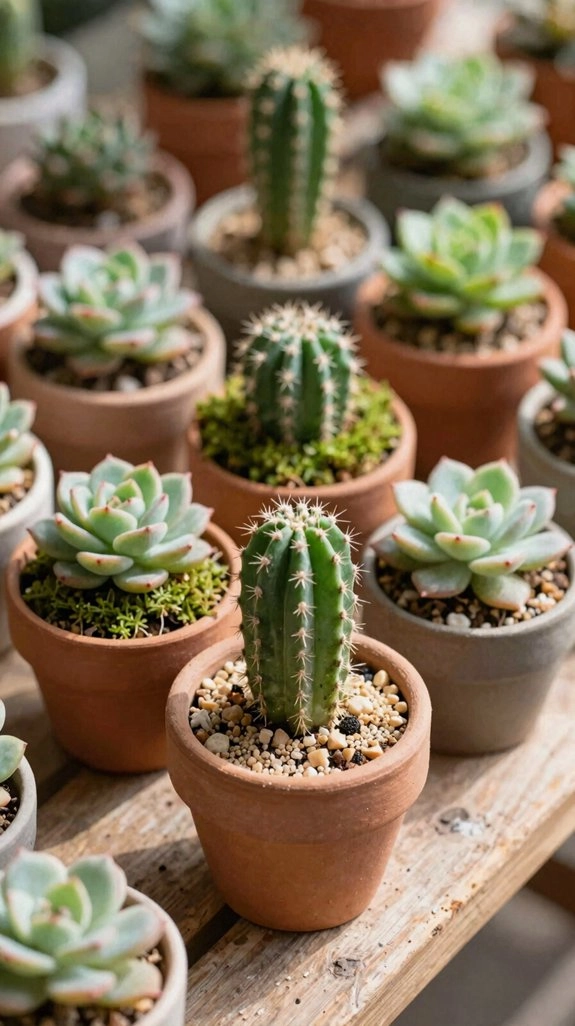
Hens and chicks are perfect for small pots, because once they settle in, you’ll only need to water them now and then, and they still look cute doing it!
Use a gritty succulent mix, a pot with drainage holes, and give them full sun so those little rosettes stay tight and colorful.
Want a fun gift idea? Try a tiny group of the mother plant and a few offsets, because they multiply fast, and before long your little pot may be packed with baby rosettes.
Easy Care In Small Pots
Tiny pots are perfect for hens and chicks, especially the blue echeveria types, because these little rosettes stay naturally compact and look adorable on a windowsill or desk.
You’ll fit right in with this easy-care crew, and they won’t ask for much at all!
- Use succulent cactus soil, so water drains fast.
- Give Indoor lighting tips: full sun or bright light keeps colors crisp.
- Water sparingly, then wait for dry mix; Winter watering pauses help.
- Relax, they’ll make offsets and fill out over time.
One tiny pot can become a mini tribe, no fuss!
Colorful Gift Container Ideas
If you loved those easy little pots on a windowsill, you’ll have a blast turning hens and chicks into a giftable mini garden!
Pick shallow, compact pots with drainage holes, then fill them with compost free mixes so roots stay happy.
Tuck in one or two clumps, add a few offsets, and you’ll get Colorful rosettes that look polished fast.
This low maintenance gift feels thoughtful without much fuss—perfect for anyone who likes plants but not chores.
For extra gifting container styling, try a strawberry-style planter.
Chicks spill from the sides, making the whole piece pop, and you can water sparingly after the soil dries.
Fast Multiplying Rosettes
When you want a plant that looks busy without actually needing much from you, these little rosettes are hard to beat! In small pots, hens and chicks stay cute and compact, and you’ll love how they fill in fast.
Try this:
- Use a gritty mix and a tiny container.
- Set the mother rosette shallowly.
- Water only when the soil dries.
- Let offsets crowd the edges.
That’s propagation through offsets in action, and seasonal rosette care stays simple—just protect from soggy soil.
Soon you’ll have extras to gift, swap, or replant.
Check pet safety, too!
Use Hanging Baskets for Trailing Succulents
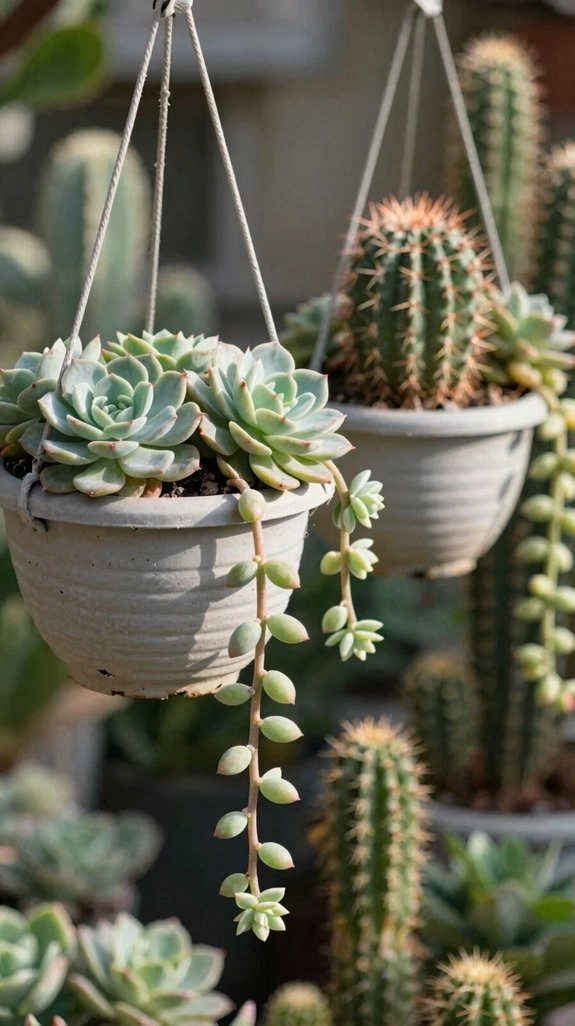
Trailing succulents look downright amazing in hanging baskets, because their stems can spill over the sides like little green waterfalls, saving space and showing off those braided, tail-like textures.
You get that braid spillover, plus tidy compact growth, without crowding shelves or windowsills.
Fill a basket with gritty succulent mix, make sure it has drainage holes, then tuck in your plant and let it settle in.
Water well, then wait until the mix is really dry again, because soggy roots are drama.
Give it several hours of bright sun, and you’ll have a happy, easygoing display that feels like your own tiny desert club!
Choose Pet-Safe Cacti and Succulents
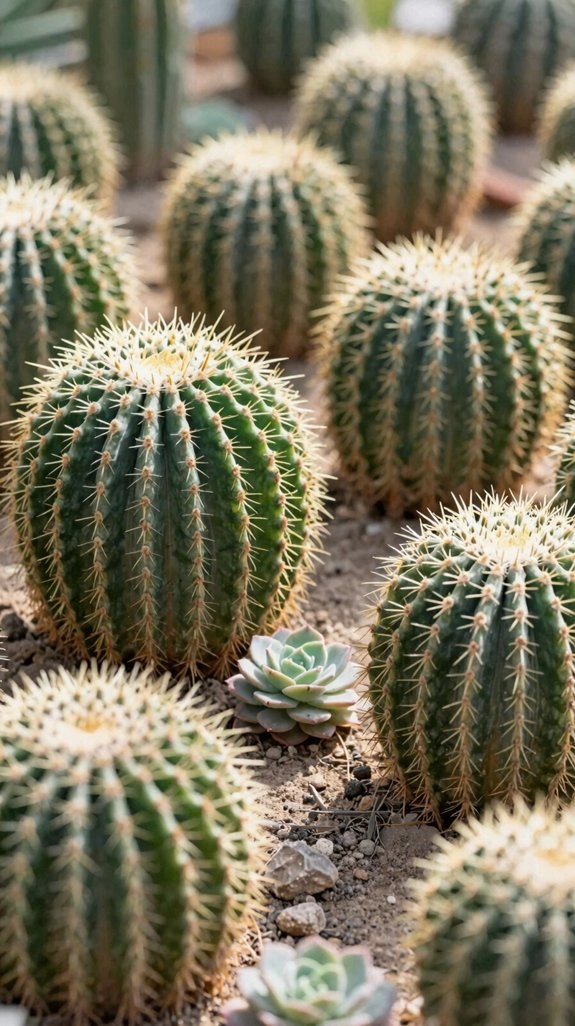
Cute hanging baskets are great, but they’re even better when the plants inside won’t make life tricky for your dog or cat!
Try these pet-safe picks:
- Bunny Ears Cactus
- Blue Hens & Chicks
- Star Cactus
- Burro’s Tail
You’ll fit right in with a garden crowd that loves easy wins, and Pet safety verification starts with the label.
If you’re unsure, do an ASPCA database lookup before you buy.
Skip toxic lookalikes like Rat Tail Cactus and African Milk Tree.
Choose Echeveria glauca or Sedum morganianum, then use well-draining soil so your plants stay tidy, healthy, and chew-resistant!
Protect Tender Succulents in Winter
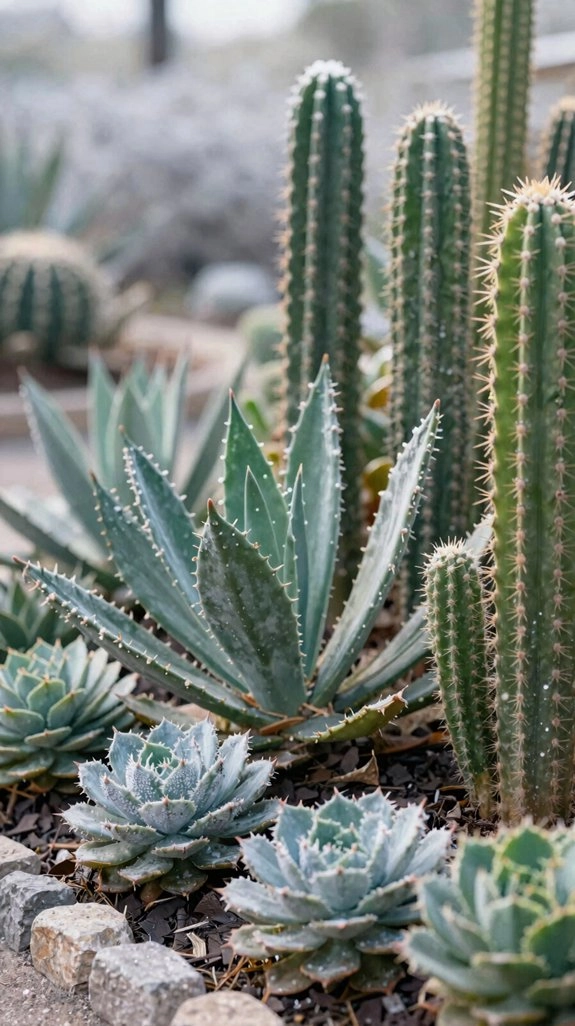
As winter rolls in, tender succulents need a little extra TLC, because cold drafts and soggy soil can turn a cute plant into a sad little mush puddle fast!
Bring them to a draft-free, cool spot, give them bright window light or a grow light, and use cactus mix in pots with drainage holes.
Water deeply, but only after the soil dries out completely, so roots stay happy.
Skip fertilizing in winter, since sleepy plants don’t need a buffet.
For pest prevention indoors, check leaves and soil often.
Ease plants in gradually, and they’ll cruise into spring strong!
Move Indoor-Only Plants Before Frost
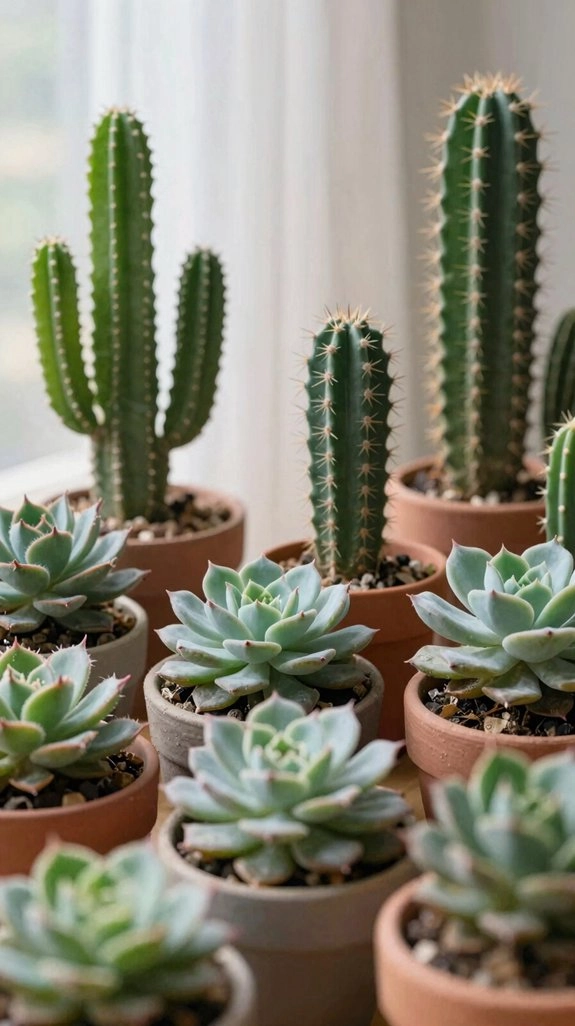
The first chilly nights are your cue to bring indoor-only cacti and succulents inside before frost sneaks up and leaves them shivering on the porch!
- Move them to a bright, draft-free spot, like a south-, east-, or west-facing window, or tuck them under a grow light.
- Cut back Watering Frequency, since winter light means slower growth.
- Use Soil Checking Techniques: poke the mix first, then water only when it’s dry enough to keep plants from shriveling.
- If you’ve got holiday bloomers, set their winter home early, and bring whole containers inside.
You’ll dodge cold damage, and your crew will settle in like they belong.
Match Plants to Their Botanical Names
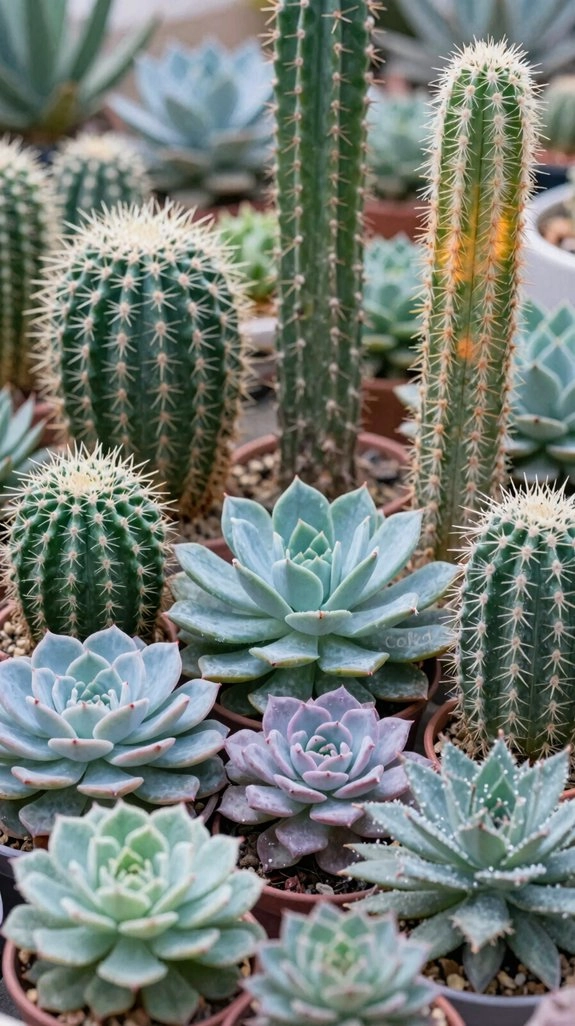
That little name on the tag can tell you a lot more than you’d think. Use Label reading tips and botanical ID steps to dodge common name confusion, because “hens and chicks” might mean Sempervivum tectorum or Echeveria glauca, and they don’t always want the same treatment.
Check the label, then match it to species specific care, light, and watering. Astrophytum asteria wants 8–10 hours of sun, while Mammillaria plumosa likes soak-and-dry.
Nice, right?
You’ll also spot pet-safe picks and bloom timing, like Schlumbergera at Christmas or Hatiora gaertneri at Easter.
That’s your plant club handshake!
Solve Common Cactus Care Problems
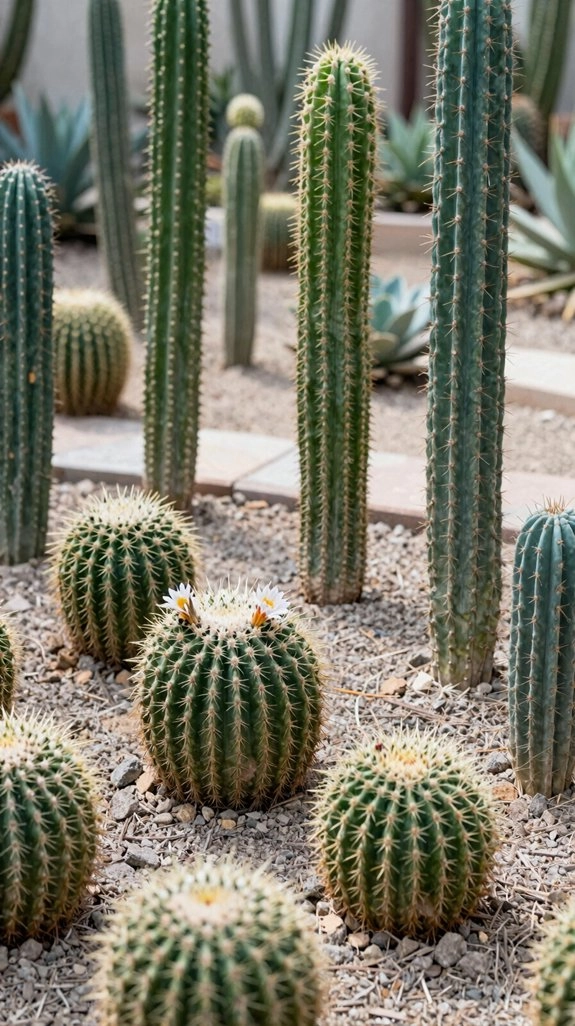
Why do cactus problems show up so fast? Because wet soil hangs around like an unwanted guest!
Diagnose root rot by checking mushy stems and sour-smelling mix, then treat overwatering issues right away.
- Use a cactus mix, plus grit or rocks for faster drainage.
- Water only when the plant is truly dry, not on a clock.
- Give bright light, often 8–10 hours, so growth stays sturdy.
- In fall and winter, water less, since your plant’s resting.
Do this, and your spiky buddy will look happier, healthier, and far less dramatic—no cactus tears needed!
Create Easy Gifts and Window Boxes
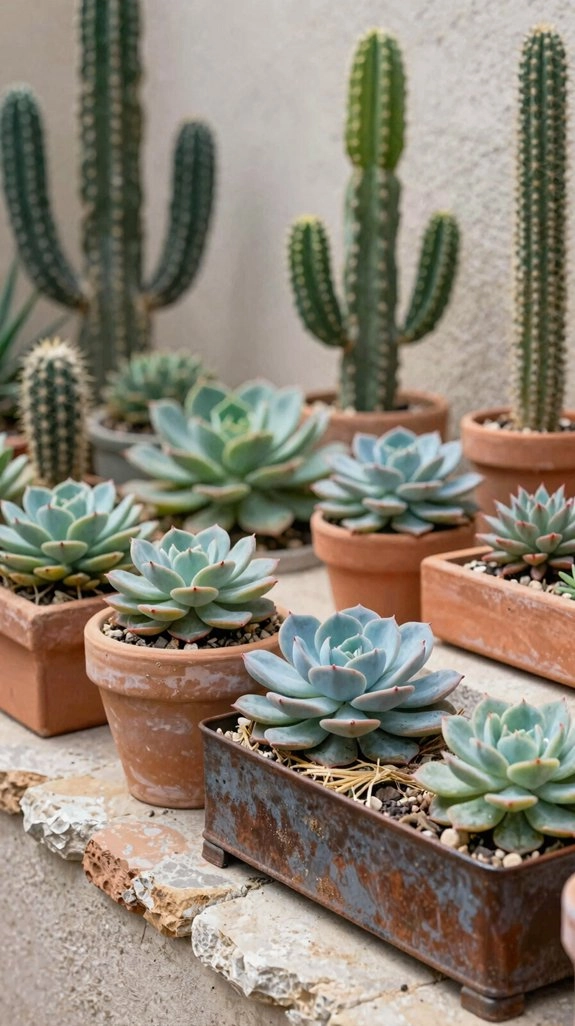
And if you want a gift that looks charming but doesn’t demand much babysitting, start with a tiny succulent or cactus dish garden!
Pick gift container themes like a teacup, tin, or thrifted bowl, add cactus soil, and tuck in hens & chicks.
They’ll multiply, so your present keeps growing, yay!
For window boxes, you can’t go wrong with office window styling that loves bright sun.
Use small rocks in the bottom, then fill with well-draining mix so rain drains fast.
Hens & chicks need only occasional watering, and they’re basically the easygoing neighbors everyone wants.
For winter, try flowering cacti you can move indoors.