Ground Cover Plants That Are Low Maintenance and Beautiful
- Ground Cover Plants That Are Low Maintenance and Beautiful
- Key Takeaways
- What Ground Cover Plants Do
- Best Ground Cover Plants for Sun
- Best Ground Cover Plants for Shade
- Ground Cover Plants for Slopes
- Erosion Control On Slopes
- Best Groundcovers For Slopes
- Low-Maintenance Slope Coverage
- Ground Cover Plants for Pavers
- Creeping Thyme for Easy Color
- Creeping Phlox for Flowering Coverage
- Trout Lilies for Part-Shade Gaps
- Spring Bells In Shade
- Foliage That Fills Gaps
- Kurapia for Warm-Climate Lawns
- Blue-Eyed Grass for Moist Spots
- Powderpuff Mimosa for Fast Spreading
- Native Ground Cover Plants for Shade
- Evergreen Ground Cover Plants for Year-Round Cover
- Evergreen Texture Year-Round
- Low-Maintenance Winter Coverage
- Best Plants For Shade
- Ground Cover Plants That Suppress Weeds
- How Ground Covers Stabilize Soil
- Spreading Ground Covers for Bare Areas
- Violets and Violas for Difficult Shade
- Shade Carpet Growth
- Spring Violet Blooms
- Lamb’s Ear for Soft, Silver Foliage
- Hardy Ice Plant for Hot, Dry Sites
- How to Plant Ground Covers Successfully
- Common Ground Cover Planting Mistakes
Low-maintenance ground cover plants can turn bare spots into a neat, beautiful carpet with very little fuss! You can use sun lovers like creeping thyme, powderpuff mimosa, or kurapia for dry spots, then choose shade stars like Allegheny spurge, Christmas fern, or Pennsylvania sedge under trees. For slopes, they help hold soil and fight weeds, and between pavers, they soften hard edges like a tiny green rug. Stick around, because the best match may surprise you!
Key Takeaways
- Dense ground covers suppress weeds, reduce bald spots, and create a neat living carpet over soil.
- For sunny areas, powderpuff mimosa, kurapia, creeping thyme, and blue-eyed grass are low-maintenance choices.
- For shade, Allegheny spurge, Christmas fern, American ginger, and Pennsylvania sedge stay attractive and fill in well.
- On slopes, creeping thyme, creeping phlox, and kurapia help stabilize soil and limit erosion.
- Lamb’s ear and hardy ice plant add beautiful foliage or blooms while thriving in tough, dry spots.
What Ground Cover Plants Do
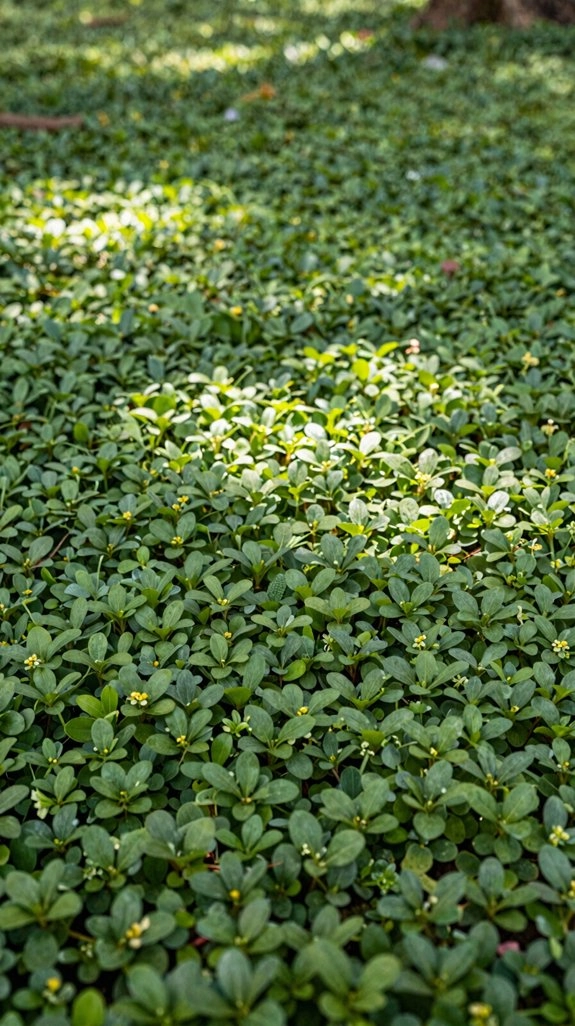
Ground cover plants spread out and knit the garden together, almost like a green team working overtime! You get Weed suppression benefits because their dense leaves crowd out sneaky invaders, and you get soil stability support as roots hold loose earth in place.
That means fewer bald spots, fewer muddy messes, and a space that feels cared for, even if you’re busy.
They also act like a low, living carpet on slopes, borders, and between pavers. Some bloom, some stay leafy, and many spread on their own, so your garden keeps filling in, growing friendlier, fuller, and easier to love!
Best Ground Cover Plants for Sun
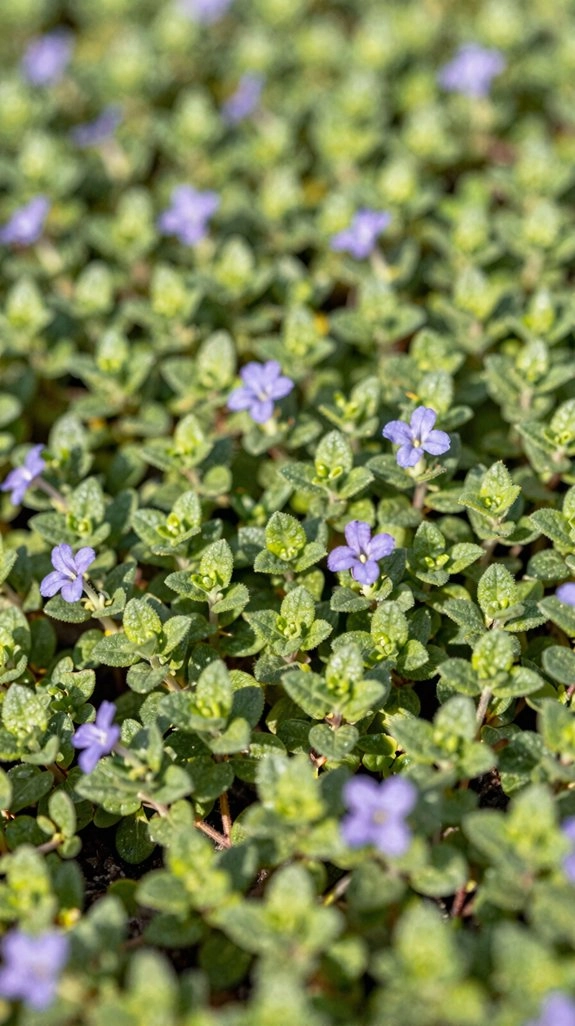
For hotter spots, powderpuff mimosa and kurapia shine big time. Mimosa can take a beating, and kurapia makes a soft, low-water carpet that keeps your sunny space looking welcoming and easy.
Best Ground Cover Plants for Shade
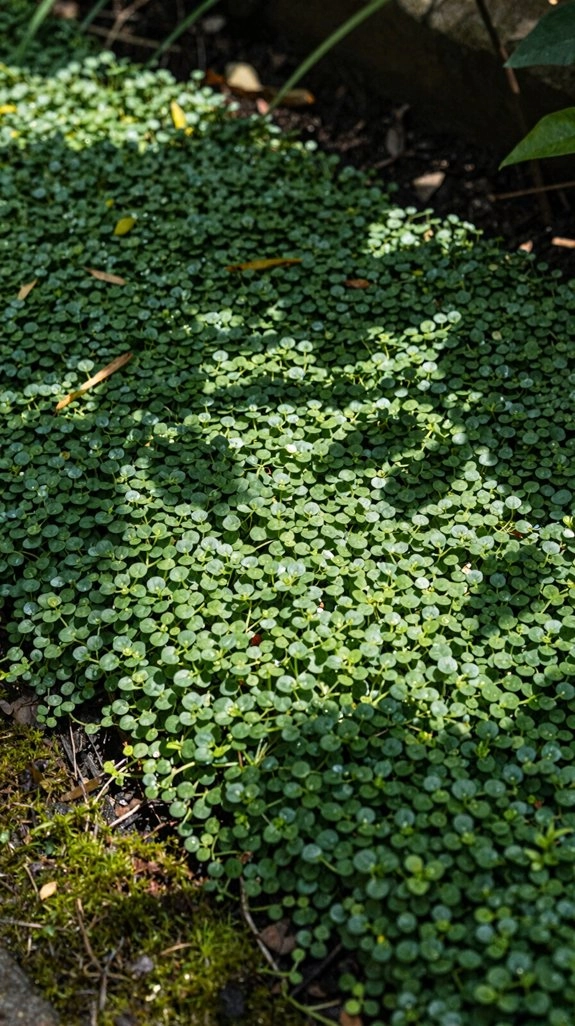
Shade can be a real puzzle, especially when the sunny stars from your yard take a break under trees and porches, but that doesn’t mean the area has to look bare or moody.
You can build a cozy, welcoming carpet with these easy picks, and yes, they get along with the quiet corners of your yard!
- Allegheny spurge: dense, glossy, white spring blooms.
- Christmas fern: evergreen, tough in dry shade.
- American ginger: maroon flowers, woodland charm.
- Pennsylvania sedge or violets: tidy clumps, purple spring surprise.
Check Soil moisture needs, then choose deer resistant options. Soon, your shade will feel finished!
Ground Cover Plants for Slopes
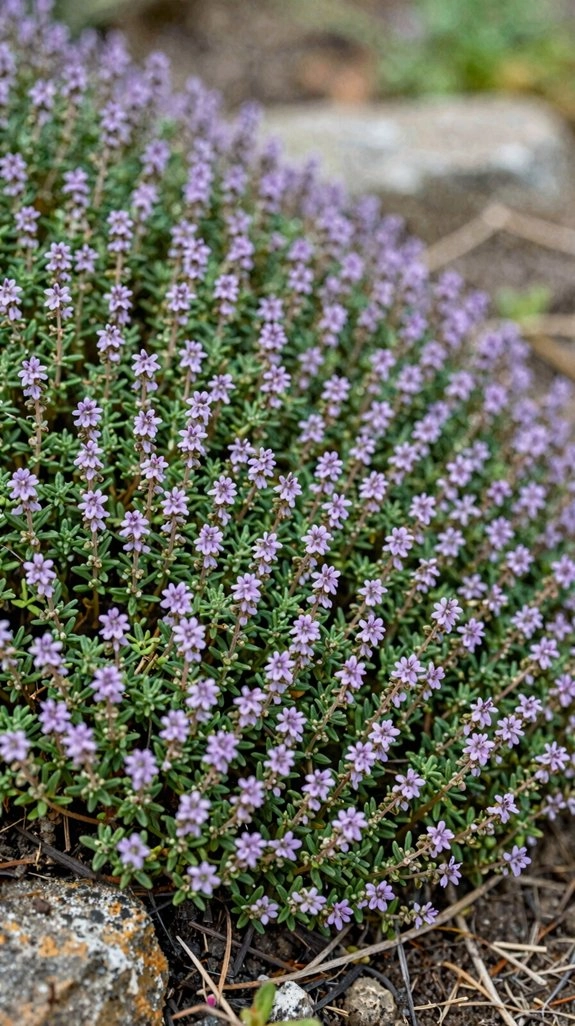
Slopes can be tricky, but the right ground covers help you keep soil in place and cut down on bare, scruffy patches—nice!
You can choose low-growing plants like creeping thyme, creeping phlox, or blue-eyed grass, and they’ll spread out while giving your hillside color and texture.
If your slope is shadier or warmer, you’ve still got smart options like trout lilies or Kurapia, so you can build low-maintenance coverage without turning your weekend into a hill-climbing workout.
Erosion Control On Slopes
When a slope starts shedding soil like it’s trying to escape the yard, the right ground cover can step in and adjust everything together! You’ll feel right at home with plants that fit your site and your style. Try these quick wins:
- Creeping thyme for sunny, dry banks, like a soft green rug.
- Creeping phlox for rocky edges, spilling in bright waves.
- Blue-eyed grass for spots with Seasonal soil moisture, plus native slope adjustments.
- Kurapia or Allegheny spurge for heat or shade, where roots knit soil fast.
Plant them close, water early, and let nature do the heavy lifting!
Best Groundcovers For Slopes
A slope doesn’t have to feel like a yard problem you keep tripping over, because the right groundcover can turn that tricky patch into a living, low-stress blanket!
Start with creeping thyme for sunny, dry spots, or creeping phlox when you want a colorful spring mat.
If your slope stays damp, blue-eyed grass fits like a friendly neighbor, while kurapia brings a warm-climate carpet with barely any fuss.
For partial shade, trout lilies quietly shine in spring.
Match plants to soil moisture matching, then set Slope planting spacing wide enough for spread, and you’ll build a hillside that feels welcoming, not wild.
Low-Maintenance Slope Coverage
If your hillside still feels like one more thing on your to-do list, the good news is that low-maintenance groundcovers can make it look polished without turning you into a full-time gardener! Start with soil preparation, then use drip irrigation while plants settle in, and you’ll join the “my slope looks amazing” crew fast.
- Creeping thyme: sunny, 6 inches tall, purple blooms.
- Creeping phlox: spreads wide, loves full sun, bright spring color.
- Allegheny spurge: shady slopes, dense, easygoing cover.
- Kurapia: dry, stable spots, low, tough, runoff-fighting.
Plant, water, relax, and let these champs outcompete weeds!
Ground Cover Plants for Pavers
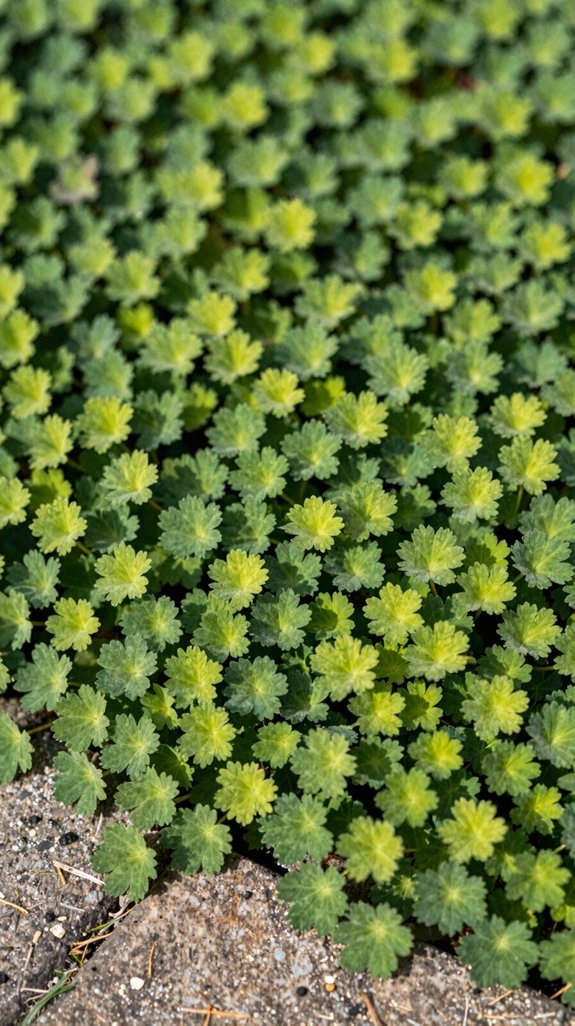
Between the cracks and edges of your pavers, the right ground cover can turn hard stone into something that feels soft, finished, and honestly a little magical!
Start by checking paver spacing and drainage planning, because plants need room and the right moisture.
For sunny, dry spots, creeping thyme stays neat and blooms purple; for slopes, creeping phlox spills in a bright, low carpet.
Ajuga tucks into tiny gaps and fills fast, while blue-eyed grass likes the moist seams near swales.
In warm zones, Kurapia makes a lawn-like mat, but skip it where feet stomp often.
Creeping Thyme for Easy Color
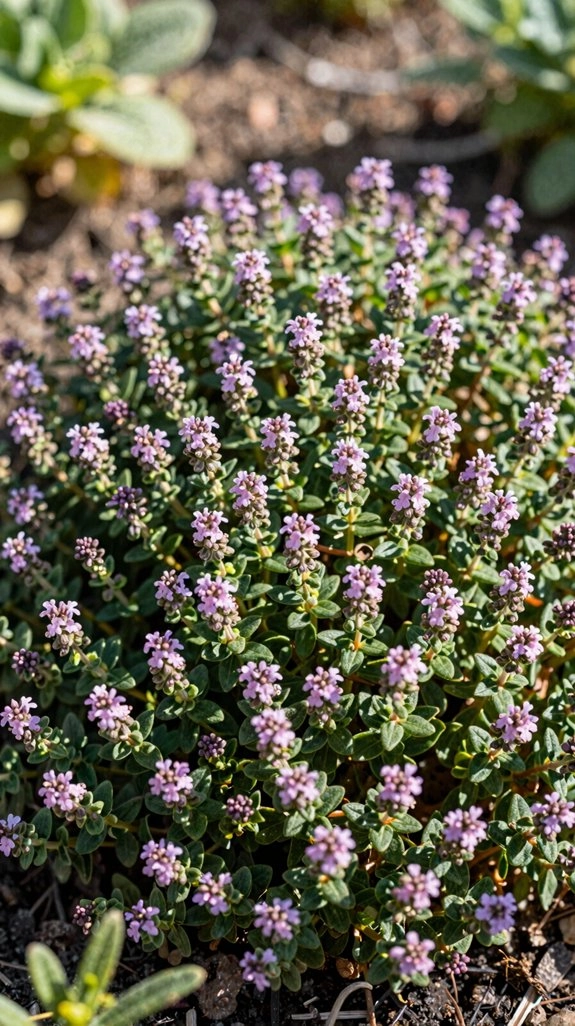
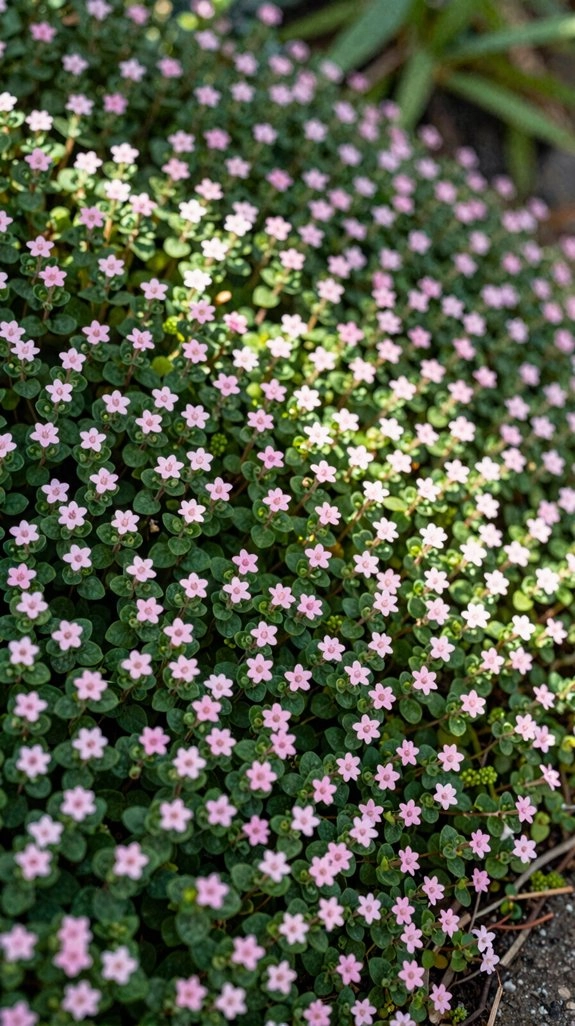
When you want color that looks cheerful without turning into a chore, creeping thyme is a tiny superstar! You’ll get a soft green mat, then a purple flower burst in late May. It stays about 6 inches tall, spreads nicely, and never asks for mowing—what a neighbor-friendly win!
- Plant in full sun.
- Use well-drained soil.
- Water deeply establish roots.
- Check spring fertilizer timing, then mostly relax.
You’ll love how it slips between pavers, brightens borders, and shrugs off drought. In zones 4–9, it’s tough, pest-resistant, and easy on your wallet. Your yard can join the low-fuss club!
Creeping Phlox for Flowering Coverage
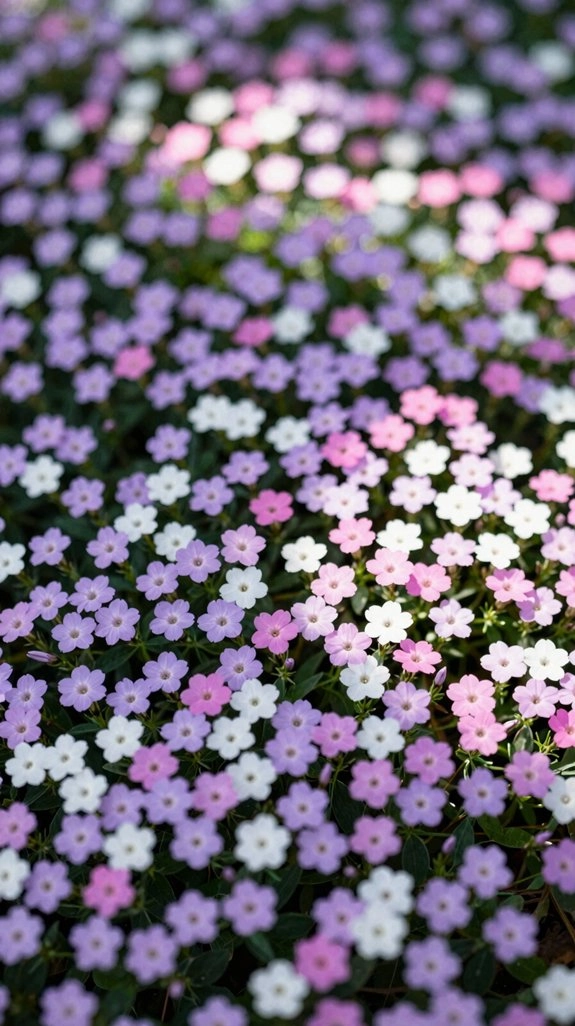
Creeping phlox brings a big flower show to tiny spaces, and it does it without acting high-maintenance!
You’ll love how it hugs slopes, spills over rock walls, and spreads into a 6-inch mat that reaches 24–36 inches wide.
Give it sun, well-drained soil, and smart soil preparation tips, then follow watering aftercare guidance until it settles in.
In USDA Zones 3–9, it soon fills gaps with bright blooms and dense cover, so weeds get less room to crash the party.
Best of all, you get lasting color at ground level, and your border starts looking like a friendly, flower-packed welcome mat!
Trout Lilies for Part-Shade Gaps
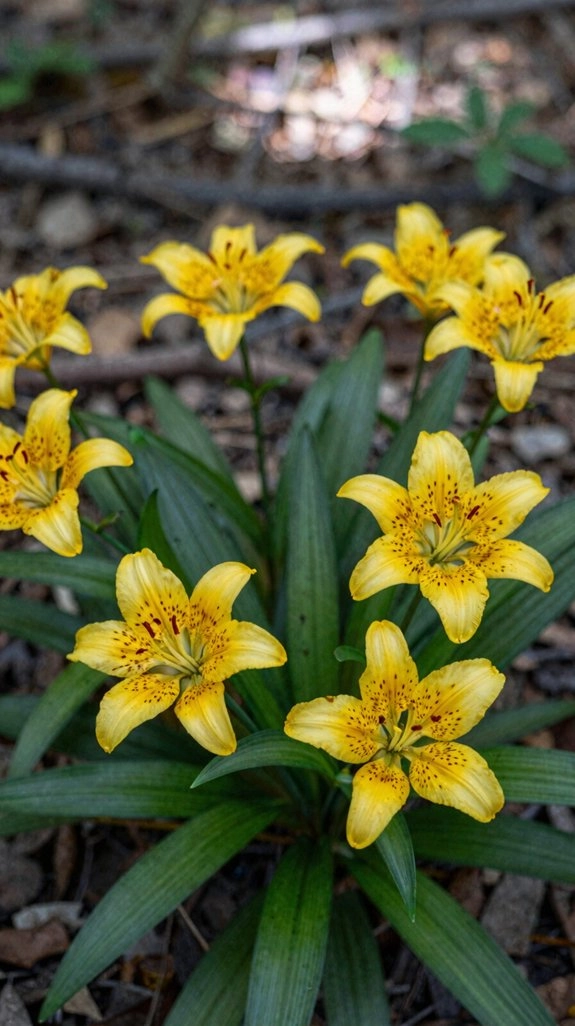
If you’ve got a shady spot that seems to shrug at grass, trout lilies can step in with a spring surprise, showing off spotted leaves and little yellow bells that hang like tiny lanterns.
You’ll only get the flowers for a short time, but the foliage keeps doing the heavy lifting, helping those bare gaps stay covered.
Best of all, once they settle in, they stay low, easy, and cheerful, which is pretty hard to beat!
Spring Bells In Shade
Tucked into those tricky part-shade gaps, trout lilies bring a little spring magic with almost no fuss! You can tuck corms into humus-rich soil and enjoy their spotted leaves and yellow bells in a shared, shady nook.
Try this:
- Dig a small hole.
- Add moist, rich soil.
- Set the corms in place.
- Water lightly, then relax.
They’re great for container planting too, and seasonal maintenance stays easy. At about 6 inches tall, they fit cozy spaces beautifully. After blooming, the leaves keep your patch looking full, so your garden crew feels welcome all season long!
Foliage That Fills Gaps
Trout lilies are a quiet little win for those awkward part-shade spots where grass gives up and looks dramatic about it! You can tuck in corms, add humus-rich soil, and keep an eye on soil moisture, then let them settle in.
In spring, you’ll get yellow, bell-like blooms and spotted leaves that look cheerful at woodland edges and under trees. After the flowers fade, the foliage still fills gaps, so your patch doesn’t quit early. They stay small, about 6 inches tall, need little attention, and work beautifully in Zones 3 to 8.
Kurapia for Warm-Climate Lawns
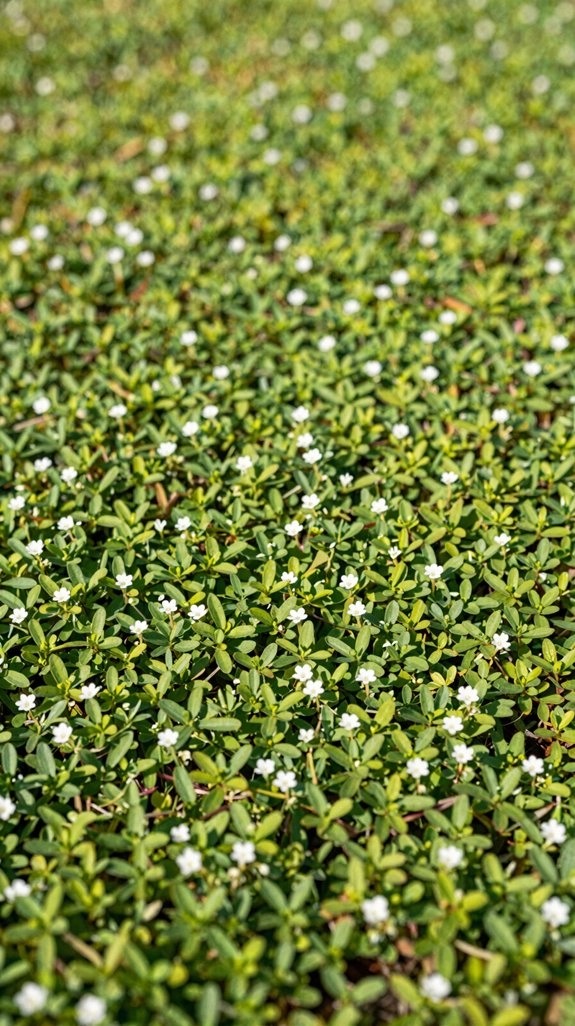
When you want a lawn that looks neat without acting like a needy divo, Kurapia can be a real win! You get a water saving lawn vibe with far less fuss, and your yard feels like part of the cool crowd.
Try this easy plan:
- Pick a sunny, warm spot.
- Plant small plugs in loose soil.
- Water lightly until roots settle.
- Skip heavy foot traffic limits, since it spreads best where you’ll stroll, not stomp.
It stays about 3 inches tall, so mowing’s optional, and in Zones 7 and up, it’s a cheerful, low-water friend for your outdoor hangout.
Blue-Eyed Grass for Moist Spots
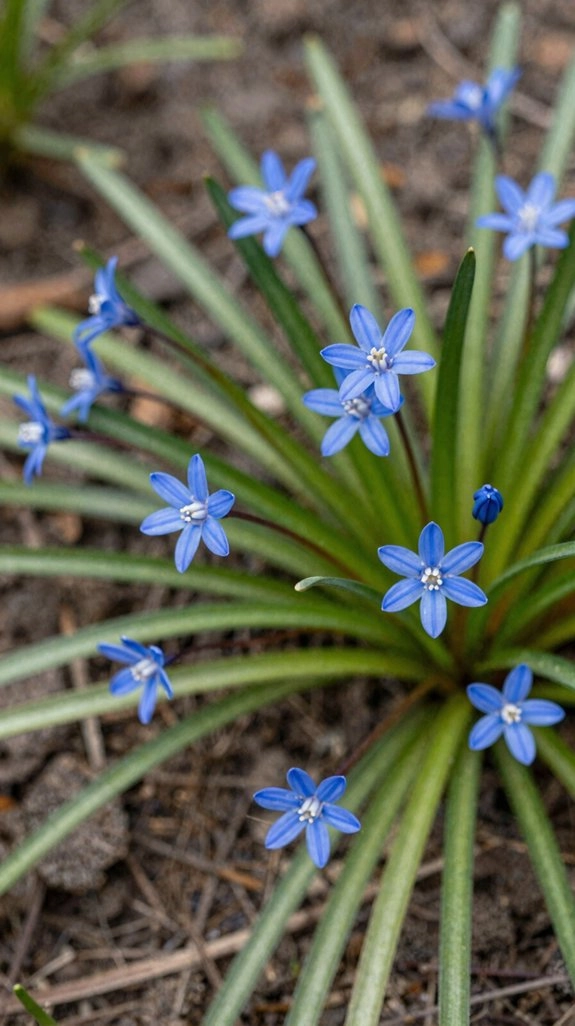
If you’ve got a damp spot that keeps turning into a plant drama, blue-eyed grass might be your tiny hero! You’ll love how this native clumping rhizomes perennial fills in moist soil without fuss, making a tidy, friendly patch that feels like it belongs.
It isn’t true grass, but its grassy look fits right in, and the 6- to 8-inch clumps stay neat.
Then the fun part arrives: starry spring blooms in blue, violet, purple, or white.
Give it sun, or a little shade for more flowers, and well-drained soil.
Soon, your soggy corner looks calm, cheerful, and completely invited.
Powderpuff Mimosa for Fast Spreading
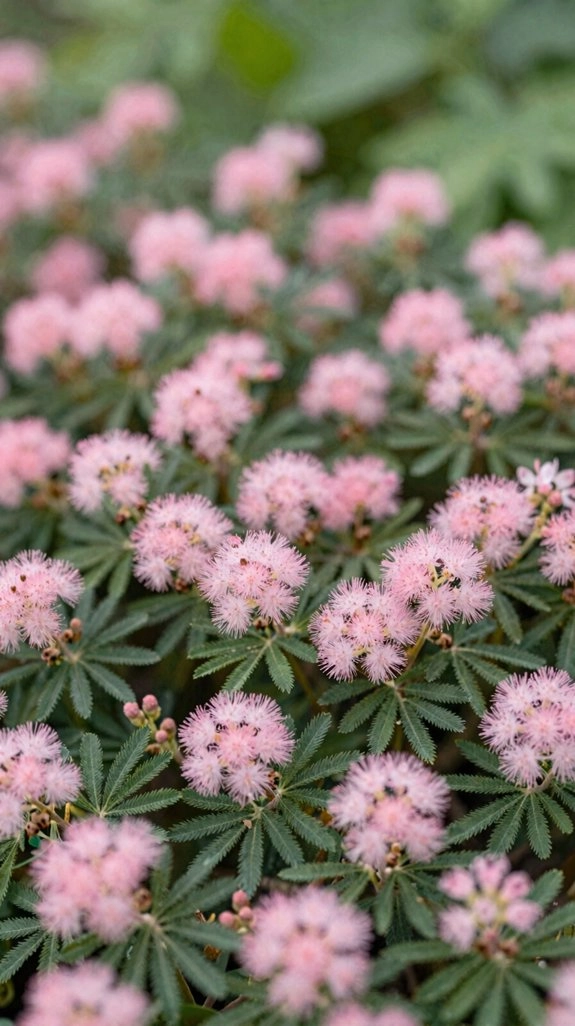
Powderpuff mimosa is the kind of ground cover that says, “Move over, bare dirt—I’ve got this!” This sun-loving native, Mimosa strigilosa, stays low at about 6 inches tall, but it spreads fast and wide, making it a smart pick for those awkward open spots you want covered in a hurry.
You’ll fit right in with this easygoing plant, especially in Zones 8–11.
- Prep well-drained soil.
- Give it full sun.
- Water until it roots.
- Enjoy drought tolerance later.
Tiny pink blooms invite butterflies, and the dense mat can handle foot traffic. It’s low-problem, quick, and surprisingly tough—yes, even mowable!
Native Ground Cover Plants for Shade
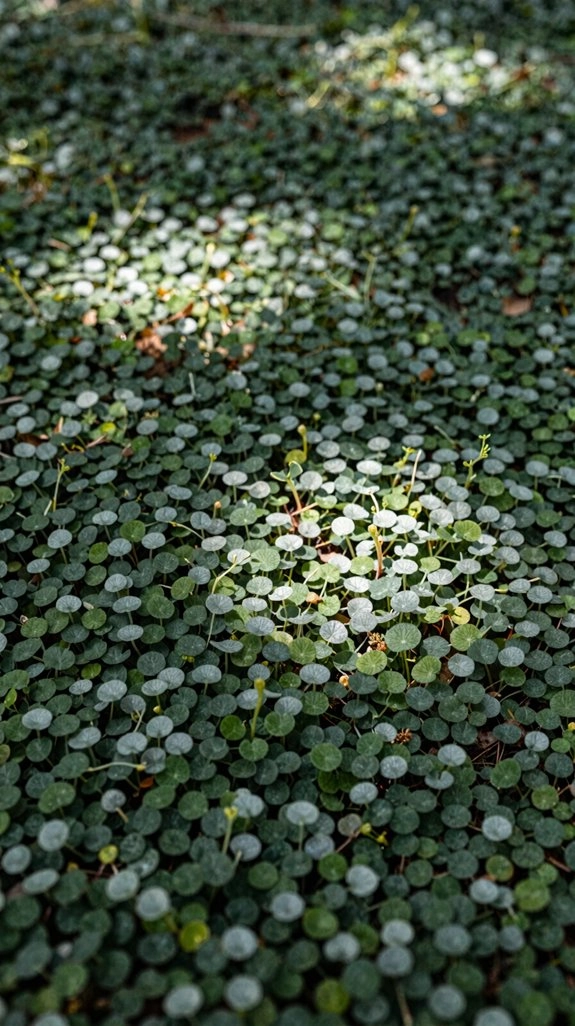
In shady spots where grass seems to give up and weeds start acting bold, native ground covers can swoop in and save the day! You’ll love Allegheny spurge, Pennsylvania sedge, American ginger, and Christmas fern—they settle in, look neat, and feel like your garden’s friendly neighborhood crew.
Check soil moisture first, then set planting spacing so each plant has room to fill out.
A light mulch depth helps hold water and cut fuss, while deer management matters for tender young shoots.
The surprise star? Christmas fern, which keeps going in dry shade once established.
Small effort, big payoff, yay!
Evergreen Ground Cover Plants for Year-Round Cover
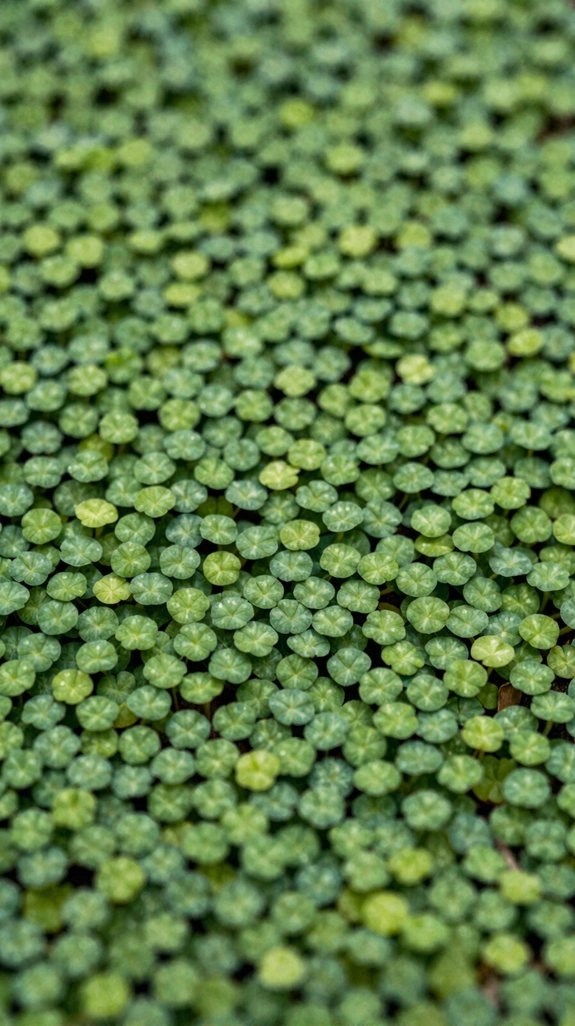
Evergreen groundcovers can keep your yard looking neat and lively all year, even when winter tries to make everything look like a sad bowl of oatmeal!
In shady spots, you can lean on plants like Allegheny spurge, Christmas fern, and evergreen wild ginger for steady color and texture, and they’ll keep spreading without asking for much fuss.
If you want the easiest winter win, creeping junipers make a low, green carpet with almost no mowing, so you get year-round cover and a happier weekend.
Evergreen Texture Year-Round
When you want your yard to look alive all year, a few hardy ground covers can do the heavy lifting without much fuss! You’ll love the cozy, lived-in vibe they create, and they don’t ask for much.
- Allegheny spurge brings dense evergreen cover, white spring blooms, and bee buzz.
- Christmas fern makes a soft, textured carpet, even in dry shade once settled.
- Evergreen American wild ginger adds mottled leaves for a rich, woodland feel.
- Creeping junipers fill low spots with steady green.
Check soil moisture needs and planting spacing tips, then mix spurge and fern for that classic, neighbor-worthy finish!
Low-Maintenance Winter Coverage
For winter curb appeal that doesn’t quit, these ground covers step in like tiny evergreen bodyguards! You can build a welcoming, green carpet with Allegheny spurge, Christmas fern, evergreen American wild ginger, and creeping thyme.
Creeping junipers bring the strongest winter punch, making dense mats that don’t flinch at cold. Use Evergreen spacing tips: set plants far enough apart to grow in without crowding, then mulch lightly.
Try this DIY idea: choose one plant, mark spots, plant, water, and watch it settle in.
Follow Winter watering guidelines, giving drink only when soil’s dry. Great news—your yard can stay friendly all year!
Best Plants For Shade
Shady spots don’t have to look bare and sleepy—this is where the right ground covers really strut their stuff! You can build a cozy, leafy crowd that feels welcoming and calm.
Try this quick mix:
- Allegheny spurge for white spring blooms and bold evergreen cover.
- Christmas fern for dry shade and tidy texture.
- Evergreen American wild ginger for mottled leaves that pop.
- Pennsylvania sedge, plus American ginger, for soft, woodsy layers.
Give each plant proper shade plant spacing, then use an Evergreen edge trim to frame paths.
Soon, your shade garden looks finished, friendly, and wonderfully low effort—nice!
Ground Cover Plants That Suppress Weeds
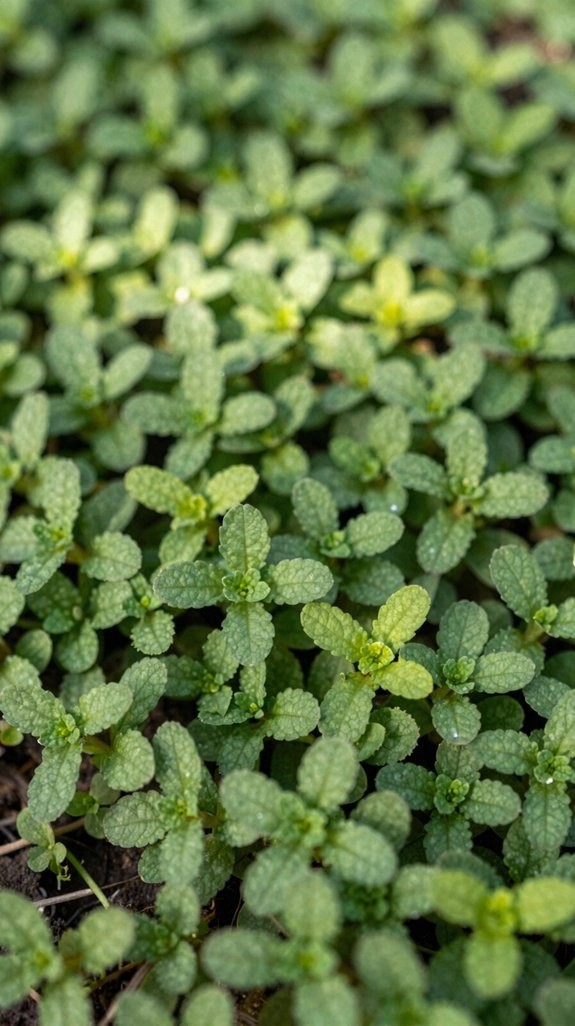
Weeds love open soil, but the right ground cover plants can shut that party down fast!
Start with soil prep, then use dense spacing for real weed prevention, because gaps invite trouble.
Try creeping thyme in sunny, dry spots, Allegheny spurge for shade, or American wild ginger in those moody woodland corners.
For wetter areas, Pennsylvania sedge makes a tidy living mat.
Clear weeds first, add compost if needed, and give establishment watering until roots settle.
After that, these low-cost stars spread, crowd out weeds, and make you feel like you’ve got the smartest yard on the block!
How Ground Covers Stabilize Soil
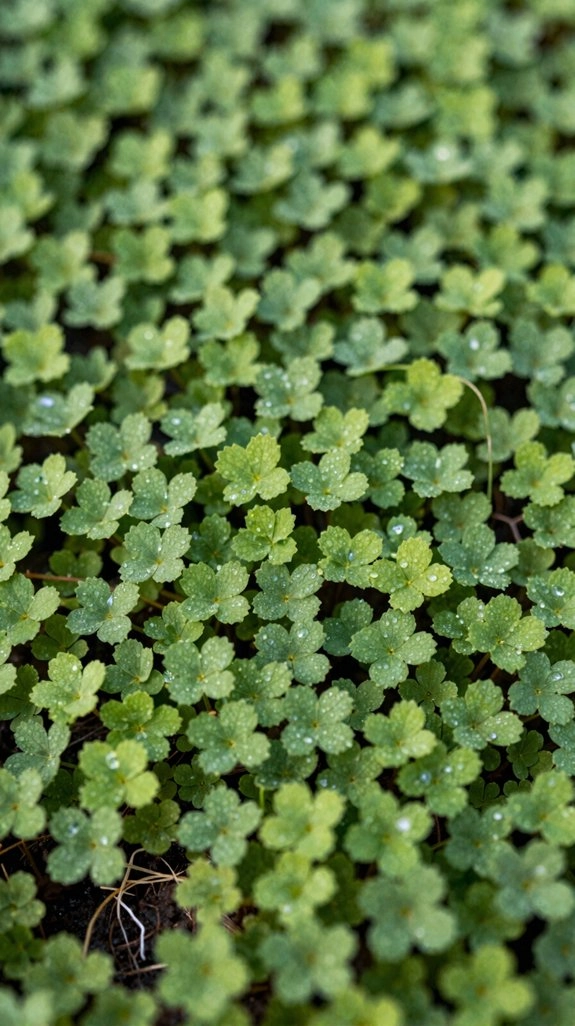
Ground covers don’t just win the battle against weeds, they also help hold your soil together like a green safety net!
- Creeping thyme hugs slopes, giving you soil binding with a tight root network.
- Creeping phlox spreads into gaps, so rain can’t shove dirt away.
- Pennsylvania sedge makes a soft mat, boosting weed suppression and moisture retention.
- Add leaf mulch and water while plants settle in, and they’ll cover ground fast.
You’ll feel like part of a smart, gardening crew, because these plants keep soil steady, cut washout, and make bare spots look calm, full, and cared for.
Spreading Ground Covers for Bare Areas
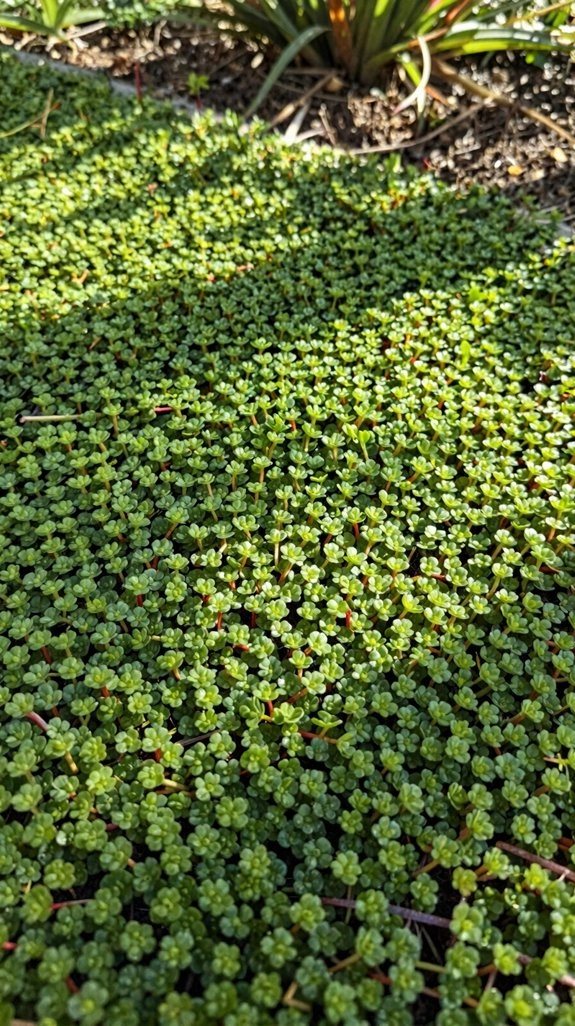
If you’ve got a few bare patches that keep staring back at you like unfinished homework, spreading ground covers can save the day!
You can start with creeping thyme for a no-mow mini lawn, or use creeping phlox on sunny slopes and rock edges.
Ajuga packs in fast around flagstone, while sedum and hens-and-chicks handle dry rocky spots with almost no fuss.
For the biggest payoff, try a Native evergreen like creeping juniper.
These gap filling plants knit bare soil into a cozy, wildlife friendly groundcovers scene, and they’re easy on your wallet too!
Violets and Violas for Difficult Shade
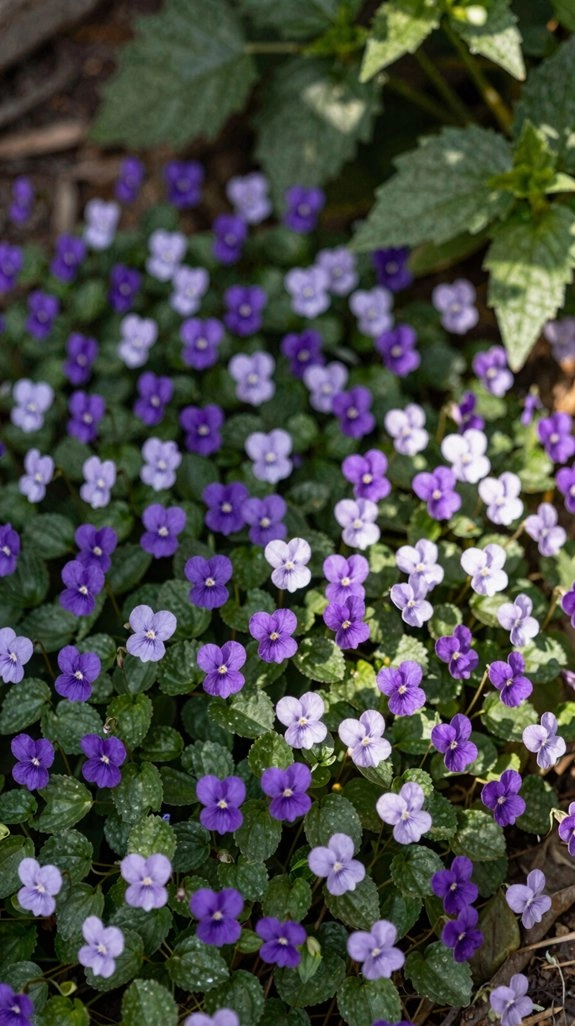
If you’ve got tricky shade under maples or in a gloomy corner, violets can knit themselves into a soft green carpet that helps crowd out weeds—nice, right?
They usually spread first, then reward you with an early-spring burst of purple blooms, so you get coverage and color without much fuss.
Violas bring the same easy-going charm, plus extra flower shapes and colors, which makes your shady spots look less “forgotten” and more “wow!”
Shade Carpet Growth
These plants are wonderfully low-drama, too. In shady corners, you can build a living carpet with violets and violas, and they’ll make your spot feel like the cool kids’ club under the trees!
Try this:
- Clear away weeds and sticks.
- Do smart soil prep with loose, rich earth.
- Give extra maintenance watering while roots settle.
- Let the plants knit together and fill bare gaps.
You won’t need special gear or big budgets, just a little patience. Soon, they’ll spread, soften rough patches, and handle neglect better than most lawn grass ever could.
Spring Violet Blooms
After you’ve got that shady carpet started, violets can take the next lap for you, especially in those tricky spots under trees where other plants act like they’ve lost the map!
You’ll see early spring flowers pop purple, then slip back to green as the patch keeps filling in.
Keep an eye on soil moisture, since steady dampness helps them settle in without fuss.
Violas join the party too, adding bright color to dim corners.
For the best carpet effect, plant several together, and choose a native selection when you can, because your shade crew will feel right at home!
Lamb’s Ear for Soft, Silver Foliage
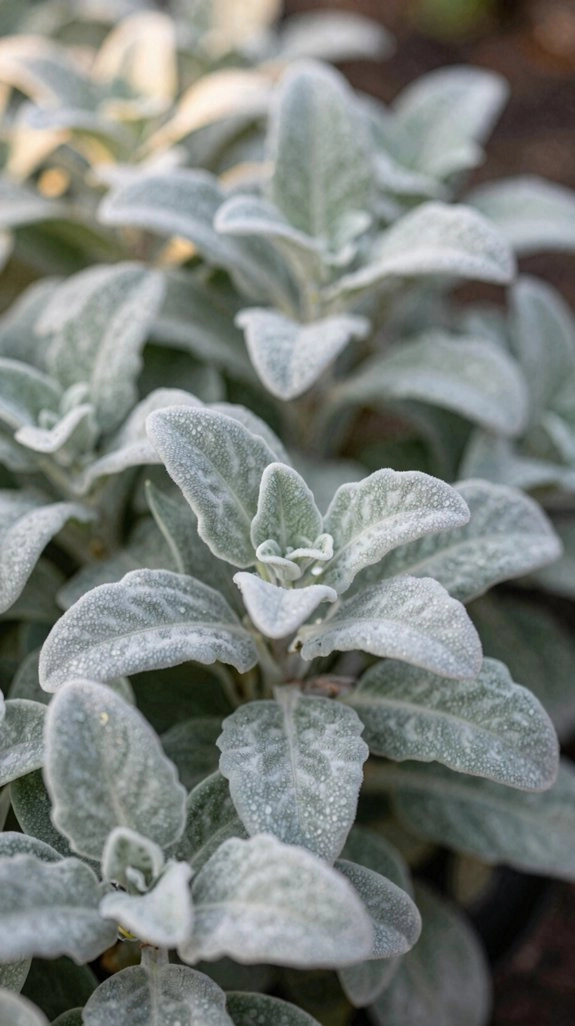
Lamb’s ear (*Stachys byzantina*) brings a soft, silvery charm to the garden that’s hard to ignore—those fuzzy, gray-green leaves look like tiny pillows spread across the soil! You’ll love how it settles into tricky spots and makes them feel welcoming.
- Plant in loose soil.
- Water lightly at first.
- Use winter care tips to keep crowns dry.
- Try invasive control measures if it spreads too far.
Once it’s rooted, it mostly takes care of itself, so you can enjoy that plush, clean look without constant fuss.
It’s budget-friendly, beginner-friendly, and a lovely way to stitch bare patches into one cozy, silver carpet!
Hardy Ice Plant for Hot, Dry Sites
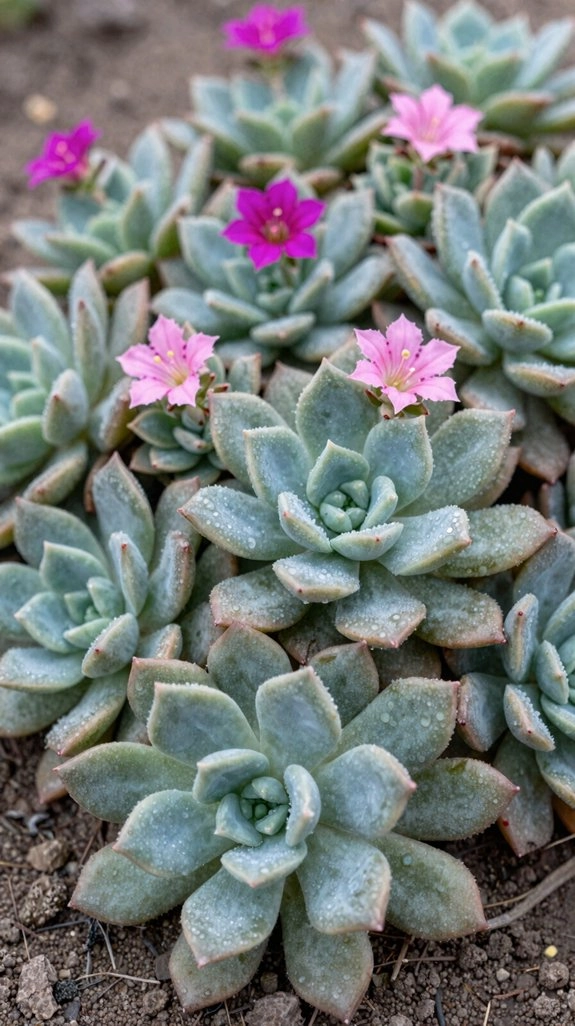
If your yard gets blasted by sun and seems to fry everything in sight, hardy ice plant (*Delosperma*) might be your new best friend! You’ll love how it hugs the ground in a low, spreading mat, turning rocky or sandy trouble spots into cheerful color zones.
This tough little plant handles heat and drought like a champ, so once it settles in, you won’t be chained to watering cans.
A bit of watering aftercare helps it get started, then it mostly minds its own business.
Best of all, it boosts soil stabilization and laughs at weeds.
Bright blooms? Yes, please!
How to Plant Ground Covers Successfully
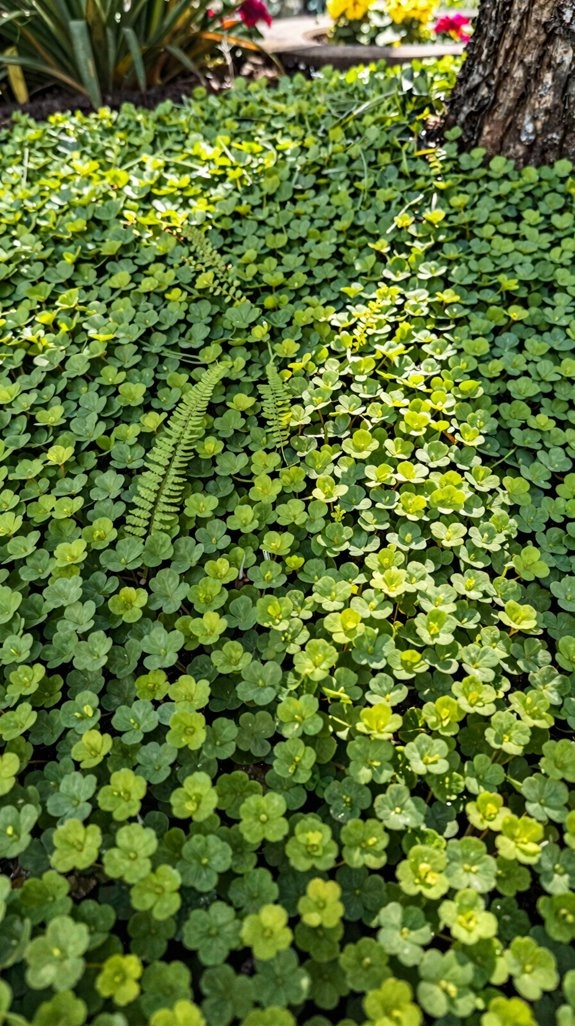
A little prep work goes a long way with ground covers, and your future self will thank you! Clear weeds, loosen the soil, and mix in compost for smart soil preparation. Then plant with care for great weed suppression and a comfy, full look.
- Gather ground covers, compost, and a hose.
- Work compost into sunny or shady spots.
- Set plants in masses, not lonely singles.
- Water well now, then ease off later.
For extra polish, tuck leaf mulch around them, but keep heuchera crowns clear. Planting in sweeps near paths looks lush fast, and you’ll feel right at home!
Common Ground Cover Planting Mistakes
Even the best-planted ground covers can hit a few snags, so let’s dodge the big mistakes before they turn into garden facepalm moments!
You’ll want to mind planting crown depth, especially with heuchera, because burying that crown invites rot.
Next, avoid a sun soil mismatch: creeping thyme and creeping phlox want full sun and sharp drainage, while trout lilies prefer shade and rich humus.
Don’t expect Kurapia to handle heavy foot traffic, either.
Give new patches extra watering, good soil prep, and leaf mulch for weed control.
One last gotcha? In wet regions, creeping buttercup and creeping Jenny can act like tiny garden rebels!