Climbing Plant Supports: How to Choose the Right Type and Use It Properly
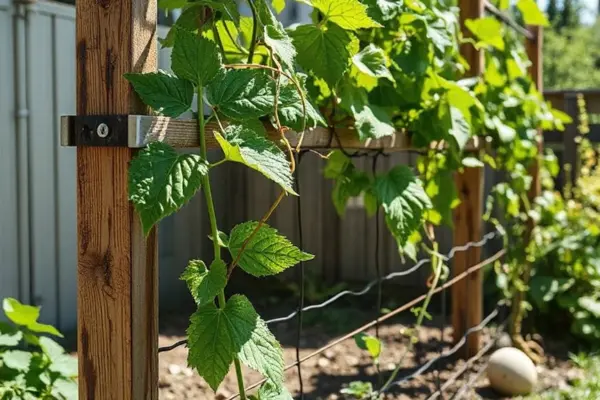
- Climbing Plant Supports: How to Choose the Right Type and Use It Properly
- Key Takeaways
- Why the Wrong Support Damages Plants — and How to Avoid It
- Every Type of Climbing Plant Support Explained
- Trellis panels
- Obelisks and towers
- Wire and tensioned systems
- Arches and pergolas
- Bamboo canes and stakes
- Garden netting
- Wall fixings and vine eyes
- Matching the Support to Your Plant's Growth Habit
- Twining climbers
- Tendril climbers
- Scrambling and leaning plants
- Self-clinging climbers
- Choosing by Space: Wall, Fence, Container, or Open Garden
- Against a wall or fence
- Freestanding in a border
- In pots and containers
- Over an arch or pergola
- DIY Supports vs Ready-Made — Materials, Cost, and Lifespan
- How to Install and Anchor a Support That Holds Under Weight
- Positioning and clearance
- Fixing to wall or ground
- Tying and training the plant
- Seasonal adjustments
- Common Mistakes That Cause Supports to Fail or Plants to Struggle
- Frequently Asked Questions About Climbing Plant Supports
You’ll save yourself floppy tomatoes and sulky peas if you match the support to the plant: mesh or light twine for peas and tendrils, 6–8 ft trellises or bamboo canes for twining vines, and galvanized steel or powder-coated cages for wisteria-sized bullies. I install supports at planting, bury posts one-third deep, and use soft Velcro ties in loose figure-eights. Check ties monthly, after storms, and you’ll see why my family trusts the sturdy stuff.
Key Takeaways
- Choose supports by growth habit: twining vines use poles or canes, tendril climbers prefer mesh, and heavy vines need steel.
- Install trellises, stakes, or arches at planting time, before shoots reach 30–60 cm, for best training and stability.
- Use the right size and material: 3–4 ft for light plants, 6–8 ft for strong climbers, and galvanized or powder-coated steel for heavy loads.
- Anchor supports securely with buried posts, wall fixings, or guy wires, and leave a 2–5 cm airflow gap from walls.
- Train growth early with soft ties and guide shoots every 10–15 cm; check ties and fixings every 4–6 weeks and after storms.
Why the Wrong Support Damages Plants — and How to Avoid It
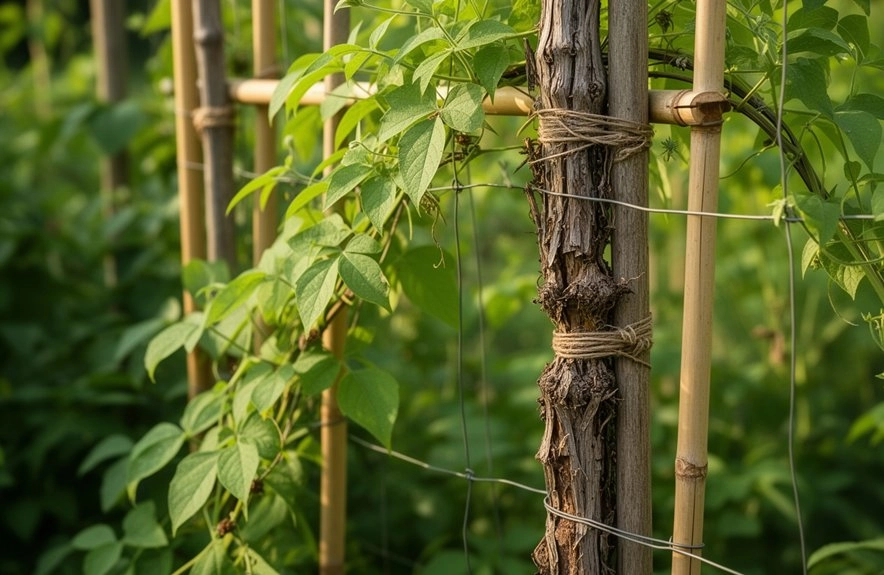
If you want your climbing plants to actually climb instead of staging a dramatic collapse, you’ve got to set up the right support early.
I learned the hard way that late staking turns tidy vines into tangled knots, and my bean patch looked like a sleepy octopus. Install trellises or stakes at planting time, before shoots hit 30–60 cm.
I use soft elastic ties, like pantyhose strips or Velcro plant ties, and I re-tie every few weeks. Bury stakes one-third deep, choose galvanized steel or sturdy bamboo, and leave a small gap from walls so air can move.
Every Type of Climbing Plant Support Explained
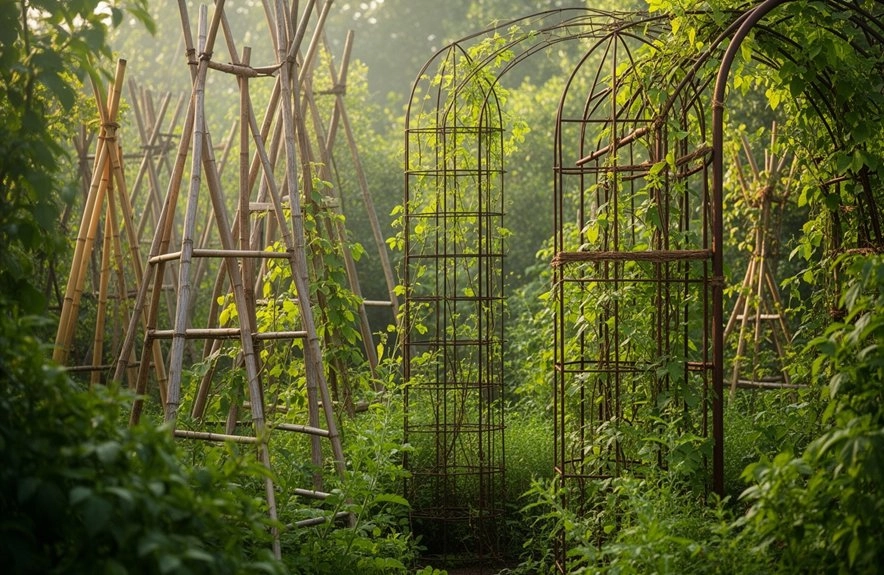
Climbing plant supports aren’t one-size-fits-all, and the right one can make a plant look polished instead of like it’s making a break for the fence. I’ve learned that climbing mechanics matter: trellises suit clematis and sweet peas, mesh helps peas and cucumbers, and coco-coir poles keep my monstera’s roots happy and humid.
For heavy tomatoes, I use cages or spiral stakes. Freestanding arches and bamboo tripods give beans and morning glories a stage. I choose support aesthetics, too, so the garden feels like our shared space, not a tangled sitcom set.
Trellis panels
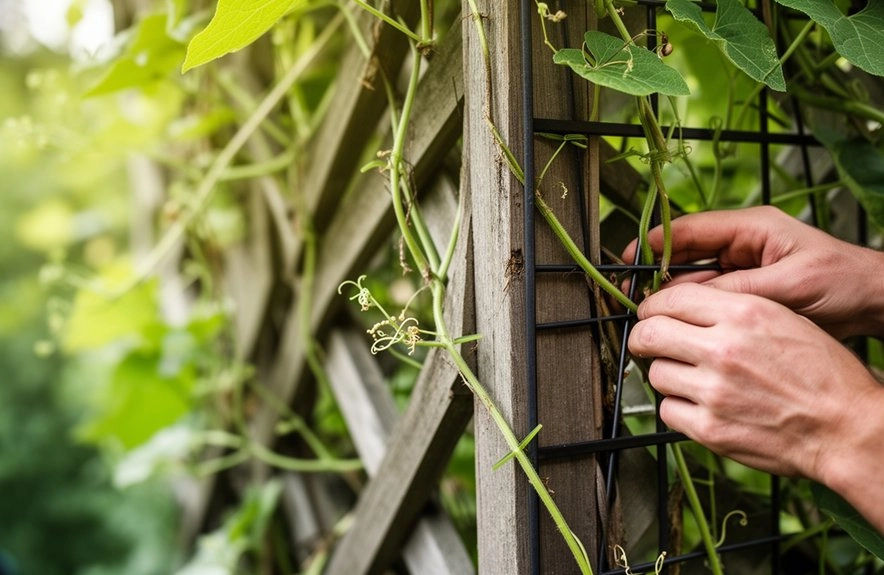
Trellis panels are my favorite kind of plant “wall art,” because they give climbers a sturdy place to show off instead of flopping around like they’ve lost the plot.
I’ve used them with my family for clematis and sweet peas, and they feel like a friendly team effort.
- Pick 6–8 ft panels for strong vines; 3–4 ft works for lighter ones.
- Choose 2–4 in. grid spacing or wider gaps.
- Use weatherproof wood, PVC, or powder-coated steel with aesthetic finishes.
- Leave 1–3 in. from walls, then follow maintenance tips and tie stems loosely.
Obelisks and towers
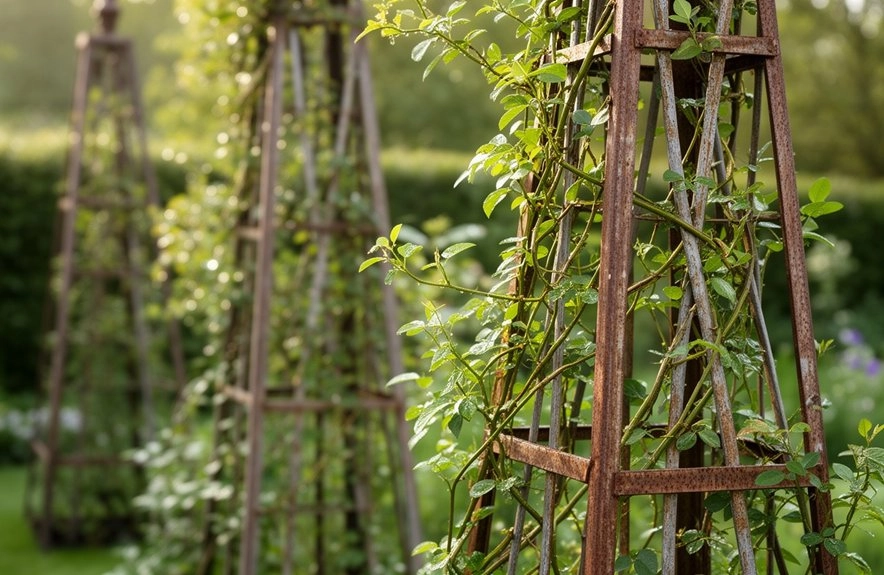
I’ve learned that an obelisk can turn one climbing plant into a real showpiece, almost like giving it a tiny stage to perform on.
I usually pick a 6-foot galvanized steel tower for morning glories, or an 8-foot one for scarlet runner beans that act like they own the place.
You’ll want weatherproof materials, sturdy anchoring, and soft ties at planting time.
My family likes how these supports add structural aesthetics and even catch seasonal lighting at dusk.
If you space them well, one obelisk can feel like your own little garden club, minus the folding chairs.
Wire and tensioned systems
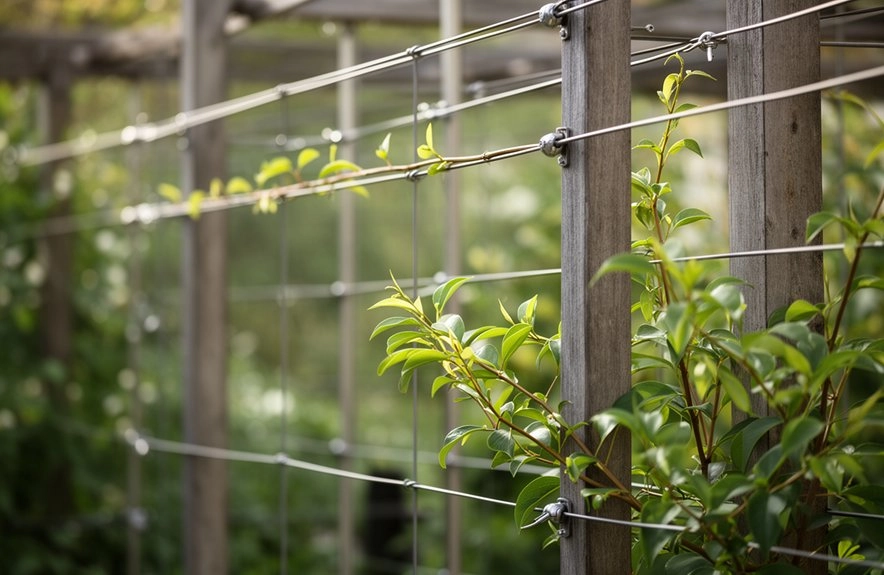
If an obelisk gives one climber a stage, wire systems give a whole wall a clean, quiet backbone.
I’ve seen them hold grapevines and passionfruit without fuss, and they make you feel like you’ve joined the smart-gardener club.
Use: 1) 2–4 mm stainless or galvanized wire, 2) turnbuckles and stainless eye bolts, 3) 30–45 cm spacing for young vines, 4) 60–90 cm for mature growth.
Leave 2–5 cm from the wall, and use battens, not bare timber.
In coastal corrosion, choose coated wire and corrosion-resistant fittings.
My family calls this artistic tensioning—because sagging isn’t stylish.
Arches and pergolas
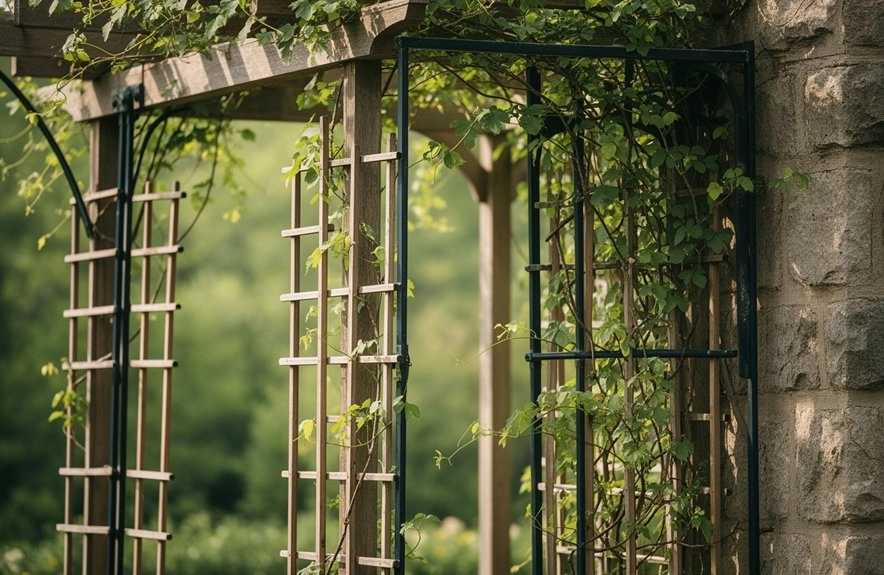
I’d place one where you want a real focal point, with 6–8 feet of height for most climbers, or 7–10 for vigorous vines. Train stems early with soft ties, keep air moving, and do seasonal pruning. Add decorative lighting, and your family’ll stroll through like they belong there.
Bamboo canes and stakes
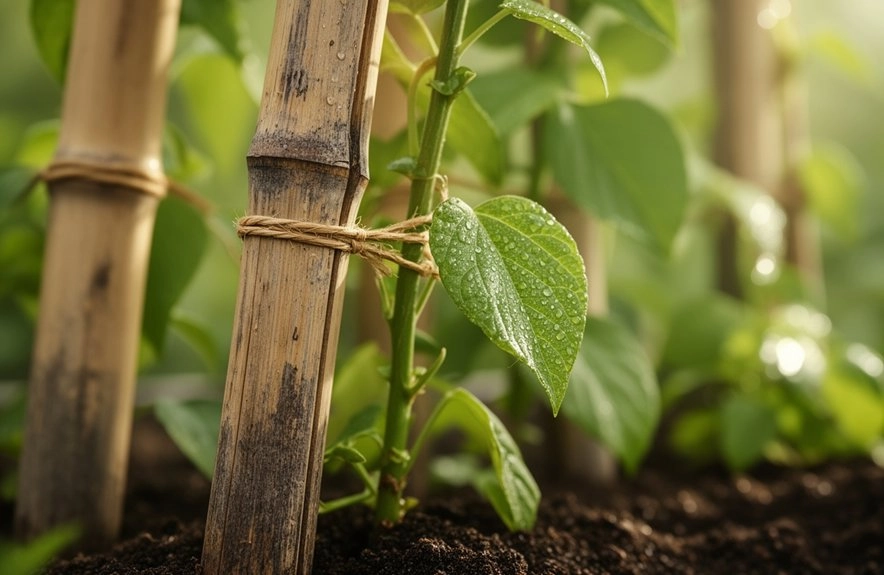
- Choose 6–10 mm canes for seedlings; 12–15 mm for eggplant or indeterminate tomatoes.
- Push each stake one-third deep for real bamboo longevity.
- Bundle 3–6 canes into a teepee, then spread the bases 60–90 cm apart.
- Tie stems with soft velcro, cloth, or old pantyhose, leaving room to grow.
I love the clean stake aesthetics, and so does my family.
Garden netting
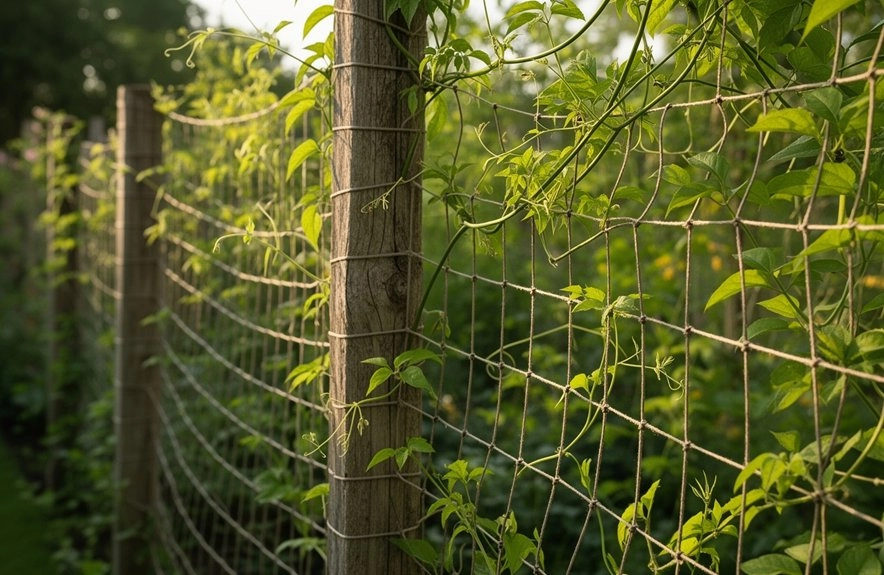
After bamboo canes have done their job, I often reach for garden netting when I want a lighter, wider climbing support that feels almost invisible once the plants get going.
You can use plastic, nylon, or heavy-duty PVC mesh sizes of 1–2 inches, and peas, runner beans, and cucumbers grab it fast.
I stretch mine on a frame or fence, then pull it tight; floppy netting turns into a plant party gone wrong.
I secure it with staples or zip ties, check for UV degradation, and choose UV-stabilized netting for seasons of steady use.
Wall fixings and vine eyes
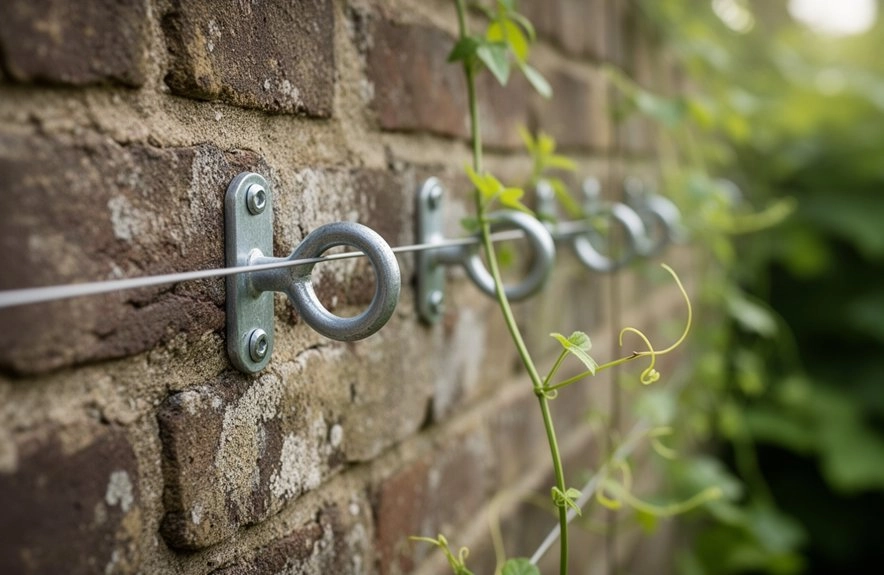
Turning to walls, I like to use vine eyes or screw-in wall hooks when I need a neat, sturdy way to hold trellis wires or guy lines, and I always choose galvanized steel or stainless steel so rust doesn’t get the last laugh.
You’ll fit in just fine when you do it this way:
- Drill masonry with the right bit.
- Match the wall plug to the screw.
- Leave a 2–5 cm gap with spacers or removable battens.
- Check corrosion inspections after storms and yearly.
For heavy loads, I trust chemical anchors.
Don’t let Boston ivy bully soft brick; I’ve seen that mess firsthand.
Matching the Support to Your Plant’s Growth Habit
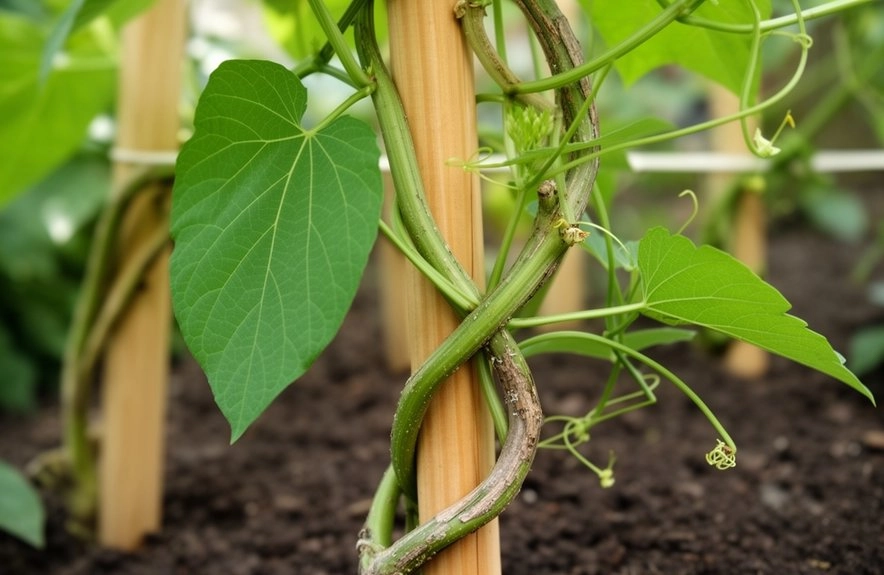
When I match a climber to its support, I picture the plant doing its own little workout, because the right structure makes all the difference.
You’ll feel at home when you read your plant’s stem orientation, size, and pace. Give pole beans and cucumbers tall trellises or A-frames; peas like light netting or overhead twine; determinate tomatoes fit 3-4 foot cages, while indeterminate ones want towers.
I’ve seen a flimsy frame flop like a sleepy noodle. Keep light access open, limit root competition, and notice microclimate effects near walls. Your garden crew will thank you.
Twining climbers
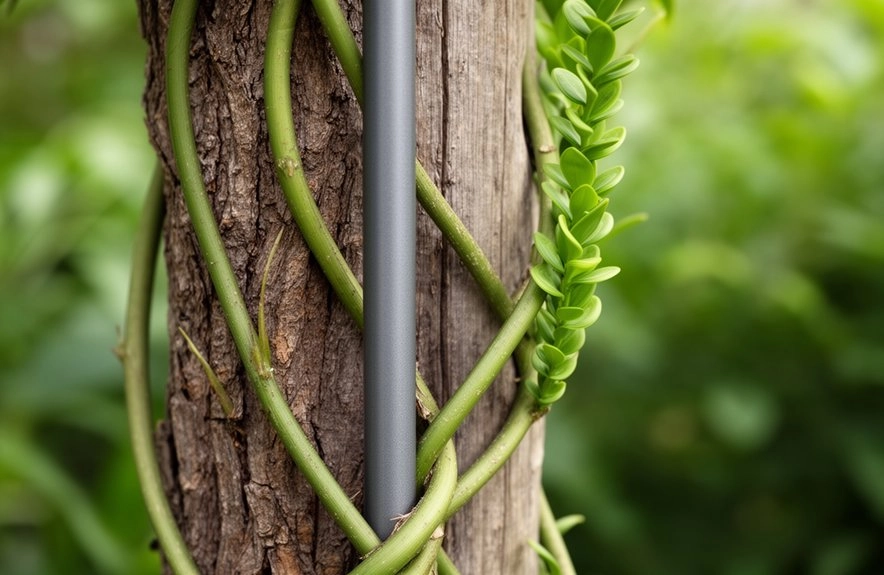
Twining climbers are the vines that like to give themselves a little hug around their support, and I’ve watched them do it with almost theatrical confidence.
You’ll get the best vine spiral when you set up smooth bamboo canes, metal poles, or thick twine at planting time. My family’s jasmine caught on fast.
- Pick supports 6–10 ft tall.
- Keep posts or wires 6–12 inches apart.
- Use soft ties, then loosen them every 4–6 weeks.
- For wisteria, choose galvanized steel or treated timber.
That training timing helps you feel like you’re on the team.
Tendril climbers
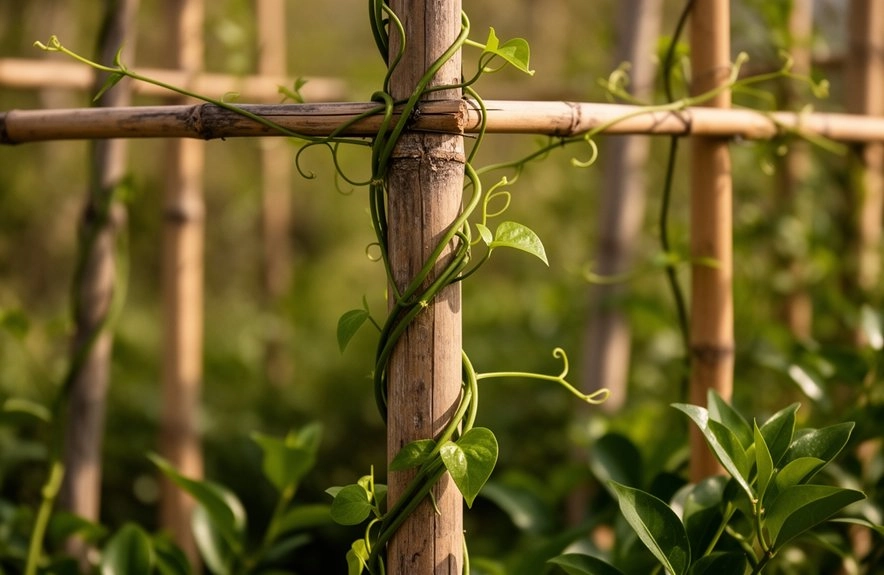
Tendril climbers are the sneaky little acrobats of the vine world, and I’m always a bit impressed by how fast they grab on.
You’ll get the best results with close-spaced trellis wire, bamboo canes, or mesh with 1–2 inch openings so passionflower, peas, and vining cucumbers can hook in. I set supports at planting, because tendrils start working within weeks.
Choose sturdy, weatherproof frames like powder-coated steel or heavy wood.
Guide young shoots gently, then let tendril mechanics do the rest. A neat trellis also helps pollinator habitat and keeps your patch feeling like a well-loved team.
Scrambling and leaning plants
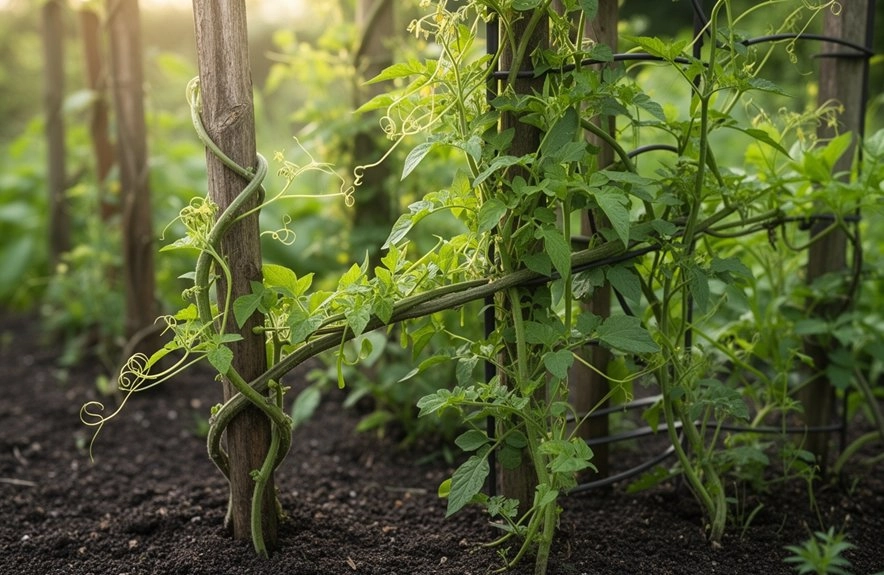
Some plants don’t climb so much as they sort of *lean, lunge, and need a little help getting their act together*—bougainvillea, climbing roses, and many jasmines fall into that camp. I’ve watched them sprawl like tired cousins, so I give them trellises, wires, or an espalier frame at planting time.
- Use powder-coated steel, treated wood, or sturdy bamboo.
- Bury stakes one-third deep.
- Tie stems with soft clips, leaving slack.
- Prune often for balance and bloom.
I keep a small wall gap for airflow, and it doubles as a nesting habitat. During spring propagation, my family roots extras and shares the love.
Self-clinging climbers
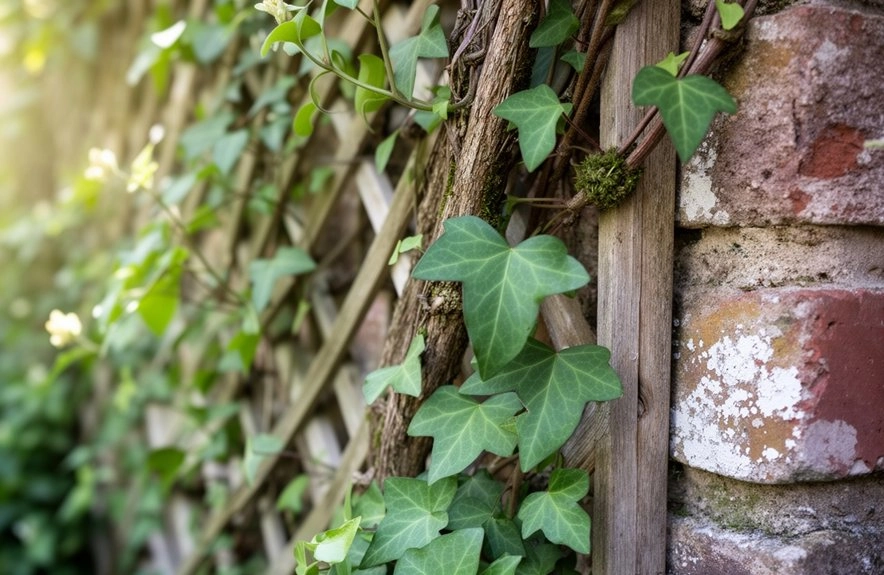
The sticky little daredevils of the vine world—Boston ivy, English ivy, and even a few Ficus species— don’t need a big structure to get moving, because they grab onto brick, wood, or masonry with adhesive pads or aerial roots.
I’ve watched them race up my aunt’s porch like they owned the place.
You’ll get the best results by giving them a sacrificial trellis or wire grid with a small air gap. That protects paint and mortar, supports substrate preservation, and makes future adhesive removals easier.
Prune often, check after storms, and scrape off old root mats before moisture sneaks in.
Choosing by Space: Wall, Fence, Container, or Open Garden
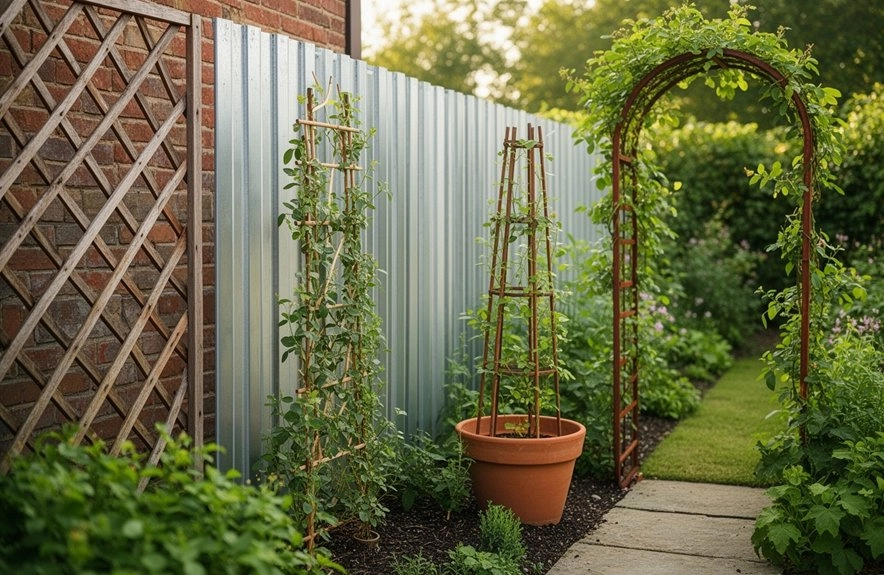
When I’m sizing up a climbing plant, I start with the space it’s got, because a wall, fence, container, or open bed each asks for a different kind of support. I’ve learned that good space planning saves headaches later, and my family laughs when I say that.
- Walls: use trellis or wire mesh with a 1–2 inch gap.
- Fences: pick mesh, welded wire, or strings for privacy screening.
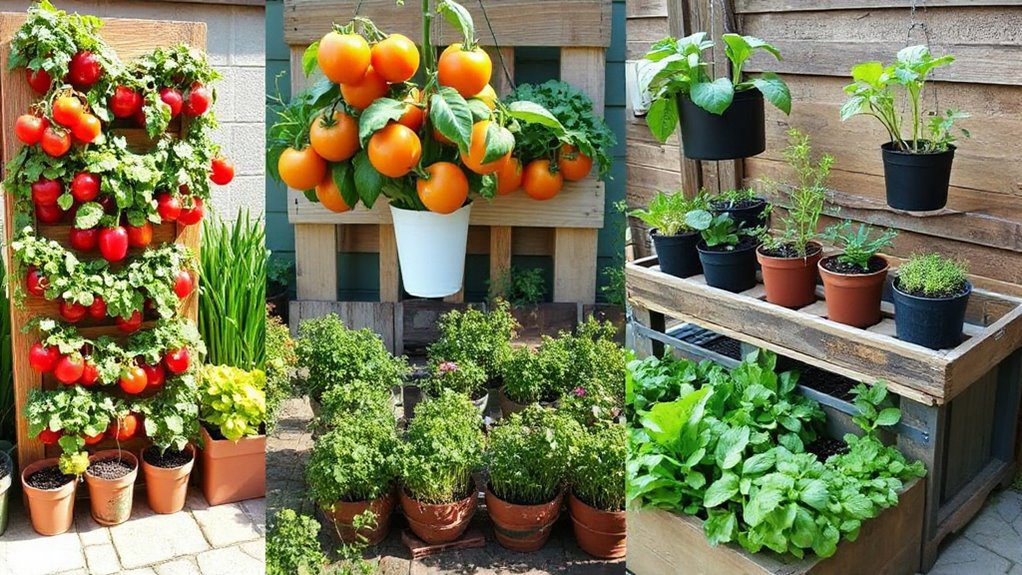
- Containers: choose obelisks or moss poles; keep the pot steady.
- Open beds: set arches or panels deep for tall growers.
I like matching support to growth, weather, and seasonal rotation.
Against a wall or fence
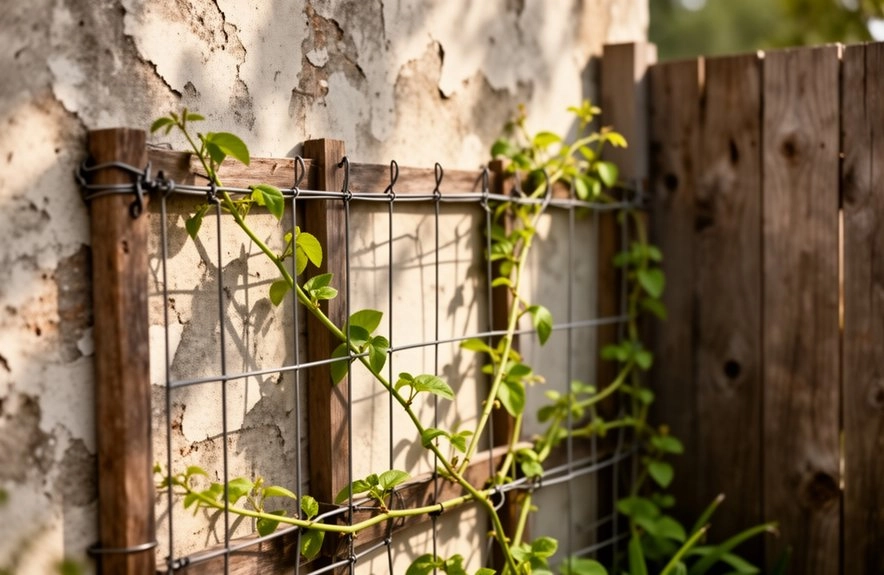
I like galvanized or powder-coated steel, or treated wood, with a 2–5 cm gap for airflow, mildew control, and paint preservation. That space also helps with a moisture barrier and cuts thermal bridging.
For wisteria, grapevine, or climbing rose, I use strong anchors into studs or masonry, every 60–100 cm.
For passionfruit or star jasmine, I stretch plastic-coated wire.
I install at planting time, then check soft ties after storms—my family calls it “vine babysitting.”
Freestanding in a border
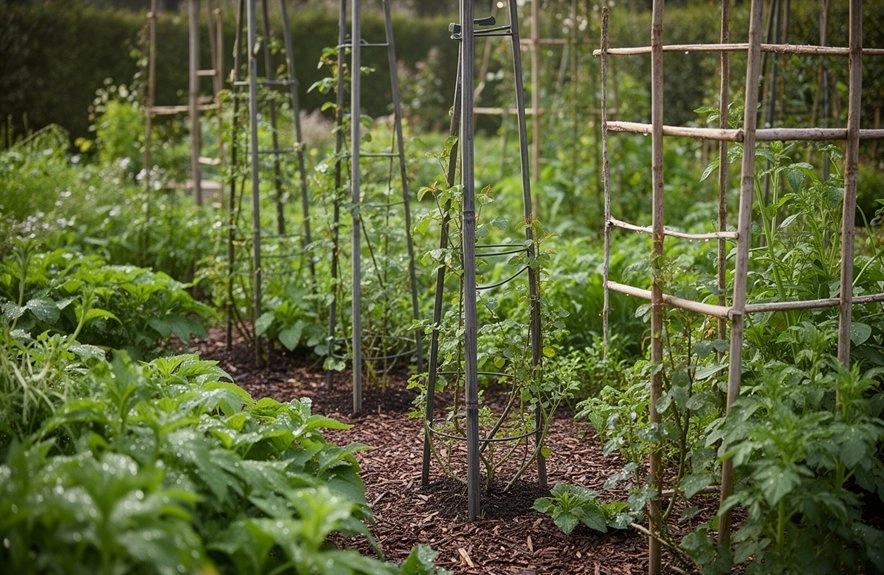
Border beacons are my favorite way to lift a climber without stealing the show. I tuck them toward the back or middle of a border, so clematis and sweet peas rise up while lower plants still get sun.
- Pick weatherproof steel, painted wood, or bamboo.
- Match height: 8–10 ft for runners; 30–80 cm for smaller perennials.
- Bury one-third of the support or use ground anchors.
- Choose mesh for peas, slats for roses, and leave airflow near walls.
I set ties at planting time, then loosen them. My kids call it a wildlife refuge with colour contrast.
In pots and containers
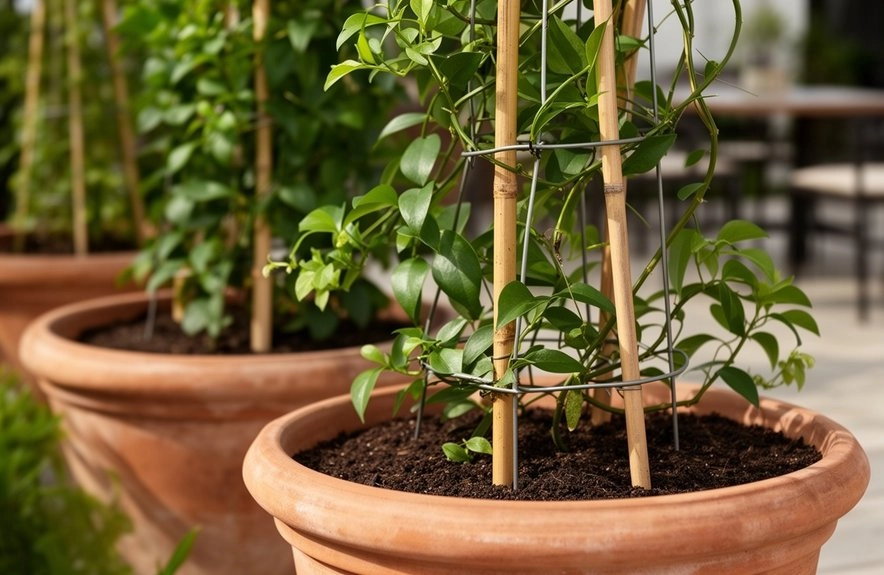
Pots and containers need their own kind of backbone, and I’ve learned that the hard way after a few toppled climbers and one heroic pothos that tried to eat the floor.
I put supports in at planting time, pushing them at least one-third into the mix for steady footing and good root aeration. For pothos, I like 30–40 cm sphagnum or coco poles; for bigger Monsteras, I reach for 50–80 cm moss or metal-core poles. I tie stems with soft clips, keep pot drainage clear, and moisten moss weekly. Repot with the support in place.
Over an arch or pergola
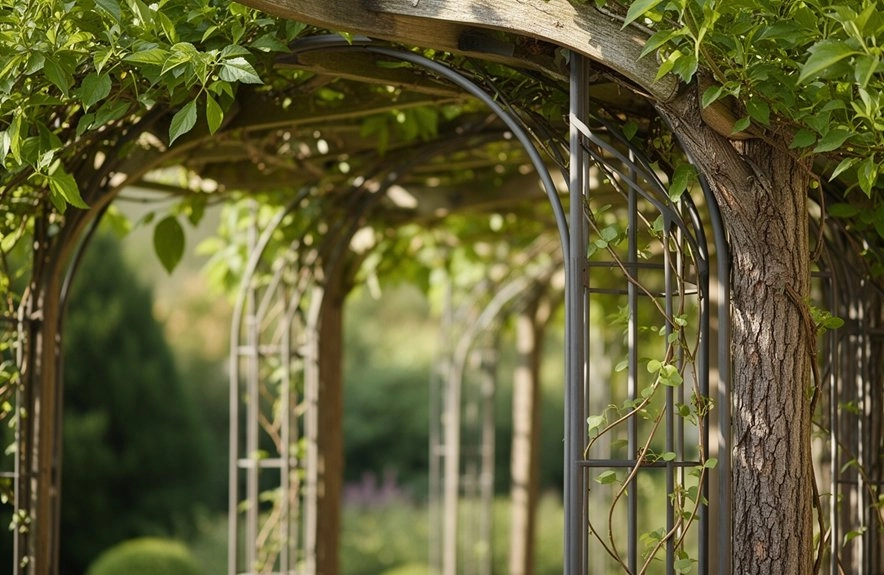
When you want a climber to make a real statement, an arch or pergola is the way to go, and I’ve seen it turn a plain path into something that feels like a green doorway. You’ll fit right in when you pick a sturdy, weatherproof frame for wisteria, roses, or jasmine, and give tall growers room to breathe.
- Set posts deep.
- Leave airflow.
- Tie stems softly.
- Check after storms.
I like soft ties and yearly re-tying; my family jokes the vines need coaching. Good supports boost seasonal aesthetics and wildlife corridors, too.
DIY Supports vs Ready-Made — Materials, Cost, and Lifespan
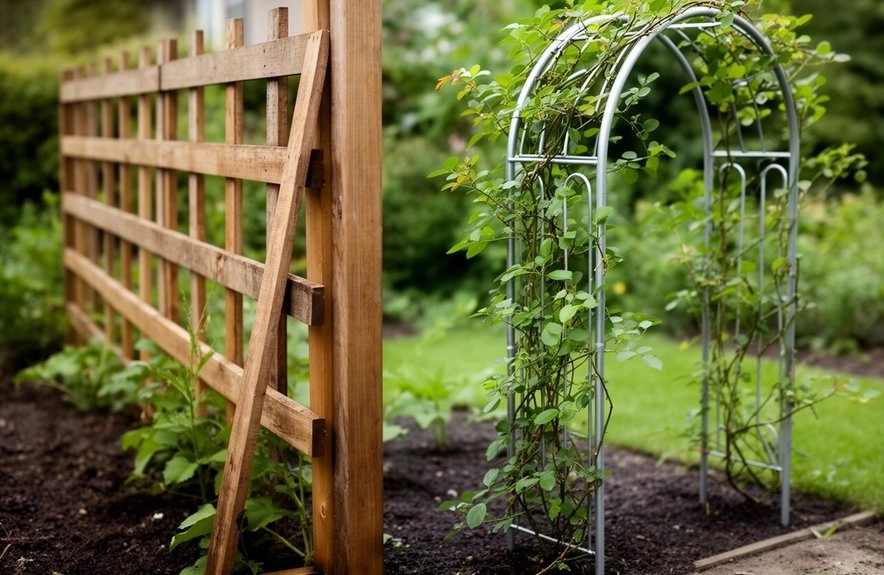
I’ve tested both DIY and ready-made plant supports, and the difference shows up fast in your wallet and in your garden.
For a budget comparison, bamboo canes, hog wire cages, or a repurposed ladder can cost $1–$40, which feels pretty friendly. You’ll also find eco materials like bamboo and coco coir that are light and biodegradable.
Ready-made powder-coated steel trellises or obelisks cost $15–$150+, but they can last 5–20 years. I’ve watched my family save money with DIY for annual beans, then switch to sturdy metal for roses. Pick what fits your crew, climate, and patience.
How to Install and Anchor a Support That Holds Under Weight
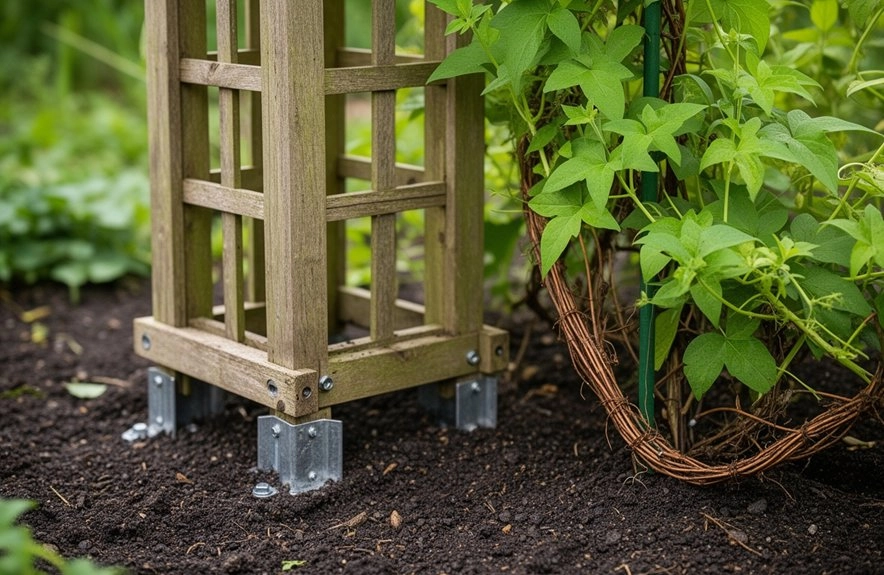
A cheap support only stays cheap if it can actually hold the plant up, so I always think about anchoring before I ever tie on the first vine.
You belong here with supports that don’t wobble. I follow simple anchoring principles and a few load testing methods.
- Bury posts one-third deep.
- Use steel for heavy climbers.
- Add guy wires 45–60 cm out.
- Fix panels with screws, vine eyes, or battens.
I’ve used Velcro ties with my kids, and we retighten monthly.
Keep ties soft, and don’t let stems choke the frame.
Positioning and clearance
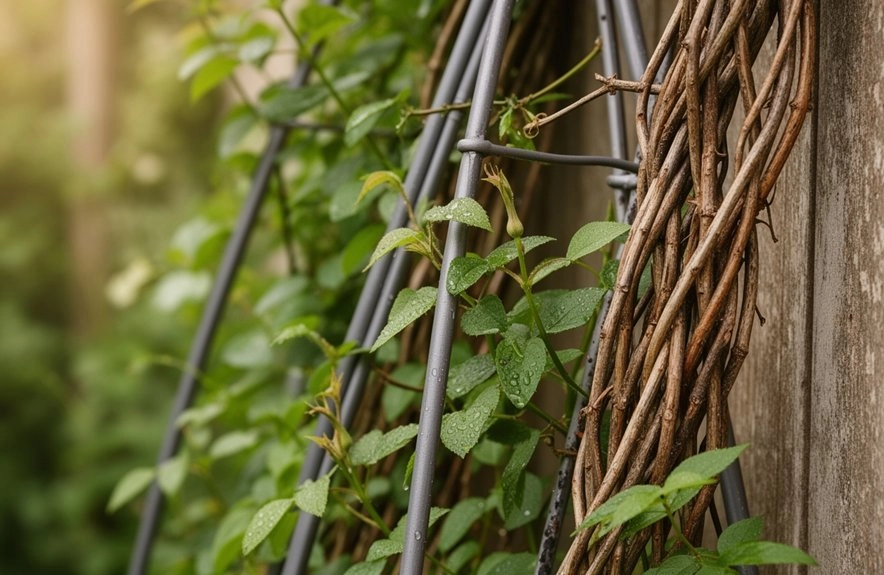
For a trellis to do its job, it needs breathing room and the right height, so I start by placing it 6 to 12 inches (15 to 30 cm) away from a wall and matching it to the plant’s growth habit. I like that airflow gap; it helps leaves dry faster and cuts mildew drama.
For runner beans or morning glories, I pick 6- to 8-foot supports. For my indoor Monstera, 50 to 80 cm feels just right. Leave 2 to 3 inches stem clearance, too. My mom learned that the hard way—snug ties can pinch like a grumpy shoe.
Fixing to wall or ground
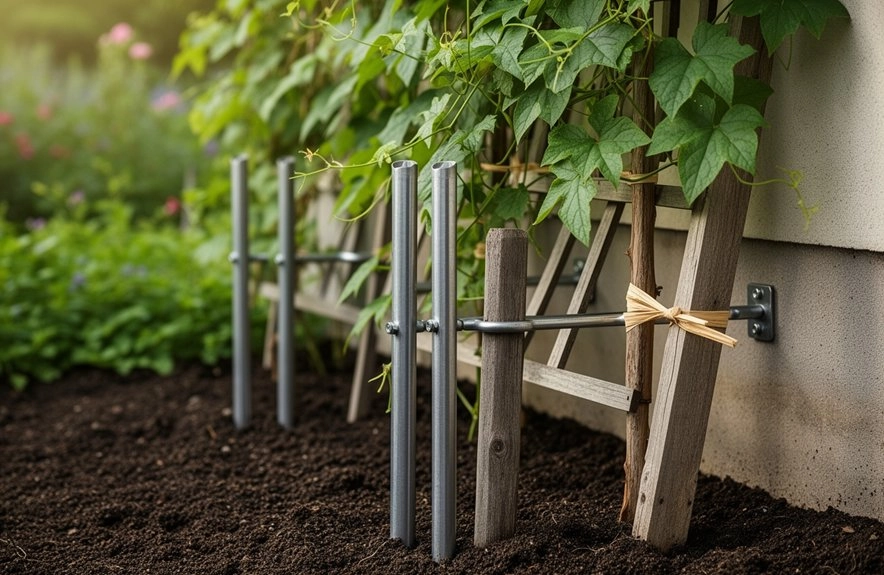
Once you’ve picked the right height and left that breathing space, the next job is getting the support fixed in place so it doesn’t wobble, lean, or peel off the wall like a bad sticker.
I’ve learned this with my own family’s jasmine and beans.
- Keep an airflow gap of 2–5 cm behind wall trellises.
- Use masonry screws, vine eyes, or timber battens into studs or solid brick.
- Choose corrosion resistance: galvanized or stainless fixings, coated wire.
- For posts, bury one-third in the ground; concrete helps for heavy vines.
Tying and training the plant
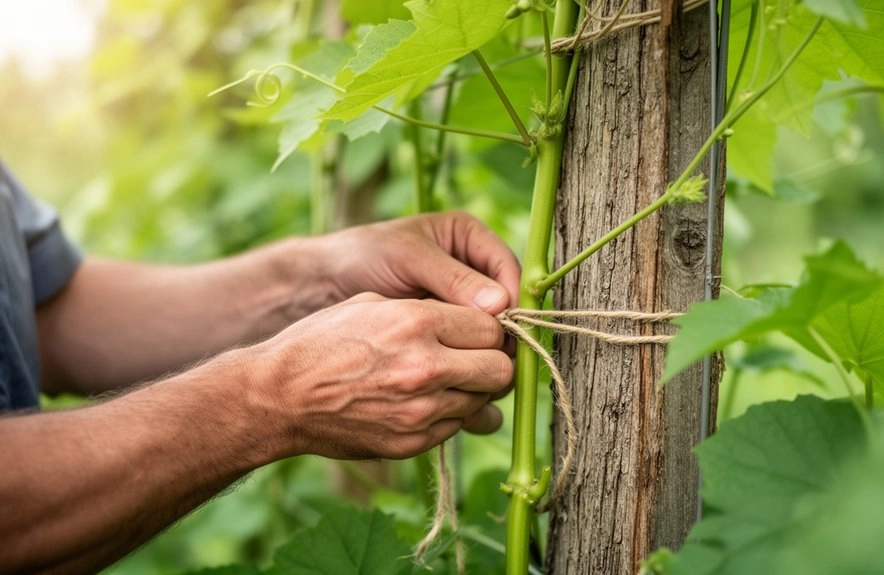
Training a climber is a little like teaching a toddler where to put their shoes: start early, stay patient, and don’t wait until everything’s on the floor.
I usually set supports at planting time, then use soft ties like cloth strips, Velcro plant ties, or pantyhose in a loose figure-eight. That keeps stems safe as they thicken.
I guide new growth every 10–15 cm through trellis gaps, watching stem spacing so nobody hogs the spotlight. I’ll re-tie twining vines as they climb, and I check monthly for snug spots.
My kids think it’s plant babysitting; honestly, they’re not wrong.
Seasonal adjustments
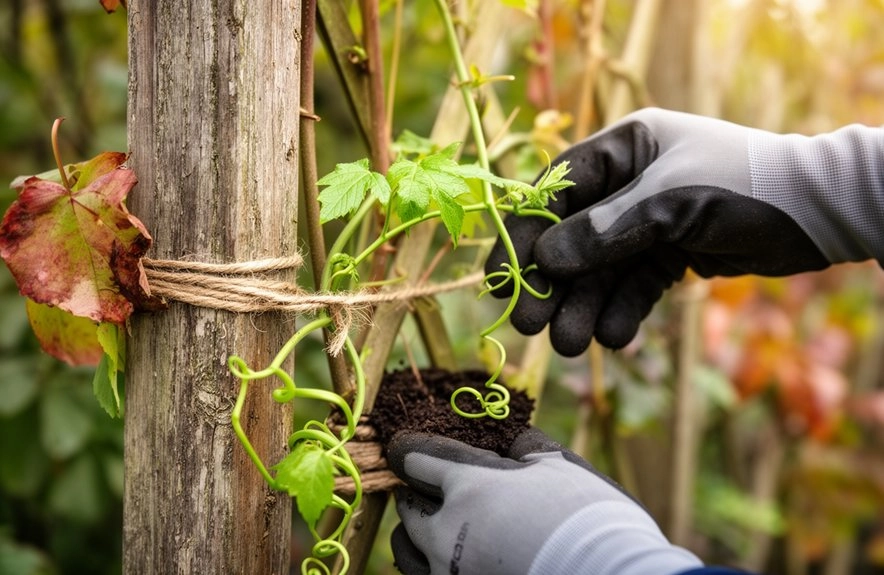
As the seasons shift, I treat climbing plant supports like gear that needs a tune-up, not a “set it and forget it” job. I’ve learned to stay in step with my family’s pruning schedule and the weather.
- Set arbors, steel trellises, and wall mesh in late winter.
- Swap in bamboo tripods or tomato cages before heat or wind arrives.
- For indoor coco coir tutors, I watch humidity control and mist lightly in winter.
- Check ties every 4–6 weeks, then store cloth netting after the season.
That keeps my garden crew growing strong, without drama or surprise tangles.
Common Mistakes That Cause Supports to Fail or Plants to Struggle
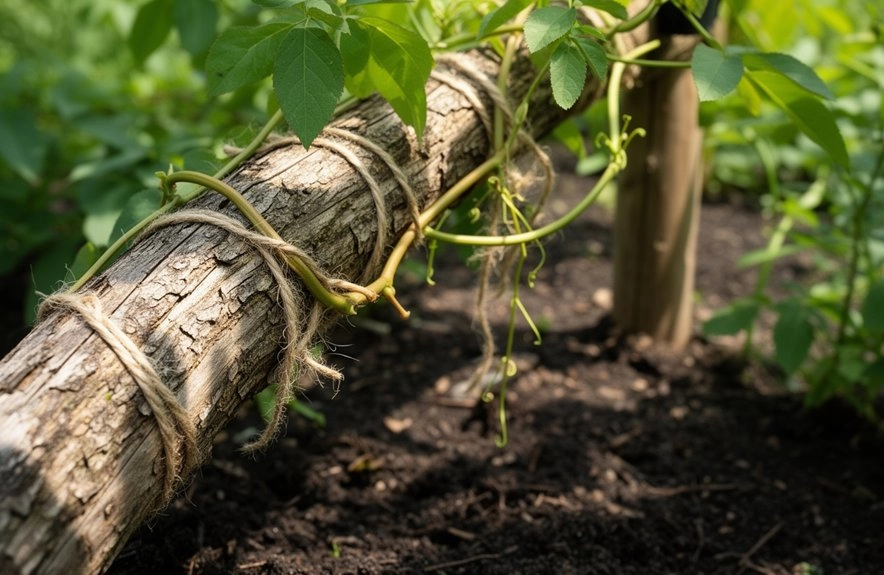
I’ve made plenty of support mistakes myself, and they usually show up fast: a stem flops because I waited too long to stake it, or a tomato starts leaning like it’s trying to escape.
You and I both know late staking makes training harder, so set stakes or trellises at planting time.
Skip tight ties; soft plant tape or stretchy garden ties work better, with a small gap so stems can thicken.
I also choose sturdy, well-anchored supports, not wobbly bamboo sticks.
Check ties after storms, and replace tired moss poles before they quit.
Frequently Asked Questions About Climbing Plant Supports
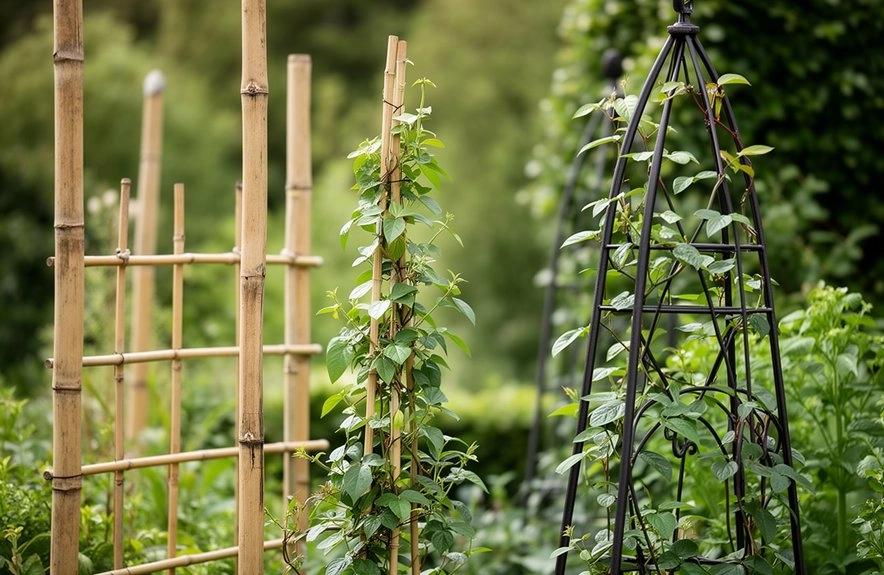
What’s the quickest way to keep a climbing plant from turning into a leafy pile on the ground? I’ve learned you start at planting time, not later. Pick support materials that fit the vine, and your crew of plants will thank you.
- Twining climbers like jasmine want trellises or poles.
- Tendril plants like grape love mesh or netting.
- Heavy vines need galvanized steel; my family’s tomatoes like soft Velcro ties and figure-eight loops.
- Check pruning timing, then retighten after storms.
Leave wall trellises a little off the wall for airflow, and replace tired ties yearly.