Whiteflies on Plants Why They Keep Coming Back
- Whiteflies on Plants Why They Keep Coming Back
- Key Takeaways
- What Whiteflies Are
- How to Identify Whiteflies
- Signs of Whitefly Damage
- Plants Whiteflies Prefer
- Understanding the Whitefly Life Cycle
- Natural Whitefly Control
- Sticky Traps
- Neem Oil
- Beneficial Insects
- Homemade Whitefly Treatments
- Preventing Future Infestations
- Mistakes That Make Whiteflies Worse
Whiteflies keep returning because hidden eggs and nymphs sit under leaves, then hatch in waves every 2½–3 weeks in warm conditions. They love tender, nitrogen-fed growth on tomatoes, peppers, and houseplants, so one surviving adult can restart the party—rude! Check leaf undersides, use yellow sticky traps, and repeat soap or neem sprays every few days for full control. Also avoid soggy soil and excess fertilizer. The sneakiest fixes are coming up next.
Key Takeaways
- Whiteflies return quickly because warm conditions can produce a new generation every 2.5–3 weeks.
- Eggs and nymphs hide beneath leaves, so missed stages can restart the infestation after adults are removed.
- Tender, nitrogen-rich new growth attracts whiteflies, especially on tomatoes, peppers, eggplant, and houseplants.
- One spray rarely works because soaps and oils must contact leaf undersides and newly hatched insects keep emerging.
- New plants, nearby host plants, and indoor conditions can reintroduce whiteflies unless plants are quarantined and monitored.
What Whiteflies Are
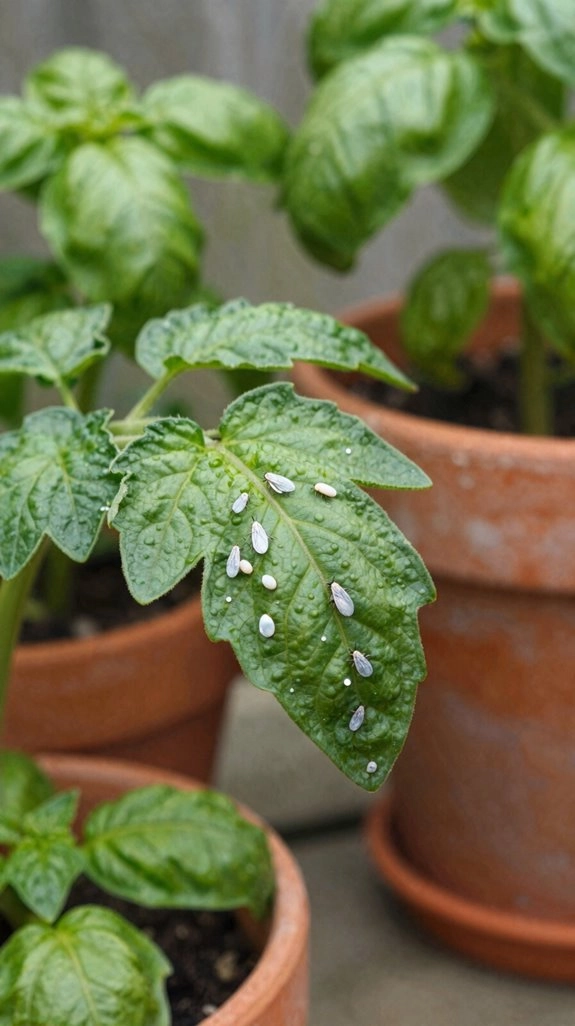
Whiteflies may look like tiny white moths or bits of dust that suddenly lift off your plant, but they’re actually soft-bodied, sap-sucking insects related to aphids and mealybugs—not true flies at all!
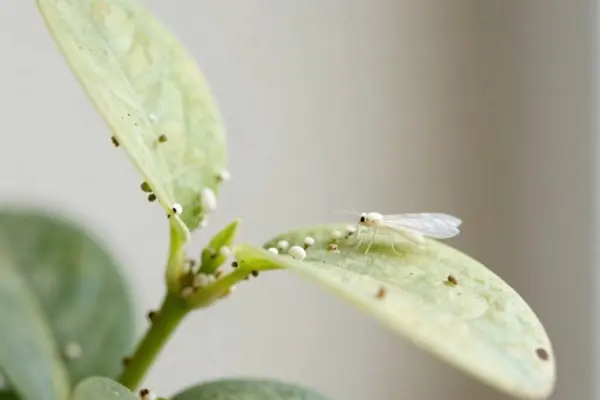
You’re not alone if Whitefly misidentification has fooled you—these tiny pests are about 1/12 inch long and oddly triangular.
They thrive indoor versus outdoor, clustering beneath leaves where eggs hatch into still, oval nymphs.
Later, winged adults appear and scatter when you brush the plant.
Sneaky, right?
Some, including sweetpotato whiteflies, feed on ornamentals and warm-weather vegetables alike.
That broad appetite helps explain why your whole plant community can suddenly seem invited to the buffet!
How to Identify Whiteflies
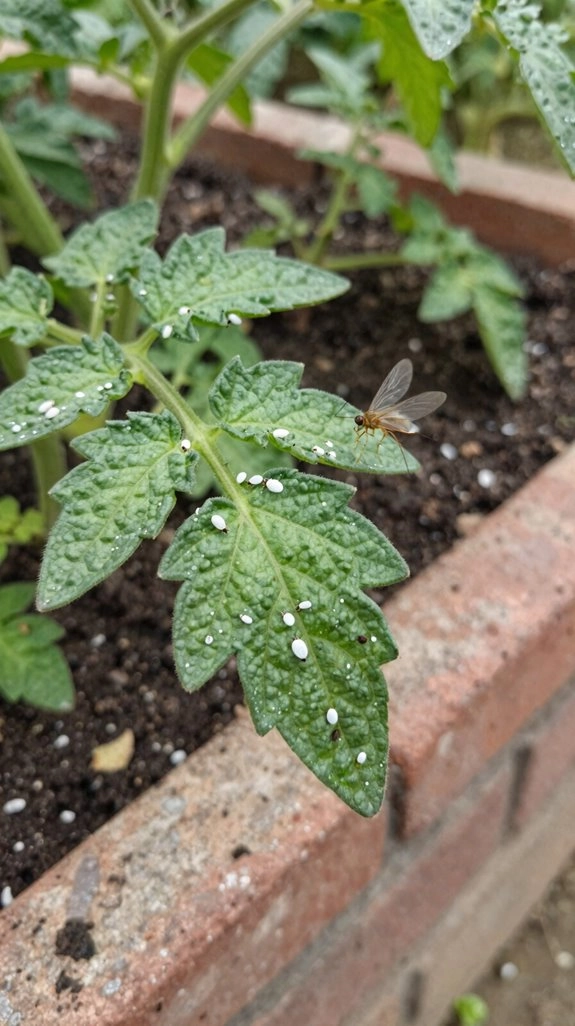
Start by turning over a few leaves, because that’s where the clues hide! During a Leaf underside inspection, look for tiny, white, triangular insects, about 1/12 inch long. Nudge the plant gently; adults often flutter up like a miniature snowstorm!
Stay curious, gardener—you’re part of a sharp-eyed crew. Eggs appear as pale specks, while nymphs sit still: oval, legless little feeders stuck underneath leaves. They aren’t mealybugs; adult whiteflies have wings.
For extra proof, place a yellow sticky trap nearby. Whiteflies love it! Add natural enemy scouting, too, and check for helpful insects before deciding what you’ve found.
Signs of Whitefly Damage
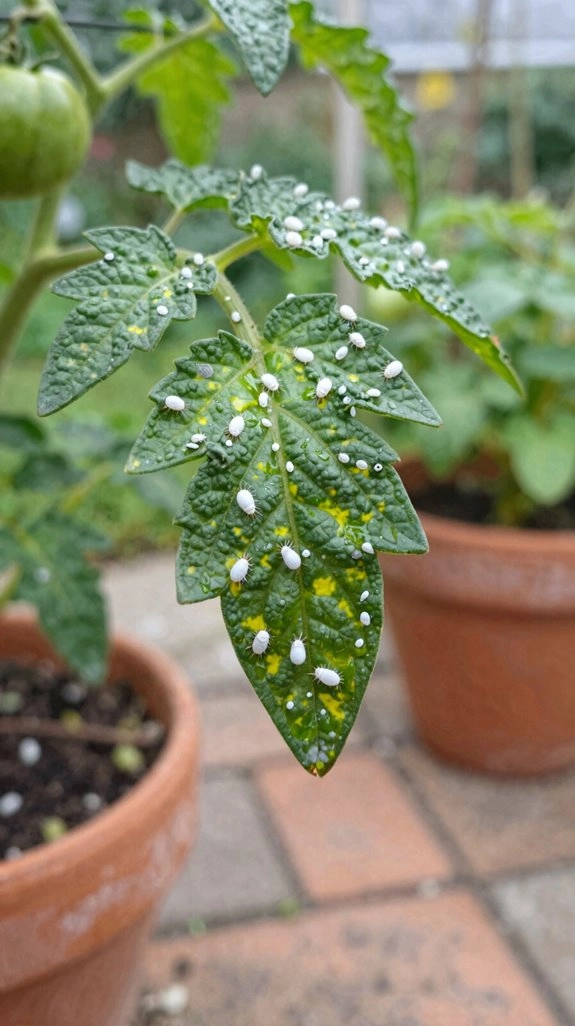
A plant that looks faded, limp, or oddly silvered may be waving a tiny red flag—whitefly nymphs can drain sap from leaf tissue, leaving leaves yellow, shriveled, and sometimes ready to drop.
Check your plant closely—you’re not alone in this detective work!
- Yellowing foliage that spreads between veins
- Sticky leaves or fruit from honeydew
- Black, honeydew sooty mold coating surfaces
- Oval, still nymphs tucked beneath leaves
- Adults that burst upward when you touch foliage
You may also notice slow growth, pale spots, or white waxy residue.
In a heavy outbreak, stems weaken and leaves fall fast—tiny pests, huge drama!
Catching these clues early helps your plant recover before serious damage happens.
Plants Whiteflies Prefer
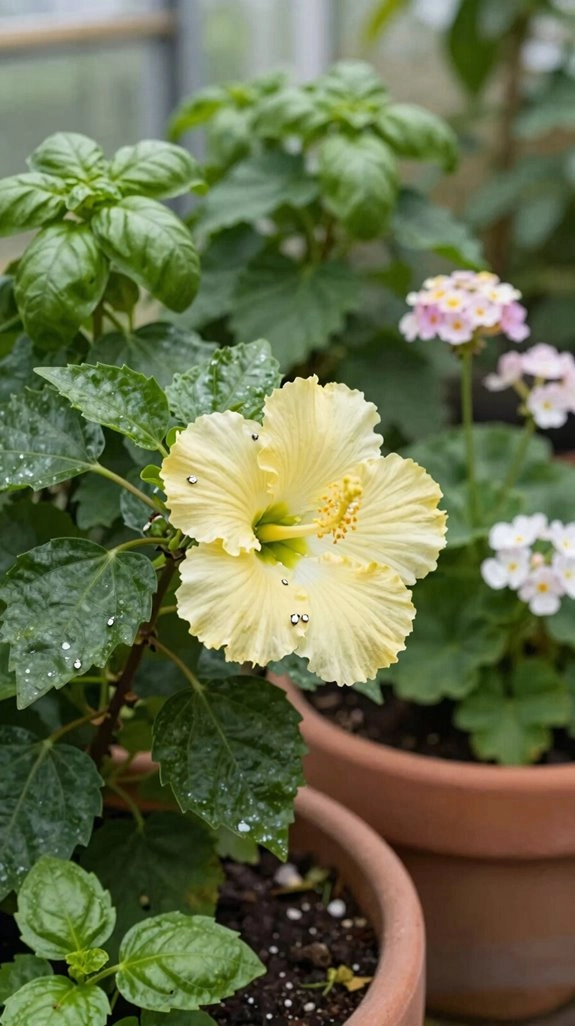
When warm weather kicks in, whiteflies often flock to fast-growing plants with tender new leaves, especially tomatoes, peppers, eggplant, and okra—basically, the garden’s all-you-can-sip buffet!
You’ll often spot them during greenhouse summer peaks, too, when heat and humidity team up.
Their Host plant preferences also include many ornamentals and houseplants, especially ones with soft, smooth leaves.
Check leaf undersides, where they gather like tiny uninvited neighbors!
Here’s the sneaky part: nitrogen rich growth attracts them.
If you heavily fertilize with synthetic products, your plants may produce extra-succulent shoots that whiteflies love.
Broad-host species can move between nearby plants, so your whole plant crew matters!
Understanding the Whitefly Life Cycle
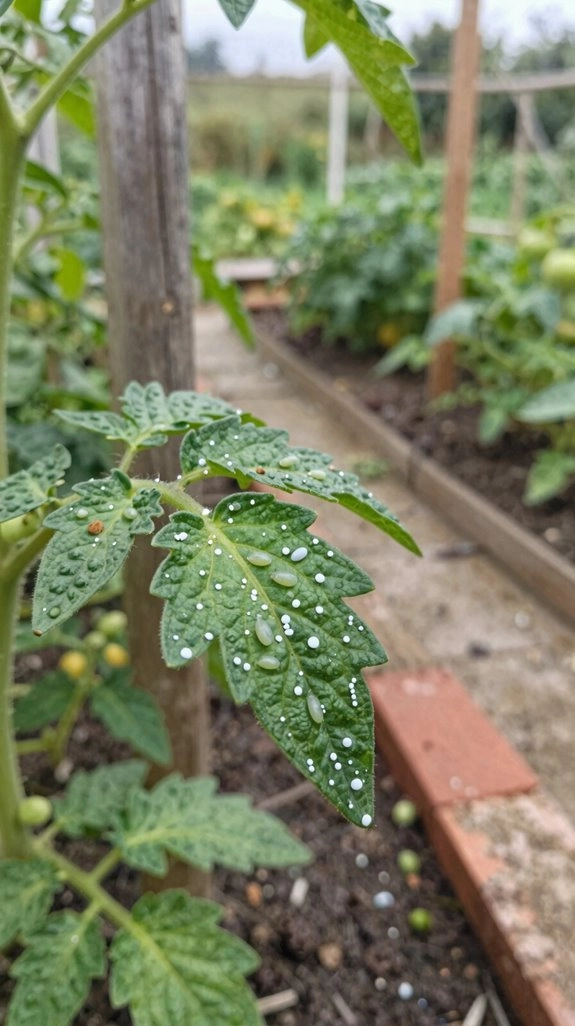
Whiteflies may look like tiny flakes of dust, but their life cycle moves fast—especially in warm weather! You’re not alone if they seem to reappear overnight.
- Females tuck eggs beneath leaves.
- Eggs hatch into sap-sucking nymphs.
- Nymphs stay put through several growth stages.
- Adults emerge, fly by day, and scatter when startled.
- One female may lay hundreds of eggs—yikes!
The nymphs cause most damage, so flying adults can vanish while trouble remains.
In warmth, a new generation may arrive in 2.5–3 weeks; cooler weather slows it.
That speed drives Seasonal resurgence and an indoor infestation, because a few surviving adults restart the whole club!
Natural Whitefly Control
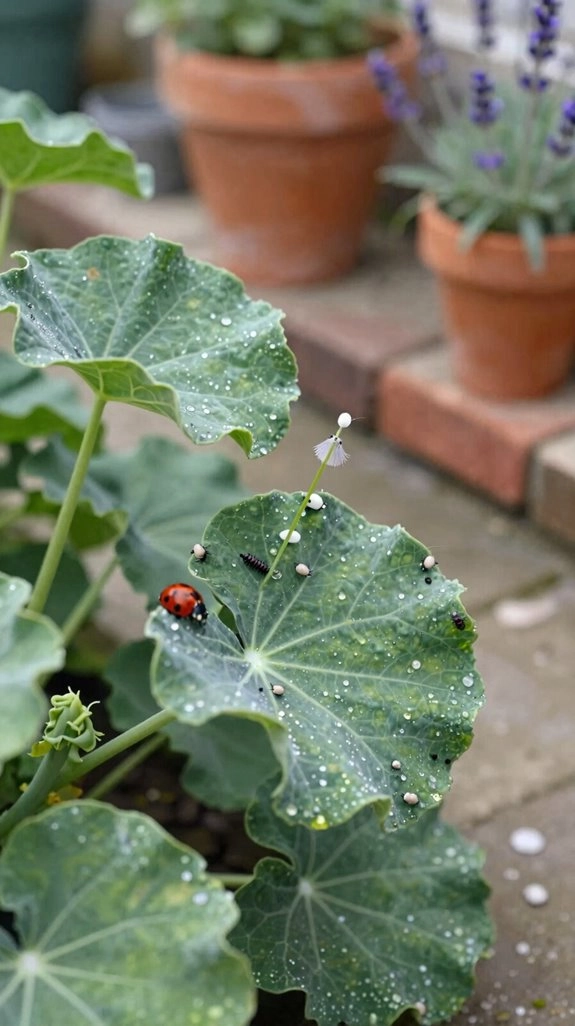
You can catch flying adults with yellow sticky traps and use neem oil carefully on leaf undersides, but you’ll need to repeat treatments as new whiteflies appear.
Check plants often, avoid spraying neem in hot direct sun, and prune badly covered leaves when needed.
Best of all, you can invite beneficial insects like lacewings and lady beetles to help turn your plant into a tiny whitefly-fighting team!
Sticky Traps
Yellow sticky traps act like bright little landing pads for adult whiteflies, catching them as they flutter away from the undersides of leaves—sneaky, but effective!
- Hang one per medium vegetable plant.
- Use one for every two large plants.
- Keep sticky sides facing foliage.
- Avoid direct sunlight.
- Check doors and new plants first.
Your timing assessment starts with what the traps catch, helping your plant-care crew spot adults before they lay more eggs.
Smart trap placement covers the canopy where whiteflies circulate—tiny pests, big commutes!
Still seeing adults after treatment?
Add traps and target leaf undersides with your chosen spray; traps can’t catch hidden eggs or nymphs.
Neem Oil
Neem oil can give your whitefly plan a natural boost, especially when you coat the leaf undersides where eggs and tiny nymphs like to hide—talk about a pest-sized bunker!
Start with a leaf inspection, then mix neem exactly as the label says. Test one leaf first, and spray when your plant isn’t thirsty or sitting in hot sun; oil can trap heat and scorch leaves.
You’re not alone in this repeat battle! Neem hits pests you spray directly, so reapply every few days until fresh adults stop appearing. Rinse adults away with water, use sticky traps, and save Soapy water for separate treatment.
Beneficial Insects
Beneficial insects can turn your plant into a tiny whitefly patrol squad! You’re not alone—invite nature’s helpers in!
- Lacewing larvae gobble whitefly nymphs like tiny hungry alligators.
- Bigeyed bugs, minute pirate bugs, and lady beetles join the cleanup crew.
- Look for Encarsiawasp exit holes: round or oval signs adults emerged.
- Use yellow traps for flying adults, then prune heavily infested leaves.
- Practice Predator conservation and parasitoid protection with selective treatments.
Avoid broad insecticides and dusty leaves, since they can wipe out your allies.
Clitostethuslady beetles even hunt ash whiteflies!
When you protect pollinators and predators, fewer whiteflies rebound—now that’s team gardening!
Homemade Whitefly Treatments
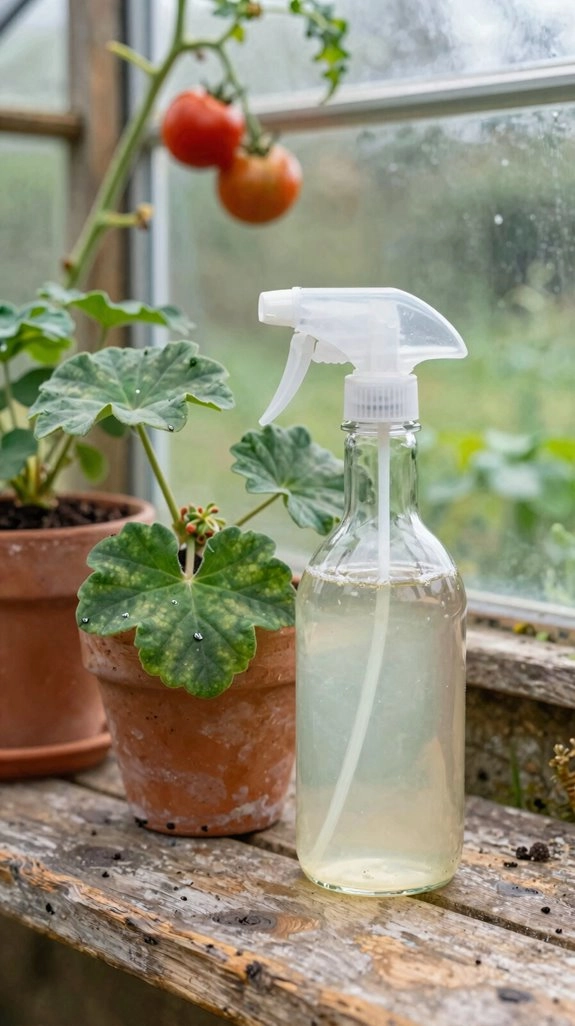
Homemade whitefly treatments can make a real dent in an outbreak without sending you on a pricey garden-store hunt—yay! Mix 8 drops of dish soap into 1 liter of warm water, test one leaf, then spray when it’s below 90°F.
For leaf coverage, aim beneath leaves, where sneaky eggs and nymphs gather. These are contact only treatments, so repeat every few days.
You can also dust dry plants with diatomaceous earth, or mix 1 tablespoon into 32 ounces of water.
Coat both sides, then reapply after moisture. Hose off adults first, use yellow sticky traps, and spot-treat carefully—your helpful garden buddies will thank you!
Preventing Future Infestations
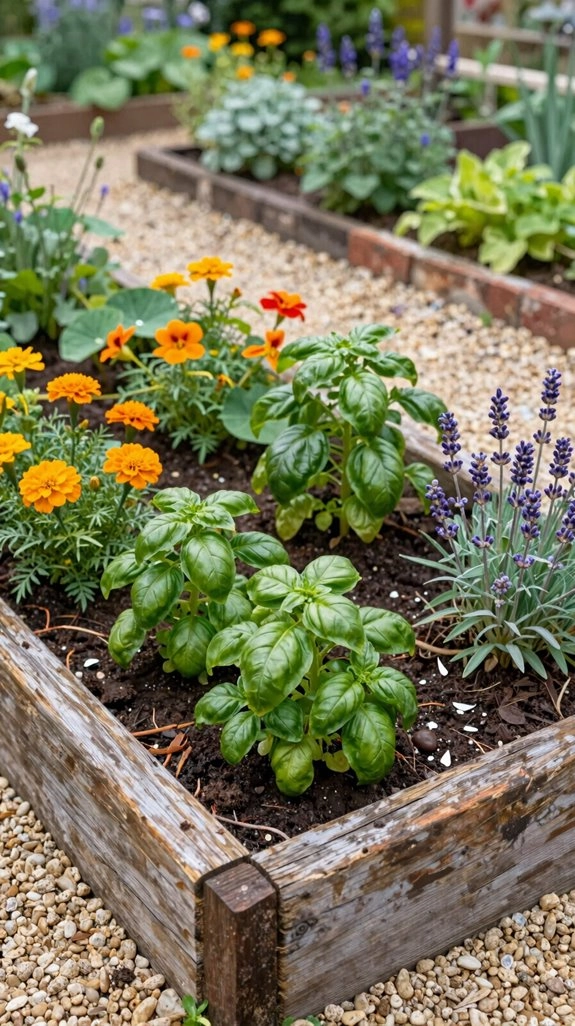
The best way to stop whiteflies from making a comeback is to catch the tiny hitchhikers before they settle in—sneaky little freeloaders!
- Inspect leaf undersides, especially fresh growth, on every new plant.
- Follow a Quarantine protocol: isolate additions for two weeks.
- Hang yellow sticky traps, one per medium vegetable plant.
- Keep leaves clean, avoid excess nitrogen, and protect helpful insects.
- Complete seasonal cleanup by removing greenhouse host plants for two weeks.
You’re building a healthier plant community, not fighting alone!
In Zone 7 and colder, winter helps outdoors, but indoor plants need your watchful eye.
Prune infested tips, then monitor traps; adults can lay hundreds of eggs.
Mistakes That Make Whiteflies Worse
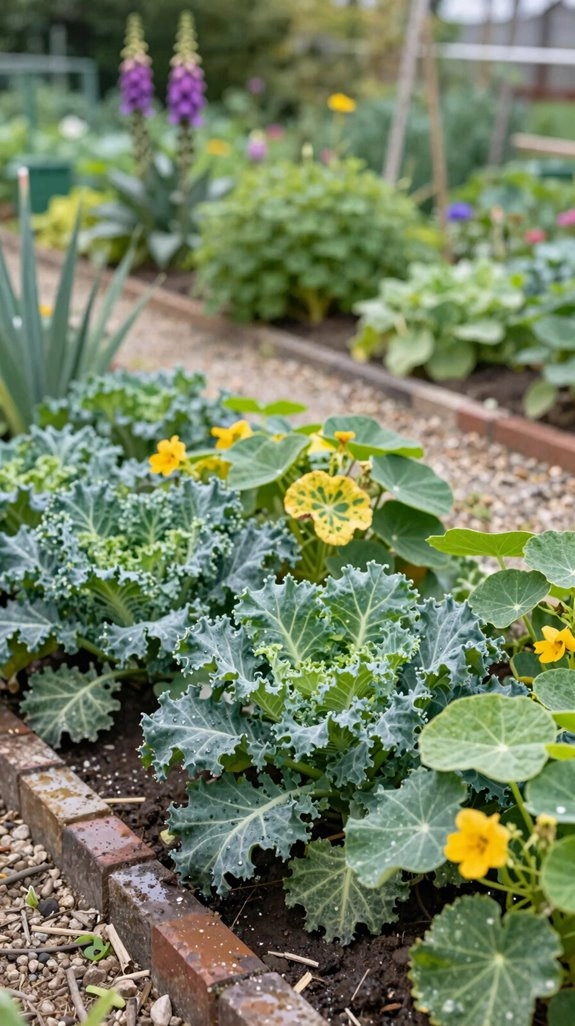
Even with good prevention habits, a few easy-to-miss mistakes can turn one or two whiteflies into a fluttering plant takeover—ugh! Low scouting frequency lets eggs and tiny nymphs hide beneath leaves until the crowd explodes.
When you spray, aim for complete underside coverage; soaps and oils only work when they touch pests.
Plan spray repetition, too, because new hatchlings arrive in waves.
Also, don’t pamper plants into trouble! Nutrient excess, especially high nitrogen, creates tender growth whiteflies love, while soggy soil helps them thrive.
Here’s the sneaky twist: ants guard honeydew-making whiteflies from helpful predators. Control ants, and your plant’s allies can finally join the fight!