17 Kitchen Garden Ideas for Fresh Herbs and Vegetables
- 17 Kitchen Garden Ideas for Fresh Herbs and Vegetables
- Key Takeaways
- Raised Vegetable Beds
- Herb Spiral Garden
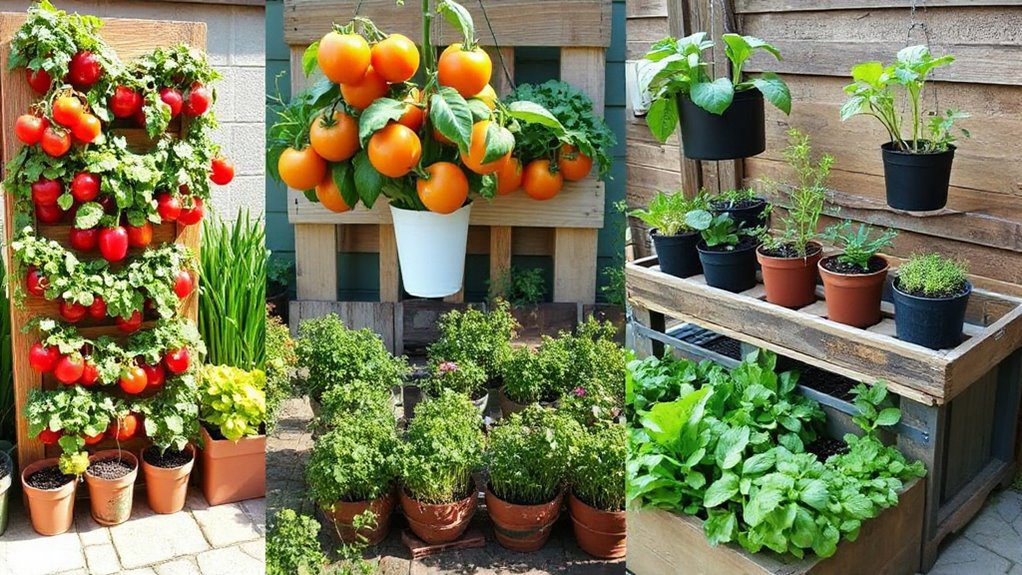
- Container Kitchen Garden
- Vertical Herb Wall
- Companion Planting Layout
- Edible Flower Borders
- Gravel Garden Paths
- Tiered Planters
- Salad Garden Section
- Compact Greenhouse Corner
- Fruit and Herb Combination
- Kitchen Door Garden
- Rain Barrel Irrigation
- Decorative Plant Labels
- Seasonal Crop Rotation
- Pollinator-Friendly Herbs
- Small Space Garden Design
Try 17 kitchen garden ideas, from four-foot raised beds and sunny herb spirals to patio pots, vertical walls, and a handy 20-square-foot garden beside your door! Use drainage holes, quality soil, compost, and deep weekly watering for healthy growth. Pair basil, chives, peppers, and eggplants, rotate heavy feeders, and let oregano bloom for pollinators. Add weatherproof labels so harvesting’s effortless. Best of all, a rain barrel can energize drip tubing, saving water and steps—keep exploring for the complete plan!
Key Takeaways
- Build a four-foot-wide raised bed with tested, compost-rich, well-drained soil in a sunny location.
- Create a compact herb spiral, placing rosemary and thyme higher and parsley and lemon balm lower.
- Grow kitchen herbs in containers, vertical wall planters, or stacked pots near sunny doors and windows.
- Combine basil, chives, parsley, peppers, and eggplants, while rotating heavy feeders between growing spaces.
- Simplify maintenance with labels, moisture checks, deep weekly watering, drip irrigation, and pollinator-friendly flowering herbs.
Raised Vegetable Beds
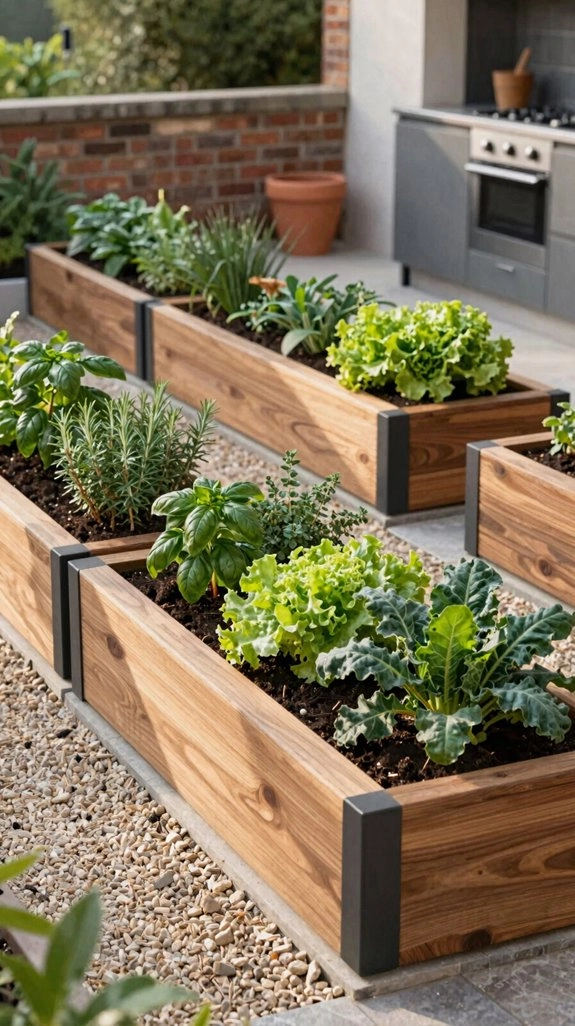
If you want a tidy, productive kitchen garden, raised vegetable beds are a fantastic place to start! A four-foot width keeps every herb and vegetable within easy reach, while well-drained soil helps roots thrive.
Choose a mostly sunny spot, then try these Soil testing tips: check pH and nutrients before planting. Add compost topdressing each season instead of heavy fertilizer—your herbs will thank you!
For tomatoes, peas, or cucumbers, look into trellis support options that save space.
Finish with simple irrigation scheduling, watering deeply on a regular routine. Mix basil and chives among vegetables, and use containers for spreading mint or seasonal parsley. Happy growing!
Herb Spiral Garden
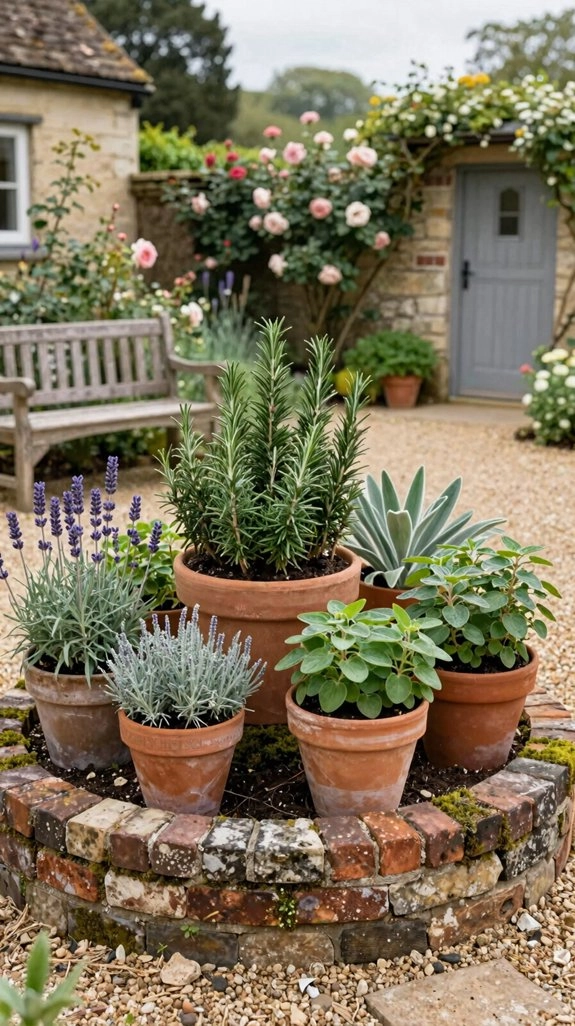
An herb spiral garden turns a small sunny corner into a tiered, space-saving planting bed—what a clever little garden! Build a gentle spiral with well-drained layers, so water travels downward instead of pooling and causing root rot.
Plant rosemary and thyme near the sunny top, then tuck parsley and lemon balm into the damper lower sections.
Add basil, chives, and sage for an easy grazing patch your household can enjoy together.
Give hardy herbs deep watering about once weekly until established, then water as needed.
Finish with comfrey mulch and compost topdressing—your little spiral will feel wonderfully generous!
Container Kitchen Garden
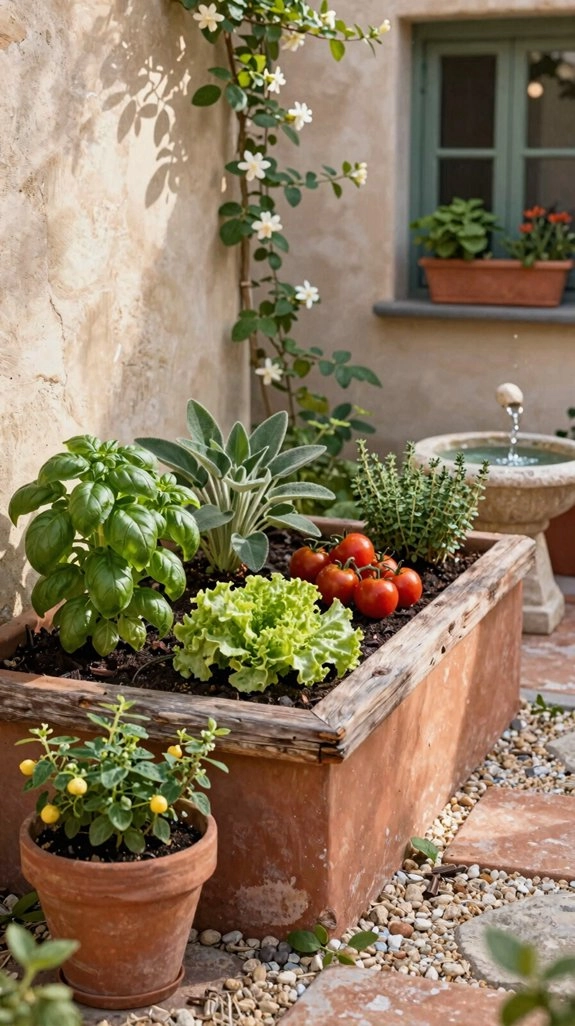
Turn a sunny patio, windowsill, or doorstep into a handy container kitchen garden, and fresh herbs will always be within reach—how convenient!
Choose pots with drainage holes and saucers, then give them up to eight hours of sun.
Start with a quality container soil mix, and try these friendly, space-saving picks:
- Grow basil, parsley, and dwarf rosemary for easy harvests.
- Keep mint and oregano in separate pots so they don’t take over!
- Cluster chives and nodding onion nearby to welcome pollinators.
Use simple Mulching strategies, such as a thin layer of straw, to hold moisture.
Your best trick? Group kitchen-grab pots near an east- or south-facing window!
Vertical Herb Wall
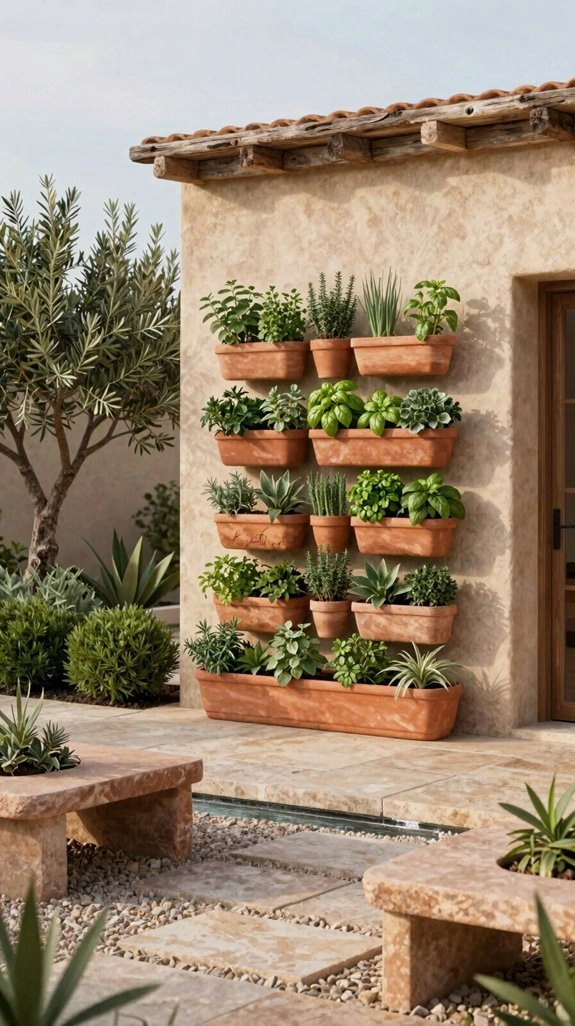
A vertical herb wall lets you grow a surprising number of fresh herbs without giving up much floor space—what a win for small kitchens! Choose a pocketed panel, trellis, or stacked planters, then fill them with basil, thyme, parsley, chives, or dwarf rosemary. You’ll need bright light, sturdy containers, and well-drained soil.
Check Light placement near an east- or south-facing window, skylight, or grow light. Add pocket drainage holes and trays, watering regularly without soaking roots. Keep harvest access easy, and follow a simple pruning schedule by snipping small amounts often.
Your herbs will stay bushy, productive, and ready for dinner—how welcoming!
Companion Planting Layout
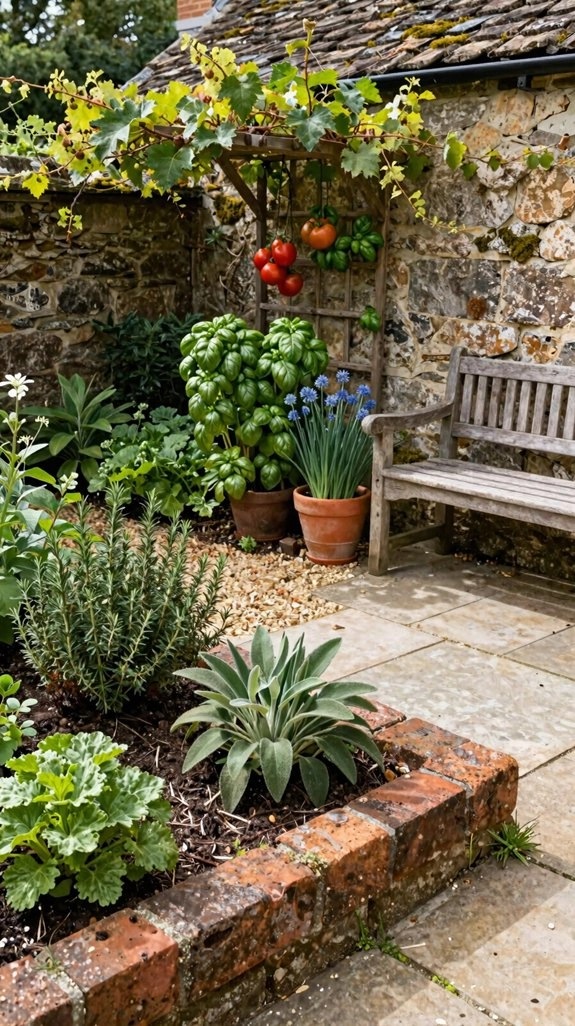
Place compatible plants side by side, and your small kitchen garden can work smarter, not harder! Start with basil and chives near vegetables to help discourage pests, while parsley keeps harvests lively.
- Pair eggplants and peppers, which share similar needs, without overcrowding.
- Tuck pole beans nearby; their climbing growth saves floor space and keeps producing.
- Leave room for Companion Spacing, easy watering, and cheerful grazing harvests.
Mixing herbs and vegetables supports Soil Health when you add Compost Teas, too. Plan Bed Succession so one crop follows another, keeping beds useful. You don’t need rigid plant roommates—just friendly neighbors sharing sunlight, care, and space!
Edible Flower Borders
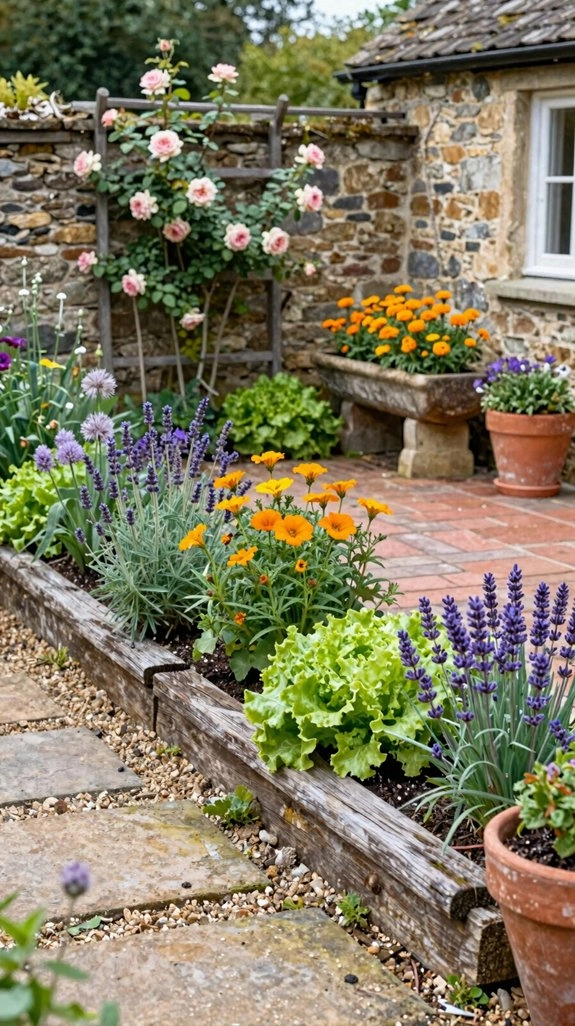
Along the sunny edges of your kitchen garden, edible flowers can create a cheerful border that’s beautiful, useful, and buzzing with life!
Choose sun-loving blooms that handle up to eight hours of light, and plant them in well-drained soil.
Alternate low flowers with thyme, sage, or rosemary for a tidy, fragrant welcome.
Place taller varieties on the outside so herbs and vegetables keep their brightest light.
Snip blossoms often for a Salad garnish, drinks, or muddling—what a tasty bonus!
For easy border maintenance, remove spent blooms and follow simple pruning tips.
Your blooms offer excellent pollinator support, turning your garden into a friendly neighborhood stop!
Gravel Garden Paths
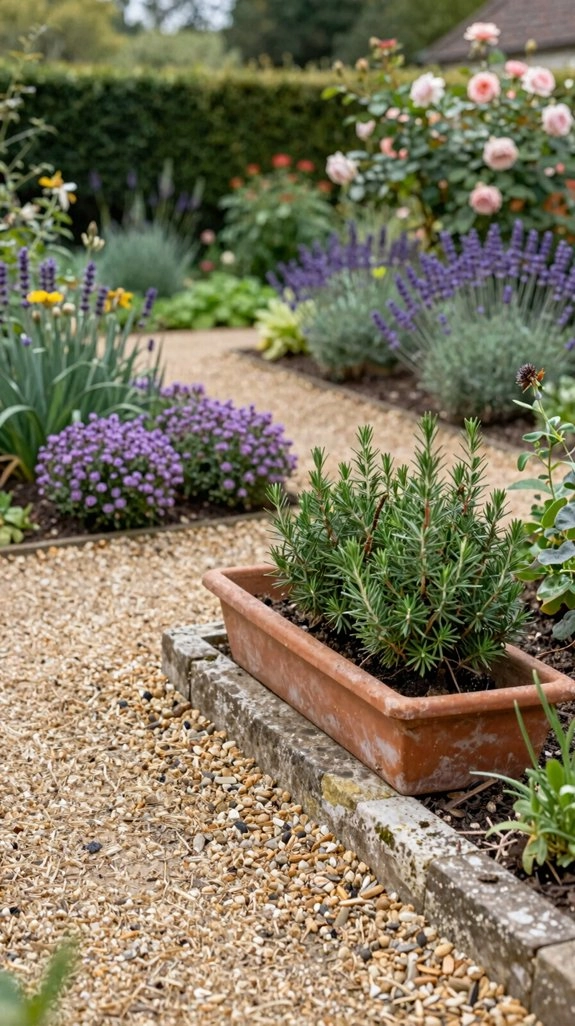
Gravel garden paths make kitchen gardens easier to enjoy, especially when rain turns the soil into a muddy mess! With thoughtful drainage planning, you’ll keep splashes away from herbs and vegetables near the kitchen.
Start simply:
- Add compacted gravel or road base for a firm, weed-resistant foundation.
- Lay fabric or thick landscaping paper first for smart weed barrier use.
- Choose angular gravel that locks together, then edge it with stones or pavers.
You’ll walk comfortably, harvest without rutting, and keep beds tidy. Pea gravel looks charming but scatters easily—because apparently, it enjoys garden adventures! A solid base saves maintenance all season.
Tiered Planters
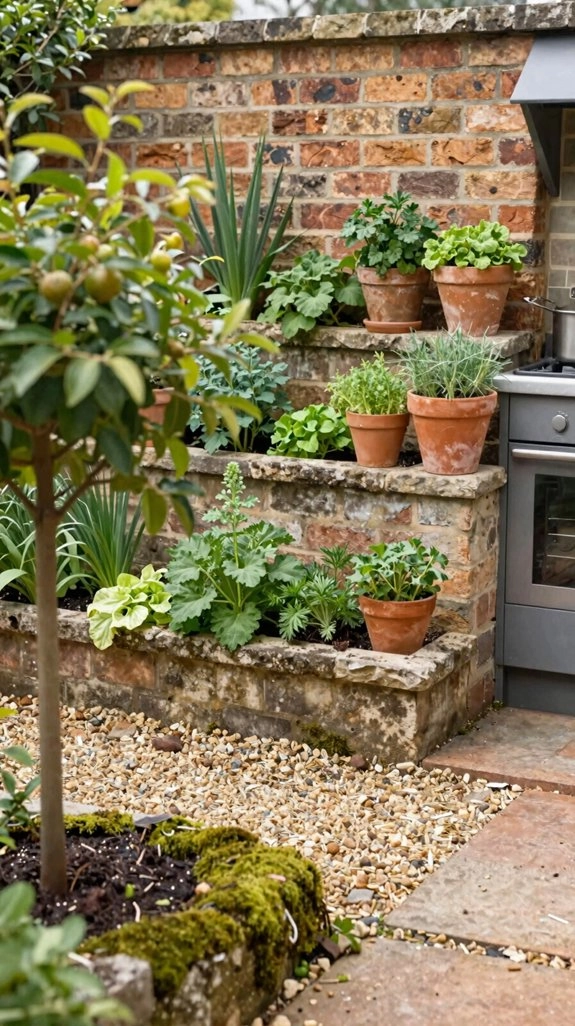
Tiered planters turn a small patio or balcony into a mini herb ladder, stacking plants at different heights so each one gets a better share of sunlight! You’ll create a friendly little growing corner without needing much floor space.
Choose a sturdy ladder planter, pots with drainage holes, saucers, compact herbs, and a quality soil mix.
For soil mix selection, pick a light blend that drains well.
Put rosemary and thyme on top, aiming for 6–8 hours of sun, then place shade-tolerant herbs below.
Follow these Watering schedule tips: water deeply weekly, but give new transplants about twice as much.
Rotate basil and parsley upward seasonally, while perennials stay put—your herbs will thank you!
Salad Garden Section
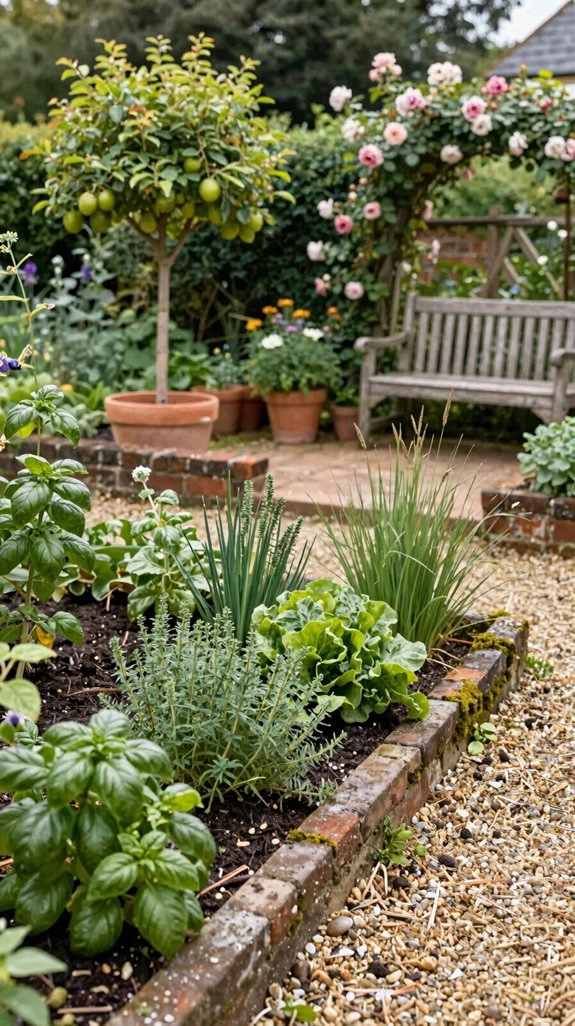
Place your salad garden near the kitchen, and you’ll be able to snip fresh parsley, chives, and crisp lettuce whenever a meal needs a little lift!
Use containers or a small raised bed in full sun; dappled shade works, but full shade won’t.
Choose well-drained soil, water new transplants generously, then water deeply about weekly once established.
Harvest gently, so plants keep producing!
- Pick parsley, chives, and lettuce in small amounts.
- Follow Seasonal harvest timing for steady variety.
- Try microgreens succession planning: sow tiny batches weekly.
You’ll create a welcoming little salad station where everyone can graze, share, and uncover the freshest bite—no chef’s hat required!
Compact Greenhouse Corner
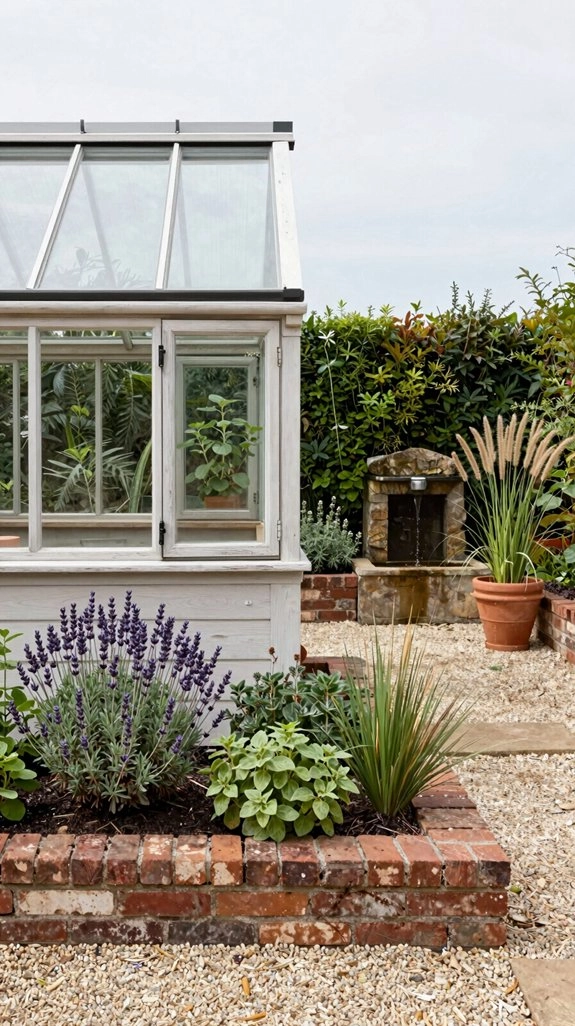
Turn a sunny patio wall or spot beside the house into a compact greenhouse corner with a small cold frame or mini greenhouse. It’s like giving your herbs a cozy little winter jacket! Add simple shelves, keeping basil, rosemary, and thyme on the brightest upper tier. Aim for up to eight hours of sun, then open vents on warm days to prevent dampness and leggy growth.
Use pots with drainage and saucers for seed starting and overwintering tender herbs. Choose dwarf varieties, such as dwarf rosemary, so everyone fits comfortably! During cold snaps, add clear covers. A little compost tea can support healthy growth, too—what a welcoming harvest nook!
Fruit and Herb Combination
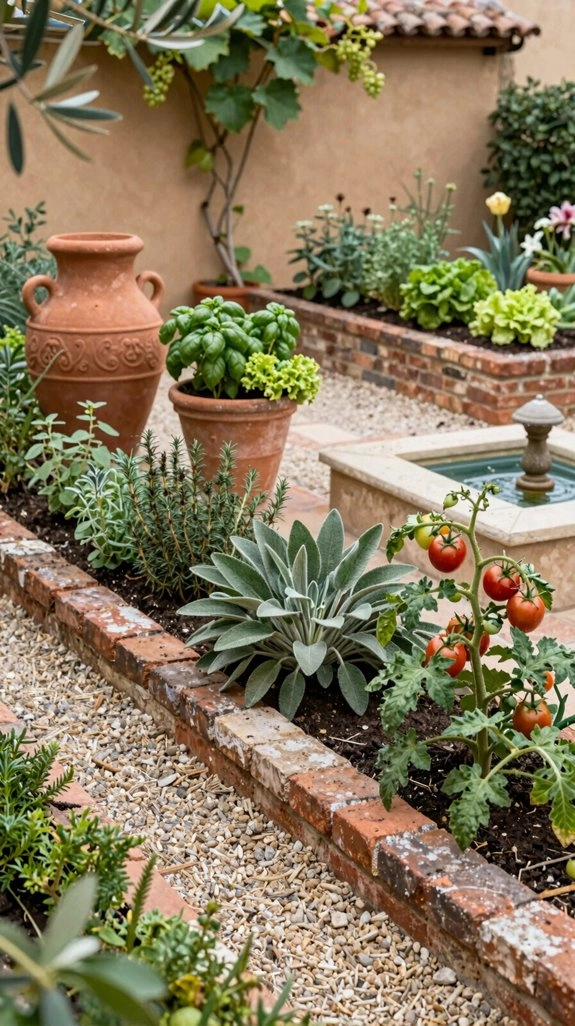
Pair a few compact fruit plants with herbs, and your sunny garden corner can become a cheerful snack station! Choose pruning-friendly fruit, such as dwarf yuzu or blueberries, then add rosemary and sage for fragrant blooms and tasty harvests.
Try this friendly mix:
- Plant chives or nodding onion nearby for allium pest control and pretty flowers.
- Grow mint in a large plastic pot, so its enthusiastic roots won’t crowd fruit.
- Surround the plants with oregano, sage, or annual herbs for easy grazing.
Keep mostly perennial herbs for returning harvests, and prune compact fruit each season. You’ll create a welcoming little feast, with neighbors eager to linger!
Kitchen Door Garden
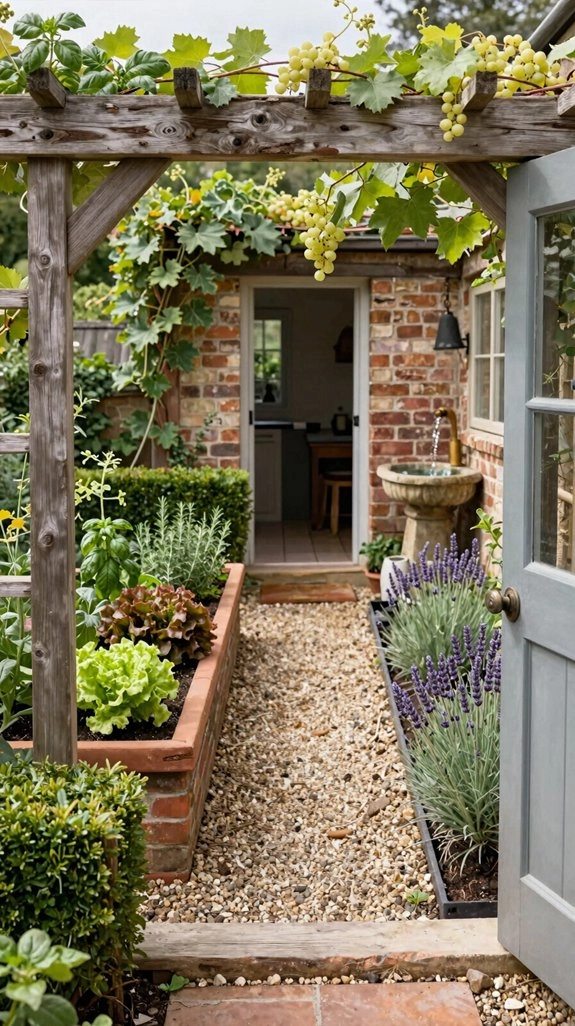
When fresh herbs are just steps from the kitchen, cooking becomes easier—and your garden can fit in about 20 square feet!
Set pots or a narrow raised bed beside the door, choosing what you actually eat. Add rosemary, sage, basil, parsley, and favorite vegetables.
Use sunny spots, up to eight hours of light, while dappled shade suits some herbs. Full shade won’t work!
Choose containers with drainage holes and saucers, then mix in compost regularly.
For easy care, try Soil moisture tracking: check before watering, and soak deeply about weekly, twice as often for new plants.
Need drip irrigation tips? Use simple emitters! You’ll harvest dinner-seasoning freshness all week!
Rain Barrel Irrigation
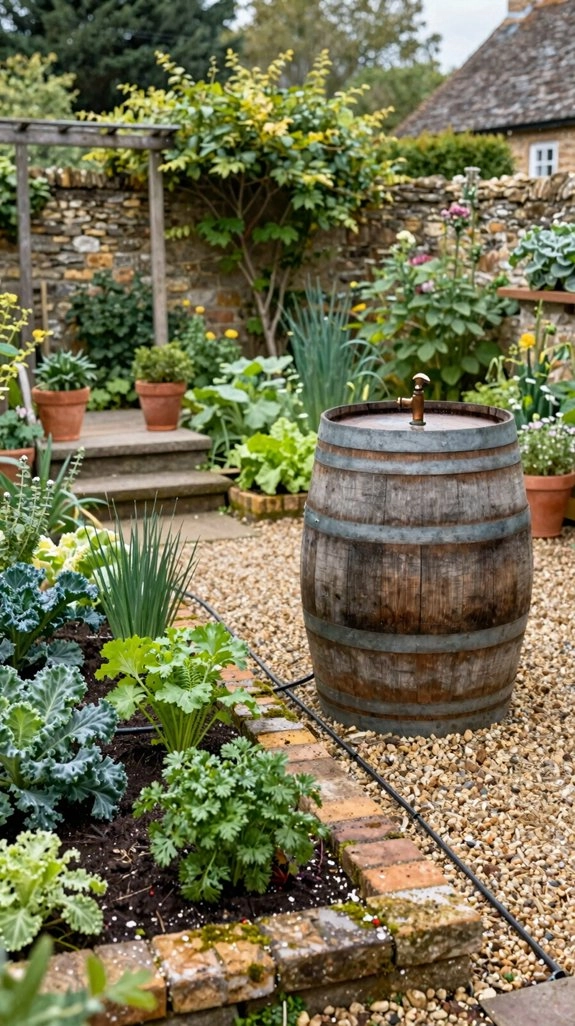
Capture free roof runoff in a rain barrel, then guide it to your kitchen garden with gravity or a small pump—what a clever little water helper!
Secure drip tubing or soaker hoses along herb rows for a slow, deep drink.
You’ll need a screened barrel, filter, tubing, and secure fittings. Try these friendly basics:
- Check Soil moisture before watering.
- Set drip scheduling for stored water, not dry-week wishes.
- Practice overflow planning so heavy rain won’t flood beds.
Keep leaves out to protect basil and parsley emitters. Add water during long dry spells.
Finally, follow winterizing steps: drain, disconnect, and cover the barrel. Your garden—and neighborhood water supply—will thank you!
Decorative Plant Labels
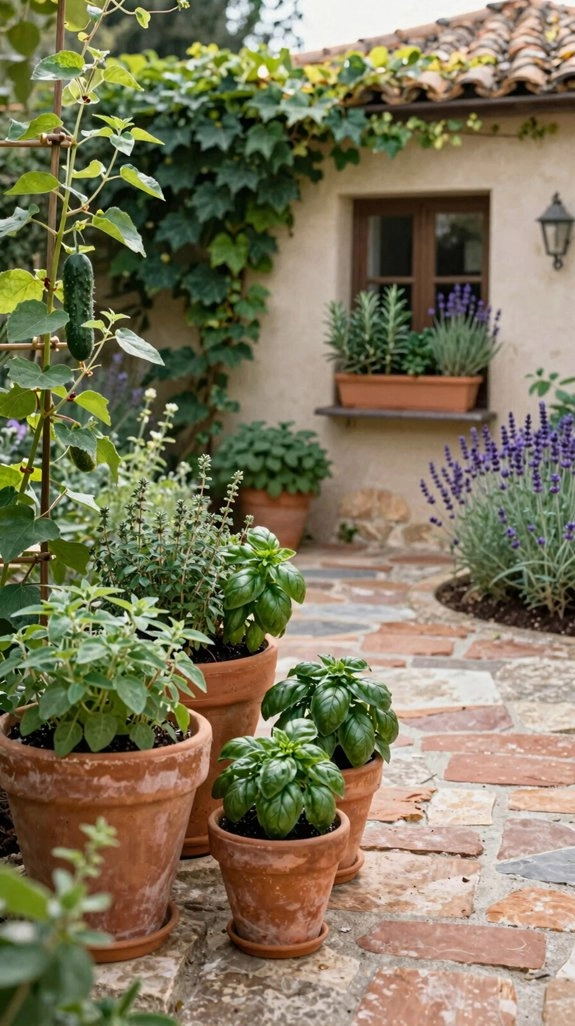
Decorative plant labels make your kitchen garden easier to organize and much more fun to visit! Create them with wooden sticks, weatherproof markers, and colorful paint, then write each plant’s name, annual or perennial type, harvest cue, and light needs.
Try “rosemary—prune regularly,” “chives—snip as needed,” or “thyme—full sun, eight hours.” Note “oregano—keep in a container,” plus mature sizes for dwarf yuzu or blueberries.
Add “mint—large pot” or “near kitchen—daily grazing” for helpful reminders.
You can even label trays with seed starting tips and pots with compost tea basics.
Best of all, your labels make every visitor feel included!
Seasonal Crop Rotation
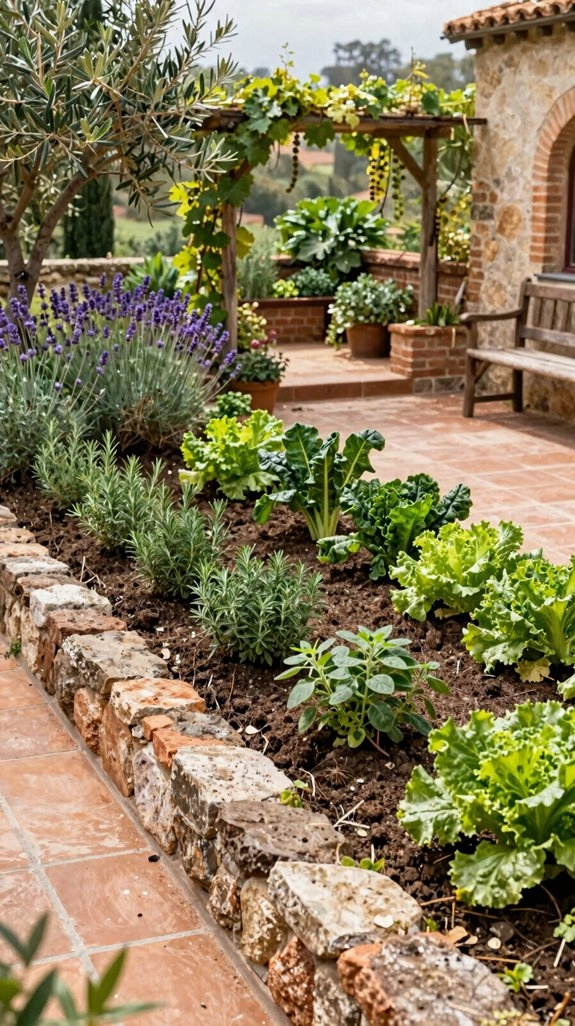
Your cheerful plant labels can also help you plan seasonal crop rotation, so each bed stays productive instead of getting tired!
Move heavy feeders, such as brassicas and leafy greens, to a new bed next season, then follow with herbs for gentler crop specific feeding.
- Plant beans first; their nitrogen-rich roots support hungry crops later.
- Match each crop with up to 8 hours of sun and well-drained soil.
- Track pest pressure timing, avoiding peppers after eggplants and other family repeats.
Use raised beds or containers for Soil health upgrades and easy swaps.
Add harvest succession planning by replanting as beans finish.
This keeps your garden flexible, abundant, and friendly!
Pollinator-Friendly Herbs
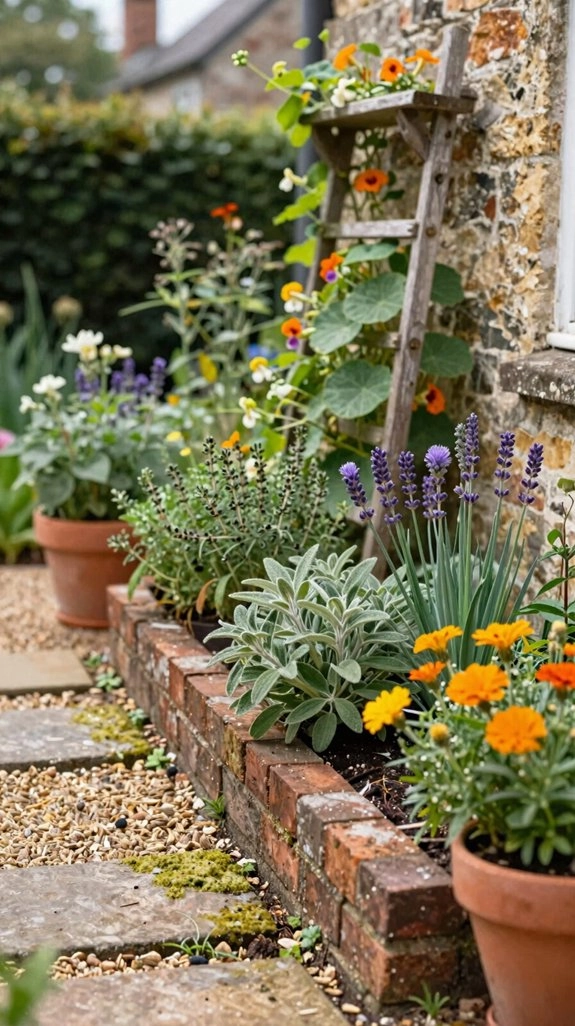
When you tuck pollinator-friendly herbs among your vegetables, you’ll get fresh flavor and a buzzing garden full of life! Start with rosemary and sage; their bright flowers feed bees while their leaves season dinner.
Let oregano bloom instead of shearing it nonstop, so insects can enjoy its nectar. Add chives and nodding onion, whose white, upside-down blooms look charming beside tomatoes and greens.
For easy care, choose dwarf rosemary or English lavender in pots near your kitchen. Even a compact greenhouse corner can host them! Create edible flower borders with mixed herbs and vegetables, welcoming neighbors, bees, and beneficial insects to share your garden.
Small Space Garden Design
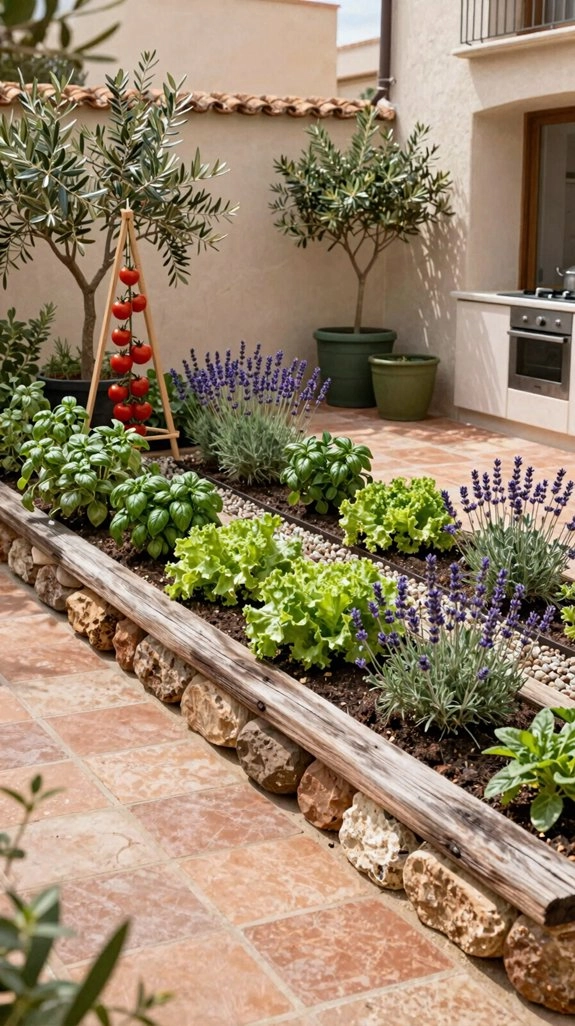
Even a tiny patio can become a productive kitchen garden—just place it close to the house, where grabbing a handful of basil or watering thirsty plants is easy!
Choose a sunny spot, since most herbs enjoy up to eight hours of light. Dappled shade works, but full shade usually flops.
Try these friendly, space-saving moves:
- Stack pots on a multilevel stand for easy Accessibility watering.
- Hang baskets or add window boxes to grow more without crowding.
- Plant dwarf herbs in a 4-by-10-foot bed or containers for compact maintenance.
Use well-drained soil and compost, then water deeply weekly. Newly planted herbs need roughly twice as much until established. Trim regularly, and your little garden will keep giving!