Vertical Gardening Ideas for Small Outdoor Spaces
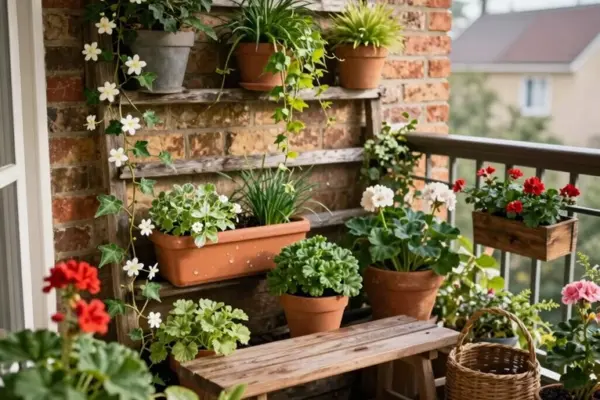
- Vertical Gardening Ideas for Small Outdoor Spaces
- Key Takeaways
- Why Vertical Gardening Works
- Best Structures for Vertical Gardens
- Trellises
- Wall Panels
- Garden Towers
- Choosing the Right Plants
- Vegetables
- Herbs
- Flowering Plants
- Creating a Living Privacy Screen
- Watering Vertical Gardens
- Common Vertical Gardening Mistakes
- Keeping Vertical Gardens Healthy
Turn your small patio into a mini jungle! Use a simple trellis of bamboo stakes and twine for peas, beans, or cucumbers; anchor it well, then guide stems upward weekly. Hang herbs in wall pockets with lightweight soil and check moisture often. For privacy, grow pole beans on welded wire between T-posts. Best of all, try a pocket garden tower for lettuce, strawberries, and cherry tomatoes—big harvest, tiny footprint. Keep going for smart watering and setup tips.
Key Takeaways
- Install trellises or A-frames for climbing peas, pole beans, cucumbers, and vining tomatoes without sacrificing ground space.
- Turn fences and sunny walls into gardens with trellis-backed panels, pocket planters, or hanging herb containers.
- Use stacked garden towers for compact crops such as lettuce, strawberries, herbs, bush beans, and cherry tomatoes.
- Create a living privacy screen by training cucumbers, beans, or melons up cattle panels or welded wire supports.
- Use sturdy anchors, lightweight well-draining soil, and drip watering because vertical containers dry out and become heavy.
Why Vertical Gardening Works
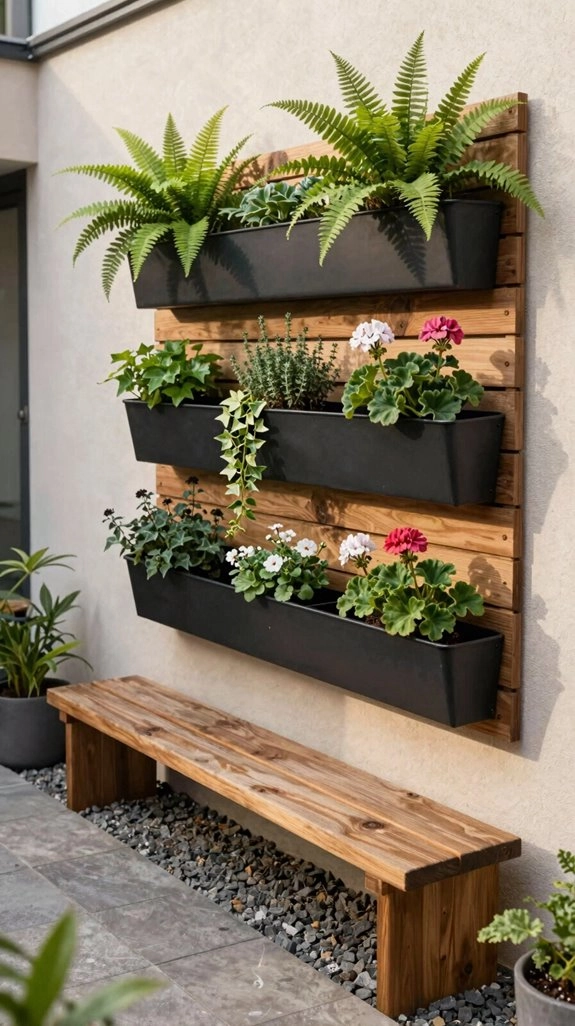
Vertical gardening works because it sends plants up instead of out, turning a tiny patio, balcony, or narrow side yard into a much bigger growing zone—pretty clever, right?
You’ll feel right at home growing alongside other small-space gardeners, because this approach makes the most of space without swallowing your walkway. A cucumber that sprawls across 20 square feet can climb upward in only a few!
Better yet, you get easier harvesting: no crawling through leaves to find hidden fruit. Vertical growth also supports improved plant health by keeping foliage drier after rain.
Here’s the bonus: raised fruit deters pests, so hungry critters have fewer easy snacks!
Best Structures for Vertical Gardens
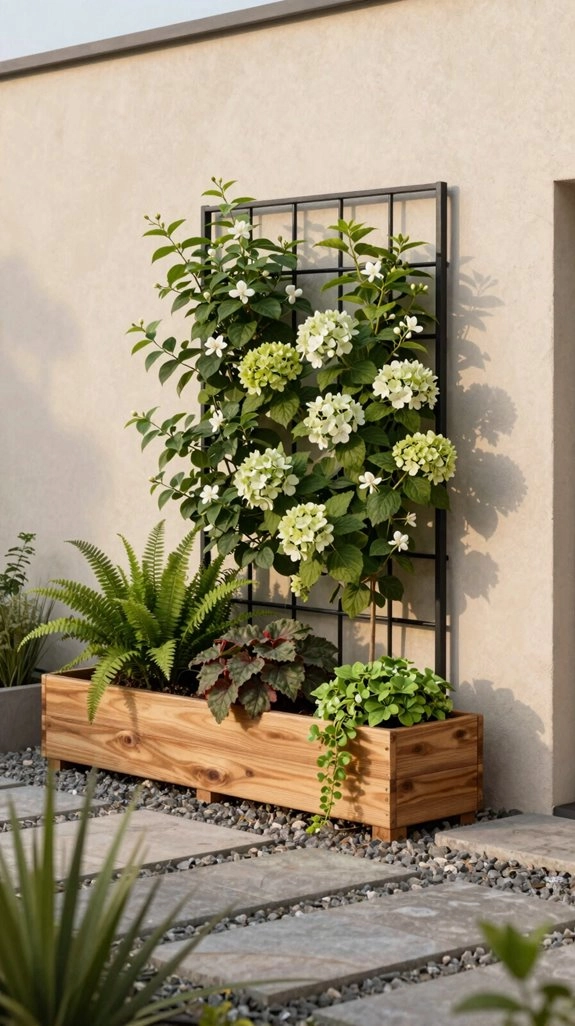
You can guide beans, peas, cucumbers, and tomatoes up a simple trellis, while wall panels turn a bare fence into a growing zone—nice, right?
Choose a sturdy option that can handle damp soil and climbing plants, because a sagging garden isn’t the look you’re after!
For the biggest space-saving surprise, garden towers and A-frames let you grow upward on both sides, keeping leaves and fruit off the ground.
Trellises
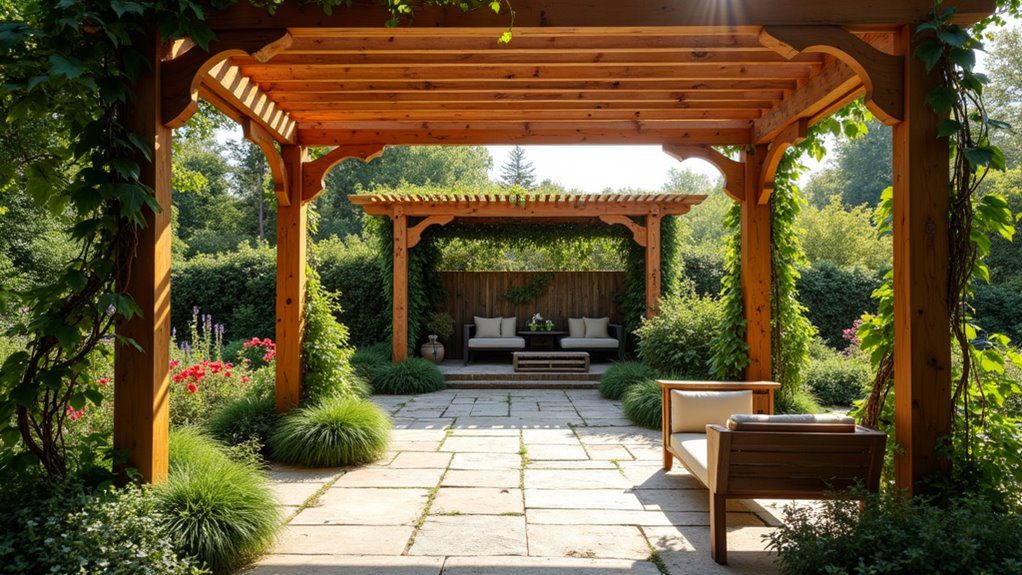
With a sturdy trellis, even a tiny patio or balcony can grow into a productive little jungle—without turning into a vine pileup!
Choose trellis materials like wood, metal, or PVC, then match height to your cucumbers, beans, peas, or tomatoes. You’ll join fellow small-space growers in picking more easily!
- Anchor it deeply for heavy, damp vines.
- Guide stems weekly; seasonal pruning keeps airflow moving.
- Lift fruit for better pest prevention and fruit protection.
- Try an arched trellis: sprawling squash can shrink from 20 square feet to only a few!
It’s beginner-friendly, affordable, and surprisingly dramatic—your harvest can hang overhead like a delicious green doorway!
Wall Panels
Wall panels turn an empty fence or sunny wall into growing space, so even a cramped balcony can hold a lively mix of greens and blooms—pretty clever, right?
Choose modular, felt-pocket, or trellis-backed panels, then place them where they’ll get six to eight hours of sun.
For pocket plant selection, tuck in lettuce, pea shoots, basil, chives, or compact flowers; shallow pockets aren’t built for root giants!
Ready for DIY wall anchoring? Use L-shaped hooks or masonry anchors, rawl plugs, and a drill to hold wet soil safely.
Then, try a trellis panel for peas, beans, or cucumbers.
Your little growing crew will thrive together!
Garden Towers
Garden towers pack a whole mini garden into one upright planter, using stacked planting pockets to grow more food without taking over your patio—pretty brilliant, right? You’ll fit right in with fellow small-space growers!
Choose roomy pockets for strawberries, lettuce, bush beans, thyme, mint, and cherry tomatoes.
Add potting mix, plant companions, and try Companion planting for a friendly, productive tower.
Use built-in watering and soil moisture testing; drainage keeps roots from getting swampy.
Practice seasonal crop rotation and integrated pest control for healthier harvests.
Set it up, water consistently, and harvest from every side.
Your patio becomes a tiny neighborhood garden—no shovel gymnastics required!
Choosing the Right Plants
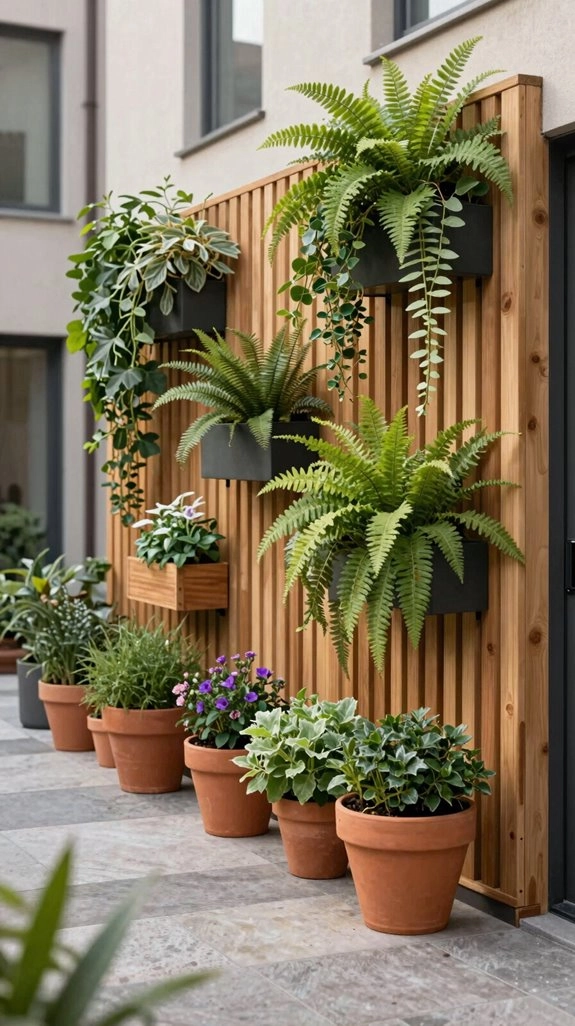
Choose plants that enjoy growing up, not out—climbing peas, pole beans, cucumbers, and vining tomatoes can make your small space feel wonderfully full!
You’ll also want herbs, compact greens, and cheerful flowering plants that suit your light, containers, and watering routine.
Here’s the fun part: pair each plant with the right support, and your garden can climb higher than your weekend plans!
Vegetables
Start with vegetables that enjoy climbing, and you’ll get far more food from a tiny patio or balcony—pretty exciting, right?
- Grow pole beans, peas, cucumbers, or vining tomatoes.
- Give them 6–8 hours of sun, facing west or midday light.
- Match Container spacing and soil moisture needs on shared trellises.
- Use tall supports for cucumbers and beans—your tiny garden crew will thrive!
Try companion planting with vegetables from the same family for a tidy, united look.
Plan crop rotation, harvest timing, and pest management as you go.
Squash and melons can climb, too, but add slings for heavy fruit—like little hammocks!
Herbs
Herbs are perfect for vertical gardens because they stay useful, fragrant, and easy to snip right where you can reach them—hello, fresh pasta topping!
Choose basil, chives, mint, oregano, sage, or parsley for wall pockets, planters, or hanging baskets.
Start with microclimate placement: give sun-loving herbs midday or west-facing light.
Then use soil volume planning, with deep enough pockets so mature roots don’t get cramped.
Group herbs with similar watering needs, and check hanging baskets often—they dry out fast!
A reservoir basket costs a little more but saves fuss.
Keep your herb crew near the door, harvest often, and everyone gets fresh flavor.
Flowering Plants
Fresh herbs make a vertical garden useful, but flowering plants bring the wow factor! Your Plant selection can turn a tiny patio into a shared little oasis.
- Train blooming climbers, like sweet peas or morning glories, on a trellis.
- Fill compact baskets with trailing petunias, nasturtiums, or lobelia.
- Choose shallow root flowers for living-wall pockets; pair them with succulents.
- Give sun lovers 6–8 hours of midday or west light.
Start with a simple trellis, hooks, soil, and seedlings—easy, affordable, and cheerful! Keep spacing roomy so air moves around stems.
The surprise star? A living wall of cascading blooms makes even the smallest corner feel like your neighborhood’s happiest hideaway.
Creating a Living Privacy Screen
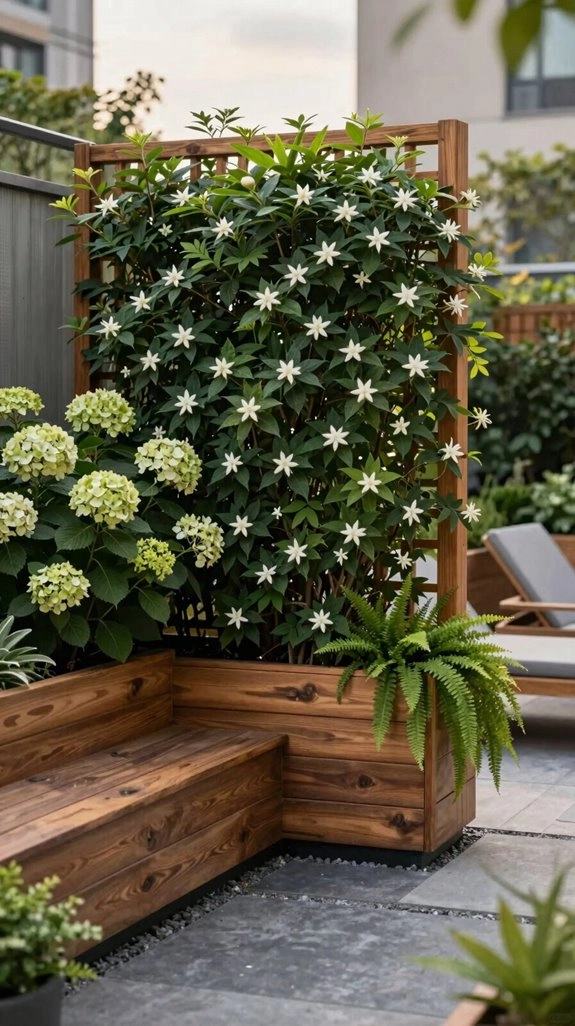
Turn an ordinary trellis into a leafy privacy screen, and your small patio or yard suddenly feels like its own cozy hideaway! Use an arched panel, cattle panel, or welded wire on T-posts, then anchor it well—mature vines get surprisingly hefty!
Plant pole beans, cucumbers, or melons along the base and guide them upward. You’ll save space, turning a sprawling 20-square-foot patch into a few tidy feet beside a walkway.
For quick cover, add leafy annuals or shade fabric, but leave gaps for privacy airflow. Keep fruits at easy-to-reach height, too. Soon, your little outdoor corner feels more private, productive, and welcoming—no jungle crawl required!
Watering Vertical Gardens
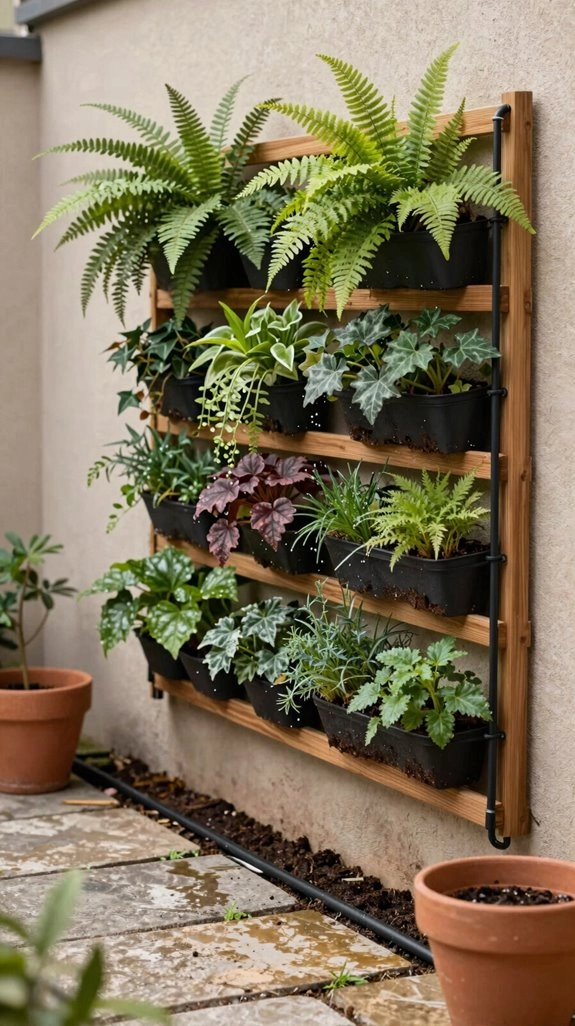
A leafy privacy screen still needs a drink, especially when it’s growing skyward! Your vertical garden joins a friendly little neighborhood, so check Soil moisture often; baskets and towers dry quickly.
- Use lightweight container soil for even watering without extra weight.
- Try drip irrigation and drip scheduling for steady moisture and smart runoff control.
- Group herbs or salad greens with similar thirst levels.
- Give every pocket drainage, so water won’t pool below.
Here’s the surprise: direct drips also reduce splashback, keeping leaves drier and your nutrient balance steadier. You’ll spend less time wrestling a hose—no soggy-bottom drama!
Common Vertical Gardening Mistakes
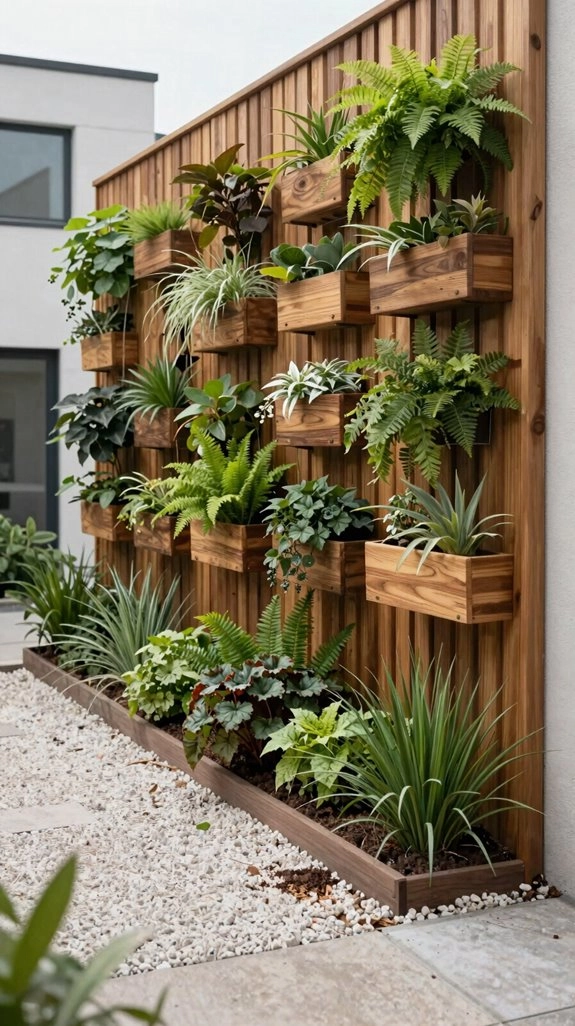
Vertical gardens can save serious space, but a few easy-to-miss mistakes can turn your sunny wall into a droopy, crowded mess—whoops!
Don’t buy pricey trellises without a plan; reuse welded wire, T-posts, or cattle panels for longer runs. Skip Thick Soil, too—it can weigh containers down fast.
Choose climbers like pole beans, peas, cucumbers, and vining tomatoes, not bushy plants that sprawl. Give them six to eight hours of sun, ideally facing midday or west light.
Here’s the big one: use Secure Anchors for wall planters. Damp soil and growing plants get heavy, so fasten everything firmly. Your garden crew will thank you!
Keeping Vertical Gardens Healthy
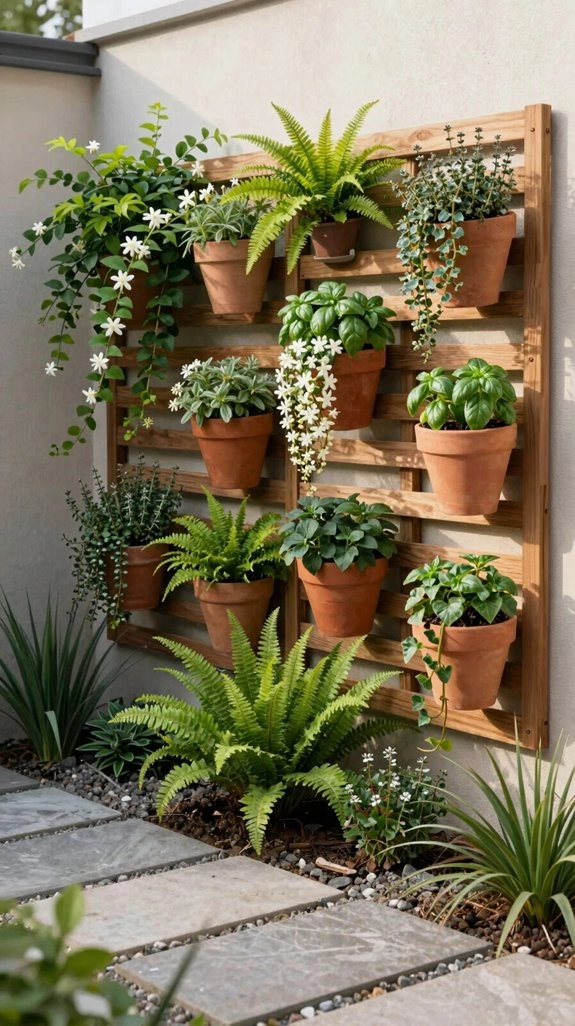
Once your plants start climbing, a little care keeps the whole setup fresh, sturdy, and productive—no sad, soggy leaves allowed!
- Train vines onto trellises, keeping fruit off splashback and improving leaf airflow after rain.
- Check soil drainage, then group plants with similar watering needs so everyone stays evenly moist.
- Pick ripe produce often; when it’s up front, your gardening crew won’t miss hidden veggies that rot.
- Use strong brackets and frames for damp soil—especially hanging planters. Your garden stays safe, stable, and ready to show off!