13 Pool Water Features Worth Adding — and What Each One Actually Costs
- 13 Pool Water Features Worth Adding — and What Each One Actually Costs
- Key Takeaways
- Why the Right Water Feature Changes How a Pool Actually Gets Used
- Every Type of Pool Water Feature, Explained
- Natural rock waterfalls
- Sheer descent waterfalls
- Sheet falls and rain curtains
- Deck jets and laminar arcs
- Bubblers and floor fountains
- Spillover spas
- Raised wall spillways
- Wall scuppers and bowl spouts
- Tipping buckets and pour-overs
- Grottos and cave features
- Fire and water combinations
- Fog and mist systems
- Negative edge overflow
- How Much Each Feature Costs to Install — Entry-Level to High-End
- Choosing the Right Feature for Your Pool's Shape, Size, and Surroundings
- Small or narrow pools
- Freeform natural pools
- Geometric and lap pools
- Pools with attached spas
- Adding a Feature to an Existing Pool vs. Building It In From the Start
- Noise, Energy Use, and Ongoing Maintenance — the Real Running Costs
- What Pool Contractors Recommend — and What Homeowners Frequently Regret
I’ve watched a simple deck jet, starting near $1,500, turn a quiet pool into kid central, and a $3,000 spillover spa or $5,000 grotto can do even more. You’ll also find scuppers, sheer descents, bubblers, rock waterfalls, vanishing edges, and fire-and-water combos, each with different plumbing, noise, and upkeep. I’d match the feature to your pool shape, climate, and budget first, because the “pretty splash” can become a family obsession fast—and there’s more to compare next.
Key Takeaways
- Deck jets, bubblers, and pre-made fountains start around $1,500 and can quickly make a pool feel more social and inviting.
- Sheer descents and scuppers usually cost $1,500–$6,000 and work best when the pool has about 18 inches of vertical drop.
- Standard waterfalls and rock builds typically range from $3,000–$15,000, with larger grottos and custom features reaching $25,000 or more.
- Vanishing edges and infinity treatments are the most expensive, often adding tens of thousands for basins, pumps, trenching, and engineering.
- Installation often requires plumbing upgrades, booster pumps, permits, and lighting, especially for retrofits or larger water features.
Why the Right Water Feature Changes How a Pool Actually Gets Used
When I talk with families about pool upgrades, I always start with this: the right water feature can change how your pool gets used, not just how it looks.
In my experience, you’ll see new behavioral patterns fast. A fountain or deck jet can cool water, boost circulation, and cut chlorine demand.
A waterfall or sheer descent adds sound that pulls people together, shaping social interactions and making conversations linger.
Bubblers on Baja steps turn “dead” shallow space into a kid magnet.
Even a $1,500 scupper can make your crew stay outside longer, which, frankly, beats another screen night.
Every Type of Pool Water Feature, Explained
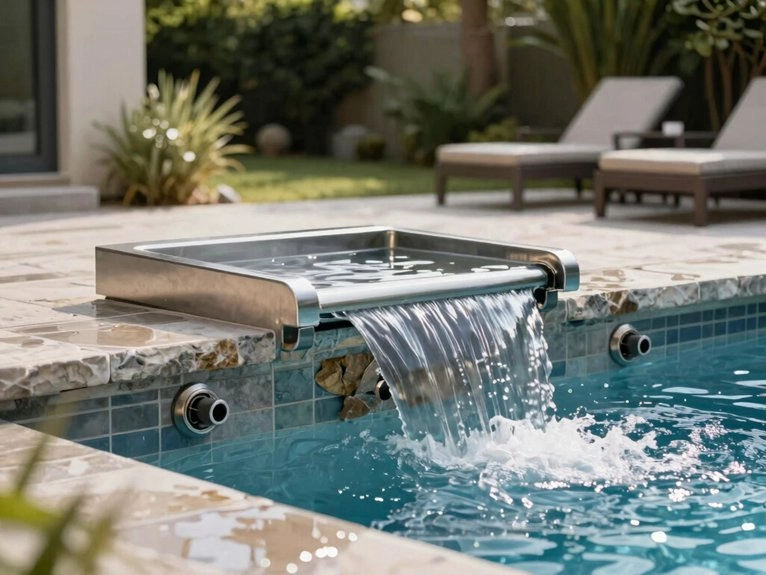
Let’s break down the main pool water features so you can picture what each one actually does. I’ve seen sheer descents send a clean curtain of water over a wall, and they’re often simpler and cheaper than big rock builds.
Deck jets, or laminar jets, shoot smooth arcs from the deck; I love the glow from LED options at dusk.
Bubblers on Baja steps add kid-friendly splash time, and my family camps there all summer.
Vanishing edges cost the most, but wow, the view. I also think about water feature acoustics and seasonal adjustments before I choose.
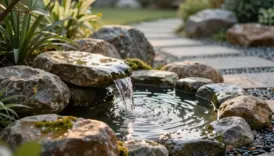
Natural rock waterfalls
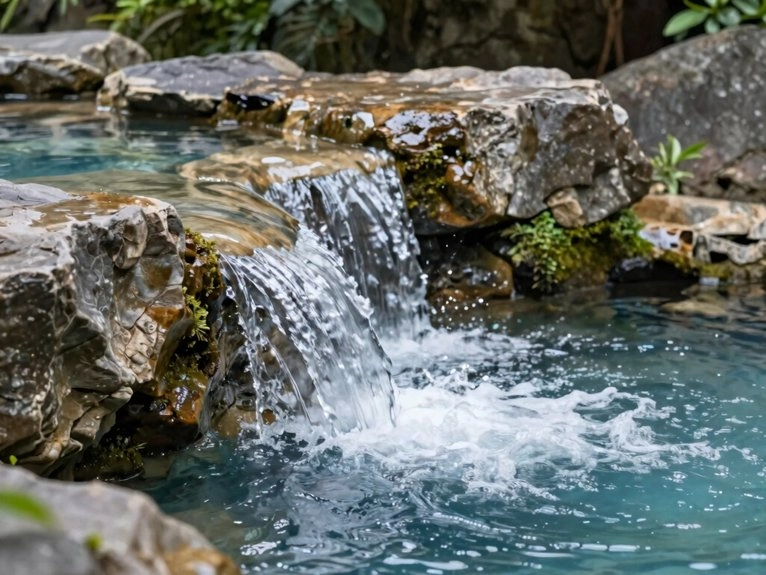
A stacked stone wall can turn a pool into a little backyard waterfall retreat.
I’ve seen natural rock waterfalls make kids gather fast, and adults linger longer, too. You’ll usually spend $3,000 to $15,000, and upscale custom builds can top $10,000.
Real or synthetic rock gives you that calm splash and a natural look. Ask about rock durability, UV-resistant finishes, and a booster pump if flow feels weak.
I always budget for cleaning those tiny cracks, because algae prevention matters. In hot places like San Diego, smart materials help your family enjoy it longer, without the grumpy repair bill.
Sheer descent waterfalls
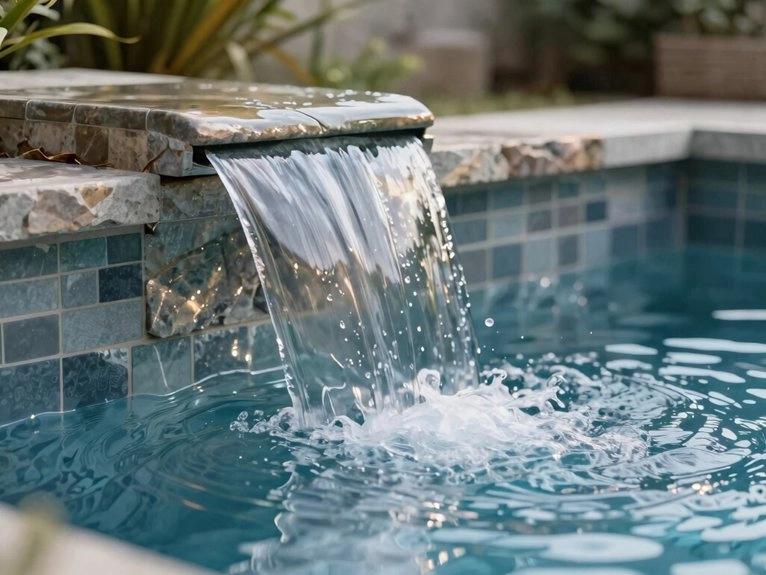
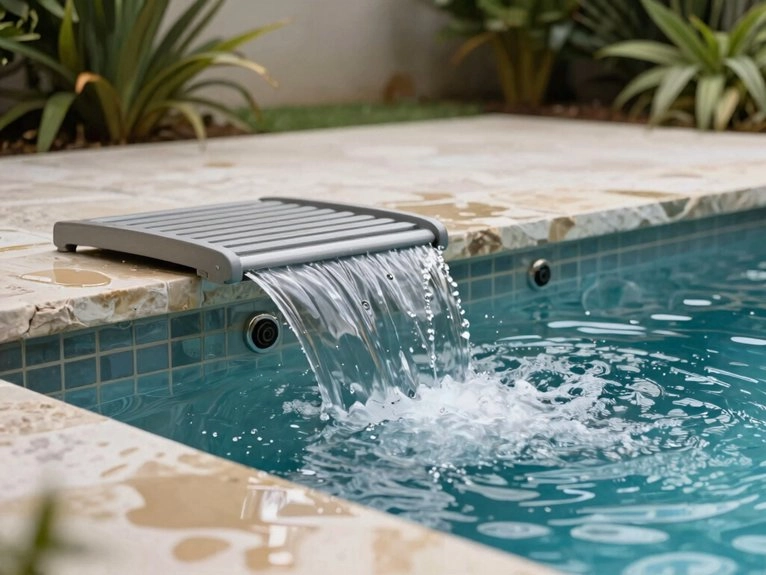
If you want a cleaner, calmer water feature, sheer descent waterfalls are a smart next step. I’ve seen families love the smooth, curtain-like sheet because it feels peaceful, not splashy.
You’ll need about 18 inches of vertical fall space and a vertical housing in a raised wall, bond beam, or pedestal. Most remodels use 18 to 24 inches of width, though 36 inches works too. Flow ties to your pump and automation, and LED synchronization makes nighttime look magical. They’re simpler than rock features, with fewer plumbing headaches. I’d still ask a pool pro to match hydraulics.
Sheet falls and rain curtains
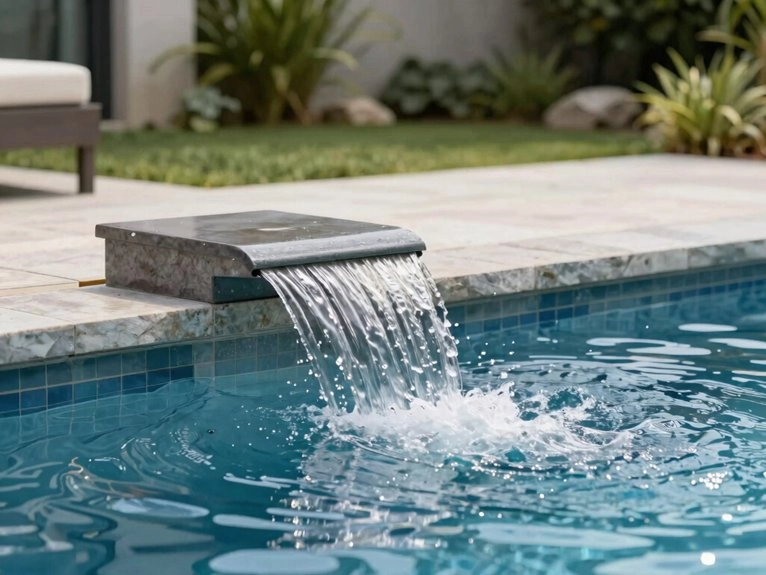
You’ll notice the clean ribbon of a sheet fall first; it’s usually 18 to 24 inches wide in remodels, and you can let the pump or automation control the flow.
Rain curtains go wider and feel fancier, but they need about 18 inches of fall space and solid Housing options behind a raised wall or pergola.
I like LED placement here; it makes evening swims feel special.
Costs vary by width, plumbing, and trenching, but you’ll usually spend less than on rock falls.
Deck jets and laminar arcs
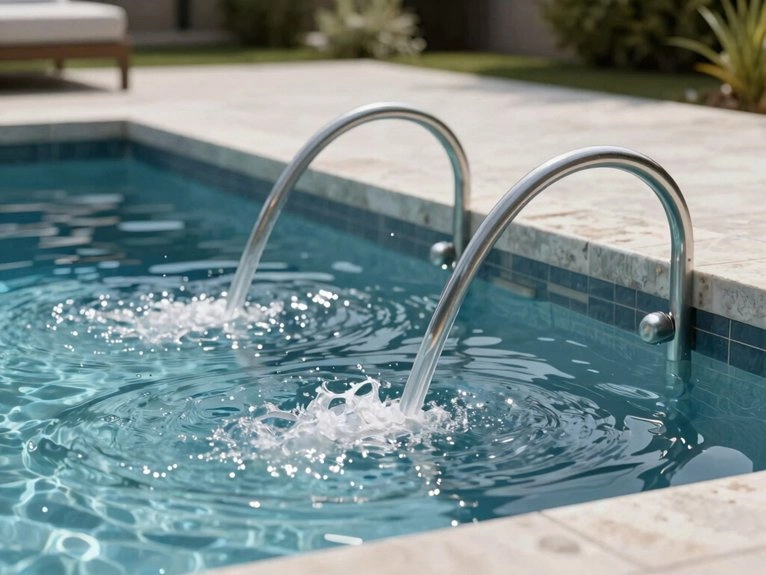
Most retrofit setups need dedicated plumbing, and Pressure requirements can mean a booster pump or upgrade. LED integration boosts the nighttime wow factor, but it raises cost. Deck jets are still budget-friendly, though trenching and wiring can sneak up on you.
Bubblers and floor fountains
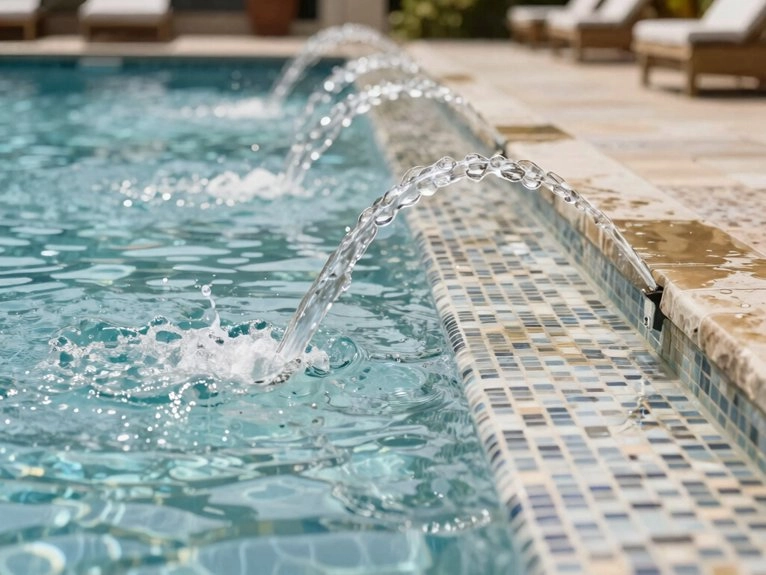
Bubblers, also called gushers or floor fountains, are one of those small pool features that can really grow on you. I like how they send soft streams from Baja steps or a shallow ledge, so you get gentle sound without drama.
In my family pool, they’ve been a kid magnet. LED customization adds a fun glow at night, but it nudges the price up.
Most installs tap existing returns, which helps keep costs down. I’d look at kit options if you want simple, budget-friendly setup.
Expect modest upkeep, plus cleaning and winterizing, because leaves never RSVP.
Spillover spas
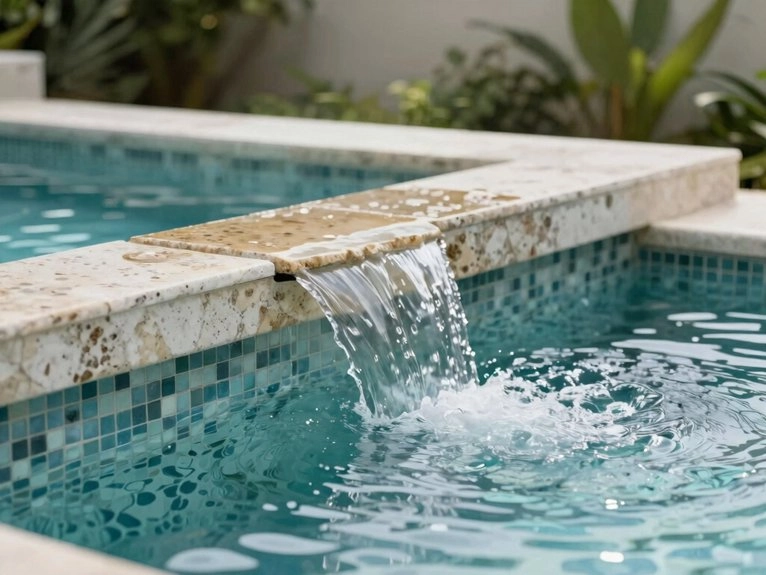
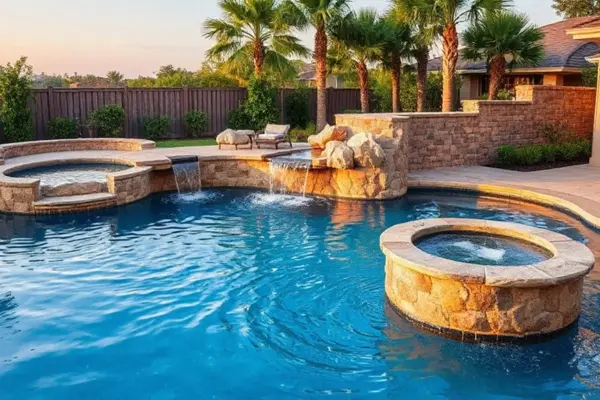
When I think about a spillover spa, I picture a raised hot tub that quietly pours water back into the pool like it’s showing off just a little. You get enhanced aesthetics and a calm, linked feel your family can enjoy together.
I’ve seen slate, stone, stainless steel, brass, and even hammered copper trim; each one changes the vibe.
- Simple prefab spillway: a few thousand dollars.
- Custom rockwork or tile: $3,000–$15,000+.
- Plan for plumbing considerations, power upgrades, and cleanup.
If you’re remodeling, you’ll usually save money and headaches. Mine loved it; my kids called it the fancy waterfall chair.
Raised wall spillways
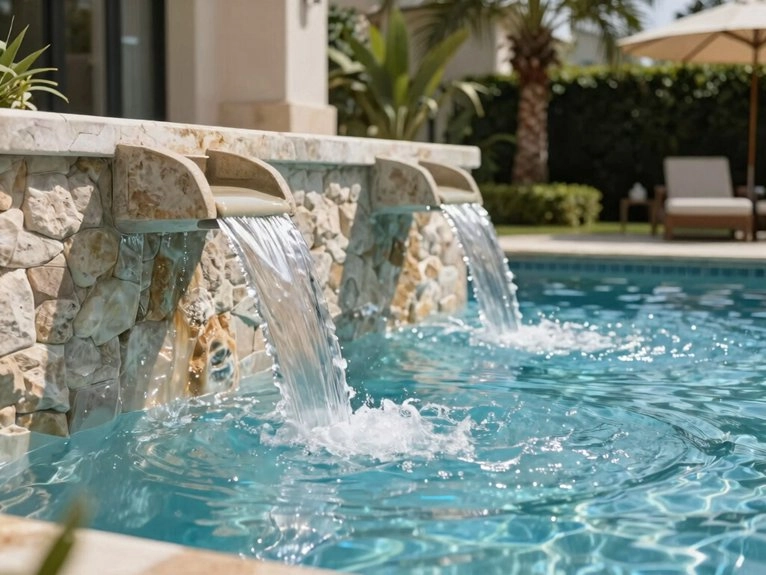
If a spillover spa feels like the pool’s showy cousin, a raised wall spillway is the part that keeps the whole scene moving. You’ll usually spend $3,000 to $15,000, and slate aesthetics or custom stone can push you higher. I’ve seen families choose them during renovations because they fit remodel-friendly plans and add calm sound.
Good flow behavior depend on plumbing integration, so I always check pump sizing before anyone starts digging. If your equipment can’t keep up, plan for an upgrade. Add LED lights or copper finishes, and your backyard may get a little too proud of itself.
Wall scuppers and bowl spouts
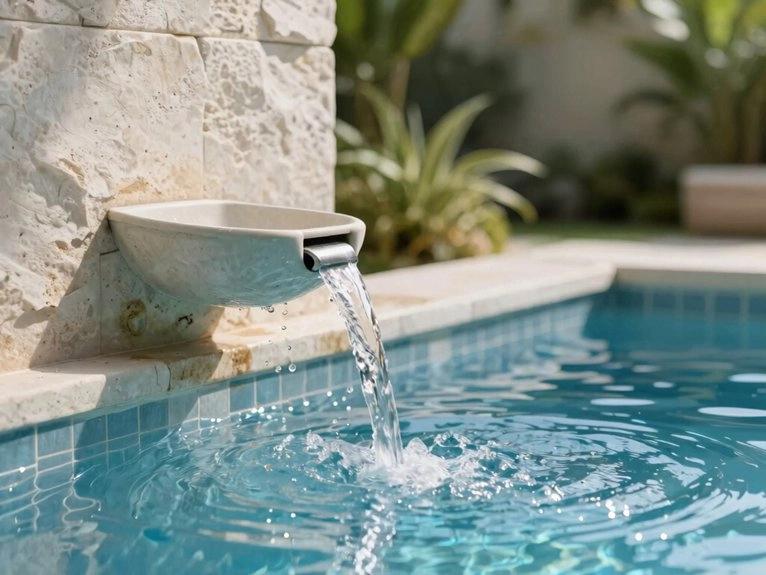
- A stainless steel scupper or brass bowl usually costs less than a full rock waterfall, and it often fits right into an existing wall.
- You’ll need one plumbing line, but a booster may help if the pump sits far away.
- LED integration looks amazing at night, though it adds cost; follow winterization tips so frozen pipes don’t ruin the fun.
Clean them, and they’ll keep shining.
Tipping buckets and pour-overs
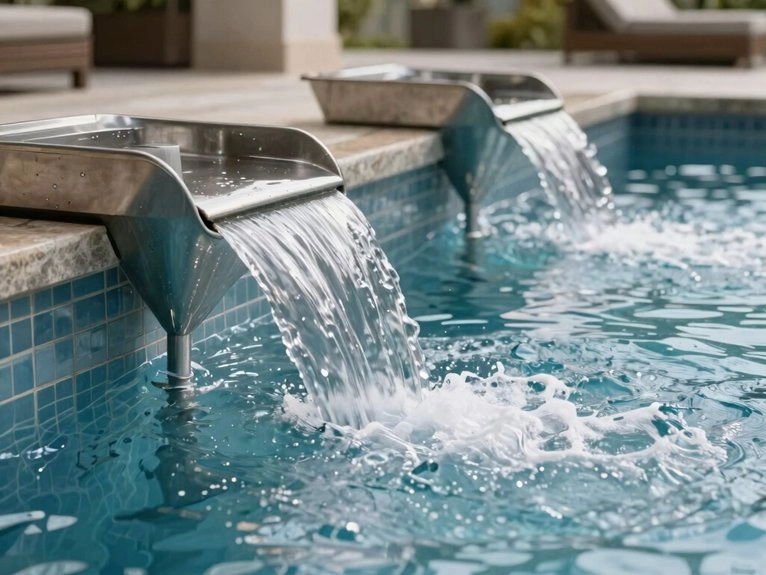
I’ve always liked tipping buckets and pour-overs because they turn a calm pool into a little water carnival.
You get that cheerful splash on Baja steps or a shallow play zone, and kids usually line up fast.
You can buy simple pre-made units for about $1,500 to $4,000, while custom themed integrations can jump past $5,000.
I’d plan another $500 to $2,000 for plumbing, valves, or a small booster pump.
Keep child friendly mechanics, add anti-slip surfacing, and don’t let anyone climb the structure.
I also budget $300 to $1,200 yearly for cleaning, seals, and winterizing.
Grottos and cave features
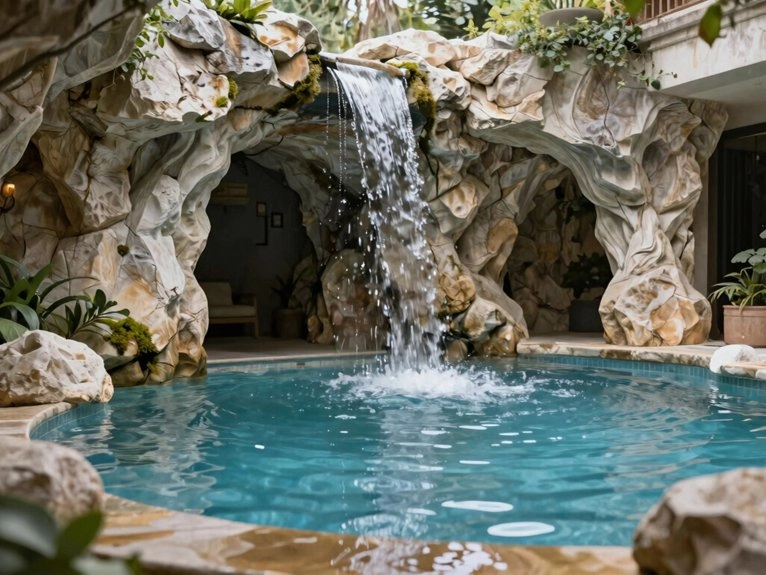
- Basic grotto: about $5,000.
- Bigger builds with slides, lighting, and rockwork: $10,000 to $25,000+.
- Plan for extra excavation, plumbing, permits, and upkeep.
I’d pick natural stone or quality synthetic rock for hot climates, and I’d ask for anti-slip surfaces plus hidden speakers, because nobody wants a cave that feels like a slippery secret.
Fire and water combinations
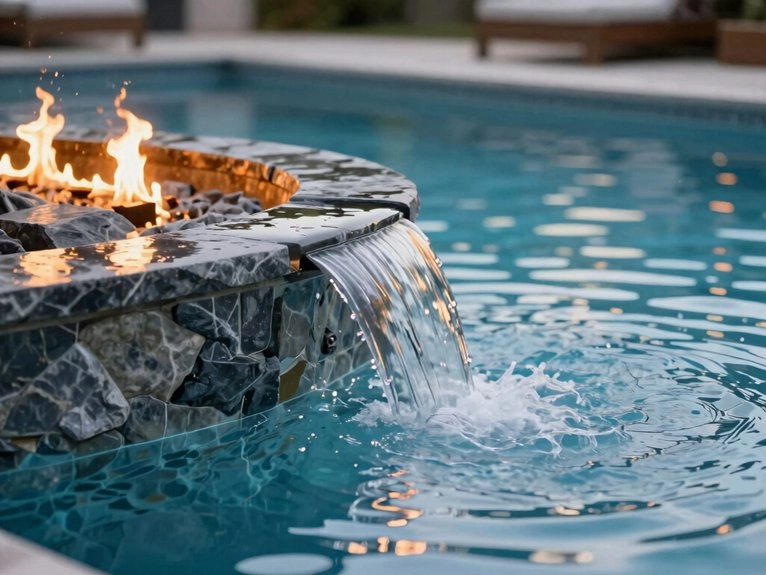
Fire-and-water bowls bring a pool to life at night, and I’m always impressed by how much drama they add for the money.
You’ll usually spend $2,500-$8,000 installed, and custom builds can top $10,000 once permits, trenching, and gas hookup work pile up.
I’ve seen them shine on edges, pedestals, and pillars, with water spilling back into the pool and LED lighting design doing the heavy lifting.
You’ll need plumbing, gas, and electrical, so plan carefully.
My family calls them “pool campfires.”
Follow clear maintenance schedules; expect $300-$1,200 a year for cleaning, winterization, and seal checks.
Fog and mist systems
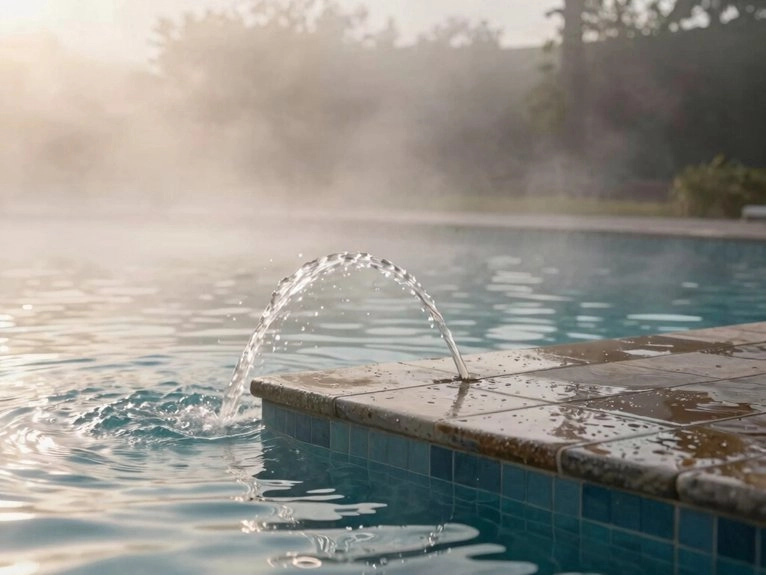
- A basic patio kit with a booster pump, stainless or ultraviolet nozzles, and a timer usually runs $1,200–$3,500.
- Bigger deck systems can hit $4,000–$10,000+.
- Plan for cleaning, winterizing, and water checks so your mist stays fine, not fussy.
Negative edge overflow
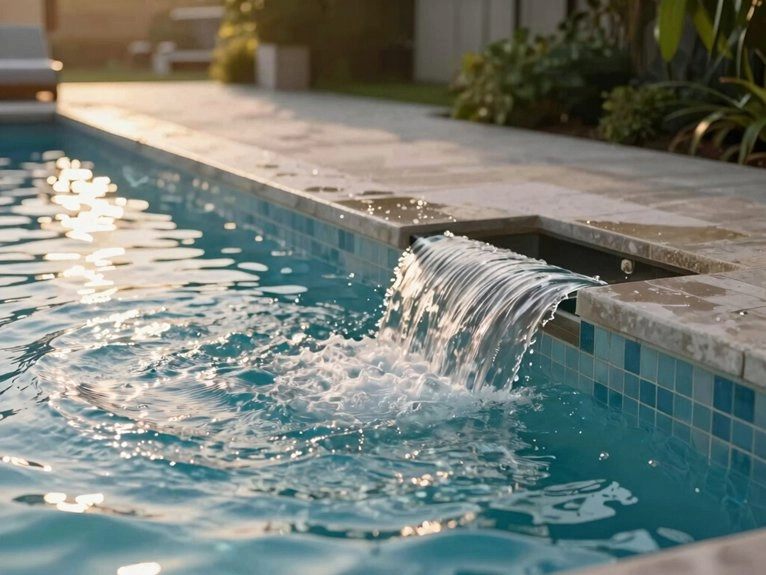
When I first saw a negative edge pool, I honestly thought the water had gone missing. Then I noticed the edge mechanics: water slips over one side into a hidden basin, then gets pumped back. That vanishing line feels luxurious and calm.
You’ll love it most on a slope or with a big view; flat yards may need extra structure. I’ve learned basin sizing matters a lot, because the catch basin must handle splash, evaporation, and steady flow. It’s not a small add-on.
Think custom engineering, extra plumbing, and freeze protection—so your dream doesn’t turn into a chilly science project.
How Much Each Feature Costs to Install — Entry-Level to High-End
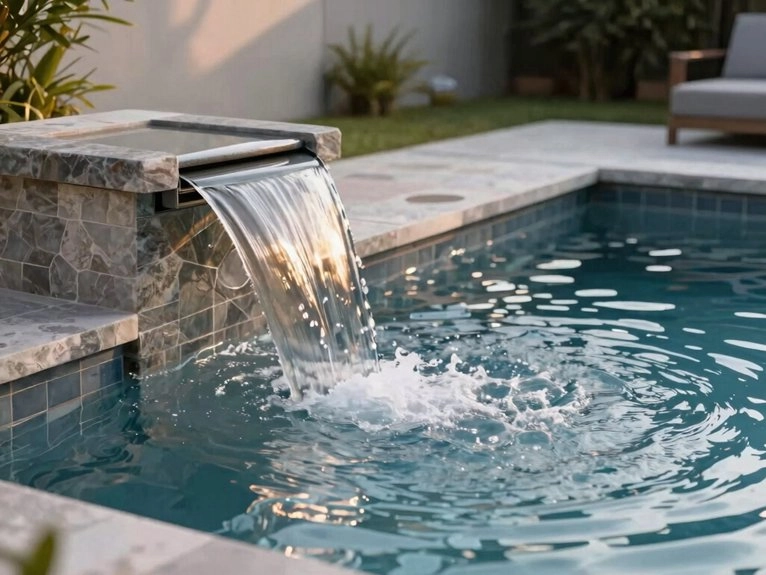
From the budget-friendly end to the “how did this get so upscale?” side, pool water features can fit a wide range of budgets.
I’ve seen simple deck jets and pre-made fountains start near $1,500, while sheer descents and scuppers often land at $1,500–$6,000.
- Standard waterfalls: about $3,000–$15,000, and custom rock builds can climb fast.
- Grottos: usually $5,000–$25,000, because rocks don’t bargain.
- Vanishing edges: often add tens of thousands, plus extras like LED lighting, plumbing, permits, and trenching.
My family always checks budget ranges and installation timelines first, so you can feel smart, not rushed.
Choosing the Right Feature for Your Pool’s Shape, Size, and Surroundings
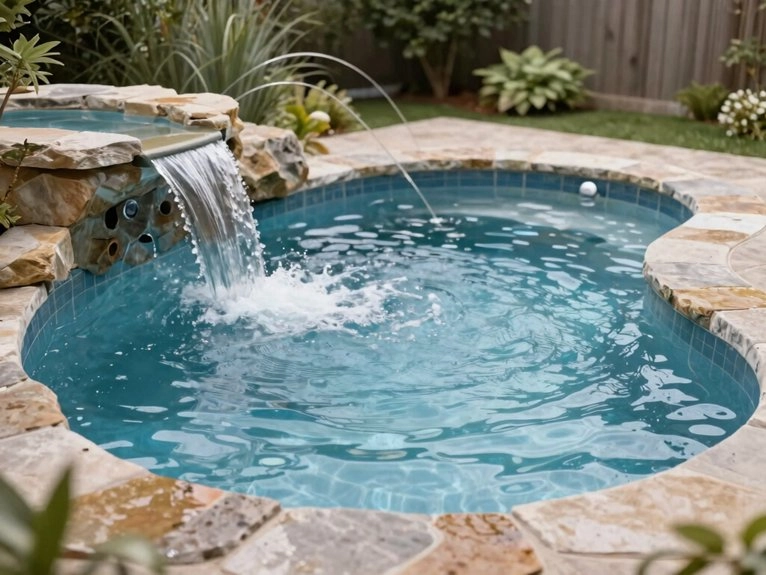
If you want a feature that feels like it belongs, start with the pool itself. I’ve learned that a petite pool looks happiest with deck jets or a single 18- to 24-inch sheer descent, while a big backyard can carry a wide waterfall or vanishing-edge treatments without looking overstuffed.
I check the drop, too: sheer descents like about 18 inches of fall. Rock waterfalls need more room, plus safe access. I also match the finish—concrete, fiberglass, or vinyl—to the builder’s plan, then think about privacy landscaping, pumps, trenching, and your climate. Freezing winters hate elaborate plumbing.
Small or narrow pools
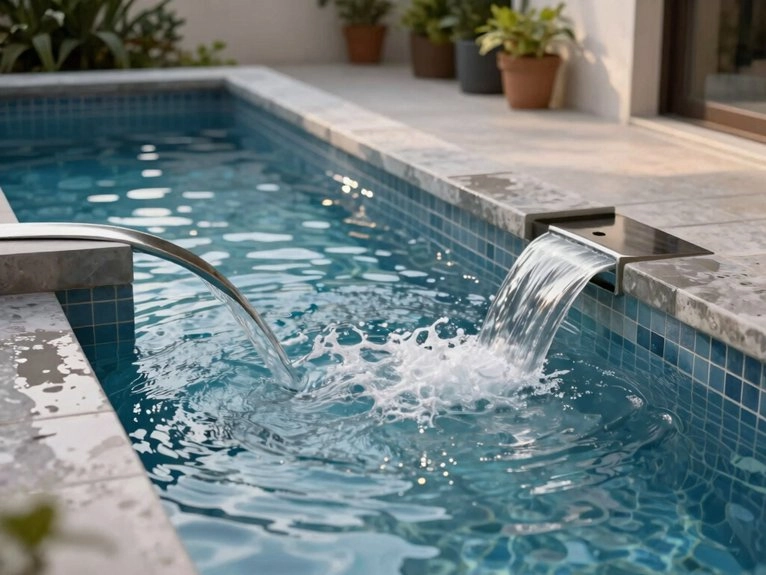
Tiny pools have big personalities, and I’ve learned they look best with features that don’t crowd the swim space. In my house, the goal is simple: keep room for splashing, not steel.
- Deck jets or single sheer descents, about 18–24 inches wide, give you sound and sparkle without eating the pool.
- I like compact laminars and slim scuppers on the deck, because they sit outside the shell and keep the water arc clean.
- For a shallow Baja step, baja bubblers add fun for kids, and simple kits start around $1,500. No waterfall drama required.
Freeform natural pools
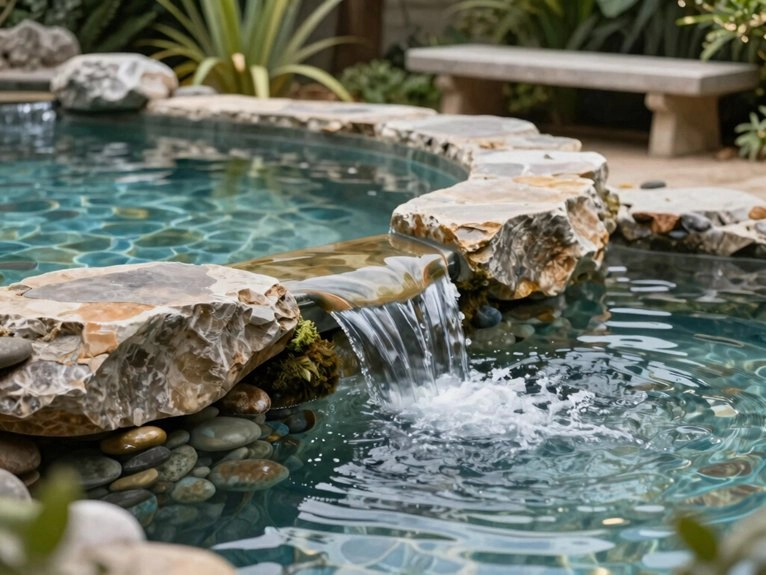
A modest rock waterfall usually runs $3,000 to $15,000, while big grottos can jump past $10,000 to $25,000. Add spillover spas or scuppers, and you may need extra pumps and careful plumbing.
In sunny San Diego, UV-safe finishes matter. Expect $300 to $1,200 a year for upkeep, because those cozy nooks love to hide leaves.
Geometric and lap pools
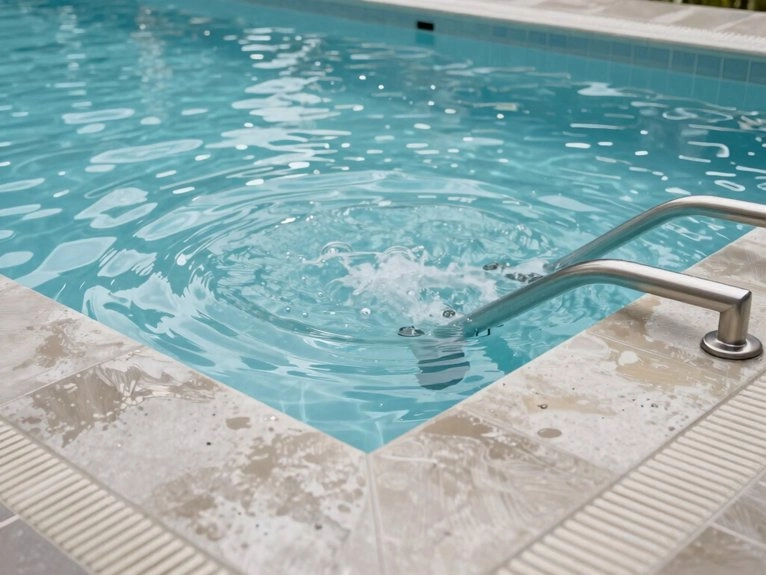
- Sheer descents or linear scuppers, 18–36 inches wide, add a calm sheet of water.
- Deck jets or laminars bring neat arcs; basic fountain setups can start around $1,500.
- Infinity edges look amazing, but they’re pricey and need special basins and pumps.
I like edge lighting and minimalist landscaping here. Linear spillways with tile or stainless steel fit right in, though plumbing can hide extra costs.
Pools with attached spas
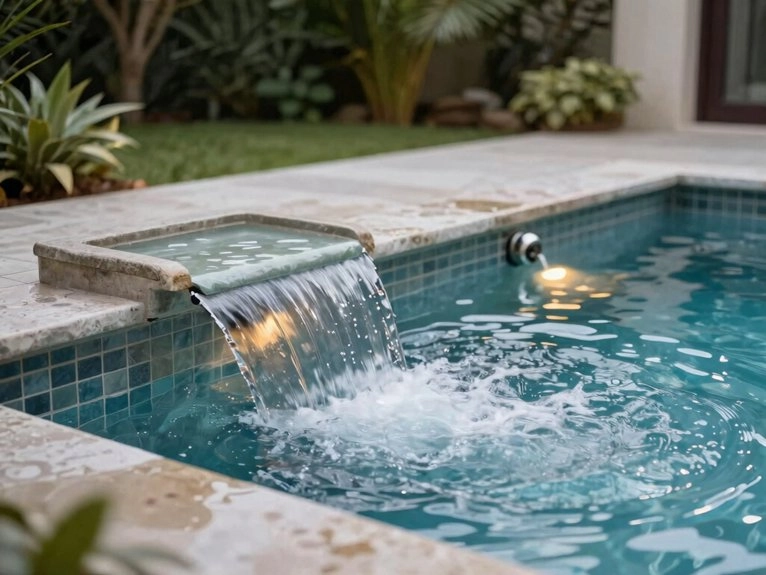
When you add an attached spa, you’re really building two water moods at once, and that’s part of the fun. I’ve watched my family claim the warm seat fast, while the pool stays ready for splashing.
A simple spillover spa can run about $3,000, while custom stone or metal channels can top $10,000. Expect extra plumbing and a booster pump, too. That upgrade boosts circulation, spa acoustics, and that cozy overflow look.
If you want a grotto with a slide or rock waterfall, costs can reach $25,000. Add LED lights, and your nights feel like a mini resort.
Adding a Feature to an Existing Pool vs. Building It In From the Start
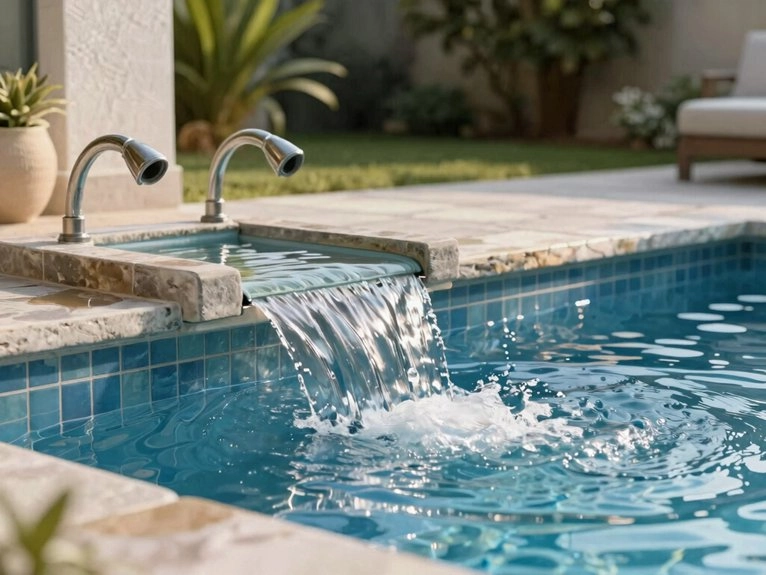
If you’re loving the look of an attached spa or waterfall, you might be wondering whether you can add a feature later—or if you should build it in from day one. I’ve seen both paths, and timing matters.
- Simple deck jets or a pre-made fountain kit can fit an existing pool, often starting around $1,500.
- Bigger features, like grottos or vanishing edges, usually bring budget surprises because of trenching, permits, and equipment upgrades.
- If you’re remodeling anyway, install it then. Your crew can handle grading, plumbing, and patching together, and installation timing gets easier for everyone—kids, pets, and your sanity.
Noise, Energy Use, and Ongoing Maintenance — the Real Running Costs
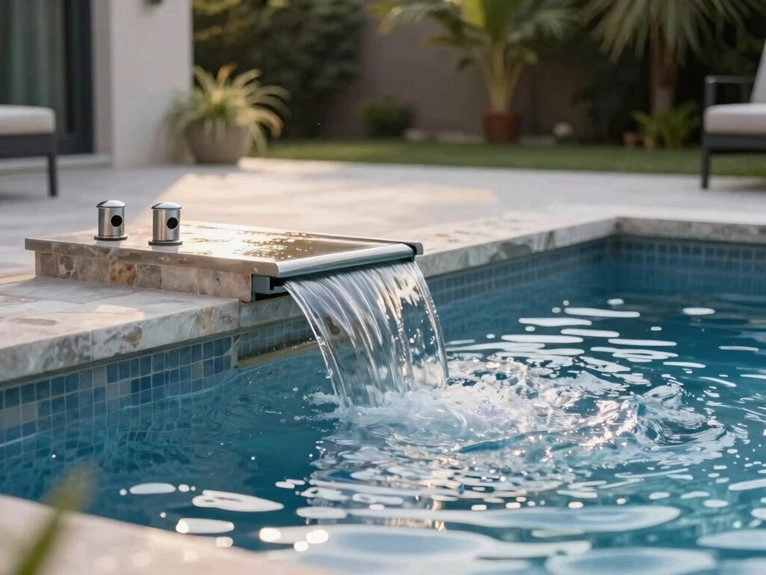
The pretty part of a water feature is easy to see; the running costs are sneakier, and I’ve learned that the hard way while standing next to a humming pump and a very opinionated family.
Big waterfalls and rock grottos can add several hundred dollars a year in electricity, while simple deck jets may cost just a few bucks a month. I notice the ambient noise too; it can soothe you, or follow you like a tiny waterfall choir.
Plan maintenance scheduling for nozzle cleaning, line flushing, winterization, and repairs. Expect $300–$1,200 yearly, plus a little extra water, chemicals, and LED draw.
What Pool Contractors Recommend — and What Homeowners Frequently Regret
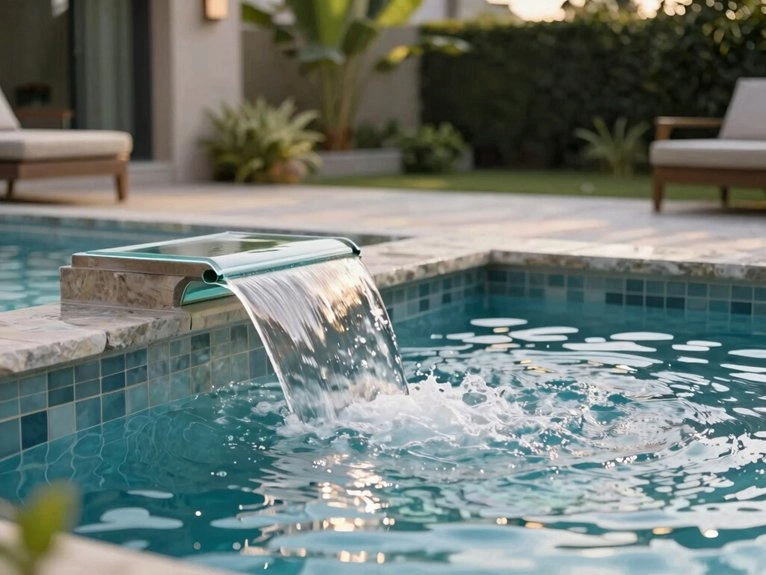
Pool contractors keep steering me back to the same idea: start with the right equipment, or you’ll pay for it twice. I’ve learned that with my own family watching every splash.
- Pick a dedicated pump and upgraded plumbing for waterfalls; cheap flow turns into sad dribbles fast.
- Add LED lights now, because unlit features disappear after dinner.
- Keep permit planning, trenching, and electrical in the budget; those sneaky costs love surprise parties.
I also ask for long term warranties and climate-ready materials, whether you’re in sunny San Diego or a freeze zone. Simple deck jets can beat an upscale grotto’s high-maintenance drama.