17 Raised Flower Bed Ideas for Your Front Yard That Boost Curb Appeal
- 17 Raised Flower Bed Ideas for Your Front Yard That Boost Curb Appeal
- Key Takeaways
- Why Elevated Garden Beds Outperform Traditional In-Ground Planting
- Choosing the Right Material for Your Home's Style and Climate
- Cedar and redwood
- Galvanized metal
- Brick and stone
- Composite and recycled
- Placement and Layout That Works With Your Front Yard's Footprint
- Along the walkway
- Flanking the entry
- Corner anchoring
- Best Plants for Year-Round Color and Low Maintenance
- Design Styles That Complement Any Home Exterior
- Modern and minimalist
- Cottage and farmhouse
- Traditional symmetry
- Smart Ways to Build and Fill Your Beds Without Overspending
- Mistakes That Kill Curb Appeal — and How to Avoid Them
- Frequently Asked Questions About Front Yard Garden Beds
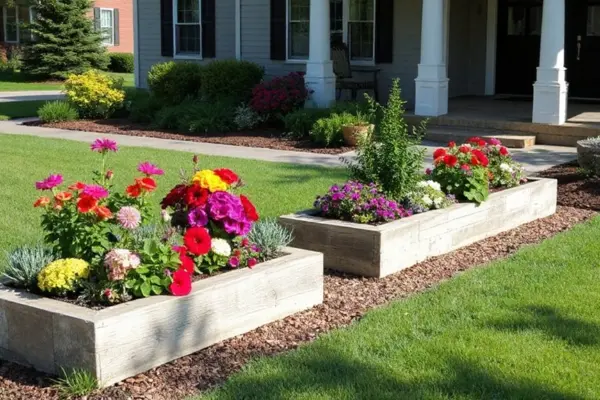
I’ve seen front yard raised beds turn plain walkways into a welcome mat. You can use cedar, redwood, brick, stone, or galvanized troughs, then fill them with 50% topsoil, 30% compost, and 20% perlite for strong roots. I like matching pairs, layered plants, and 2–3 inches of mulch; my family actually keeps up with that. Skip thirsty exotics, mind drainage, and keep shrubs 3–4 feet from the house, and the rest gets easier from here.
Key Takeaways
- Use matching raised beds on both sides of the walkway for a balanced, welcoming front-yard entry.
- Choose durable materials like cedar, brick, stone, or galvanized metal for long-lasting curb appeal.
- Mix tall, mid, and low plants to create layered depth, with focal plants near corners or entry points.
- Add seasonal color with pollinator-friendly natives, bulbs, and repeat flower colors for a polished look.
- Improve drainage with quality soil, mulch, and drainage holes, especially in wet or freeze-thaw climates.
Why Elevated Garden Beds Outperform Traditional In-Ground Planting
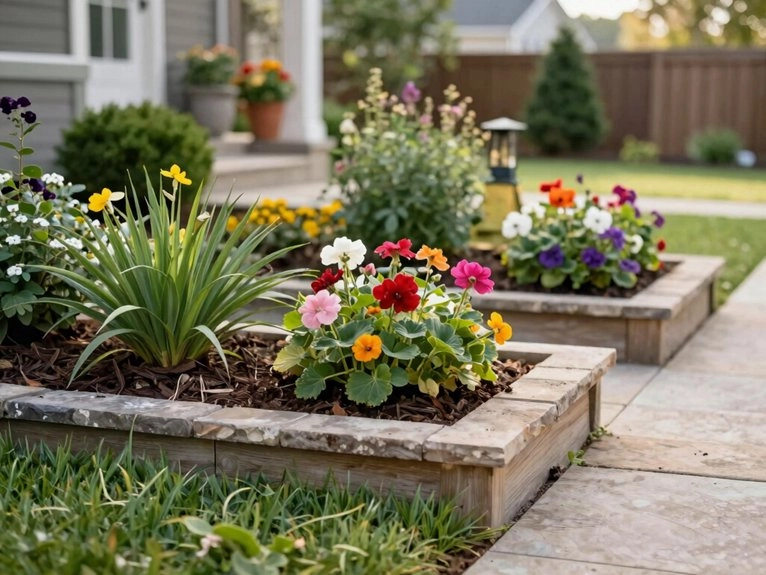
If you’ve ever planted in the ground and watched your spring garden sit there like it’s still half asleep, raised beds feel like a small miracle. I’ve watched mine wake up early, thanks to spring warming from exposed soil and better drainage. You can plant sooner, and your season stretches out a bit.
I fill beds with 6–12 inches of loose soil, compost, and perlite, so roots don’t drown in heavy clay. My back says thank you, too; waist-high planters make ergonomic gardening feel doable for me and my family. Fewer aches. More blooms. More garden crew pride.
Choosing the Right Material for Your Home’s Style and Climate
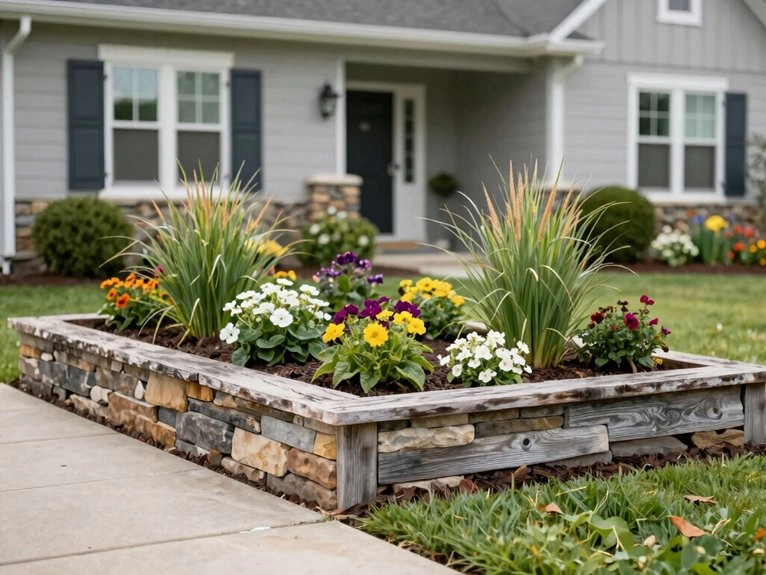
Once you’ve got the growing part figured out, the next big choice is what your raised bed is made of, because the material changes how it looks, how long it lasts, and how much babying it needs.
I’ve watched brick and stone beds make a classic front yard feel welcoming, while corten steel or galvanized troughs give my place a clean, modern edge.
In wet or freeze-thaw climates, I’d pick non-porous choices for better material longevity.
I also pay attention to thermal performance; dark metal can roast roots.
My family likes low-upkeep beds, so I choose sturdy, easy-care materials.
Cedar and redwood
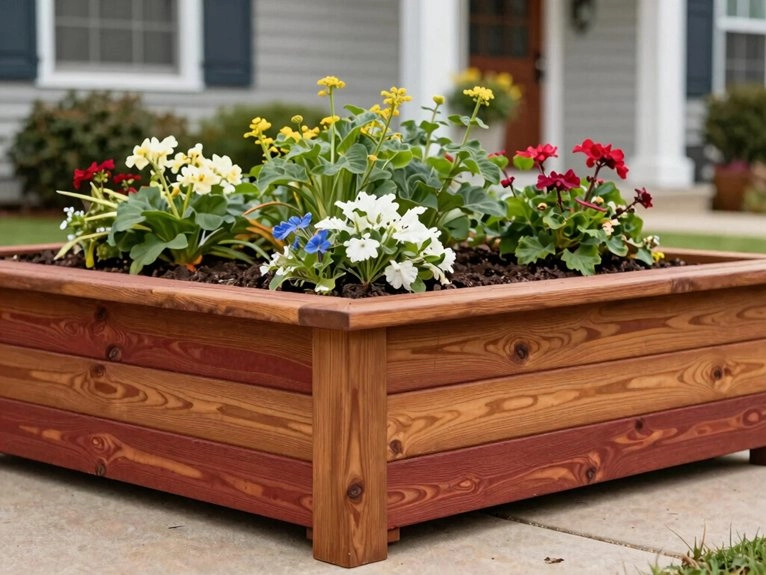
- Cedar’s natural oils help fight rot and bugs.
- Redwood’s tannins add durability and rich color matching with your home.
- Both can last 10–15+ years, and a quick seal helps preserve that glow.
You’ll pay more upfront, but you get long-term value. Use stainless-steel screws, and you’ll skip weird stains.
Galvanized metal
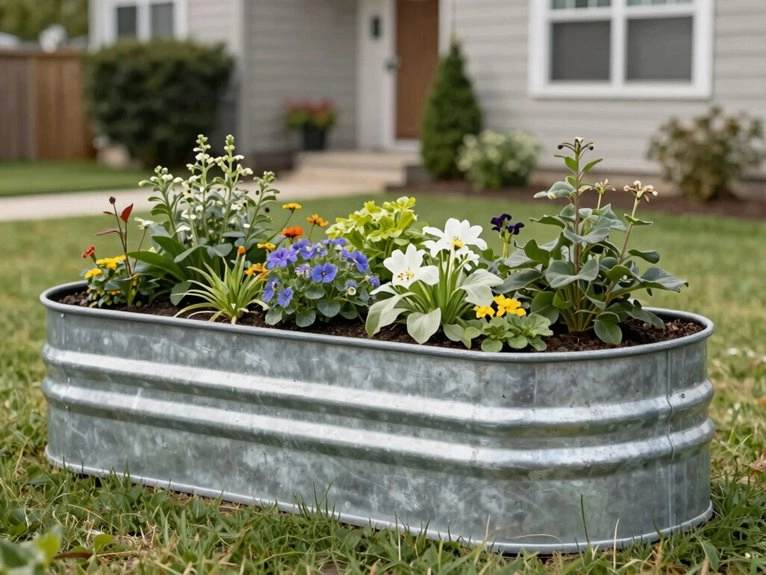
Galvanized metal planters have a clean, sturdy look that I’ve come to trust in my own yard, especially when I want something that can take a beating and still look sharp. You can count on them for rust prevention and 20-plus years outdoors, which feels like winning the front-yard lottery.
I drill 1/4- to 1/2-inch holes in the bottom, or add gravel, so roots don’t sit in swampy water. For my porch, I like 24-inch troughs, or 4-foot ones for bigger impact. Watch thermal expansion, and leave a little room. I’ll paint mine sage green or matte black, and my kids say it looks stylish without trying too hard.
Brick and stone
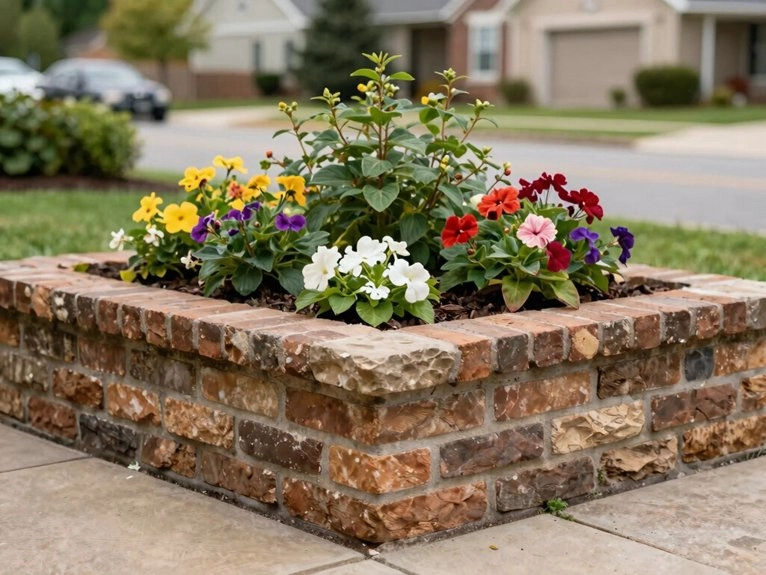
If you like the sturdy feel of metal planters, brick and stone take that same no-nonsense mood and give it a more classic, built-in look. I’ve seen brick edging match a red-brick porch so well, it felt like it belonged there from day one.
My family likes the calm, settled feel it brings.
- Build brick walls two courses high for a neat 16–20-inch bed.
- Pick limestone, bluestone, or fieldstone for timeless style and stone seating at 16–18 inches.
- Use mortared walls for slopes, or dry-stacked stone for drainage.
Choose colors that echo your house, then cap it cleanly.
Composite and recycled
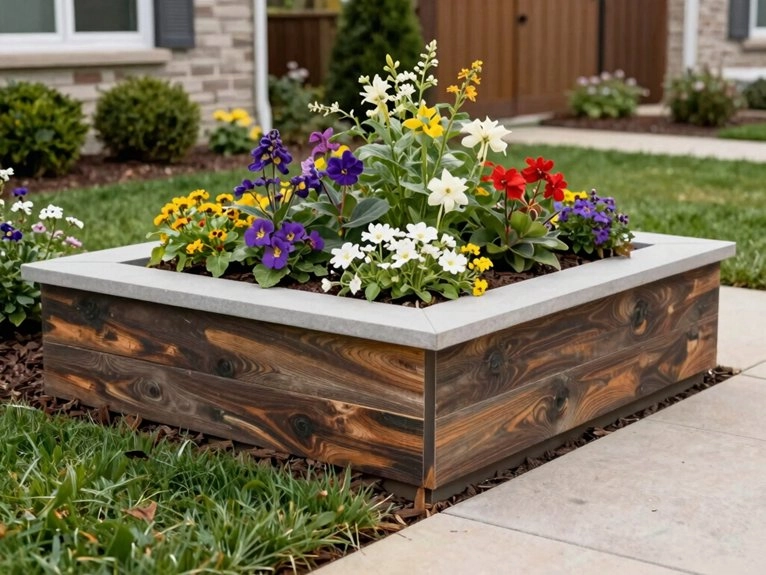
Composite boards and second-life scraps can turn a plain garden box into something sturdy, smart, and a little bit clever. I’ve seen composite boards made with recycled plastics and wood fibers last for decades, even in my aunt’s blazing front yard.
You can also use reclaimed troughs, old bricks, or pavers for a solid frame that won’t quit. My family loves the “found it, fixed it” vibe. Drill drainage holes in metal tubs, line them with hardware cloth, and fill with raised-bed mix. Add mulch on top, and you’ve got less work, fewer weeds, and more welcome.
Placement and Layout That Works With Your Front Yard’s Footprint
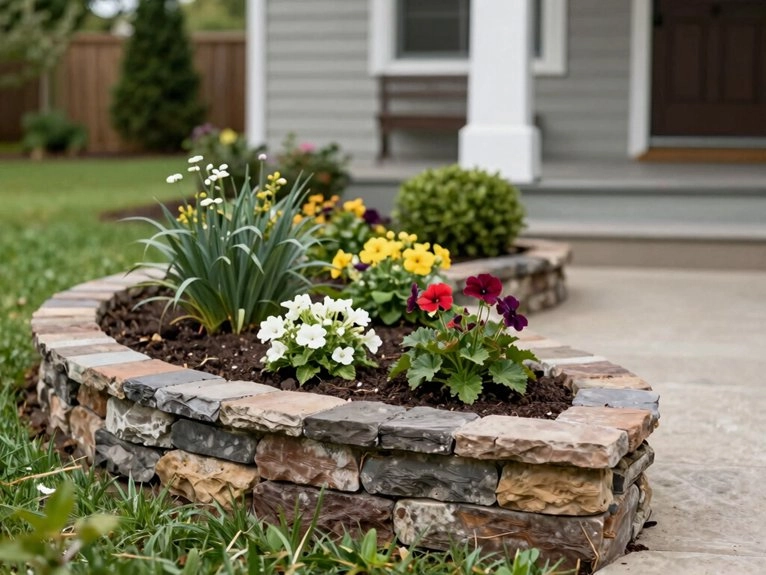
When you’re planning a front yard bed, placement can make the whole design feel intentional instead of squeezed in as an afterthought. I’ve found that a smart layout helps you and your family feel right at home.
- Put beds along the foundation or near a porch step, and keep taller plants in back, low annuals up front.
- Use sunlight zoning: full-sun beds need 6+ hours; shady spots near north walls love impatiens.
- In narrow yards, try slim triangular beds, low edging, and a 2–4 ft path for easy traffic flow.
Along the walkway
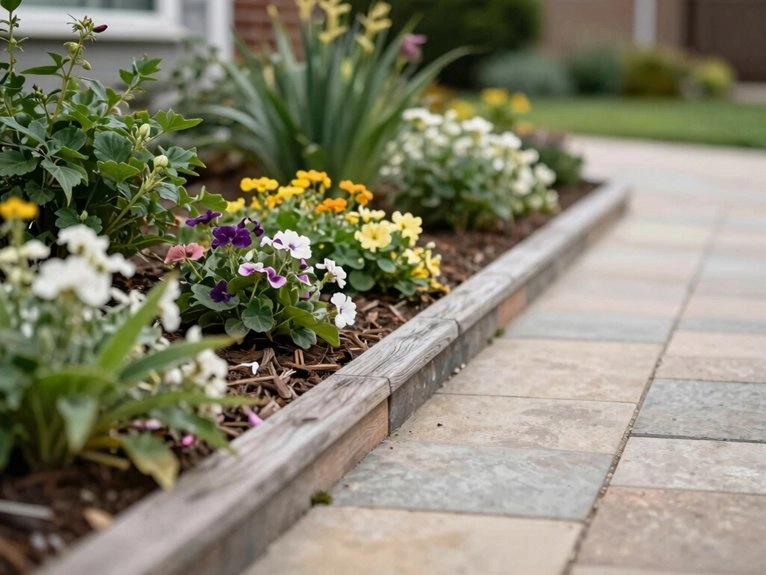
I use dwarf boxwood, salvia, cornflower, and seasonal bulbs for steady color and pollinator buzz. Brick, stone, or galvanized troughs keep soil put. I repeat two colors, mix two leaf textures, and layer tall, mid, and low plants. I also add low-voltage lights; my kids call it “the runway.”
Flanking the entry
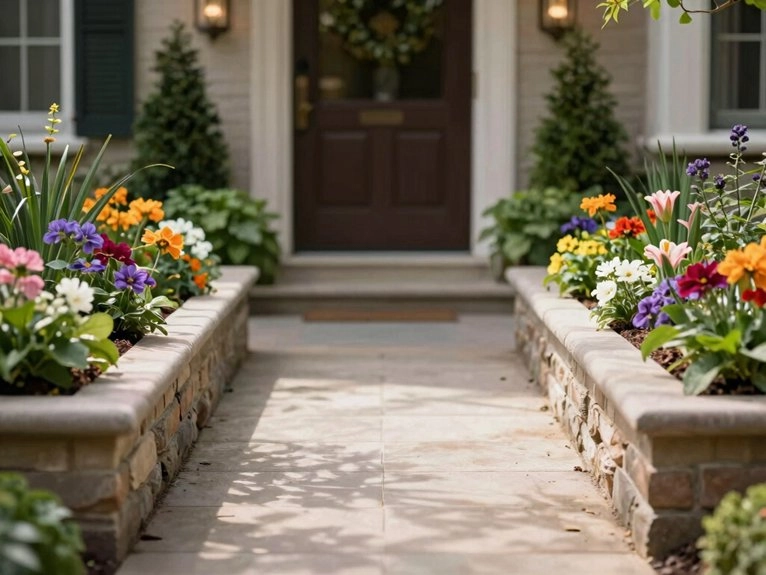
If the walkway beds were the warm-up, the flanking beds are the main event. I like matching raised beds on both sides of your entryway; they turn your porch into a friendly welcome, not a lonely doorway. Use symmetrical planters, 3–4 feet wide and 18–24 inches high, to frame entry focalpoints with style.
- Put tall dwarf hydrangeas or grasses in back.
- Add salvia, lavender, or boxwood in the middle.
- Finish with lamb’s ear, geraniums, and mulch.
I’ve found brick feels classic, cedar feels cozy, and drainage matters—soggy roots are nobody’s guest.
Corner anchoring
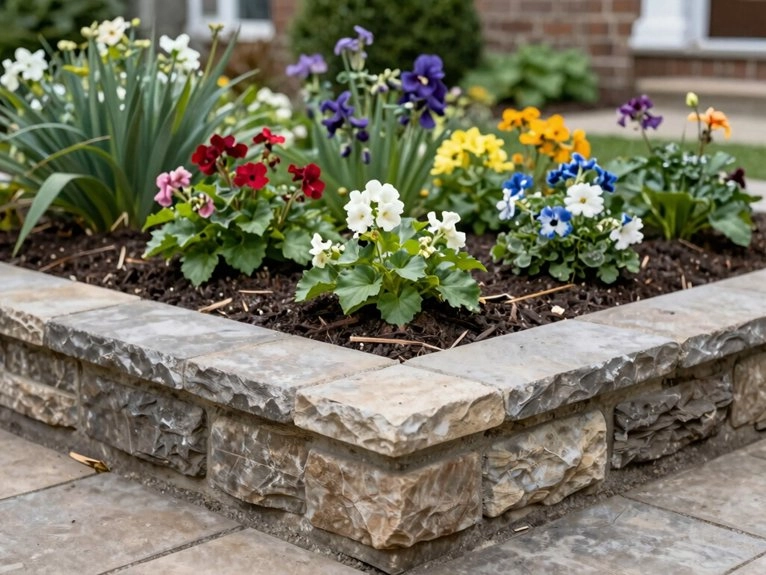
I like to anchor the corner with one strong focal plant, because that deep corner can make the whole bed feel steady and finished.
In my yard, I’ve seen a 2-foot hydrangea do the job beautifully, like a little vertical sculpture. You can set it in brick, stacked blocks, or a galvanized trough, depending on your style and patience level.
Then step down the heights toward the street, and add 18-inch edging so the soil stays put.
I’d tuck in Salvia or native grasses, then add seasonal lighting.
It feels welcoming, not fussy, and my family notices it.
Best Plants for Year-Round Color and Low Maintenance
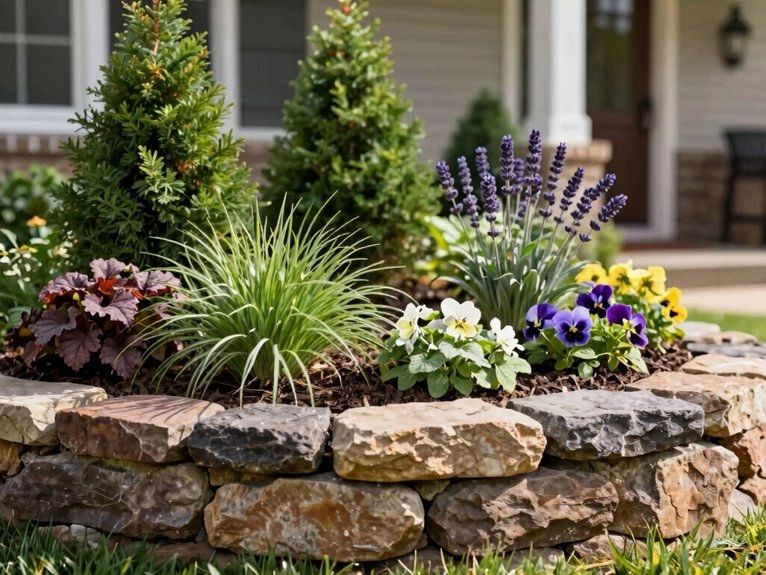
For a front bed that looks good in every season, I usually start with a simple plant mix that does most of the work for me. You can do this too, and feel right at home in the garden crowd.
- Mix dwarf boxwood or Japanese holly with salvia and coneflower for shape, bloom, and winter structure.
- Tuck tulips and daffodils into drought tolerant groundcovers like sedum or creeping thyme; they pop early without fuss.
- Add pollinator friendly shrubs and natives such as asters or coreopsis, then mulch 3–4 inches to save water and hush weeds.
Design Styles That Complement Any Home Exterior
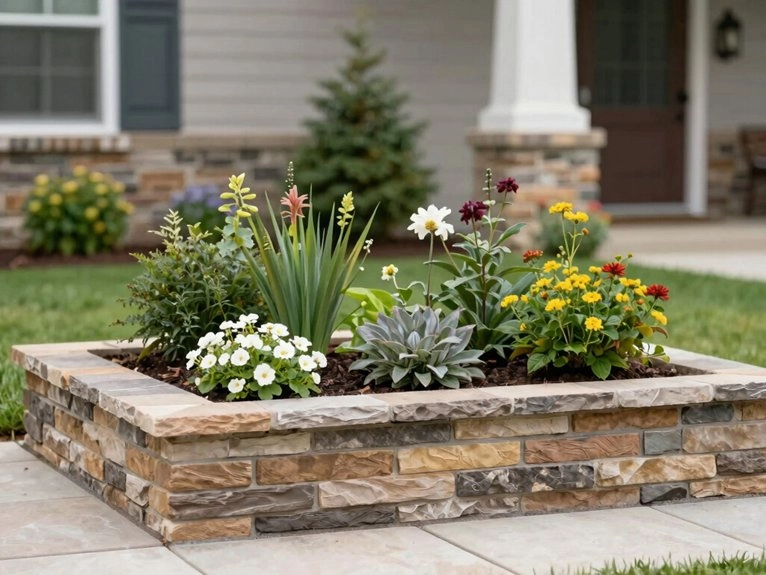
Once you’ve got year-round color working for you, the next big win is choosing a style that looks like it belongs with your house. I’ve seen lavender, salvia, and English roses make a cottage bed feel warm and welcoming, especially with brick edging that matches the porch.
My family likes native coneflower and bee balm beds, too, because they bring bees and cut watering. For seasonal shifts, I lean on color theory: repeat a few blooms, then shift heights for balance.
In tight yards, I use narrow raised beds or window boxes with cedar or stone. It’s neat, not fussy.
Modern and minimalist
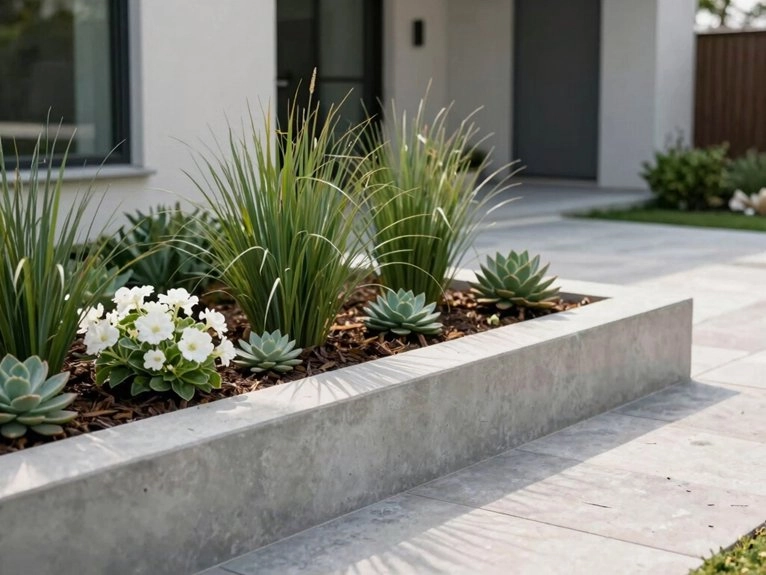
If you want a raised bed that feels crisp and current, keep the whole setup simple and intentional.
I’ve found that geometric hardscaping makes your front yard look like it knows what it’s doing. Try this:
- Use corten steel or painted galvanized troughs; they resist rot and look sharp for years.
- Keep minimalist planting to three stars—white alliums, silver Artemisia, and boxwood. My family actually noticed the “wow” without a jungle.
- Shape beds as rectangles or squares, then add straight pavers, thyme, and a slim bench.
You’ll feel right at home, and your curb appeal will too.
Cottage and farmhouse
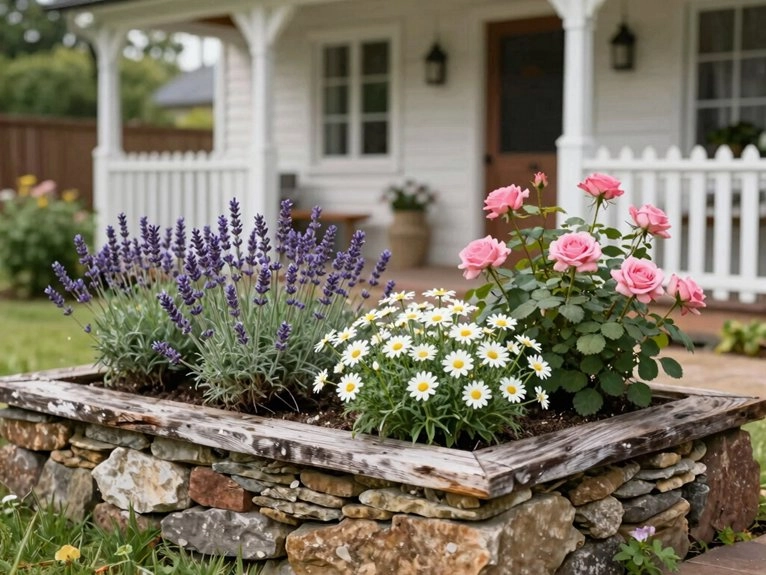
After the clean lines of modern beds, I love how a cottage or farmhouse raised bed can feel softer and more lived-in, like it’s been part of the yard forever.
I use cottage layering: English roses, lavender, and foxglove in back, mids, and low edges, with 6+ hours of morning sun. I’ve built beds from reclaimed wood or brick, then topped them with cedar for farmhouse accents.
I mix lamb’s ear, grasses, peonies, and delphiniums, plus an arched trellis, gravel path, and bench. My family loves it, and native plants with 2–3 inches of mulch keep weeds from staging a coup.
Traditional symmetry
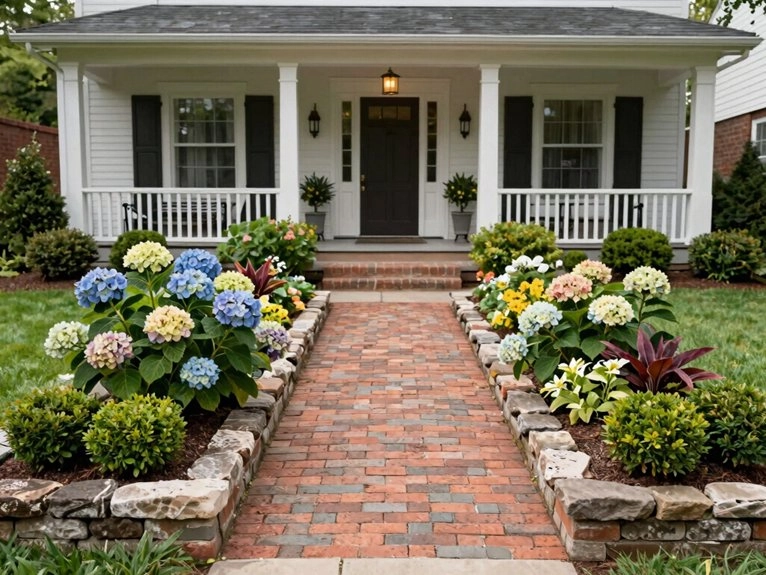
When I want a front yard to feel calm and polished, I lean hard into traditional symmetry. I’ve found it makes neighbors feel welcome, like they belong on your porch.
- Place matching raised beds, 3–4 feet wide and 6–8 feet long, on both sides of the walkway for entry balance.
- Build formal plantings in mirrored layers: hydrangeas or grasses in back, salvia or coneflowers in the middle, alyssum up front.
- Repeat pairs of identical containers, colors, and textures, and line up brick or stone edges with porch columns.
My family calls this “fancy without fuss.”
Smart Ways to Build and Fill Your Beds Without Overspending
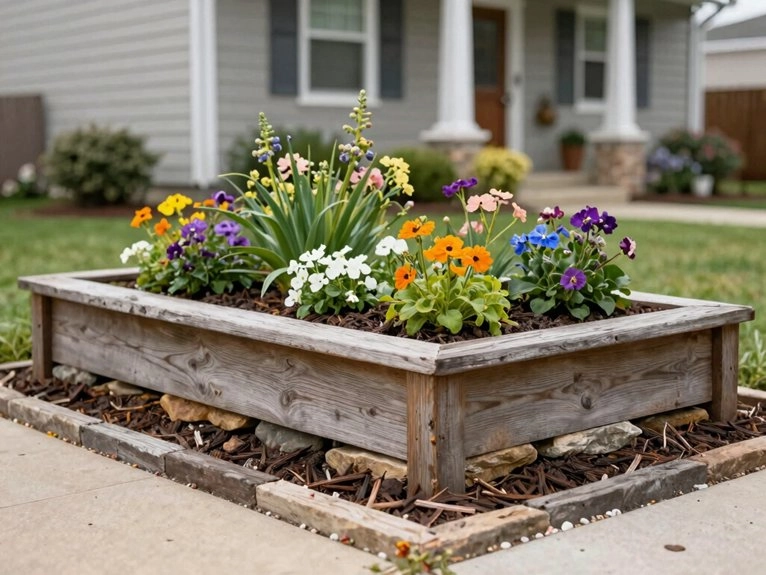
On a tight budget, I still like a raised bed that looks sturdy and inviting, and I’ve found you don’t need ornate lumber to get there.
I’ve built budget builds with pallet boards and cinder blocks, and an 8-by-4-foot bed can cost under $50.
For a quick win, I’ll also use a galvanized trough or an old bathtub; I drill holes, then fill them with 50% screened topsoil, 30% compost, and 20% perlite.
For soil saving, I mix leftover potting soil, compost, and local topsoil 1:1:1.
My family loves the tidy, easy-care feel.
Mistakes That Kill Curb Appeal — and How to Avoid Them
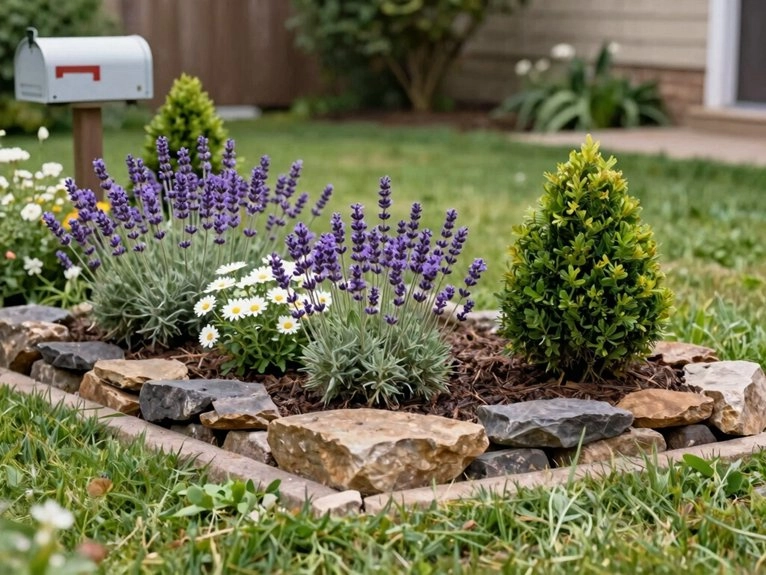
Even a beautiful raised bed can lose its charm fast if a few common mistakes sneak in, and I’ve made enough of them to know how quickly curb appeal can go sideways.
I learned the hard way with my own front walk.
- Planting shrubs too close to the house creates overgrown foundations. Keep mature plants 3–4 feet out, and check tags.
- Broken brick edging turns into edging eyesores. Use clean brick or stone lines.
- Stuffing in thirsty exotics or skipping compost invites sloppy beds. I pick natives, test drainage, and keep decorations simple.
Frequently Asked Questions About Front Yard Garden Beds
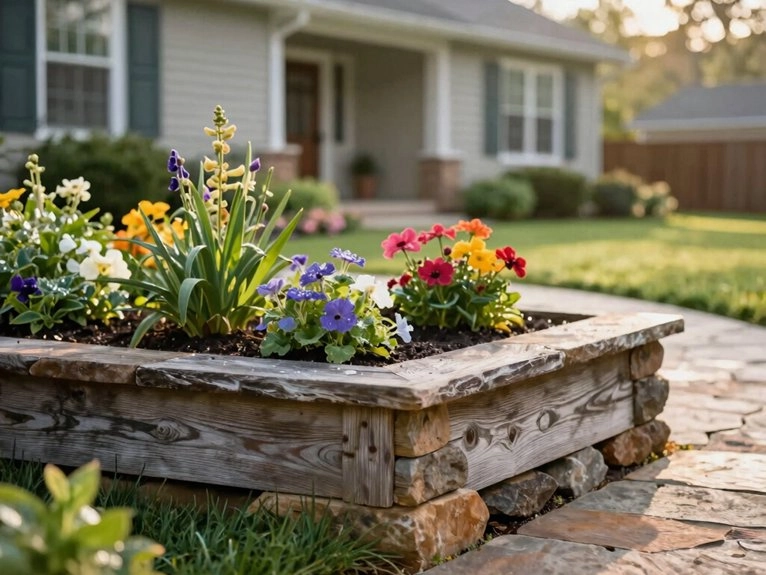
I ask those questions too, because I’ve watched a bed go from charming to chaotic in about one rainy week. You can calm that mess with soil testing, then choose plants for your USDA zone and sunlight. Put hydrangeas or grasses in back, petunias or lamb’s ear in front. Use brick, stone, or galvanized edges, then add 2–3 inches of black wood mulch. My family’s maintenance routines stay easier with waist-height beds.