Flower Bed Edging Materials Compared for Style, Cost, and Durability
- Flower Bed Edging Materials Compared for Style, Cost, and Durability
- Key Takeaways
- Steel Edging
- Brick Borders
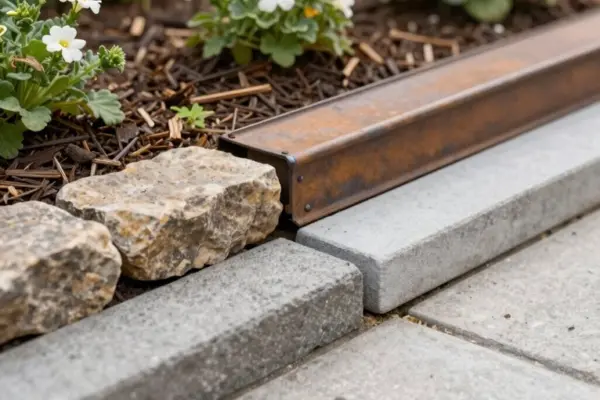
- Natural Stone
- Concrete
- Wood
- Composite Materials
- Plastic Landscape Edging
- Living Plant Borders
- Which Material Lasts Longest?
- Best Choice for DIY Gardens
You can frame beds with budget plastic ($1–$3.50/foot), warm wood, classic brick, crisp concrete, rugged stone, or sleek steel—each creates a different vibe! Plastic bends easily but lasts just 3–5 years; brick and concrete can reach 20–50 with a solid base. Stone looks timeless but takes muscle. For busy edges, galvanized steel lasts 20–40+ years, while Cor-Ten may last 50–100. Keep going for easy installation tips and smart material matches.
Key Takeaways
- Steel edging delivers crisp modern lines, costs about $3.50–$12 per foot, and Cor-Ten can last 50–100 years with proper installation.
- Brick borders create a timeless look, typically last 20–50+ years, but need a firm base and occasional weed control between joints.
- Natural stone offers heritage style and exceptional durability, costing roughly $12–$70 installed per foot, though heavy materials and curves often require professional installation.
- Concrete edging provides stable, clean outlines for about $3–$8 per foot and commonly lasts 20–50 years when properly installed.
- Plastic is the cheapest curved-border option at $1–$3.50 per foot but lasts only 3–5 years; aluminum offers 30+ years without rust.
Steel Edging
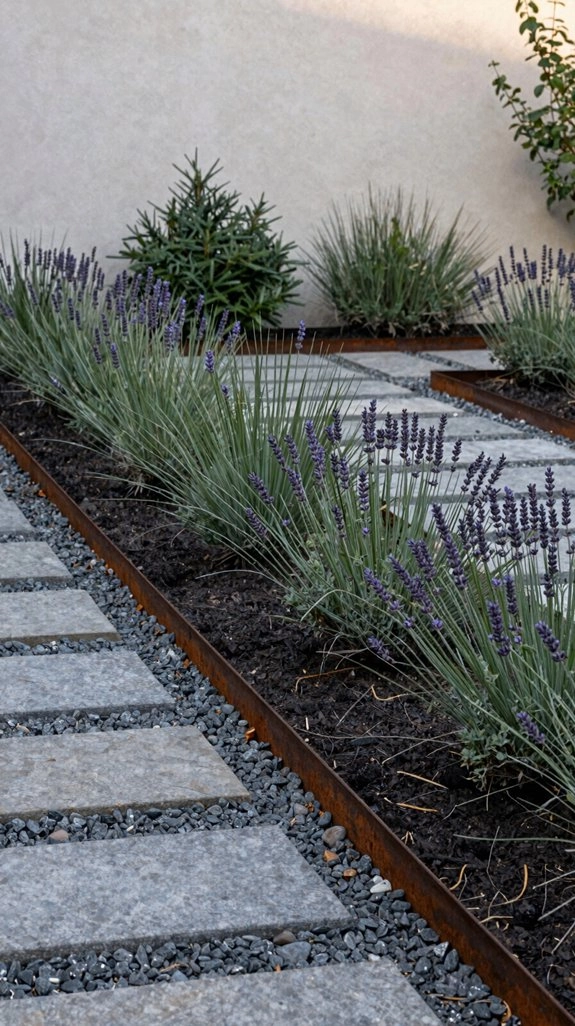
Steel edging brings serious strength to a flower bed, especially if your garden sits beside a driveway, walkway, or busy patio. You’ll get crisp, modern lines that help your space feel polished and connected to the rest of the neighborhood.
Choose galvanized steel, weathering Cor-Ten, or powder-coated pieces for a clean look and strong corrosion resistance. Standard steel costs about $3.50–$7 per foot; Cor-Ten runs $6.50–$12, so calculate your cost per project before shopping.
For DIY installation techniques, mark the edge, dig a narrow trench, set sections straight, and secure them with stakes. Still, hire a pro for anchoring near pavers—properly installed Cor-Ten can last 50–100 years!
Brick Borders
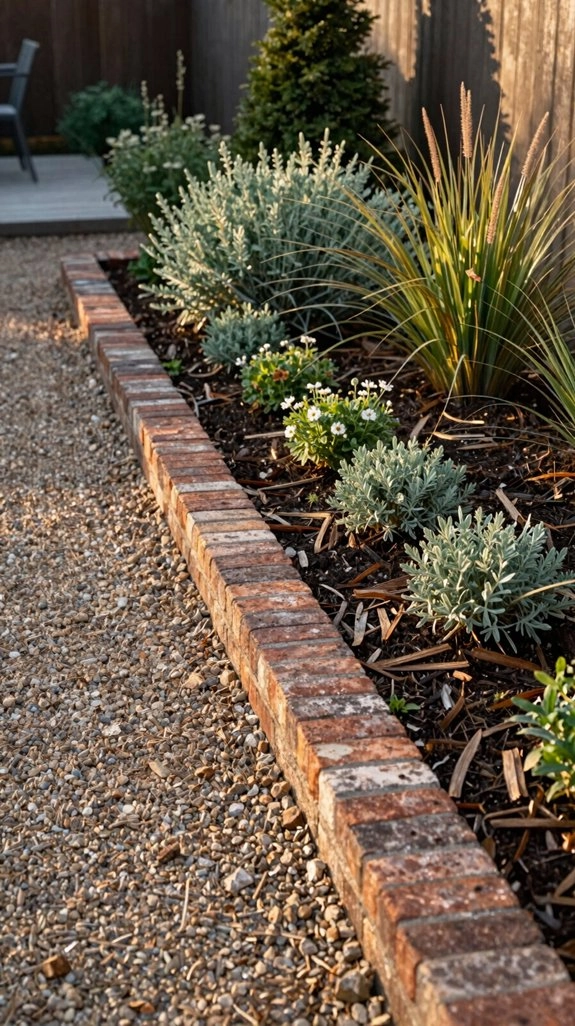
Brick borders give a flower bed that timeless, tidy look you see beside classic patios and walkways, and they can fit almost any garden style—nice!
You can lay bricks flat for a low, welcoming line or set them on edge for more height and definition. Your neighbors will recognize that polished, traditional look right away!
For a lasting result, build a firm, level base before setting each brick. Costs vary with materials and labor, but careful prep helps your border last 20–50+ years.
Plan for Weed management between joints, too. In cold regions, choose ASTM C902 Class SX bricks for freeze thaw compliance—your border stays straighter through winter’s drama!
Natural Stone
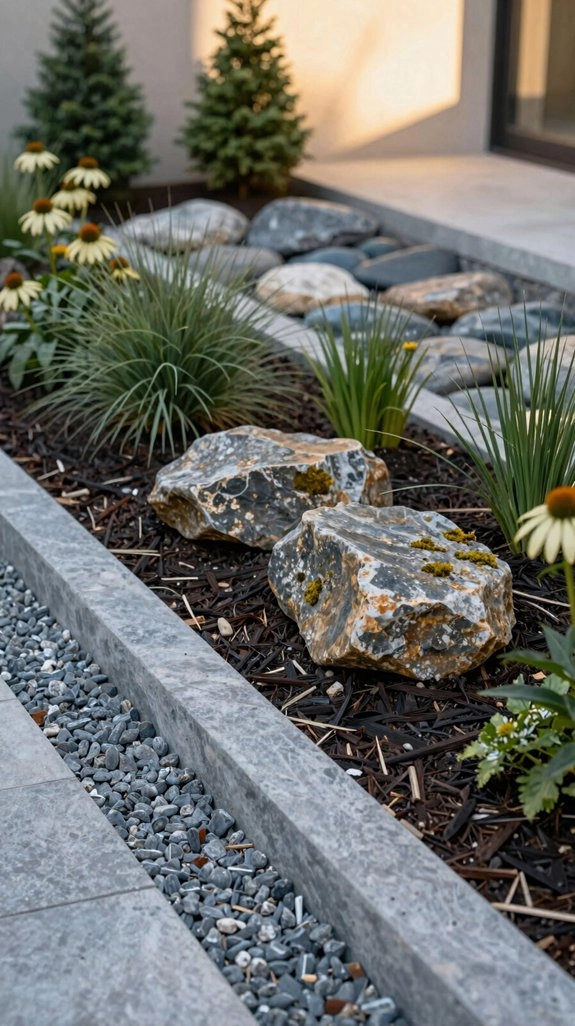
For a border that feels pulled straight from a countryside estate, natural stone brings serious staying strength—plus plenty of wow factor! You’ll create a welcoming, established look that helps your garden feel like part of the neighborhood’s story.
Granite and basalt offer excellent Freeze–thaw durability, absorbing under 1% water and standing up to winter’s repeat performances. Expect installation complexity, though: stone is heavy, curves take skill, and a pro often makes sense.
At roughly $12–70 per linear foot installed, it’s a bigger upfront commitment. Still, with a 30–100+ year lifespan, your border could outlast your weekend plans—now that’s impressive!
Concrete
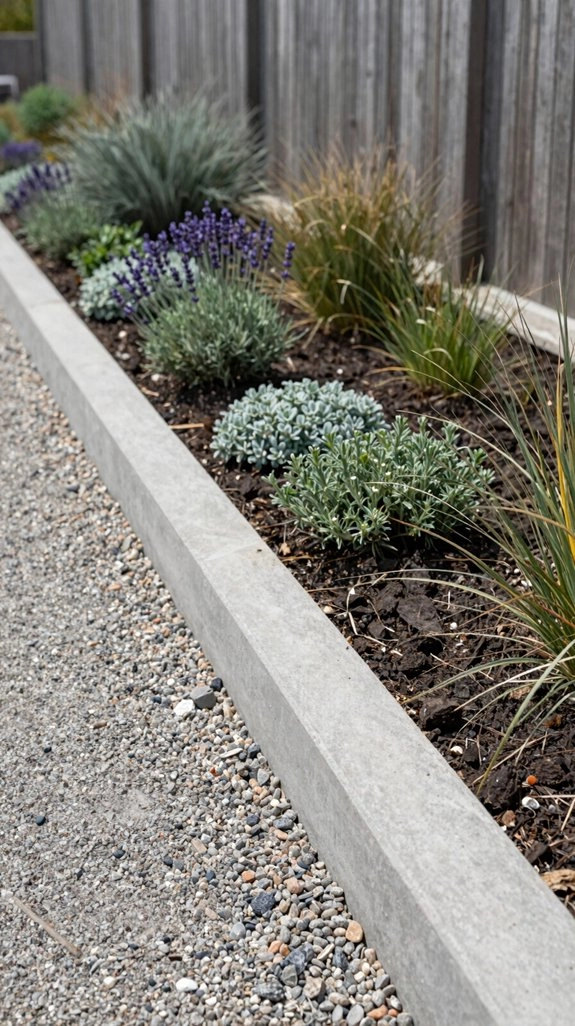
Concrete edging gives your flower beds a crisp, confident outline that won’t scoot out of place after one enthusiastic lawn-mowing session—nice!
You can choose poured curbing or precast blocks, then add color, stamps, or texture for a polished, neighborhood-ready look.
Expect about $3–8 per linear foot.
Tool based installation planning helps you map curves before concrete becomes a permanent decision.
For DIY work, gather precast units, gravel, sand, and a level.
Dig, compact the base, set pieces, and check alignment.
Proper base prep and air-entrainment support freeze thaw crack prevention.
Quality units can last 20–30 years—seriously sturdy!
Seal every 2–3 years.
Wood
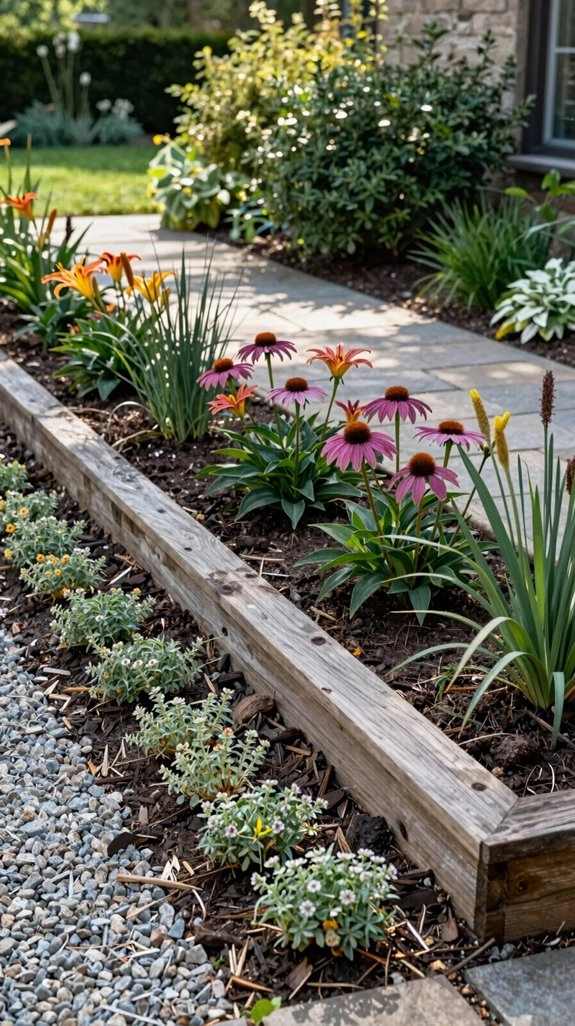
Wood edging brings a warm, natural frame to flower beds, blending beautifully with mulch, blooms, and curved garden paths—no “industrial parking lot” vibes here!
You’ll get a softer, classic look that helps your garden feel like part of the neighborhood.
For a curved border, use flexible boards or short sections of weatherproof wood.
Dig a straight, shallow trench, set pieces snugly, and anchor them well to limit warping and gaps.
Wood costs less and installs easier than stone, hooray!
Still, plan for edging maintenance: keep it out of standing water, especially in freeze-thaw areas.
Rot-resistant, treated wood lasts longer, though it won’t outlast stone or metal.
Composite Materials
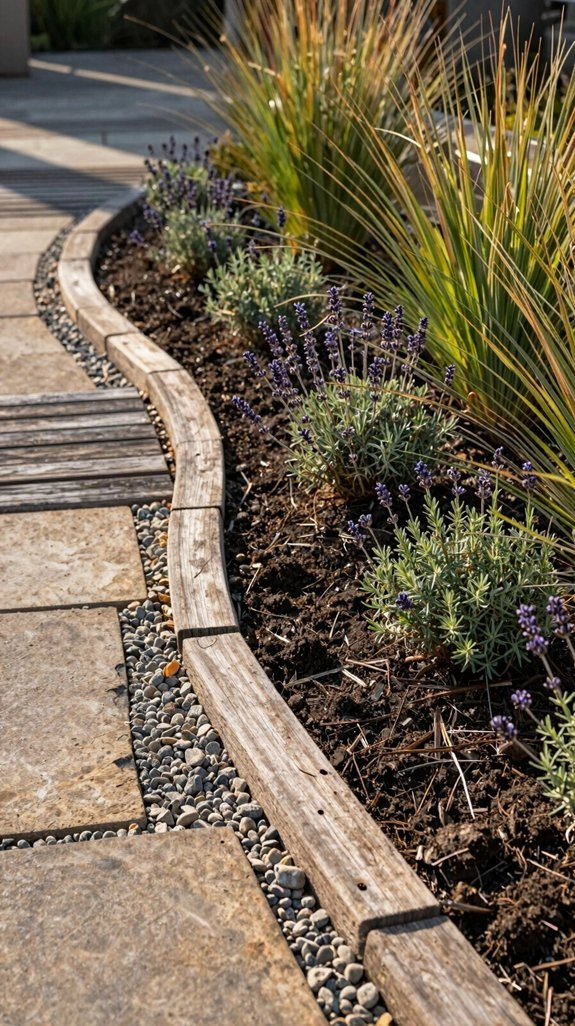
Composite edging gives you a clean, polished border without the cracking and fading that can plague bargain plastic—nice! You’ll get recycled durability from HDPE-based materials, helping keep waste out of landfills while your garden fits right in with a well-kept neighborhood.
For a simple DIY install, grab edging, stakes, a shovel, and a tamper. Dig a 4–6-inch trench, shape the strip around flexible contours, stake it every 4–5 feet, then backfill and compact. Easy!
It costs more upfront than basic options, but you won’t be replacing brittle borders every few seasons. Your beds stay smooth through sun, frost, and storms—no garden drama required!
Plastic Landscape Edging
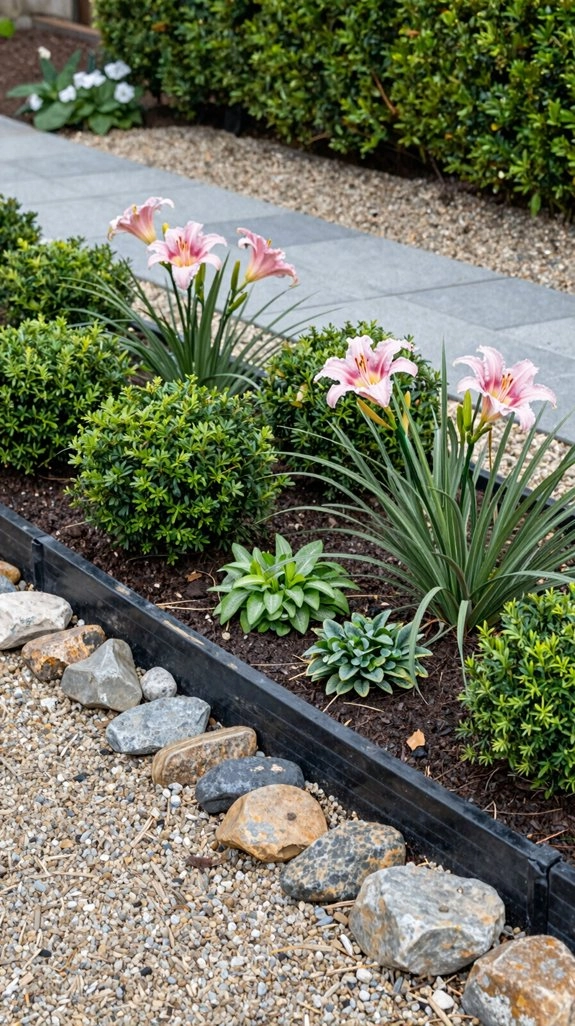
Plastic garden scene edging is the budget-friendly quick fix for flower beds, costing about $1–$3.50 per linear foot and bending easily around curves—great for a small weekend makeover!
For curved bed installation, grab edging, stakes, and a shovel. Dig a 4–6-inch trench, set the strip, then stake it every 4–5 feet. You’ll get a neat border that helps your garden feel polished and welcoming!
Still, plastic needs teamwork with your climate. UV degradation prevention means choosing UV-rated products and checking stakes after hot summers or frost. Standard edging may last only 3–5 years, so it suits quiet corners and small budgets—not a 30-year barrier.
Living Plant Borders
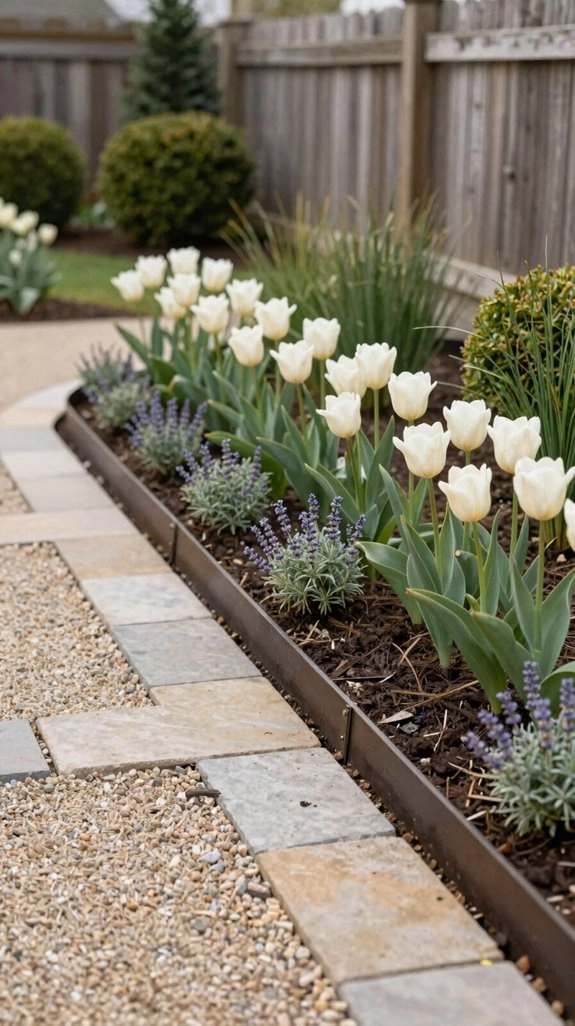
Living plant borders need an edge that can keep up as perennials spread, bulbs pop up, and you shift mulch from season to season!
- Choose aluminum for flexible, tidy lines.
- Use steel to hold bold, sweeping curves.
- Pick stone for a cozy, timeless garden feel.
- Check plastic with UV stability testing; it may crack.
- Dig a 4–6-inch trench, then handle trench backfill compaction.
You’ll keep soil from wandering into the lawn, and your shared garden rhythm stays neat!
Aluminum’s hidden joints and angled stake pockets resist frost heave, so your border won’t do the springtime wiggle.
Stone looks lovely but costs more and hates tight curves.
Which Material Lasts Longest?
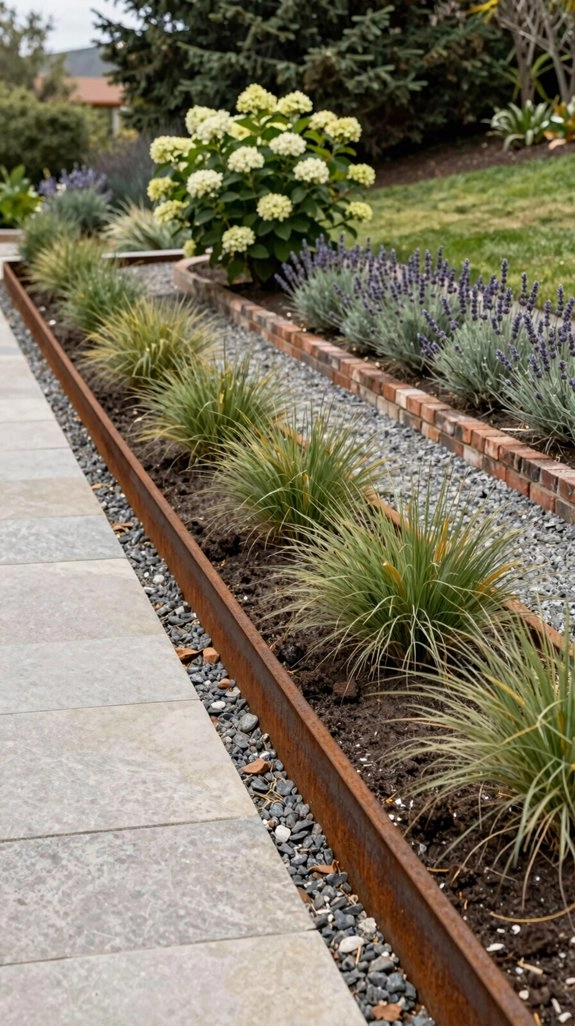
Which edging wins the long-haul contest? In Edge lifespan comparisons, standard plastic trails behind at about 3–5 years, while brick and concrete often reach 20–50 years with a solid base.
Steel can serve your garden crew for decades: galvanized types last 20–40+ years, and Corten may reach 50–100+ in mild climates. You’ll need smart anchoring and corrosion planning, though—no shortcuts, neighbors!
For long term maintenance planning, aluminum is a standout, lasting 30+ years without rusting, rotting, cracking, or turning brittle.
Yet natural granite or basalt takes the crown: it can last 30–100+ years and shrugs off freeze-thaw weather beautifully.
Best Choice for DIY Gardens
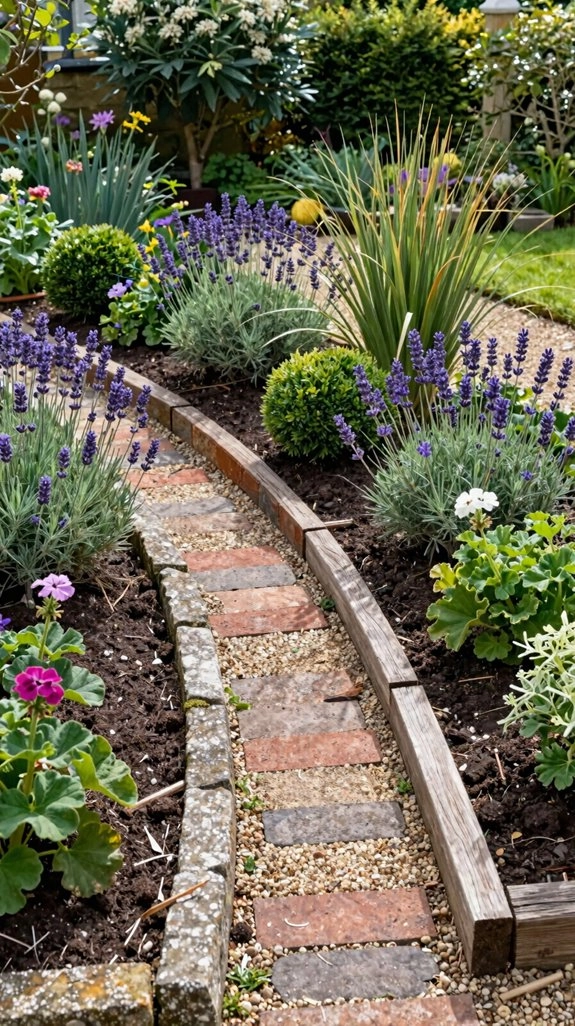
For a DIY garden that looks tidy without turning into a weekend-long wrestling match, start by weighing your budget, the curves in your bed, and how long you want the border to last.
- Recycled plastic offers Cost friendly options: $1–$3.50 per foot, flexible curves, but lasts 3–5 years.
- Brick creates a welcoming classic look; use a firm base, expect weeds.
- Steel handles busy spots well, though anchoring takes care.
- DIY installation tips: dig a 4–6-inch trench, stake every 4–5 feet, compact backfill.
- Aluminum costs $3–$8 per foot, bends neatly, and lasts 30+ years—your no-fuss neighborhood-garden winner!