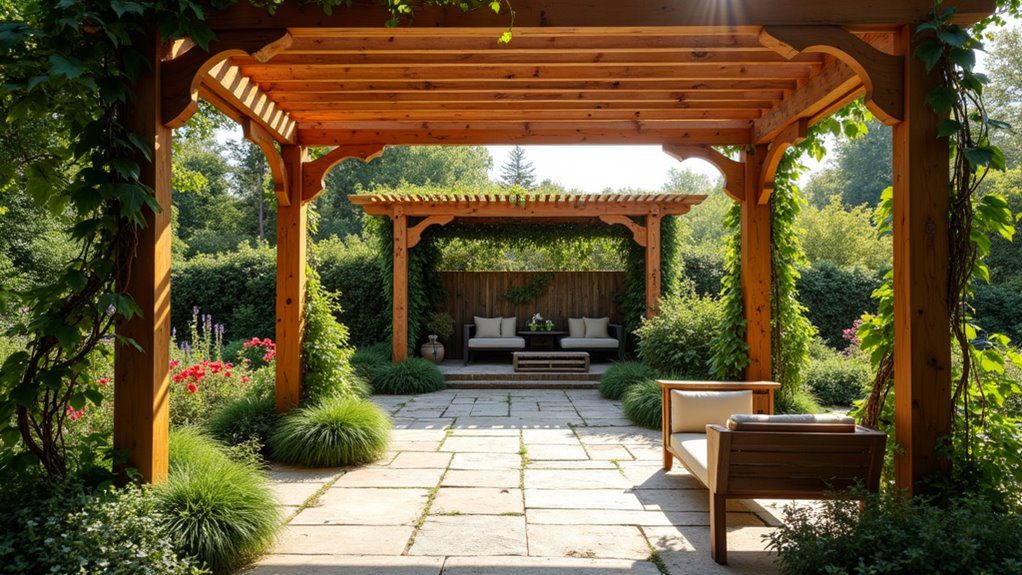
Raised Garden Bed Plans for Small Backyards That Maximize Every Inch
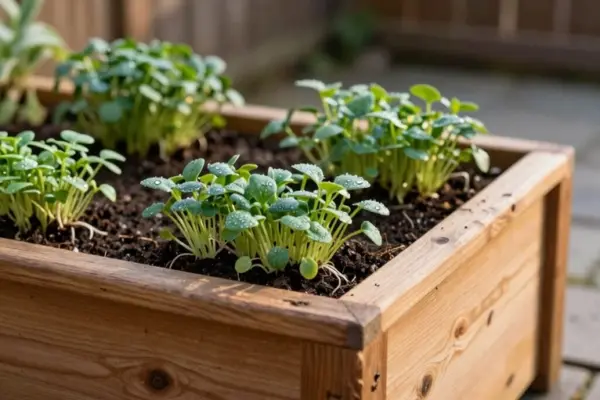
- Raised Garden Bed Plans for Small Backyards That Maximize Every Inch
- Key Takeaways
- L-Shaped Layouts
- U-Shaped Raised Beds
- Narrow Side Yard Gardens
- Corner Vegetable Beds
- Fence-Line Gardens
- Vertical Raised Beds
- Square Foot Gardening Layouts
- Multi-Level Raised Beds
- Choosing the Right Layout
- Planning for Easy Harvesting
Enhance a small backyard with L-shaped corner beds or slim fence-line boxes made from cedar, screws, cardboard, and raised-bed soil—easy weekend builds! Keep beds 12 inches deep, line bottoms with hardware cloth and weed fabric, and leave a path for harvesting. Try square-foot planting for tidy, high-yield rows. Best of all, build a U-shaped bed with a center aisle and trellis; you’ll grow more without doing soil gymnastics. Keep going for smart layouts and simple plans.
Key Takeaways
- Use L-shaped beds to turn unused corners into productive planting space while preserving open lawn and pathways.
- Build U-shaped raised beds with a central access aisle, allowing easy care without compacting the soil.
- Install narrow beds along side yards or fences, leaving a slim walkway for watering, harvesting, and maintenance.
- Make beds at least 12 inches deep; use 18–24 inches for deep-rooted crops like carrots and potatoes.
- Add trellises, hardware cloth, weed fabric, and drip irrigation to maximize vertical space and reduce maintenance.
L-Shaped Layouts
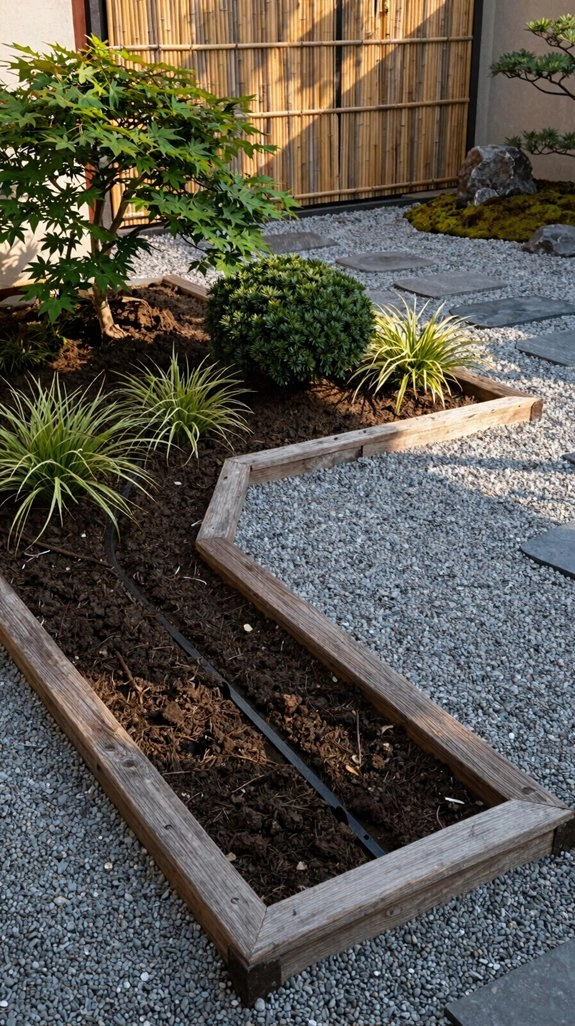
An L-shaped raised bed turns an overlooked backyard corner into a productive little garden zone—pretty clever, right?
You’ll turn a cramped side yard into a welcoming spot for growing food together, without swallowing the path.
Build each arm 3–4 feet wide with cedar boards, screws, cardboard, and rich soil amendments.
It’s a friendly beginner project: mark the corner, assemble the frames, layer cardboard, then fill and plant.
Use companion planting along the extra edges—basil beside tomatoes, lettuce near herbs.
Here’s the fun surprise: add a trellis in the inner corner, and your cucumbers can climb skyward, using every inch!
U-Shaped Raised Beds
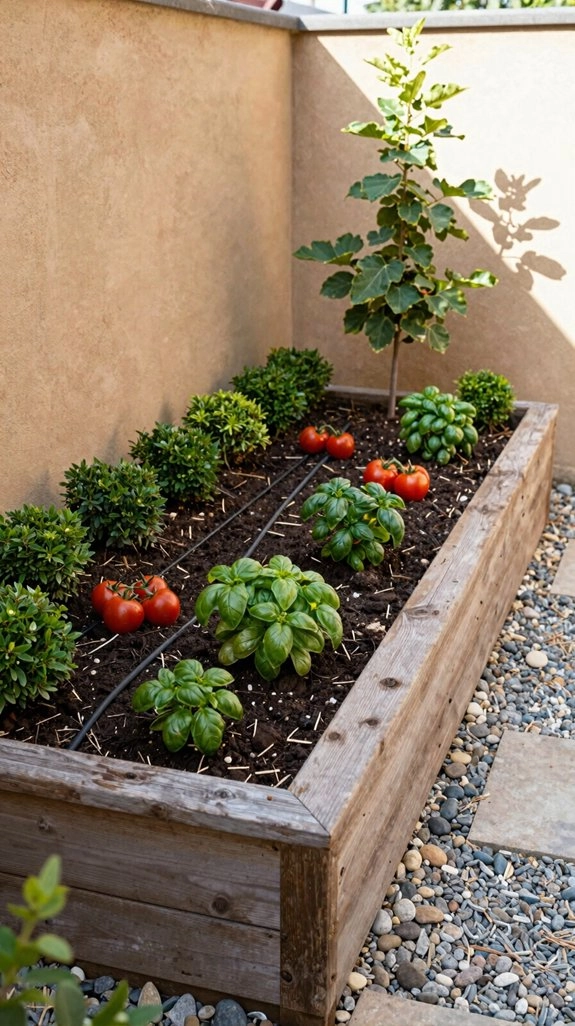
When your backyard feels too tight for a full garden, a U-shaped raised bed can create a surprisingly roomy growing space without taking over the whole yard!
- Build three connected boxes from cedar; Cedar longevity gives you about 10–15 years of dependable use.
- Make each bed at least 12 inches deep for tomatoes, greens, and root crops.
- Line the bottom with hardware cloth and weed-blocking fabric to stop rodents and grass roots.
- Leave an open center access aisle, so you can tend every plant without stepping on soil.
You’ll get a tidy, welcoming garden hub—more harvest, fewer muddy acrobatics!
Narrow Side Yard Gardens
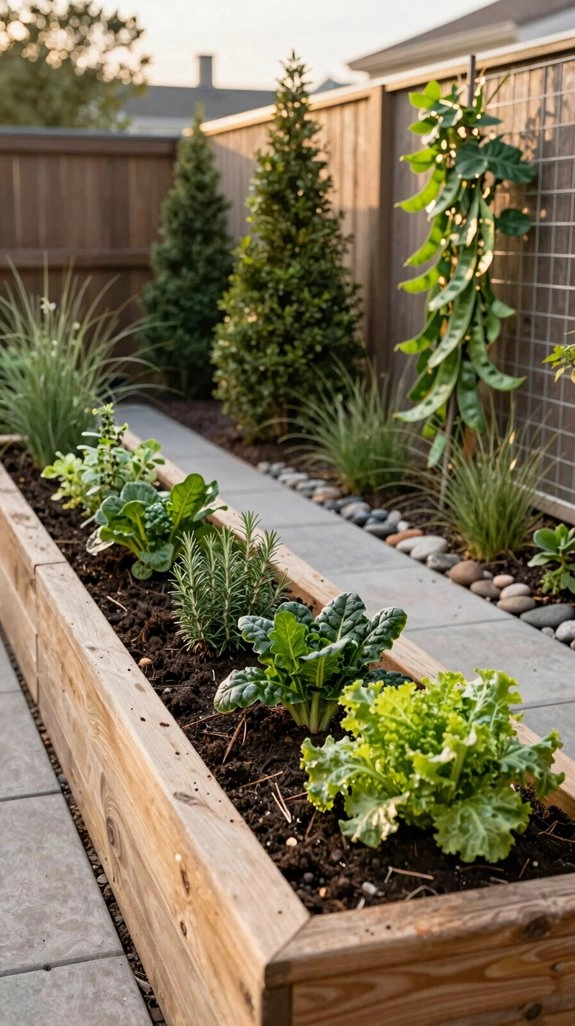
A narrow side yard doesn’t have to become a forgotten strip of weeds and stray garden tools—give it a purpose!
First, check Sideyard sunlight and mark your final spot with rope or scrap wood.
Build a cedar or redwood bed along the edges, keeping a narrow walkway open for watering and harvesting.
Cedar costs more upfront, but it can last 10–15 years—nice!
Use 12 inches of soil access for most vegetables; make it 18–24 inches for carrots or potatoes.
Before filling, staple hardware cloth and weed fabric underneath for easy pest prevention.
Your once-awkward passage can become a hardworking little garden everyone will admire!
Corner Vegetable Beds
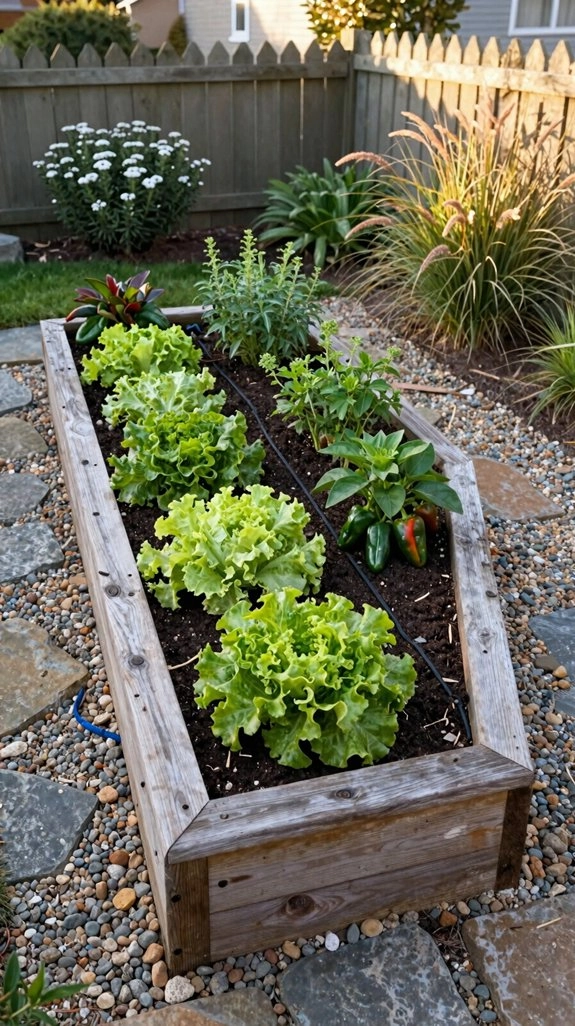
Corner vegetable beds turn an unused backyard angle into a tidy, productive growing zone—pretty clever, right? You’ll create a cozy spot that feels like part of the garden club!
- Build an L-shape from cedar or redwood, leaving accessibility width along the open side.
- Make beds 12 inches deep; choose 18–24 inches for carrots and potatoes.
- Staple hardware cloth and weed fabric underneath for fewer digging pests—sneaky critters, thwarted!
- Fill with raised-bed soil, check soil moisture, and plan corner drainage.
Use spacing templates and companion planting to fit more favorites together.
For composting maintenance, top-dress annually; don’t replace all the soil.
Fence-Line Gardens
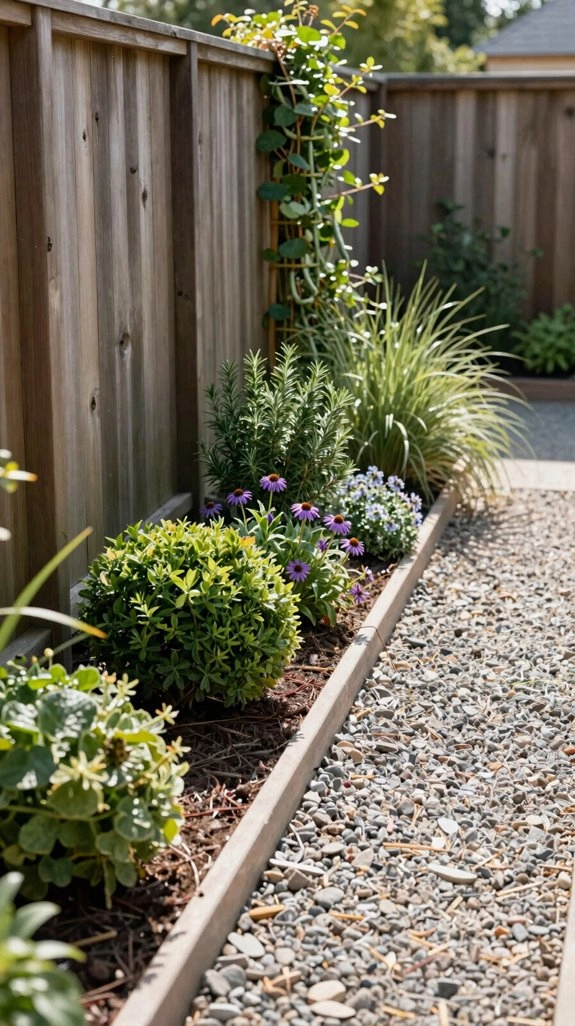
Fence-line gardens turn a forgotten strip beside your yard boundary into a hardworking growing space—pretty neat, right?
Build an L-shaped cedar or redwood bed to hug the fence, leaving room for paths, play, and everyone’s favorite crops.
Use 12 inches of soil for most vegetables, or 18–24 inches for carrots and potatoes. Staple hardware cloth underneath, then add weed-blocking fabric; rodents won’t get an invite!
Include compost bin integration nearby, and start drip irrigation planning early for easy watering.
Finally, add a fence-mounted trellis for beans or peas. You’ll grow upward, save ground space, and create a garden nook your neighbors will admire!
Vertical Raised Beds
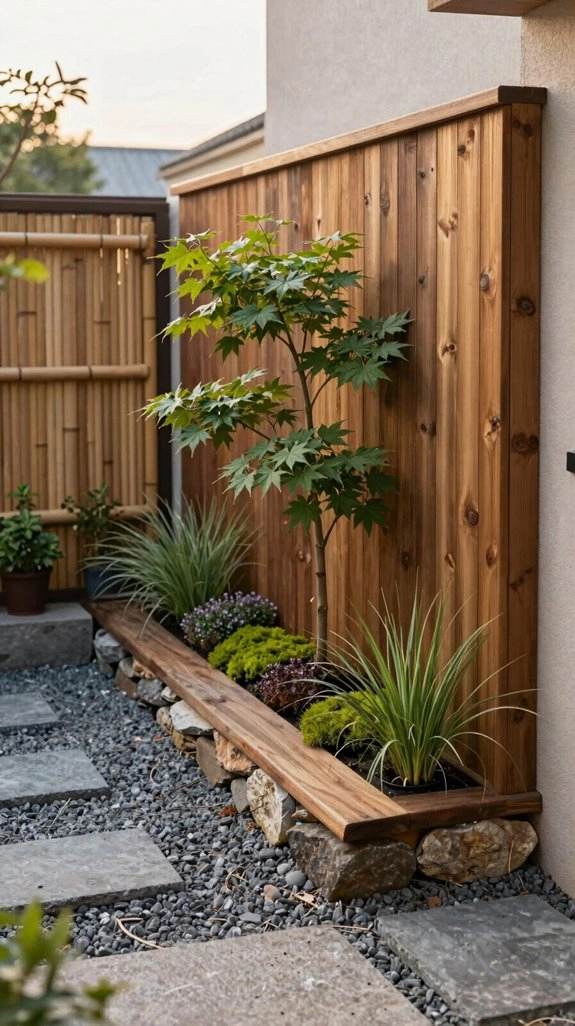
Why let tomatoes, beans, and cucumbers sprawl across your tiny yard when they’re happy to climb? Join fellow small-space growers and build upward—your pathways will thank you!
- Add a simple wood or metal trellis to a raised bed; tie vines loosely as they grow.
- Stack tiered beds with boards and soil, placing sun-loving plants on top.
- Fit an L-shaped bed into a corner, then add a vertical support to protect walkways.
- Drill 1/2-inch drainage holes in a stock tank, attach a trellis, and grow skyward!
Use wall planters for herbs, companion planting below, and succession sowing after harvests. Big harvest, tiny footprint!
Square Foot Gardening Layouts
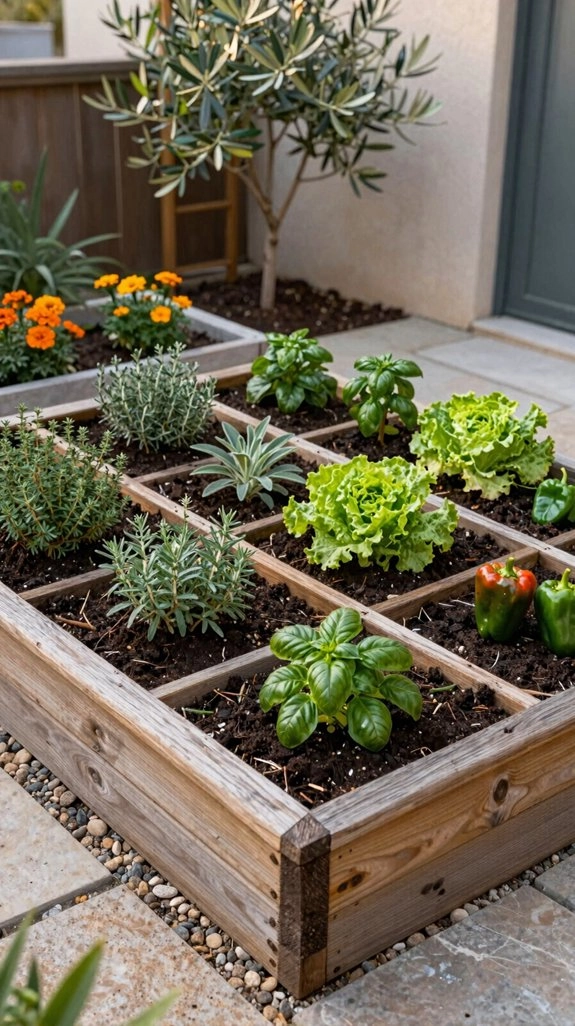
With a simple grid, you can turn one compact raised bed into a tidy little food factory—no sprawling rows or mystery seedlings required!
Build a raised bed grid from thin wood strips, then match crop spacing to each square: one tomato, four lettuces, or 16 carrots.
Give most vegetables 12 inches of soil depth. Fill with raised-bed soil, add compost yearly, and use weed fabric plus hardware cloth underneath to block invaders—because rabbits don’t respect boundaries!
Here’s the smart twist: assign 18–24-inch-deep squares only for carrots or potatoes. With seasonal rotation, your little garden crew can keep harvests coming all year!
Multi-Level Raised Beds
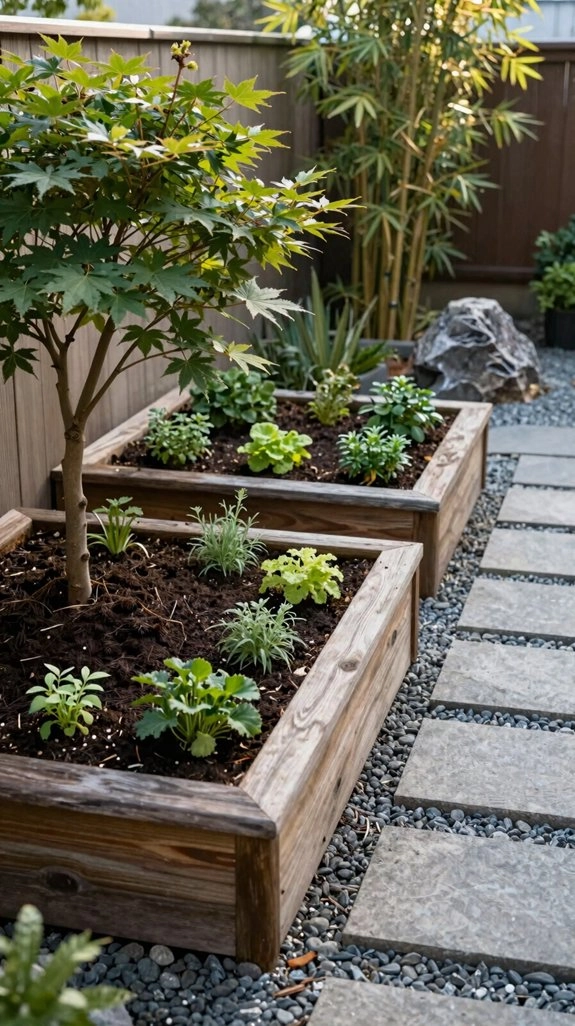
Once you’ve mapped out every square, think upward and outward—multi-level raised beds let you grow more food without asking your small backyard for another inch!
- Start with Soil depth planning: make tiers 11 inches deep for most vegetables, with the lower tier’s top near 2 feet high to save your back.
- Use cedar or redwood, add drainage and irrigation, and expect sturdy beds to last 10–15 years.
- Plant with seasonal crop rotation and simple pest control strategies, so your shared garden success keeps rolling.
- Try a U-shaped cedar bed with trellises—tomatoes climb, greens stay handy, and everyone can reach the open center. No awkward stretching!
Choosing the Right Layout
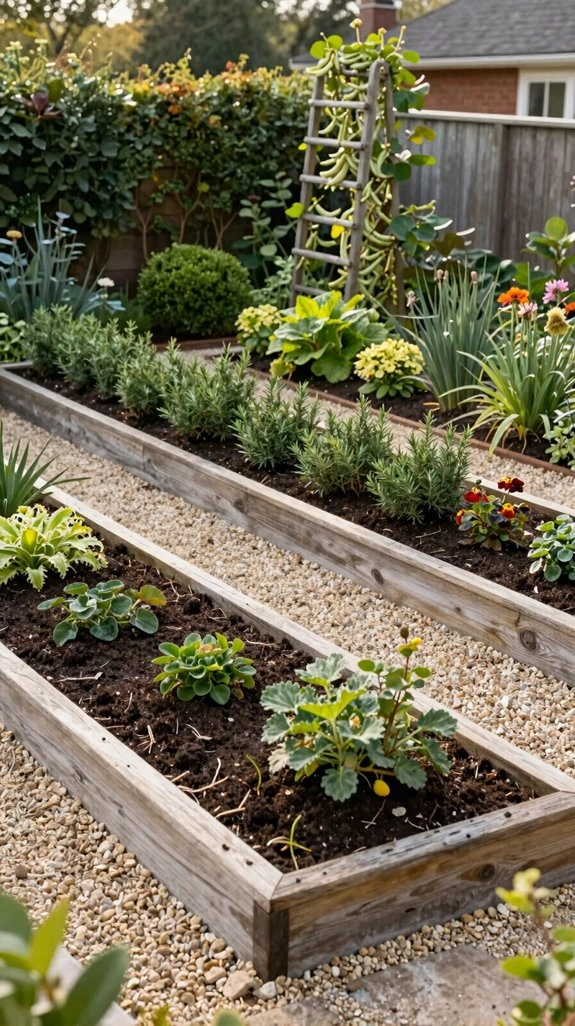
Choosing the right layout starts before you cut a single board: sketch your sunny areas, then mark the proposed footprint with rope or scrap wood right where the bed will live. Sunlight mapping helps you claim the brightest patch, not just the convenient one!
For access planning, try an L- or U-shape that hugs a corner while leaving one open side. Keep every row reachable without stepping on soil—your plants will feel like part of the neighborhood.
Choose at least 12 inches of depth, or 18–24 inches for carrots and potatoes. Want more growing room without stealing lawn? Add trellis-ready sections or tiers; suddenly, your small yard grows up!
Planning for Easy Harvesting
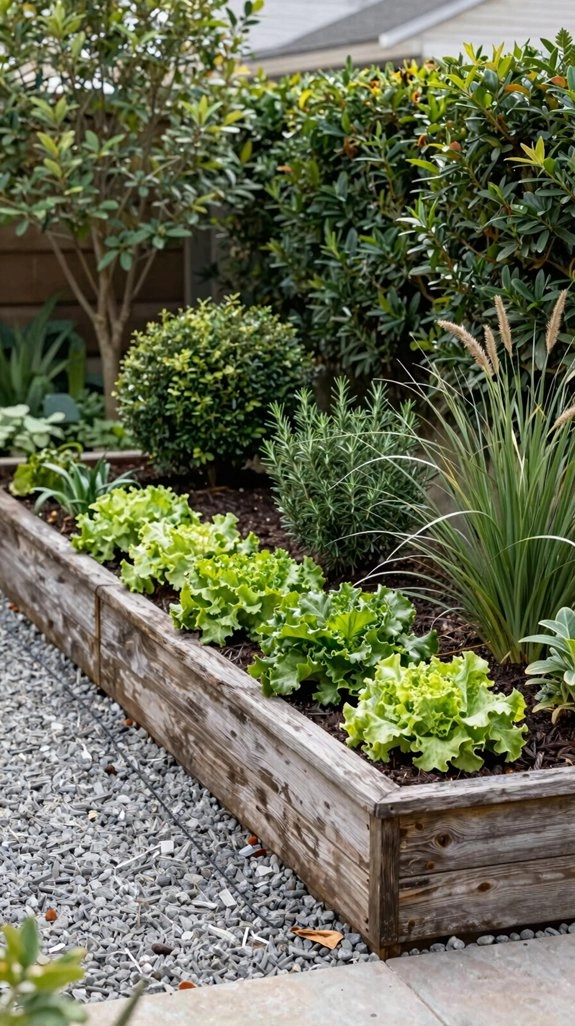
Plan harvesting paths before you fill the bed, because reaching ripe tomatoes shouldn’t feel like a backyard obstacle course! You’ll feel right at home with a layout that lets everyone pick comfortably.
- Choose a U-shaped or corner bed so you can reach plants from every side.
- Build 12 inches deep, or 18–24 inches for carrots and potatoes.
- Plan watering hose routing along paths, not across your picking zone.
- Add hardware cloth, weed fabric, and Compost mulch strategies to protect soil.
Set the box in its final sunny spot first—moving a filled bed is no fun! Top up compost yearly, then enjoy easier harvests.