15 Lawn Edging Ideas That Create a Clean Professional Look
- 15 Lawn Edging Ideas That Create a Clean Professional Look
- Key Takeaways
- Steel Lawn Edging
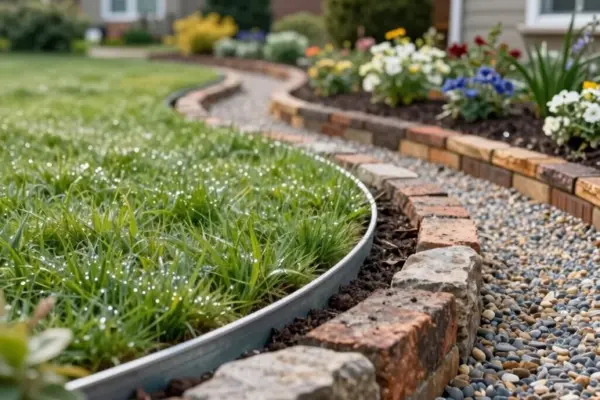
- Brick Lawn Edging
- Natural Stone Borders
- Concrete Landscape Edging
- Timber Lawn Borders
- Rubber Landscape Edging
- No-Dig Lawn Edging
- Corten Steel Edging
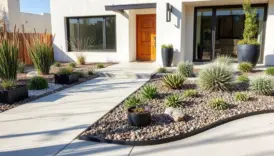
- Gravel Lawn Borders
- Paver Lawn Edging
- Curved Landscape Borders
- Decorative Metal Edging
- Recycled Plastic Borders
- Modern Minimalist Edging
- DIY Lawn Edging
You can frame beds with steel strips, brick, stone, concrete, timber, rubber, gravel, or recycled plastic for crisp, mower-friendly lines. Mark curves with a hose, cut a 2-inch trench, then set your material level and backfill—easy weekend work! For a sleek upgrade, use thin Corten steel; it bends smoothly, holds mulch, and develops a warm patina beside plants. Keep scrolling for 15 beginner-friendly ideas, costs, and installation tips.
Key Takeaways
- Steel or powder-coated metal edging creates crisp mowing lines and a polished, contemporary border around beds and paths.
- Brick, concrete, and paver edging provide durable, rigid frames that keep grass from invading planting areas.
- Natural stone borders add timeless texture, resist mower damage, and help contain mulch and soil.
- Flexible rubber, recycled plastic, and no-dig strips form neat curves quickly with minimal excavation.
- For professional results, mark layouts first, maintain consistent height, cut clean vertical edges, and secure materials firmly.
Steel Lawn Edging
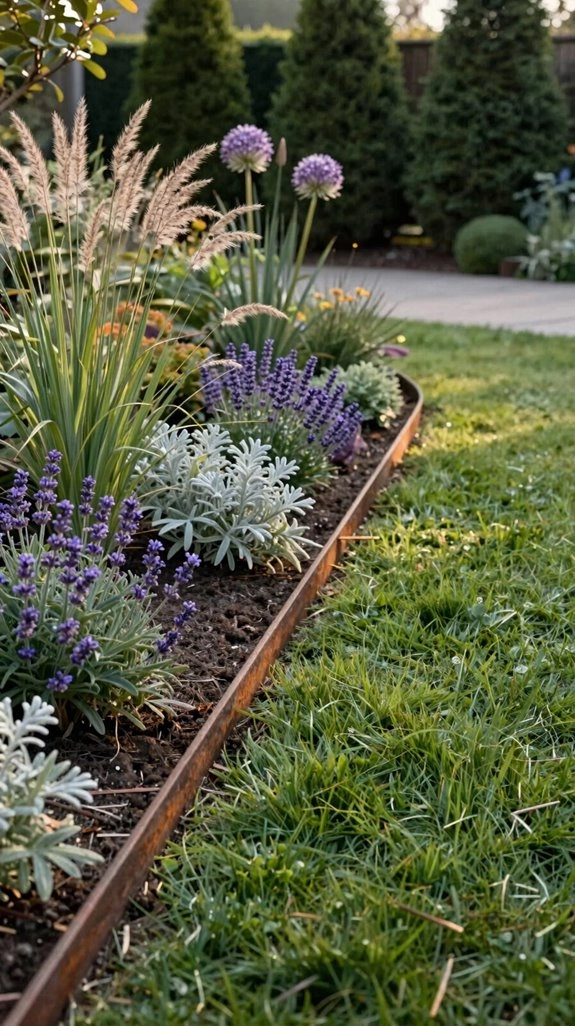
Steel lawn edging gives your yard that crisp, freshly groomed look—without making you spend every Saturday fighting runaway grass! You’ll get sharper mowing lines and clean bed definition that helps your whole outdoor space feel neighbor-approved.
Start with short steel strips, galvanized spikes, a mallet, and gloves. Set the strips along your bed, tap in the spikes, and keep the top edge level. Easy, right?
Choose powder-coated steel to match your yardscape, or try flexible Corten steel for gentle curves. It weathers into a warm, rust-like patina that looks right at home beside stone and mulch.
Want extra visual depth? Raise sections slightly to create a low planter edge—instant polish!
Brick Lawn Edging
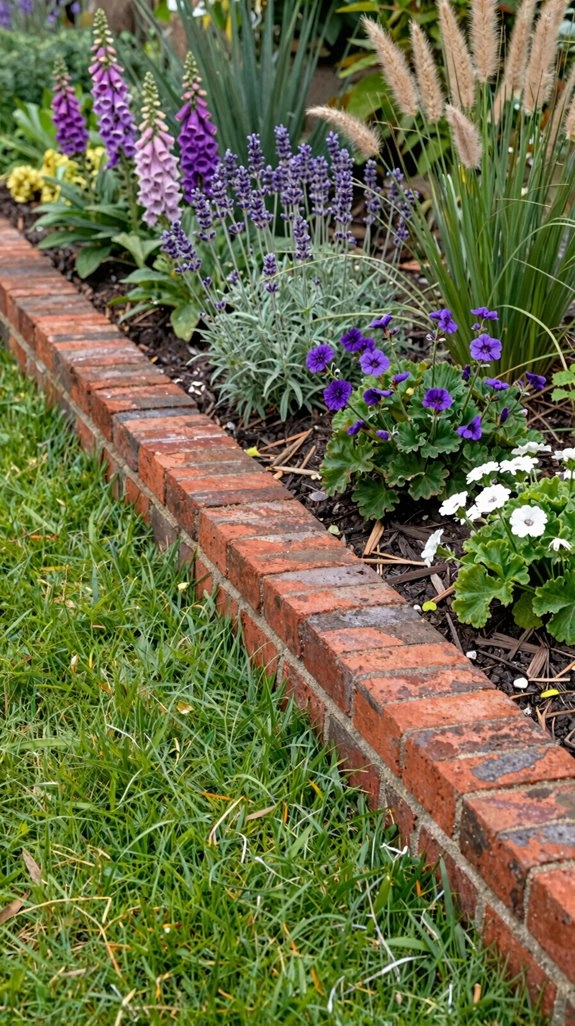
Brick lawn edging brings old-world charm and serious garden control to your yard—what’s not to love?
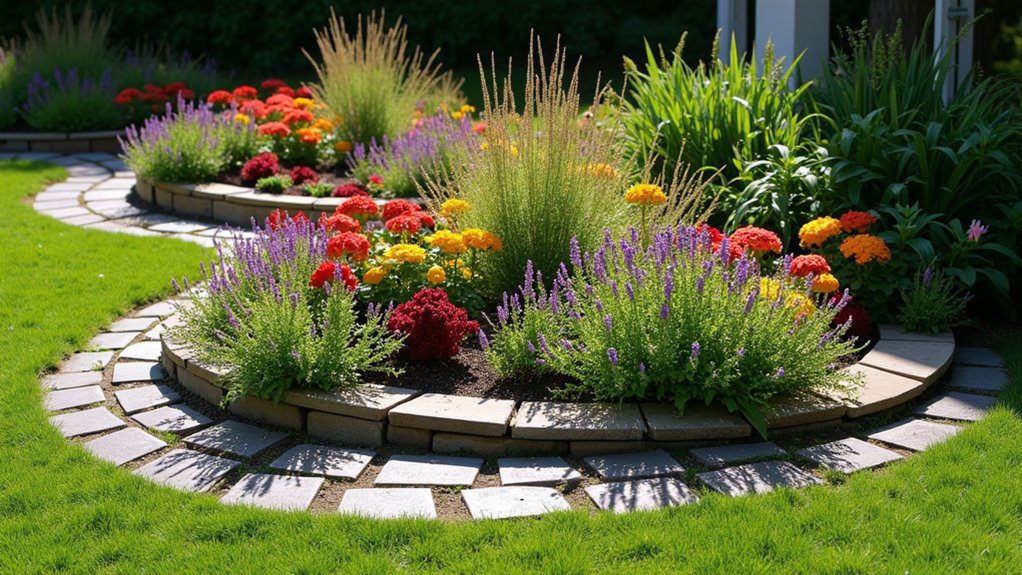
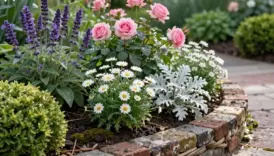
You’ll dig a narrow trench, add compacted gravel and sand, then set level bricks for a border that keeps grass out of beds.
It’s beginner-friendly, budget-flexible, and makes your garden feel like part of a well-kept neighborhood!
For Weathered brick sourcing, check salvage yards or local listings for rustic character.
Use these Brick patterning tips: run bricks straight for classic curb appeal, curve them around beds, or create a tidy geometric layout.
Add mortar if your conditions call for it, and keep mulch off the lawn side.
Crisp, stable, charming—no grass jailbreaks!
Natural Stone Borders
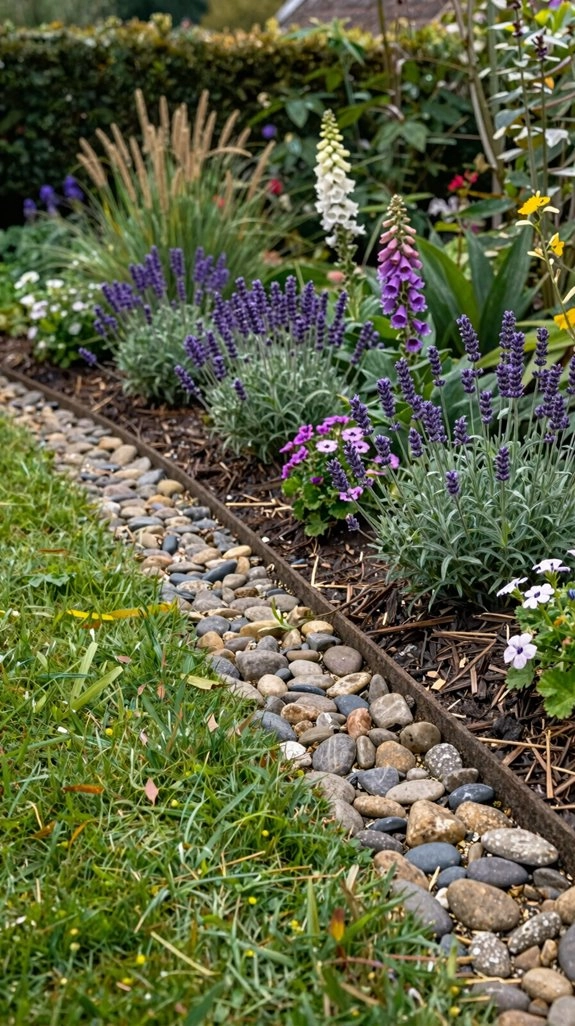
Natural stone borders give your yard a grounded, timeless look, and they’re tougher than a mower that’s had too much coffee! Choose granite, limestone, or sandstone for durable outdoor edging that fits right into your neighborhood’s natural charm.
You’ll need stones, a shovel, and a few small rocks. Trench along the lawn line, set the larger stones at a consistent height, and pack gaps tightly. No mortar needed—easy win!
Matching textures create a polished, welcoming edge, while slight height changes add character. Better yet, the mulch retention benefits keep soil from drifting into grass and may reduce bothersome edge weeds. Your flower beds will look like they belong there!
Concrete Landscape Edging
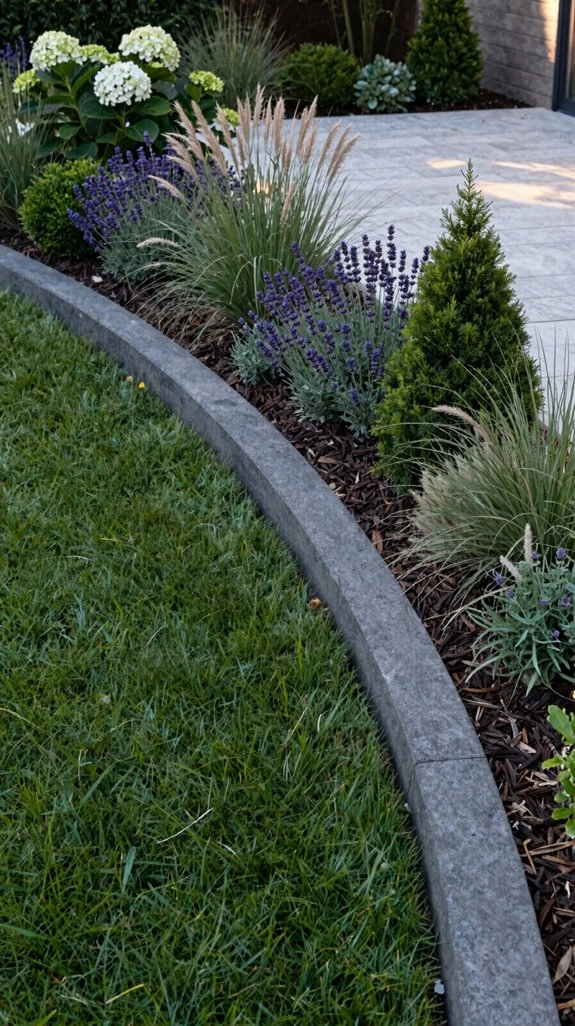
Concrete garden edging gives your lawn a sharp, tidy outline, while keeping mulch, soil, and wandering grass where they belong—finally, no more messy border creep! You’ll get a durable border that stays straight through rain, heat, and busy weekends.
For budget friendly installation, choose precast concrete units, gravel, a level, and a tamper. Dig a shallow trench, compact the base, then set each piece snugly along your mowing line.
Want your yard to feel polished like the neighbors’ favorite gathering spot? Scan curb style profiles, from subtle low edges to taller finishes near driveways. Backfill tightly, check alignment often, and enjoy one continuous, professional-looking border!
Timber Lawn Borders
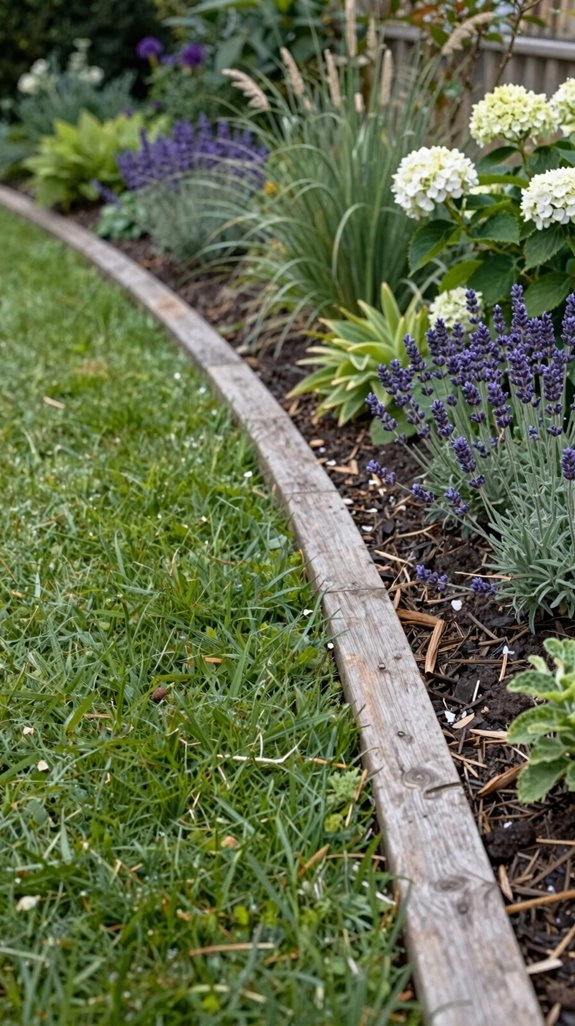
Timber lawn borders bring a warm, classic look to your yard, and they’re surprisingly simple to install—no elaborate crew or wheelbarrow full of mystery tools needed!
Choose rot- and pest-resistant treated timbers suited to your climate, ideally from sustainable materials.
Mark your bed line, dig a shallow trench, and seat boards with their tops just above the soil.
For curves, use shorter sections and stakes to follow the shape neatly.
They aren’t Maintenance free options, so re-tamp stakes and adjust heights occasionally.
Mow close, then trim stray grass.
Timber beautifully defines cottage beds, paths, and privacy friendly landscaping, giving your shared outdoor space a crisp, welcoming finish!
Rubber Landscape Edging
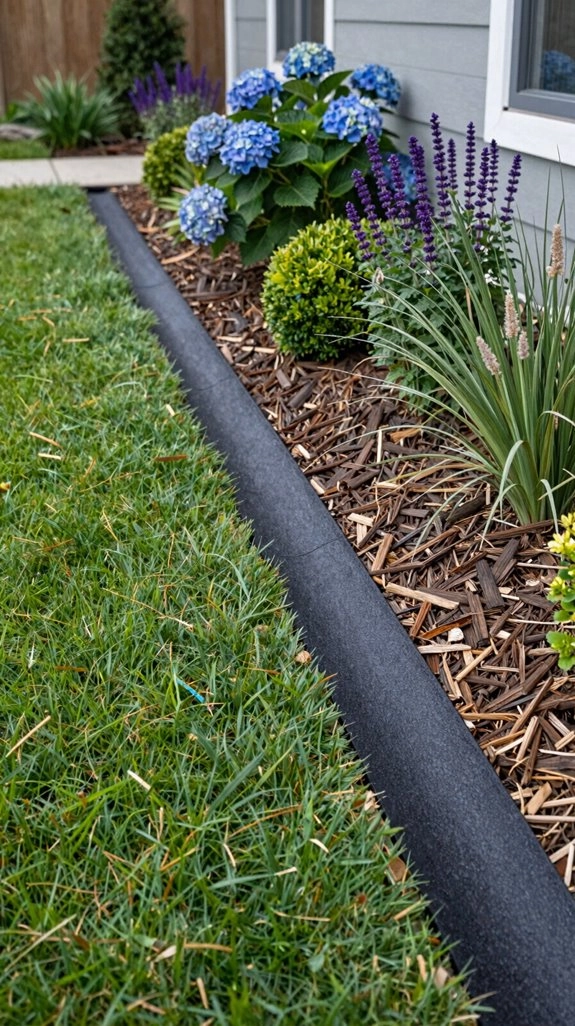
Rubber garden edging gives your garden beds a smooth, flexible border that bends around curves without a wrestling match—hooray! You’ll get smooth curves around flower beds, trees, and play spaces, helping your yard look polished like the neighborhood gardens you admire.
Choose recycled-rubber rolls, stakes, a shovel, and mulch. Dig a shallow trench, press the edging in, pin it securely, and leave the top edge visible. Easy!
Its soft surface can lower injury risk near busy paths, while weather resistance helps it handle rain and damp soil without rusting or rotting. Best of all, this low maintenance barrier holds mulch in place and keeps grass out.
No-Dig Lawn Edging
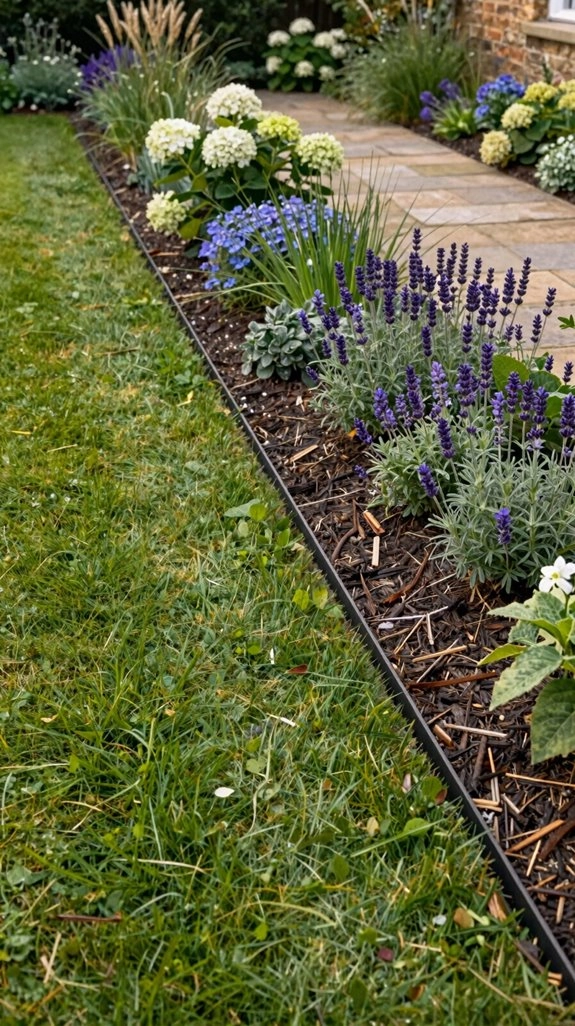
No-dig lawn edging gives you a crisp, tidy border without spending your afternoon digging a moat—what a win!
- Pick flexible rubber, plastic, or thin metal strips for an affordable, beginner-friendly start.
- Shape curves with a garden hose, or use string and stakes for straight lines.
- After mowing, press edging into slightly moist soil to the right soil depth, keeping grass below the top edge.
- Finish with maintenance trimming once or twice monthly using shears or a trimmer.
For raised borders, set the lawn side below the grass line so mulch blends smoothly. Your yard will look polished and neighborhood-ready—no shovel marathon required!
Corten Steel Edging
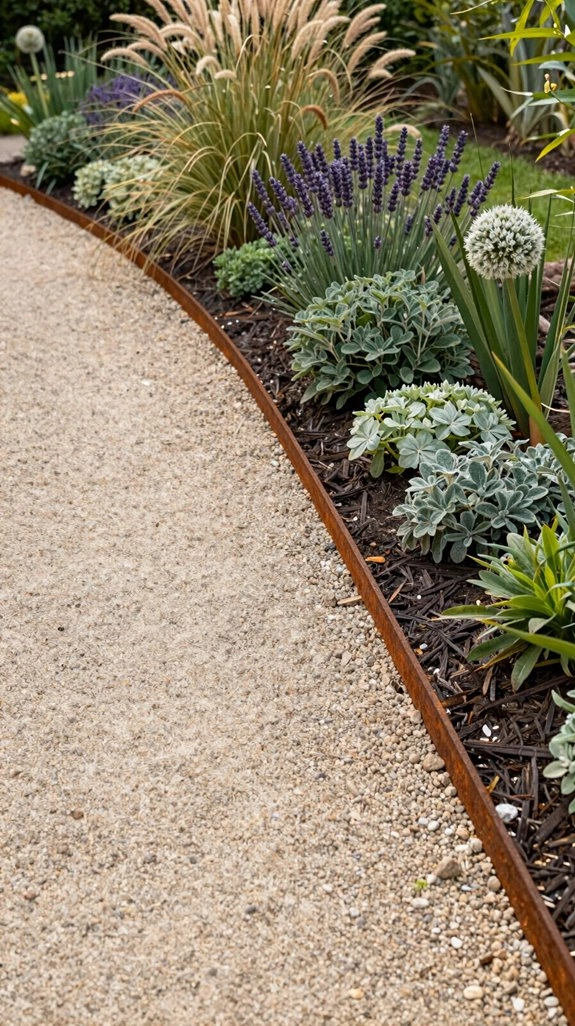
For a sleek upgrade that feels more permanent than no-dig strips, Corten steel edging brings crisp lines and a warm, rusty-brown finish that looks right at home beside mulch, stone, and plants—pretty stylish, without being fussy!
You’ll need steel panels, stakes, a shovel, and gloves. Set the pieces in a narrow trench, secure them, then backfill for a border that blocks wandering grass.
Over time, the rust patina deepens beautifully, giving your yard that pulled-together neighborhood-garden feel. Choose straight sections or curved edging for soft arcs around beds.
Better yet, vary panel heights to create subtle stepped layers or low planter-style borders. It’s sturdy, low-maintenance, and seriously sharp!
Gravel Lawn Borders
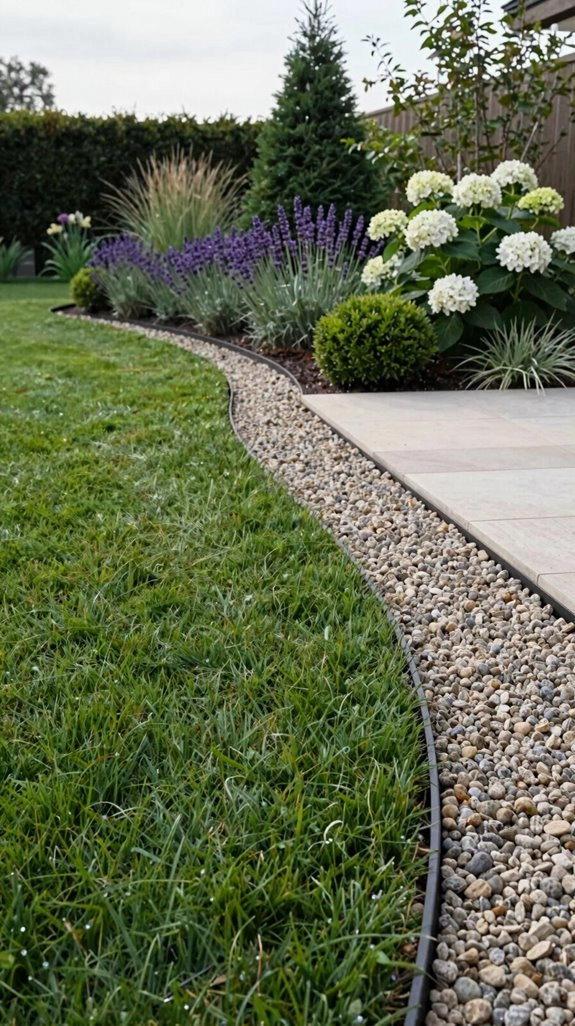
Gravel lawn borders give beds a crisp, polished outline while adding a satisfying crunch underfoot—tiny rocks, big upgrade!
- Cut grass vertically, about 2 inches deep, and dig your trench.
- Level the base, then install metal edging or stone restraints with galvanized spikes.
- Add gravel at an even gravel depth, keeping the surface below the lawn’s edging height.
- Choose stones that suit your shared garden style, from sleek gray to warm mixed tones.
Keep mulch off the lawn-side edge, then rake stray pebbles back monthly. Your crew-worthy result looks neat after every mow—no runaway rocks, hooray!
Paver Lawn Edging
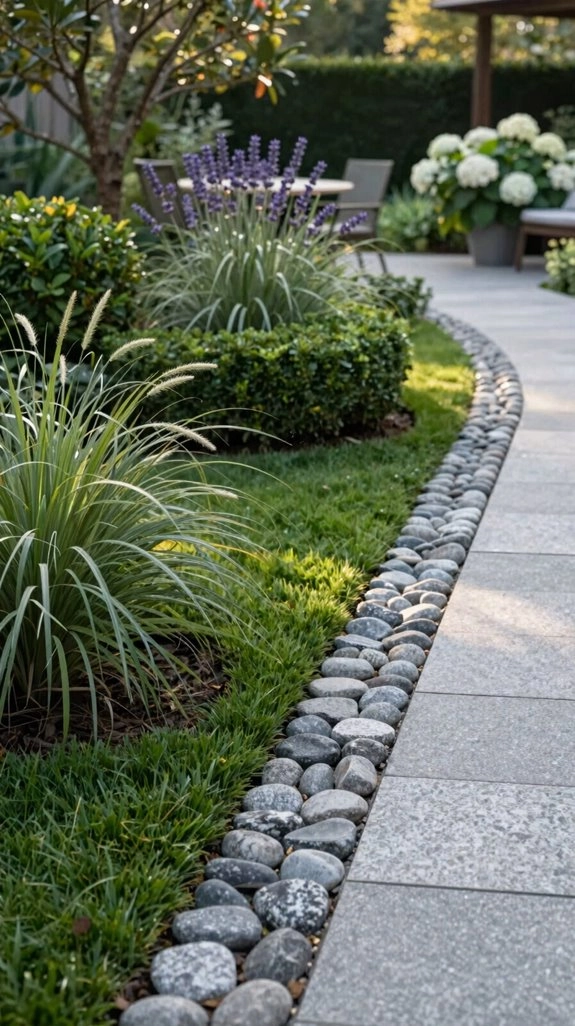
Paver lawn edging gives your yard a sharp, built-in frame, and it’s easier to tackle than it looks—score! You’ll need pavers, gravel, sand, a tamper, and galvanized spikes for a border that feels right at home with the neighborhood.
Dig a shallow, straight trench, add and compact gravel and sand, then set each paver level. Anchor the edge with spikes so it won’t wander after rain or mower bumps—no rogue pavers here!
Match colors to your driveway or patio for instant curb appeal. Backfill with soil or mulch, keeping tops visible.
This also simplifies tree trimming and mulch maintenance, giving beds a polished, welcoming finish.
Curved Landscape Borders
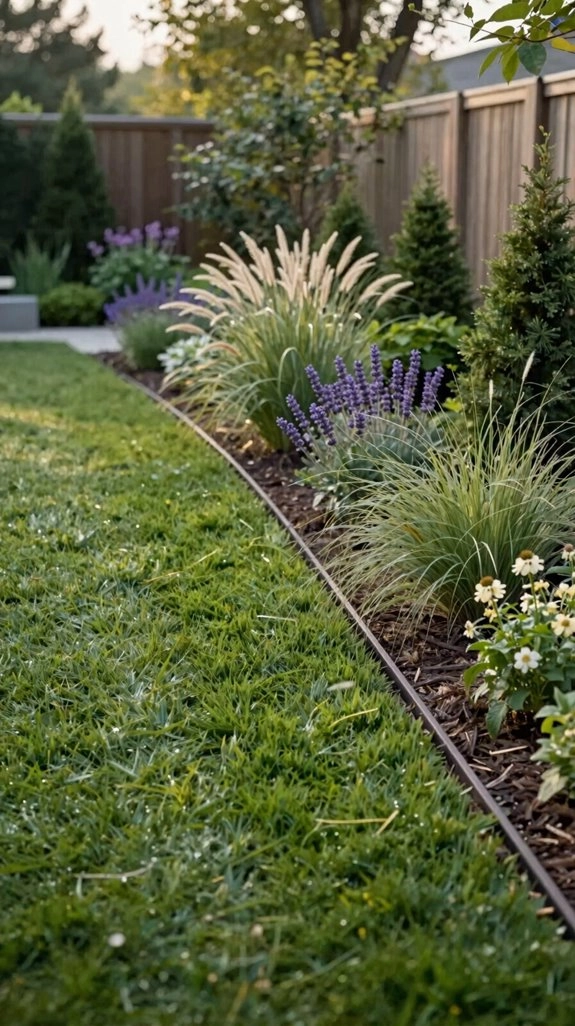
Curved scenery borders soften straight lines and make flower beds feel more natural, like they’ve always belonged there—nice, right?
- Try hose guided curves first; simple lawn line marking helps everyone picture the shared plan.
- Cut about 2 inches deep with an edger, then use garden shears for tidy touch-ups. Smooth edging keeps grass from sneaking back—cheeky stuff!
- Set stone restraints with galvanized spikes, then cover edges with mulch for a welcoming, finished look.
- For the surprise finish, stack flat rocks in a shallow trench. You’ll create a sturdy, natural curve that makes your yard feel beautifully connected.
Decorative Metal Edging
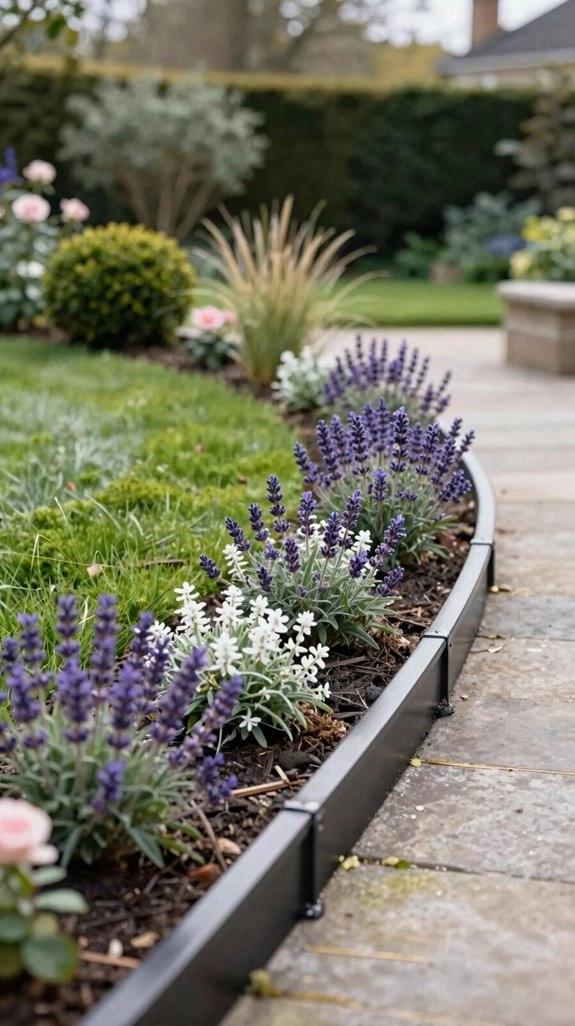
Decorative metal edging gives your lawn a clean, polished outline without making the yard feel stiff—pretty slick, right?
Choose corten steel for a modern Garden border; its warm, weathered finish settles naturally among plants. Use edging stakes to hold flexible sections in gentle curves, then keep heights even for tidy yard definition.
Prefer color? Powder-coated trim strips match fences, patios, or planters and shrug off weather with little fuss. Install them along mulch beds to block sneaky grass—because turf loves to wander!
For a standout neighborhood-ready finish, vary a few taller sections and fill them as slim built-in planters. Add river rocks beside the edge for extra sparkle and sharper lines.
Recycled Plastic Borders
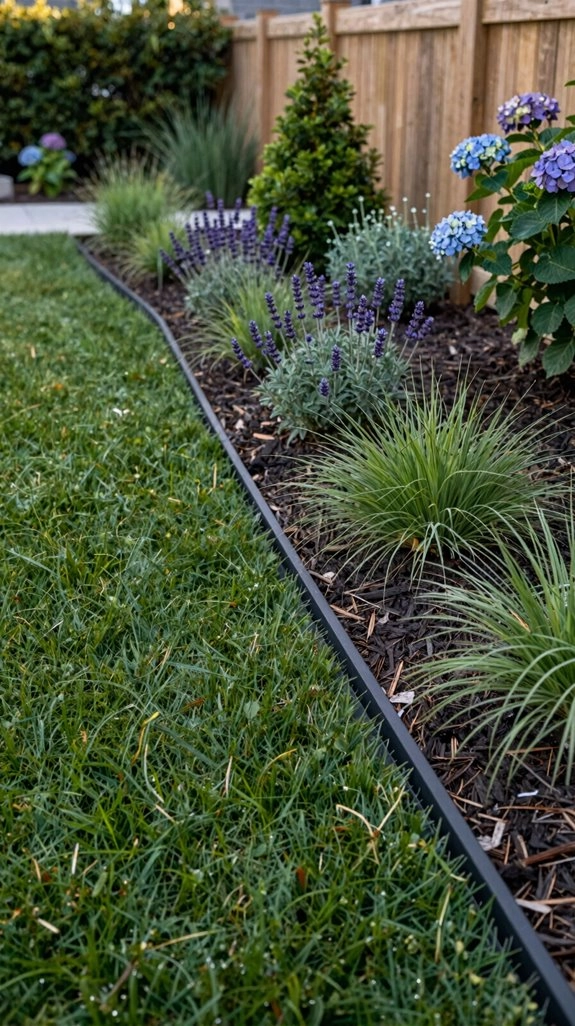
Recycled plastic borders offer a budget-friendly way to give your lawn crisp, dependable lines, even when rain, heat, and chilly mornings try to stir up trouble!
- Choose lightweight PVC/HDPE strips from your local garden crew’s favorite aisle.
- Cut and curve them around beds with simple shears—no giant trench drama!
- Set tight Edge Spacing between grass and mulch or pavers.
- Practice Mulch Guarding: keep mulch on the bed side only.
You’ll get rot- and insect-resistant edges that won’t crumble like untreated wood. Add a thin mulch layer, then touch up once or twice monthly during growing season. Your yard will look wonderfully pulled together!
Modern Minimalist Edging
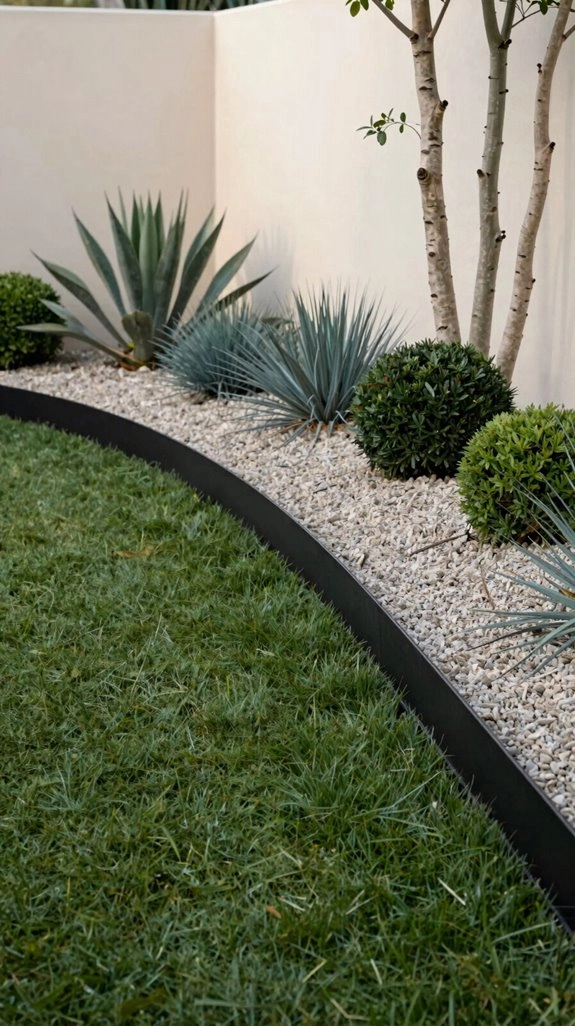
Modern minimalist edging gives your yard that sleek, magazine-ready look without turning the weekend into a giant construction project! Choose thin steel or aluminum strips for a crisp lawn-to-bed line that handles sun and water with little fuss.
Want more character? Corten steel brings a warm, weathered finish and bends into smooth curves, so your terrain feels polished and welcoming. Keep drip irrigation tucked behind the border for an uncluttered view.
For bold geometry, anchor rigid paver restraints with galvanized spikes. Then try a gray cobble base topped with white river rock—double definition, zero visual chaos!
For edging maintenance, mow first, cut vertically two inches deep, and touch up monthly.
DIY Lawn Edging
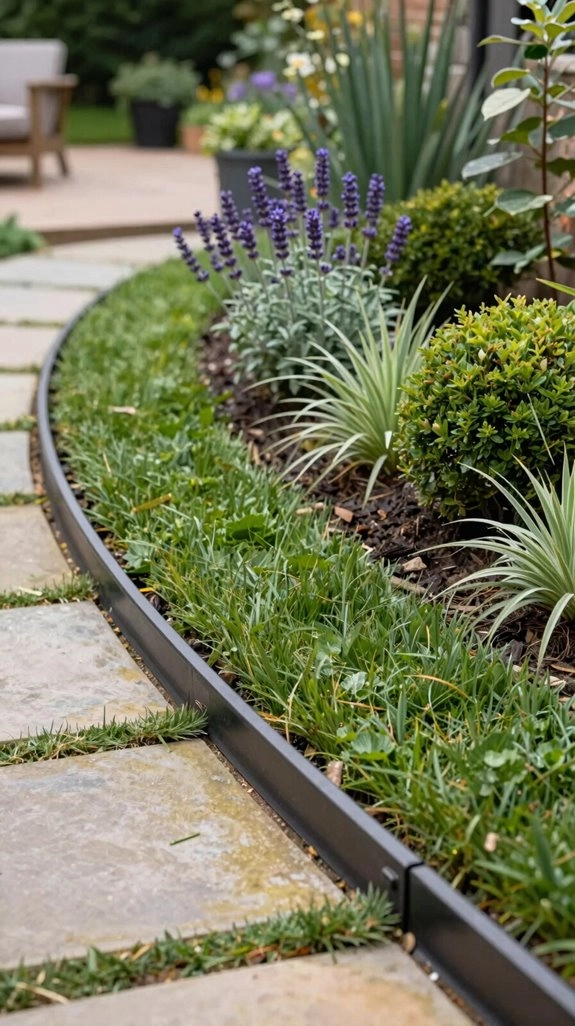
DIY lawn edging is one of those satisfying weekend upgrades that makes the whole yard look sharper—without needing a contractor or a wallet-sized panic attack!
- Mow first, then mark straight runs with string and curves with a hose.
- Use a sharp half-moon edger, cutting vertically about 2 inches deep; push, wiggle, repeat!
- Rake away loose soil, water stressed grass, and consider seeding after edging for thin spots.
- For the club-worthy finish, install low-profile corten steel or metal strips. They block creeping grass and make edging line maintenance quick.
You’ll get crisp borders, cleaner beds, and that “how’d you do that?” neighborhood glow!