Flower Bed Edging Ideas That Give Every Garden a Finished Look
- Flower Bed Edging Ideas That Give Every Garden a Finished Look
- Key Takeaways
- Steel Landscape Edging
- Brick Borders
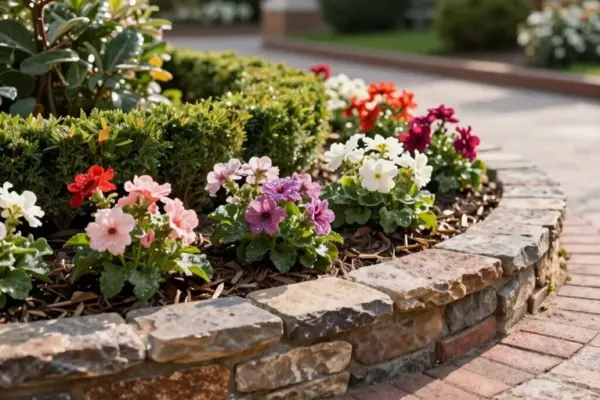
- Natural Stone
- Concrete Edging
- River Rock Borders
- Wooden Garden Edges
- Living Plant Borders
- Curved Garden Edging
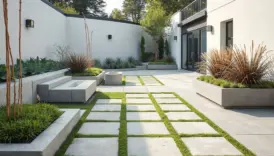
- Modern Minimal Designs
- Cottage Garden Borders
Give your flower bed a finished look with steel, brick, stone, concrete, wood, or river rock! Steel offers a crisp, low-maintenance line; brick feels classic, while natural stone adds rugged charm. For DIY success, mark your border, dig a shallow trench, level the base, and adjust each piece with soil. Want curves? Try bendable metal, roll plastic, or scalloped terracotta. For a softer surprise, plant low-growing grasses or shrubs as a living edge—they’ll fill in beautifully. Keep exploring for more practical ideas!
Key Takeaways
- Choose powder-coated steel or modular edging for crisp lines, easy installation, and reliable separation between flower beds, grass, and mulch.
- Create a classic, welcoming border with bricks, using a shallow trench, string line, and careful soil adjustments for level placement.
- Use natural stone or river rock for organic texture, adding a compacted gravel base or weed barrier for stability and easier maintenance.
- Add warmth with rustic logs, pressure-treated timbers, or living borders of closely planted shrubs and grasses.
- Shape polished curves with flexible metal, plastic, terracotta, or living plants, while combining weathered wood and stones for cottage charm.
Steel Landscape Edging
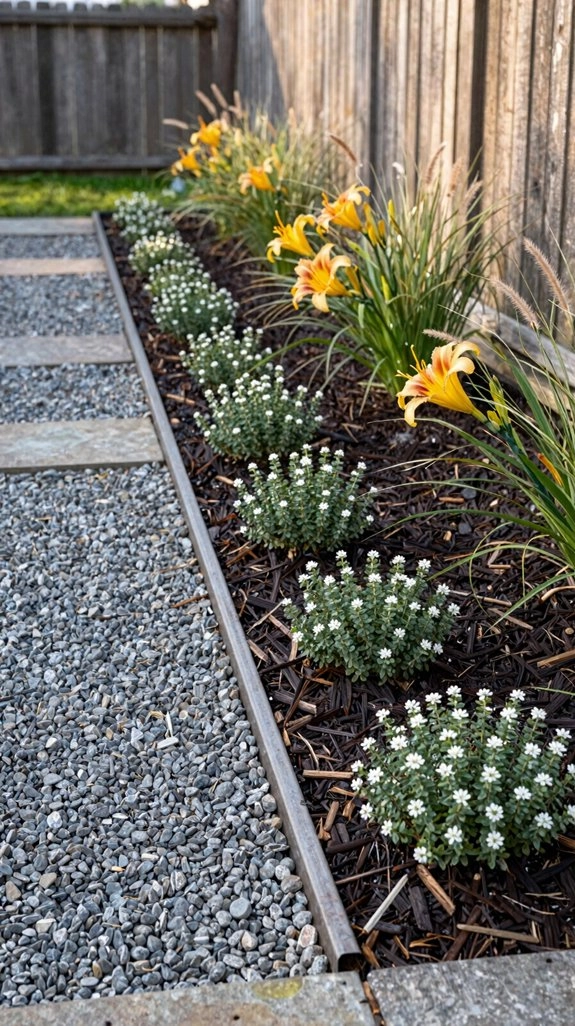
If you want flower beds with clean, polished lines, steel yardscape edging is a fantastic place to start! You’ll get crisp borders that make your garden feel welcoming and cared for, without spending all weekend digging.
Choose Powder Coated Colors for a steady look, or let the steel develop a Natural Patina that adds warm, changing character.
Gather sections, stakes, a mallet, and a level. Lay out your line, connect the pieces, check that everything’s straight, then tap the edging into the soil. Easy!
Because sections bend, you can shape curves while blocking grass and mulch. Anchor them well, and your tidy border will stay put!
Brick Borders
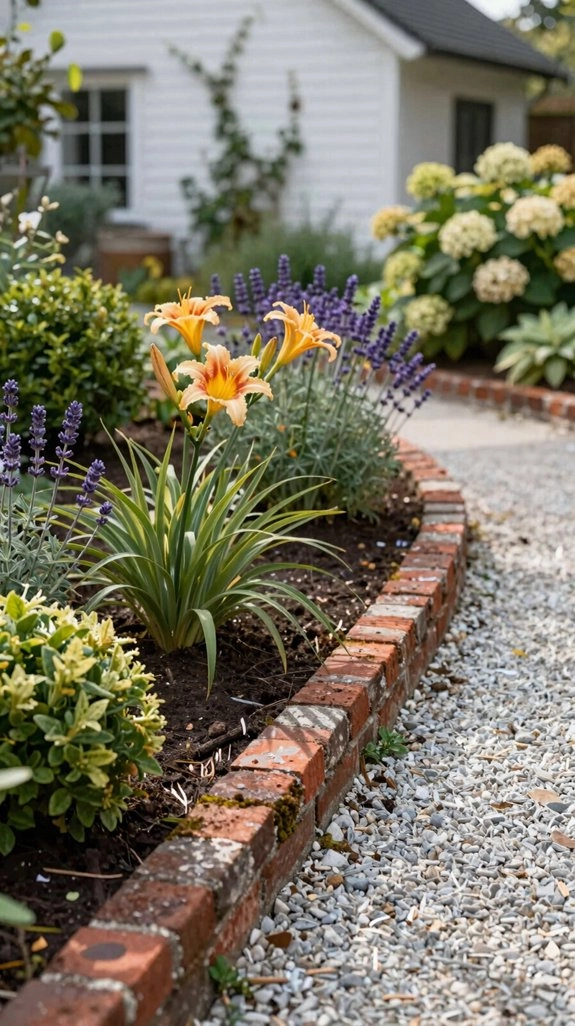
Brick borders bring a classic, welcoming look to flower beds, and they’re surprisingly beginner-friendly! With basic bricks, prepared soil, a string line, and a rubber mallet, you can create a tidy edge without special skills.
For smooth Brick edging installation:
- Dig a shallow trench.
- Lay bricks on their wide faces, or stand them upright.
- Check positioning with a string line and line level.
- Add or remove soil beneath each brick, then tap gently.
Bricks flex around quirky curves, so Brick layout tips include testing your pattern first.
They’re affordable, sturdy, and easy to adjust.
Best of all, a firm, wobble-free border makes your garden feel beautifully finished!
Natural Stone
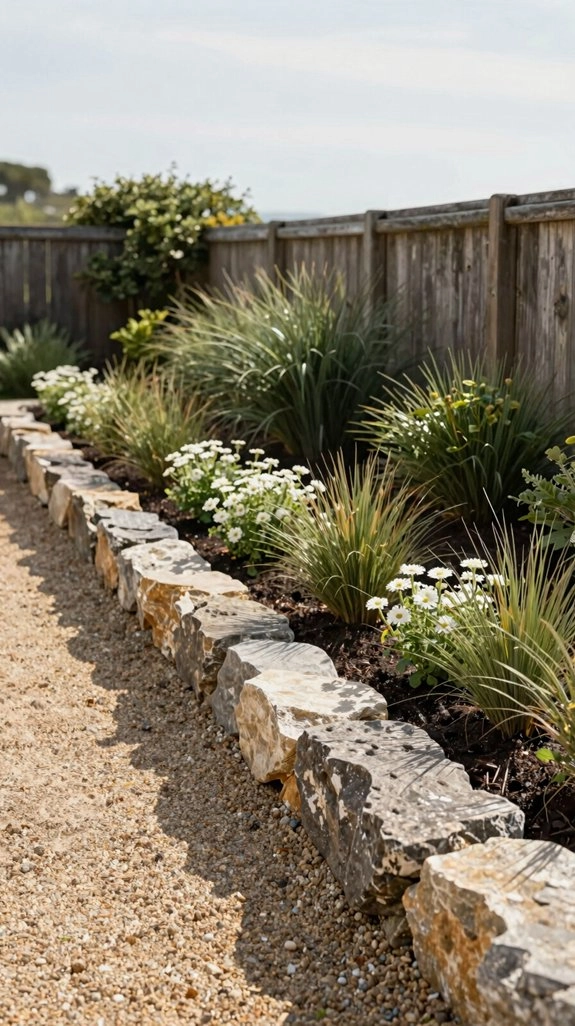
Natural stone edging brings a rugged, organic feel to flower beds, with fieldstones and chunky retaining-wall rocks creating a border that looks right at home in garden scenery!
Choose stones that fit your garden’s size and style. Expect uneven lines and small gaps, which help the border feel welcoming and naturally grown. Gather stones, a shovel, gravel, and a level.
For stone border installation, dig a shallow trench, add gravel, then level and compact the base before placing each rock. Interlocking pieces give straighter sections, while curves take patience. Though labor-intensive, stone edging durability rewards you with a lasting, high-impact finish.
Mulch may mingle with grass—and that’s part of the charm!
Concrete Edging
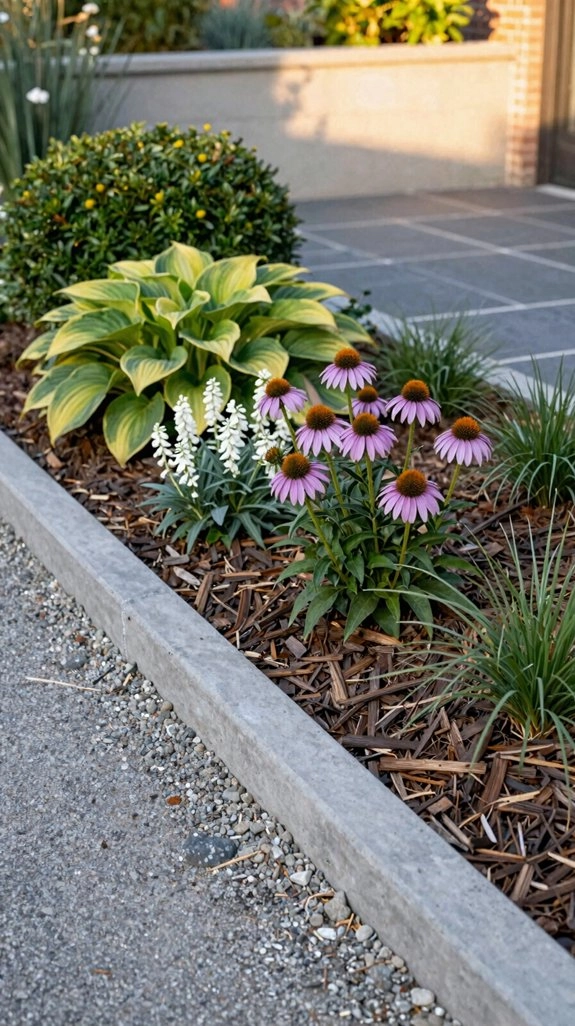
Concrete edging gives your flower beds a crisp, polished line that makes the whole yard look instantly tidier! It suits straight runs or graceful curves, creating low maintenance edging that feels built in.
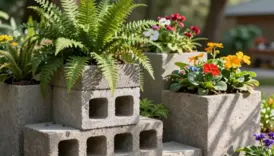
Plan first: measure the perimeter, mark corners, and keep the height even. Pouring takes skill, so consider professional installation. For a weekend project, molded concrete blocks offer a friendly shortcut!
- Pair it with incorporated pathway edging
- Add garden border lighting for evening glow
- Compare concrete sealer options for protection
- Place blocks one by one for easy updates
You’ll get durable, polished results that welcome everyone home—without wrestling wet concrete on Saturday!
River Rock Borders
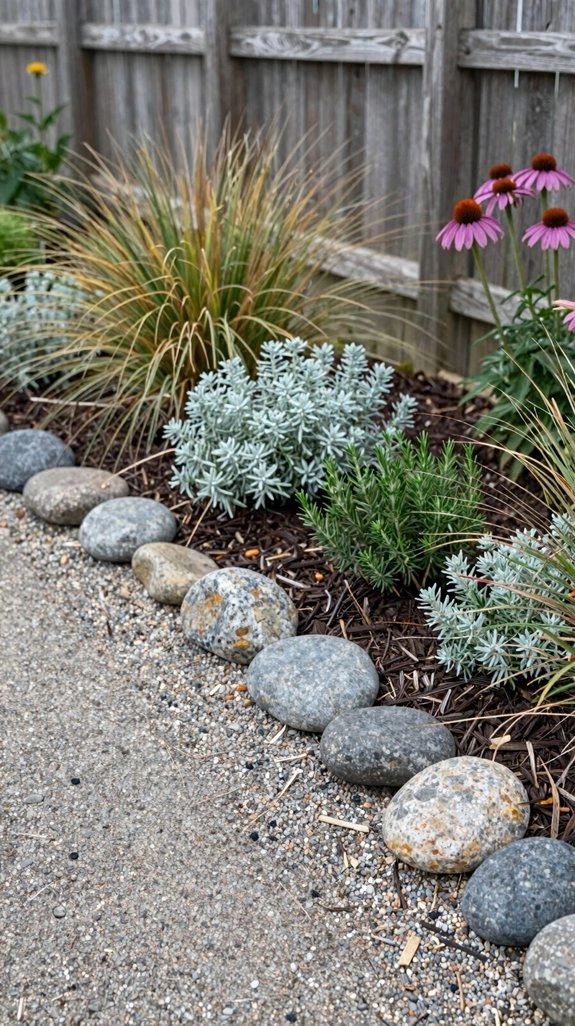
River rock borders bring a relaxed, polished look to flower beds, and they’re a beginner-friendly way to define your garden without hauling wet concrete around!
Dig a shallow trench, add a weed barrier, and choose consistent stones, such as 1–2-inch rocks with smaller gravel accents.
For stability, focus on proper base leveling: spread and compact a thin sand or gravel layer, then place the outer rocks first so the border looks locked together.
Keep drainage considerations in mind!
Use a deeper trench where runoff is strong, rake the gravel evenly, and pack the base tightly.
Rounded stones leave gaps, but that natural look feels welcoming—and helps your garden belong.
Wooden Garden Edges
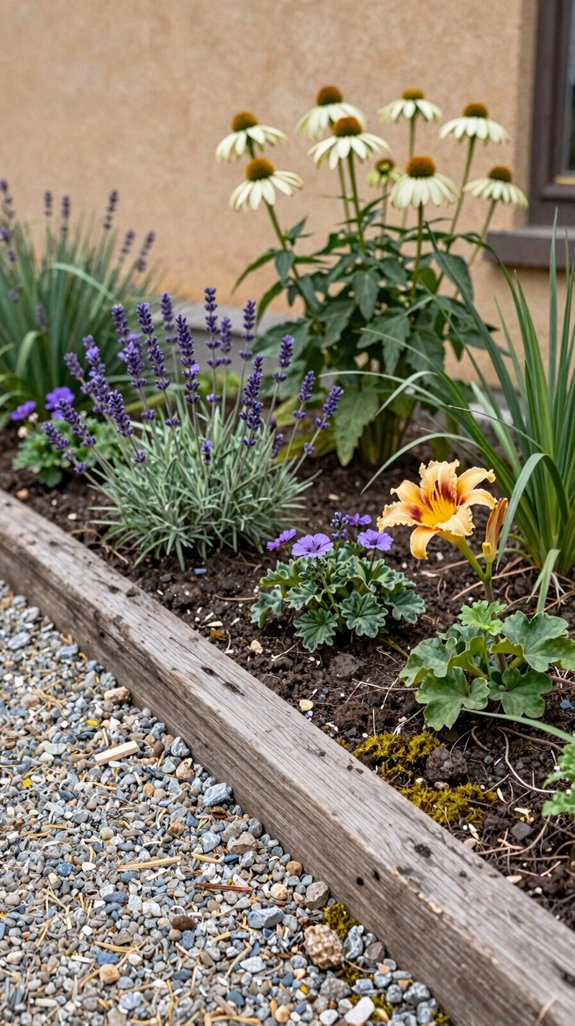
Wooden garden edges add instant warmth to a flower bed, from chunky log borders to neat yardscape timbers—and they’re often affordable, beginner-friendly, and full of personality!
Choose your favorite look:
- Rustic logs: Lay trunks or branches along a marked line, pin them into soil, and replace them every few years.
- Timbers: Level the ground, cut pressure-treated yardscape timbers, and fit them snugly.
- Cottage charm: Weave willow wattle or arrange cedar shingles for a welcoming, budget-friendly border.
- Straight or curvy: Use planks for straight beds; flexible composite edging handles bends.
Finish with pine mulch to slow grass creep, and protect wood from mowers!
Living Plant Borders
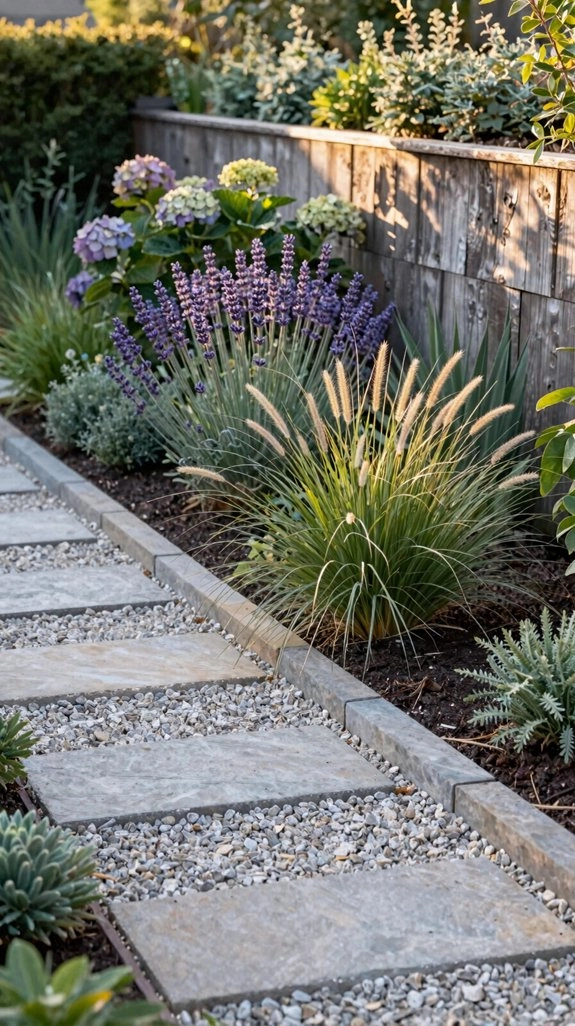
Living plant borders bring a fresh, lively finish to flower beds, especially when low-growing shrubs or grasses are planted close enough to grow into one tidy line!
Boxwood creates an English-garden feel, while ornamental grasses add movement and seasonal texture.
Choose tight spacing so plants fill in quickly, then shear them evenly for a crisp look, or let them grow naturally for cottage charm.
Plant them just inside mowing height to block grass and reduce exposed soil.
With companion planting, you can pair the border with flowers that share similar needs.
Best of all, consistent shaping keeps low maintenance pruning simple—less trimming, more time enjoying your garden!
Curved Garden Edging
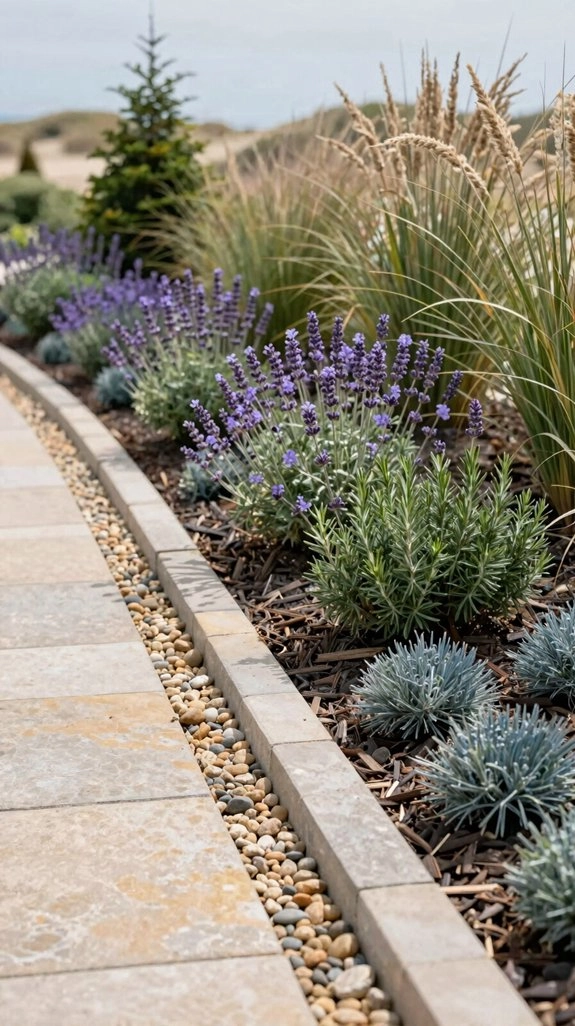
Curved garden edging can make a flower bed feel more natural and polished, especially when straight lines would look too stiff!
Start with flexible materials for easy, friendly DIY success:
- Pound metal edging into sweeping lines.
- Set roll plastic inside a shallow trench.
- Lay scalloped terracotta carefully, keeping pieces level.
- Shape a low hedge into soft curves.
A tall hedge may feel too formal, so choose compact boxwood for a welcoming border.
Plastic costs little, though frost can lift it; tap it down in spring.
Brick or stone looks sturdy, but curved sections need patience and careful positioning.
Here’s the surprise: living edging grows into your garden’s shape, making every season feel connected!
Modern Minimal Designs
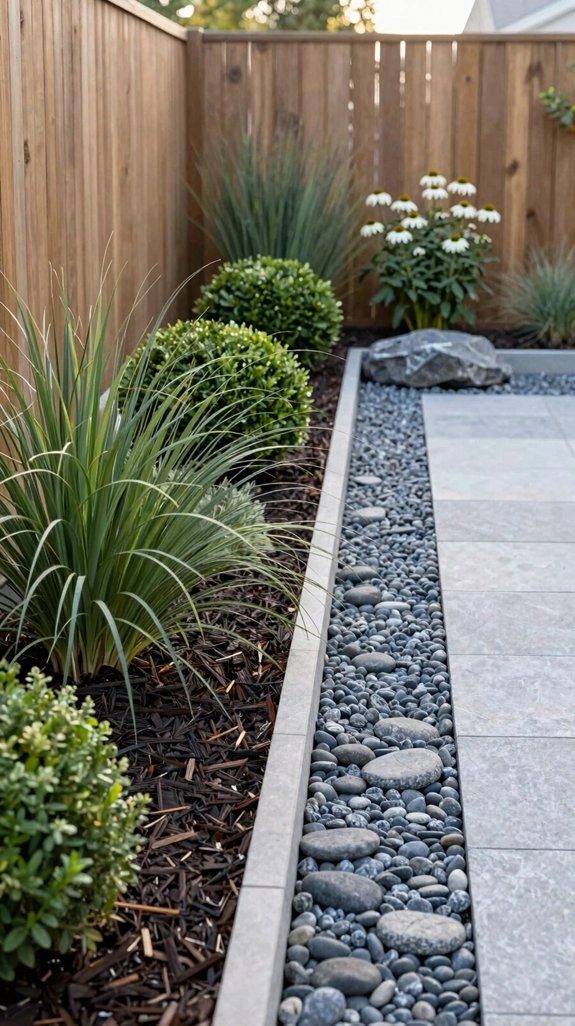
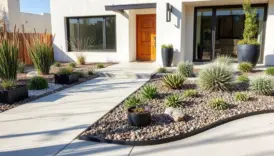
Modern minimal edging turns a flower bed into a crisp, polished feature without making your yard feel cold! For a low maintenance design, try thin, no-dig powder-coated steel. Mark your line, tap the edging in with a mallet, and enjoy straight edges or gentle curves.
Want a geometric look? Use modular concrete blocks, though poured concrete usually needs professional installation.
For a budget-friendly option, set long-roll plastic edging in a shallow trench, then backfill it until the top nearly disappears.
Here’s the clever finish: add a slightly raised mulch mound level with the border. You’ll get clean mowing lines, fewer stray clippings, and a welcoming, magazine-ready bed!
Cottage Garden Borders
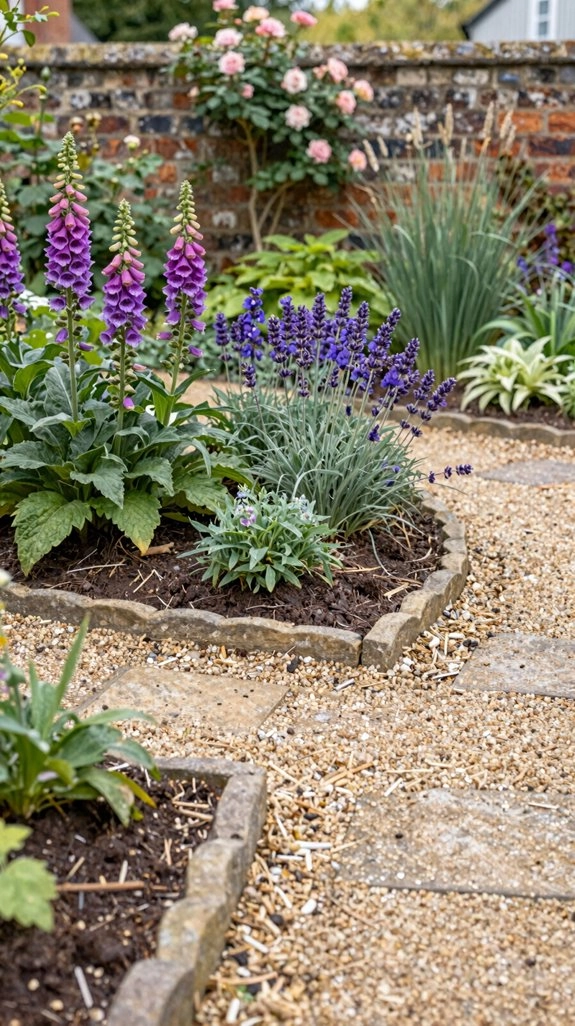
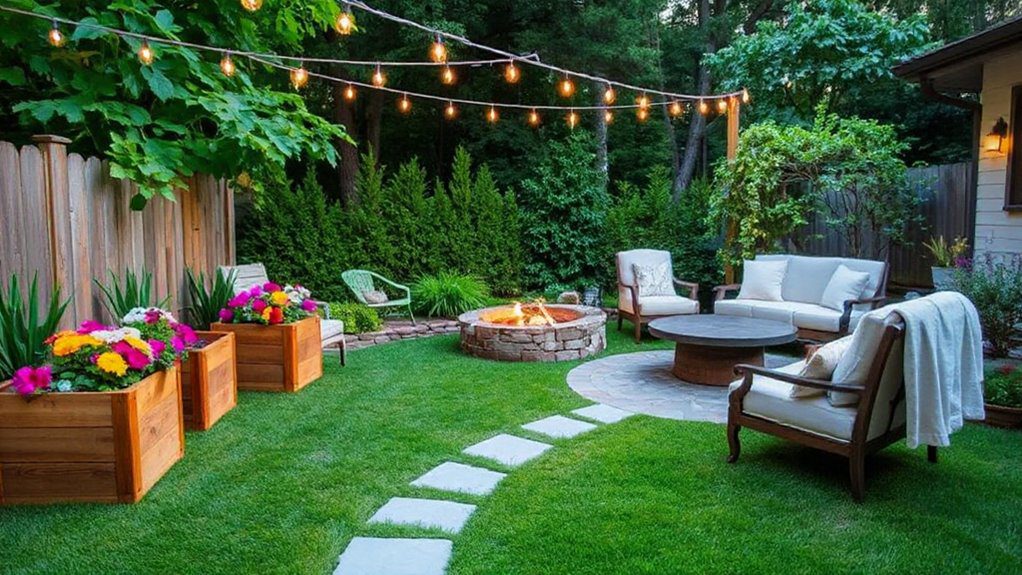
Trade sleek metal and sharp lines for the relaxed charm of a cottage garden border! Weathered wood or stones give your flowers a friendly, rustic welcome while keeping grass out.
Start with these easy options:
- Hand-edge with a spade, cutting a crisp line and shallow dip for mulch mounding.
- Tuck small cedar shingles around curves; they’re affordable and last years.
- Weave willow twigs for countryside character, but protect them from string trimmers.
- Plant close boxwoods for a living edge you can lightly shear.
Keep edging maintenance simple with regular trimming. For the most charming result, choose wattle, knowing its weathered look won’t last forever!