A Complete Guide to Planning a Bloom-Filled Landscape
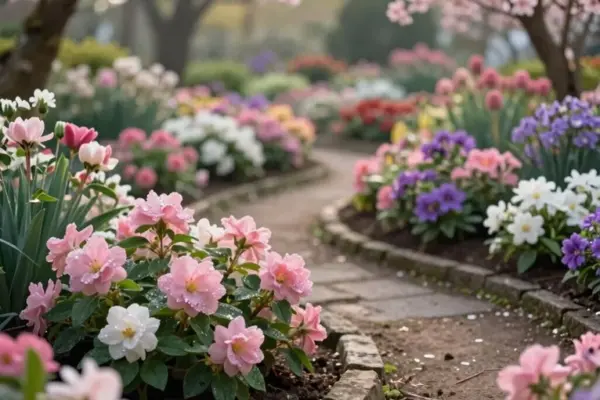
- A Complete Guide to Planning a Bloom-Filled Landscape
- Key Takeaways
- Choosing a Color Palette
- Layering Annuals and Perennials
- Designing Continuous Blooms
- Creating Focal Points
- Attracting Butterflies and Bees
- Mixing Heights and Textures
- Building Curved Flower Beds
- Adding Garden Paths
- Seasonal Care Calendar
- Common Design Mistakes
Plan your bloom-filled panorama with three to five repeating colors, then layer tall plants behind, medium flowers in the middle, and low growers up front. Pair lasting perennials with cheerful annuals, map bloom times, and add grasses for texture between seasons. Shape smooth curved beds, leave 18–24-inch paths, and choose a focal point near a view. Include nectar-rich flowers for bees and butterflies, then mulch and deadhead on schedule. Best of all, avoid crowding by planning mature widths—your future self will cheer! More smart design tips await.
Key Takeaways
- Choose three to five coordinated bloom colors, repeating them in drifts and using white or blue to soften clashing shades.
- Layer plants by mature height, placing tall specimens behind, medium flowers centrally, and low growers or groundcovers along the front.
- Map bloom periods and stagger plantings so multiple flowers overlap throughout the seasons, supported by grasses and evergreens.
- Create focal points near paths or viewing areas, framing them with layered plants and nectar-rich flowers that attract pollinators.
- Add curved beds, accessible paths, contrasting textures, and seasonal maintenance routines to keep the landscape practical and attractive year-round.
Choosing a Color Palette
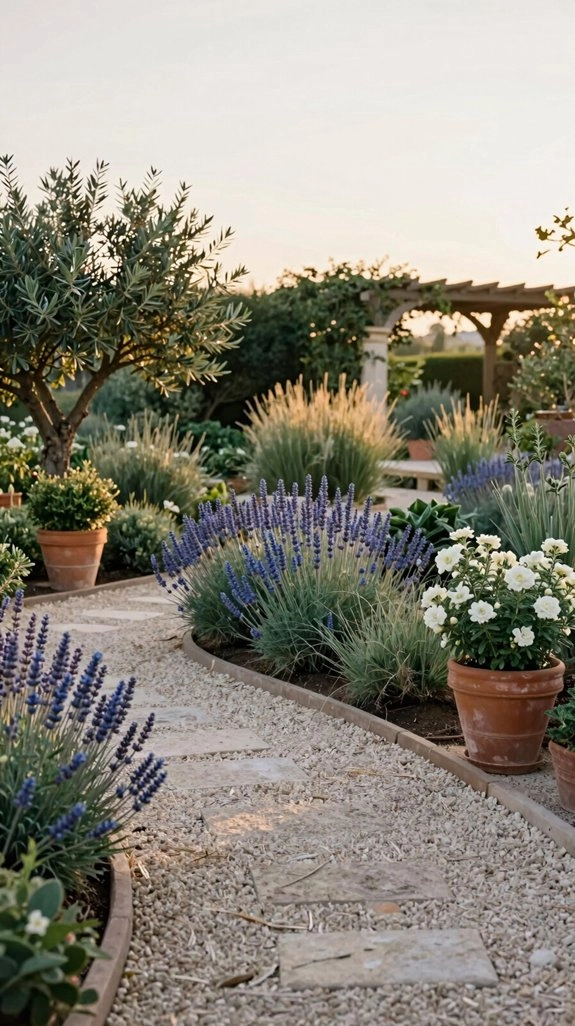
When you’re choosing a color palette, start with a color wheel—it’s like a cheat sheet for making your garden look pulled together!
Pick neighboring colors, like purple and red, for easy harmony, or opposites, like purple and yellow, for lively contrast.
Keep three to five main bloom colors, then repeat them in drifts to create bloom color rhythm.
Add white or blue as a friendly buffer when shades clash.
For soil color blending, notice how blooms work with your earth and mulch.
Try seasonal contrast planning, plus foliage texture pairing with silvery or deep-purple leaves.
The surprise? Pastels can keep hot spaces calm, while fiery hues shout, “Look here!”
Layering Annuals and Perennials
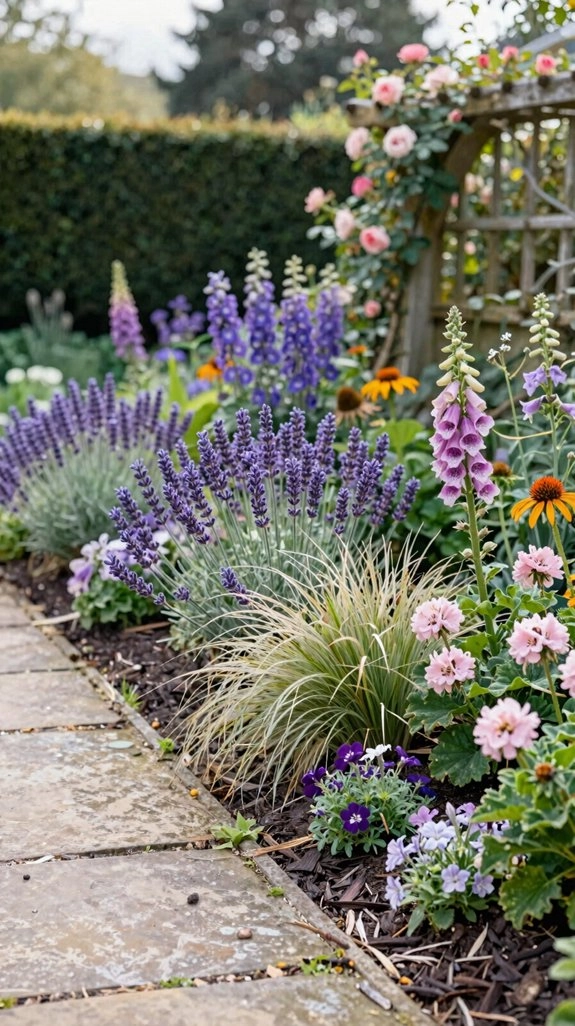
Build your garden in layers, with tall plants rising in back, medium bloomers filling the middle, and low flowers or groundcovers edging the front—like a beautiful living theater!
Check Sunlight Levels first, then place long-lived perennials as anchors and tuck annuals into open spaces.
Use mature widths, not hopeful guesses, so plants won’t crowd each other later.
Annuals can brighten gaps while perennials settle in, since many need two years to look their best.
Match bloom partners with Pollinator Timing in mind, giving visiting bees dependable places to land.
Here’s the surprise: fast-growing annuals between young clumps can make your first season feel wonderfully full!
Designing Continuous Blooms
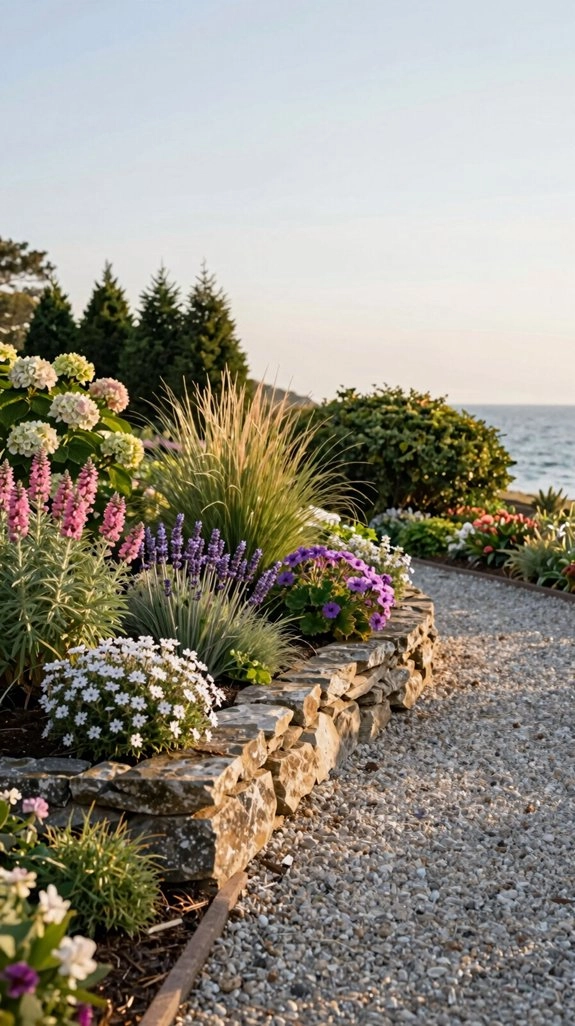
Start with Bloom time mapping: sketch your beds and note each flower’s start and finish dates.
Then plan staggered plantings, aiming for at least two types blooming together each season.
Add long-lasting zinnias, cosmos, snapdragons, and statice for dependable color.
When flowers fade, grasses and evergreens keep things lively.
Harvest repeat-blooming flowers regularly, and they’ll reward you with fresh bouquets!
Creating Focal Points
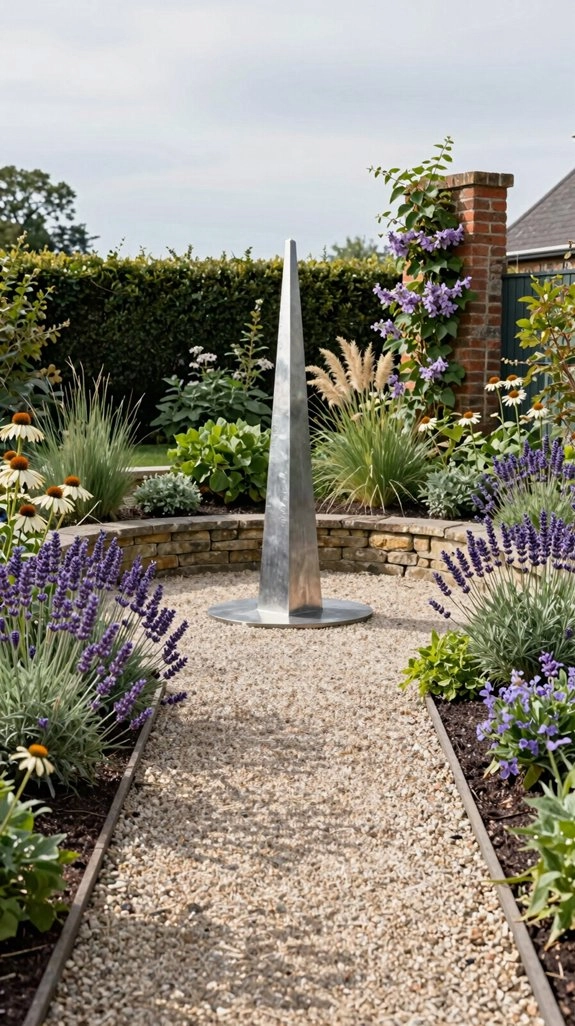
A strong focal point gives your garden a clear visual anchor, so choose a plant or feature that’ll still stand out once everything reaches full size.
Try plant form selection first: pick the tallest, fullest, or most striking option for your bed.
Place it at a corner, island center, or beside a path where you’ll see it from a window, entrance, or patio.
Frame it with tall plants behind, medium layers in the middle, and low growers in front.
Calm creams, pale yellows, or lavender let bold blooms shine.
For seasonal anchor planning, pair spring bulbs with summer blooms and fall color.
What a welcome!
Attracting Butterflies and Bees
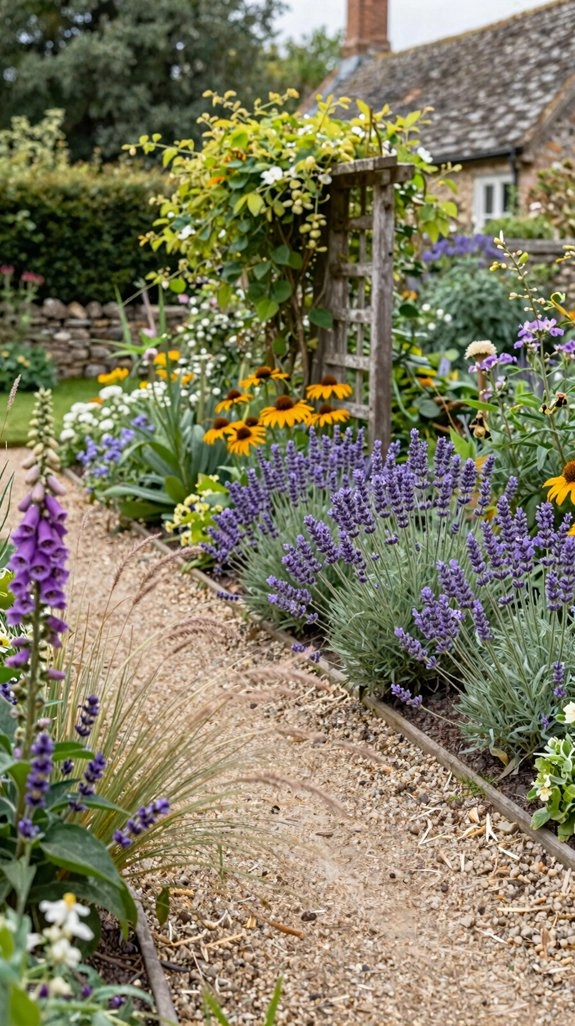
With your garden’s focal point in place, it’s ready for even more lively visitors—hello, butterflies and bees! Plant nectar- and pollen-rich flowers with Native pollinator timing in mind, from spring tulips and daffodils to summer yarrow and asters, so your garden keeps the welcome sign out.
Choose blue, purple, and yellow clustered blooms for bees, plus flat landing pads and open, tubular flowers for butterflies. Add milkweed, parsley, or dill for hungry caterpillars, too.
For easy microclimate support, set a shallow pebble-filled bee bath nearby and leave bare soil or stems for shelter. Skip broad-spectrum sprays—your tiniest guests will thank you!
Mixing Heights and Textures
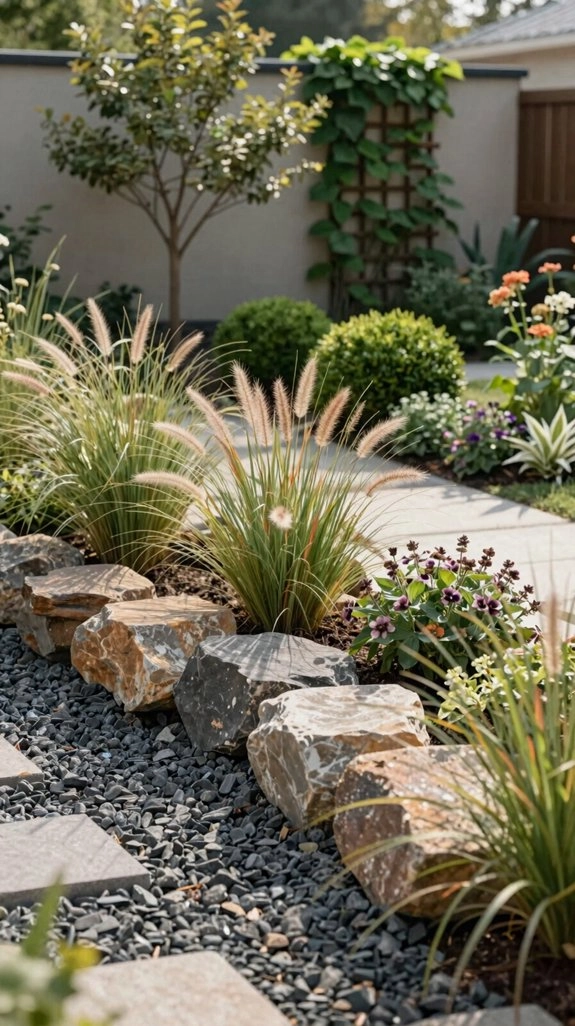
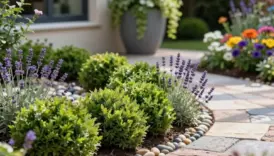
Layer your terrain like a tasty garden parfait! Start with layered plant heights: place tall specimens or hedges behind borders, or in the center of an island bed. Choose by mature size, not pot size, so sunlight and views stay open. Medium plants, usually 2–5 feet tall, belong in the middle, while edging plants and ground covers under 2 feet finish the front.
Next, create texture contrast! Pair airy, fine foliage with bold, broad leaves, then add ornamental grasses structure for movement and winter interest. Repeat favorite textures in drifts of three or more plants. Here’s the sweet surprise: matching bloom heights makes every passage feel naturally welcoming!
Building Curved Flower Beds
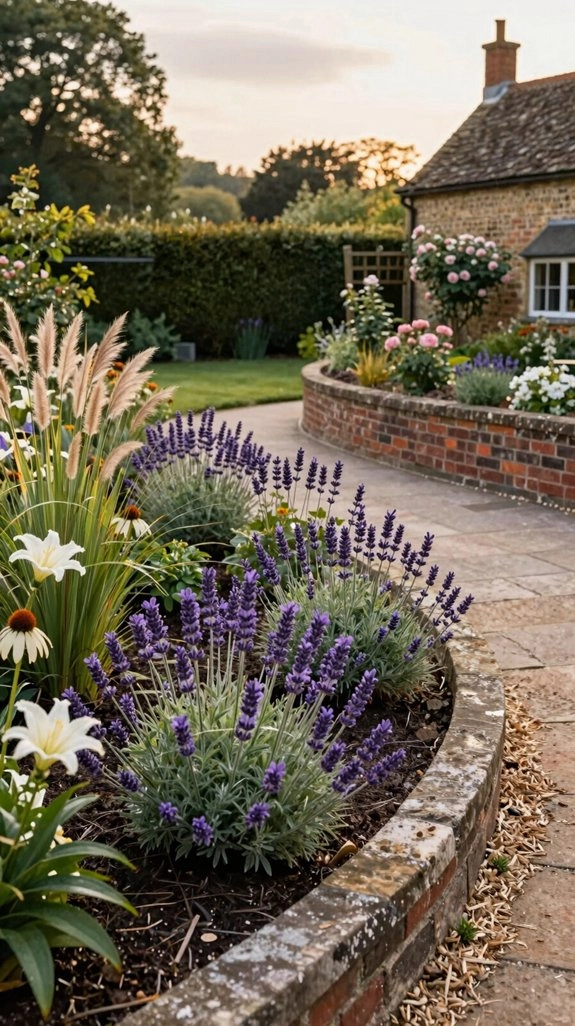
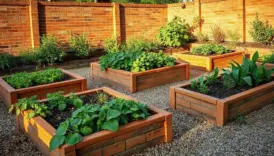
Curved flower beds can turn a plain yard into a welcoming garden path, and they’re easier to plan than they look! Grab a Hose Line or string, shape a smooth arc, and view it from several angles. Adjust the bend, then mark your Edge Definition with spray paint.
Keep mowing and trimming simple by leaving an 18–24-inch clear strip along one side. Place tall plants toward the back and shorter blooms in front, protecting views and sunlight.
Use mature widths to guide Plant Spacing, so growth won’t crowd.
Finally, try Drift Repetition: repeat groups of three or more, staggered along the curve. What a cheerful payoff!
Adding Garden Paths
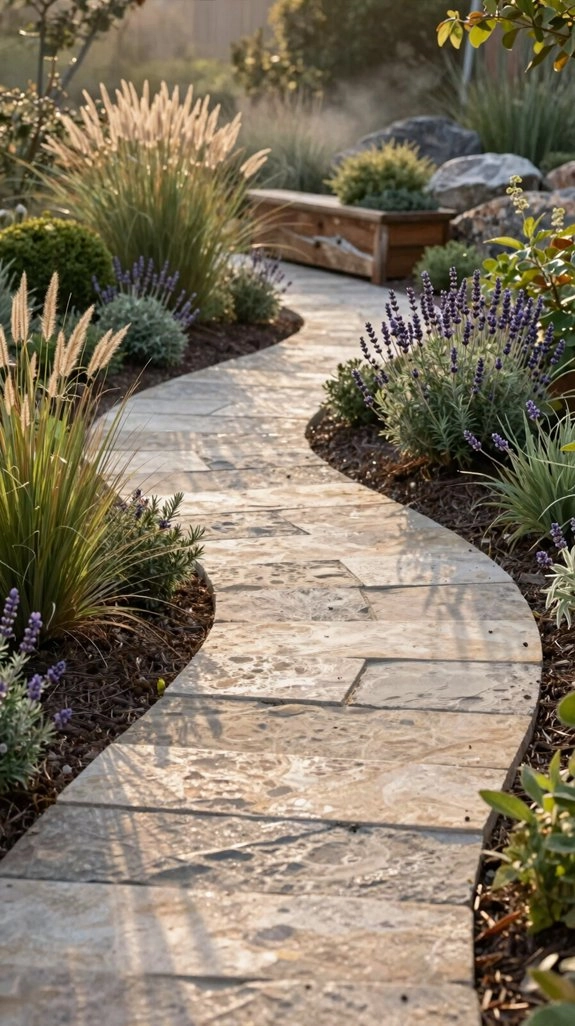
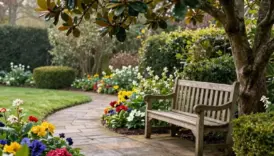
Garden paths make every flower bed easier to enjoy and maintain! Keep yours 18–24 inches wide, so you can reach plants without stepping into beds.
Choosing path materials? Try gravel, mulch, brick, or stepping stones. First, sketch your layout, then test it with a garden hose. Walk the route, checking turns and connections!
- Match straight paths with formal beds.
- Use curves for a relaxed, natural feel.
- Frame favorite blooms near windows, seats, or entryways.
Think about planning maintenance routes, too. Position paths so you can weed, deadhead, and harvest from standing spots. That simple test saves effort and makes your garden feel welcoming to everyone!
Seasonal Care Calendar
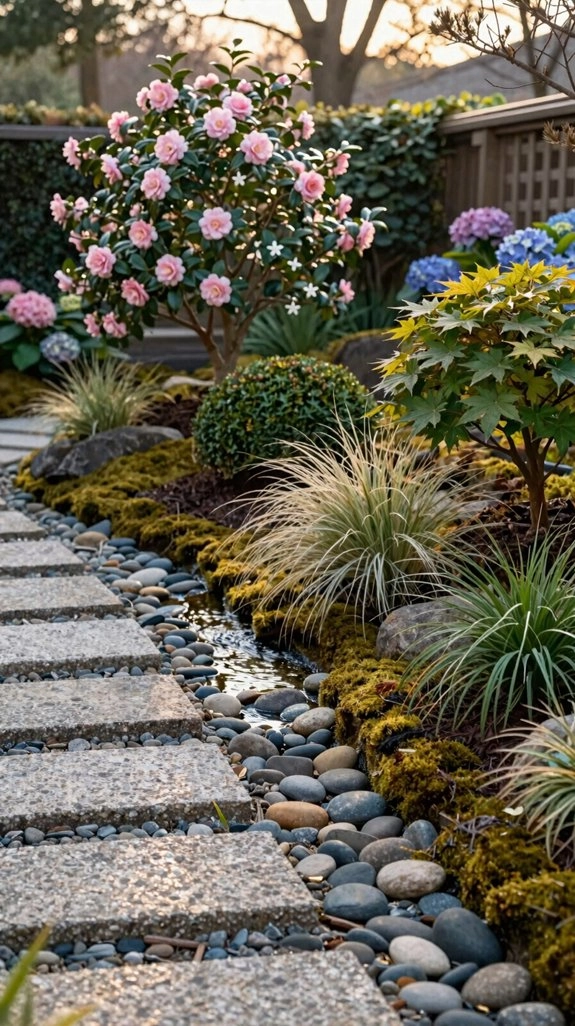
Once your paths are mapped, a seasonal care calendar helps you know what each bed needs and when! In early spring, keep waking perennials evenly moist, and let tulip, daffodil, and narcissus leaves yellow naturally.
After the last frost, plant annual cut-flower starters, deadhead often, and mulch to save water. Set water schedules, especially while midsummer plants establish, then prune spent blooms and add zinnias, dahlias, or snapdragons for armfuls of color!
In late summer, harvest and deadhead, welcome asters and rudbeckia, and tuck fall bulbs between perennial crowns. Come autumn, wait until foliage dies back before cutting, then mulch crowns. Your future garden will thank you!
Common Design Mistakes
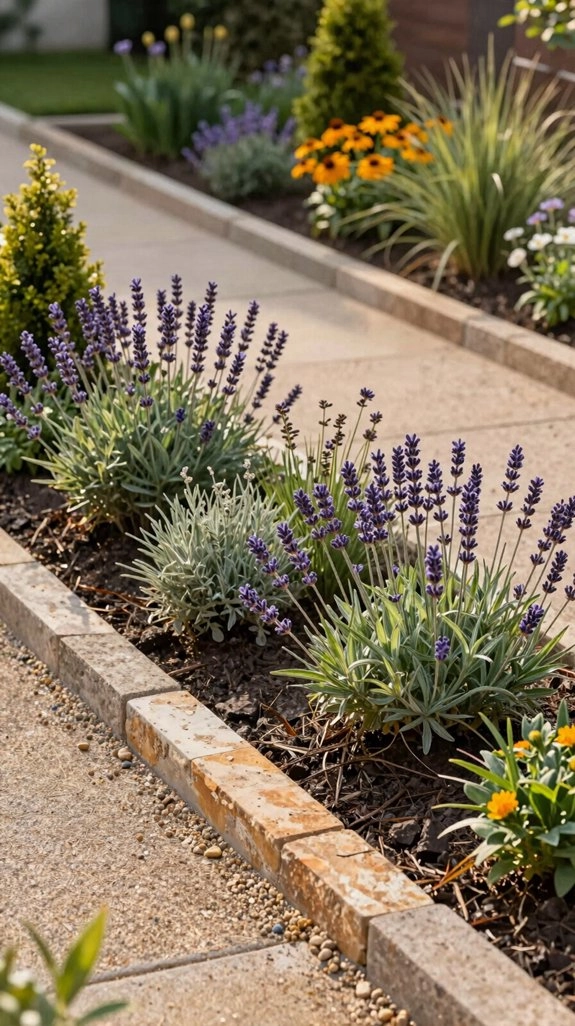
Even a beautiful planting plan can stumble when small design mistakes sneak in! You’ll create a friendlier, fuller garden by checking a few basics before digging.
- Start with measuring bed dimensions, including windows and paths. Place tall plants near walls, medium growers in the middle, and low blooms up front so everyone can enjoy the view.
- Practice preventing overcrowding by accounting mature widths, not tiny nursery pots. Give roots room for water, nutrients, and healthy airflow.
- Focus on Avoiding site mismatch: match sun, shade, and soil. Then mix spring, summer, and fall bloomers, so your garden keeps the welcome party going!