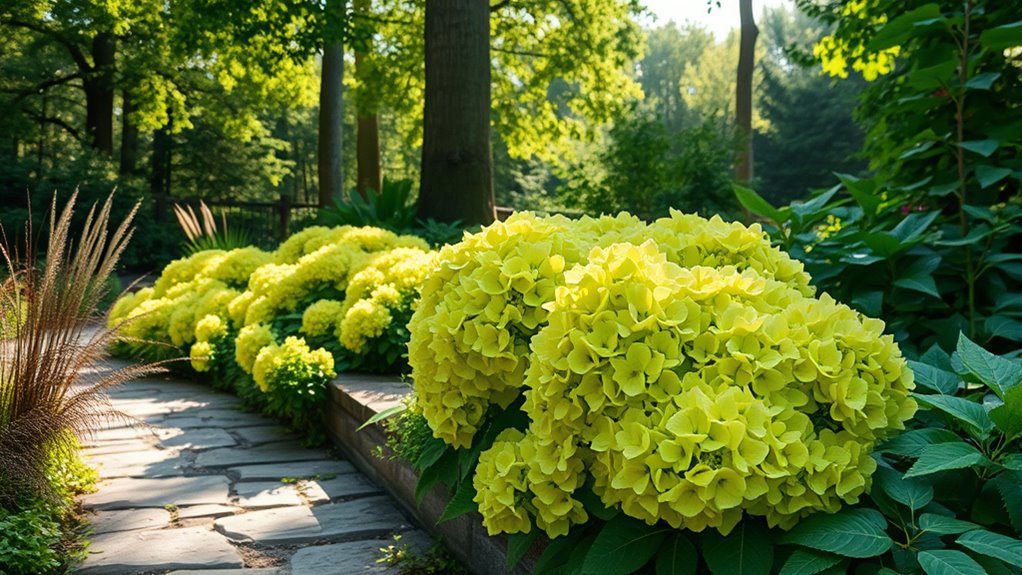
17 Garden Bed Layout Ideas for a Productive and Beautiful Landscape
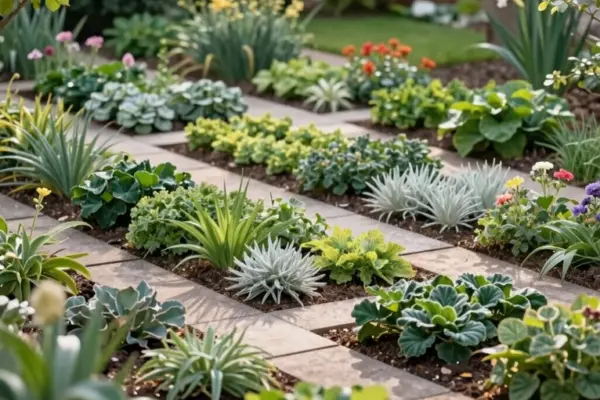
- 17 Garden Bed Layout Ideas for a Productive and Beautiful Landscape
- Key Takeaways
- Raised Bed Grid Layout
- Curved Border Garden Beds
- Layered Planting Design
- Island Garden Beds
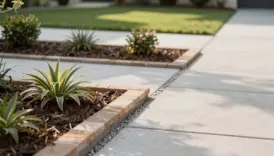
- Foundation Planting Layout
- Symmetrical Front Yard Beds
- Corner Garden Beds
- Mixed Perennial Borders
- Vegetable and Flower Combination
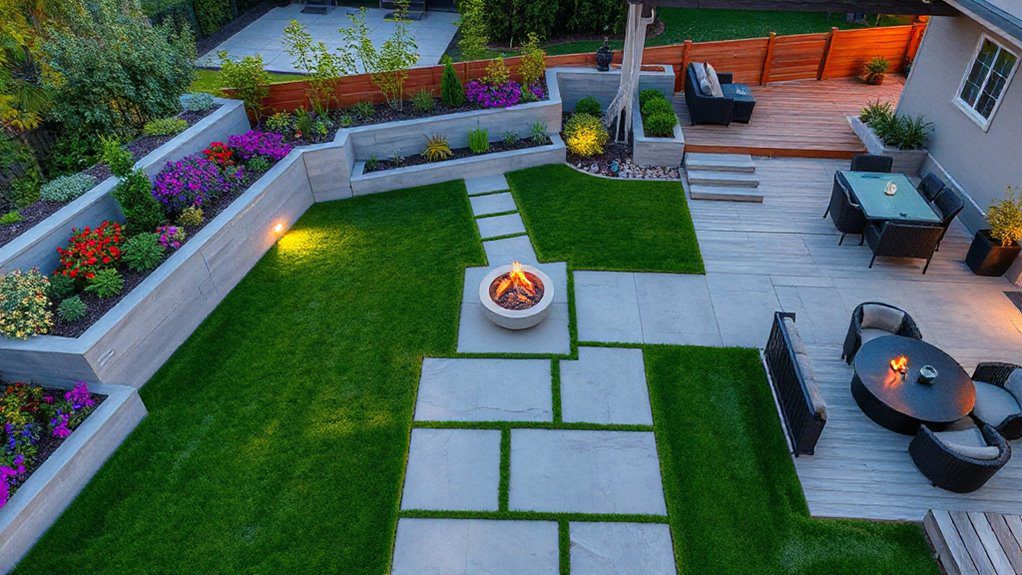
- Tiered Garden Beds
- Pollinator-Friendly Layout
- Rock Border Beds
- Modern Minimalist Beds
- Cottage Garden Layout
- Shade Garden Arrangement
- Four-Season Planting Plan
- Low-Maintenance Garden Beds
You can turn a plain yard into a productive showpiece with raised-bed grids, curved border beds, island plots, and layered plantings. Try simple lumber, stones, or panels, then add narrow paths, trellises, and dense sowing for easy upkeep and bigger harvests. Mix cottage charm, shade-friendly corners, and four-season rotations to keep beds busy and neat. Start with one layout that fits your space, and the best surprise comes when you stack height and paths just right!
Key Takeaways
- Use raised beds in neat 4×4 or 4×8 blocks with 2-foot paths for organization and easy access.
- Try island beds with access on all sides to improve movement, planting flexibility, and maintenance.
- Add trellises, obelisks, or panels to grow cucumbers, beans, and peas upward, saving space.
- Use layered planting with tall crops in back and low growers in front for a beautiful, efficient design.
- Plan succession planting and crop rotation so beds stay productive across seasons with minimal bare soil.
Raised Bed Grid Layout
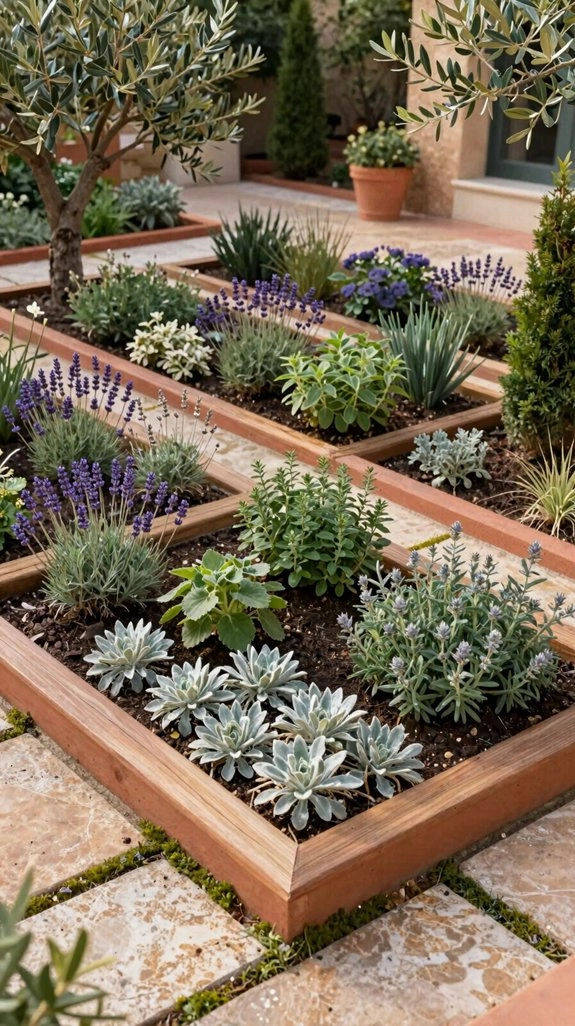
If you want your garden to feel organized without looking stiff, a raised-bed grid layout is a fantastic place to start! You’ll fit several even beds, like 4×4 or 4×8, into neat rows, with about 2 feet between them so you can move easily and still save space.
That simple structure helps you plan crop rotation, companion planting, and better soil fertility without the chaos.
Use trellises inside the grid to reach up, not out, and place beds so you can work from three sides. Start by seeding densely, then thin later.
You’ll get tidy beds, easy harvests, and a garden that feels like yours!
Curved Border Garden Beds
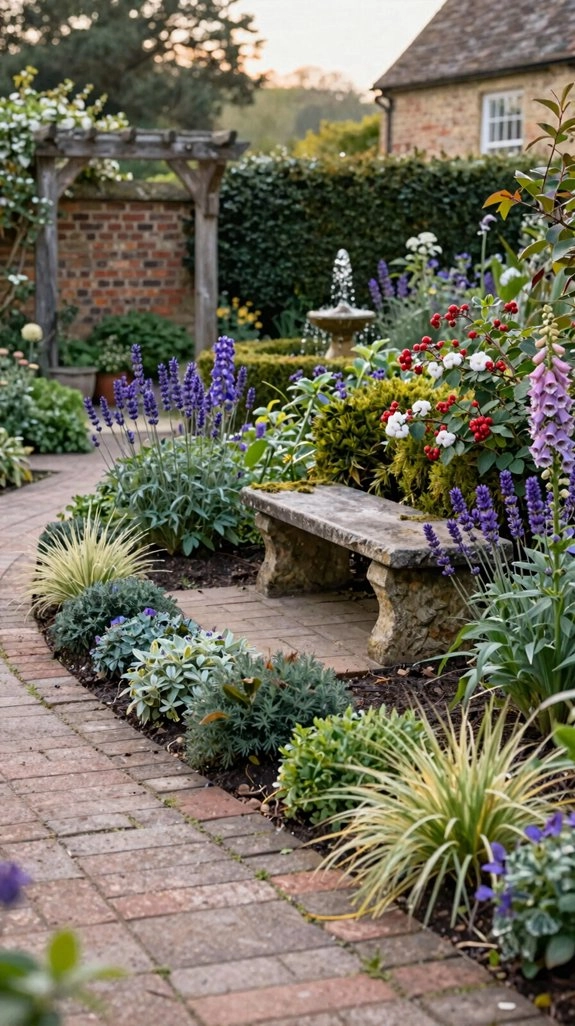
A curved border garden bed can turn that “what do I do with this weird edge?” spot into a real showpiece! You’ll fit it along a fence, driveway, or walkway curve, and it’ll feel like it belongs there, not like it wandered in lost.
Start with soil access planning and bed width sizing: keep small beds about 1.5 feet wide and 6 feet long, so you can reach in without doing a weird yoga pose.
For trellis placement, tuck panel trellises at the back, or line obelisks along the bend.
Try two or three matching beds, then use seasonal crop rotation to keep the whole arc fresh and productive!
Layered Planting Design
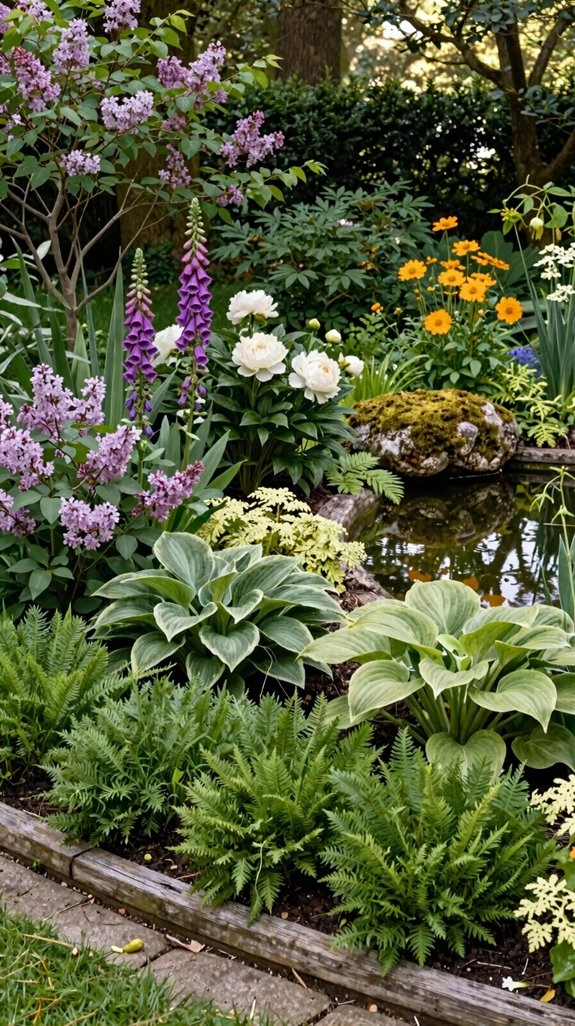
When you stack your garden by height instead of just lining everything up, you can turn one bed into a little living tower of food and color—how fun is that!
You’ll love companion height stacking: put cucumbers, pole beans, or peas on a trellis at the back, then tuck mid-height plants and low growers in front.
Try trellis understory shading with leafy greens below vining cucumbers, so they stay cooler in summer.
For a clever twist, place Malabar spinach on the sunny edge and keep baby greens closer together, then thin later.
You’ll get more harvest, less stress, and a tidier look!
Island Garden Beds
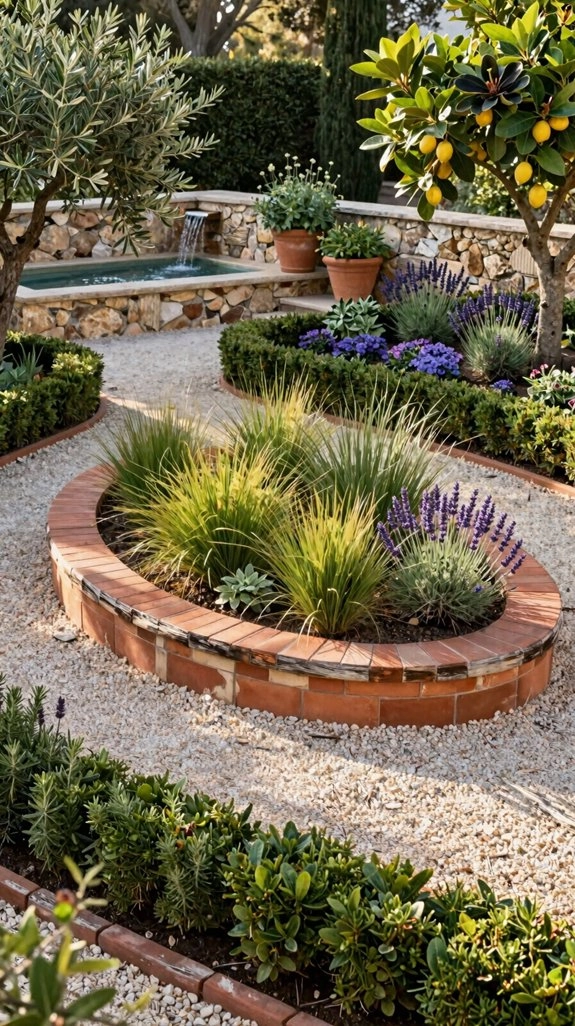
Island garden beds take that stacked, layered look you just used and give it a fresh twist out in the open, where every side needs a path and every plant gets its moment in the sun!
You’ll want about 2-foot paths all around, so you can reach in without squishing the soil, and that keeps your garden crew feeling welcome too.
Try block planting instead of long rows, then mix companion planting with seasonal rotations for better flow.
Add trellises or obelisks to lift beans, cucumbers, or peas upward, saving space.
If your island’s bigger, use a twin-style symmetry, and tuck arches between beds for a polished, wow-worthy finish!
Foundation Planting Layout
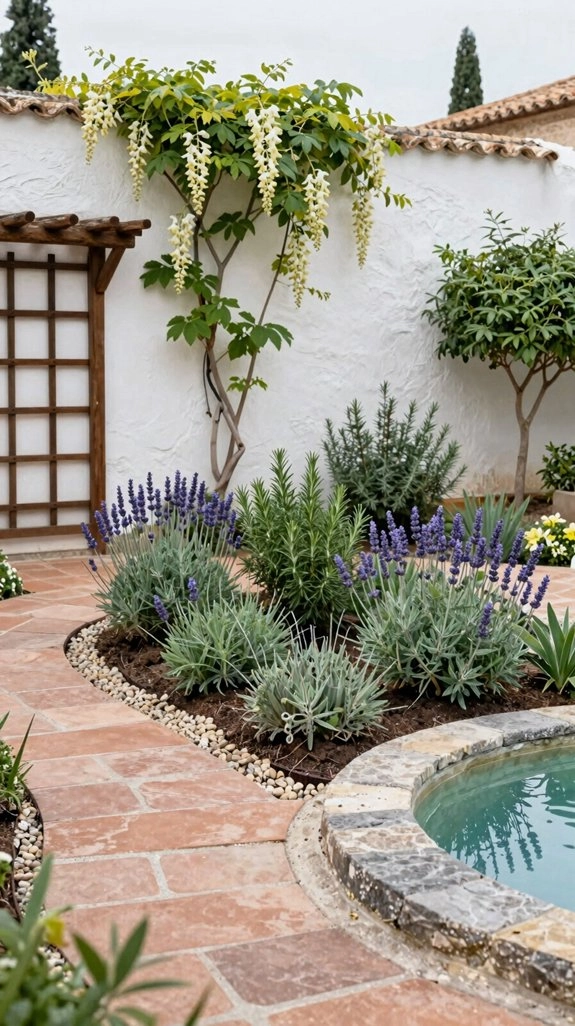
Near the house or fence line, foundation planting works best when you keep the bed neat, compact, and plainly intentional—think a border garden that’s at least 1.5 feet wide and about 6 feet long for a clean, finished look. You boost curb appeal fast!
- Start with blocks or raised-bed groups.
- Keep foundation depth easy to reach from three sides.
- Add accessible paths only where you need them.
- Finish with a vertical trellis for beans, roses, or vines.
This setup feels welcoming, saves space, and looks fuller than one long row. Little effort, big neighbor envy!
Symmetrical Front Yard Beds
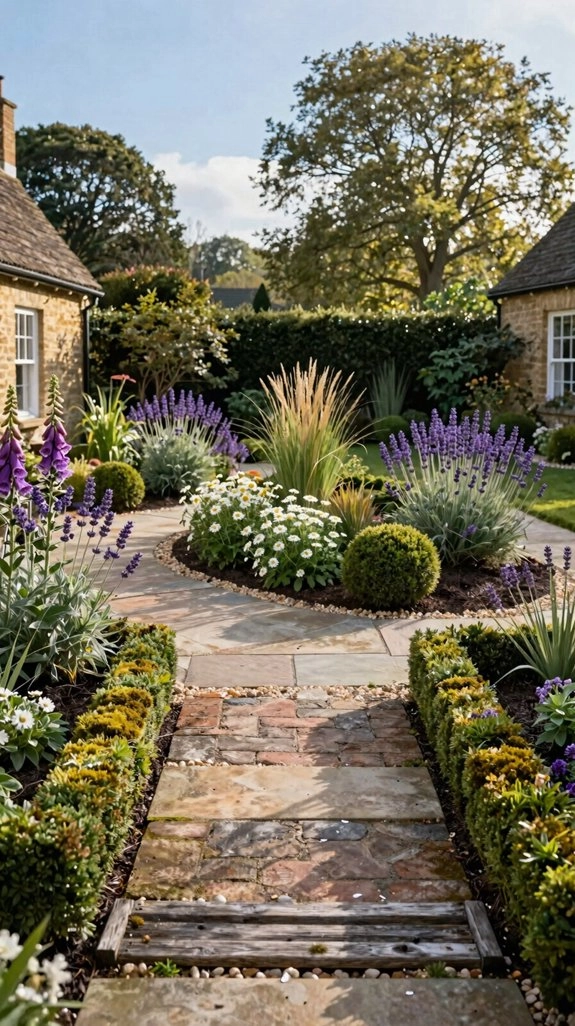
If you want your front yard to feel polished and calm, symmetry is your secret weapon! Start with a Twin Garden: build mirror-image raised beds on both sides of your entry, using equal 4×4, 4×8, or 4×10 frames. Add at least two 2-foot-wide paths, so you can stroll through your little outdoor room without bumping elbows with tomatoes.
Then match trellises on each side for balance, and keep compost bin placement tucked where it won’t break the view.
In a square yard, try four equal beds, plus seasonal crop rotation, for a neat, friendly look that says, “Come on in!”
Corner Garden Beds
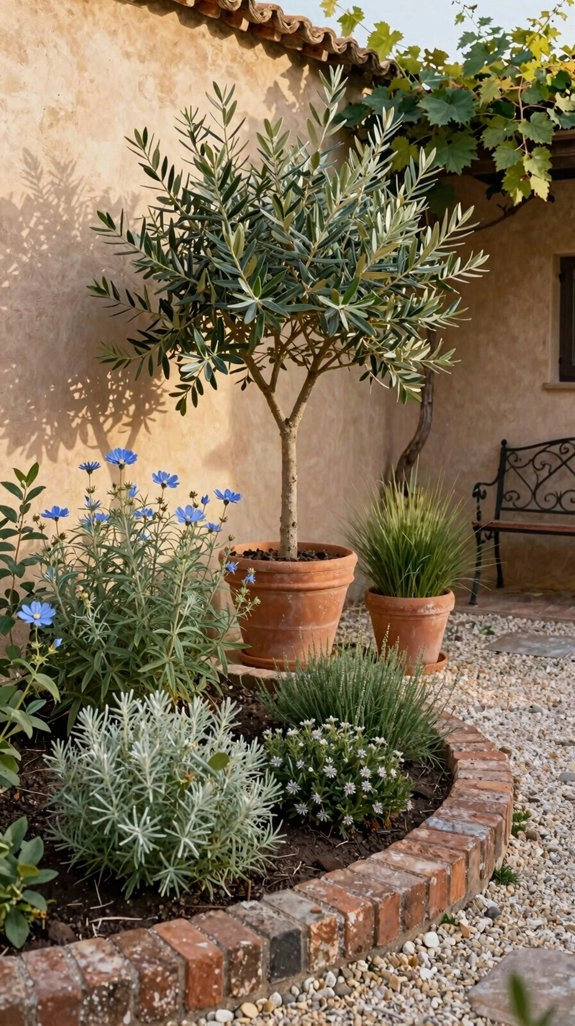
Corner garden beds are a clever way to turn that awkward little meeting point where a fence, driveway, path, or wall comes together into a hardworking growing spot!
- Use a trellis for vertical gardening, so beans or cucumbers climb up instead of sprawl out.
- Try companion planting to tuck friendly crops together and make the most of tight corners.
- If space is skinny, aim for a bed about 1.5 feet wide and 6 feet long.
- Build two small sections in blocks, with narrow paths, so it feels tidy and easy to join in.
You’ll waste less space, and your corner can look planned, not patchy!
Mixed Perennial Borders
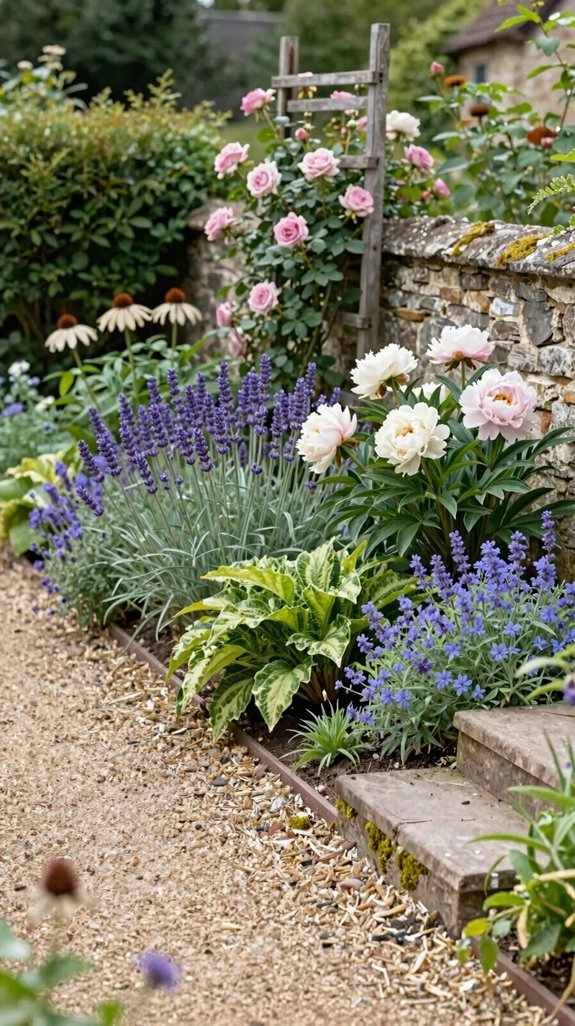
With a mixed perennial border, you can turn a plain strip of yard into a layered, living picture that keeps coming back year after year—pretty neat, right!
You’ll create Height Layering by placing tall stars in back, medium blooms in the middle, and low growers up front, so the whole bed feels friendly and full.
Repeat 3 to 5 plants in drifts, like a mini club of color, and you’ll get Seasonal Color that rolls from spring to fall.
Pick plants with the same sun and water needs, then add grasses or bold leaves for structure.
Space them well, and they’ll knit together beautifully!
Vegetable and Flower Combination
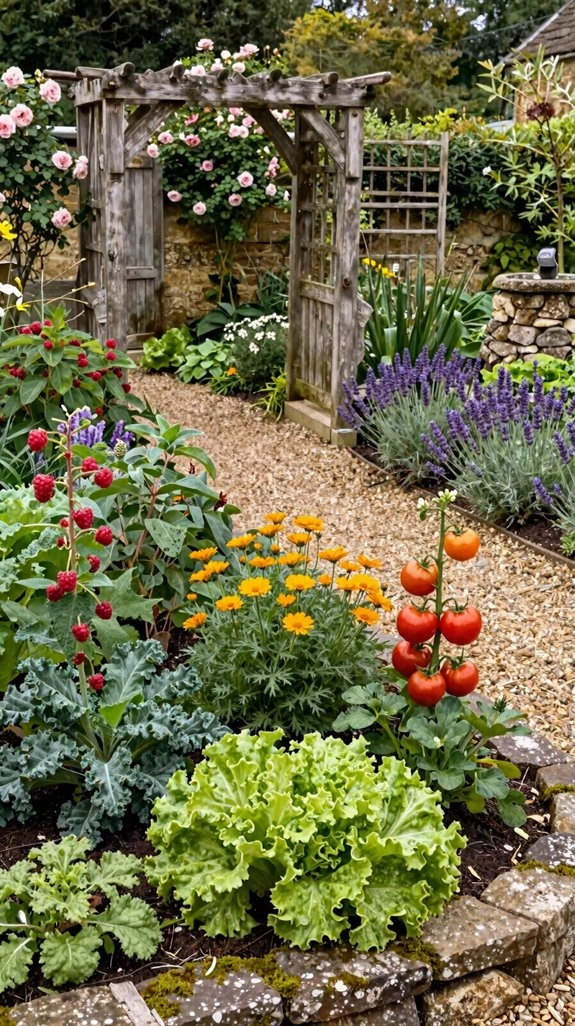
Tuck vegetables and flowers together, and your bed can start working harder and looking prettier at the same time! You’ll love the cozy, space saving, vibe of companion blooms.
- Try block planting in raised beds, so you fit more food and see less bare ground.
- Mix fast radishes with slow carrots; the radishes pop out first and loosen the soil.
- Use trellises for cucumbers or peas, then tuck herbs or leafy greens below.
- Add arches or obelisks to link beds and create an outdoor room feel.
Pick space hogs for support, and keep stingy crops in smaller pockets.
Tiered Garden Beds
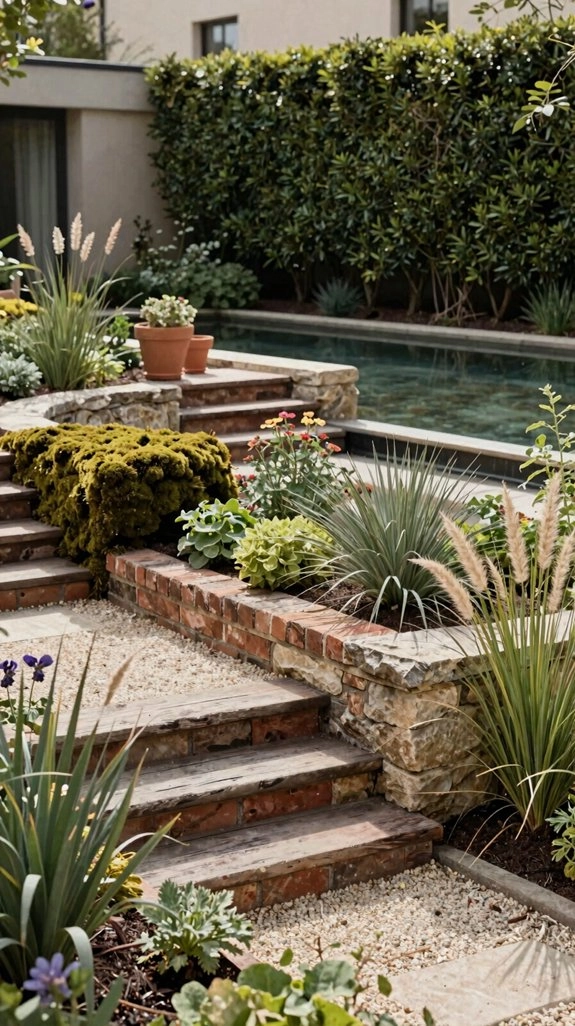
If your garden bed mix of veggies and flowers already feels lively, tiered garden beds can take that energy up a notch—literally! You’ll stack soil levels to add growing room without stealing more ground, which is perfect for small space gardening and sloped yards.
Build each tier with cedar, stone, or treated lumber, and keep the heights even so you can weed and harvest without a yoga pose. Put tall plants up top, shorter ones below, and split zones for root crops or companion planting.
Want the big win? Train pole beans, cucumbers, or peas upward for extra harvest!
Pollinator-Friendly Layout
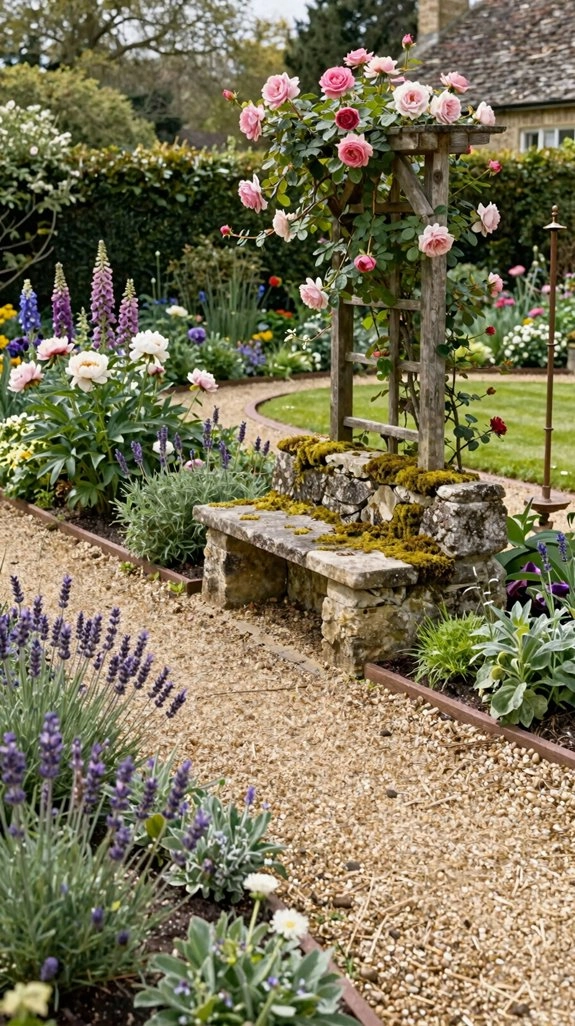
For an easy DIY setup, use basic raised-bed materials, sturdy trellis panels, and a mix of fast growers and flowering vines. You’ll build pollinator pathways that feel welcoming, not crowded.
- Border garden: place panels at the back, then sow flowers and peas.
- Twin beds: mirror two beds, add arches, and keep 2-foot paths.
- Succession planting: start with radishes and cool flowers, then swap in heat lovers.
- Plant dense, then thin later, so more blooms stay open for bees.
Try vining beans, cucumbers, and squash on trellises. You’ll save space, lift blossoms into sun, and wow your little bee crew!
Rock Border Beds
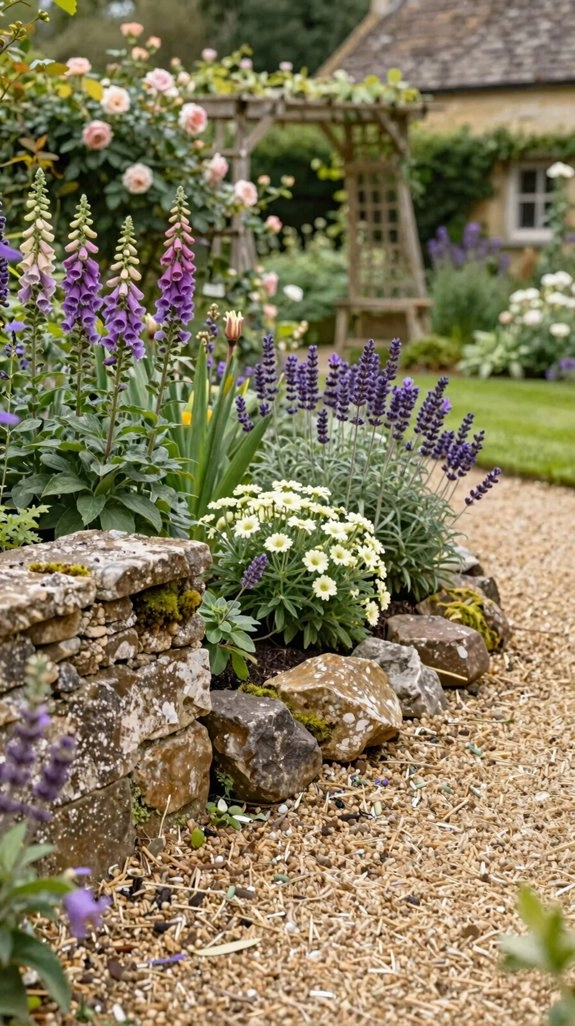
Rock border beds can turn those awkward little edges along a fence, driveway, or patio into something useful and pretty, and honestly, they do a great job of making “leftover space” feel like a plan!
For smart rock border placement, start with a bed about 1.5 feet wide and 6 feet long, then tuck in compact plants so you keep bare soil to a minimum.
Need easy access? Plan your paths before you plant, because plant access planning saves you from awkward reaching later.
Add a panel trellis behind the bed, or try two raised sections with a bench or citrus pot between them, and wow, you’ve got style and function!
Modern Minimalist Beds
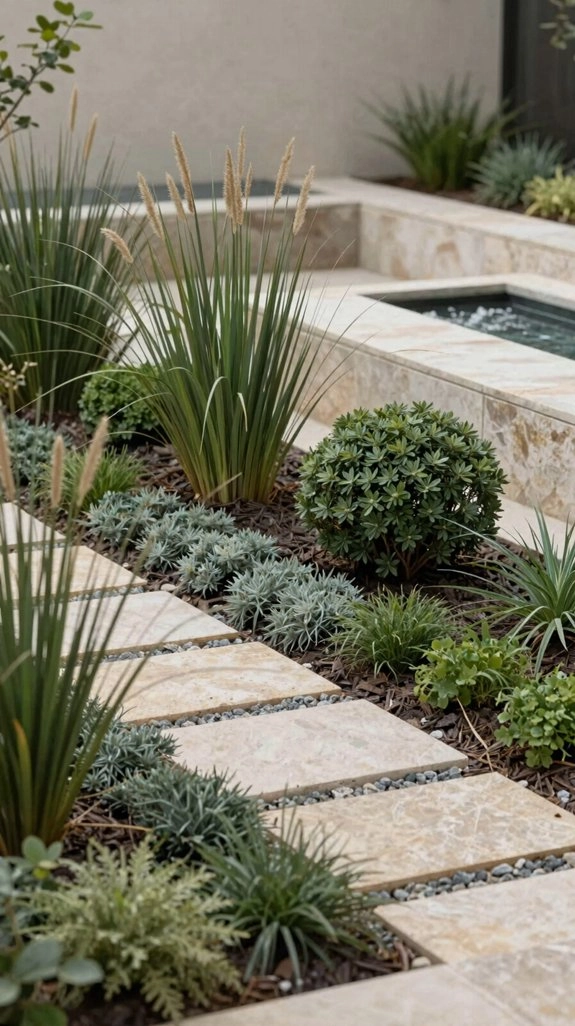
Modern minimalist beds keep things neat, calm, and surprisingly productive, so after those pretty rock edges, you can swap “cute border” energy for a cleaner, sharper look that still works hard!
You’ll fit more food in less space, and your garden crew feels instantly organized.
- Try compact blocks with fewer paths.
- Keep raised bed edges straight and simple.
- Use soil pathway planning to cut bare dirt.
- Add one trellis, not five, for vertical flair.
Plant dense, then thin later, because seeds don’t need perfect spacing.
Choose space-efficient crops, like climbing beans or high-yield greens, and your bed stays sleek, friendly, and harvest-ready.
Cottage Garden Layout
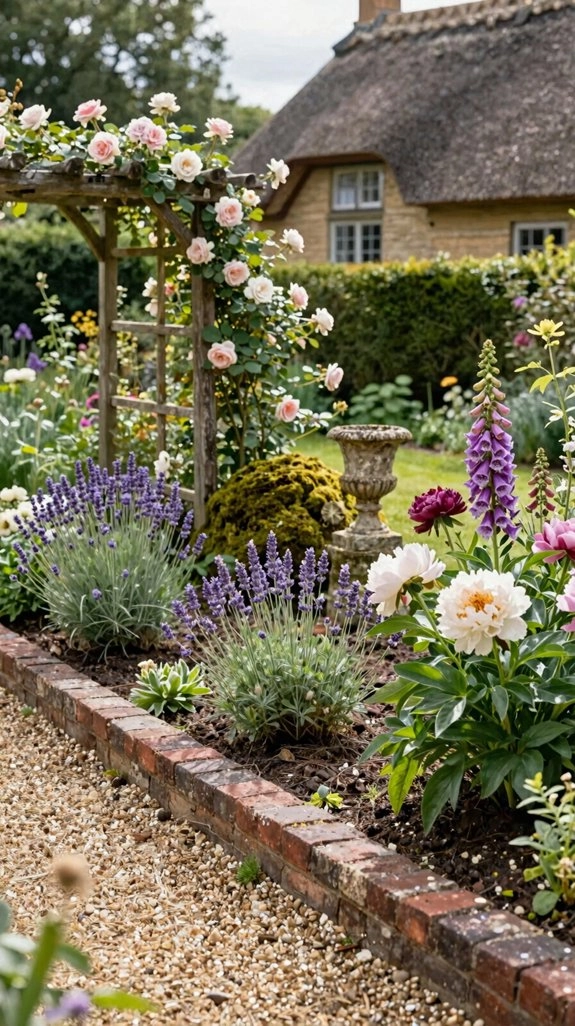
Because cottage gardens love a little wild charm, you can mix flowers and vegetables in a way that feels cozy instead of messy, and that’s the magic here!
Start with curved beds, layered heights, and clusters of crops, so your garden feels like a friendly gathering, not a lineup.
Add a simple trellis or two with string, bamboo, or metal panels, then let beans or cucumbers climb while you save space.
Block planting keeps bare soil low, which helps soil health.
For extra harvests, use succession planting and crop rotation, then tuck early crops behind later ones.
Shade Garden Arrangement
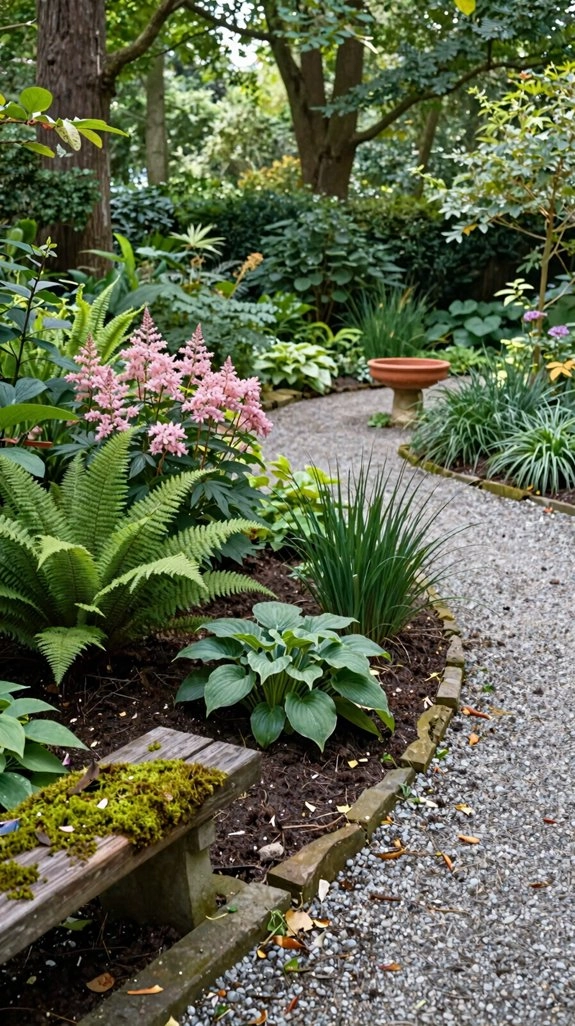
If your shady yard has been feeling a little left out after all that cottage-garden fun, don’t worry—you can still build a lovely, productive bed layout! Start with raised beds, then tuck your dappled shade crops into the brightest edge and your most shade-loving plants deeper in.
- Use a Border Garden for fence-line shade.
- Try a Trio/Classic layout for longer spaces.
- Add trellises only where light is softer overhead.
- Build a companion planting plan with leafy crops and foliage.
Keep paths slim, so every ray hits your plants, not your boots. With the right mix, your shaded nook feels cozy, useful, and welcome!
Four-Season Planting Plan
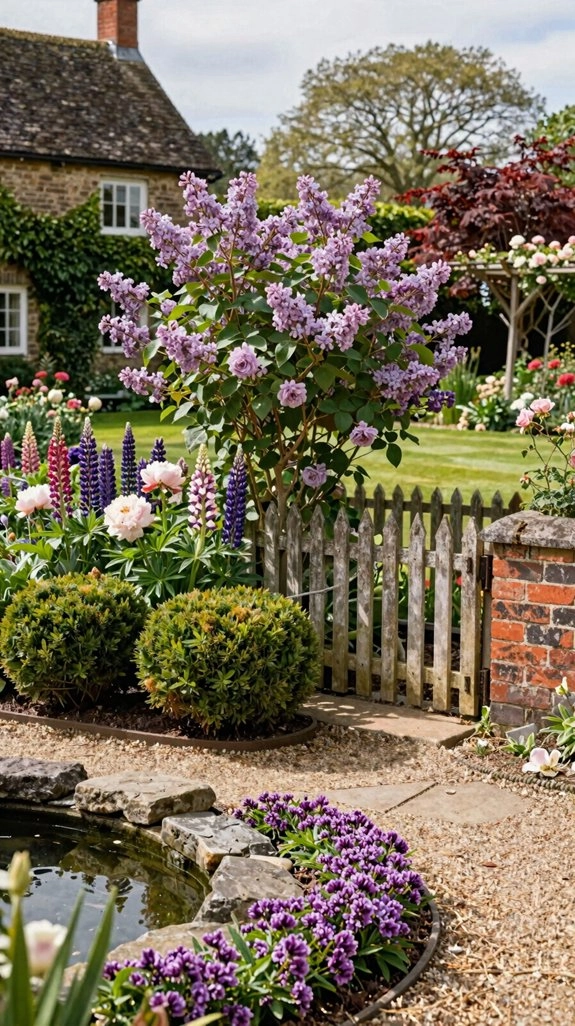
As the seasons flip from cool to hot, a four-season planting plan keeps your beds working instead of snoozing!
Start with crop rotation: tuck radishes and carrots into spring beds, then swap in beans or beets as warmth rises.
Use succession scheduling, too, so when garlic comes out, rapini slides in fast—no awkward empty space!
Keep your layout in neat blocks with short paths, so each zone gets replanted on cue.
The sneaky-smart trick? Grow leafy greens under trellised cucumbers or pole beans, and let “space hogs” climb up instead of sprawling out.
Your harvest stays steady, and your garden feels like a busy little club!
Low-Maintenance Garden Beds
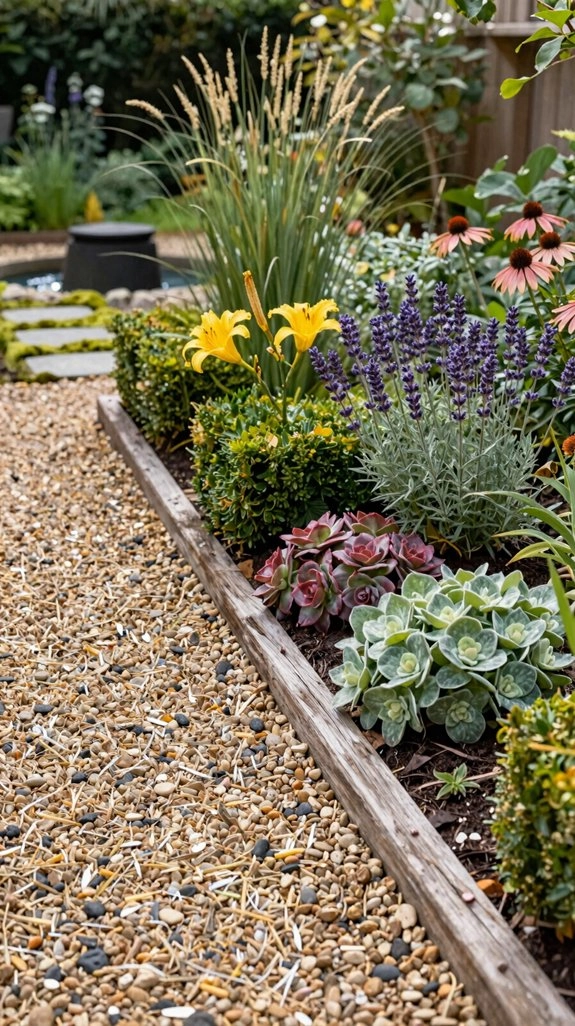
For a low-maintenance garden bed, start with a block-style layout instead of long, skinny rows, and keep paths as narrow as you can manage. You’ll cut bare soil, weed less, and grow more food with less fuss—nice, right!
- Choose a Border Garden for small spaces, or a Four-Garden Classic if you want an “outdoor room.”
- Add trellises for cucumbers, squash, beans, or peas, and let them climb!
- Sow thick, then thin for easy planting and bonus baby greens.
- Use mulch pathways and seed succession so beds stay busy, not sleepy.