Vegetable Garden Layouts That Improve Harvests in Limited Space
- Vegetable Garden Layouts That Improve Harvests in Limited Space
- Key Takeaways
- What Makes Small Garden Layouts Work?
- Map Your Sun Before You Plant
- Match Crops to Light Levels
- Choose the Right Bed or Container
- Use Vertical Space for Bigger Yields
- Climbing Crops Upward
- Trellises And Supports
- Stack Plants High
- Plan Paths So You Can Reach Everything
- Reach All Plants
- Narrow, Clear Paths
- Space Plants for Airflow and Growth
- Group Crops by Water Needs
- Build in Drainage for Healthier Roots
- Place Fruiting Crops Where They’ll Thrive
- Fit Leafy Greens Into Tight Spots
- Use Succession Planting to Keep Harvests Coming
- Feed Small Garden Beds Regularly
- Organic Nutrient Boosts
- Keep Soil Supplied
- Avoid Common Small-Space Layout Mistakes
- Start Small and Improve Each Season
- Begin With Few Pots
- Learn By Growing
You can boost harvests in a tiny garden by mapping sun first, then matching crops to light, and using big pots, trellises, and narrow beds with 18–24-inch paths. Start with compost, a few containers, and a simple trellis; plant tomatoes in the brightest spot, leafy greens in shadier gaps, and peas up high. Keep sowing in rounds, feed lightly, and watch your space turn into a little produce machine, with a few sneaky tricks waiting next!
Key Takeaways
- Map sun first; most vegetables need 6+ hours, while leafy greens can work in 2–4 hours.
- Match crops to light: put tomatoes, peppers, eggplant, and squash in the sunniest spots.
- Use trellises for peas and beans, and place tall crops on the north side to avoid shading.
- Keep beds narrow and paths 18–24 inches wide so you can reach, water, and harvest easily.
- Group plants by water needs, use succession planting, and feed small beds regularly to maintain yields.
What Makes Small Garden Layouts Work?
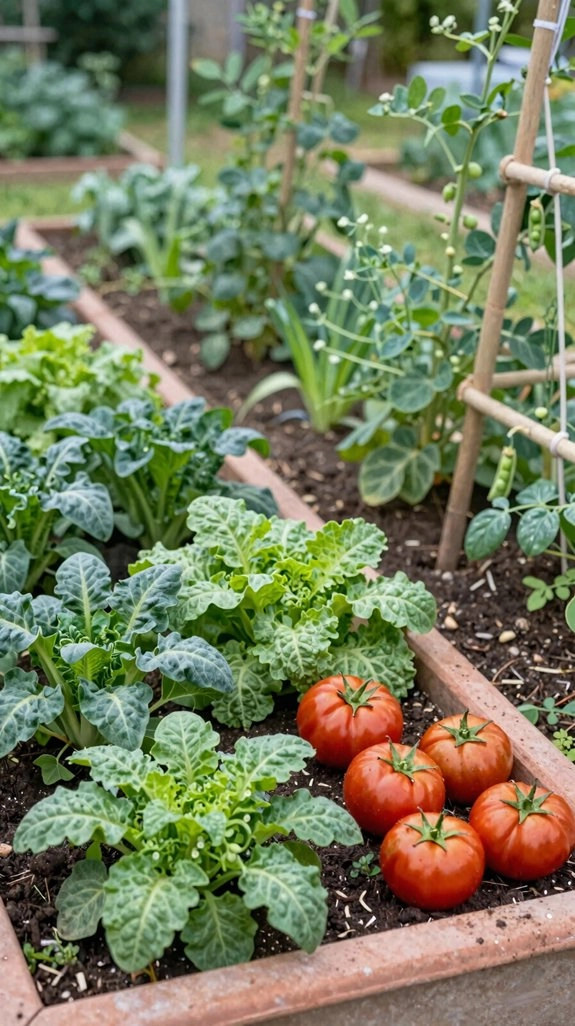
When you’re working with a small garden, the layout has to do a lot of heavy lifting, so start with the sun and let that shape everything else!
You’ll feel smarter, not stressed, when you match crops to light: tomatoes and peppers want 6–8 hours, peas and beans about 5, and leafy greens can handle 2–4.
Use big pots for fruiting plants, keep quick leafy rows a little snug, and leave airflow, so disease can’t crash the party.
Add microclimate management with trellises, daily-check spots, and pollinator friendly planting.
Save space for succession planting, then replant fast—your tiny crew stays productive!
Map Your Sun Before You Plant
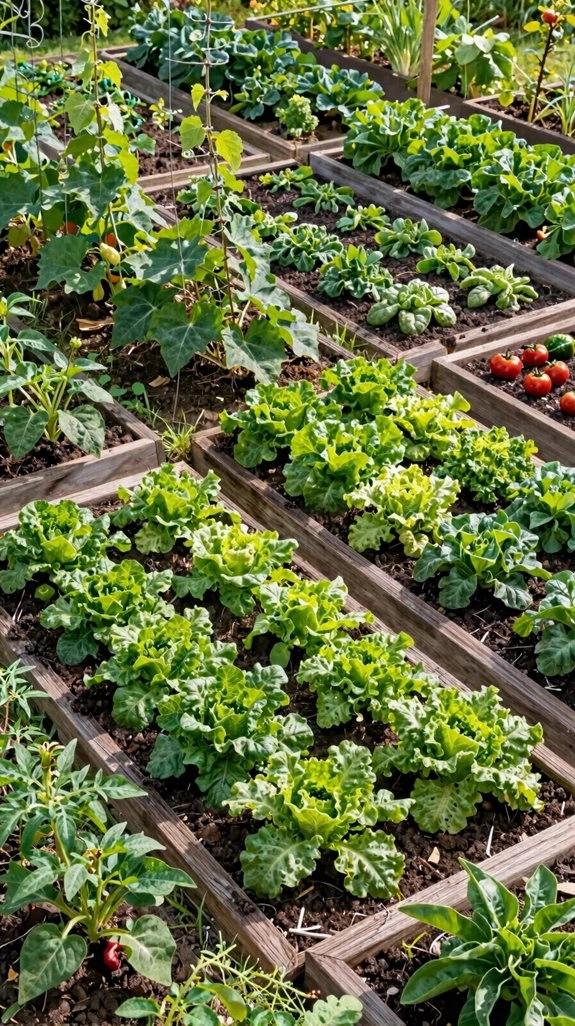
Great layouts start with a smart map, and your garden’s sunshine is the best clue you’ve got! Start by spending a day outside, then measure shade patterns at morning, noon, and evening.
- Mark the sunny spots, because most veggies want 6 hours or more.
- Use a sun-calculator app, or simple spot checks, to track shadows.
- In pots or tight beds, favor south-facing spaces for the brightest boost.
- If light is short, adjust planting dates and choose spots wisely, so your crew gets the best shot at success!
Match Crops to Light Levels
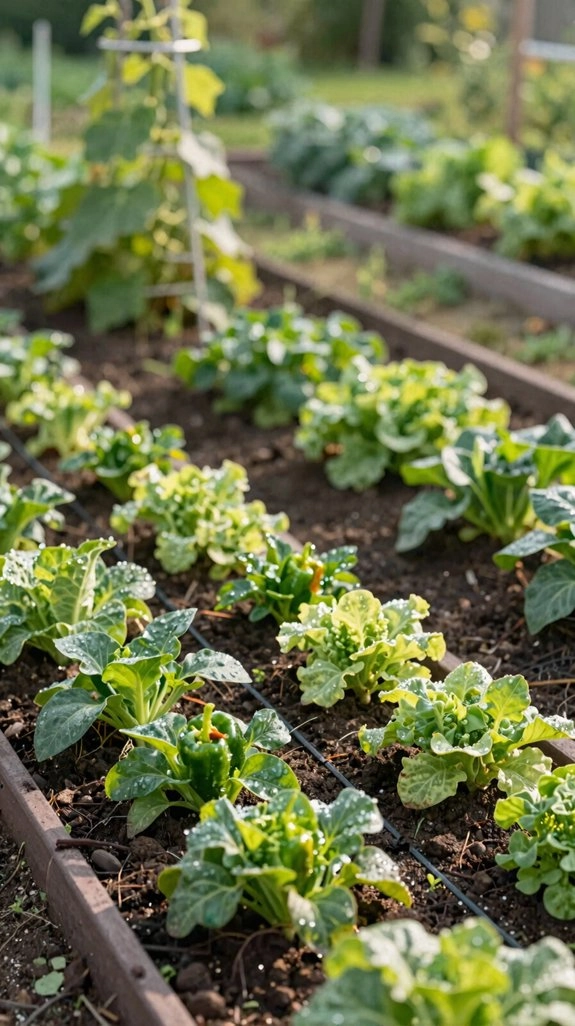
Even a tiny garden can punch above its weight, but only if you match each crop to the light it actually gets. Check direct sun hours, because crops care about duration, not pep talks!
Give tomatoes, eggplant, peppers, and squash 6–8 hours of full sun.
Use about 5 hours for peas, beans, and roots.
Tuck leafy crops, basil, and berries into 2–4 hours, where Soil microclimates and Wind protection can help.
Recheck balcony shadows as seasons shift, since a north-facing spot may fool you.
Smart Pollinator planting and Companion benefits can boost the whole crew—nice, right?
Choose the Right Bed or Container
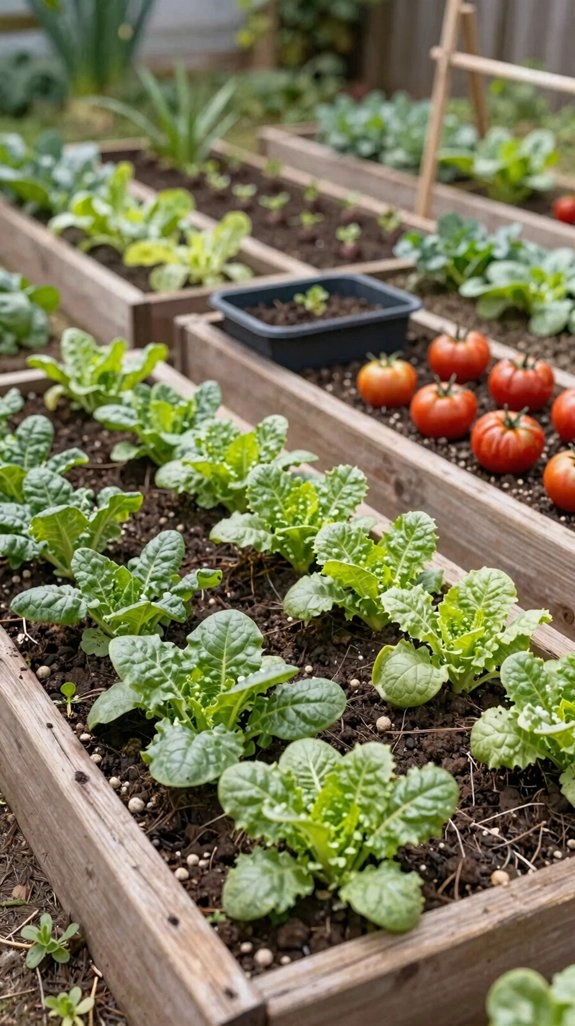
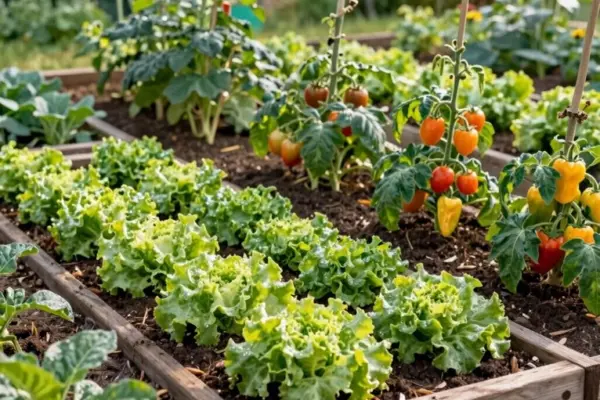
Start by choosing a bed or container that fits the crop and the light, because that combo can make or break your harvest. Big pots help tomatoes stay calm and fed, while smaller crops can share snug beds. Nice, right?
- Pick full sun pots for tomatoes and peppers.
- Use medium light for peas, beans, and roots.
- Go with peat free media, like coir or composted waste mixes.
- Check drainage requirements with holes, a finger test, and a watered pot’s weight.
Add compost or worm castings, and you’ll build a friendly little grow space that keeps giving!
Use Vertical Space for Bigger Yields
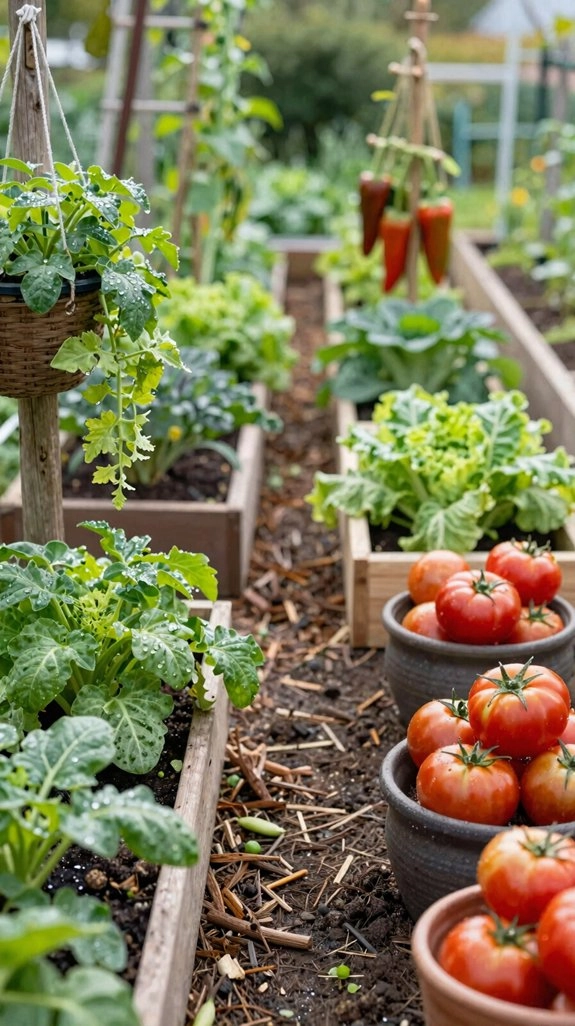
You can grow a lot more food in the same small bed when you train peas, beans, and other climbers up trellises or netting—hello, extra room for more plants!
Start with simple supports like poles, wire, or even a ladder-style setup, and plan them before you plant so you don’t end up wrestling tangled vines later.
Put taller vines on the north side and lift plants off the soil, and you’ll get better airflow, fewer disease headaches, and a steadier harvest without turning your garden into a jungle.
Climbing Crops Upward
How do you get a bigger harvest without stealing more yard space? Train peas, beans, and small squash upward, and you’ll fit more food into the same footprint—pretty slick, right!
- Install your trellis before planting, then guide shoots up; you’ll get better airflow and fewer soggy leaves.
- Use companion pairing, pollinator support, and succession timing to stack yields, not headaches.
- In containers, let climbers reach above the pot while roots enjoy roomy soil.
- Place tall vines on the north side, so shorter crops still soak up sun.
Check growth weekly, and keep plants snug on support.
Trellises And Supports
While your garden is still bare, set up trellises and supports first, because vining crops need a ladder before they start acting like acrobats!
You can use 8-foot poles spaced 6 feet apart with rebar across the top, then add nylon netting for peas and beans.
That setup boosts airflow, keeps fruit off wet soil, and helps with pest management and weed prevention, too.
For tomatoes, tie biodegradable twine to the stem and overhead support, then snip side shoots for better light.
A little compost tea and mulch alternatives can help nearby beds stay lively.
In small spaces, climb up, not out!
Stack Plants High
Before the first seed goes in, set up your vertical supports, because a trellis, cattle panel, or nylon netting can turn a tiny patch into a much bigger harvest zone!
- Grow peas and beans upward; they free floor space and invite airflow.
- Try compact companion planting, tucking basil or lettuce below climbers.
- Use the largest container you can for dwarf tomatoes, then tie taller vines to twine or rebar.
- Plan drip irrigation planning early, and place sun-loving plants where tall neighbors won’t shade them.
You’ll pack more harvest into less ground, without the crowding drama. Nice, right?
Plan Paths So You Can Reach Everything
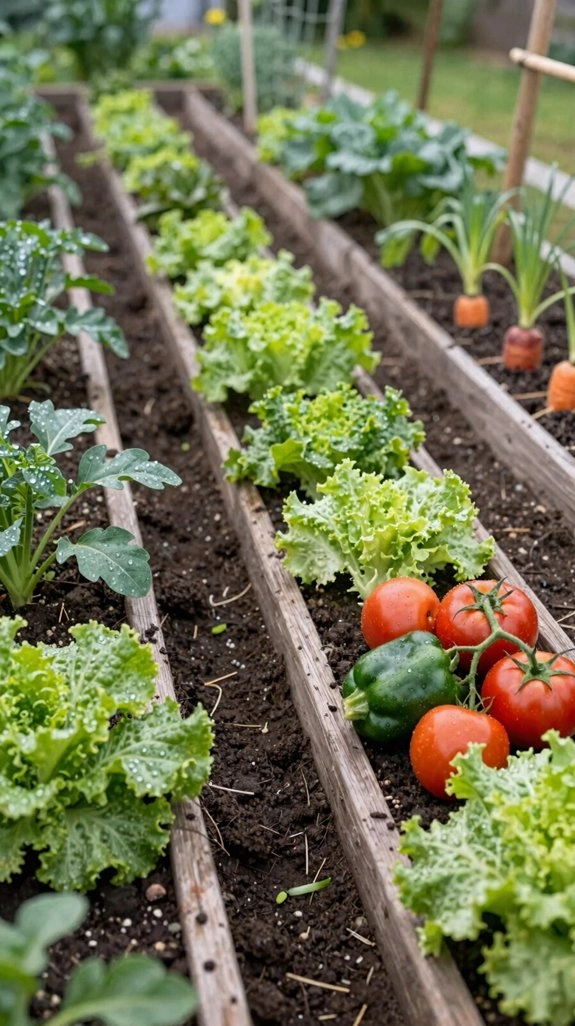
You want every plant within easy reach, so keep your beds narrow and your paths clear, because nobody enjoys playing hopscotch in the garden!
Make paths about 18–24 inches wide, and keep beds around 4 feet max, so you can weed, water, and harvest without stepping on soil or squishing roots.
If you’ve got trellises or tall crops, plan the lanes so you can still get to the base, tie things up, and sneak in a quick replant when a bed opens up.
Reach All Plants
When every plant is easy to reach, garden chores stop feeling like a workout mystery! You’ll feel like part of the crew, not the weed jungle boss.
- Keep beds about 4 feet wide, so you can touch the center from both sides for Harvesting efficiency and Kneeling access.
- Make walkways 18–24 inches wide for easy Maintenance shortcuts and safer moving.
- Put tall crops on the north side, so they don’t shade your shorter favorites.
- Set drip lines, containers, and raised beds so you can reach every plant for Pest check routines, watering, and quick swaps.
Narrow, Clear Paths
Down the row and right on cue, narrow paths can make a tiny garden feel surprisingly roomy! You’ll want 18–24 inch walkways, straight and clear, so you can water, weed, and harvest without tiptoeing into the beds. That’s accessibility planning with obstacle free routes, and it keeps your garden feeling friendly, not fussy.
Keep raised beds about 4 feet wide, so you can reach the center from either side. Plan paths before planting, then keep them steady all season, even when cucumbers sprawl.
In container lanes, leave space for quick daily checks—your plants stay happier, and you do too!
Space Plants for Airflow and Growth
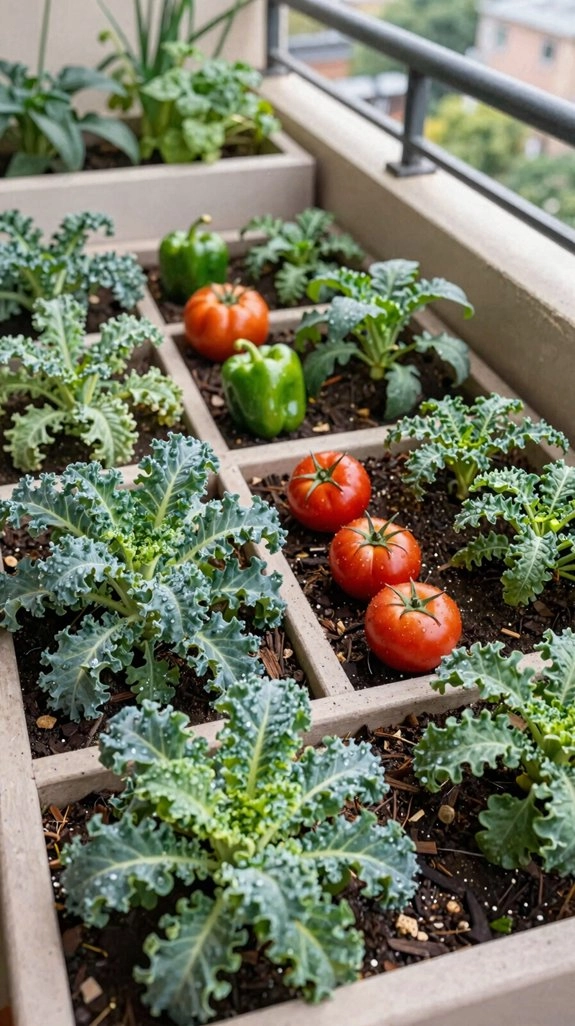
Airy garden beds make happier plants, and that’s no joke! You’ll grow better when you match spacing to mature size, not tiny seedlings. Companion planting, airflow benefits; Pollinator friendly spacing, reduced disease risk—nice perks, right?
- Tomatoes and peppers need elbow room in summer heat.
- Raised beds let you tuck plants a bit closer, but don’t squeeze them.
- Give cucumbers a boundary, so they don’t smother neighbors.
- Thin leafy greens early, or replant in waves when heat hits.
That little extra space keeps your crew strong, sunny, and harvest-ready!
Group Crops by Water Needs
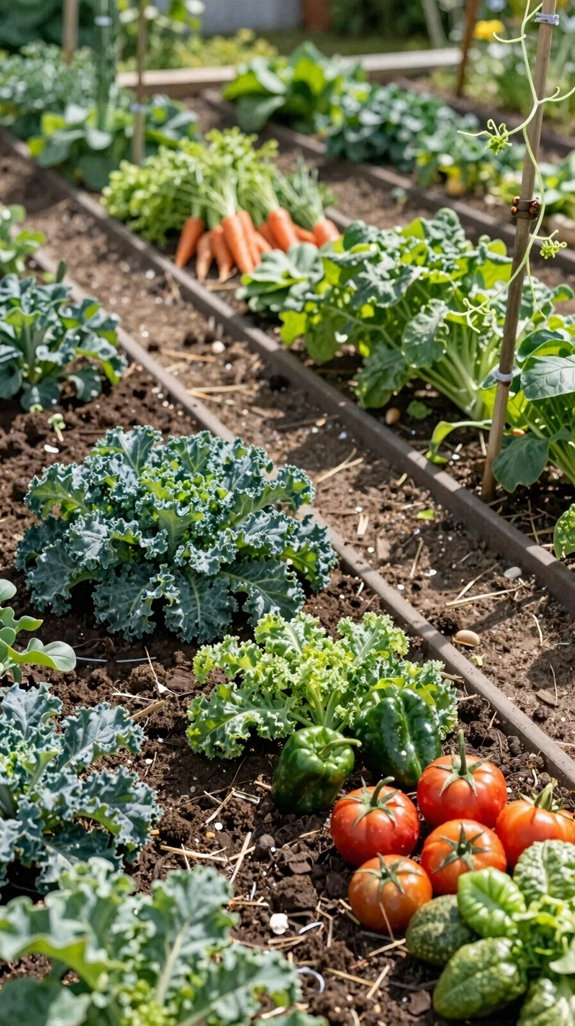
Because water is one of the easiest things to mess up in a small garden, it helps to group plants by how thirsty they are! Put rosemary and sage in one dry zone, and tomatoes or cucumbers in another, so nobody gets bossy over the hose.
This soil moisture zoning keeps your watering rhythm simple, and your plants feel like they’ve found their crew.
In containers, use container drainage planning and cluster the thirsty stuff together, where you can check moisture daily with a quick finger test. Keep low-water crops in drier pockets, and match feeding with watering, so growth stays steady and fruit set doesn’t pout!
Build in Drainage for Healthier Roots
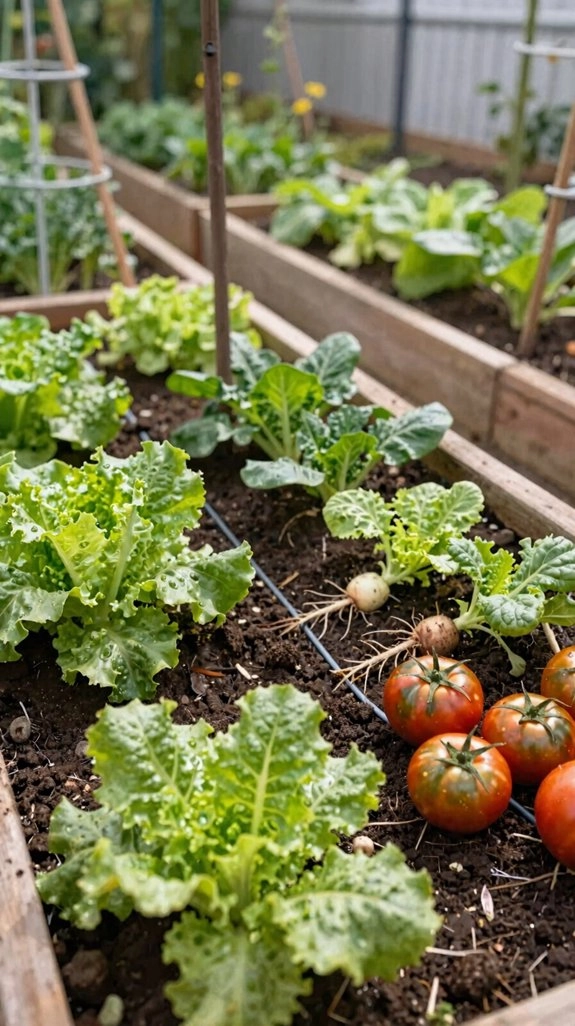
Once you’ve grouped your thirsty plants and your drought-tough herbs, the next sneaky garden hero is drainage—yep, the thing that keeps roots from sitting in a sad little swamp! You belong in a garden that bounces back fast.
- Check holes: use pots or beds with plenty of drain holes; cheap fix, big payoff.
- Do the pooling test after rain; standing water means trouble.
- Feel first: a fingertip check beats guessing, even when leaves droop.
- Lift and learn: after watering, note pot weight, then add holes or tweak mix. Compost tea, soil biology, mulch depth, and evaporation control help roots breathe and stay happy!
Place Fruiting Crops Where They’ll Thrive
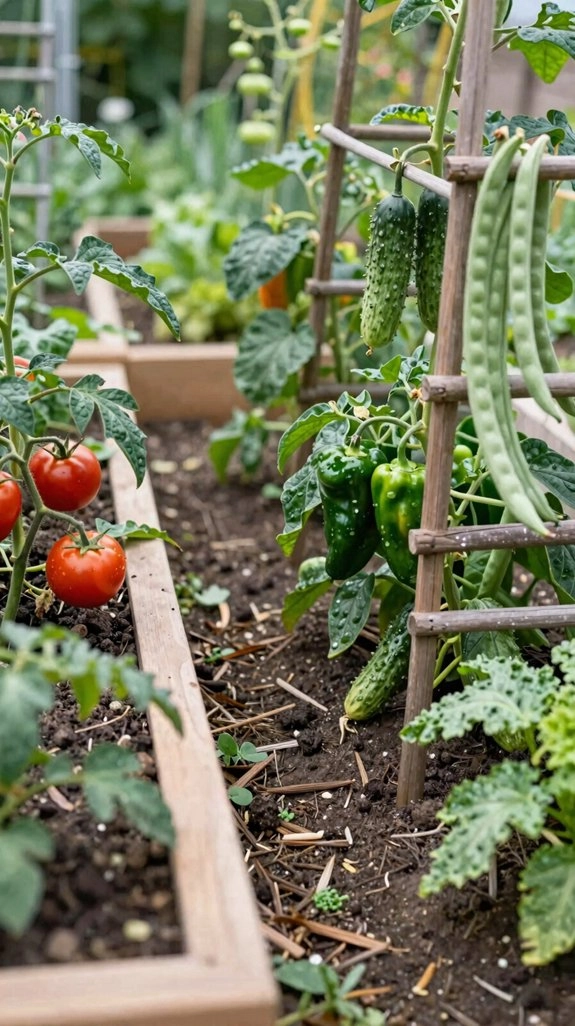
When you’re mapping out a small garden, put your fruiting crops where the sun shows off the most, since tomatoes, eggplant, peppers, and squash love about 6–8 hours of direct light a day. Track seasonal sun tracking, because bright spots shift, and your tiny kingdom changes too!
Give them Fruiting microclimates with roomy beds or big pots, plus airflow so leaves dry fast.
Use a smart Container watering strategy, and tuck pots near rain shelter placement if storms splash hard.
If you’ve only got 5 hours, save the sunniest corner for the heavy hitters, then train taller plants northward. Nice harvest, right?
Fit Leafy Greens Into Tight Spots
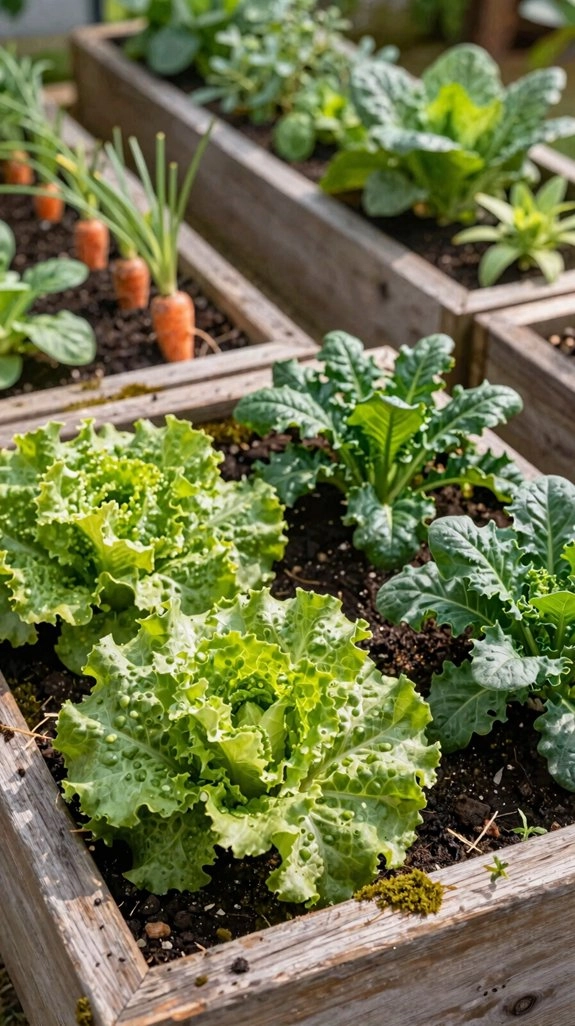
While your sun-loving crops hog the prime real estate, leafy greens are the easygoing roommates that can squeeze into the tighter, shadier spots and still do great. They’re perfect for that awkward nook, and you can cover shade timing with just 2–4 hours of sun.
- Plant lettuce, spinach, kale, or arugula close together, then pick young leaves often to prevent bolting.
- Add compost, a trowel, and water, then harvest cycling keeps those spots useful.
- Leave a little gap to increase airflow, which helps cut disease.
- In pots, check moisture daily; you’ll get crisp greens without drama.
Use Succession Planting to Keep Harvests Coming
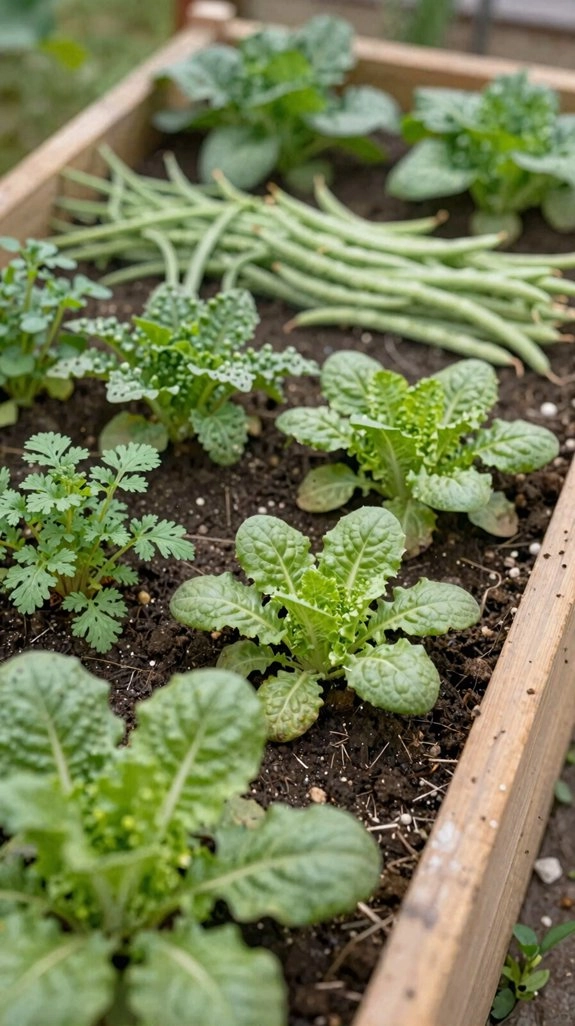
To keep your garden from hitting a boring little harvest pause, use succession planting so one crop hands the baton to the next.
You’ll watch peas finish in spring, then beans race in, or pull lettuce before it turns bitter and tuck in cucumbers once Soil readiness says go—wow!
Keep a simple harvest scheduling note, then check pest watch as each round shifts.
In small beds, try variety cycling: bush beans, then beans again, or peas followed by zucchini after the soil warms.
Leave a few empty squares on purpose, and your patch stays busy, friendly, and full of fresh food.
Feed Small Garden Beds Regularly
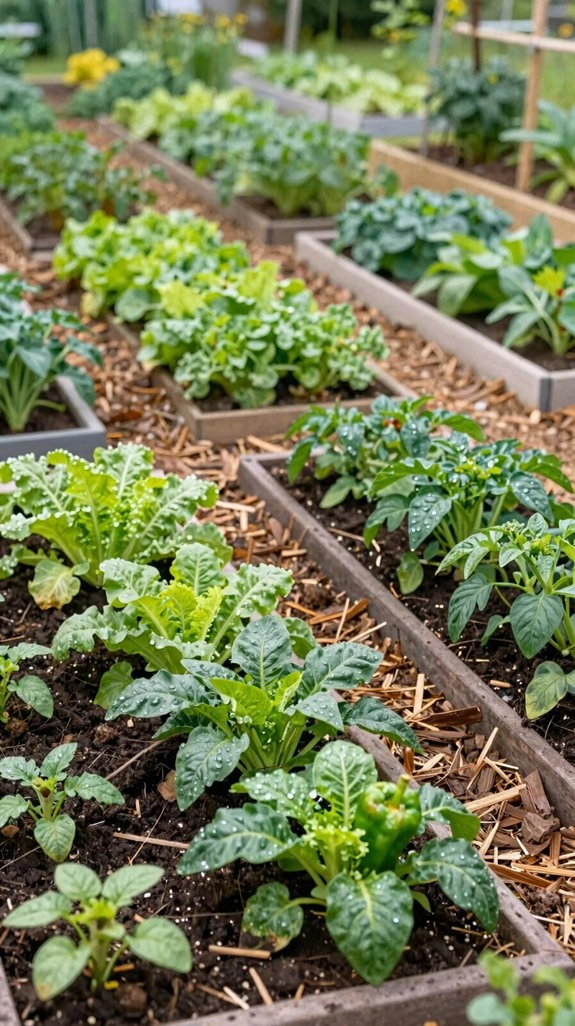
Wow, in small beds, the soil can run out of steam fast, so you’ll want to keep it fed with easy organic boosts like compost or worm castings.
Add a little topsoil mixed with compost to raised beds or containers, then top it up during the season so your plants don’t hit that awkward mid-summer slump.
If you keep the soil supplied on a regular schedule, your tomatoes, beans, and peppers can keep flowering and fruiting like champs, not like sleepy campers!
Organic Nutrient Boosts
Because small garden beds run out of food fast, you’ve got to keep them on a steady, gentle diet instead of waiting for a dramatic rescue meal!
- Mix in finished compost at setup for slow-release fuel.
- Add worm castings or composted manure in light top-ups, and watch plants perk up.
- Try liquid organic feeds like compost tea, which can wake up soil microbes and support nutrient cycling.
- In raised beds, repeat small feedings as growth and watering speed up demand.
You’ll spot better color, steadier growth, and fewer “why are you so dramatic?” moments.
Organic feeds build a friendlier bed, not just a bigger plant!
Keep Soil Supplied
Your beds can’t live on compost alone forever, so now it’s time to keep the pantry stocked with steady, gentle feedings!
Use slow release compost, worm castings, or composted manure, and your plants get a calm, steady trickle instead of a flashy, short-lived burst.
Add compost tea or simple liquid topups every few weeks, especially in containers, where nutrients disappear fast.
Keep moisture even, too, because dry soil or soggy roots block nutrient cycling.
Here’s the sneaky win: choose the largest feasible container, then check soil daily, first for moisture, then for plant mood.
That’s how your little garden stays happy, productive, and in the club!
Avoid Common Small-Space Layout Mistakes
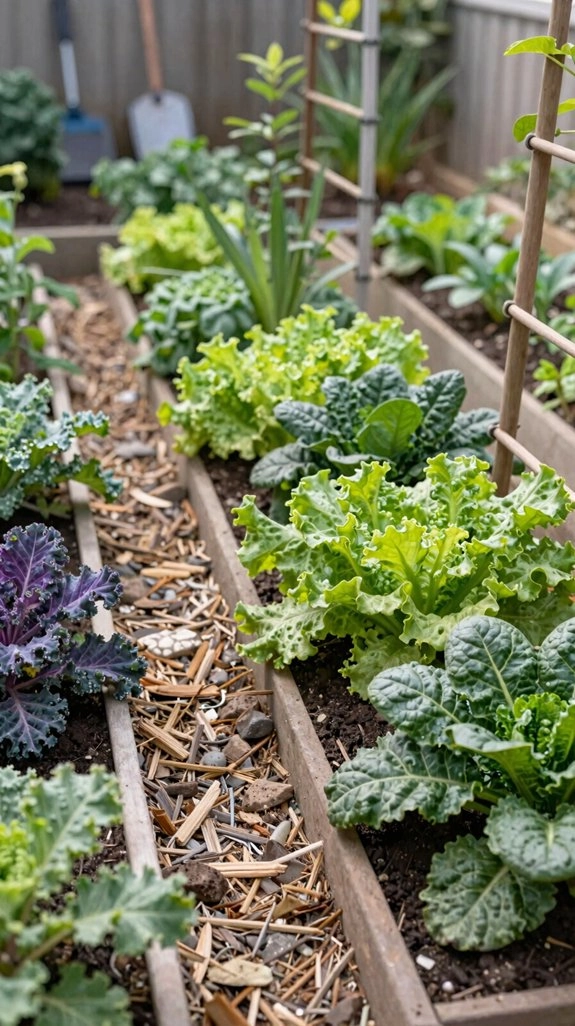
Even in a tiny garden, a few layout mistakes can quietly shave down your harvest, so it’s worth slowing down and planning before you dig in.
- Check true sun: Walk the space, mark 6–8 sunny hours for fruiting crops, and tuck herbs or greens into 2–4 hour spots.
- Skip crowding: Give plants room, because tight beds invite disease and tired-looking harvests.
- Watch companion planting mistakes and weed control errors: group good neighbors, then leave space to pull weeds fast.
- Keep paths: Add 18–24 inch walkways and trellises, so you can reach, water, and sneak in one more crop later!
Start Small and Improve Each Season
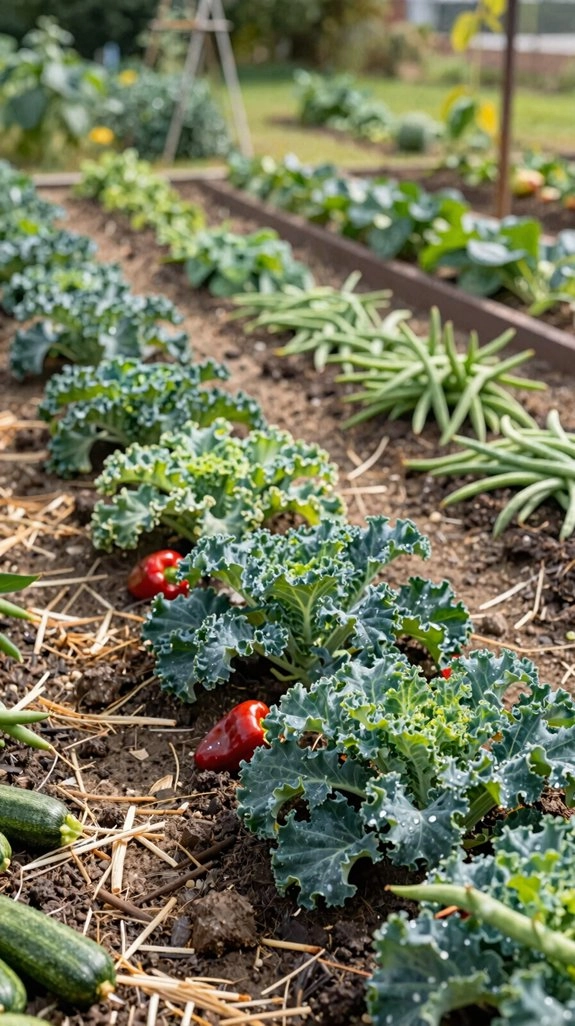
Start with just a few pots or one bed, and you’ll actually keep up with the little stuff, like daily checks and that handy finger-in-the-soil moisture test—no jungle of chores, no “wait, did I water that?” panic!
Pick crops that fit your sun, use bigger containers for heavy hitters like tomatoes, and give the soil a nutrition boost each season so your setup stays happy.
Keep notes on what you planted, what sprouted, and what you harvested, then add more space only after you’ve got the routine nailed, because that’s how you grow smarter, not just bigger.
Begin With Few Pots
Because container gardening can feel a little like running a tiny plant hotel, it’s smart to begin with just a few pots, not a full “dream setup.” That way, you’ll actually keep up with the daily stuff that makes containers work, like finger-testing the soil, spotting pests early, and figuring out when a pot is thirsty before a plant throws a dramatic wilt-fest!
- Pick 2–3 larger pots.
- Do Soil checking each morning.
- Keep pest monitoring simple and quick.
- Match crops to real sun hours.
You’ll fit right in, and your first harvest may be small, but each season gets smarter. Add a few pots later, adjust watering, and keep going!
Learn By Growing
When you grow a little now and learn as you go, your garden starts teaching you right back!
Start with a few pots or bed sections, match crops to your real sun, and keep daily checks simple.
You’ll troubleshoot faster when you notice dry soil, soggy roots, or sneaky pests early, before they throw a party.
Use seasonal logging to track harvests, planting dates, and what each space gave you.
That plant feedback helps you adjust spacing, watering, and nutrition next round.
After each season, scale up in small steps, and your little garden crew will feel bigger, smarter, and tastier!