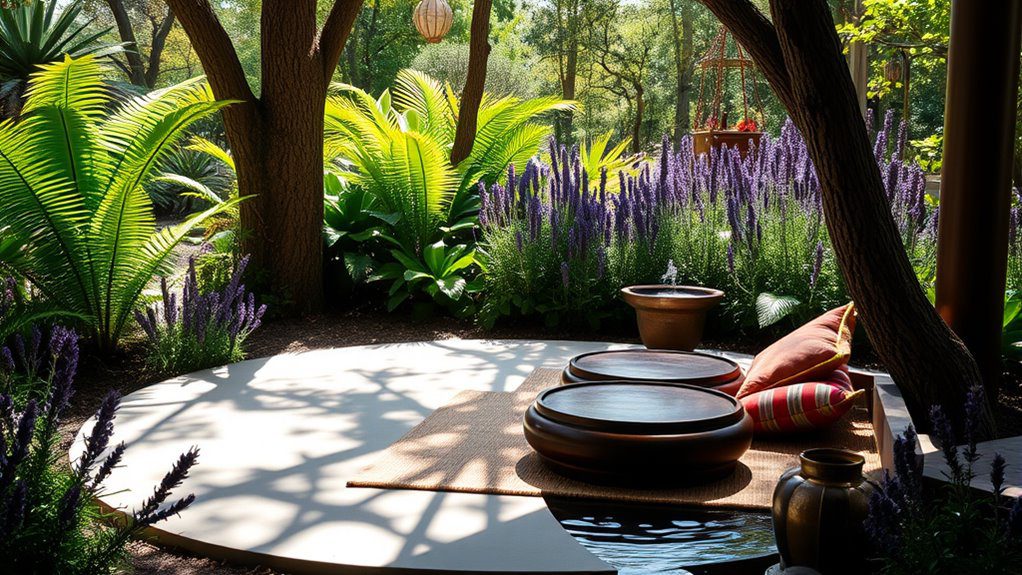
Front Yard Garden Design Ideas That Feel Inviting
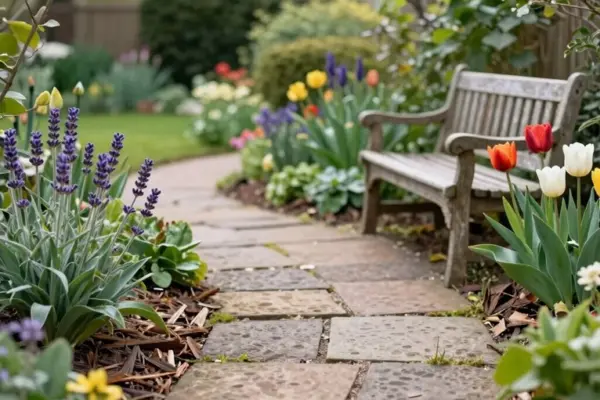
- Front Yard Garden Design Ideas That Feel Inviting
- Key Takeaways
- Plan Your Front Yard Garden Layout
- Match Front Yard Garden Plants to Sun and Shade
- Pick a Front Yard Style for Your Home
- Add Trees and Shrubs for Year-Round Structure
- Repeat Plants for a Relaxed Look
- Soften Hard Edges With Curves and Beds
- Add Rocks, Edging, and Mulch
- Create Inviting Container Garden Moments
- Plant Between Pavers and Pathways
- Keep Curb Appeal Strong in Every Season
- Start Small and Expand Over Time
You can make your front yard feel inviting by tracing a simple bed shape with a hose, then planting for your sun and shade spots. Start with one small tree or shrub, add repeating groups of 3, and use low edging plus mulch to keep things tidy—easy, cheap, and way less scary than it sounds! For a cozy twist, tuck groundcovers between pavers or by the walk, and your curb appeal keeps getting better from there.
Key Takeaways
- Match the garden style to your home so the front yard feels cohesive and welcoming.
- Trace bed shapes with hose or rope first to preview curves, space, and plant counts.
- Map sun and shade zones before choosing plants that suit each area year-round.
- Use repeating groups of three to five plants for a balanced, intentional rhythm.
- Add small trees, shrubs, edging, and mulch to create structure, softness, and curb appeal.
Plan Your Front Yard Garden Layout
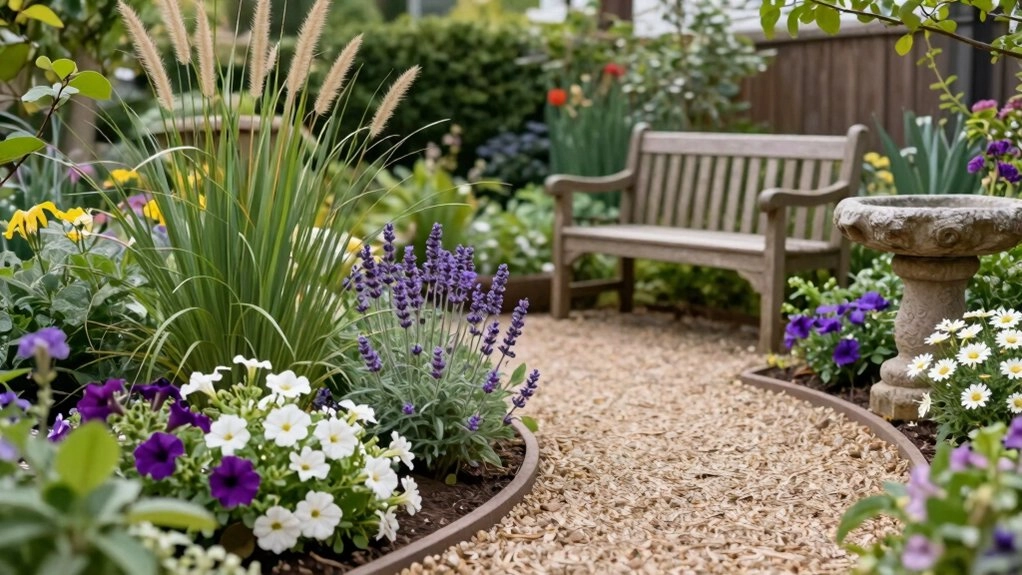
Before you dig a single hole, grab some graph paper and a garden hose or rope, then trace out your front bed right in front of the house—this little trick helps you see the space, estimate how many plants you’ll need, and dodge that “oops, I bought way too many shrubs” moment.
Keep the bed smaller near the walkway or foundation line, so you can test edging without blowing the budget.
Choose curves or straight lines to match your home, then set big shrubs and a small tree as focal points.
Leave room for growth, group perennials in threes, and your planting rhythm, seasonal color, and pathway balance will feel warm and welcoming!
Match Front Yard Garden Plants to Sun and Shade
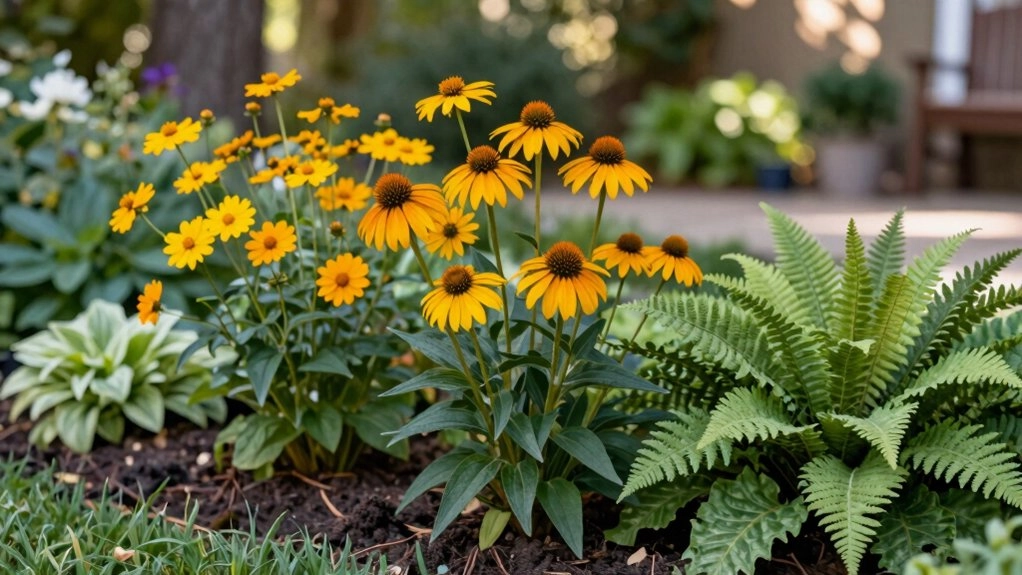
As you choose plants for the front yard, let sunlight be your guide, because not every spot gets the same kind of glow!
Walk the space in morning and afternoon, and you’ll see shade, part shade, and full sun shift like a tiny weather map.
Pick plants that fit the overlap, like “full sun to part shade,” so both sides can look related and calm.
That helps you dodge plant selection mistakes and keeps the vibe welcoming.
Try shade tolerant alternatives where trees cast extra cover, then check again in winter and summer.
Same palette, small spacing tweaks, big happy curb appeal!
Pick a Front Yard Style for Your Home
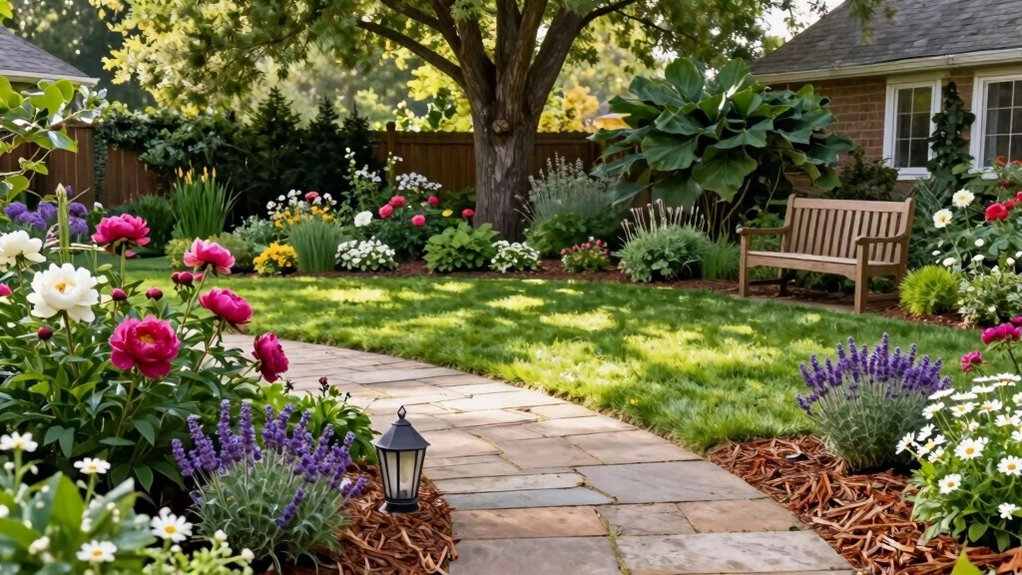
Now that you’ve sized up the sun and shade in your front yard, it’s time to give the whole space a personality! Pick a style that fits your home’s bones, so your yard feels like it belongs, not like it borrowed a costume.
Go cottage with mixed heights and Colorful accents, or go modern with clean lines and bold plant masses. Start with structure first, then add simple edging, repeat the same plants in odd-numbered groups, and aim for seasonal balance and maintenance ease.
A crisp border feels tidy; softer pockets feel friendlier.
Choose plants that handle your light, and you’ll get a welcoming vibe all year—no garden drama, promise!
Add Trees and Shrubs for Year-Round Structure
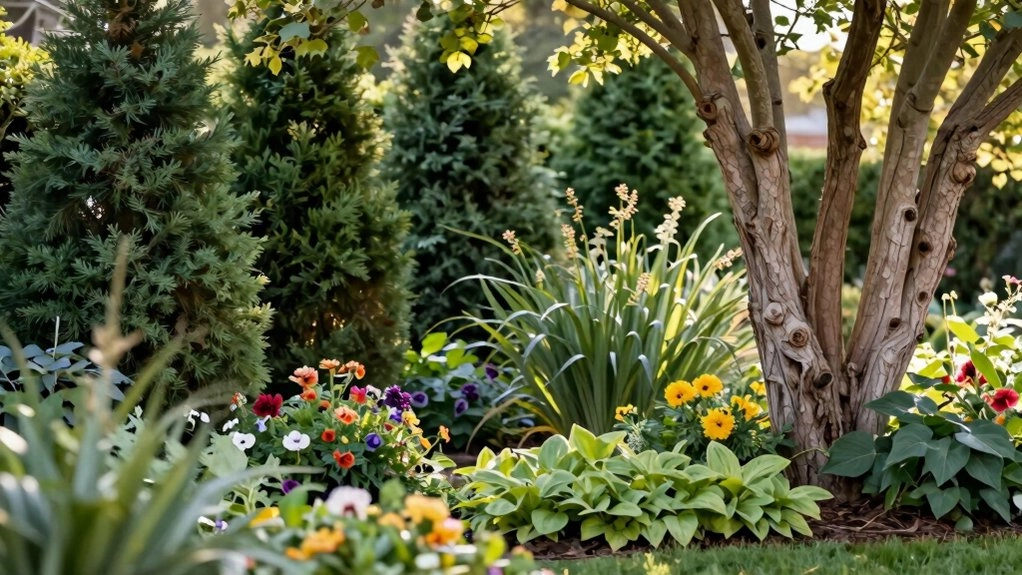
With the bones of your style in place, you can give the front yard some endurance by adding a small tree-and-shrub island bed near the street or curb. Start with one small ornamental tree, like a plum, a little off-center, then tuck in Japanese yew or boxwood for an evergreen backbone, plus a flowering shrub for seasonal interest.
Use metal edging, add mulch, and water well the first year—easy materials, big payoff! Space plants for full growth, so the bed fills in to about 80% coverage without constant replanting. That’s how you build a welcoming spot that feels like it belongs.
Repeat Plants for a Relaxed Look
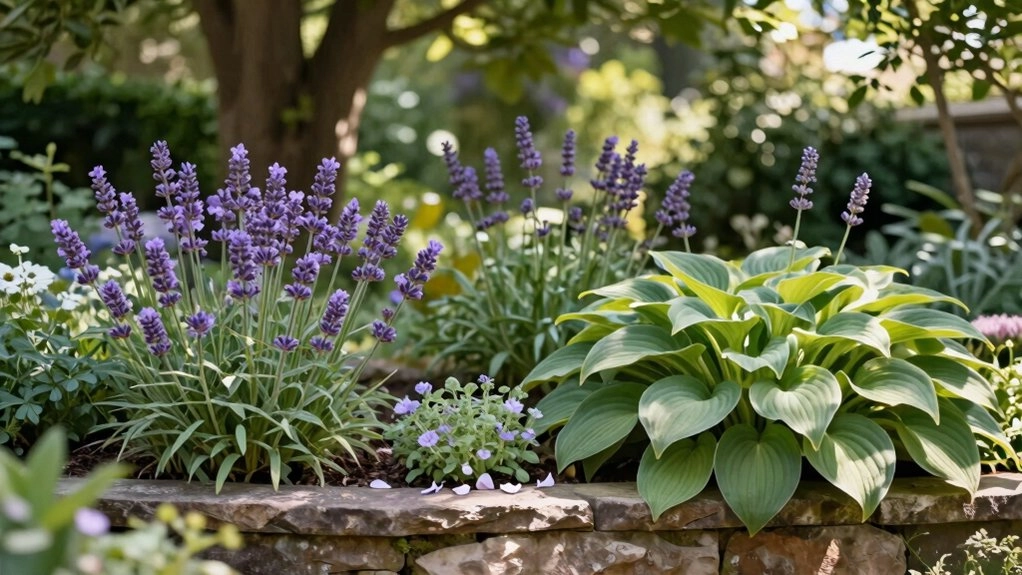
Repeat planting is where a front yard starts to feel calm and put-together instead of a little “oops, I bought one of everything.” Try grouping the same 3–5 plants in a few spots, like the same shrub paired with the same 2 or 3 perennials near the walkway, at the corners, and again in that island bed, and suddenly the yard reads as intentional from the street!
Use layered perennials and keep consistent spacing so the drifts knit together as they grow. Repeat a strong evergreen, then swap in seasonal blooms for fun. Match edging, too, and boom, you’ve got rhythm, not chaos.
Soften Hard Edges With Curves and Beds
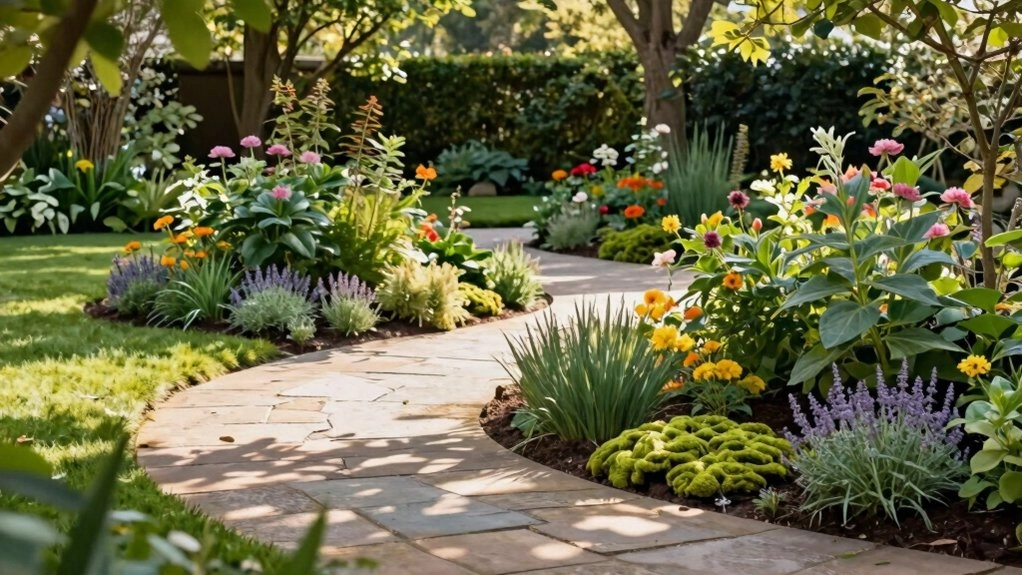
Curves are your front yard’s secret weapon, because they make sidewalks and driveways feel less like hard slabs and more like part of the garden! You’ll love how pathway passages feel easier when beds gently wrap the edges.
- Lay a garden hose first, then tweak the line on graph paper.
- Plant low ground cover up front, with mid-height perennials behind it.
- Use steel edging and mulch discipline to keep the curve crisp.
Group plants in threes or fives, so the bed feels full, not spotty. A little mulch or topsoil top-dress finishes the look, and helps new plants settle in fast!
Add Rocks, Edging, and Mulch
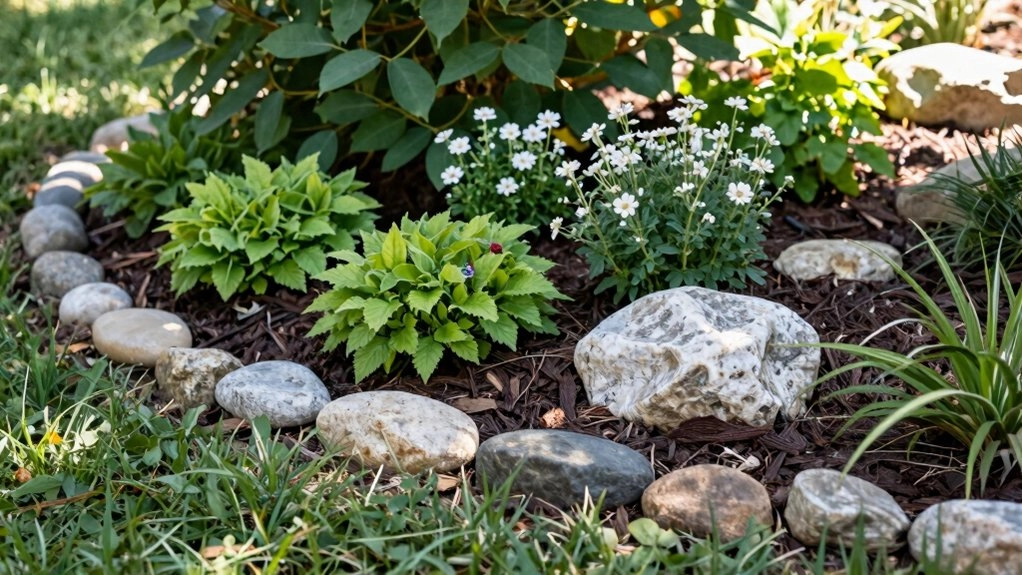
Around the bed edges, a simple border can do a lot of heavy lifting! Use brown steel edging, or a similar barrier, to make crisp borders and keep mulch where it belongs.
Next, add 2–3 inches of mulch after planting, which helps block weeds and gives your yard that polished, “we live here” feel.
Then place stone accents on corners, at transitions, or in a front-facing focal spot, like friendly little anchors.
Choose river rock for a softer vibe, or basalt near driveways for contrast.
Keep crowns clear, and your plants should settle in nicely, no soggy drama.
Create Inviting Container Garden Moments
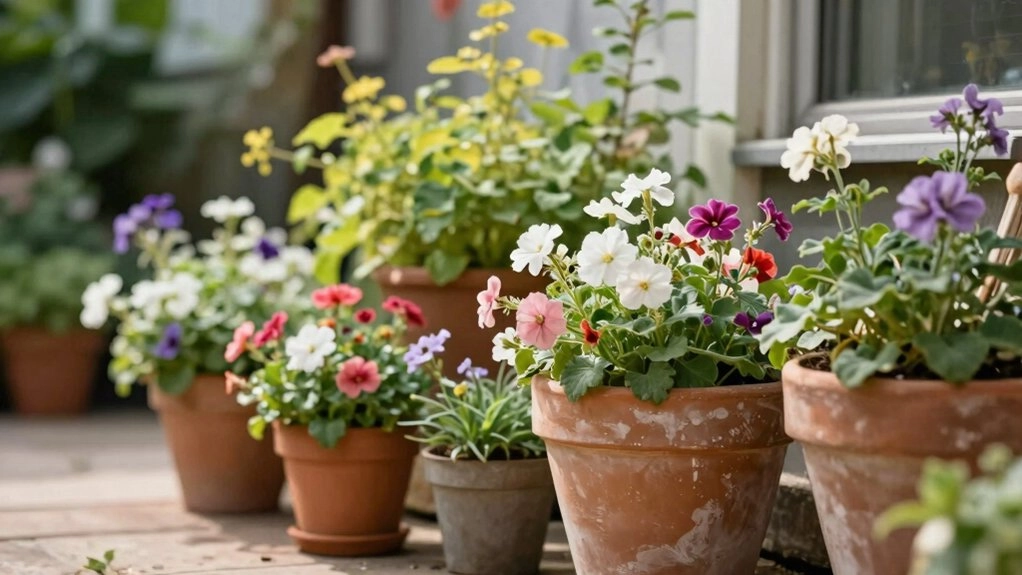
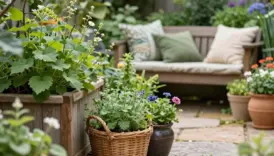
When you want your front entry to feel friendly fast, start with a pair of big container “bookends” near the porch columns or steps—two or three tall black pots, for example, can make the whole space feel pulled together in minutes!
- Use shade-friendly picks like Mahonia or Japanese aralia where light’s low.
- Mix broad leaves with grasses for fullness, even when blooms rest.
- Swap annuals each spring, but keep evergreen anchors for easy seasonal colorways.
Keep watering consistency simple with a quick check after hot days.
A gravel edge or clean line makes the pots feel like tiny welcome rooms—no stylish skills, just a warm hello!
Plant Between Pavers and Pathways
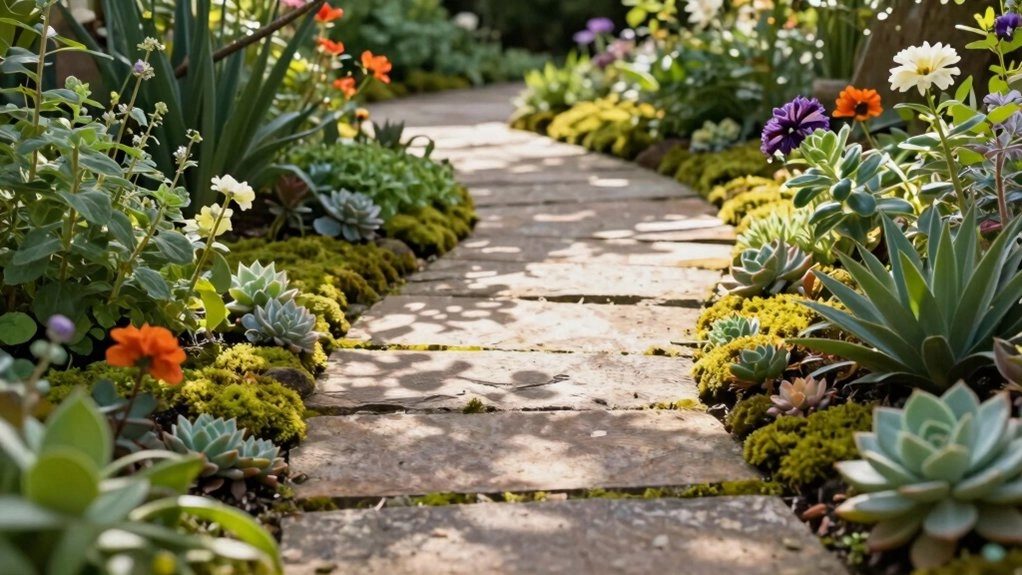
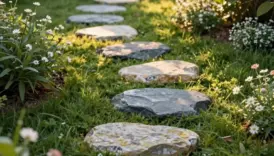
Underfoot, your front path can do more than just lead the way—it can actually *join the garden*! Try planting low, spreading groundcovers between pavers, like silver carpet, to soften stone and handle light steps.
Start with a few small pockets of planting along the edges, then tuck in more between joints for a layered look. Use weed control tips like keeping gaps tight, adding mulch at bed borders, and choosing groundcover choices that knit together fast.
Want a tidy finish? Repeat one accent plant nearby, and let the between-paver mat stay low and even. Nice and friendly, right?
Keep Curb Appeal Strong in Every Season
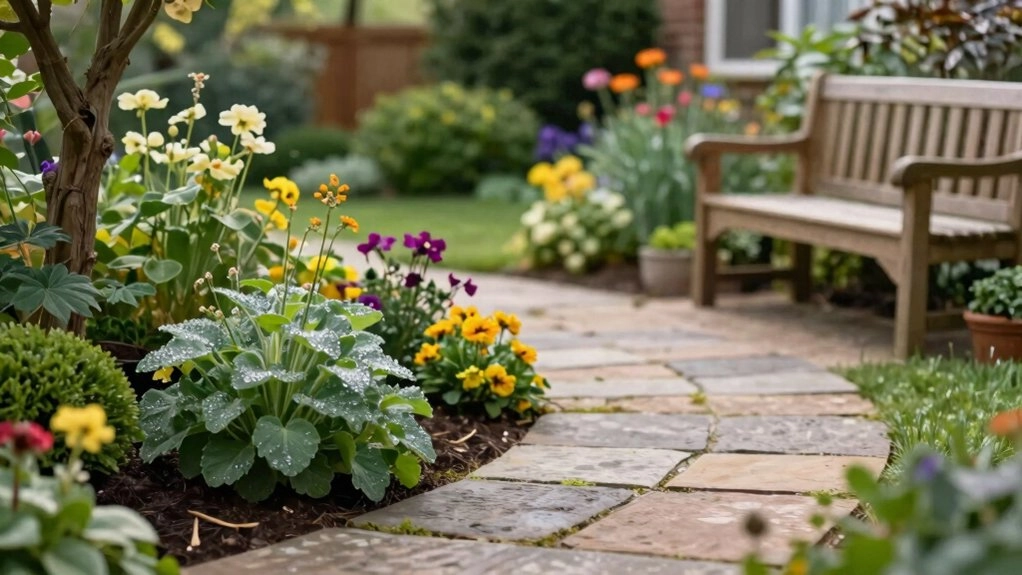
Those pretty pavers can lead the eye, but the rest of your front yard should keep the show going all year long! Plant one front bed by the house, then layer shrubs and perennials for winter interest and a fresh spring reset.
- Pick zone-right plants, grouped in 3–5s, so they come back strong.
- Edge beds with steel, then add mulch each year for neatness and protection.
- If light shifts, choose plants that like the full range and repeat them on both sides for that friendly, “we belong here” look.
Need extra pop? Try an island bed with an ornamental plum—wow! Seasonal cleanup stays easy.
Start Small and Expand Over Time
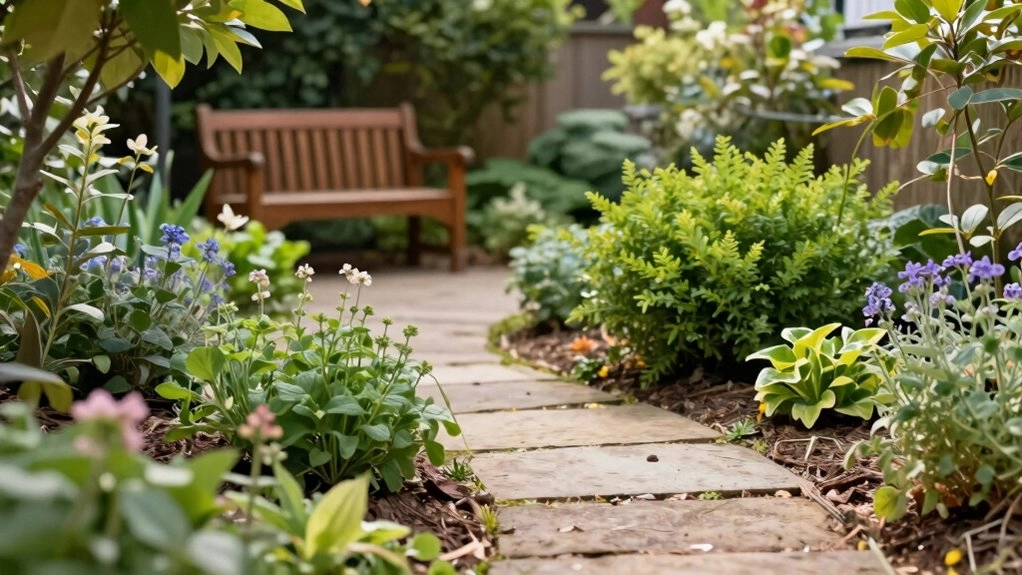
Start small, and your front yard won’t feel like a giant weekend dare!
Pick one bed by the house, stage it with a hose, and test soil conditions before you dig.
That keeps costs low and helps you learn what gets sun, shade, and a little drama.
Begin with perennials, then add seasonal color once the basics settle in.
Sketch the plan on graph paper, leave room for growth, and scale up gradually.
Install trees or big shrubs first, then finish with mulch and top-dressing.
You’ll build confidence, save cash, and still get that “we belong here” glow!