Raised Garden Beds With Trellis That Maximize Space
- Raised Garden Beds With Trellis That Maximize Space
- Key Takeaways
- Why Vertical Growing Changes Everything
- Small space efficiency
- Better plant health
- Easier harvesting
- Trellis Styles That Transform Any Bed
- Arch trellis designs
- A-frame structures
- Wall-mounted options
- Cattle panel tunnels
- Best Plants to Grow Vertically
- Climbing vegetables
- Flowering vines
- Compact fruit varieties
- Materials That Balance Strength and Style
- Wood and bamboo
- Metal and wire panels
- DIY repurposed options
- Layout Ideas for Different Garden Spaces
- Backyard setups
- Side yard solutions
- Urban and patio gardens
- Design Tips for a Cohesive Look
- Matching bed and trellis
- Color and texture harmony
- Seasonal styling ideas
- Common Mistakes to Avoid
- Frequently Asked Questions
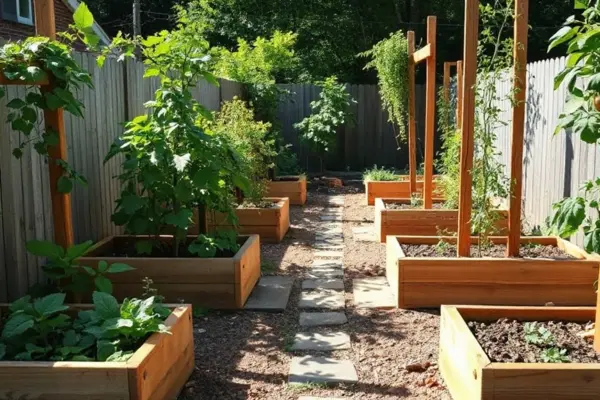
A raised garden bed with a trellis lets you grow up, not out, so you can fit beans, cucumbers, peas, and even indeterminate tomatoes in less space. I like placing the trellis on the north side of a 4 x 8 bed so it won’t shade smaller plants, and a cattle panel or rustproof ladder panel works great. You’ll get better airflow, cleaner harvests, and fewer fungal headaches—because nobody wants sad, muddy cucumbers. There’s more to this setup, too.
Key Takeaways
- Place trellises on the north side of raised beds to prevent shading and keep lower plants productive.
- Use 4 x 8 or 4 x 12 beds with vertical supports to grow beans, cucumbers, peas, and tomatoes upward.
- Choose strong trellises like cattle panels, arches, or A-frames for heavy crops and secure them before planting.
- Use rust-resistant materials such as galvanized steel, stainless wire, or remesh for longer-lasting support.
- Add slings for melons and squash, and train indeterminate tomatoes weekly for cleaner, easier harvesting.
Why Vertical Growing Changes Everything
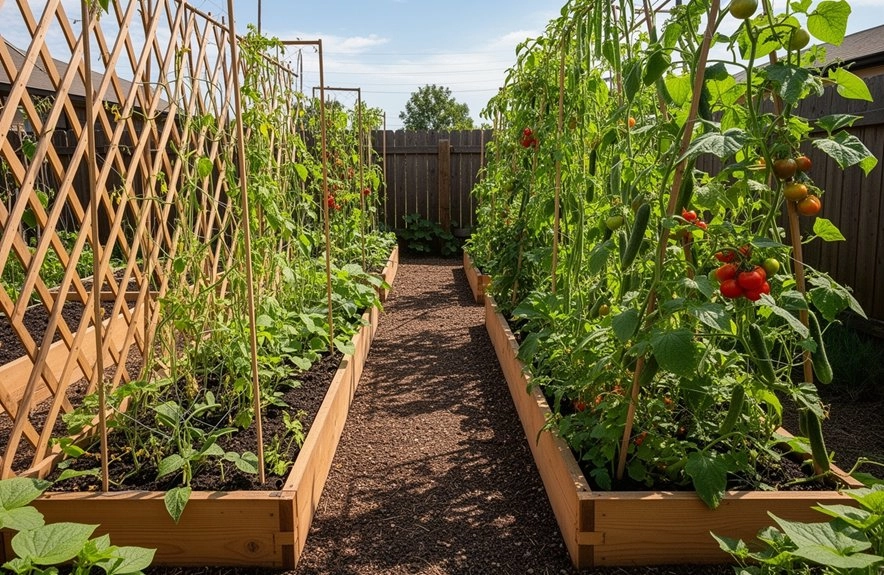
When you add a trellis to a raised garden bed, you’re not just decorating it—you’re changing how the whole space works. I’ve watched cucumbers, pole beans, and peas climb up instead of sprawl out, and it feels like your garden finally stands up straight.
A tall, 70.9-inch trellis on the north side keeps indeterminate tomatoes from shading neighbors, while stronger metal frames with plastic supports handle wind and heavy fruit. Better airflow means quicker drying, less fungus, and happier harvests. That’s microclimate modification in action, plus pollinator attraction from more blooms. My family calls it garden teamwork.
Small space efficiency
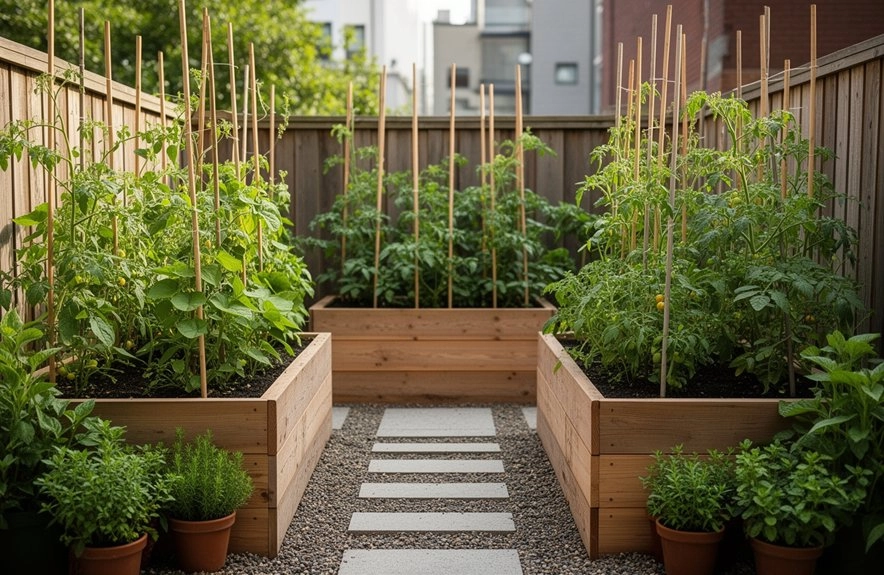
Small spaces get a whole lot smarter with a trellis, and I’ve seen that in my own beds and on cramped patios where every inch matters.
You can turn a 4 x 8 or 4 x 12 bed into double-duty ground by sending beans, cucumbers, and peas up instead of out.
In my family’s micro herbbeds, a slim stainless steel ladder trellis kept basil neighbors from getting squished, and compact irrigation slipped under the canopy without fuss.
Choose a light frame for beans, a stronger panel for squash, and place it north side if you want sun, not drama, for the rest.
Better plant health
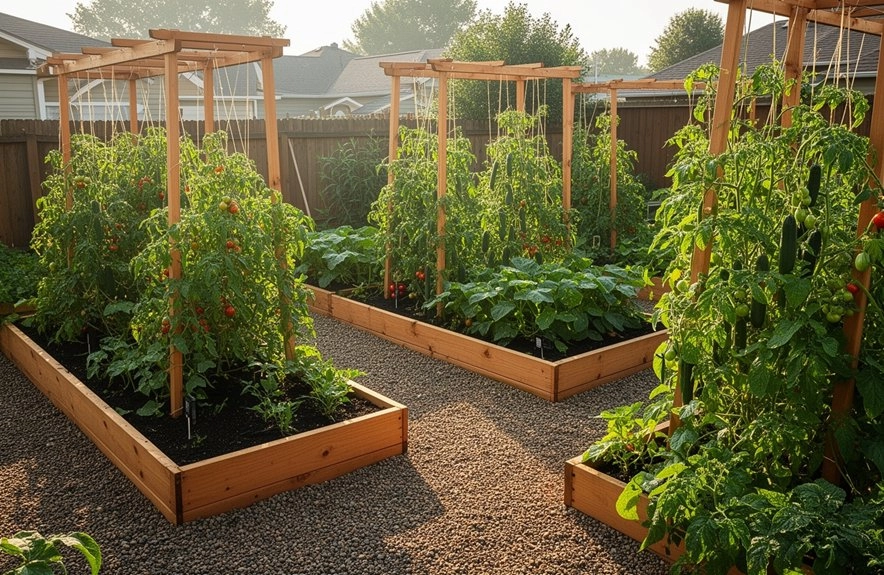
Health shows up fast in a trellised bed, and I’ve noticed it most on rainy weeks when the leaves dry quicker instead of sitting there damp and sulky.
You give plants better air flow, brighter light, and less mud contact, so they build stronger disease resistance.
I’ve seen fewer slug chews on my beans and fewer rabbit nibbles on my squash.
The soil microbiome stays happier too, because raised, draining beds don’t turn soggy and sour.
Choose a sturdy trellis, like welded wire or a tomato tower, so vines won’t flop like tired laundry.
Your plants will thank you, and so will your nerves.
Easier harvesting
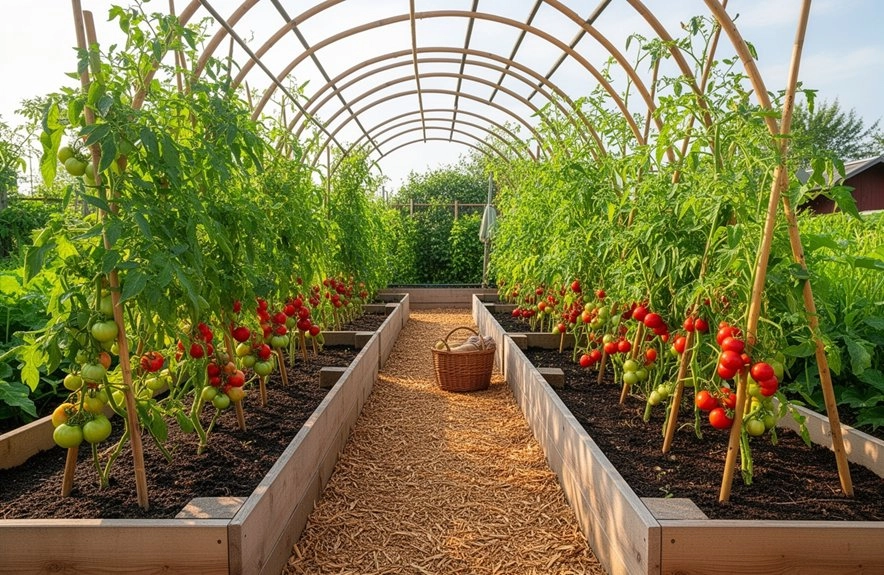
Once your plants are healthier and standing taller, harvesting gets a whole lot nicer too.
I’ve found that raised beds with trellises lift tomatoes, cucumbers, and pole beans to eye level, so you can pick fast without the garden yoga routine.
Put the trellis on the north side, and you’ll keep fruit easy to see while the rest of the bed stays sunny.
I like sturdy galvanized or stainless supports because heavy fruit stays clean and bruise-free.
With ergonomic tools and handy harvest accessories, my family fills baskets from the bed edge, not a half-kneeling struggle.
Trellis Styles That Transform Any Bed
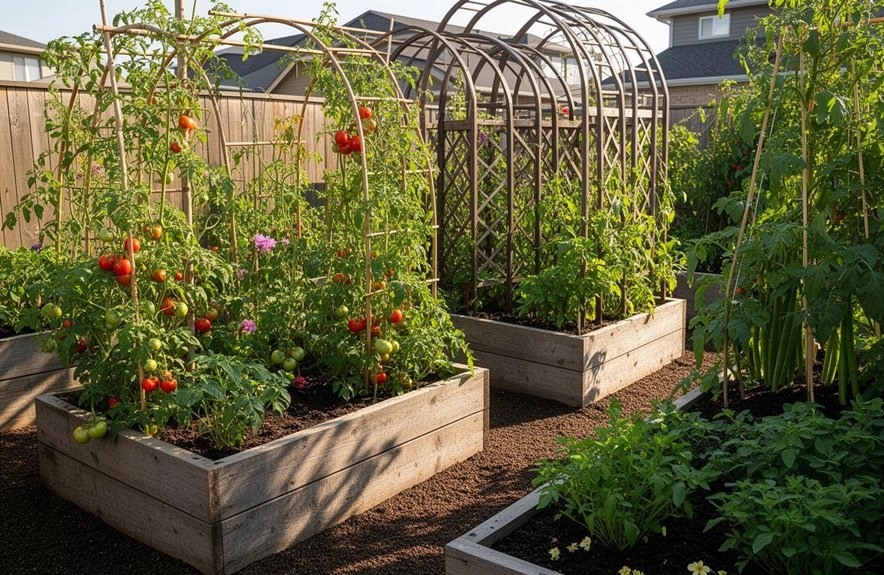
What kind of trellis turns a plain raised bed into a workhorse? I’ve found that the best one fits your family’s rhythm. In my beds, I like styles that raise vines without stealing room, so you can grow more and still breathe easy.
- A-frame or ladder trellises: sturdy, storable, great for pole beans.
- Wire-panel or remesh: tough for melons and squash.
- Lightweight fabric mesh: easy on elevated planters.
- Modular panels: simple to swap when seasons change.
These choices help you grow up, not out, and they keep my garden crew feeling like we’re on the same team.
Arch trellis designs
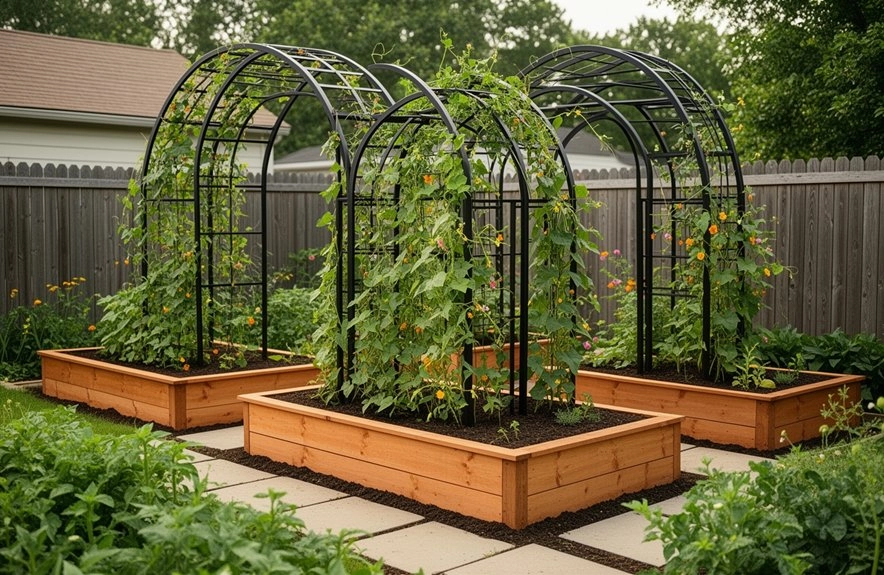
If you’ve liked the bed-friendly trellis styles above, arch trellises take that same idea and give it a little more drama. You can tuck a 4- or 8-foot arch over one or two 2-wide beds, then add 12-inch extensions when your peas or pole beans start acting like they own the place.
I like setting mine north-south so my neighbor beds don’t get shady and grumpy. A corner trellis works well in lifted corner systems, and removable arches make seasonal swaps easy. Screw them in for a snug fit, or lift them out. Rust-proof metal and cedar beds get along great.
A-frame structures
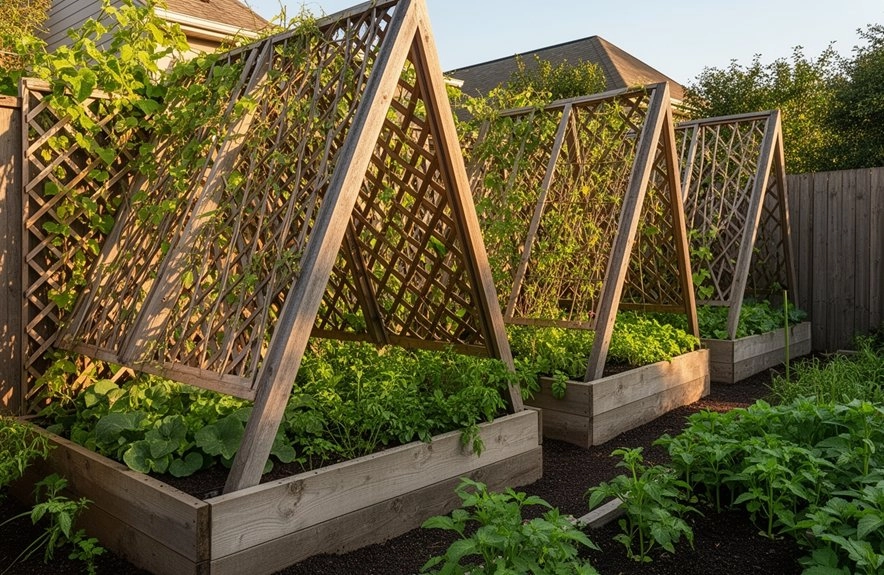
A-frame trellises are one of my favorite “put it up, grow a jungle, take it down later” solutions. I use them in my family beds because they feel sturdy, friendly, and easy to share.
- Pick wood, metal, or cattle panel for strong support.
- Set the legs 3–6 feet apart and sink stakes deep.
- Grow cucumbers and pole beans up top; tuck lettuce or spinach below.
- Do seasonal maintenance, then store it before winter.
I like 4 x 8 or 4 x 12 frames. They handle wildlife interactions better than flimsy setups, and my crew loves the space savings.
Wall-mounted options
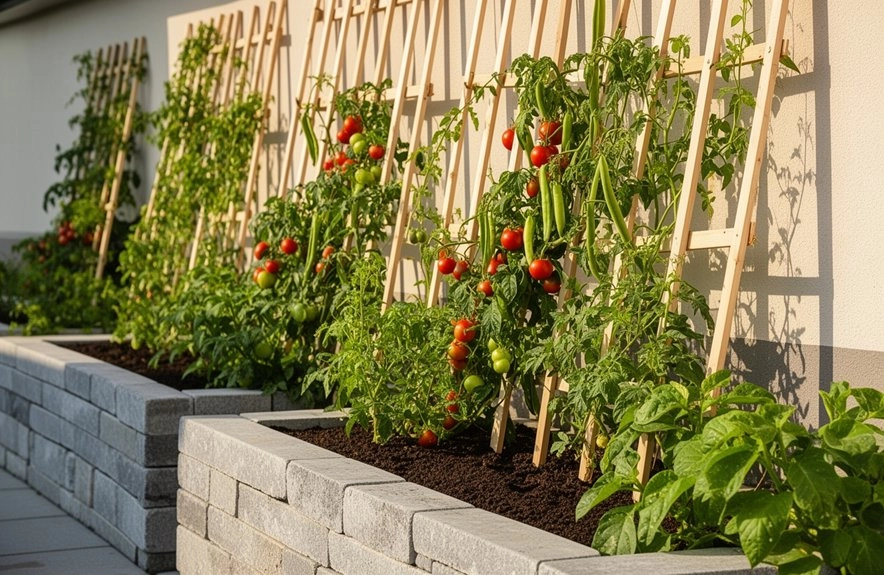
When I want to squeeze even more growing room out of a raised bed, I go vertical with wall-mounted trellises. I mount them on the north side, so my beans don’t shade the tomatoes, and I use sturdy mounting hardware, brackets, and wall anchors for a rock-solid hold.
Galvanized wire panels and stainless-steel string trellises last well and don’t fuss much. For peas, I keep it light; for squash, I choose stronger panels.
My family likes the neat look, and even my privacy screens seem happier. In tight spots, planter-trellis combos keep roots happy and growth up.
Cattle panel tunnels
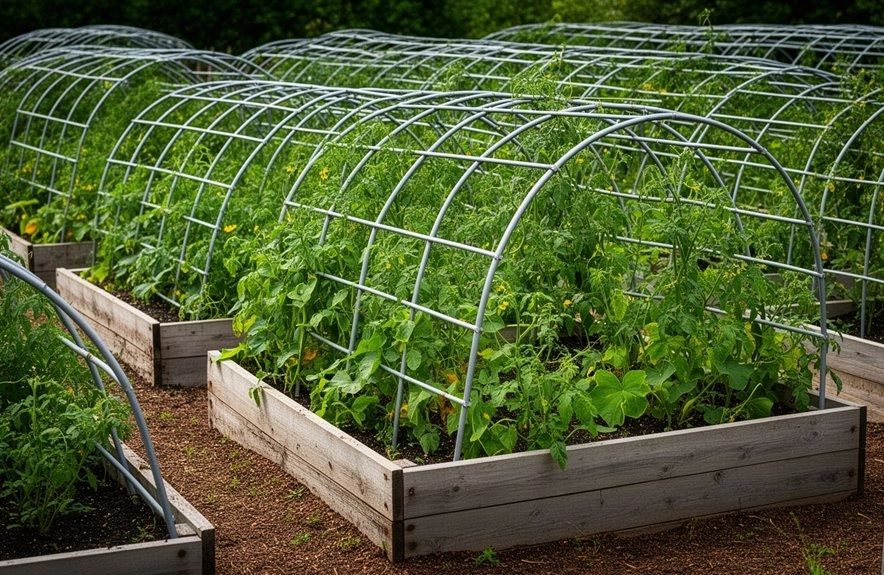
For a tunnel that can carry real weight, I reach for a cattle panel arch over raised beds. I’ve helped my family build one with 16-ga galvanized panels, and it feels solid, not wobbly.
- Anchor with T-posts or rebar
- Tie with zip ties or wire
- Gain 6–8+ ft of growing room
- Use heavy gear handling,fruit sling techniques for bulky harvests
You can span two 4 x 8 beds and keep vines up high. I like that it’s quick to install, reusable, and kind of a backyard clubhouse for climbing crops. Air moves better, harvest stays cleaner, and your knees complain less.
Best Plants to Grow Vertically
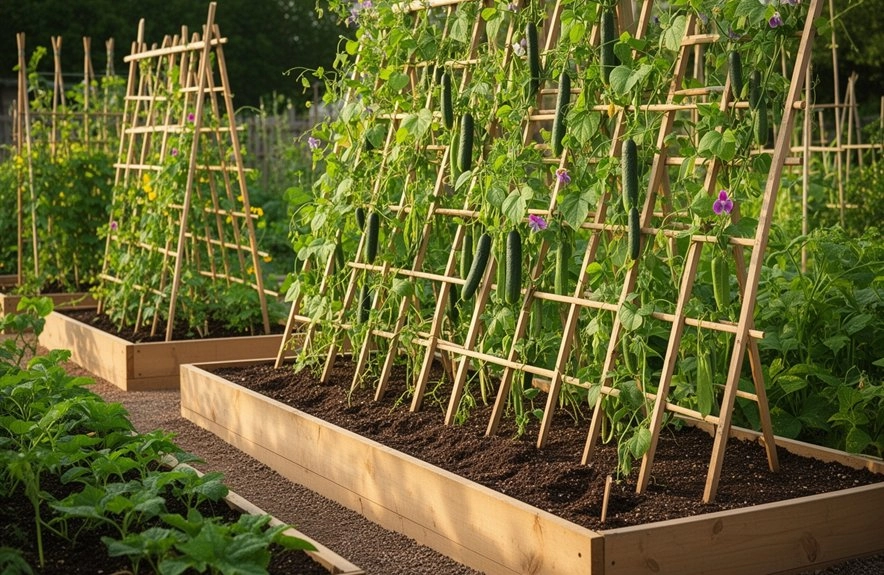
Once you’ve got a sturdy cattle panel tunnel up, the fun part starts: picking plants that actually want to climb.
I love starting with vertical legumes like Emerite pole beans; they shoot up 6 to 8 feet and keep producing like they’ve got a point to prove.
My family also grows Suyo Long cucumbers and Lisboa, because trellising them saves room and helps keep leaves drier.
For taller support, I’ll tie indeterminate tomatoes every week or so.
Peas, snap or snow, climb happily too.
Even trellised gourds and small melons can join the party, with slings for fruit.
Climbing vegetables
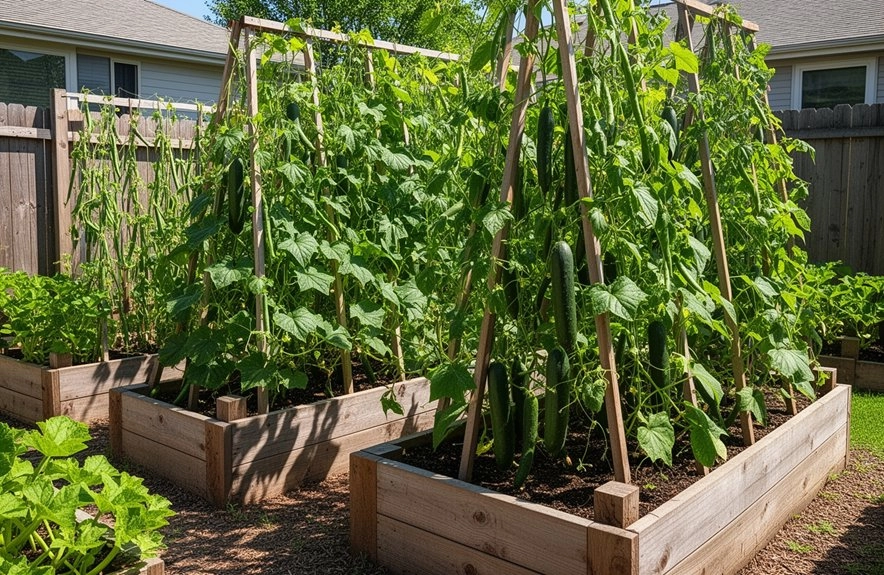
Climb the right crop, and your trellis starts earning its keep fast. I’ve watched pole beans, Suyo Long cucumbers, Sugar Snap peas, and indeterminate tomatoes turn a raised bed into a little vertical club. You get more room below, better airflow, and easier picking when the kids aren’t hunting cucumbers in the mulch. I place trellises on the north side and set them before planting.
- Use light string frames for beans.
- Pick cattle panels for heavy tomatoes.
- Try galvanized metal to dodge rust.
- Tuck in vertical onions and climbing herbs.
For compact beds, incorporated trellis planters feel like cheating—in a good way.
Flowering vines
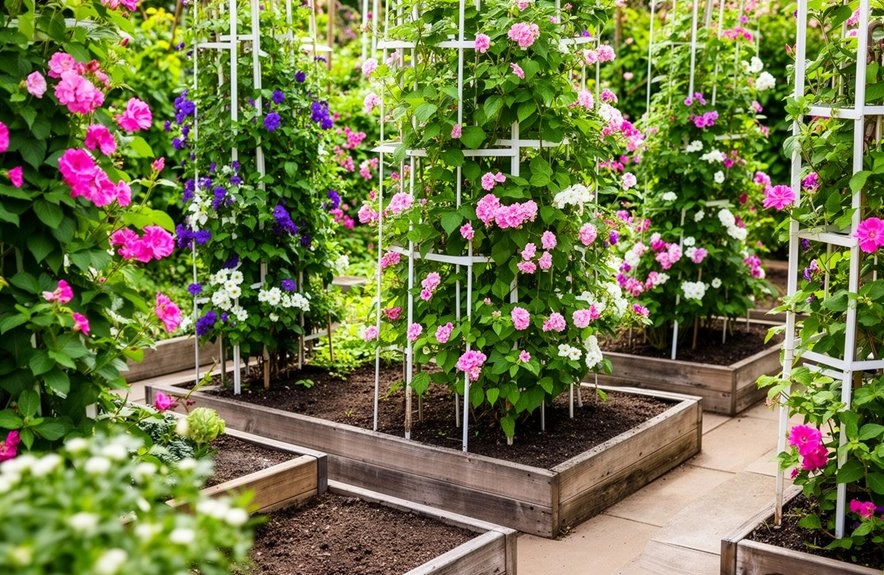
Flowering vines bring a different kind of payoff, and I’m always happy to make room for them after the food crops are set.
I’ve had great luck with morning glories and climbing nasturtiums on raised beds with trellises; they climb fast, bloom hard, and keep the lower plants from getting stuck in the shade club. Use rustproof stainless-steel string or ladder trellises, not soggy wood. Set seedlings 6–12 inches out, and keep the bed 7–14 inches deep. I place trellises north-side, then tie stems every week. It helps with scent pairing and pollinator attraction, too.
Compact fruit varieties
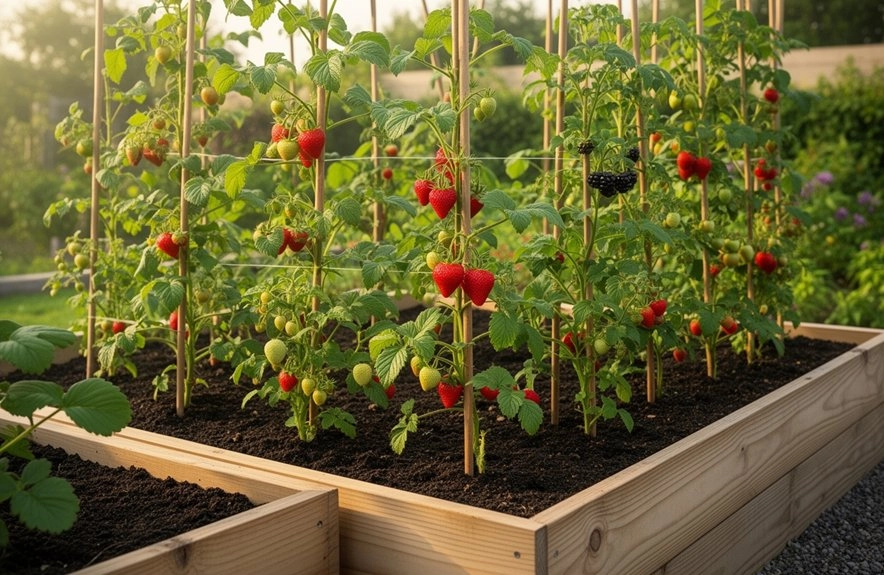
A few compact fruit plants can turn a raised bed with a trellis into a little vertical orchard, and I’m a big fan of that trick. You can join the club with compact cultivars that stay tidy and productive.
- Patio tomatoes and dwarf cucumbers fit 4 x 8 beds well.
- Pick compact melons or miniature watermelons for sling support.
- Try Alpine strawberries or patio raspberries in elevated planters.
- Grow snap peas or bushy pole beans on ladder trellises.
I’ve found container friendly fruits need at least 7.25″ of root depth, and deeper beds usually boost them. My family loves the harvest parade.
Materials That Balance Strength and Style
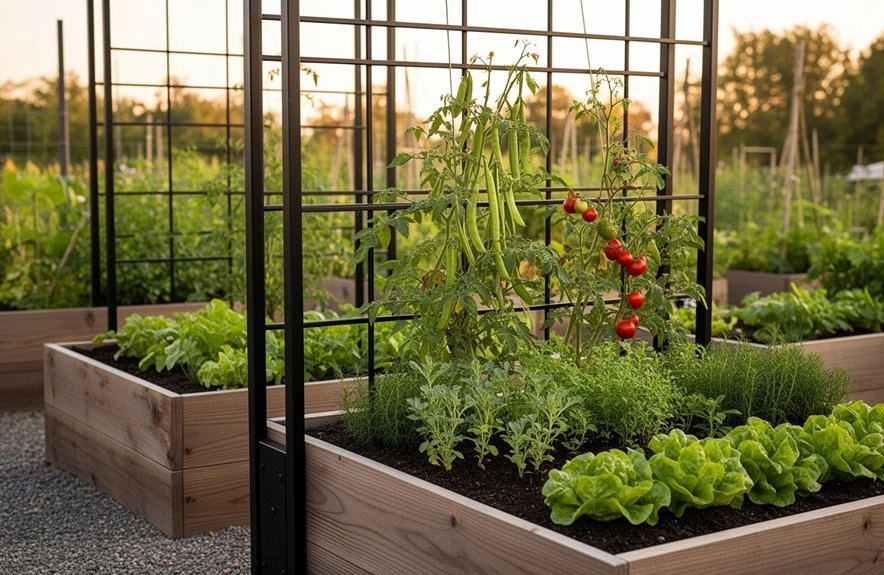
When I build a raised bed with a trellis, I want it to look good and hold up to real garden chaos. I like galvanized steel or stainless ladder panels because they bring Galvanized aesthetics and shrug off rust, even when your melons act like tiny wrecking balls. For a softer look, I pair a composite wood frame with metal panels; that gives me Composite durability and less warping. I also use galvanized screws, aluminum corners, and a broad base. In my family’s small yard, a slim 4 x 8 bed keeps things sturdy, neat, and not bossy.
Wood and bamboo
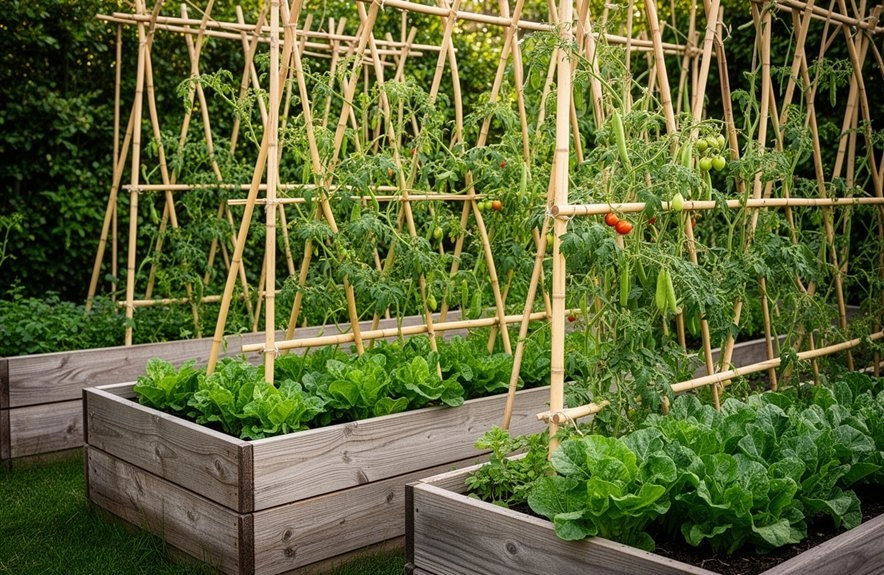
Cedar boards and bamboo poles make one of my favorite raised-bed combos because they feel simple, sturdy, and just plain smart. I’ve built them for my family, and they hold peas, pole beans, and cucumbers without fuss.
Seal the wood with weatherproof finishes, then use joint hardware or galvanized screws where the pieces meet.
- Lash bamboo ladders to bed edges.
- Set stakes 18–24 inches deep.
- Space supports 3–6 feet apart.
- Add plastic inserts at contact points.
You’ll save space, boost air flow, and still have room for your knees.
Metal and wire panels
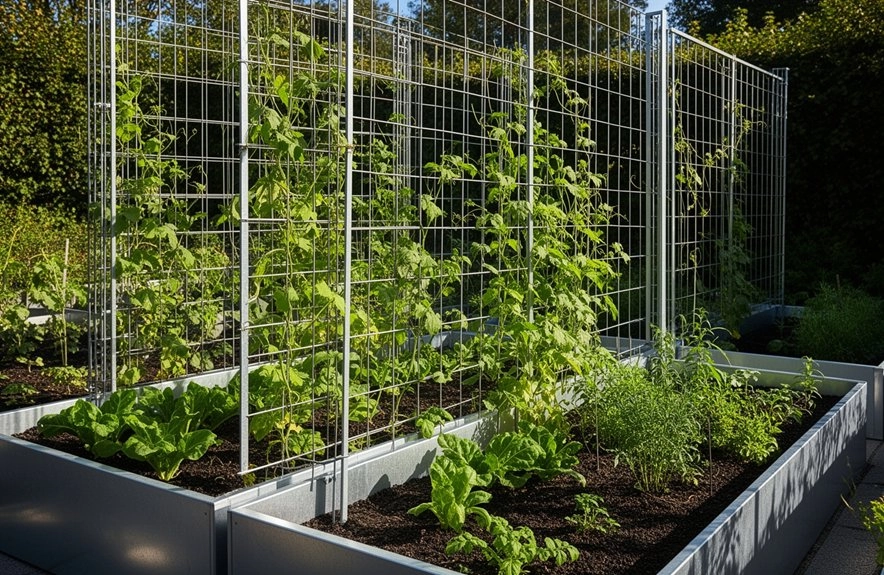
Metal panels are the strong, no-nonsense workhorses I keep coming back to for raised beds. I’ve seen galvanized cattle panels and remesh hold pole beans, cucumbers, and tomatoes without sagging, even across 6-foot spans.
You’ll get sturdy vertical space, better airflow, and more sunlight, which feels like winning twice. I screw panels to bed frames or zip-tie them to stakes, and I always focus on panel anchoring with 12 to 18 inches in the ground.
With galvanized maintenance, you’re mostly just checking rust and bolts. For squash or melons, I add slings. My family calls it “the garden gym.”
DIY repurposed options
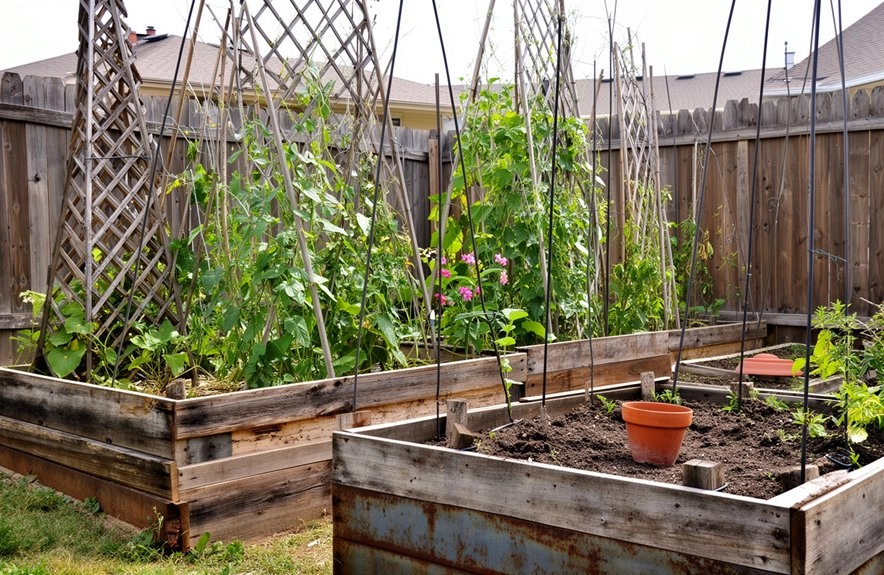
I love to turn odds and ends into garden helpers, because a good trellis doesn’t have to come from a store. In my family garden, you can do the same and feel right at home. Try pallet restoration: reinforce a wooden pallet, screw it to a 4 x 8 bed, and let peas and beans climb.
- Bend a cattle panel into an arch.
- Use rebar, 18 inches deep, for squash.
- Fasten a gate or shelving with straps.
- Try bicycle repurposing with a wheel arch.
You’ll save space, reuse gear, and grin when vines behave.
Layout Ideas for Different Garden Spaces
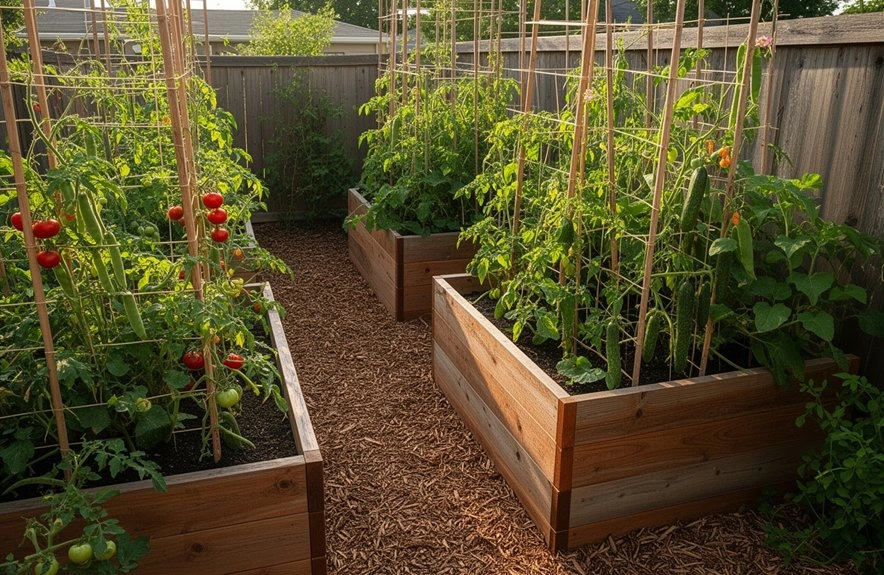
When space gets tight, I like to match the trellis to the garden instead of forcing the garden to fit the trellis. In my family’s tiny plots, space zoning helps every inch work harder.
For narrow balconies, I’d pick a Self-Watering Raised Planter, since it gives deep roots and a trellis without eating floor space. In small yards, I set beds on the north side, east–west, so vines don’t bully the lettuce. I also love paired 4 x 8 beds with an arch, plus pathway integration. Corners? Use 2 x 2 planters or tiered GardenBLOX.
Backyard setups
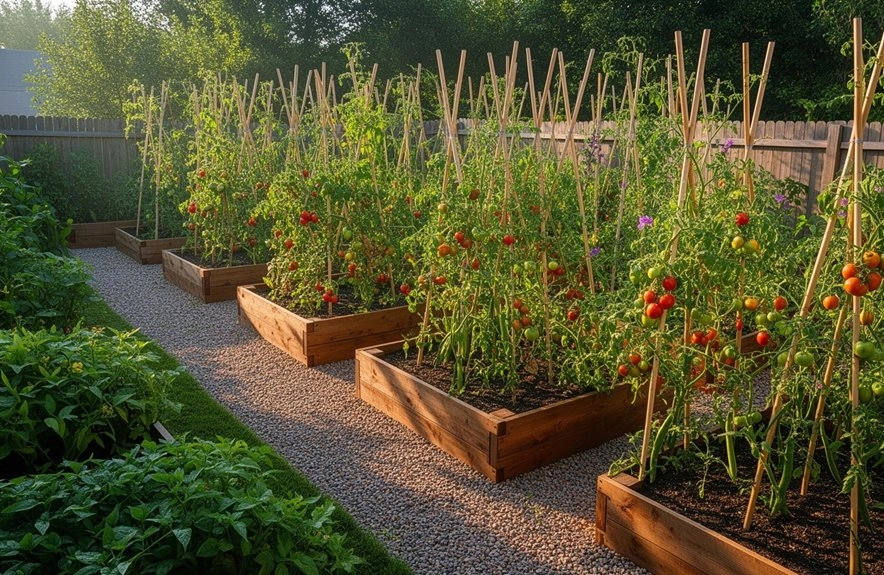
In backyard setups, I like to treat the bed like the boss and the trellis like the sidekick, not the other way around. I’ve learned that placing it on the north side keeps sun on your beans, cucamelons, and tomato neighbors. My family loves compact beds with rustproof ladder panels, because they save space and still feel roomy.
- Use sturdy arches for squash.
- Try wheeled planters for microclimate management.
- Add privacy screening with tall vines.
- Pick composite or galvanized parts for long life.
I’ve also seen built-in drainage cut fuss, and good airflow keeps mildew from crashing the party.
Side yard solutions
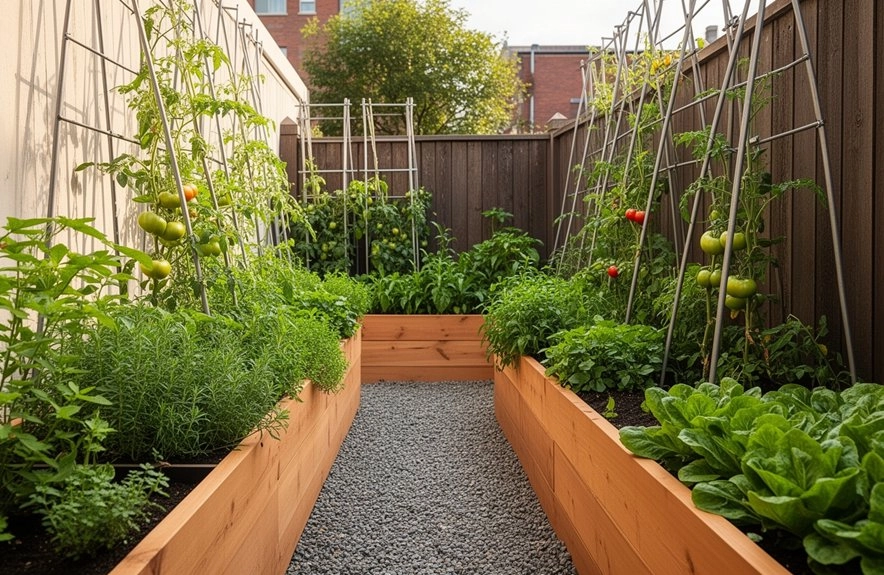
Along a tight side yard, I like to tuck the trellised bed on the north side and run it east to west so the vertical support doesn’t steal light from the lower plants.
I’ve used narrow 4×8 beds with rustproof stainless-steel ladder trellises, and they fit like they were made for our family’s squeeze-past path.
Choose pole beans, peas, and vining cucumbers, plus shade tolerant plantings below.
For privacy screening, a 12-inch arch extension helps fast.
I anchor frames deep, or use wheeled planters, because neighbors shouldn’t get all my tomatoes.
Melons? Only with slings, unless you enjoy drama.
Urban and patio gardens
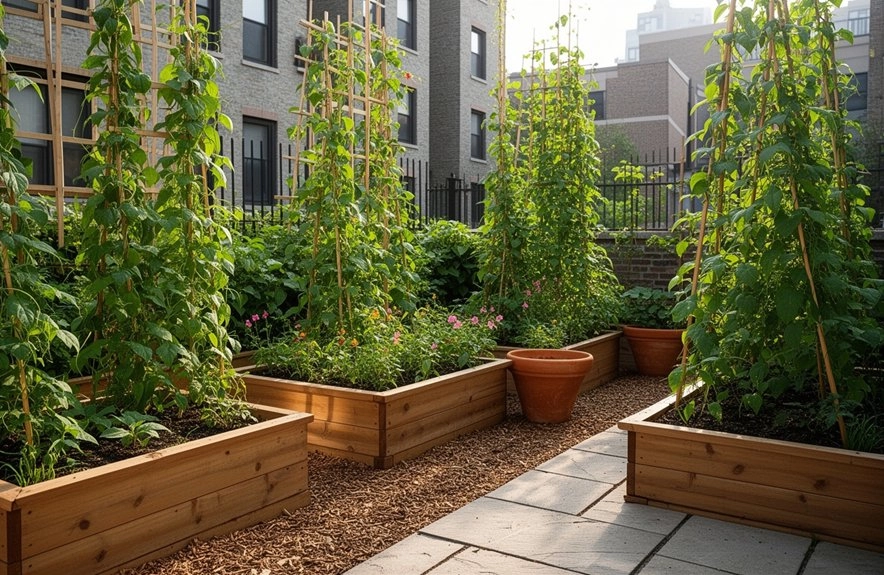
A tiny patio can still grow a serious harvest, and I’ve learned that a well-built raised bed with a trellis can turn one compact footprint into two jobs at once: ground-level planting and vertical growing. You can join the club with 4 x 8 or 2 x 4 beds, plus rustproof steel or galvanized frames that shrug off city weather.
- I use east–west placement for microclimate management.
- I put taller trellises north to protect lower plants.
- I love rolling GardenBLOX for sun chasing and storage.
- I also count on privacy screening, because my neighbors don’t need to watch my tomatoes climb like they pay rent.
Design Tips for a Cohesive Look
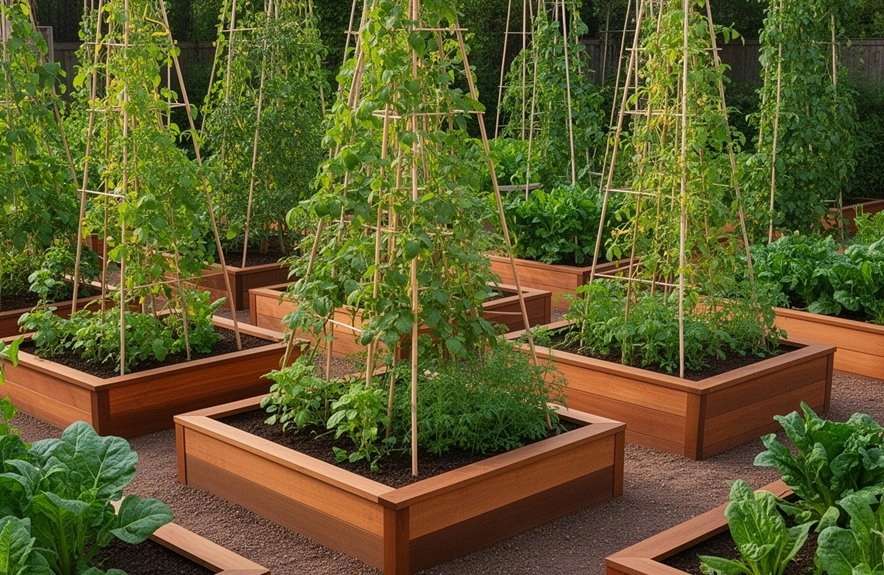
When I moved from squeezing crops into a small patio layout to making the whole setup look intentional, I learned that a cohesive raised bed garden starts with repeating the same few choices on purpose.
Use material consistency: cedar planks or composite frames with galvanized or stainless-steel trellis parts. I stick with one trellis style, like arch or ladder, across my beds, and my family notices the calm rhythm right away.
Proportion standardization helps too; a 70.9-inch trellis over a 35.4-inch bed just feels right.
I also match hardware, wheels, and drainage details, because tiny mismatches bug me like socks in sandals.
Matching bed and trellis
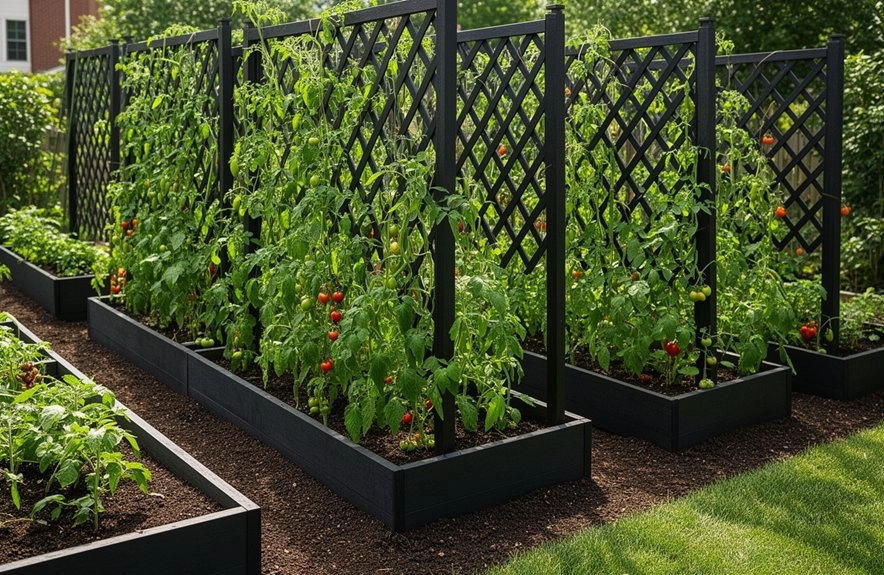
Matching the bed to the trellis is where a pretty garden turns into a working one. I’ve learned that a smart bed trellis feels like a teammate, not a bossy guest. Check planting compatibility first.
- Use ladder or string trellises for pole beans and cucamelons.
- Choose galvanized wire panels or reinforced arches for melons and squash; slings help.
- Put permanent trellises on the north side of east–west beds, and aim arch openings north/south.
- In wooden beds, screws or Lifetime corner adapters work well.
My family loves corner-fit arch kits for 2×2 beds. Stable, drained beds keep vines happy and wind less dramatic.
Color and texture harmony
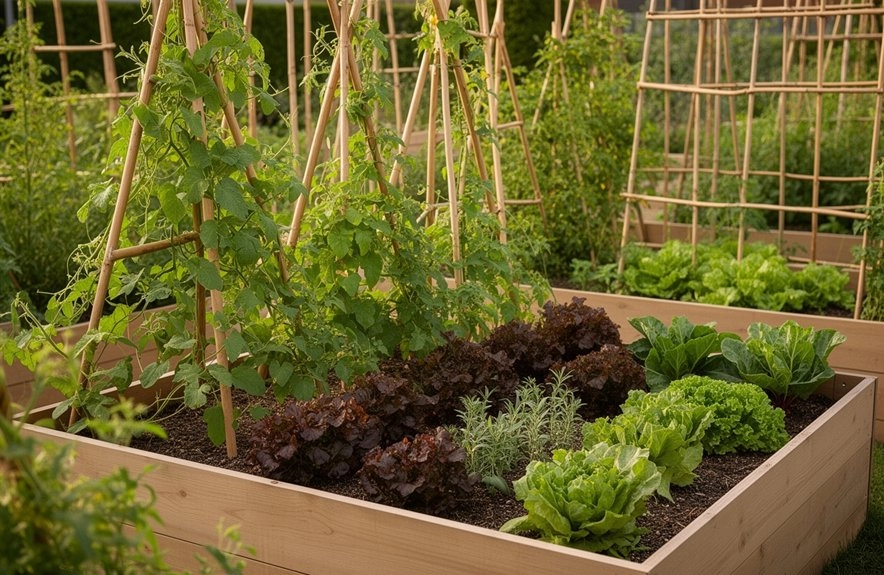
Once I’ve got the bed and trellis working well together, I start paying attention to how they look together, too. I like cedar or composite frames in warm tones, because they play nicely with galvanized metal and don’t scream, “I showed up late.”
You can echo the trellis finish in your hose, cages, or patio chair for a tidy feel. I also lean on textural contrast: smooth inserts, weathered metal, and cedar grain give the bed character without turning it into a circus.
Then I add vines, and suddenly my little garden feels like home.
Seasonal styling ideas
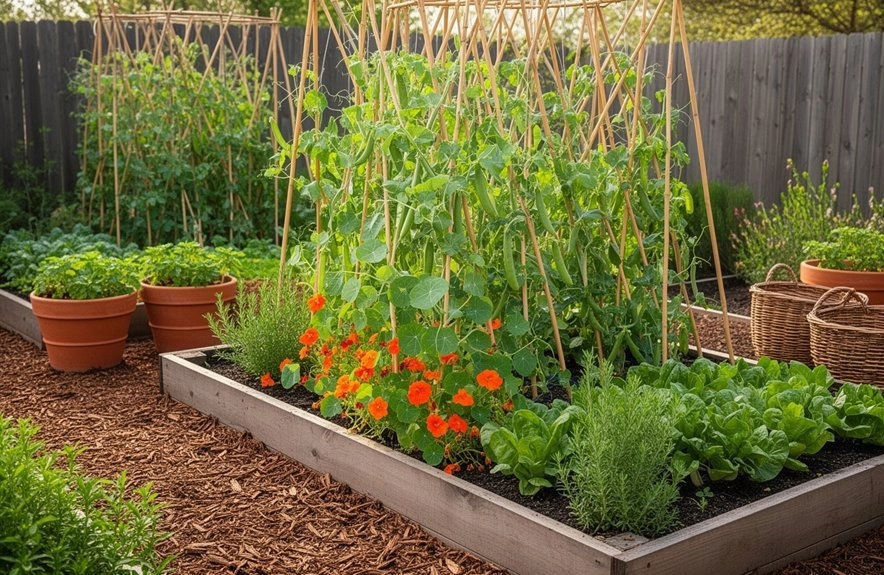
As the seasons shift, I like to treat my raised bed and trellis like a little outdoor stage. I string twinkle lights along a 4-arch kit, and the evening glow feels friendly, not fussy.
I tuck in seasonal centerpieces like mini wreaths or burlap bows, then swap them as the months change.
- Mix morning glories with pole beans for color and snacks.
- Clip small slings for melons; they look neat, too.
- Keep herbs at the base for winter structure.
- Use seasonal lighting and mesh covers as weather changes.
Common Mistakes to Avoid
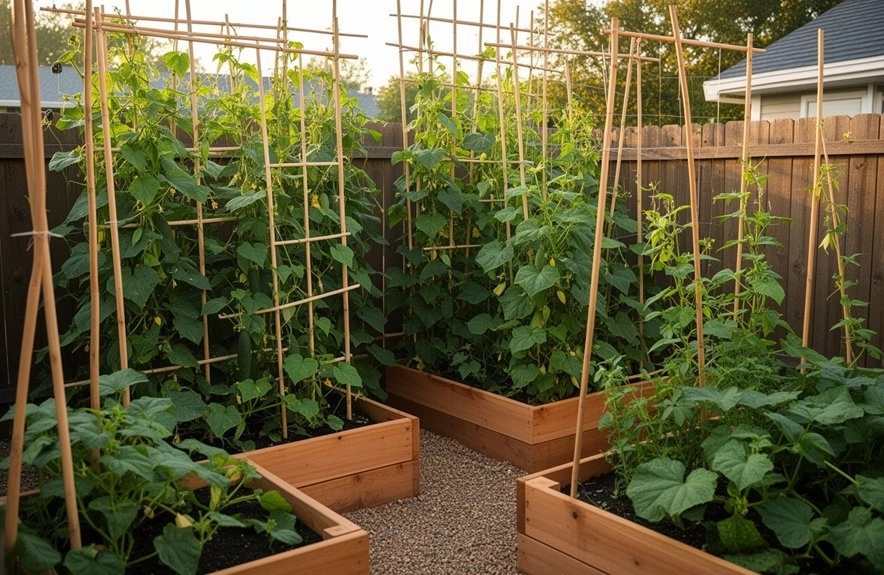
When I built my first raised bed with a trellis, I learned fast that a few small mistakes can turn a good garden into a wobbly mess. Put tall supports on the north side, or run your bed north–south, so you don’t shade beans and tomatoes.
Don’t wait on placement timing; install anchors before planting, or you’ll nick roots and mutter at the dirt. Match the frame to squash or melon weight, and use at least 12–18 inches of anchoring depth.
I’ve seen flimsy twine fail. Check hardware yearly, and add slings for heavy fruit.
Frequently Asked Questions
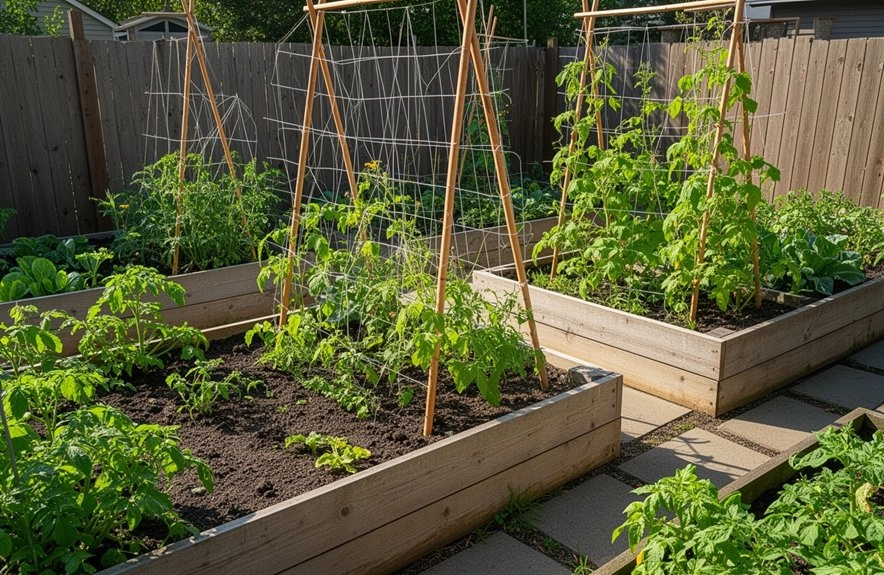
Got questions? I’d say yes, and you’re not alone. In my family garden, a 4 x 8 bed with a north-side trellis gave our beans room to climb and kept cucumbers from turning into green bullies.
- Will it fit? A 4 x 12 or Roundabout 10 x 10 can double your space.
- What’s strong enough? Use cattle panels for squash and melons; light string works for pole beans.
- Will it last? Choose galvanized or stainless steel.
- Can I move it? A wheeled raised planter makes harvest day easier.
Good airflow helps soil microbes and pest management too.