Window Box Flower Ideas That Brighten Any Home Exterior
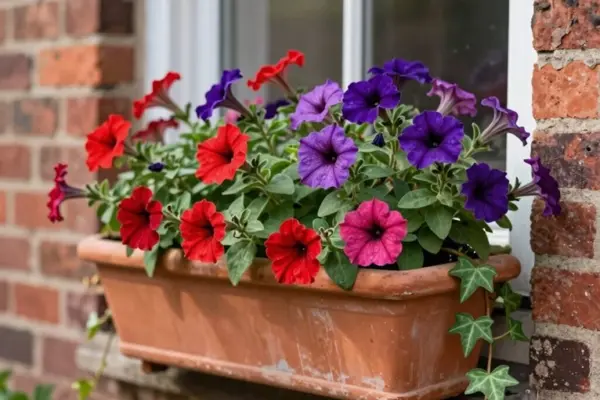
- Window Box Flower Ideas That Brighten Any Home Exterior
- Key Takeaways
- Why Window Box Flowers Work So Well
- Pick the Best Window Box Location
- Choose Plants for Full Sun
- Sun-Loving Plant Choices
- Color And Texture
- Space For Growth
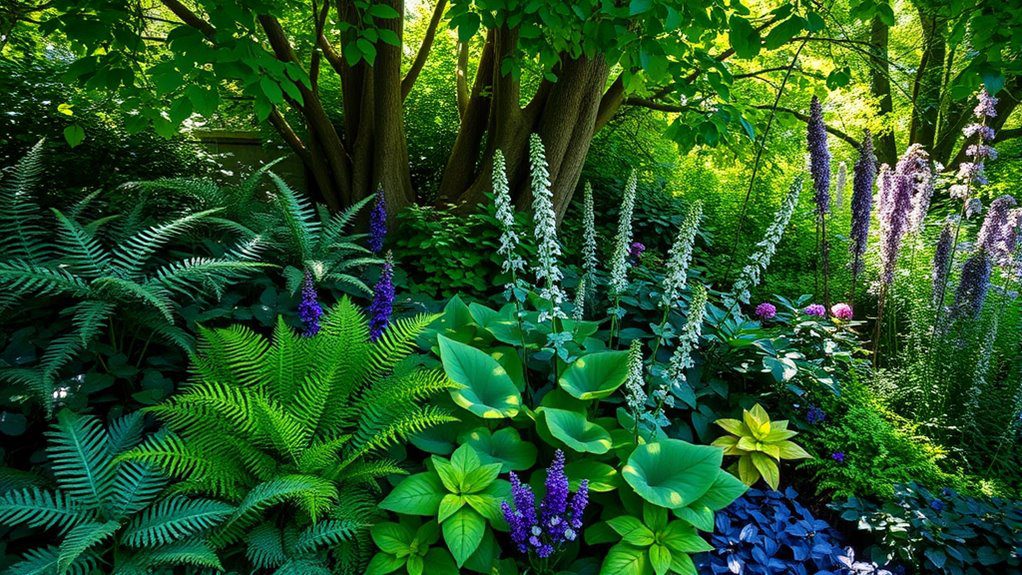
- Choose Shade-Loving Window Box Plants
- Use Bold Foliage for Extra Impact
- Contrasting Leaf Colors
- Mixed Textures Matter
- Bold Foliage Pairings
- Build a Simple One-Flower Window Box
- Mix Flowers for All-Season Color
- Layer Colors and Textures
- Combine Trailing and Upright
- Rotate Blooms Through Seasons
- Add Trailing Vines for a Fuller Look
- Repeat Plant Groups for Balance
- Echoed Plant Clusters
- Balanced Repetition
- Unified Window Rhythm
- Create a Railing Window Box Display
- Match Your Window Box to Exterior Colors
- Design a Cottage Garden Window Box
- Grow an Edible Window Box Mix
- Edibles For Window Boxes
- Herbs And Flowers Together
- Easy Harvesting Ideas
- Fill a Fragrant Herb Window Box
- Combine Textures for a Richer Look
- Plan for a Long Blooming Season
- Avoid Common Window Box Mistakes
- Choose Plants That Suit Your Conditions
Brighten your home exterior with a window box that matches your light, then mix blooms and foliage for instant charm! For sun, try petunias, zinnias, and geraniums; for shade, choose coleus, impatiens, or begonias. Add trailing sweet potato vine, keep plants spaced, water often, and deadhead faded flowers. Want extra wow? Use a thriller-filler-spiller combo with a bold center plant and a cascading edge—easy, affordable, and way fancier than your porch should have to be!
Key Takeaways
- Match flowers to your window box’s sunlight: petunias and zinnias for sun, coleus and impatiens for shade.
- Use the thriller-filler-spiller method with upright plants, colorful blooms, and trailing vines for a fuller display.
- Prep boxes with loose, well-draining soil and holes to protect roots and prevent stalling or rot.
- Water consistently, especially in heat, because window boxes dry out quickly and windy spots dry even faster.
- Deadhead often and swap plants seasonally to keep the box colorful from spring through frost.
Why Window Box Flowers Work So Well
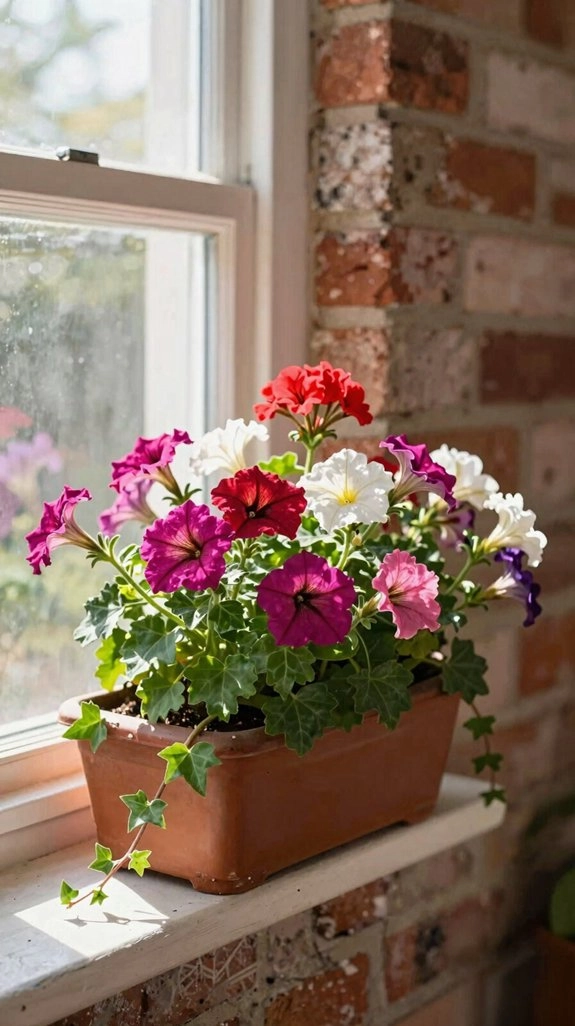
Why do window box flowers work so well? You match plants to light, so sun lovers like zinnias and petunias shine, while coleus and impatiens cozy up in shade.
With smart Soil prep, good drainage, and loose roots, you protect root health and help each plant fill out instead of stalling.
Keep a steady watering schedule, because boxes dry fast, especially in heat.
Deadhead often, and add seasonal pruning when blooms fade, so the display keeps popping.
Best of all, a layered mix of thriller, filler, and spiller plants makes your home feel friendly, finished, and just a little bit stylish.
Pick the Best Window Box Location
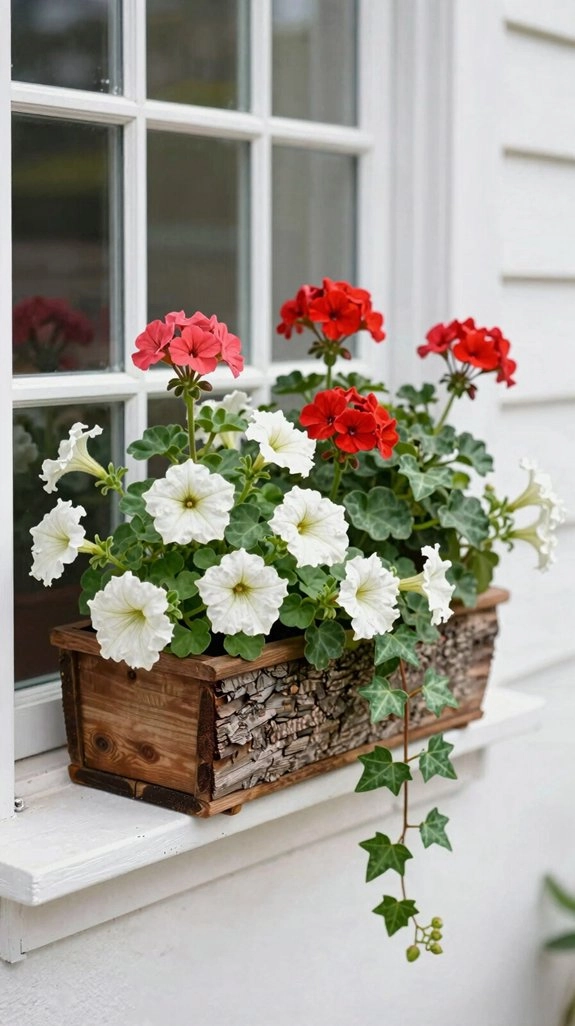
Now that you know how to mix and match flowers for a lively display, it’s time to park that box in the right spot, because light can make or break the whole show!
Measure sunlight hours first: full sun for 6+ hours, part-shade for 3–6, and full shade if your wall stays cool.
Then choose a sill, railing, or hanging point that fits your space and style, oh yes!
Account for wind exposure, too, since breezy spots dry soil fast and can rattle stems.
After you set it, step back, check spacing, and give every plant room to breathe and join the neighborhood.
Choose Plants for Full Sun
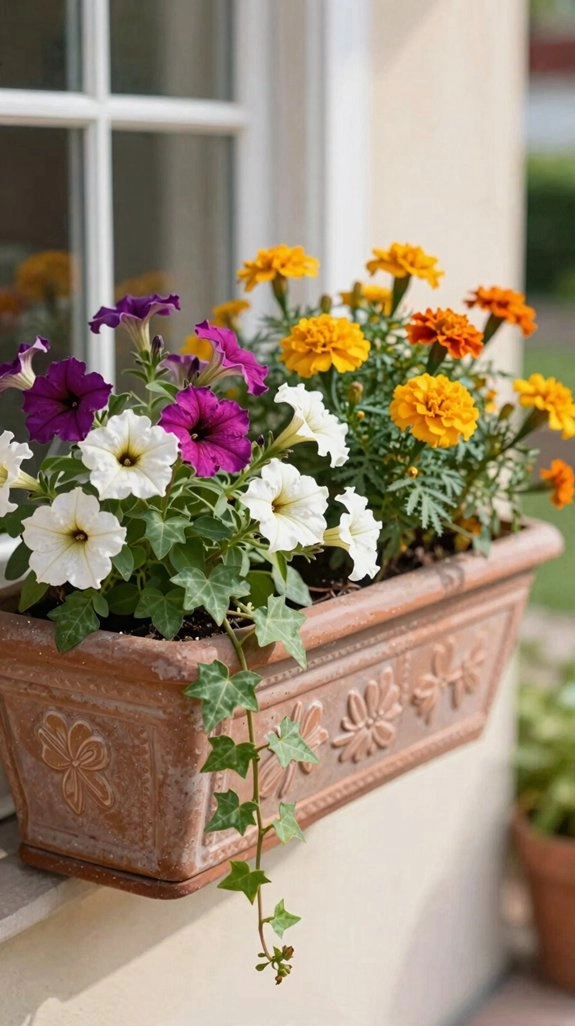
For a full-sun window box, you’ll want heat-loving stars like petunias, zinnias, lavender, and geraniums, because they can handle the heat and keep the show going.
Mix in bold color and texture with upright geraniums, spiky salvia, and trailing petunias that spill over the edge like they’re showing off a little—fun, right?
Give each plant some breathing room, refresh the potting mix, and your box will have space to grow into a bright, happy mess all season long!
Sun-Loving Plant Choices
- Mix upright spikes, like salvia, with petunias for a “thriving” look.
- Add sweet potato vine to spill over the edge and soften the box.
- Refresh soil, loosen roots, and water daily in hot spells.
These Window box pollinators bring bees and smiles, and deadheading keeps blooms coming. Your porch will feel friendly, lively, and totally you!
Color And Texture
If you loved that lively, bee-friendly window box vibe, here’s where things get extra fun: full sun boxes can handle bold color and interesting texture all season long!
Start with ruffle pink petunias, Dallas Red lantana, and pink or purple geraniums for easy, bright color.
Then mix in copper coleus and bear grass to Create eye catching focal points with shiny leaves and feathery shape.
Use contrasting plant heights with dracaena or gaura, and let sweet potato vine spill over the edge for a soft finish.
Step back, tweak the look, and boom—your box feels rich, balanced, and totally welcoming!
Space For Growth
A sunny window box has its own little appetite, and it’ll pay you back with big color when you feed it the right plants!
- Start with fresh potting mix and a quick root refresh, so soil health can bounce back fast.
- Pick sun-lovers like geraniums, zinnias, petunias, and lavender-style herbs; they handle heat without throwing a drama queen fit.
- Leave spacing for airflow, then use thriller-filler-spiller layers, with spikes, blooms, and sweet potato vine to spread out красиво.
Step back, check the gaps, and water often. That extra room helps your box keep blooming from early summer to fall!
Choose Shade-Loving Window Box Plants
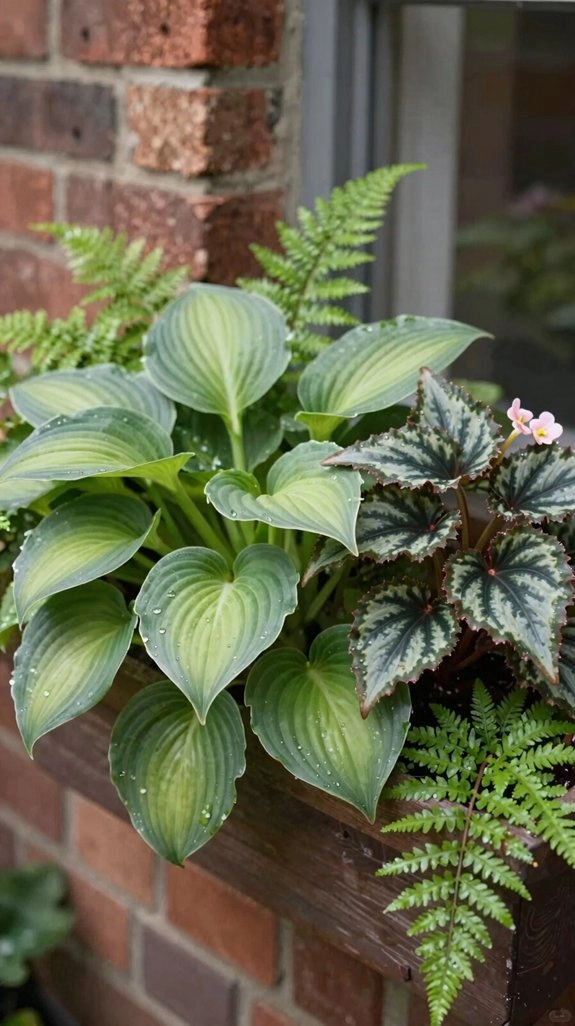
When your window box gets less than 3 hours of direct sun, you’ll want plants that don’t just survive in the shade, but actually look fabulous there!
Start with shade plant combos that mix texture and color, so your box feels welcoming, not blah.
For reliable bloom picks, choose coleus for vivid leaves, begonias for nonstop warm-season flowers, and impatiens for tidy mounds that bloom from summer to fall with almost no fuss.
If your spot is extra dim, fuchsias add two-tone charm.
Plant them in rich soil, water well, and you’ll have a cheerful display neighbors may envy!
Use Bold Foliage for Extra Impact
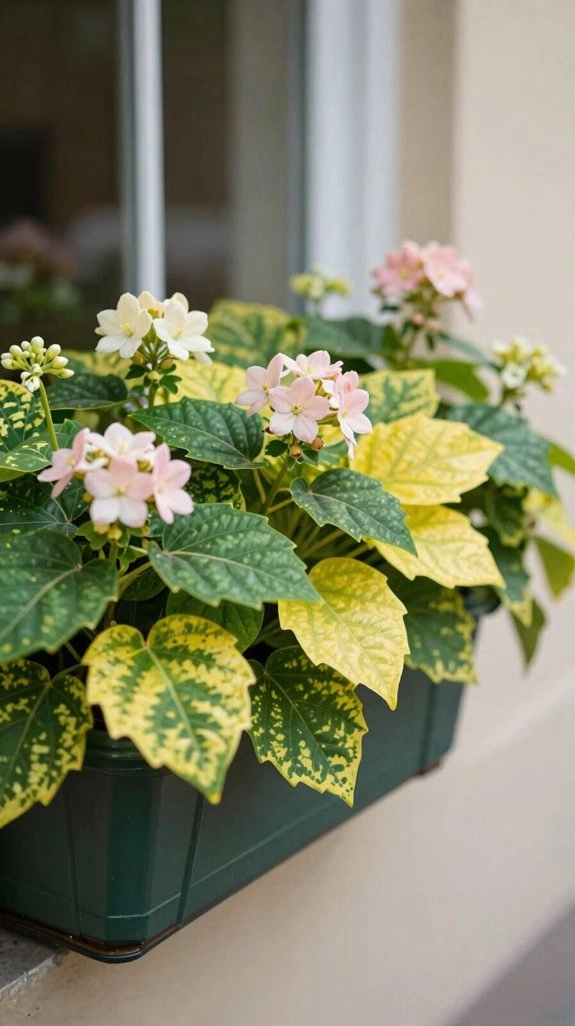
Bold foliage can make your window box pop fast, especially when you mix bright coleus with deeper greens or near-black leaves for that wow factor!
Try pairing leafy textures, like spiky dracaena or bear grass with trailing sweet potato vine, so the whole box feels fuller and more polished.
And here’s the fun part: when flowers take a break, your leaves keep the show going, so your window box still looks lively all season long.
Contrasting Leaf Colors
Even if your window box barely blooms, you can still make it look fantastic by leaning on leaf color! You’ll feel right at home when bold foliage does the heavy lifting, and seasonal color change keeps things fresh.
- Mix lime coleus with nearly black sweet potato vine for instant pop.
- Add dusty miller or plectranthus argentatus to brighten dark siding and make rich greens glow.
- Try a warm upright thriller, then tuck in copperleaf or Spanish moss for a layered look.
These combos are cheap, easy, and eye-catching, and your container color pairing will feel polished, not fussy—nice!
Mixed Textures Matter
Leaf color already does a lot of the heavy lifting, but texture is what makes a window box look full and lively from across the yard—fancy, right?
You can build Foliage Contrast with bold coleus, soft trailing sweet potato vine, and a spiky accent like dracaena or bear grass.
Toss in a silvery leaf such as Silver Shield for a cool glow, and suddenly your box feels like a tiny club of textures!
Keep Texture Repetition simple: repeat 2–4 foliage types, space them well, and let them grow.
Soon, your window box won’t look flat, it’ll look polished and welcoming.
Bold Foliage Pairings
- Start with coleus, like Stained Glassworks Copper or True Red, for color that shifts from lime to deep red.
- Add bear grass or spikes dracaena so the box stands tall, even when blooms nap.
- For the wow factor, tuck in Lantana Dallas Red and dusty miller with dark coleus.
You’ll get a lush, filled-out look that’s easy, affordable, and seriously eye-catching!
Build a Simple One-Flower Window Box
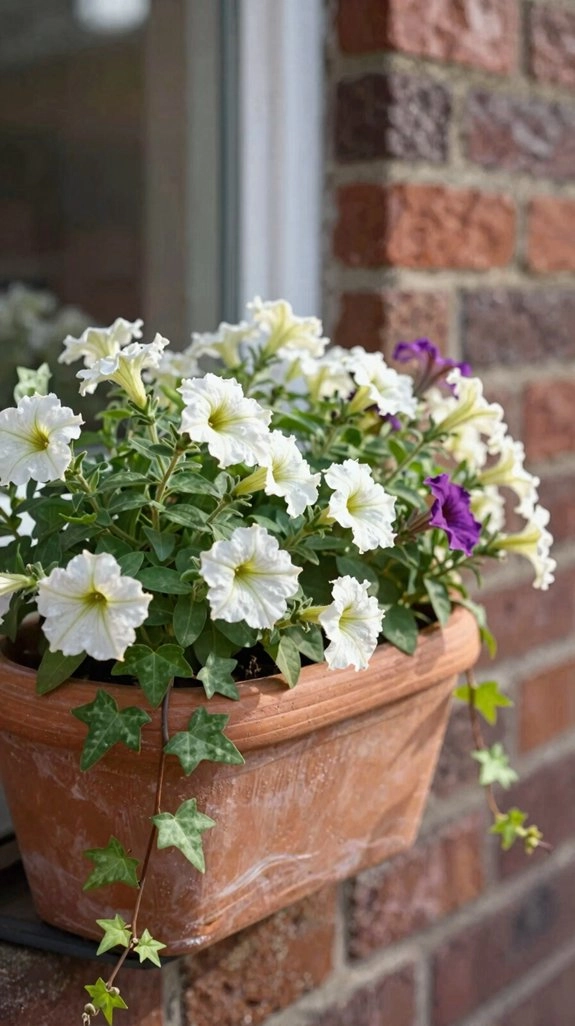
If you want a window box that looks neat, cheerful, and way less fussy, start with a simple one-flower plan—seriously, it’s easier than it sounds!
Pick one main plant, like three coral geraniums or a shade-loving coleus, and fill the box with just that.
Use a container with drainage holes, then add small stones and quality potting mix so roots stay happy, not soggy.
Space plants so they can grow in, and check Watering schedule tips as weather shifts.
Watch Seasonal bloom timing, deadhead geraniums, and you’ll get a tidy, friendly display that feels pulled together fast!
Mix Flowers for All-Season Color
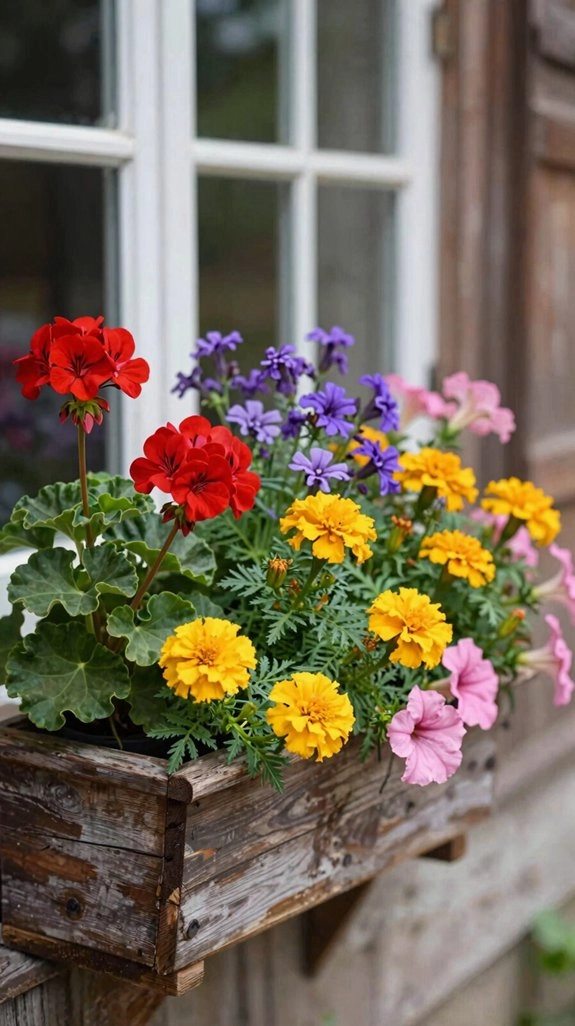
For a window box that stays cheerful, you can mix colors and textures, starting with steady foliage like coleus or dusty miller, then add bloomers such as petunias or geraniums for easy, bright impact—nice!
Next, pair upright plants with trailing ones, so your box keeps its shape while sweet potato vine spills over the edge and softens the whole look.
To keep the color going all season, swap in long-blooming flowers like lantana or begonias, deadhead spent blooms, and you’ll get a box that feels fresh instead of fussy, ha!
Layer Colors and Textures
A window box can feel a little plain at first, but layering colors and textures gives it instant wow factor! Use a Focal plant strategy with a bold thriller, then follow these texture contrast rules so your box feels friendly and full.
- Start with coleus or bear grass, then tuck in petunias, verbena, or calibrachoa for easy color.
- Mix dusty miller with chunky coleus leaves, so even bloom breaks still look lively.
- Repeat clusters, like sweet potato vine plus caladium, and you’ll get a polished, neighbor-worthy look.
Deadhead blooms, refresh mix, and let your display keep smiling!
Combine Trailing and Upright
When you want your window box to look lively all season, mix upright plants with trailing ones so the whole thing feels full from top to bottom.
Start with one tall star, like dracaena, gaura, or coleus, then tuck in sweet potato vine, calibrachoa, or bacopa to pour over the edge.
That color contrast gives you instant charm, and the different bloom height keeps the center and rim busy, not bare.
Give each plant room to grow, and deadhead stray flowers for a neat finish.
You’ll get a box that feels welcoming, polished, and just a little show-offy, in the best way!
Rotate Blooms Through Seasons
To keep your window box looking cheerful from spring to frost, think of it like a little seasonal lineup that changes outfits!
- Start with coleus and petunias, then swap in heat-loving bloomers for summer. Succession planting schedules help you know when to trade plants.
- Add geraniums, angelonia, and sweet potato vine for a steady thriller–filler–spiller look. Deadhead often, and you’ll stretch the show for pennies.
- When nights cool, slide in pansies and follow climate adjustment tips, so your box feels like home in every season.
Add Trailing Vines for a Fuller Look
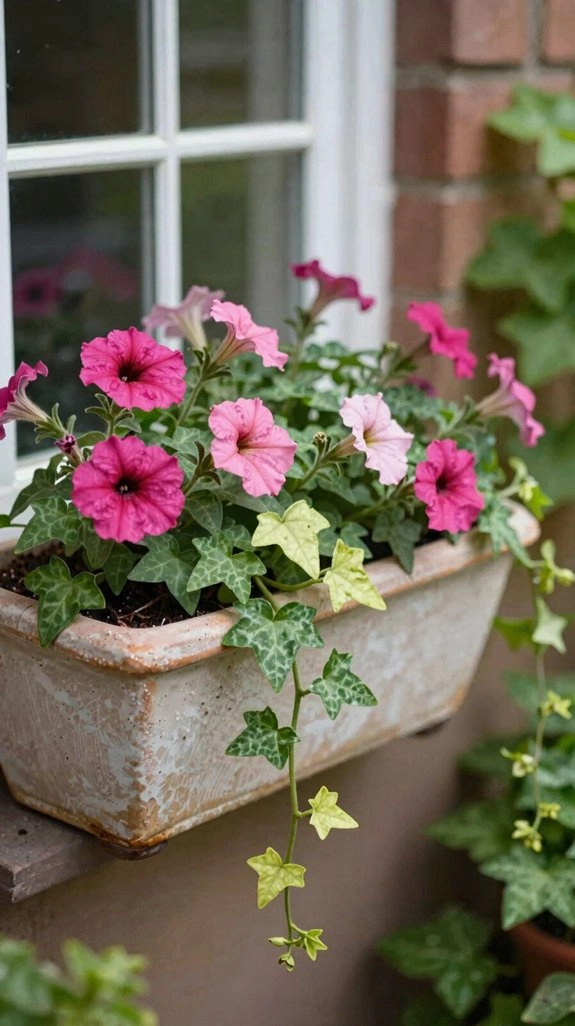
For a window box that looks packed, lush, and just a little dramatic, trailing vines are your secret weapon! Try sweet potato vine, like Margarita or Blackie, for fast, cascading color that makes your box seem full in no time.
In sunny spots, heat-loving trailers such as moonflowers keep the spill lively as summer cranks up.
Place vines near the front edge, give roots room, and let them drape naturally.
For pruning trailing care and Foliage spill balance, pair a vine with a tall center plant, then add another soft spiller if you want that extra “wow, you live here?” finish!
Repeat Plant Groups for Balance
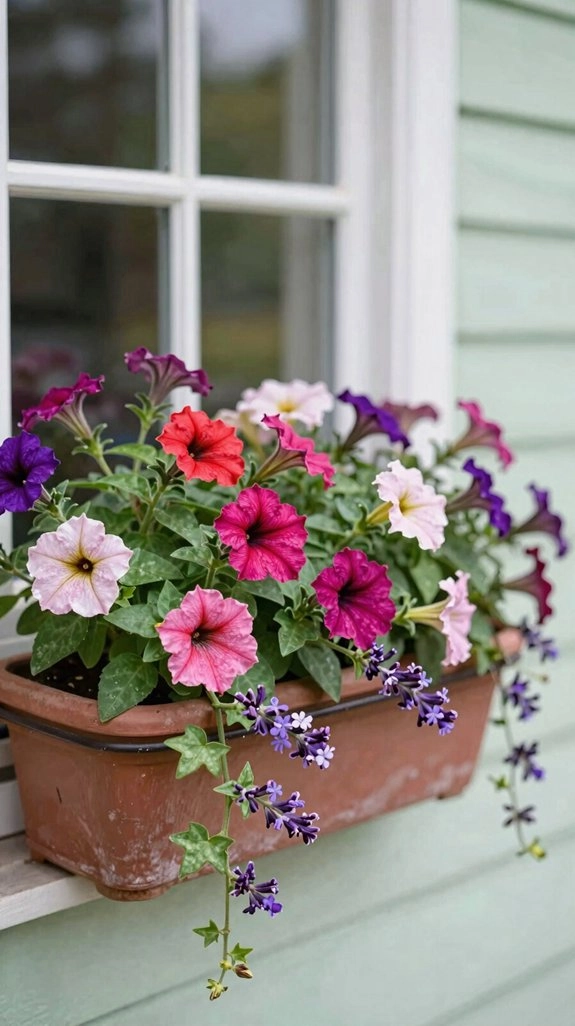
You can make your window box feel polished fast by repeating the same plant cluster—think an upright ivy topiary, a bold coleus, and a couple of trailers—so each section echoes the next.
That kind of balanced repetition gives you an easy rhythm, and it keeps the whole box looking calm, full, and intentional instead of a little plant circus.
Keep the groups spaced generously, because as they grow together, they’ll connect into one smooth, unified display that looks way more expensive than it really was!
Echoed Plant Clusters
When a long window box needs to look calm and pulled together, echoed plant clusters can do the heavy lifting!
You repeat 3–4 plants in repeat blocks, and the whole box starts to feel like your crew is in sync.
- Try an Ivy ball topiary, coleus, sweet potato vine, and white caladium for a seasonal anchor.
- Leave growth spacing so each cluster can spread, then blend into one full line.
- Use foliage rhythm, especially more coleus, so color stays steady when blooms fade.
It’s easy, budget-friendly, and the result looks polished, not fussy—like your window box finally found its people!
Balanced Repetition
Balanced repetition gives a long window box that calm, collected vibe without making it feel stiff, and it’s easier than it sounds! Start with three or four hero plants, like ivy ball topiary, coleus, sweet potato vine, and white caladium, then mirror them in companion plant pairing and repeating color blocks.
Keep the same order in repeated groups, and leave breathing room so each plant fills in evenly, not like it’s fighting for the spotlight.
Want the best trick? Repeat one bold foliage anchor and one trailing vine, then step back—your box’ll look friendly, balanced, and delightfully put together!
Unified Window Rhythm
A window box feels instantly more polished when you repeat the same plant group more than once, because the eye likes to see a pattern it can follow! Try repeatable foliage clusters, and your neighbors may start copying you, in a nice way.
- Use coleus, sweet potato vine, and white caladium in two or three spots.
- Add one upright plant, one bright filler, one spiller, and one accent, so each cluster stays lively.
- Do seasonal spacing planning, leaving room for growth, so the rhythm stays clean as plants fill out.
That unified look feels friendly, tidy, and surprisingly easy!
Create a Railing Window Box Display
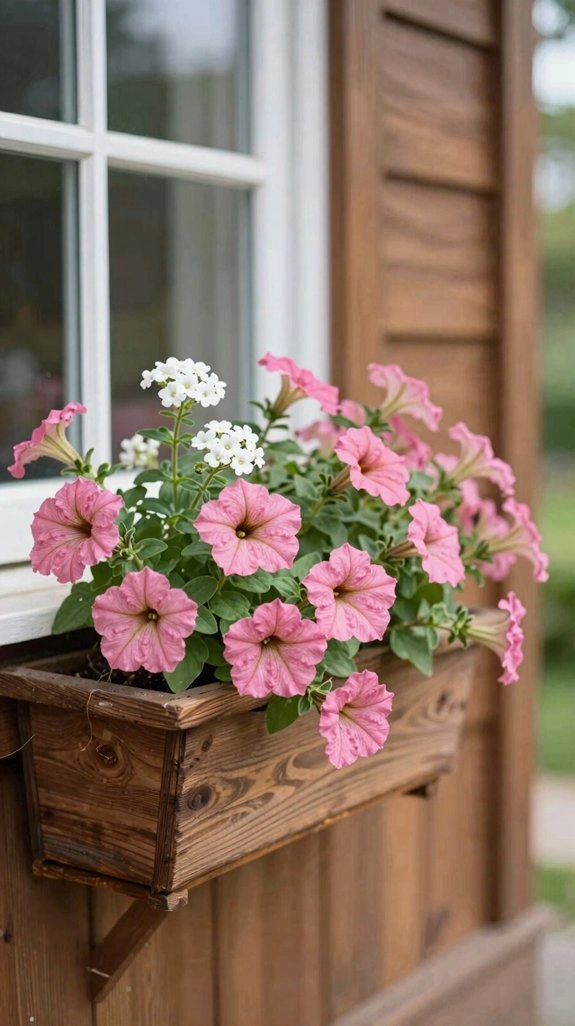
If you want your railing window box to really pop, start by mixing heights and textures so it looks full from the street and up close! Add seasonal texture, use draping spillers, and tuck in a thriller, a mid-height plant, and a trailing vine for that “wow, you belong here” feel.
Try purple fountain grass, croton, and sweet potato vine, or swap in pansies, nasturtium, and lobelia, then trade pansies for blue angelonia later.
Keep plants spaced for growth, and water often, since boxes dry fast.
If your railing is exposed, let the spillers drape, then anchor everything with a structural plant—easy, lush, done!
Match Your Window Box to Exterior Colors
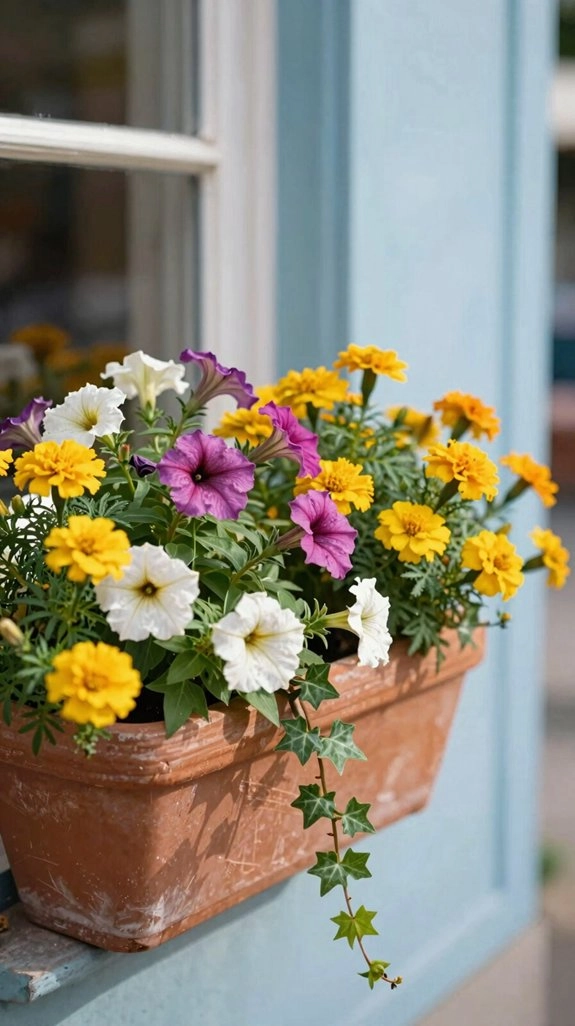
Next, let your window box play nice with your home’s paint and trim, and the whole front of the house starts looking like it got a little style upgrade overnight!
You’ll feel right at home when the colors echo your house instead of fighting it.
- Pick blooms in the same family as your exterior, like yellow flowers on a yellow house or white caladiums with white frames.
- For a sunny-and-bright vibe, repeat shutter colors with petunias or pink ruffles.
- Keep a swap plan for how to make certain blooms and how to refresh seasonally, so your palette stays friendly year-round!
Design a Cottage Garden Window Box
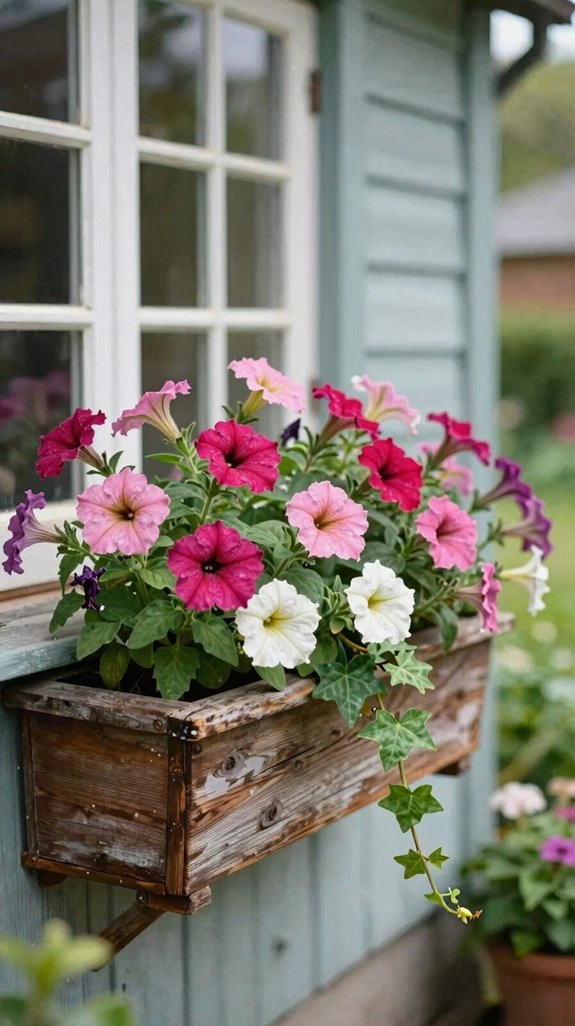
When you want that charming, overflowing cottage-garden look, start with a little drama in the center and let everything else tumble around it!
Use sweet potato vine ‘Blackie’ as your dark thriller, then tuck in petunias, wishbone flower, verbena, and licorice plant so the box feels like a friendly flower crowd.
Keep plants snug, but not cramped, and refresh potting soil before planting.
Put the box in sun, loosen root balls, and let stems spill naturally.
Deadhead for blooms, and you’ll get a fuller, softer display that looks like an old garden, minus the weeds and gossip!
Grow an Edible Window Box Mix
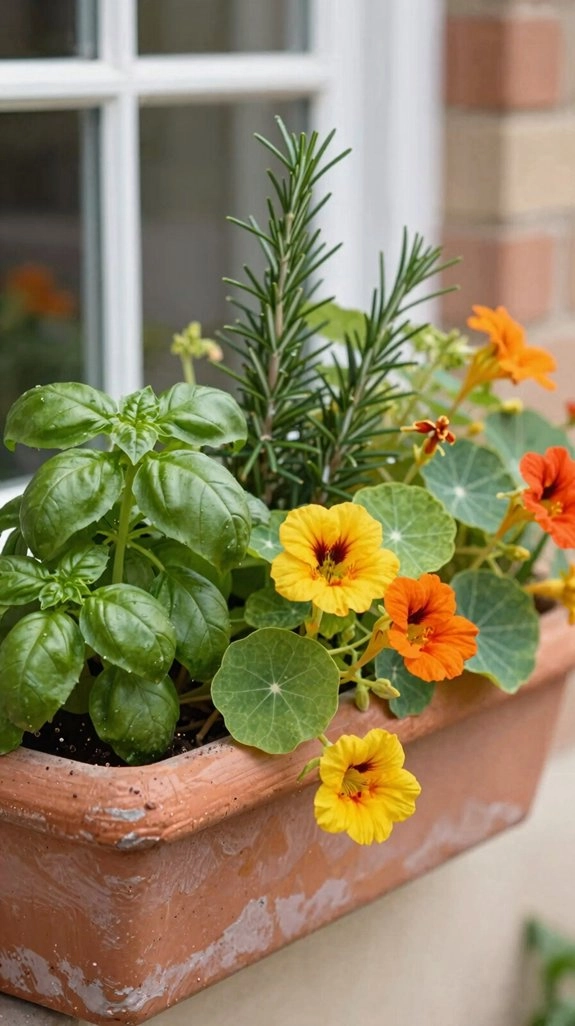
An edible window box is a tasty little win, and you can mix herbs and flowers together for a sunny spot that looks pretty and works hard!
Start with lavender cotton, flat-leaf parsley, and chives, then add thyme to spill over the edge, and you’ll have easy snips for cooking right outside your window.
For a fun surprise, tuck in Johnny-jump-ups, nasturtiums, or even pansies and scented geraniums, so your box gives you color, fragrance, and fresh bites all season long.
Edibles For Window Boxes
If you want your window box to do more than just look pretty, edible plants are a fun way to make it pull double duty!
- Start with parsley, chives, lavender, and thyme for easy care and snip-and-grow fun.
- Add Johnny-jump-ups or nasturtiums for edible bloom pairings that brighten meals and smiles.
- Try strawberries with bell pepper seedlings for a tasty surprise that feels a little elegant.
Put your box in sun, water it well, and snip often for fresh growth. Herb harvesting tips? Pick small bits, not big haircuts, so your plants keep cheering you on!
Herbs And Flowers Together
Because a window box can be both pretty and useful, mixing herbs with flowers is a smart little win!
Start with a sunny, well-draining box and build a thriller–filler–spiller mix: lavender for height, flat-leaf parsley and chives for quick fullness, and thyme to tumble over the edge.
Then tuck in johnny-jump-up and nasturtium for pollinator friendly blooms that you can also eat.
These edible herb pairings look cheerful, smell amazing, and feel like a tiny neighborhood party at your kitchen window.
Water often in heat, feed every 2–3 weeks, and deadhead spent blooms for steady color.
Easy Harvesting Ideas
Want an edible window box that’s as handy as it’s pretty? Try this easy mix near your kitchen, and you’ll snip fresh flavor in no time!
- Build it smart: Use a sunny box with drainage holes, a little stone layer, and quality potting mix. Add lavender, parsley, chives, and trailing thyme for a tidy thriller-filler-spiller look.
- Add the fun stuff: Toss in Johnny-jump-up and nasturtium, so you can grab blooms for salads and smiles.
- Keep it going: Harvest often, use succession picking, deadhead spent flowers, and feed every 2–3 weeks to stretch the bloom cycle.
Fill a Fragrant Herb Window Box
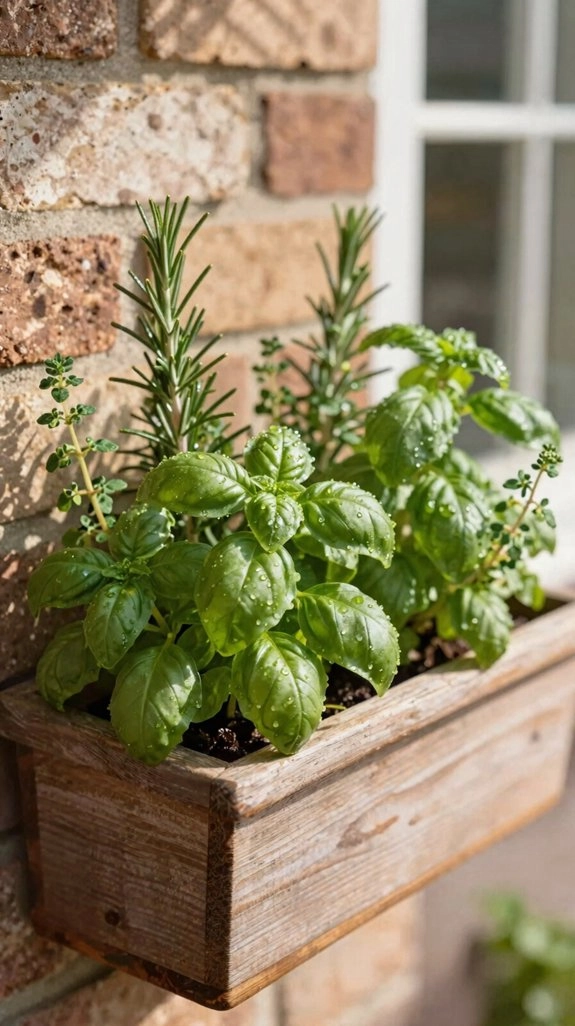
A sunny kitchen window box can smell amazing and still look neat, especially when you turn it into a little herb garden that does double duty!
Start with upright lavender, flat-leaf parsley, and chives for a tidy, green base that feels welcoming. Add trailing thyme to soften the edge, then tuck in spearmint and variegated lemon thyme for a fresh, lively scent.
Keep it simple: use basic potting mix, bright sun, and a few snips now and then. Pruning herbs stays easy, and smart harvesting tips help you keep plants full.
Finish with Johnny-jump-ups for cheer, color, and pollinators.
Combine Textures for a Richer Look
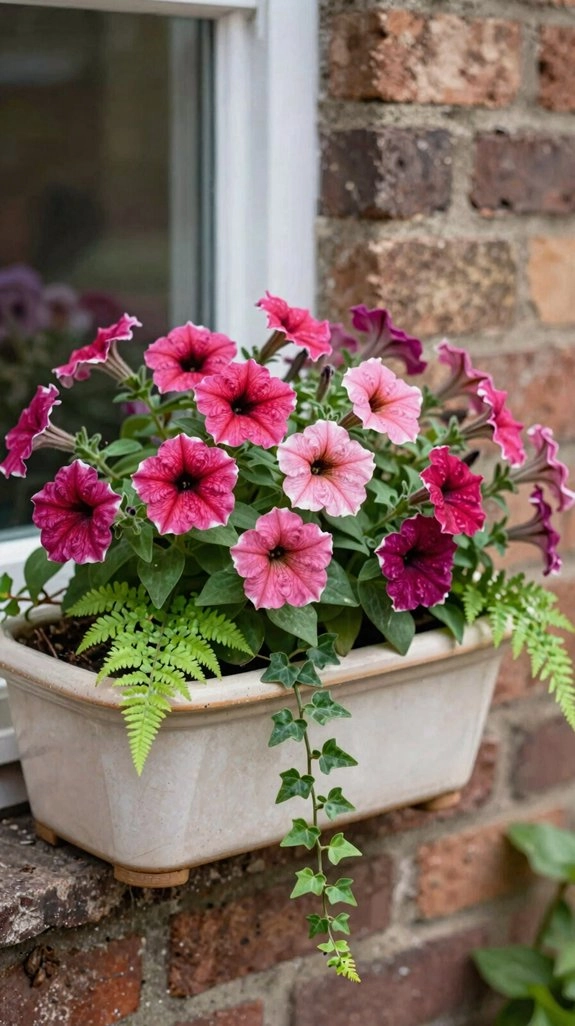
Mixing textures is where a window box really starts to show off! You’ll feel right at home when you build contrast with soft, chunky, and spiky plants. Try this:
- Soft + bold: Pair silvery plectranthus with begonia flowers for instant charm and easy care.
- Tall + trailing: Use coleus with sweet potato vine for smart texture height pairing and a fuller look.
- Fine + big: Add Spanish moss or creeping ivy beside copperleaf, then tuck in a repeating leaf rhythm with striped vine leaves.
Aim for three textures, and your box’ll look layered, lively, and wonderfully inviting!
Plan for a Long Blooming Season
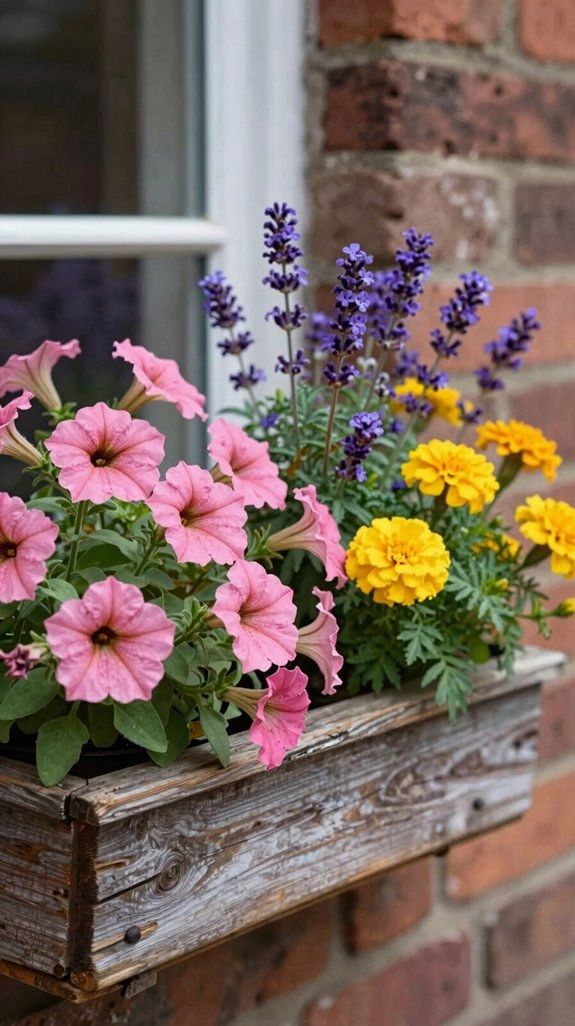
To keep your window box blooming for months instead of just a quick spring fling, start by matching plants to your light level, because happy plants are nonstop bloom machines!
In full sun, pick petunias, geraniums, zinnias, and lavender, then tuck them into a thriller–filler–spiller mix for steady color.
Refresh the potting mix, loosen roots, and your plants will settle in fast.
Keep water coming, especially in heat, and stick to a deadheading schedule so old blooms don’t hog the spotlight.
For extra wow, try succession planting with an all-purpose liquid fertilizer every 2–3 weeks.
Wow, that’s a long show!
Avoid Common Window Box Mistakes
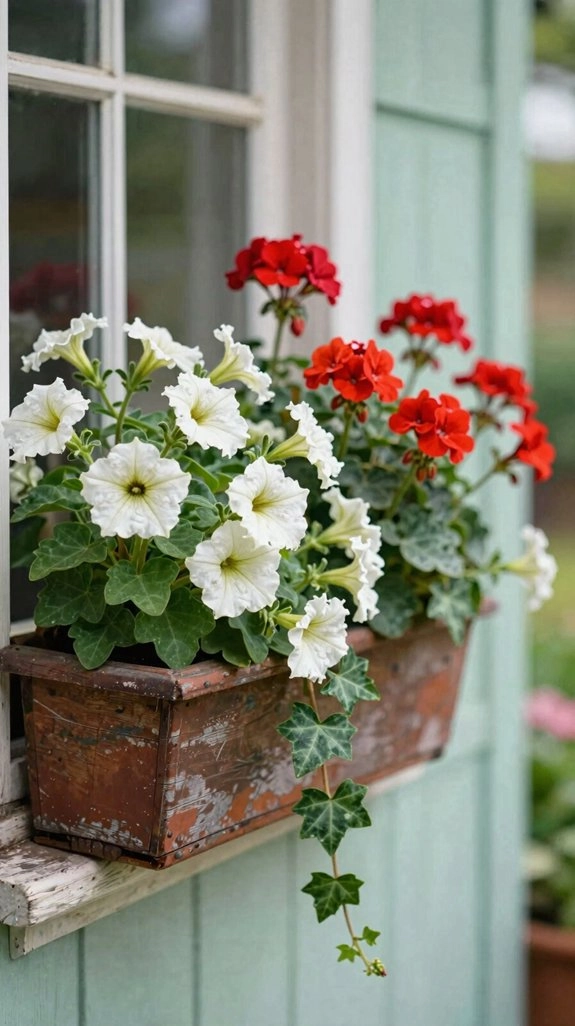
Steer clear of the usual window box blunders, and your little garden will look rejuvenating much longer!
- Fix drainage issues by using boxes with holes and a small stone layer, so water doesn’t sit there like it owns the place.
- Avoid overcrowding: give each plant elbow room, or you’ll squeeze out airflow and end up with thin midseason growth.
- Prevent root rot by loosening pot-bound roots and rejuvenating the mix, then water and feed steadily.
A little care keeps your crew thriving, and honestly, it feels pretty great to belong to the “my window box looks amazing” club!
Choose Plants That Suit Your Conditions
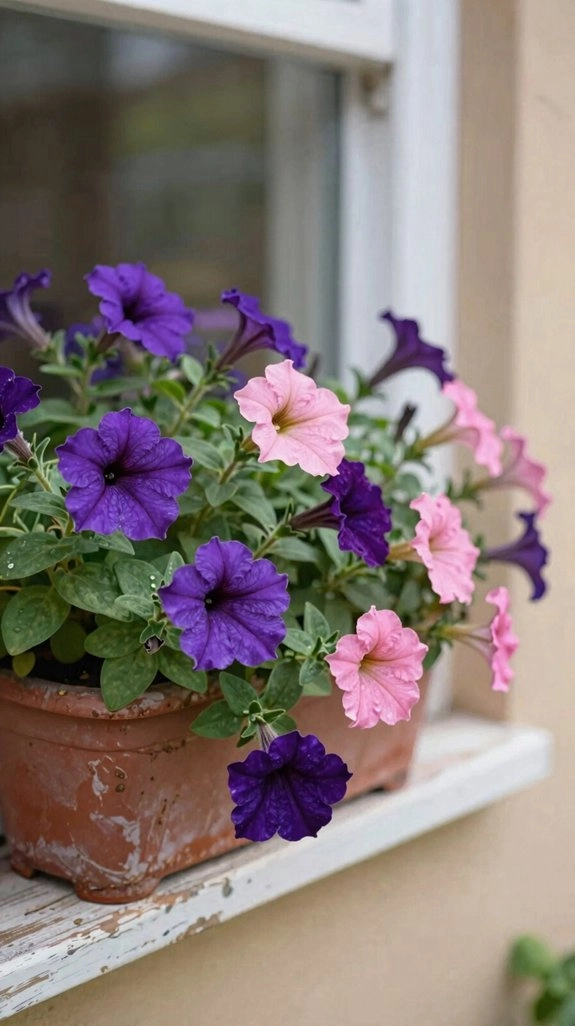
Now that your window box has good drainage and isn’t packed like a rush-hour subway, it’s time to match the plants to the spot you’ve got. Match container lighting first: full sun boxes love zinnias, petunias, lavender, and geraniums, while part shade suits salvia and many herbs.
Next, check drainage needs and refresh the mix with quality potting soil, because soggy roots ruin the party fast! In sunny spots, select heat tolerant bloomers like lantana and sweet potato vine. In shade, coleus, impatiens, begonias, and fuchsias bring the color.
Pick a mix of thrillers, fillers, and spillers, and your neighbors may ask for your secret!