Shade Garden Ideas That Stay Colorful From Spring to Fall
- Shade Garden Ideas That Stay Colorful From Spring to Fall
- Key Takeaways
- Understanding Different Types of Shade
- Choosing the Right Shade Plants
- Flowering Plants
- Evergreen Plants
- Layering Plants for Year-Round Interest
- Using Colorful Foliage
- Adding Decorative Containers
- Creating Woodland-Style Gardens
- Low-Maintenance Shade Garden Tips
Track your shade first—deep, medium, or partial—then layer hellebores, bleeding hearts, and brunnera for spring sparkle. Add hostas, coral bells, ferns, and Japanese forest grass for colorful leaves that won’t quit. Tuck impatiens or coleus into bare spots after frost, and use a 14-inch pot for caladium or torenia. Mulch 2–3 inches and water deeply in the morning. The best surprise? Foliage can outshine flowers—keep going for easy design tricks.
Key Takeaways
- Track seasonal light to distinguish dense, deep, medium, or partial shade before choosing plants.
- Start spring with hellebores, bleeding hearts, lungwort, and brunnera beneath deciduous branches.
- Maintain summer color with impatiens, coleus, caladium, goatsbeard, and coral bells.
- Build lasting structure with hostas, ferns, foamflower, Japanese forest grass, and evergreen groundcovers.
- Repeat chartreuse, burgundy, and blue foliage colors, then mulch and deep-water for low-maintenance beds.
Understanding Different Types of Shade
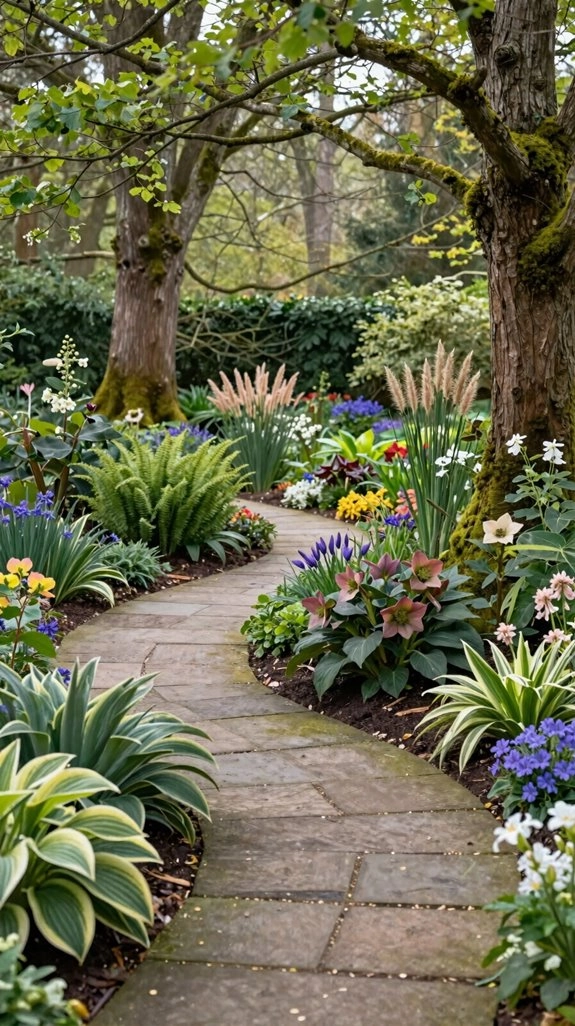
Shade isn’t just shade—your garden may have anything from a cool, dim corner beneath pine branches to a bright north-side bed that never gets much direct sun. You’re not alone if it feels confusing!
Dense shade gets under three hours of sun, often beneath low pine or hemlock limbs. Deep shade under dogwoods or redbuds looks darker, while medium shade offers brighter indirect “skyshine.”
Partial shade gets two to four hours of gentler sun, usually before afternoon heat arrives. Track Microclimate patterns and seasonal light shifts for a few days—yes, your yard has plot twists!
If leaves fry, move plants; shade-tolerant doesn’t always mean shade-thriving.
Choosing the Right Shade Plants
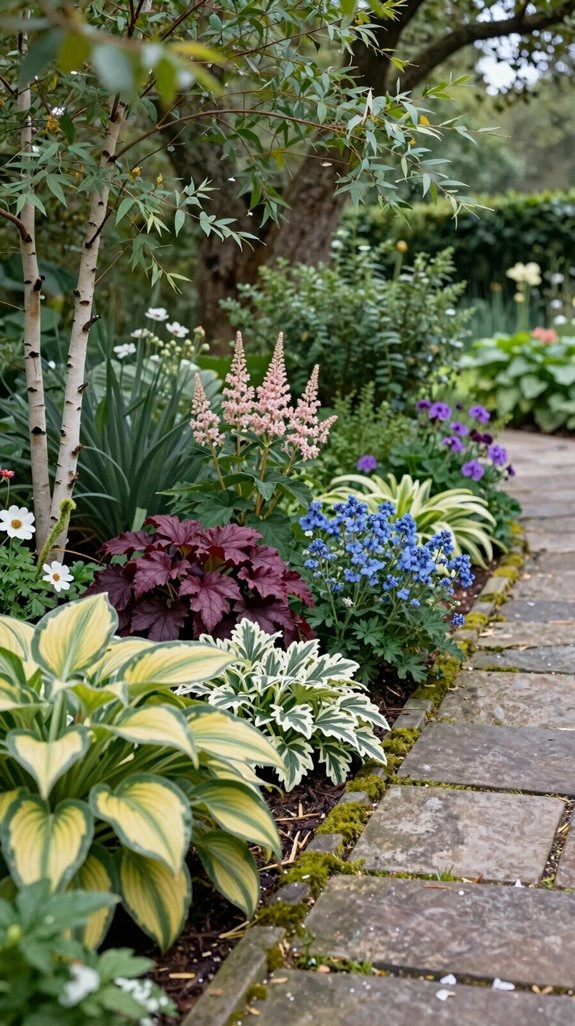
Once you’ve checked your light level, choose flowering plants that can truly thrive there, like brunnera for bright spring blooms or impatiens for summer color—easy win!
Add evergreen or long-lasting foliage anchors, such as hostas and colorful coral bells, so your bed still looks lively when flowers take a break.
The real magic comes from mixing blooms with bold leaves, because shade gardens shouldn’t have to look like a green waiting room!
Flowering Plants
Flowering plants can turn a dim garden corner into a colorful little retreat—no blazing sun required! Start your pollinator friendly planting with lungwort, whose early blooms and silver-speckled leaves brighten moist shade.
For late spring, tuck in bleeding hearts, then add goatsbeard for creamy summer plumes. This seasonal succession keeps your shared garden space feeling welcoming, not sleepy!
Need easy, budget-friendly color? Grow trailing torenia as an annual in containers or borders; it flowers all summer with almost showy confidence.
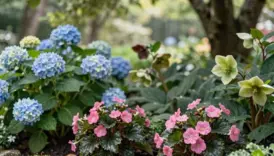
Finally, coral bells ‘Wild Rose’ brings rosy-purple leaves and pink midsummer flowers to filtered shade. You’ll create a layered, neighbor-worthy display from spring into fall!
Evergreen Plants
Evergreen plants give a shady bed its backbone, so it still looks cared for when blooms take a break—no sad, bare patches allowed!
- Tuck pachysandra or Vinca minor beneath trees for evergreen cover; match each to your soil moisture.
- Add foamflower’s deep green, burgundy-centered leaves for cozy woodland charm, especially beside a native companion.
- Choose semi-evergreen ‘Wild Rose’ coral bells for rosy-purple mounds and midsummer blooms in part shade.
- For the wow factor, plant hosta ‘Waterslide’: its rippled powder-blue leaves make your shared garden space feel polished, even without flowers.
Japanese forest grass adds soft texture, too—easy, welcoming, and never boring!
Layering Plants for Year-Round Interest
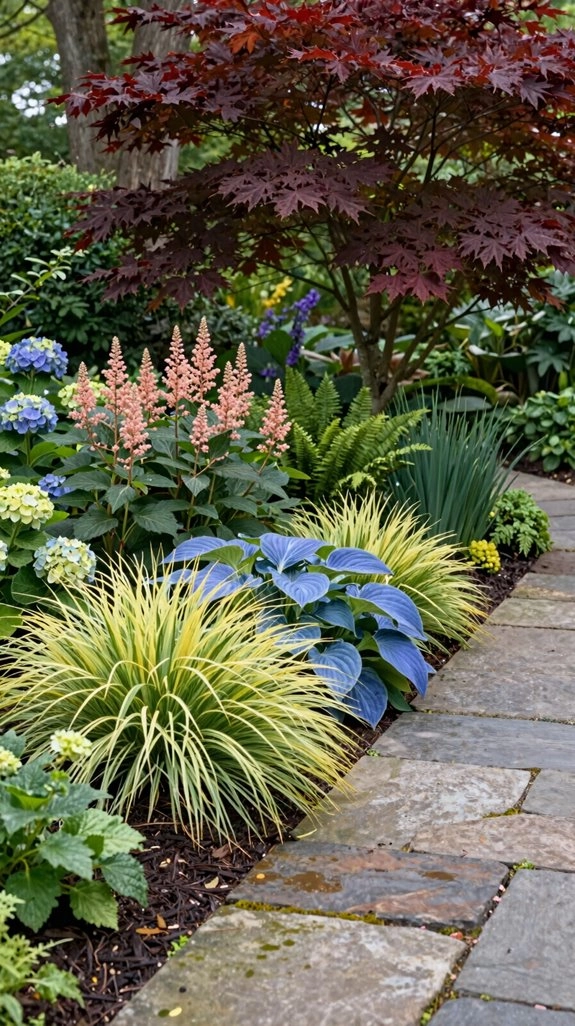
Layering turns a shady bed into a living scene that changes all year, not a flat patch of green that fades into the background. Start with canopy trees, add a Japanese maple, shrubs, perennials, and groundcovers—your garden crew has jobs at every height!
Try Microclimate layering: tuck hellebores, bleeding hearts, and brunnera beneath bare branches for spring surprises. Then let hostas, heuchera, foamflower, ferns, and Japanese forest grass carry the show with contrasting shapes.
For seasonal gap filling, pop in coleus, caladium, or impatiens after frost. Repeat a few favorite tones throughout, and the bed will feel connected, welcoming, and wonderfully full.
Using Colorful Foliage
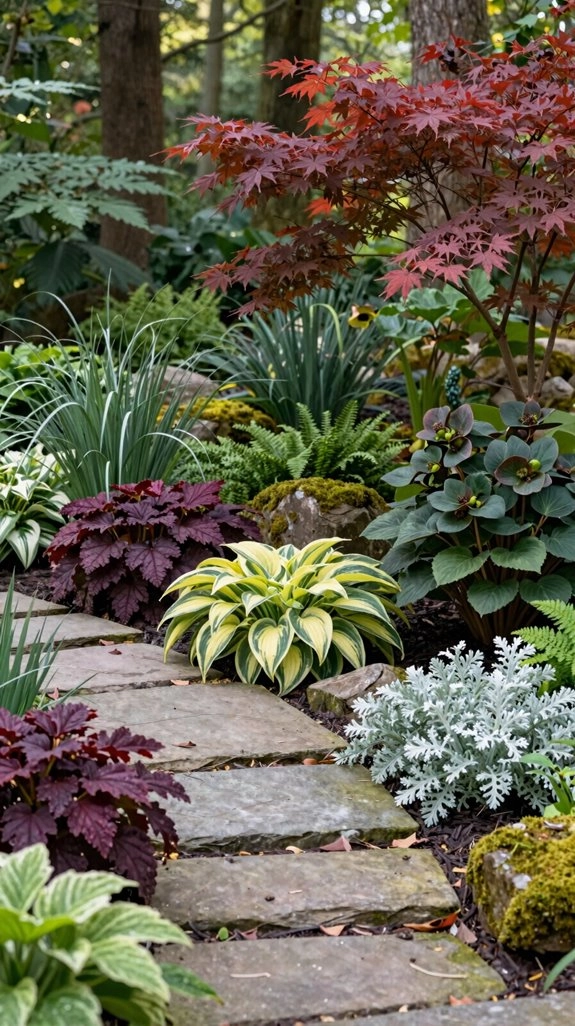
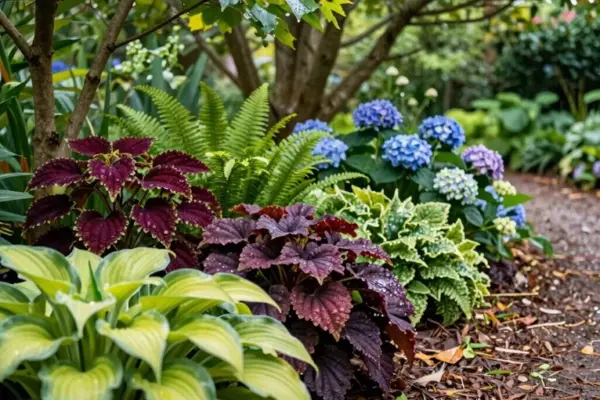
Turn up the color with foliage, and your shade garden can look lively even when hardly anything is blooming! Create color contrast with deep red and chartreuse, then repeat those shades for foliage repetition that makes your bed feel pulled together.
- Plant Heuchera ‘Wild Rose’ for rosy-purple glow.
- Tuck in rippled blue Hosta ‘Waterslide’—a real shade superstar!
- Soften edges with cascading Japanese forest grass.
- Add chartreuse coleus and speckled polka dot plants for instant pop.
You’ll create a welcoming mix everyone notices. Best part? These easygoing plants keep the party going, even when flowers take a nap.
Adding Decorative Containers
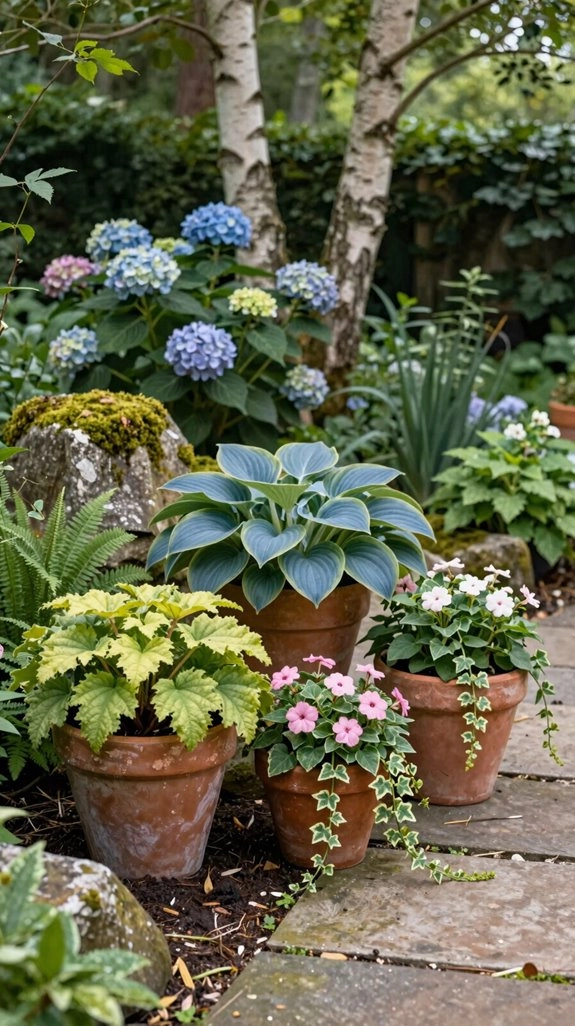
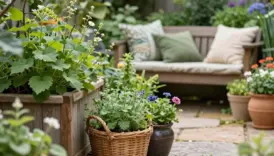
Decorative containers give your shade garden a bright, movable burst of color—no major digging required! For easy decorative container styling, choose a 14-inch pot and fill it with compact torenia, coleus, or caladium. You’ll create a welcoming little display that feels right at home with the rest of your garden!
Start seasonal color layering with a mulch-topped pot, then check moisture with your finger; shade plants usually drink less than sun lovers.
Add a tall golden pineapple sage, flowering wishbone flower, and a surprise texture mix of polka dot plant, chartreuse heucherella, and blue hosta.
Suddenly, your shady corner has serious sparkle—without acting elaborate!
Creating Woodland-Style Gardens
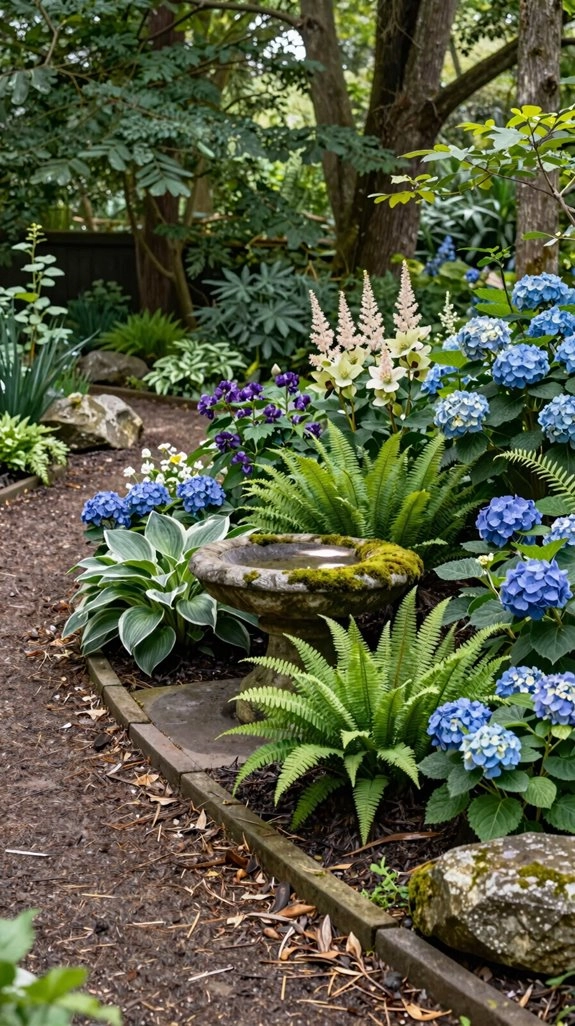
When you build a woodland-style garden in layers, even a plain shady yard can feel like a peaceful forest retreat—minus the hiking boots!
- Start with mature trees, then tuck Japanese maples beneath them for a cozy understory.
- Add shrubs and shade stars like hosta, coral bells, foamflower, and brunnera in rich woodland soil.
- Fill edges with Japanese forest grass and groundcovers, creating a shared, tucked-in look.
- Watch seasonal light, placing sensitive plants away from moving bright spots.
For the big finish, mix bold hosta leaves with aruncus ‘Chantilly Lace’ or astilbe.
Your garden gains color, texture, and a welcoming woodland community!
Low-Maintenance Shade Garden Tips
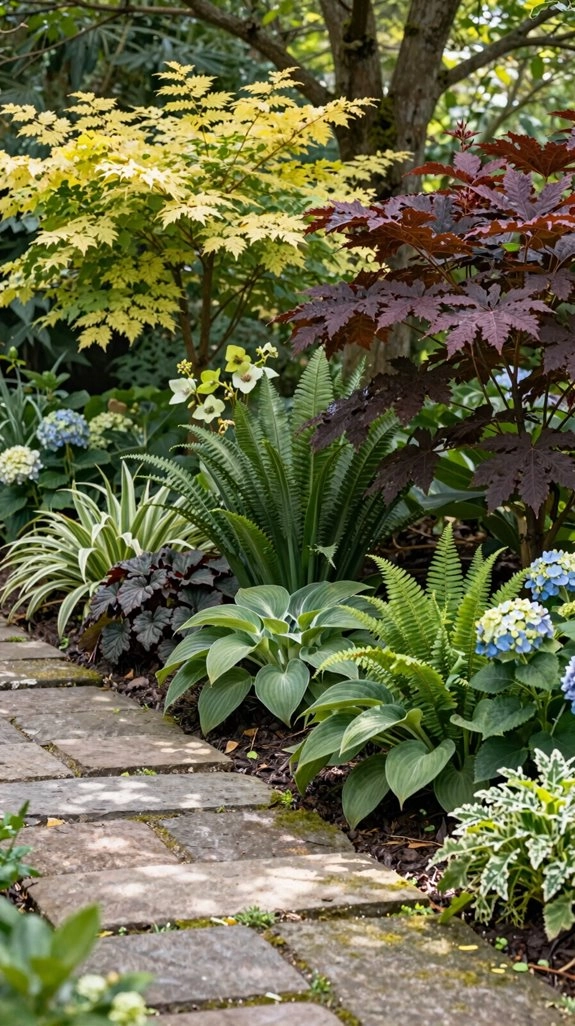
A low-maintenance shade garden starts with a little detective work: watch your yard for a day or two, then note where direct sun lands and how long it stays.
Check soil readiness, then match shade-loving plants to under two hours of sun and shade-tolerant choices to partial shade.
Layer trees, shrubs, hostas, coral bells, and groundcovers for a look that feels like it belongs together.
For easy weed control, spread shredded leaves or bark at a 2–3-inch mulching depth, keeping mulch away from stems.
Set a watering schedule of one or two deep morning soakings weekly.
Bare spot? Tuck in coleus or impatiens—instant color, no drama!