Australian Native Garden: A Beautiful, Low-Maintenance Landscape
- Australian Native Garden: A Beautiful, Low-Maintenance Landscape
- Key Takeaways
- Benefits of Native Landscaping
- Choosing Plants for Your Climate
- Layering Trees, Shrubs, and Ground Covers
- Creating Habitat for Wildlife
- Designing with Natural Textures
- Water-Wise Planting Strategies
- Seasonal Color and Interest
- Mulch and Soil Essentials
- Easy-Care Maintenance Tips
- Common Design Mistakes to Avoid
An Australian native garden gives you a gorgeous, low-maintenance space that works with your local climate, not against it—nice, right! Pick plants for your sun, soil, and rainfall, then layer trees, shrubs, and ground covers for easy style and fewer weeds. Add thick mulch, drip watering, and a few nectar-rich blooms like grevillea or paper daisies, and you’ll get colour, wildlife, and less fuss. Stick around, and you’ll see how to make it even easier.
Key Takeaways
- Australian native plants suit local climates, reducing watering, spraying, and general maintenance once established.
- Match plants to sun, soil, drainage, and microclimate for healthier growth and fewer failures.
- Layer trees, shrubs, and ground covers to create a natural look, suppress weeds, and allow mature growth.
- Dense native planting can provide shelter and nectar for wildlife while supporting year-round biodiversity.
- Use deep watering, drip irrigation, and 5–8 cm mulch to conserve moisture and keep upkeep simple.
Benefits of Native Landscaping
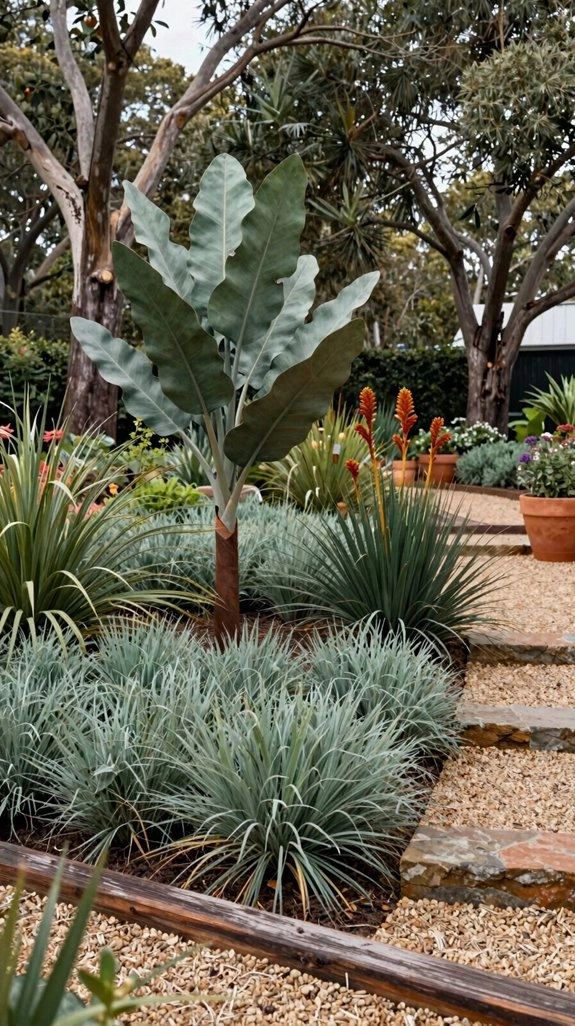
When you choose Australian native plants, you’re working with plants that already know the local weather, soil, and seasonal mood swings—pretty handy, right?
With smart Soil preparation, you set them up for easier growing, then enjoy less watering, fewer sprays, and less fuss once they settle in.
That means more time for you, less time wrestling the garden hose, and no need to join the “water every day” club!
Seasonal upkeep stays simple, too.
You’ll spot birds, bees, and butterflies showing up, while your garden keeps changing with colour and texture.
Best part?
Native beds can look lively, not bland, so you feel right at home.
Choosing Plants for Your Climate
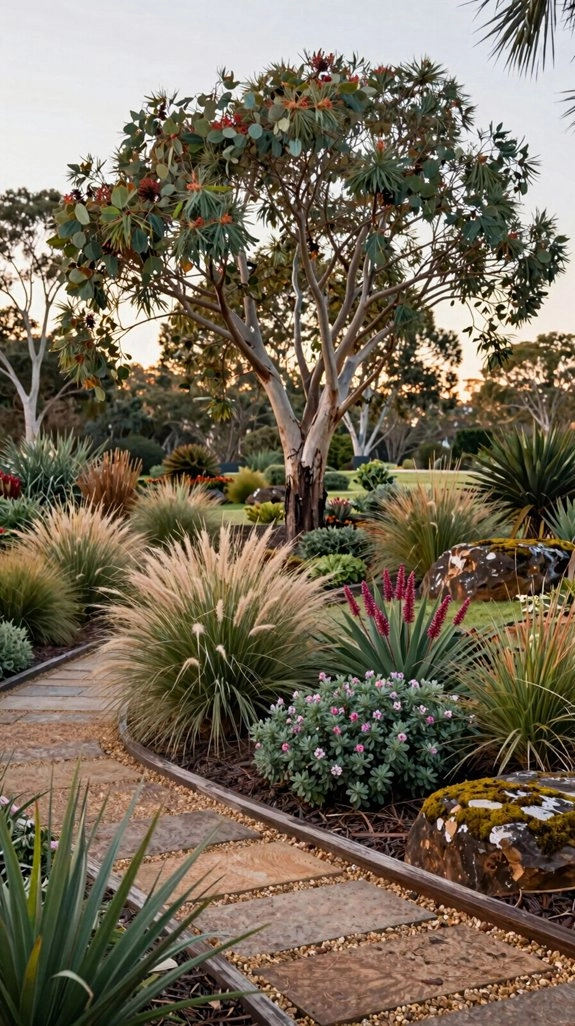
Picking the right Aussie natives starts with where you live, because plants that love the tropical north won’t always be thrilled in the cool south, and vice versa! You’ll feel right at home once you match your garden to local conditions.
- Start with microclimate matching, then pick natives that suit your rainfall and temperature.
- Check Sun exposure through the day; kangaroo paw and grevillea love at least half a day of sun.
- Test Soil drainage with a 30cm hole and water, because soggy clay can spell trouble.
- Compare Shade tolerance, pH, and nutrients, keeping phosphorus low for happy roots and easy success!
Layering Trees, Shrubs, and Ground Covers
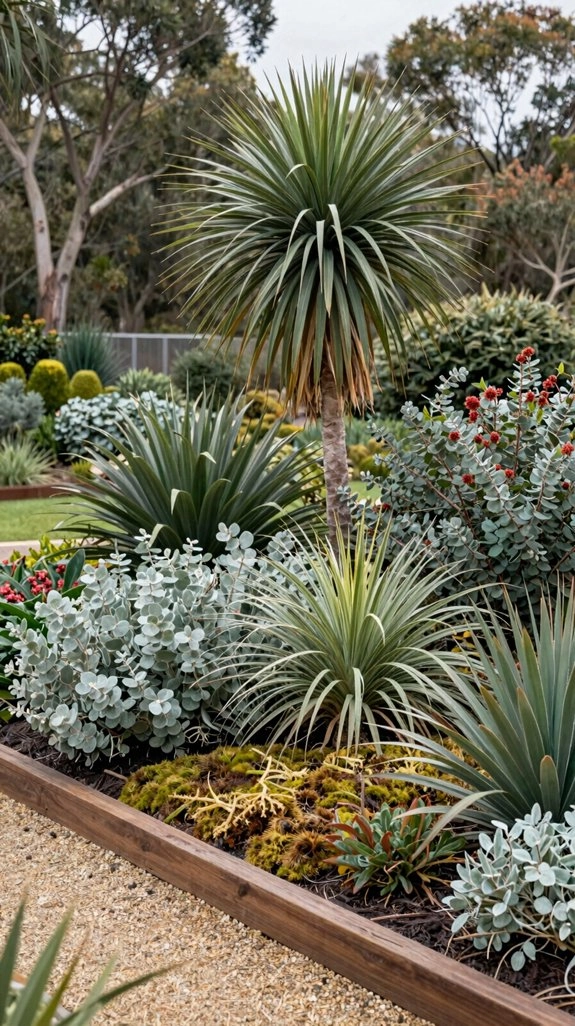
A well-layered native garden feels polished fast, and it’s easier to build than you might think! Start with tall trees at the back, then tuck mid-height shrubs in the middle and low ground covers up front. Nice and neat!
Choose easy fillers like native violets or woolly bush-style plants; they spread quickly, smother weeds, and save you time while the garden settles in. Keep an eye on sun exposure and drainage, especially in clay, so roots don’t sit soggy.
Here’s the smart bit: do your spacing planning now, because mature plants need room, and you’ll prune less later. That’s a win!
Creating Habitat for Wildlife
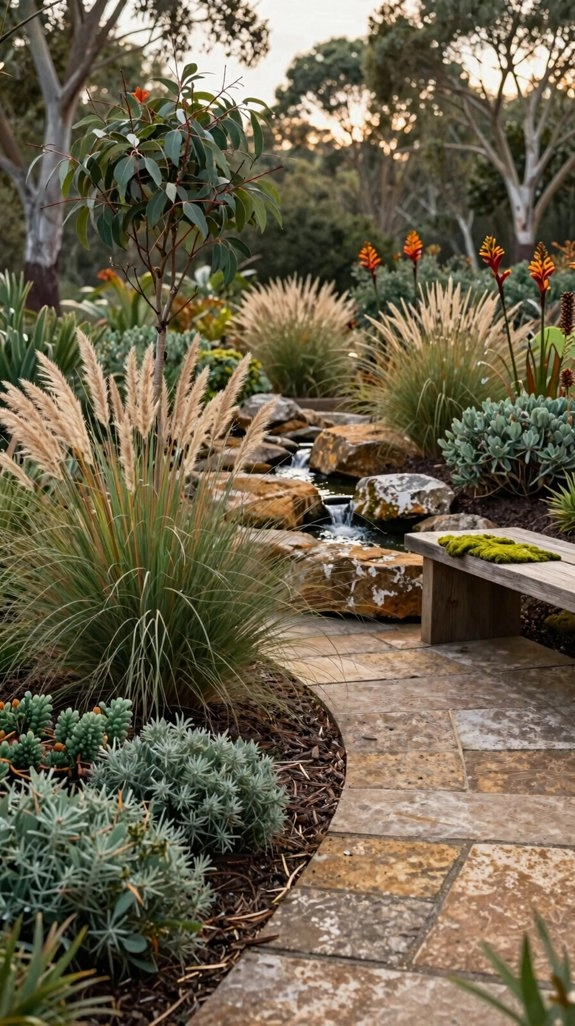
Even a simple native garden can turn into a tiny wildlife hotel, and that’s the fun part! You’ll help birds, bees, and little lizards feel at home.
- Plant dense shrubs for wildlife shelter; they’re low-cost and easy to grow.
- Mix flower shapes and bloom times, so you keep nectar sources coming all year.
- Add paper daisies for bright, nectar-rich blooms that native bees can’t resist.
- Use overplanted, then thinned natives for snug nesting cover and more biodiversity.
Because local plants suit your conditions, you’ll need less fertiliser and fewer sprays. Nice, right? Your garden can feed, hide, and welcome a whole buzzing crew!
Designing with Natural Textures
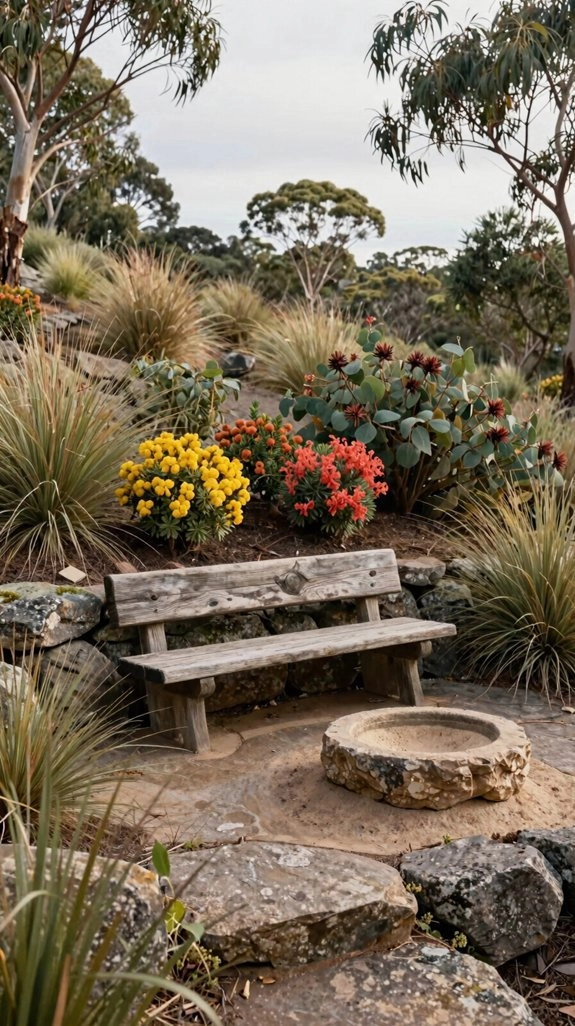
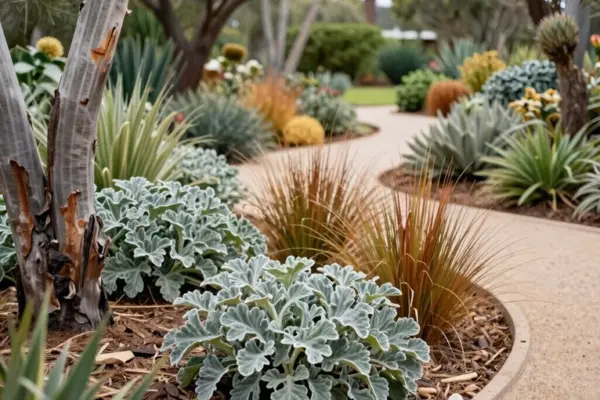
Once your native plants are welcoming birds, bees, and little lizards, you can have even more fun by shaping how the garden looks and feels! Mix fine, strappy grasses and Lomandra with rounded shrubs for easy texture contrast, and your space will feel full, friendly, and a bit cottage-like.
Try alternating grey-green leaves with deeper green ones, then tuck upright forms beside dense mounds. That simple move gives you foliage rhythm without extra pruning—nice, right?
For a little surprise, add gum-leaf plants for a soft rustle, or Pandorea jasminoides for sweet scent.
Finish by placing spiky bits near smooth masses, and voilà, your paths practically guide themselves!
Water-Wise Planting Strategies
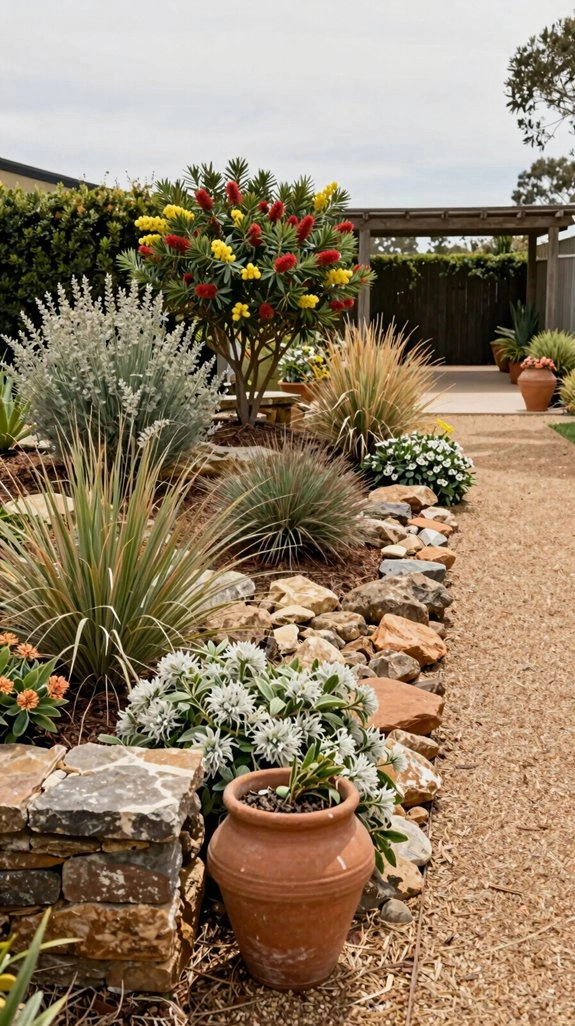
Because Australian natives are built for our wild, uneven rainfall, you can lean into plants that don’t demand constant fussing. Choose species for your sun moisture needs, and give full-sun beds extra establishment watering at first.
- Pick tough locals, then water deeply, not often.
- Set up drip irrigation with a timer, so roots drink slowly and you waste less.
- Spread mulch thickly, using bark or leaf litter, to lock in moisture.
- Check soil drainage; if water sits, raise the bed. Plant densely, and let the canopy shade the soil—your crew will thank you!
Seasonal Color and Interest
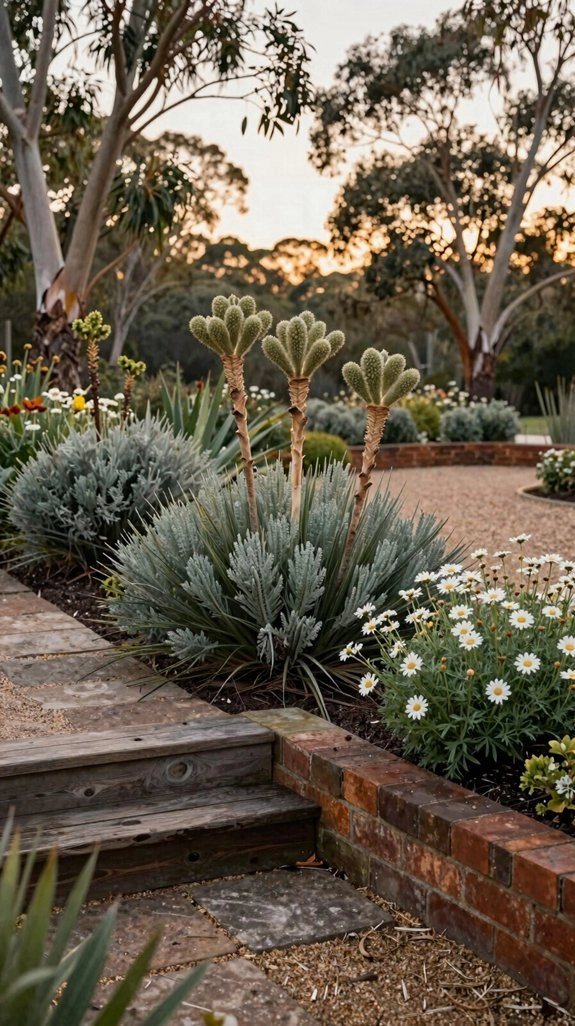
With the watering sorted, you can start having a lot more fun by planning for colour that keeps popping up through the year! Choose seasonal blooms like wattles for late winter and spring, then kangaroo paw and billy buttons to carry the show into summer.
For year round interest, mix in Grevillea and paper daisies, which can keep firing off flowers for ages, wow!
Add texture too, with Adenanthos, Lomandra, and strappy grasses, plus upright or weeping shapes.
Place taller plants at the back, smaller ones up front, and give many bloomers at least half-day sun so your garden keeps smiling.
Mulch and Soil Essentials
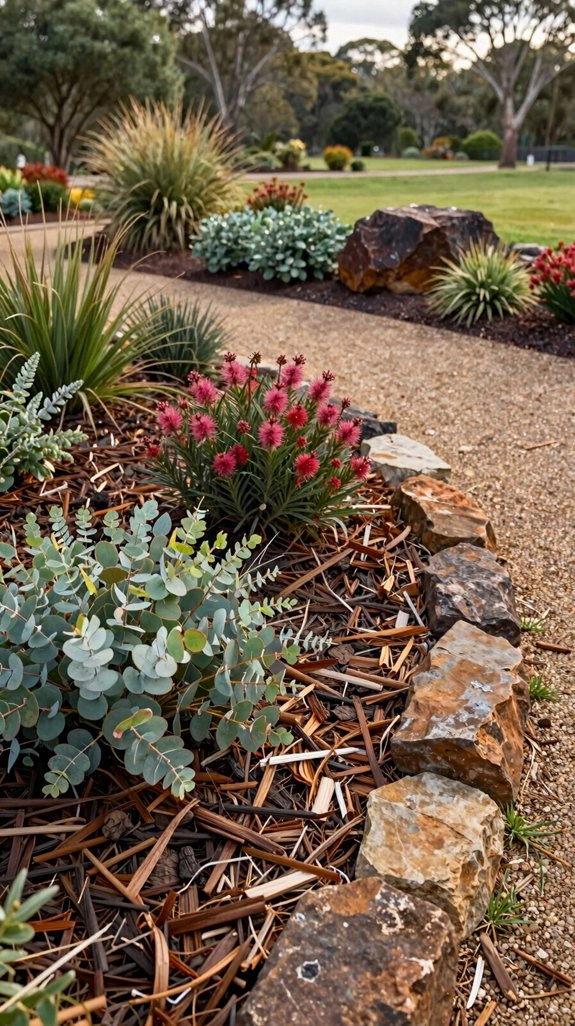
Under the mulch, your native garden gets a big helping hand! You’ll boost water retention, slow weeds, and keep roots cooler when summer turns fierce.
- Spread mulch 5–8 cm deep, but keep it off stems.
- Choose free-draining soil, because healthy natives hate soggy feet.
- If you’ve got heavy clay, raise beds or mix in drainage help before planting.
- Need feeding? Use low-phosphorus products only, so your soil health stays friendly for native plants.
It’s a simple setup, and it feels like your garden’s cheering you on, right from the ground up!
Easy-Care Maintenance Tips
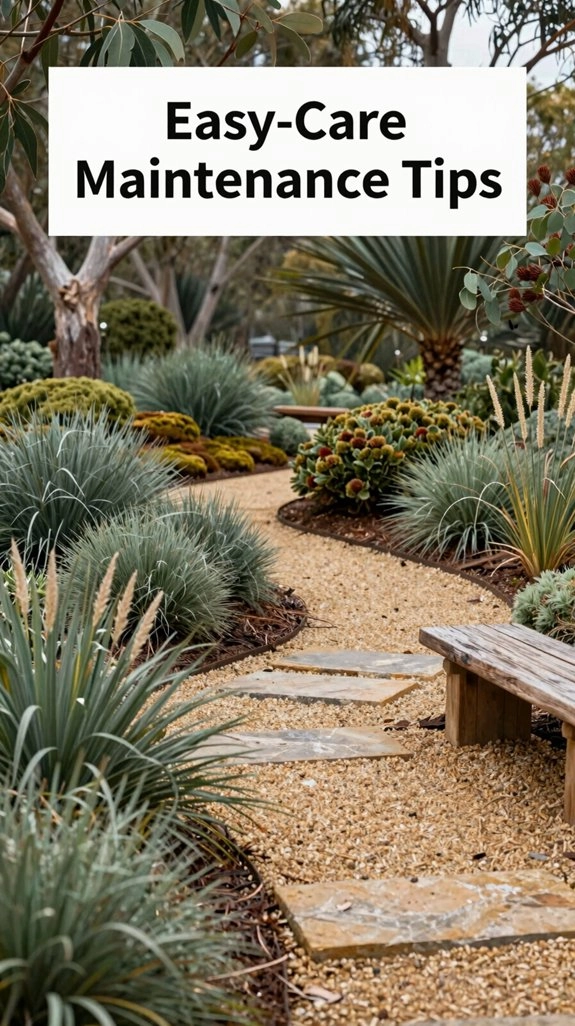
Once your natives are settled in, upkeep gets wonderfully low-key! Your low maintenance routine is simple: follow a watering schedule that soaks plants deeply but not often, and keep young plants evenly moist until roots grab hold, especially in sunny beds.
Mulch 5–8 cm deep, and you’ll save water, slow weeds, and help the soil improve like it’s been on a spa retreat.
For weed control, pull invaders early before they crash the party.
Need a pruning guide? Trim lightly after flowering, and only shape eucalypts or grevilleas when they ask for it.
If you feed, choose low-phosphorus options—your natives will thank you!
Common Design Mistakes to Avoid
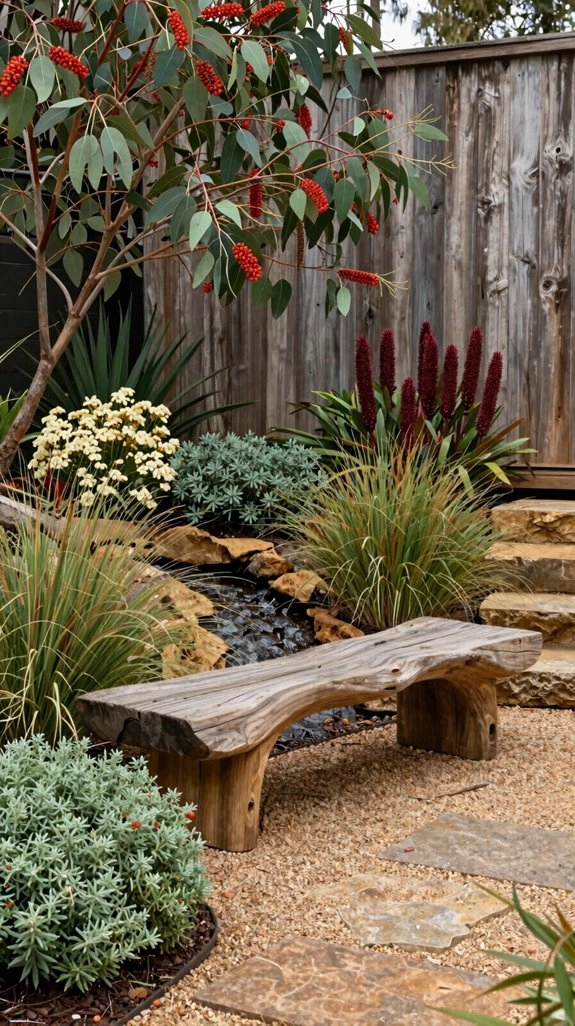
Even the prettiest Australian native garden can go a bit sideways if you plant by vibes alone, so start with the basics, not the Pinterest panic!
You’ll fit in faster when you dodge these common slips:
- Check Sun drainage first—most natives want half-day sun and free-flowing soil.
- Watch Overcrowding risks by sizing plants for mature spread, not cute nursery size.
- Respect phosphorus sensitivity; use low-phosphorus feed only if needed.
- Get Planting density right: don’t leave gaps, but don’t jam roots either.
Add soft edges around paths, and your garden’ll feel lush, friendly, and truly yours!