Garden Pest Identification Every Home Gardener Should Know
- Garden Pest Identification Every Home Gardener Should Know
- Key Takeaways
- Why Pest Identification Matters
- Common Garden Pest Categories
- Chewing Insects
- Sap-Sucking Insects
- Soil-Dwelling Pests
- How to Recognize Pest Damage
- Leaf Damage
- Stem Damage
- Root Damage
- Natural Pest Control Methods
- Physical Barriers
- Beneficial Insects
- Organic Treatments
- When to Take Action
- Preventing Future Pest Problems
Identify garden pests by matching clues: ragged holes and frass mean chewers like caterpillars or beetles, while curled, sticky leaves often signal aphids, whiteflies, or mites. Check leaf undersides for tiny insects, pale stippling, honeydew, and sooty mold—sneaky pests love hiding there! Handpick caterpillars, hose off aphids, and use row covers or stem collars early. Don’t spray first: about 97% of insects help or do no harm. Next, you’ll learn targeted fixes that protect your garden’s good guys.
Key Takeaways
- Identify pests by damage: ragged holes indicate chewers, while sticky leaves and sooty mold point to sap-sucking insects.
- Inspect leaf undersides for aphids, mites, thrips, whiteflies, mealybugs, scale, eggs, and pale stippling.
- Check stems and roots when plants wilt; cutworms, borers, root maggots, and rot can cause hidden damage.
- Look for frass, skeletonized leaves, chewed edges, or sudden wilting to distinguish caterpillars, beetles, and borers.
- Confirm the pest before treating, since most insects are beneficial or neutral and broad sprays can harm natural predators.
Why Pest Identification Matters
Before you grab a spray bottle and declare war on every bug in sight, take a closer look—accurate pest identification helps you choose the control that actually works!
Skip Garden pest myths with symptom pattern recognition: holes and frass suggest chewing, while sooty mold points to honeydew. A correct species lookup supports natural enemy mapping, so you don’t evict helpful garden teammates—about 97% of insects are beneficial or neutral!
That means targeted control selection, smarter treatment timing accuracy, and avoidance of overuse. Start gently, then escalate only when needed; that’s real IPM decision confidence.
Keep notes on what you saw and tried, and you’ll build a stronger, friendlier garden plan.
Common Garden Pest Categories
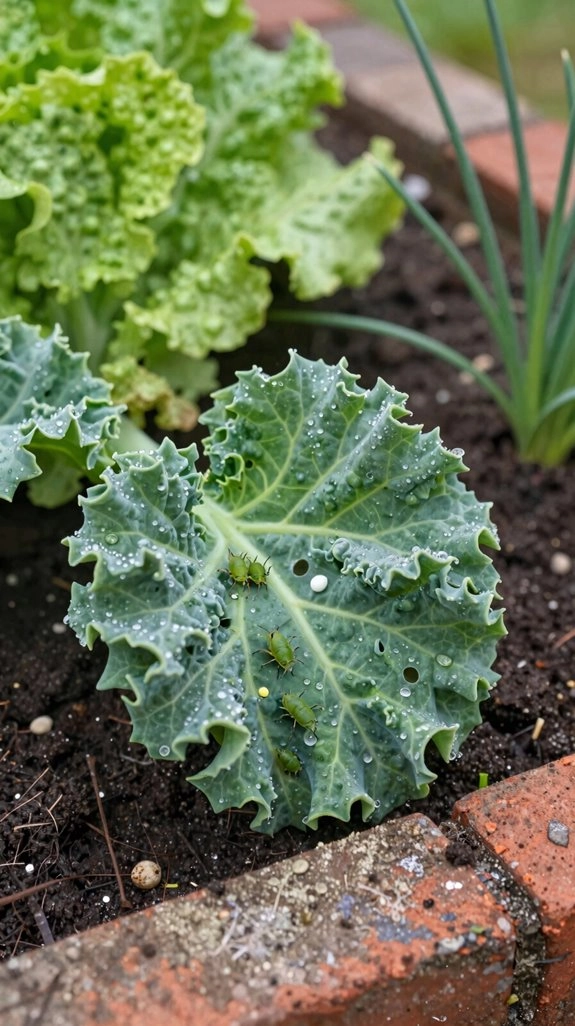
You’ll often spot chewing insects by their ragged holes, while sap-suckers leave curled, sticky, or faded leaves behind—sneaky little troublemakers!
Check beneath leaves, then watch for soil-dwelling pests such as cutworms and root maggots that damage plants from below.
Once you know which group you’re facing, you can choose a targeted fix without harming helpful bugs.
Chewing Insects
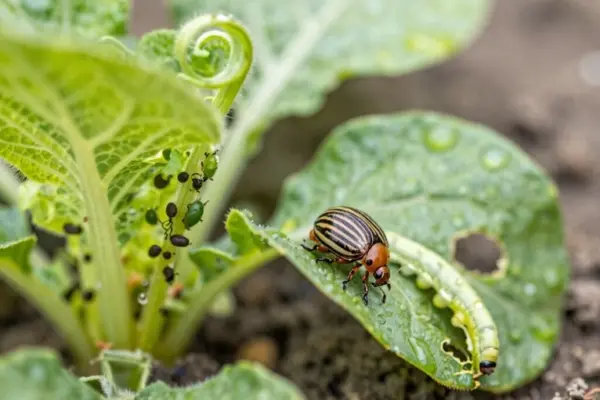
Chewing insects leave the garden’s loudest clues: round holes, ragged leaf edges, stripped “skeleton” leaves, and sometimes chewed stems or flower buds.
You’re not alone—every gardener spots these tiny buffet raids!
Check Seasonal timing, then inspect leaf undersides for egg laying signs, larvae, and crumbly frass.
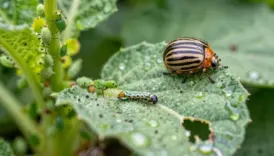
Cabbage worms and loopers often pepper kale and broccoli near the ribs, while hornworms can strip tomatoes and leave soccer-ball droppings below.
Colorado potato beetles chew potato leaves fast.
Start early: handpick pests into soapy water, use row covers, or apply Bt for caterpillars.
Choose the least harmful fix, so your garden’s helpful insects stay on your team!
Sap-Sucking Insects
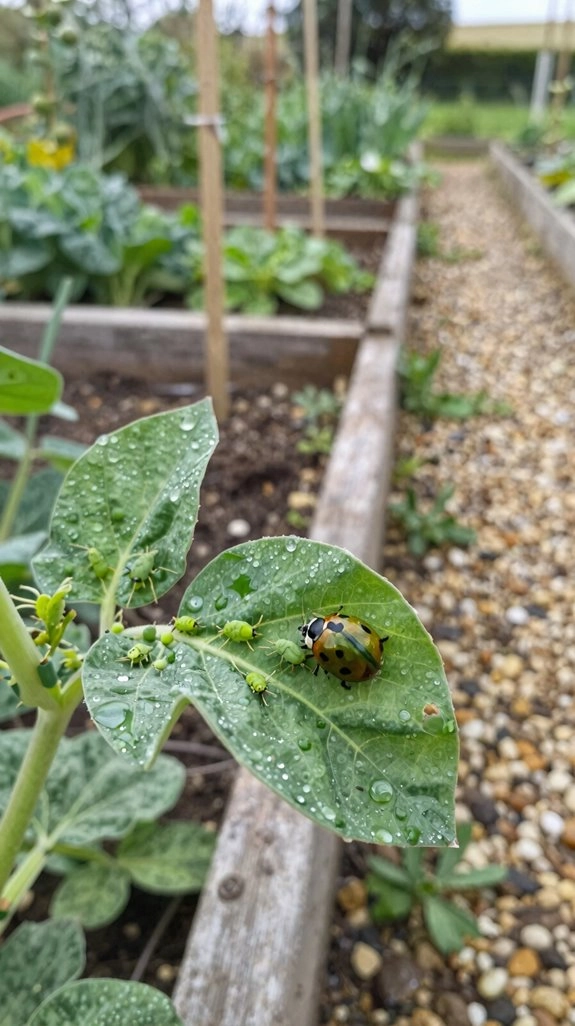
Sap-sucking insects may be tiny, but they can turn healthy leaves pale, curled, and sticky in a hurry! Early detection matters, so join fellow gardeners in checking leaf undersides for aphids, mites, thrips, whiteflies, mealybugs, or scale.
- You’ll spot stippling before leaves yellow.
- You’ll catch honeydew before sooty mold moves in.
- You can spray soft-bodied pests with water.
- You can use insecticidal soap or horticultural oil carefully.
- You’ll welcome beneficial predators, like ladybugs and lacewings!
Don’t reach for broad sprays—your garden helpers deserve better! If you’re unsure what’s causing damage, compare photos and choose targeted treatments. The right match saves plants, money, and plenty of gardening heartbreak!
Soil-Dwelling Pests
Some garden pests work underground, where they can nibble roots, tunnel through tubers, or cut off a seedling at the soil line before you even spot the culprit—sneaky little troublemakers!
Watch for Soil pest signals: wilt, collapse, or missing corn seeds.
Check roots for wireworms, root maggots, earwigs, fire ants, or curled cutworms.
Larval identification and pest lifecycle cues help you choose wisely, like our gardening community does.
Try a simple cutworm collar: wrap cardboard around each stem, press it one inch deep, and enjoy safer seedlings!
Cultivate, rotate crops, and use beneficial nematodes for targeted organic timing—they attack underground pests without harming your helpful surface allies.
How to Recognize Pest Damage
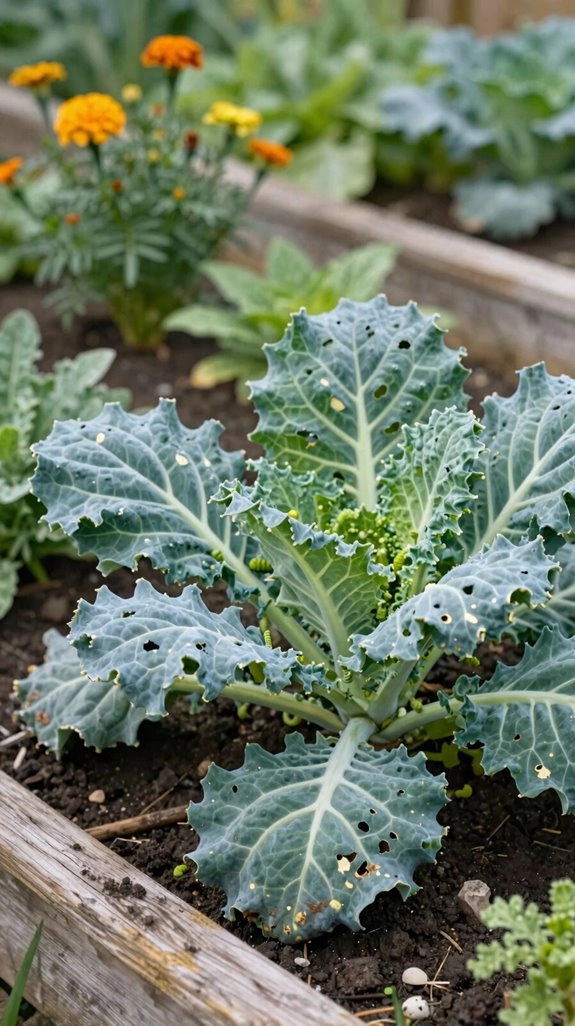
Start by checking leaf undersides for tiny pests, sticky honeydew, holes, chewed edges, or pale stippling—those sneaky bugs love to hide!
Then examine stems for scars, wilt, or oozing spots, and check roots for gnawing, swelling, or rot if a plant suddenly droops.
If damage appears evenly across the whole plant, don’t blame bugs too fast; it could be a nutrient problem in disguise!
Leaf Damage
Leaf damage can tell a surprisingly clear story if you know where to look—flip a few leaves over first, because aphids, whiteflies, mites, and other tiny troublemakers often hide underneath!
- Tiny dots? You’re not alone—mites may be stippling.
- Sticky shine signals honeydew sooty mold from sap-feeders.
- Curled, yellow leaves often mean sucking pests moved in.
- Ragged holes and skeleton edges suggest hungry caterpillars or beetles.
- Holes near brassica ribs are a caterpillar clue—case closed!
Use Leaf underside clues to join fellow gardeners in spotting problems early.
But pause: patches, lesions, powder, or odd spots may be disease, not bugs.
Different culprit, different fix—your plants deserve detective work!
Stem Damage
When a healthy-looking plant suddenly wilts, don’t just blame the heat—check its stem for tiny holes, crumbly sawdust-like frass, or soft, hollow spots. You’re not alone; fellow gardeners see this sneaky damage every season!
Use Seasonal scouting and simple diagnosis tools, like a flashlight and clean hands, to inspect the base and stem. Tunneling plus sudden wilt points to borers, not leaf chewers.
Match infestation timing to pest life cycles: squash vine borers hollow vines, while European corn borers invade stalks and tassels.
Here’s the big clue—larvae hide inside, blocking water and inviting rot. Remove spent corn stalks to stop overwintering pests.
Root Damage
Below the soil, pest damage can stay hidden while your plant starts to wilt, yellow, or stall out—even though you’ve watered and fed it like a proud plant parent!
- You notice seeds never sprout—so frustrating!
- Your potatoes have tunnels, like tiny unwanted apartments.
- Stems weaken or girdle, mimicking drought stress.
- Dead patches appear where root maggots have fed.
- You feel ready to solve the mystery, together!
Carefully dig around a few crowns and inspect roots for larvae, scars, and chewed tissue. Wireworms often target seeds and tubers.
Companion Planting and Resistant Varieties can help your garden crew prevent repeat trouble.
Natural Pest Control Methods
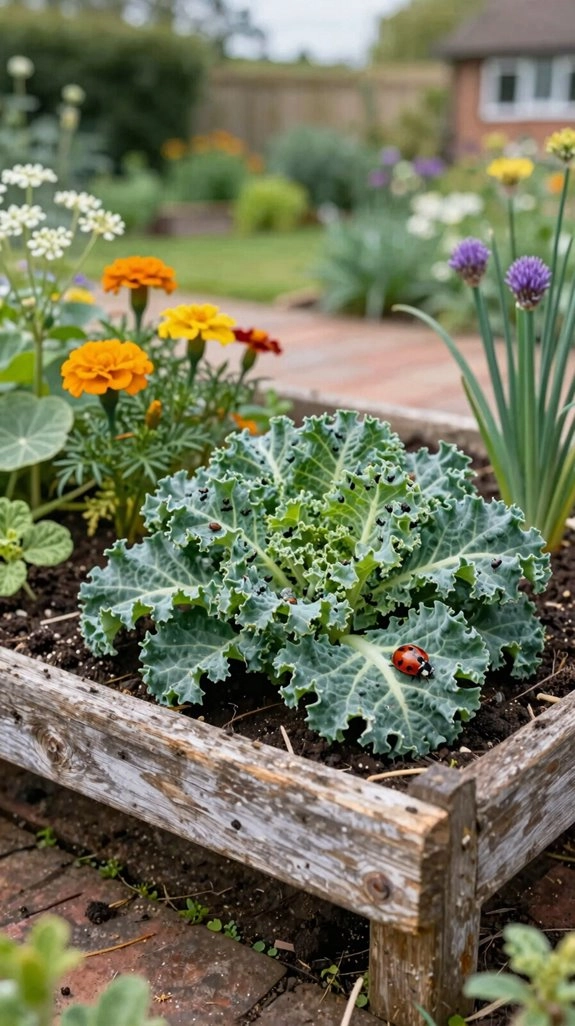
Start simple: you can block pests with floating row covers and stem collars, then invite helpful ladybugs, lacewings, and tiny parasitic wasps with flowers and water—nature’s cleanup crew!
If trouble continues, use targeted organic treatments, like Bt for caterpillars or insecticidal soap under aphid-covered leaves, so you don’t knock out the good bugs too.
Physical Barriers
Physical barriers give your garden a simple, chemical-free shield, stopping pests before they can turn tender seedlings into an all-you-can-eat buffet!
- Float row covers over seedlings; secure edges, and flying pests stay out!
- Slip cardboard collars around stems to stop cutworms and root maggots.
- Ring young plants with simple DIY barriers, like plastic cups with bottoms removed.
- Remove weeds and debris, because tidy beds leave fewer pest hideouts.
- Do barrier maintenance checks after rain or wind; gaps invite tiny gate-crashers!
You’re part of a smart gardening crew when you use Integrated pest proofing. These low-cost defenses protect early growth, when plants need you most.
Beneficial Insects
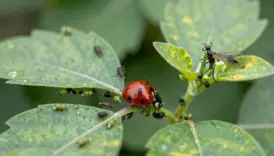
Beneficial insects can turn your garden into a tiny pest-control team, and they work for free—now that’s a good deal! Ladybugs, parasitic wasps, and green lacewings hunt aphids, whiteflies, mealybugs, mites, scale, and caterpillars.
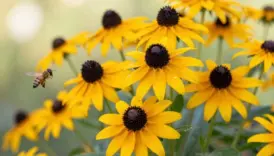
For easy habitat support, plant daisy- or dill-family blooms near vulnerable crops and add a shallow water dish with pebbles. You’ll welcome helpful adults without much cost or fuss!
Don’t spray everything that crawls; most insects are beneficial or neutral, and indiscriminate spraying can remove your garden’s natural control crew. Better yet, these flowers bring Pollinator benefits, too. Your garden community gets stronger, busier, and a little less snack-friendly for pests!
Organic Treatments
Tackle garden pests with the gentlest tools first—handpick beetles or caterpillars into a cup of soapy water, rinse aphids from leaves with a steady hose spray, and use row covers to block flying troublemakers before they land.
- Join fellow gardeners using Organic IPM strategies.
- Try Bt for caterpillars; follow targeted application tips.
- Use soap for aphids, coating leaves thoroughly.
- Grow dill and daisies for beneficial insect support.
- Practice pollinator safe spraying and resistance prevention planning.
For low toxicity pest control, clean fallen fruit, rotate crops, and add collars around stems. Save spinosad for emergencies—it can harm bees, so spray after dusk, away from blooms.
When to Take Action
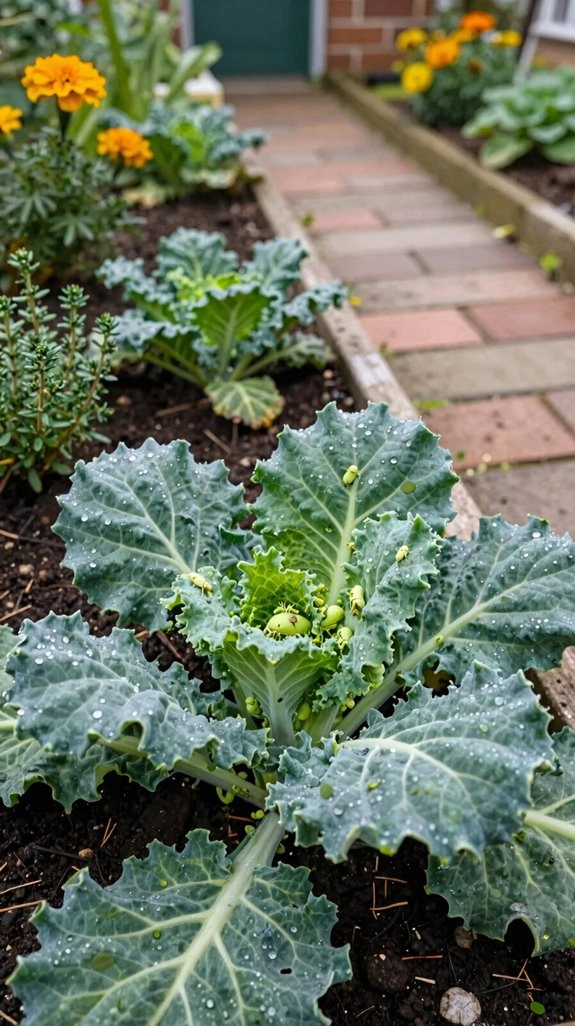
Don’t wait for a few tiny holes to turn into a full-on leaf buffet! Use action thresholds during pest monitoring: fresh chewed edges, skeletonized leaves, frass, or trouble beneath leaves call for early intervention.
Build simple scout routines with your fellow gardeners. Squish aphids, whiteflies, or mealybugs, rinse them with water, and welcome lady beetles.
Spot cabbage worms, loopers, or hornworms? Handpick them or use Bt before damage escalation begins.
Watch timing cues closely for borers; frass or sudden wilting means act before larvae tunnel inside. This is smart spread prevention, not panic!
If treatments fail, document them and seek diagnostic help for careful infestation triage.
Preventing Future Pest Problems
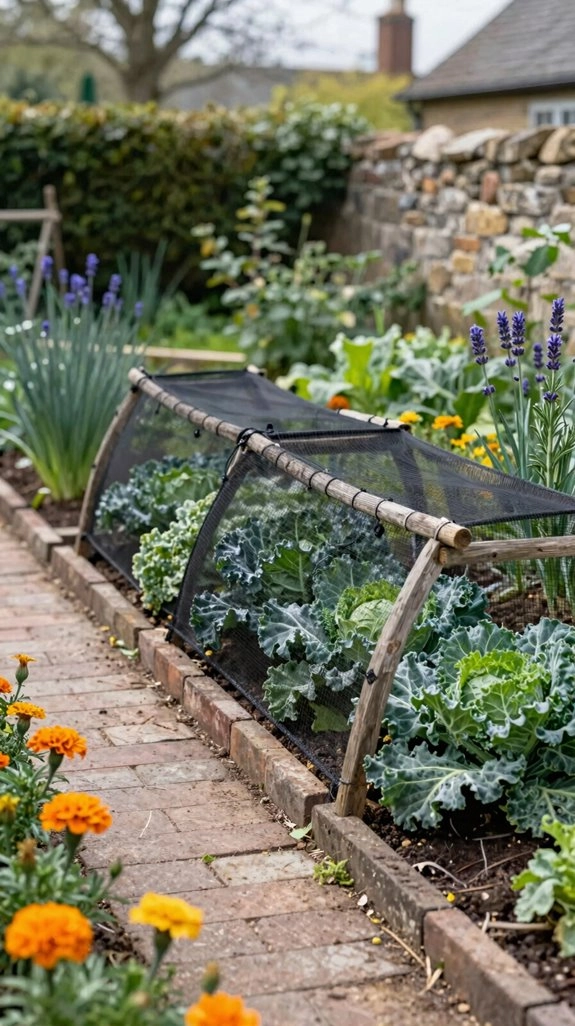
Early action stops today’s damage, but a few smart habits can make next season much quieter—no tiny pests throwing a backyard reunion!
- Try sanitation cleanup: remove debris and weeds, denying overwintering bugs a cozy home.
- Use Crop rotation, especially for brassicas, so cabbageworms can’t find their favorite buffet.
- Practice pest monitoring weekly; identify damage before choosing handpicking, traps, or beneficial insects.
- Nail row cover timing by covering crops when moths lay eggs, then uncover for pollination.
- Plant dill and daisy flowers near water; ladybugs and lacewings join your garden crew!
Keep notes on treatments, change tactics, and spray away from blooms.
Your whole gardening community wins!