Front Yard Landscaping Designed to Reduce Maintenance Year-Round
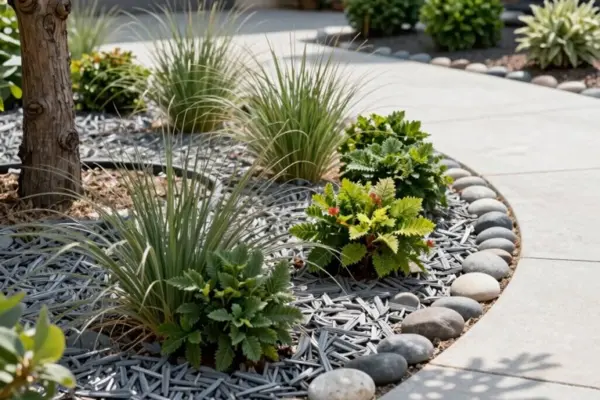
- Front Yard Landscaping Designed to Reduce Maintenance Year-Round
- Key Takeaways
- Start With a Low-Maintenance Landscape Plan
- Choose Plants That Fit Your Yard
- Match Plants To Site
- Favor Native Species
- Prioritize Low-Need Varieties
- Use Native Plants for Easier Care
- Limit High-Maintenance Flower Beds
- Reduce Lawn in Low-Use Areas
- Add Ground Cover to Tough Spots
- Best Spots for Groundcover
- Low-Care Plant Choices
- Weed and Erosion Control
- Use Mulch to Block Weeds
- Create Clean Bed Lines and Edging
- Add Hardscapes for Long-Term Function
- Choose Durable Materials That Last
- Durable Paver Choices
- Long-Lasting Border Materials
- Weather-Resistant Surface Options
- Install Smart Irrigation for Front Yard Landscaping
- Plan Drainage Before You Install
- Build Year-Round Front Yard Interest
- Use Evergreens for Structure
- Evergreen Backbone
- Year-Round Visual Anchor
- Low-Care Seasonal Form
- Add Shrubs and Grasses for Texture
- Keep Walkways and Entry Areas Simple
- Direct Paths
- Clean Borders
- Durable Surface Choices
- Match Plant Groups to Sun and Water Needs
- Design for Less Seasonal Cleanup
- Make Outdoor Living Areas Easy to Maintain
- Save Time With Professional Landscape Design
- Keep Your Front Yard Looking Clean Year-Round
To keep your front yard easy all year, start with a simple plan: map sunny and shady spots, shrink lawn where you don’t walk, and add crisp edging, mulch, and drip irrigation. Then choose native evergreens, drought-tough perennials, and a few grasses in matching groups—less fuss, more wow! Hardscape paths or gravel can replace messy corners, and a clean layout means less trimming, fewer weeds, and way less weekend work. Stick around, there’s more to love!
Key Takeaways
- Design beds around actual foot traffic, parking, and sight lines, then use crisp edging to keep turf and mulch contained.
- Choose native, drought-tough plants matched to sun, shade, soil, and drainage for less watering, feeding, and replacement.
- Group plants with similar needs together and build structure with evergreen shrubs, ornamental grasses, and hardy perennials.
- Reduce lawn in low-use areas by adding ground cover, gravel paths, or mulch to suppress weeds and cut mowing.
- Use durable hardscapes like stone walkways or gravel patios, with proper drainage, to minimize repair and seasonal cleanup.
Start With a Low-Maintenance Landscape Plan
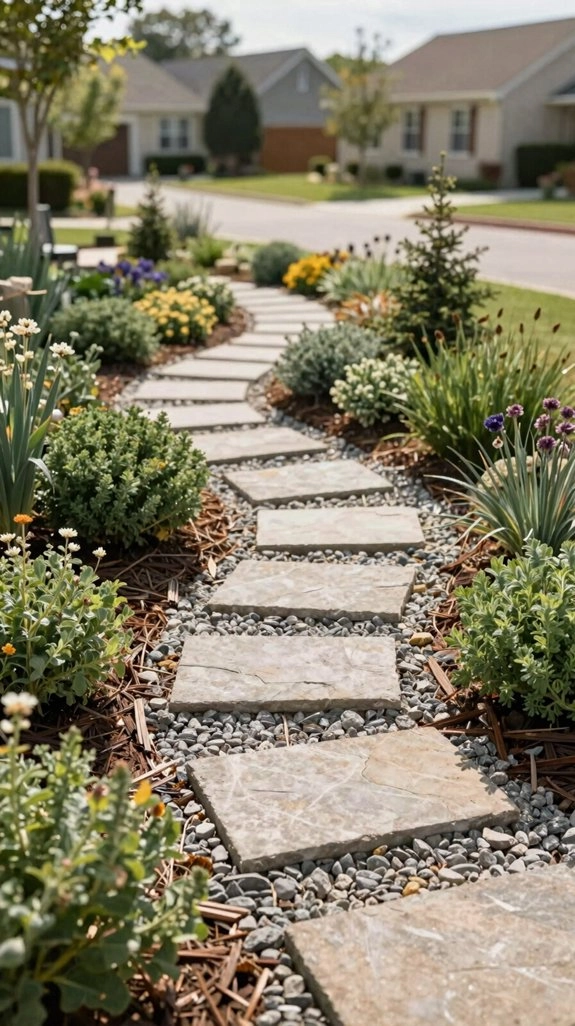
Before you pick a single plant, map your front yard around how people actually use it, because that’s where a smart plan starts! You’ll feel more at home when walkways, parking sight lines, and play paths all make sense.
Use Zone zoning to group sunny and shady spots, then set the bed layout with crisp edging materials so trimming’s easy and turf stays put.
Choose low lawn, durable hardscapes, and drip watering early, so seasonal cleanup shrinks fast.
Add weed barriers only where they help, and keep mulch depth steady for a neat look.
Smart trim timing? That’s the last little win!
Choose Plants That Fit Your Yard
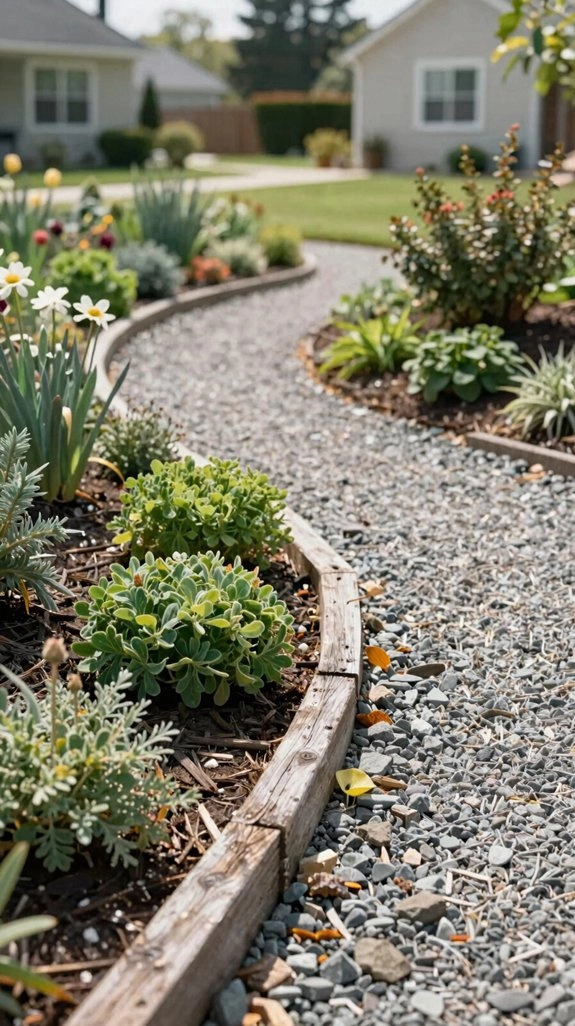
Pick plants that match your yard’s sun, shade, soil, and drainage, because the right fit means less stress, less watering, and way fewer plant replacements—yay for fewer gardening “oops” moments!
Then look for native or regionally adjusted plants, since they already know your local weather tricks and usually ask for less water and fertilizer once they settle in.
For easy front-yard wins, mix in low-care picks like evergreen shrubs, drought-tolerant perennials, or grasses, and group plants with similar needs so upkeep stays simple instead of turning into a weekend puzzle.
Match Plants To Site
When you match plants to your yard’s real conditions, gardening gets way easier, and your plants stop acting like drama queens!
Start with microclimates mapping and soil testing basics, then note sun, shade, drainage, and your climate.
Pick drought-tough plants for hot, dry spots, and tuck moisture lovers only where water naturally lingers.
Build a steady evergreen structure layer with boxwood, holly, yew, or laurel so your front yard looks finished even in winter.
For less fuss, mass plants with similar needs, like repeated grasses, and you’ll spend less time juggling care, watering, and replacements.
Favor Native Species
Native plants can make your front yard feel like it finally got the memo, because they’re already built for your local soil, sun, and drainage!
Start with Soil testing basics so you know what your yard can actually handle, then pick native seed options or young plants that fit your spot.
You’ll water less, skip lots of fertilizer, and spend less time replacing sad, floppy shrubs.
Better yet, choose evergreen shrubs and ornamental grasses for steady shape, and group plants with the same needs.
Bonus: pollinator-friendly blooms bring bees and butterflies, so your yard feels lively, not needy.
Prioritize Low-Need Varieties
If you want a front yard that looks good without acting like a full-time job, start with plants that actually fit your yard’s sun, soil, and drainage. You’ll save money, skip drama, and keep your crew of plants happy!
Choose native or regionally adjusted, drought-tough picks like boxwoods, yews, hollies, blue fescue, creeping thyme, or sedum. They usually need less water, fewer chemicals, and less replacement once settled.
Add evergreens and grasses for a finished look, then group plants with the same Watering Schedule, so care feels easy.
Seasonal Pruning stays simple, and weeds get crowded out.
Use Native Plants for Easier Care
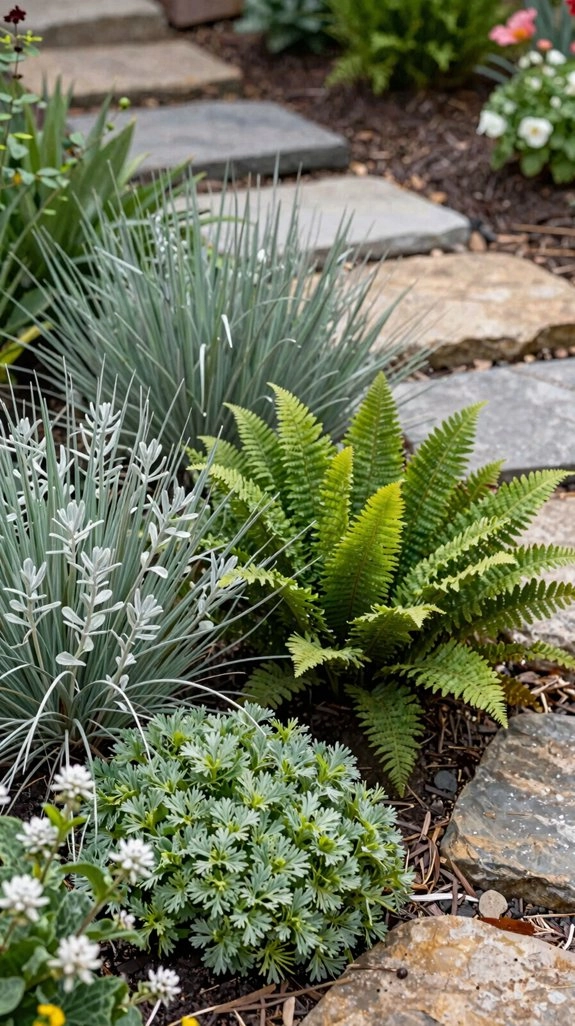
Because your front yard has to work hard and look good, choosing plants that already know your local weather is a smart little cheat code! Native plants bring built-in drought resilience and better soil matching, so you water less, feed less, and swap plants out less often.
Start with species that fit your sun, shade, drainage, and soil, then group similar natives together for easy care. That simple move cuts the maintenance mental load, too—nice!
For year-round curb appeal, mix regionally acclimated evergreens with perennials. You’ll get a steadier look in winter, fewer bare spots, and way less “oops, I forgot to replant” stress.
Limit High-Maintenance Flower Beds
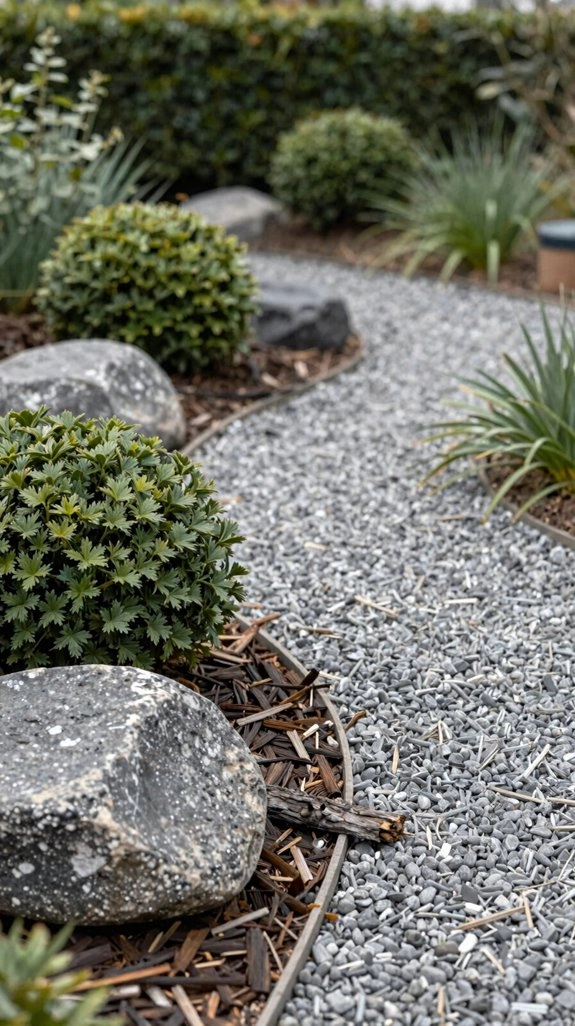
Even with smart plant choices, a front yard can get a little wild if every bed turns into a full-time flower show!
You’ll feel more at home when you keep beds smaller and more intentional, so you can make seasonal color without signing up for endless chores.
Build structure with hardy perennials, ornamental grasses, and a few evergreen shrubs, then tuck similar plants together for easier watering and care.
That setup helps Reduce deadheading, while consistent pruning stays quick and friendly.
Finish with crisp edging, and mulch stays put, weeds back off, and your yard looks neat with less effort.
Reduce Lawn in Low-Use Areas
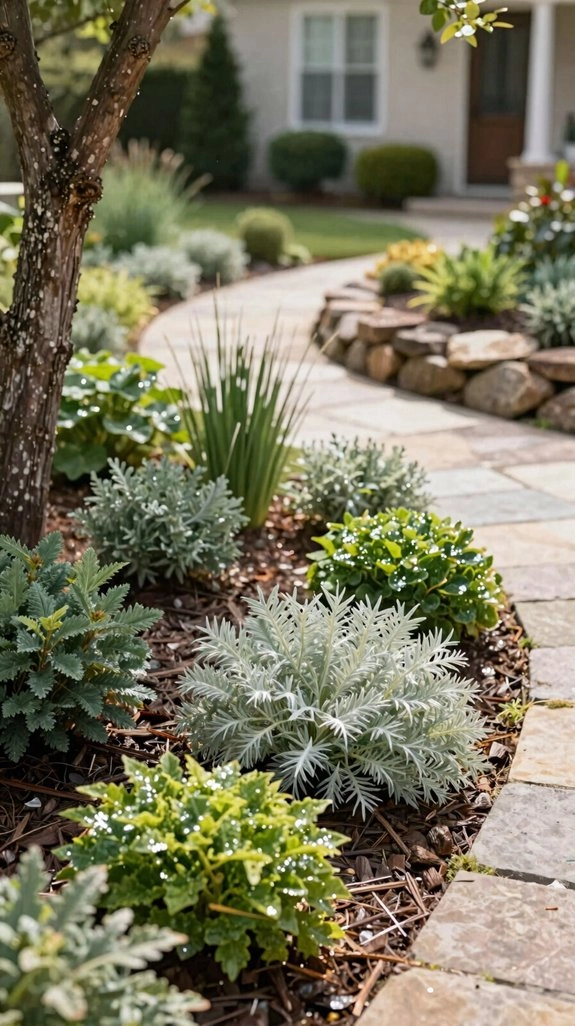
When you look at those little strips of turf that nobody really uses, it’s easy to see where your weekend is disappearing! You can trim them down, and suddenly your yard feels calmer, more like it belongs to you.
- Use gravel pathways to create low traffic zones, so foot traffic stays off the grass.
- Swap bare corners for rock or limestone, which can suppress weed growth and cut cleanup.
- Keep lawn only where you actually walk, then you can minimize mowing frequency and share the work with ease.
It’s a small change, but wow, the payoff is big: less mowing, less stress, more time to enjoy home!
Add Ground Cover to Tough Spots
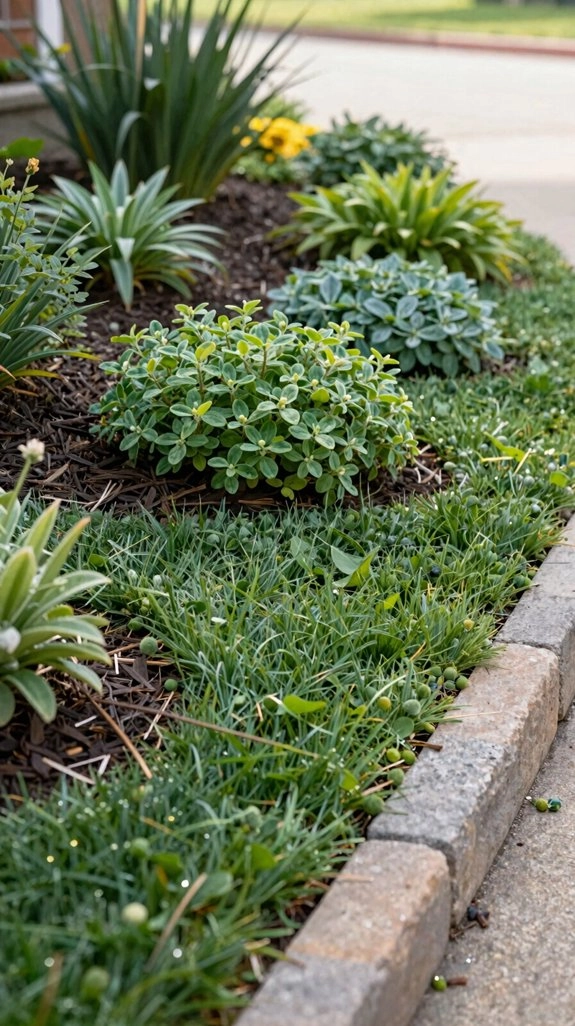
You can turn those tricky front-yard spots, like shady strips, slopes, and worn edges, into low-fuss wins with ground cover that helps hold soil, keeps moisture in, and makes weeds work overtime.
Start with tough, easy picks like Korean grass, Kurapia, or even Ruschia nana for drier areas, and give them a good home with graded soil, compost, and clean edging, so they fill in fast and don’t wander off like little garden escape artists.
Nice, right? With the right setup, you’ll spend less time trimming and more time admiring a tidy yard that actually behaves!
Best Spots for Groundcover
If your front yard has a few stubborn spots that refuse to play nice, groundcover can step in and do the heavy lifting! You’ll feel right at home solving those tricky patches, and your yard gets to look pulled together.
- Erosion hotspots and slope control: plant spreading cover to hold soil, not slide it.
- Tree shade and thin lawn edges: use tough spreaders for weed suppression and fewer mows.
- Best surprise: swap narrow turf bands for a living mat, then edge it in, water it well the first season, and let it knit together.
Low-Care Plant Choices
For those stubborn front-yard spots that keep acting like rebels, low-care ground covers can step in and make life way easier! Try creeping thyme, clover, vinca minor, or Korean grass for busy corners and awkward slopes. They spread fast, look neat, and pair nicely with shade tolerant shrubs and deer resistant varieties, so your yard feels pulled together, not fussy.
If you want an even tougher win, use Kurapia or Ruschia nana for dense coverage. Edge beds with a sharp spade line, then water well while they’re establishing. After that, you’ll enjoy a calmer, lower-work yard—nice, right?
Weed and Erosion Control
Bare dirt has a sneaky way of turning into a weed party and a muddy mess, especially on slopes, hot edges, and those awkward spots where grass just gives up. You can fix that fast with ground covers that knit together and block light.
- Try Korean grass, Ruschia nana, or Kurapia for no-mow ease.
- Choose drought resistant options and pest resistant plantings for long-lasting help.
- Install a clean steel line, then tuck in mulch and water well the first season.
Once rooted, these plants hold soil during storms, cut runoff, and keep your crew of neighbors-envy levels high!
Use Mulch to Block Weeds
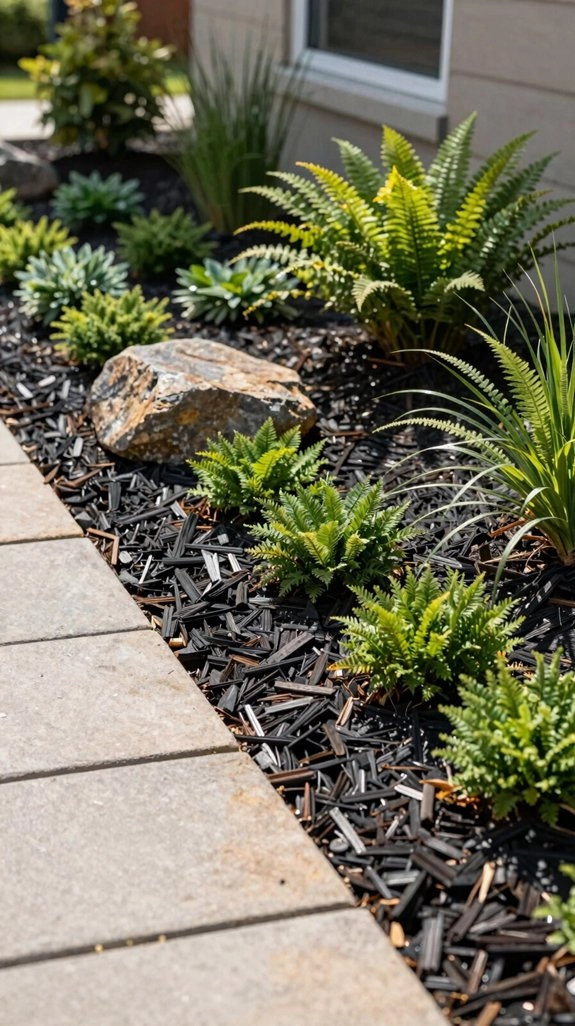
Mulch is one of those front yard helpers that does a lot of heavy lifting without making a fuss! You spread it around your beds, and it blocks sunlight, so weed seeds struggle to sprout.
A 2–4 inch mulch depth gives solid weed suppression without smothering roots, and organic mulch also boosts soil moisture and moisture retention, which helps your plants settle in with less watering.
You don’t need simple tools, just a bag or two and a rake.
Refresh it yearly, and your yard stays neat, friendly, and easier to care for, all season long!
Create Clean Bed Lines and Edging
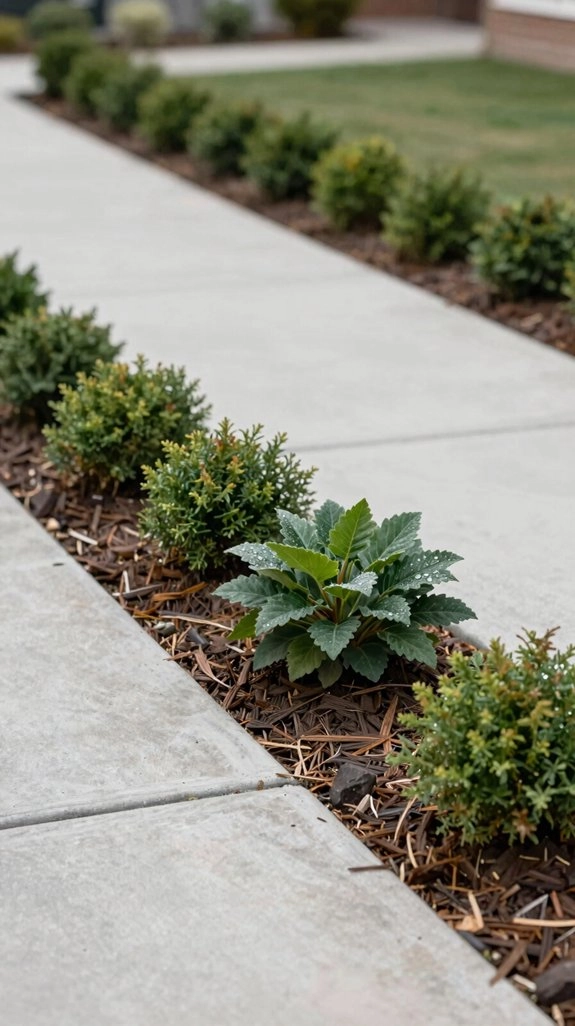
When your bed lines look crisp, the whole front yard suddenly feels pulled together, even if you’re keeping the plant list nice and simple! You’ll fit right in with a yard that looks neat without extra fuss.
- Cut clean turf boundaries with a flat spade or sharp border.
- Keep mulch tucked in, so it doesn’t wander after rain or cleanup.
- Refresh edges each season for better weed prevention and faster touch-ups.
Straight or gently curved lines stop mowing from wandering, and grass won’t sneak into beds as easily. That means less trimming, fewer weeds, and a tidy look that feels easy to maintain!
Add Hardscapes for Long-Term Function
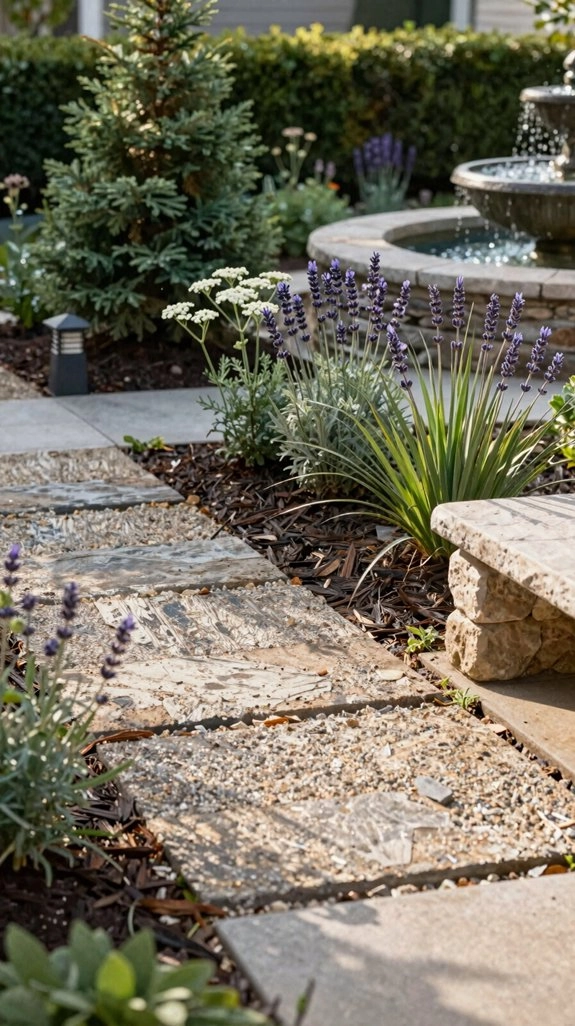
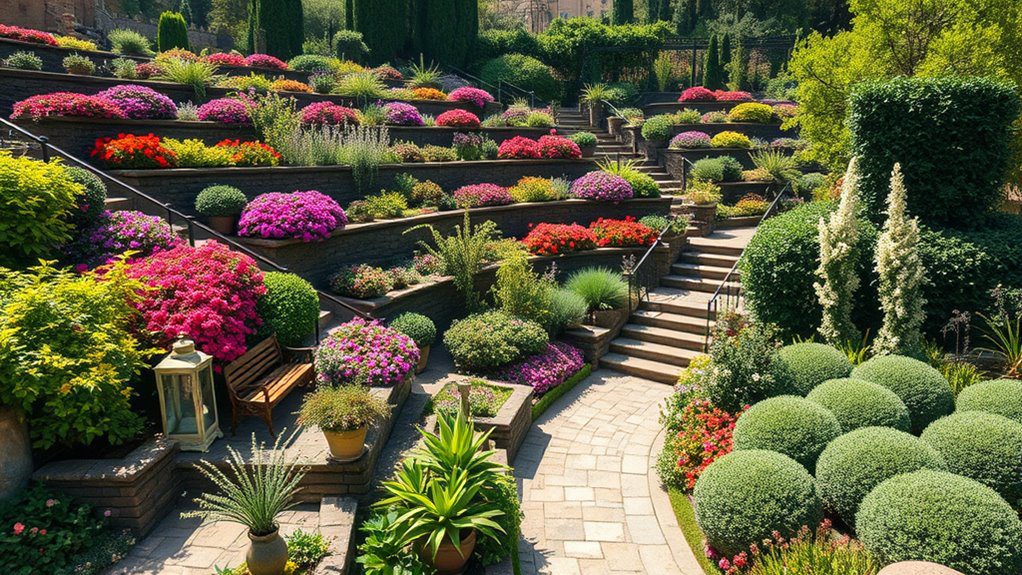
Stone paths, patios, and even a small gravel courtyard can do a lot of heavy lifting in a front yard, and they don’t ask for weekly mowing in return—what a deal!
You can swap tired turf for Durable Pathways, a cozy seating spot, or a tidy Gravel Courtyard that keeps the space feeling open and welcoming.
Place walkways where feet naturally travel, and you’ll cut muddy patches, erosion, and those awkward sidesteps after rain.
Add proper leveling, a solid base, and a little slope for drainage, and you’ll spend less time fixing and more time enjoying your yard, neighbor-style!
Choose Durable Materials That Last
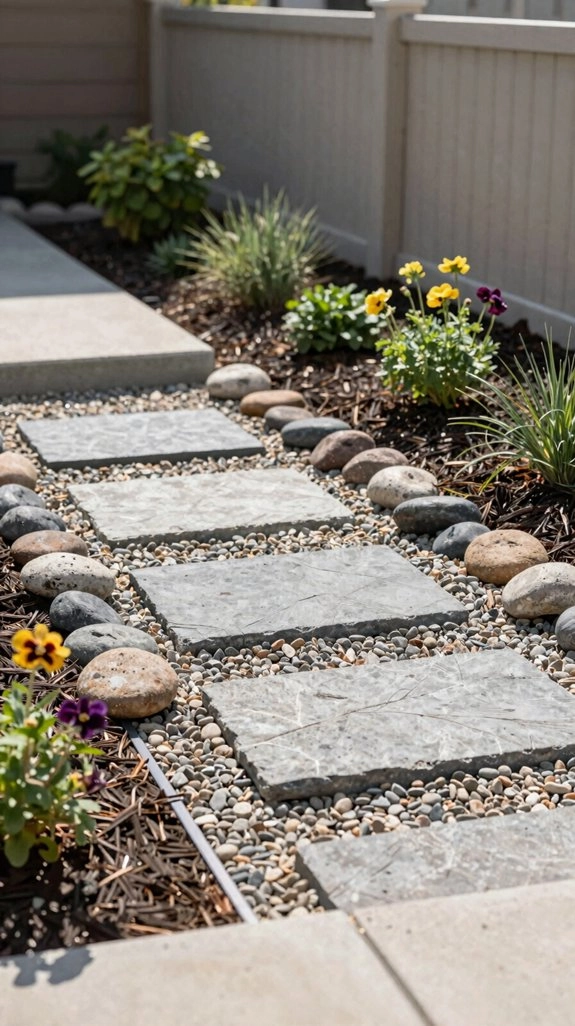
You’ll want to pick durable pavers, stone, and border materials that can handle boots, bikes, and wild weather without acting dramatic after one winter—because nobody wants a front yard that starts wobbling like a bad chair!
Choose well-installed, freeze-thaw-ready surfaces with solid edging and smart drainage, and you’ll cut down on moving, cracks, and those sneaky repair bills that show up when you least expect them.
The right materials may cost a bit more up front, but they can save you a lot of work later, which is a pretty sweet trade, right?
Durable Paver Choices
For a front yard that can handle messy weather and busy foot traffic, start with pavers made from dense, low-absorption materials, because they soak up less water and stand up better to freeze-thaw cycles—pretty handy, right? You’ll feel like you’re joining the low-stress crew!
- Build on a compacted aggregate base with bedding sand.
- Pick textured, slip-resistant finishes for safer steps.
- Use thick pavers with edge restraints and good drainage.
These choices cut rocking, gaps, and weeds, while sealant benefits add winter protection and help the surface stay cleaner. The result? A neat, sturdy path that keeps your front yard looking welcoming, not weary!
Long-Lasting Border Materials
Frame your front yard with borders that can actually take a beating, because weak edging turns tidy beds into wobbly, soggy messes fast!
Choose quality pavers, stone, or crisp galvanized steel, and set them on a stable base so your lines stay straight.
If you want low cost updates, go for metal edging that’s installed at the right depth, keeping mulch in place and turf from sneaking in.
For quick seasonal fixes, check drainage and reset any loose sections.
Durable borders resist cracking, fading, and heaving, so your yard feels polished, welcoming, and easy to keep in shape all year.
Weather-Resistant Surface Options
When your front yard needs to look sharp and stay that way, durable surface materials make a huge difference! For your outdoor entry, choose pavers or permeable crushed granite, and pair them with durable edging so everything stays neat.
- Build simplified pathways with properly installed pavers, and they’ll resist wobble.
- Try long lasting patios using freeze-thaw rated stone, proper sand, and good drainage.
- Swap turf for compacted limestone or gravel, with weed barrier underlayment, for less mowing.
Keep surfaces graded, so water drains fast and winter won’t crack your plans. Nice, right? Your yard stays welcoming, tidy, and easy to love.
Install Smart Irrigation for Front Yard Landscaping
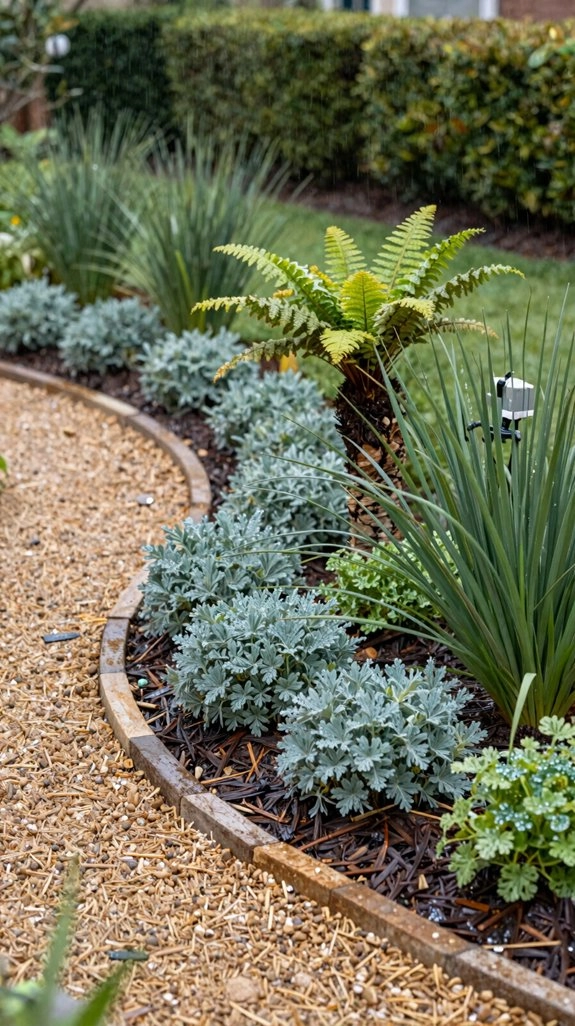
Smart irrigation can make your front yard look polished without turning you into a part-time hose wrangler! Install a smart controller, then let soil moisture sensors and irrigation scheduling insights tweak watering after rain, heat, or dry spells. Nice, right?
Next, pair drip lines or soaker hoses with separate zones for sunny beds and thirsty plants. You’ll water roots, not sidewalks, and drought-tolerant shrubs won’t get spoiled.
During the first growing season, keep watering steady so roots settle in strong. Set runs for early morning, then check for leaks and pressure issues, and you’ll save water, money, and hassle.
Plan Drainage Before You Install
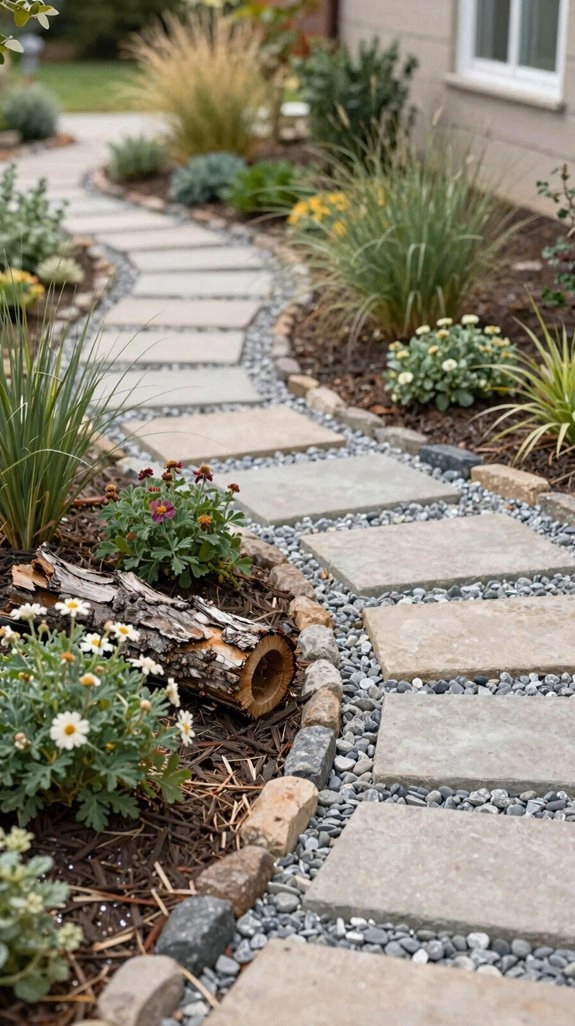
Before you plant a single shrub or roll out sod, take a good look at how water moves across your yard—because a pretty front yard can turn into a muddy mess fast! You’re on the right team when you plan drainage first.
- Shape grades so surface runoff moves away from your house.
- Fill low spots, cut swales, or add a rain garden where water collects.
- Match fixes to the problem, like French drains for wet soil, and use level patios with permeable pavers or gravel bases.
After installation, watch the next heavy rain. You’ll spot trouble early and keep maintenance low, year-round!
Build Year-Round Front Yard Interest
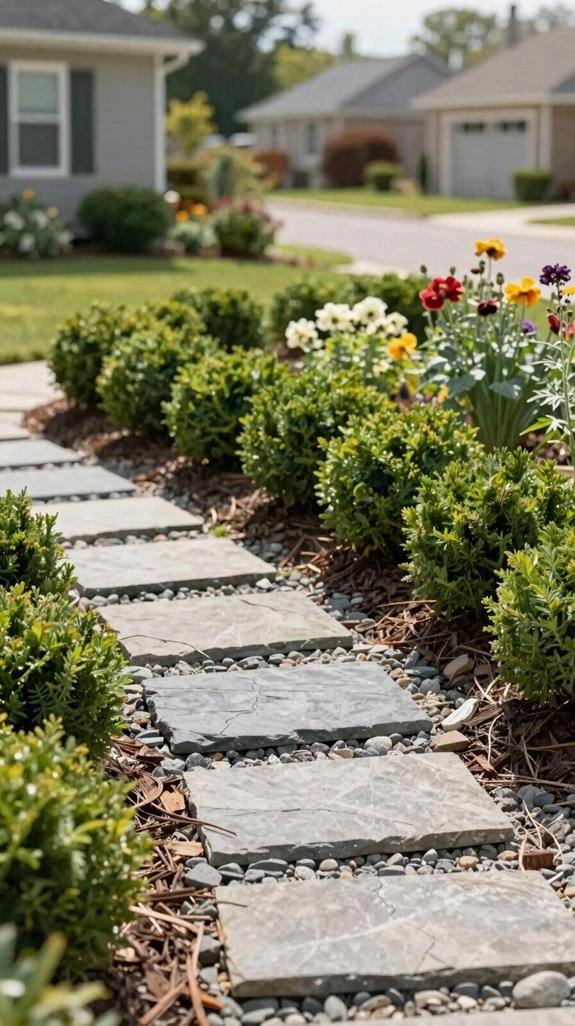
Next, group perennials in bigger blocks, not tiny singles, so the view reads distinctly from the street.
Finish with mulch and neat bed lines, and you’ll avoid the empty-lot look.
Easy, affordable, and neighbor-friendly—yes, please!
Use Evergreens for Structure
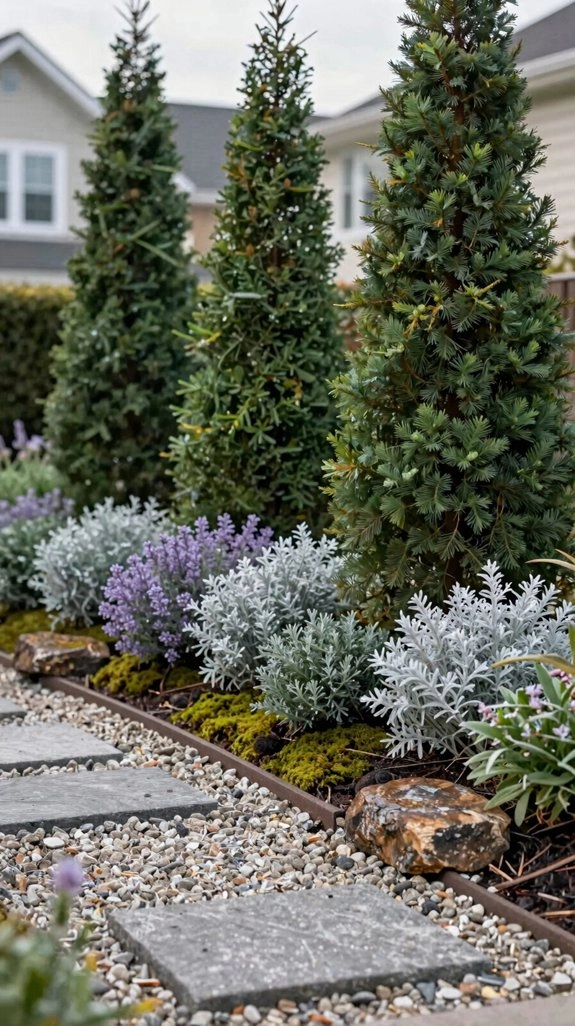
Evergreens can be the backbone of your front yard, giving you that steady, year-round shape when other plants take a winter nap—no blank-yard blues here!
Boxwoods, hollies, yews, and laurels keep things neat and full, and when you group them in the right size and spacing, they create a strong visual anchor that won’t ask for constant trimming.
Best of all, a well-placed evergreen layer along paths or property lines gives you low-care structure that still looks sharp, even on the laziest snow day.
Evergreen Backbone
If you want your front yard to still look polished in January, give it an evergreen backbone—think boxwoods, hollies, yews, laurels, and junipers holding the line when the rest of the garden goes a little sleepy!
You’ll get winter interest, steady color, and less fall replanting, which feels like a win for your wallet and your weekends.
- Start with the shrubs first, then tuck in perennials and grasses.
- Group plants with the same sun and water needs.
- Choose hardy, region-right picks for easier upkeep.
That simple structure makes your yard feel calm, welcoming, and truly yours, even when the weather gets grumpy.
Year-Round Visual Anchor
A front yard looks so much more polished when it has something steady holding the scene together, even in January when the flower beds are acting a little dramatic. You can use a seasonal evergreen layer, like boxwoods, hollies, yews, or laurels, to keep color, height, and texture in place all year—nice, right!
If you’ve got irrigation, you can lean into more evergreen choices. If you don’t, pick native shrubs that fit your soil and moisture, and they’ll work with you, not against you.
Plant them in repeating masses for clear foundation blocks, then add mulch and crisp bed lines. You’ll get a clean look, more wildlife habitat, and way less weekend fuss.
Low-Care Seasonal Form
The secret to a front yard that still looks put-together in February? Build your low-care seasonal form with an evergreen shrub layer.
Place boxwoods, laurels, yews, or hollies along the foundation, walkway edges, and big focal spots, so your yard feels full, even when blooms vanish.
- Choose simple, matching shapes for easier pruning.
- Use low water strategies if you skip irrigation, and lean on native evergreens.
- Add perennial blocks after the structure is set, so seasonal color pops back without constant seasonal replacement planning.
That way, you’ve got a crew that belongs together, and cleanup stays easy!
Add Shrubs and Grasses for Texture
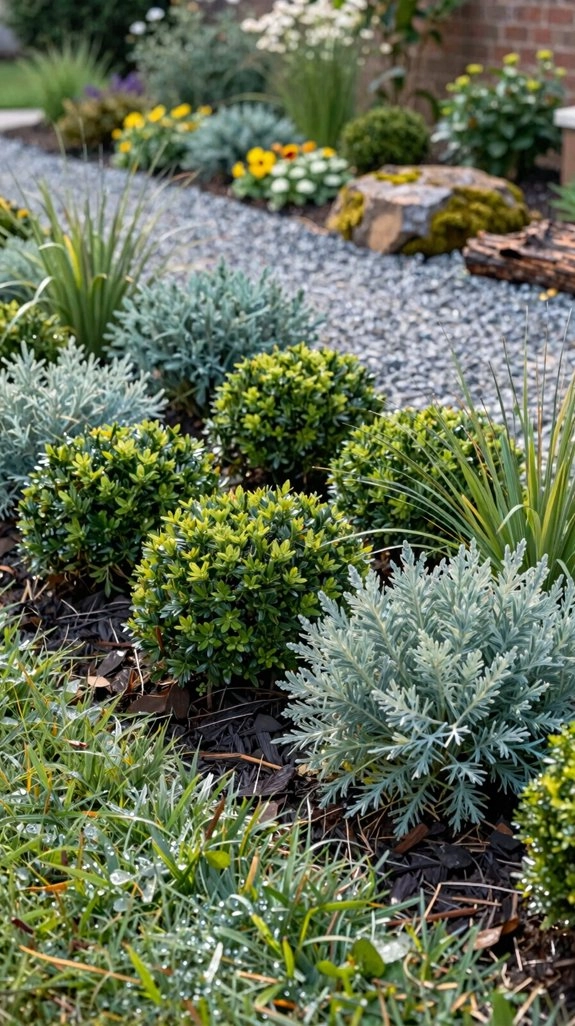
Green structure can make your front yard feel polished year-round, even when flowers are taking a winter nap! Add evergreen shrubs like boxwoods, laurels, yews, or hollies for a full look, then tuck in low height plants for Seasonal color.
Simple materials: shrubs, mulch, and drought-tough grasses.
Plant blue fescue or Japanese forest grass in blocks, and you’ll get texture, sway, and less fuss—nice!
Group plants with the same sun, water, and soil needs, so your care stays simple.
One big win: hardy shrubs and grasses keep your yard looking welcoming, without turning you into a weekend gardener.
Keep Walkways and Entry Areas Simple
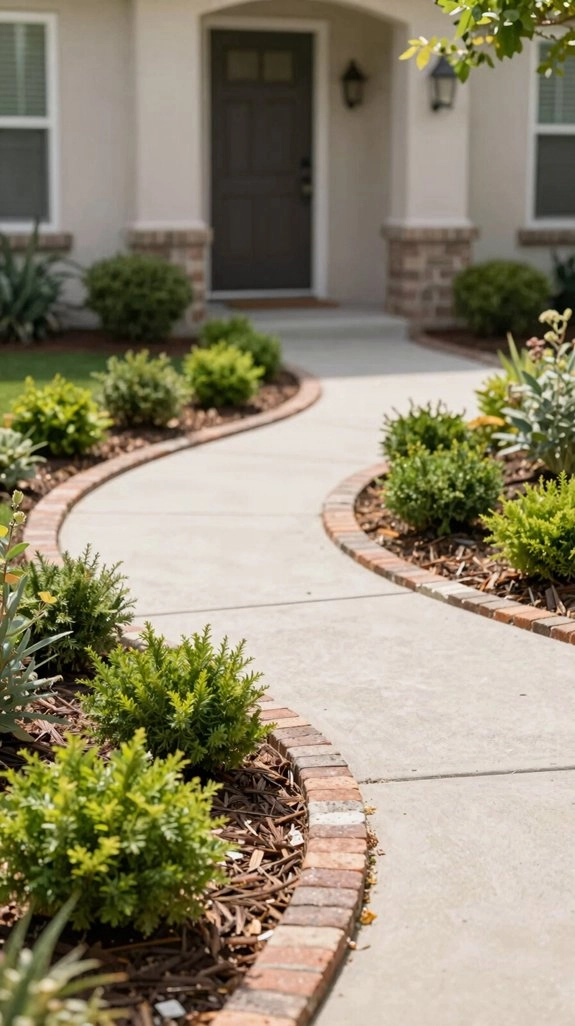
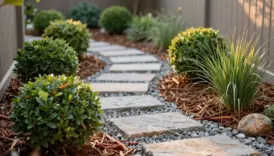
You can make your front entry feel calm and polished by keeping the path direct, using one sturdy surface like pavers or set gravel, and skipping the wiggle-wiggle layout that seems fun until weeds show up.
Tight bed lines and low-maintenance edging, like steel or stone, help hold mulch in place and keep the whole area looking crisp—nice, right?
For an even easier win, group simple plants near the door and add a small hardscape spot, so you cut down on mowing, mud, and that awkward “where do I step?” shuffle.
Direct Paths
At the front of your home, a simple path can do a lot of heavy lifting! You’ll save time, feel welcome, and skip those muddy detours that sneak in after rain.
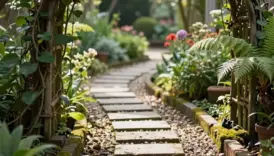
Choose direct, straight, or gently curving walkways, and use permeable materials like pavers, concrete, or crushed granite on a compacted base.
- Keep the route short from driveway to door.
- Set crisp borders so grass and mulch don’t creep in.
- Give the entry a wider landing near the door or mailbox.
Slope the path away from the house, and guide runoff into gravel or permeable spots. Nice and easy!
Clean Borders
Clean borders make a front walk look neat in a hurry, and they also save a ton of cleanup later—nice! You can carve sharp bed lines with a flat spade, then keep your walkway clearance clear so turf doesn’t sneak in.
Use a simple, steady bed width, like a clean stripe, and tuck planting only where feet won’t land. Add solid edging, then set your mulch depth at 2–3 inches to hold weeds down and keep the edge crisp.
The result? Less trimming, fewer missed weeds, and a front entry that feels friendly, tidy, and ready for company.
Durable Surface Choices
A tidy edge is nice, but the surface under your feet has to work just as hard! You want paths that look good and keep your crew happy, not ones that wobble, sprout weeds, or turn into puddles.
- Try pavers or quality stone, set on a solid base with a weed barrier.
- Use crushed granite or permeable pavers for drainage, so winter won’t heave things apart.
- Keep the same surface from patio to door, and add a crisp edging definition with steel or tight borders.
That simple setup cuts repairs, trims cleanup, and makes your entry feel welcoming, all year.
Match Plant Groups to Sun and Water Needs
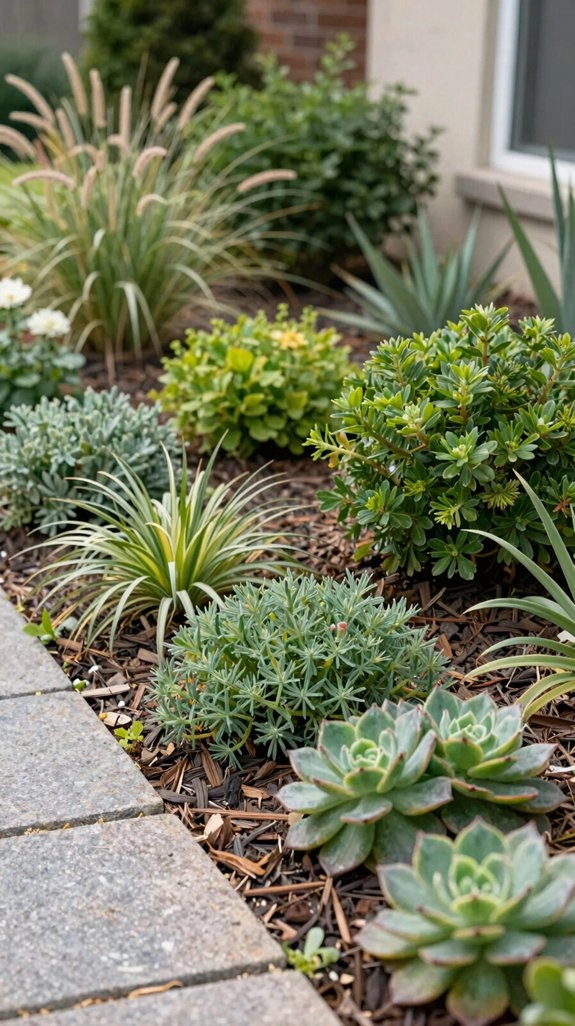
When you group plants by sun and water needs, your front yard starts to feel a lot less fussy and a lot more put-together. You’ll water smarter, not harder, and your plants won’t argue over who gets the hose—nice!
Put full-sun plants with full-sun friends, shade lovers with shade lovers, and keep thirsty bloomers together so watering stays simple.
In one bed, use drip lines or soaker hoses for the needy spots, then let drought-tough natives coast on less.
That means easier Seasonal cleanup, better weed prevention, and less mental load for you.
Pretty sweet, right?
Design for Less Seasonal Cleanup
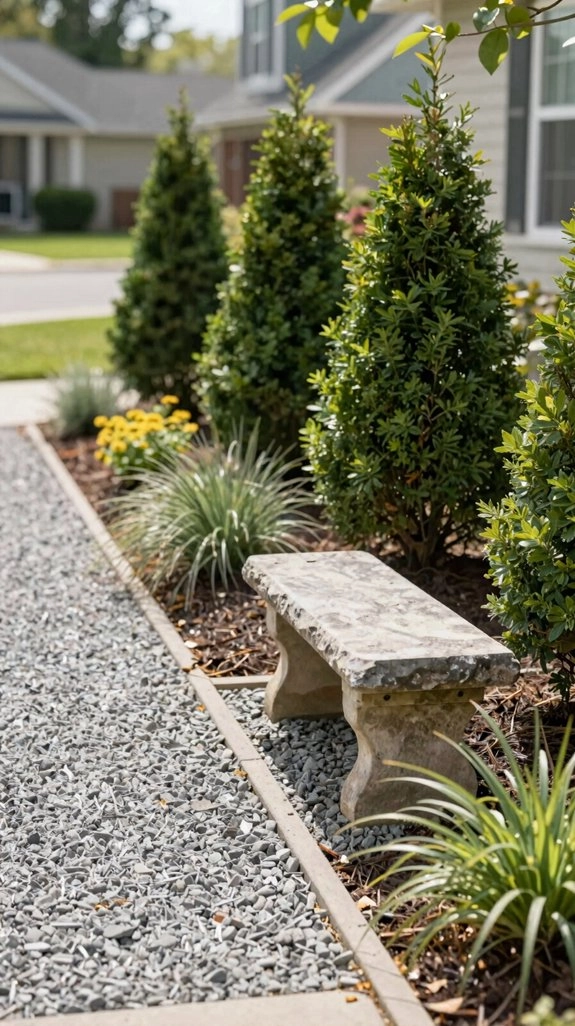
If you want your front yard to look polished without turning every season into a weekend project, start by designing for less cleanup! You’ll fit right in with a yard that stays neat, even after blooms fade.
- Use evergreens, grasses, and bark-texture plants for winter shape.
- Add Crisp Borders with a flat-spade edge, so turf stays out and spring work gets easier.
- Choose Easy Mulching with ground covers, bark, or wood chips to block weeds.
Group a few hardy perennials together, not tiny plant crowds, and you’ll deadhead less, replant less, and relax more. Nice, right!
Make Outdoor Living Areas Easy to Maintain
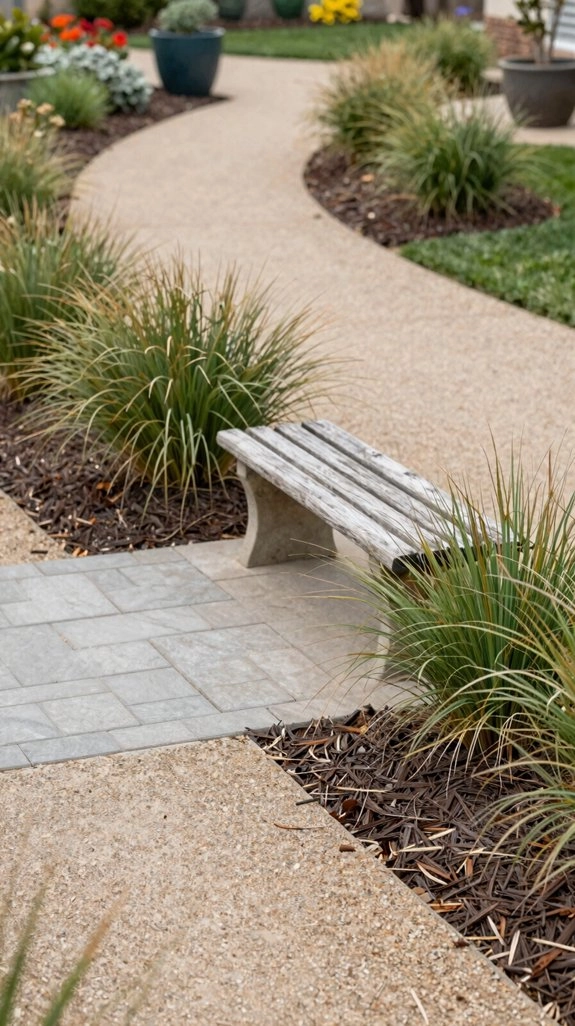
To keep your outdoor living areas easy to care for, start by placing patios, walkways, and entry paths where you actually use them most, not where they create extra lawn to mow and trim.
Choose pavers or drained gravel, so rain won’t turn busy spots into muddy messes—nice, right?
Then build crisp outdoor rooms with edging, a border, and a planting bed for simple mulch containment and fewer weeds.
Use a groundcover strategy with hardy evergreens, grasses, and perennials that like the same water.
Finish with drip or soaker hoses, and you’ll save time all season.
Save Time With Professional Landscape Design
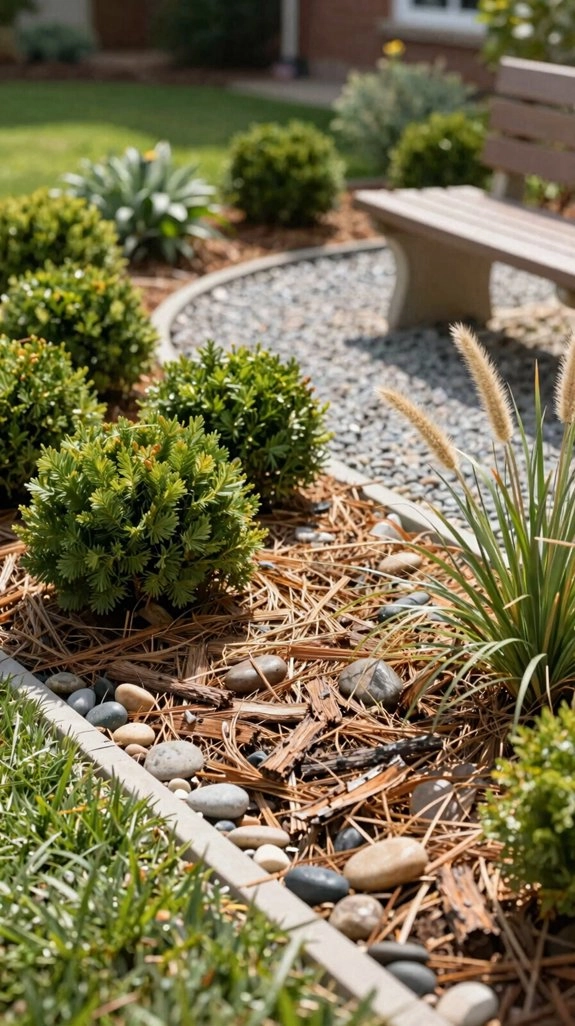
A smart scenery design can save you a ton of weekend work, and honestly, that’s a beautiful thing! With a solid design workflow, you set your front yard up around drainage, sun, and foot paths, so you’re not forever fixing messes.
- Place evergreens and grasses for year-round structure.
- Use drip watering and smart scheduling to cut chores.
- Match plants to your soil, so they don’t quit on you.
That’s time saving in the best way. You also dodge crowded beds, bad materials, and pricey do-overs. Nice, right? A pro plan helps you belong to the low-stress yard club, and your neighbors will notice!
Keep Your Front Yard Looking Clean Year-Round
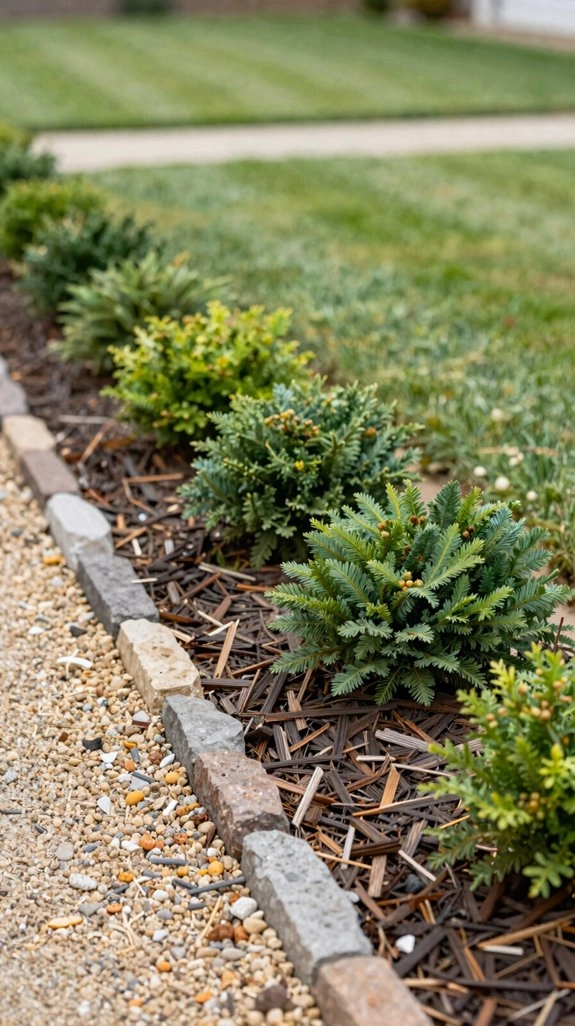
Now that your front yard has a smart plan, you can keep it looking sharp without spending every Saturday playing “fix the mess.”
Crisp bed edges, a fresh layer of mulch, and a few evergreen shrubs do a lot of heavy lifting, because they keep the yard looking neat even when the seasons change. Use clean edging and a durable border to lock in mulch containment, then refill groundcover gaps with creeping thyme or Kurapia.
That simple move blocks weeds, keeps soil covered, and helps you stay tidy year round.
For the easiest win, group plants into bold blocks, so your curb appeal feels calm, welcoming, and truly put together!