Black Eyed Susan Flower Ideas That Bring Bright Color Outdoors
- Black Eyed Susan Flower Ideas That Bring Bright Color Outdoors
- Key Takeaways
- Why Black-Eyed Susan Stands Out
- Best Black-Eyed Susan Varieties for Color
- Goldsturm’s Reliable Golden Blooms
- Irish Eyes And Color Variants
- Best Black-Eyed Susan for Cutting Gardens
- How to Grow Black-Eyed Susan From Seed
- Where to Plant Black-Eyed Susan in Full Sun
- How to Keep Black-Eyed Susan Healthy
- Landscape Ideas for Black-Eyed Susan
- Best Companion Flowers for Black-Eyed Susan
- Cottage Garden Pairings
- Prairie Plant Partners
- How to Harvest Black-Eyed Susan for Vases
- How to Dry Black-Eyed Susan for Crafts
- How to Keep Black-Eyed Susan Blooming Longer
- Deadhead Spent Flowers
- Pinch Back For Stems
- Keep Water Fresh
- How Black-Eyed Susan Helps Wildlife
Black-eyed Susans are a bright, easy way to boost outdoor color, and you can use them in borders, wildflower patches, or sunny pots—nice and simple! Try Goldsturm for bold gold blooms, or Irish Eyes for a fun green-center twist. Want cut flowers? Snip fully open stems in the morning and place them in cool water. Even better, deadhead often and you’ll keep the show going, with birds and pollinators stopping by for extra cheer all season long.
Key Takeaways
- Black-eyed Susans add bright golden daisy-like blooms with dark centers that instantly cheer up outdoor spaces.
- Plant compact varieties like Goldsturm, Little Henry, or Little Goldstar for neat front borders and smaller garden areas.
- Use Irish Eyes for a unique green-centered look that still flowers from summer into fall.
- Grow them in full sun with well-drained soil, and deadhead faded blooms to keep color coming longer.
- Leave some seed heads in fall to feed birds, or cut flowers for sunny vases and cheerful displays.
Why Black-Eyed Susan Stands Out
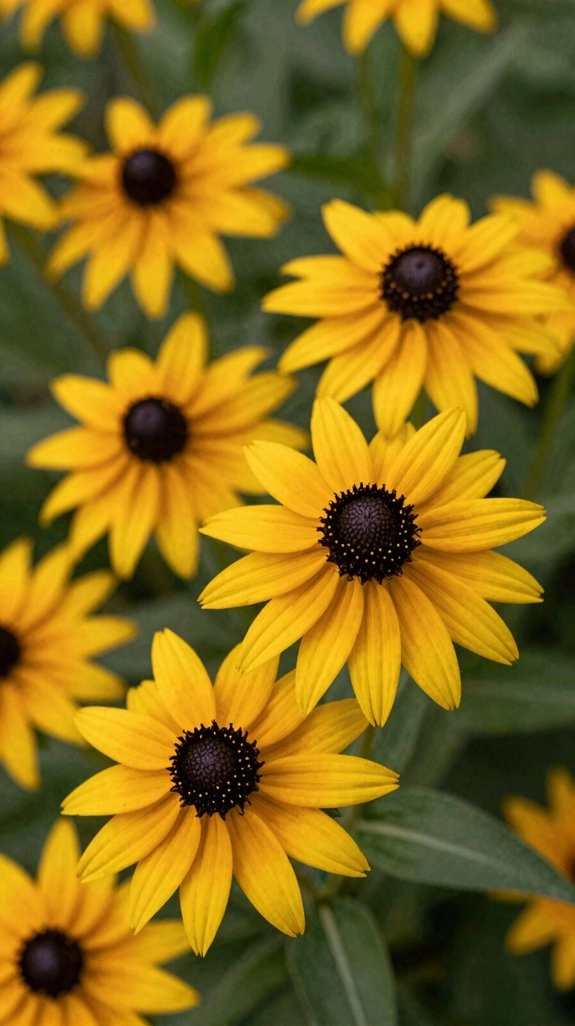
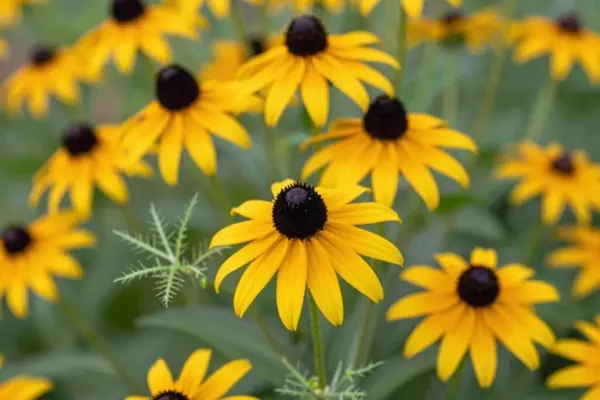
Right from the start, black-eyed Susan grabs attention with those bold, daisy-like golden-yellow blooms and that dark center that looks like it’s wearing a tiny black button-up coat. You get instant cheer, plus bold bloom contrast that makes your garden feel friendly and alive!
You don’t need skilled skills to grow it, either. It keeps blooming from early summer to frost, so you can enjoy it through changing weather without much fuss.
Even better, you’ll support pollinator benefits with every sunny flower, and if you leave seed heads up, birds may stop by for a snack. That’s a win-win, neighbor!
Best Black-Eyed Susan Varieties for Color
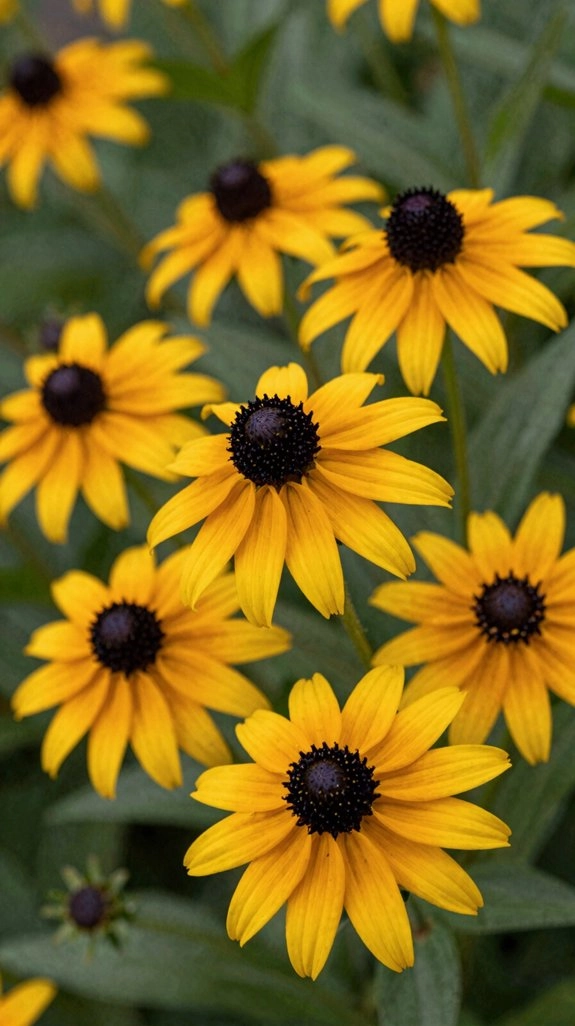
When you’re picking black-eyed Susans for pure color, Goldsturm is a rock-solid favorite, with deep golden petals, dark brown centers, and blooms that keep your garden looking bright for longer.
If you want a twist, Irish Eyes swaps in green centers for a fresh, unexpected look that still flowers from summer into fall—pretty sneaky for a “black-eyed” flower, right?
And that’s just the start, because other varieties bring their own charm, from compact front-border color to taller, showy blooms that really steal the scene.
Goldsturm’s Reliable Golden Blooms
If you want a Black-Eyed Susan that shows up looking cheerful and keeps the party going, Goldsturm is a fantastic place to start! You get deep golden petals, dark brown centers, and a clump that feels right at home in your border.
It’s award-winning, dependable, and not too tall, so you won’t need a ladder or a jungle map to enjoy it.
Give it full sun, well-drained soil, and a little deadheading, and it can bloom from summer into fall.
Nice bonus: Pollinator attraction and Monarch support make your garden feel like a friendly stopover.
Irish Eyes And Color Variants
For cutting garden timing, remember Rudbeckia hirta gives its best show in one to two peak years, so replant or let it reseed, and you’ll keep the fun going!
Best Black-Eyed Susan for Cutting Gardens
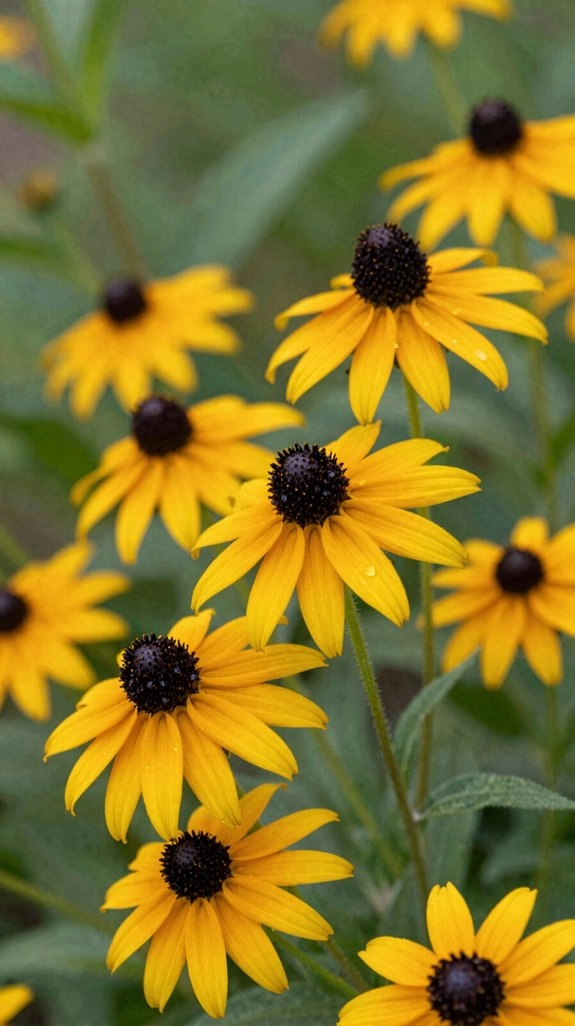
From there, you’ve got some smarter, sturdier choices to try: ‘Goldsturm’ is a classic for reliable stems and those rich gold petals with dark centers, while ‘Little Henry’ and ‘Little Goldstar’ keep things tidy with shorter stems that are much easier to arrange, especially if you’re working with a small vase and a “please don’t flop over” attitude.
For wildflower arrangements, seasonal cutting tips matter: pick blooms after they fully open, then snip in the morning, pop stems into cool water, strip leaves below the line, and recut at an angle.
Want a showstopper? ‘Herbstonne’ brings huge sunny heads!
How to Grow Black-Eyed Susan From Seed
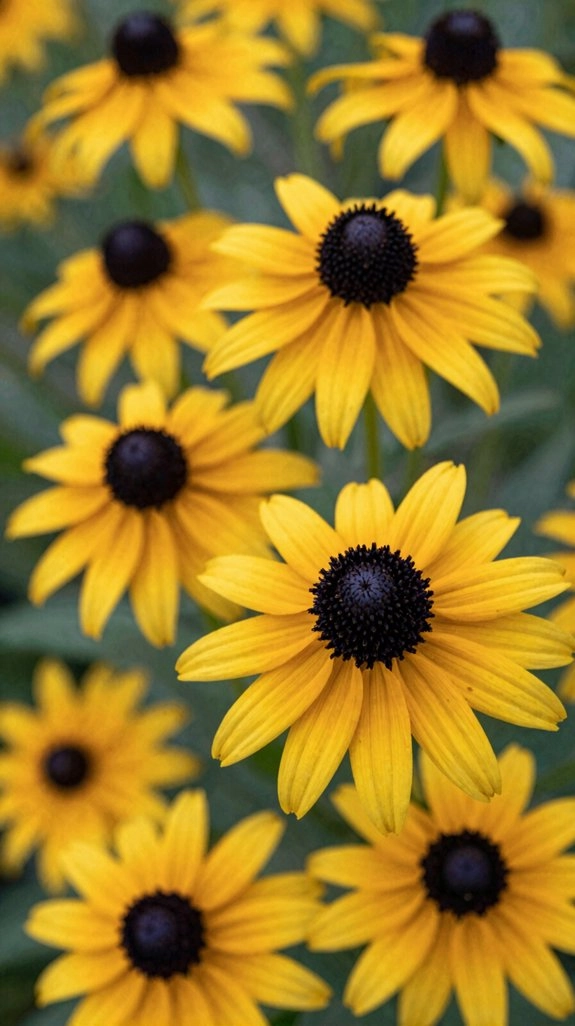
Once the soil has warmed up in early spring, you can get Black-Eyed Susan seeds going either outdoors in a sunny bed or indoors in containers or biodegradable pots—easy stuff, no specialized gear required! Check soil temperature first, because seed starting works best when it’s comfortably warm, not chilly and grumpy.
- Clear weeds and loosen the soil, then mix in compost or well-rotted manure.
- Scatter seeds lightly, press them in, and water gently but thoroughly.
- Watch for sprouts in 10–14 days, then keep them lightly watered.
You’ll fit right in with this cheerful garden crew, and later, leaving spent plants can invite bonus seedlings!
Where to Plant Black-Eyed Susan in Full Sun
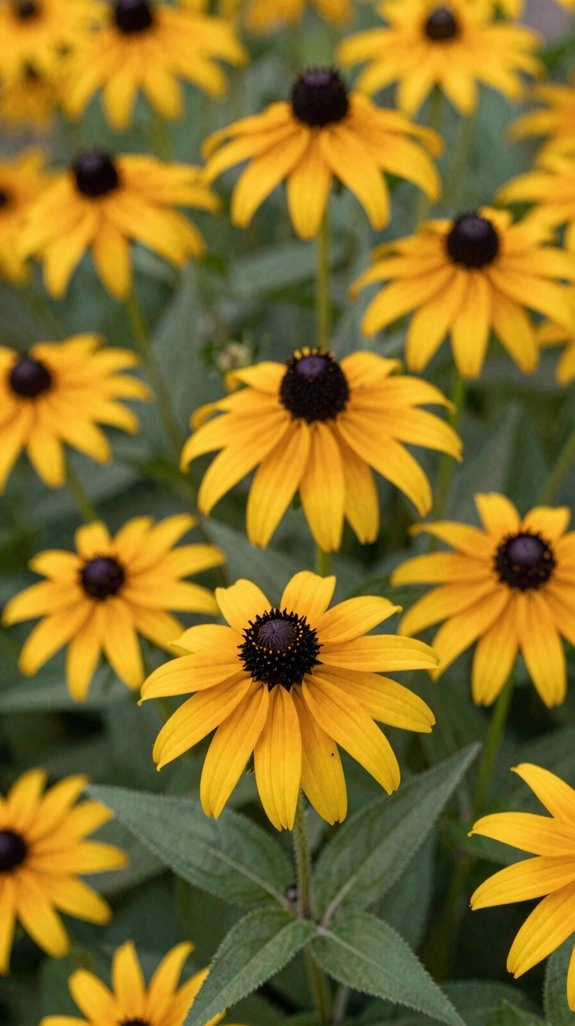
Black-eyed Susan plants are total sun-lovers, so give them a spot that gets bright, direct light for most of the day if you want those cheery yellow blooms to really show off!
You’ll fit them best in sunny borders, where they can mingle with friends that like open skies too.
Pick a site with loose soil and drainage needs in mind, because soggy roots are no one’s idea of a party.
If space is tight, try compact types up front, then tuck taller ones behind them.
Goldsturm shines in mixed beds, and once it settles in, you’ll get a bold, happy display!
How to Keep Black-Eyed Susan Healthy
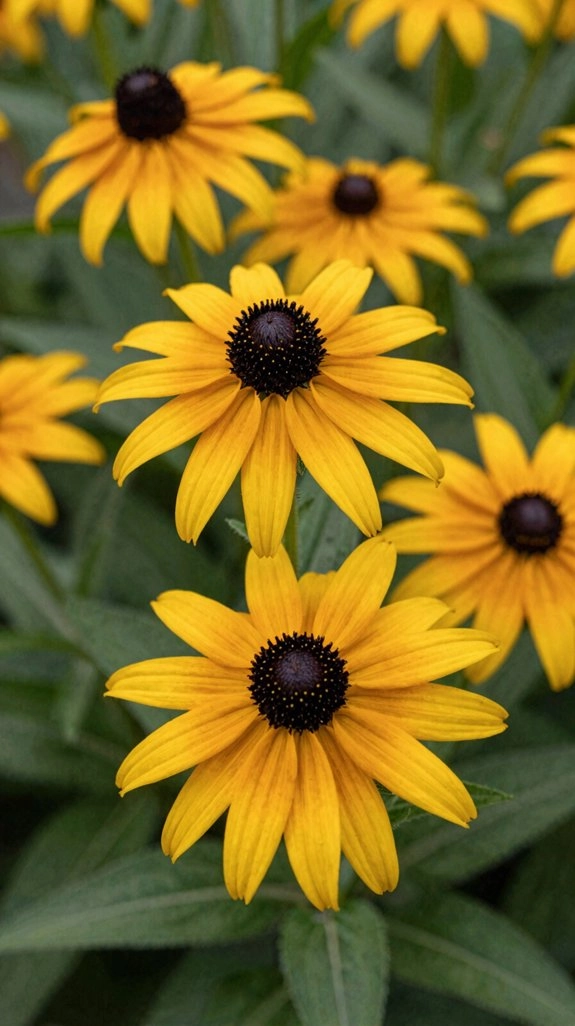
To keep your black-eyed Susans looking bright and bouncy, give them full sun, well-drained soil, and a steady drink of water when things get dry—just enough to stay vigorous without turning the garden into a swampy mess!
- Deadhead faded blooms for more flowers.
- Pinch stems in late spring for sturdier plants.
- Check leaves for aphids and mildew, then act fast.
You’ll also boost Soil health by avoiding soggy spots and overhead watering, which helps roots breathe.
A little sun protection? That means good air flow, not shade, so your plants can shine with the whole crew all season long!
Landscape Ideas for Black-Eyed Susan
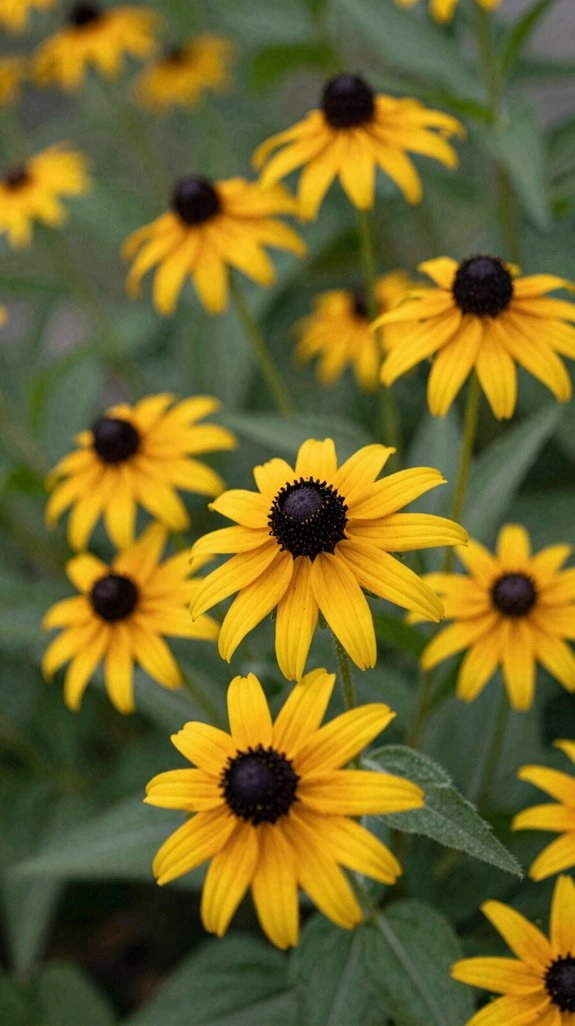
In a sunny border or a breezy meadow-style bed, Rudbeckia can do some seriously pretty heavy lifting! You’ll get the best summer-to-fall bloom in full sun and well-drained soil, and taller types like Autumn Sun can screen a fence in the back of the bed.
For a prairie vibe, repeat drifts with ornamental grasses so the daisy heads pop.
Want a friendlier, pollinator-packed look? Tuck in Echinacea, Gaillardia, or Achillea by height, and your border will feel welcoming fast.
For container planting, use a roomy pot, deadhead for more flowers, then leave seed heads in fall for wildlife benefits.
Best Companion Flowers for Black-Eyed Susan
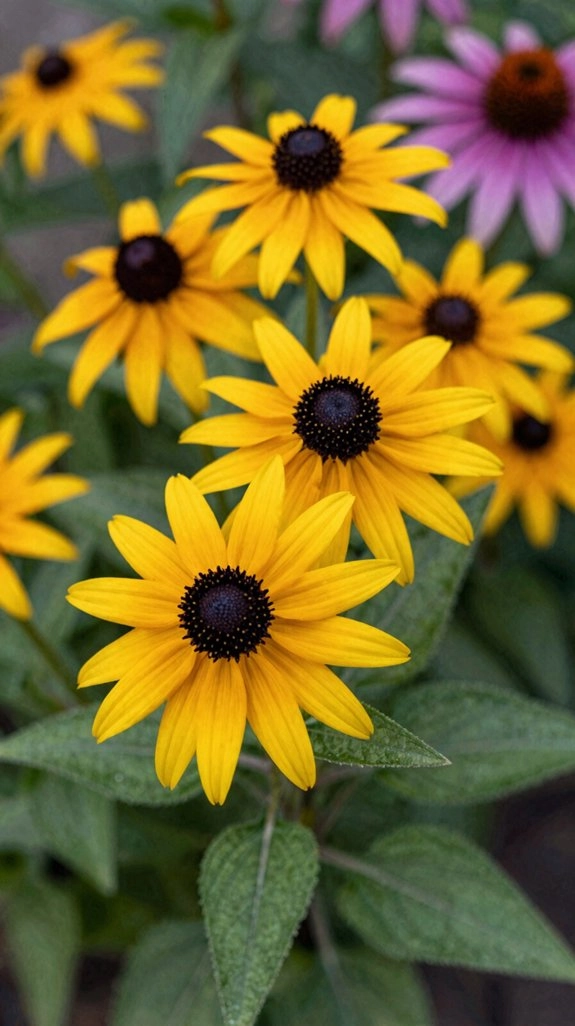
You can make Black-eyed Susans feel right at home in a cottage garden by pairing them with coneflowers, blanket flowers, and airy yarrow, and wow, the color mix gets lively fast!
For a prairie-style look, tuck in salvia too, since those spiky purple-blue blooms make the bright yellow cones pop like little suns.
Just keep these plant pals in full sun with well-draining soil, and you’ll get a cheerful, pollinator-friendly show that keeps going from summer into fall.
Cottage Garden Pairings
When you’re building a cottage-garden look around Black-eyed Susans, think soft layers, happy color, and lots of buzzing visitors!
You’ll feel right at home mixing them with:
- Coneflowers and bee balm for a pollinator companion combo that keeps traffic coming.
- Phlox in the border for extra border color and that sweet summer-into-fall glow.
- Yarrow, salvia, and blanket flower for texture, height, and cheerful contrast.
Plant in full sun with well-drained soil, then tuck the taller blooms near or slightly in front, depending on shape.
You won’t need impressive tools, just a trowel and watering can.
Soon, your bed’ll look charming, lively, and delightfully un-fussy!
Prairie Plant Partners
Black-eyed Susans already bring that sunny, prairie-style cheer, but they really strut their stuff once you pair them with the right neighbors!
Try coneflowers for a bold daisy mix, tucking them behind or around your Rudbeckia, depending on height.
Add blanket flowers up front for fiery pops, and slip in yarrow for a soft, textured carpet.
Want extra contrast? Place salvia beside or in front for purple-blue spikes that make the yellow blooms glow.
For pollinator attraction and seasonal bloom planning, finish with Michaelmas daisy, so your bed keeps going when summer starts to fade.
How to Harvest Black-Eyed Susan for Vases
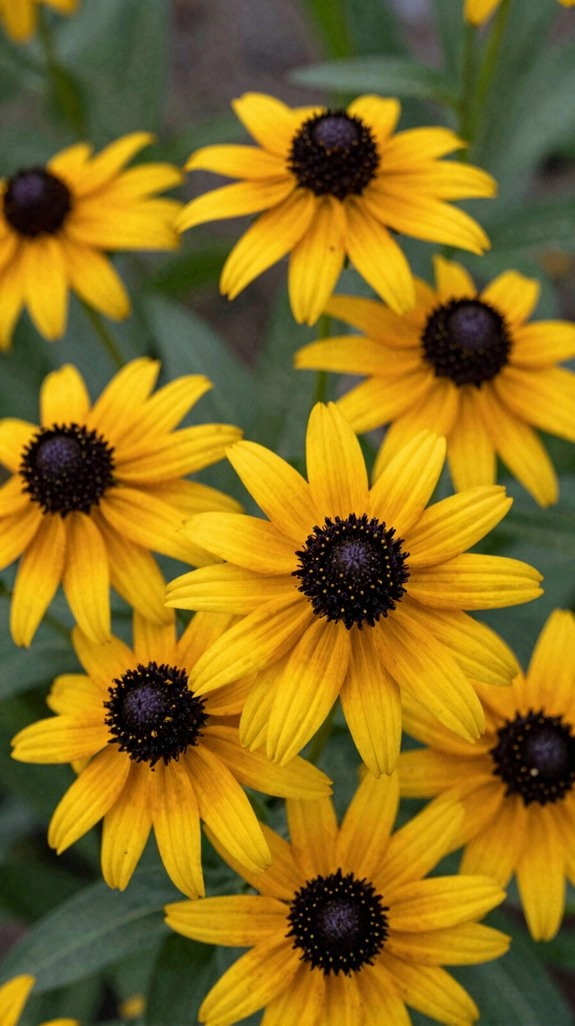
After a sunny morning stroll through the garden, snip your Black-Eyed Susans once the dew’s gone and the blooms are fully open, because that’s when they usually look their best in a vase. For smart harvest timing, cut long stems, then tuck them straight into cool water fast, like they’re joining the party!
- Remove any leaves below the waterline.
- Recut each stem at a diagonal for better drink-up strength.
- Skip hot water or pounding, just keep it simple.
For easy vase prep, refresh the water every few days and recut stems if you want them to last longer.
How to Dry Black-Eyed Susan for Crafts
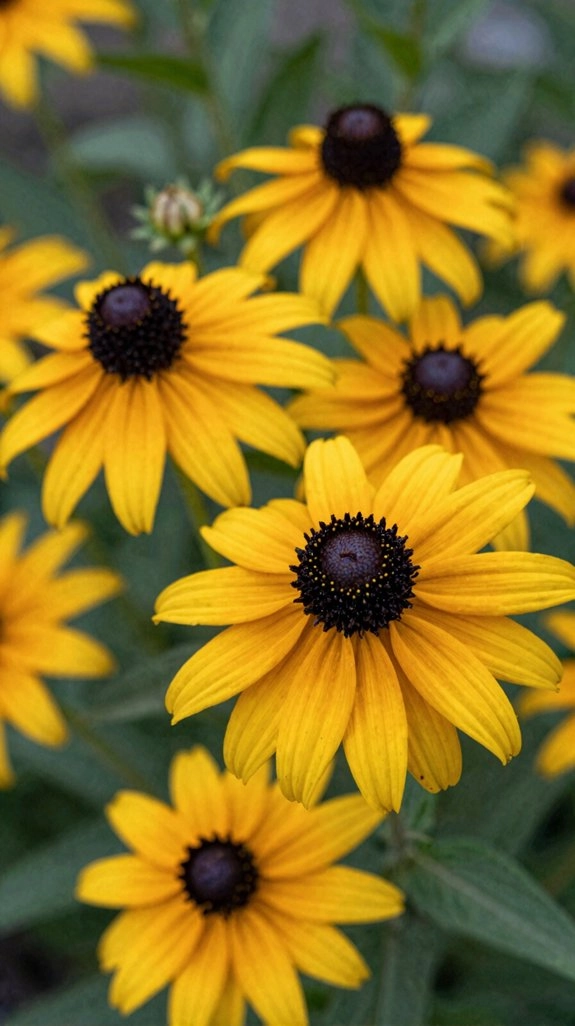
If your vase blooms are making you smile, you can also save that pretty color for later by drying Black-Eyed Susans for crafts—easy, fun, and a little bit magical!
Pick fully open flowers after the dew dries, snip long stems, and strip extra leaves.
Gather them, tie them tight, then hang upside down in a warm, dry spot with good airflow.
This helps make quick drying and can prevent petal curl.
Want a flatter look? Press petals or cone pieces between books with parchment.
Later, choose craft uses like wreaths, garlands, or rustic accents—your sunny stash will thank you!
How to Keep Black-Eyed Susan Blooming Longer
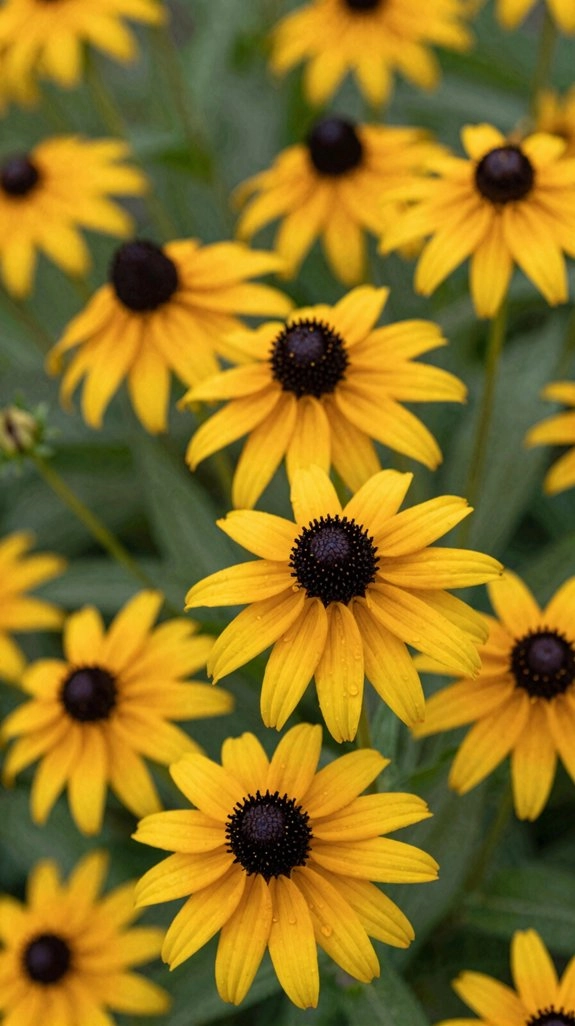
Want more of those sunny black-eyed Susan blooms? Start by deadheading the faded flowers, then pinch back the stems a bit to encourage fresh growth and sturdier blooms, because nobody likes a plant that acts like it’s retired already!
Keep the water fresh, too—whether in the garden or a vase—since clean water helps the flowers stay perky longer and may give you a cheerful surprise when new blooms keep popping up.
Deadhead Spent Flowers
Deadheading black-eyed Susans is one of the easiest little garden chores, and it can keep those sunny blooms coming much longer! Snip off faded flowers fast, and your plant can focus on new buds instead of seed-making.
- Use clean snips for quick, tidy cuts.
- Keep plants in full sun with well-drained soil and moderate watering.
- Stop deadheading in early fall if you want winter finches and black-capped chickadees to enjoy the seeds.
Regular deadheading also boosts hummingbird attraction and pollinator benefits, so your patch feels lively and cheerful all season. Different varieties bloom from summer to frost—nice, right?
Pinch Back For Stems
Around mid-to-late May, give your black-eyed Susans a quick haircut by pinching them back to about half their height, and they’ll usually come back with shorter, sturdier stems that hold up better as the season rolls on!
This Pruning Timing trick boosts Stems Strength, so your plants feel less wobbly and more garden-party ready—nice, right?
Use clean pruners or your fingers, snip the soft tips, and let the plants branch out.
You’ll get a fuller look, and many Rudbeckia hirta types won’t flop as much later on.
Keep the bloom show going, and your patch will feel like it belongs in the spotlight!
Keep Water Fresh
Fresh stems and fresh water make a big difference when you want black-eyed Susans to keep looking cheerful in a vase! Put them in cool water right away, and do Waterline leaf removal so nothing sits soggy below the surface.
- Recut each stem at an angle for better sipping.
- Refresh the vase water every few days, easy and low-cost.
- Keep blooms cool, with Upright stem support and no heat tricks.
You don’t need flame, hot water, or stem pounding—just gentle care.
If you’re extra invested, trim the bottoms again and enjoy longer, brighter blooms together!
How Black-Eyed Susan Helps Wildlife
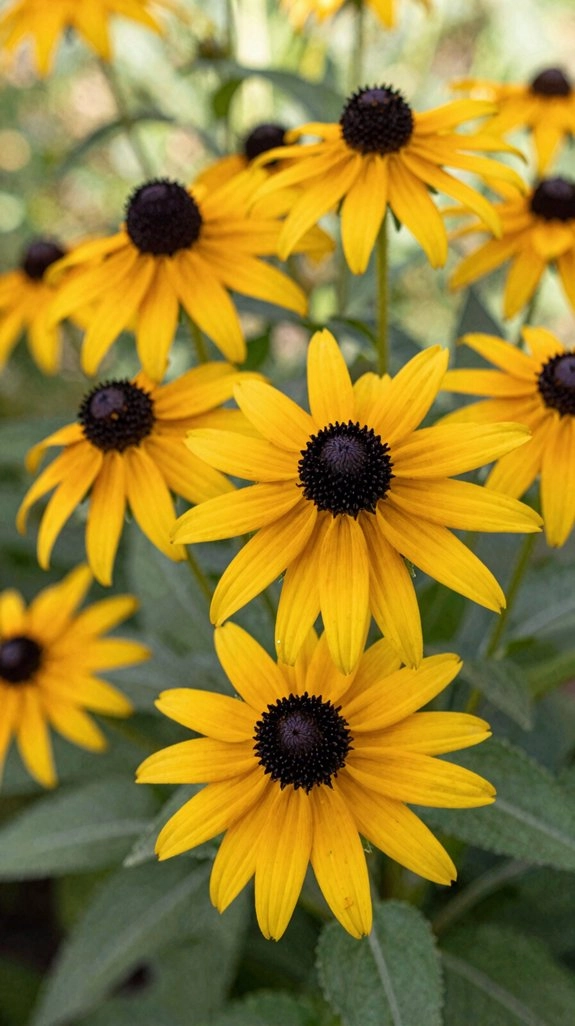
Black-eyed Susans do a lot more than just look cheerful in the garden—they’re tiny wildlife magnets! You’ll boost native pollinator attraction when bees and butterflies zip in for nectar from late spring through fall.
Plant species types when you can, since they usually help native pollinators more than ornate cultivars.
Then comes the quiet payoff: winter seed support. If you skip deadheading in early fall, the cones fill out for finches and black-capped chickadees, and you can leave spent stems standing.
Since deer usually pass them by, your patch keeps feeding and sheltering wild guests, even when other blooms get nibbled!