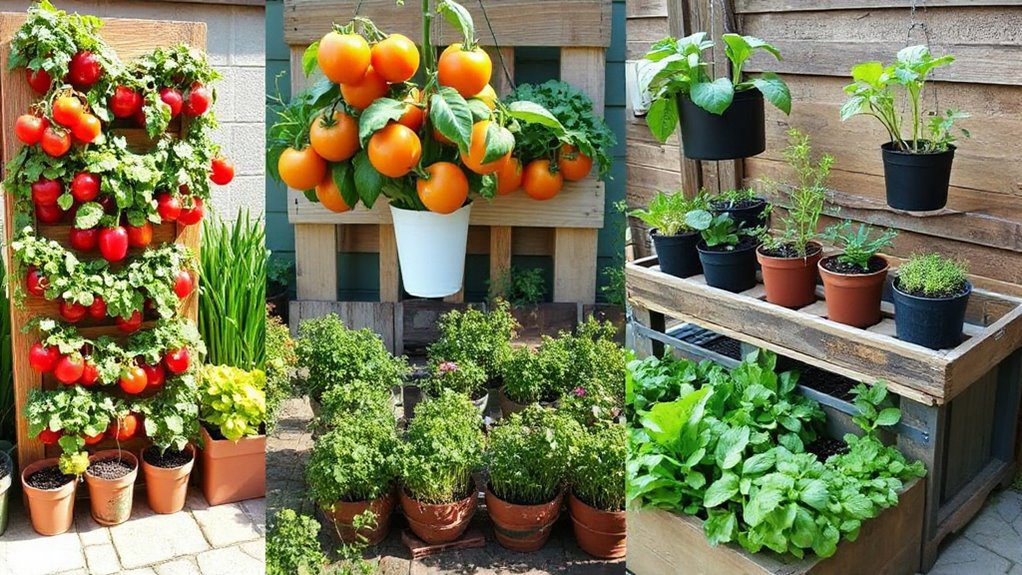
Home Vegetable Garden: A Beginner’s Guide to Growing Fresh Food
- Home Vegetable Garden: A Beginner’s Guide to Growing Fresh Food
- Key Takeaways
- Planning Your Garden Space
- Choosing Easy Vegetables
- Preparing Healthy Soil
- Raised Beds or In-Ground
- Watering the Right Way
- Companion Planting Basics
- Natural Pest Control
- Seasonal Planting Guide
- Harvesting Tips
- Common Beginner Mistakes
Start with a sunny 4×8 bed or containers, checking drainage, hose access, and soil with a test. Add compost, then plant easy winners: lettuce and radishes in cool weather, beans and zucchini from seed, and tomatoes after frost. Water soil lines about an inch weekly, scout leaf undersides, and use row covers or handpicking for pests. Harvest often, especially in cool mornings—your plants will produce more! Avoid crowding, and you’ll soon learn the best beginner secret: succession planting. More practical timing and care tips await below!
Key Takeaways
- Choose a sunny, well-drained location with hose access, and begin with a manageable 4×8-foot raised bed.
- Grow beginner-friendly vegetables such as lettuce, radishes, beans, zucchini, and tomatoes according to seasonal timing.
- Test soil before planting, then add compost or leaf mold and adjust pH only according to test results.
- Water at the soil line, aiming for about one inch weekly while adjusting for heat and soil moisture.
- Prevent problems by spacing plants properly, scouting regularly, using barriers or beneficial insects, and harvesting frequently.
Planning Your Garden Space
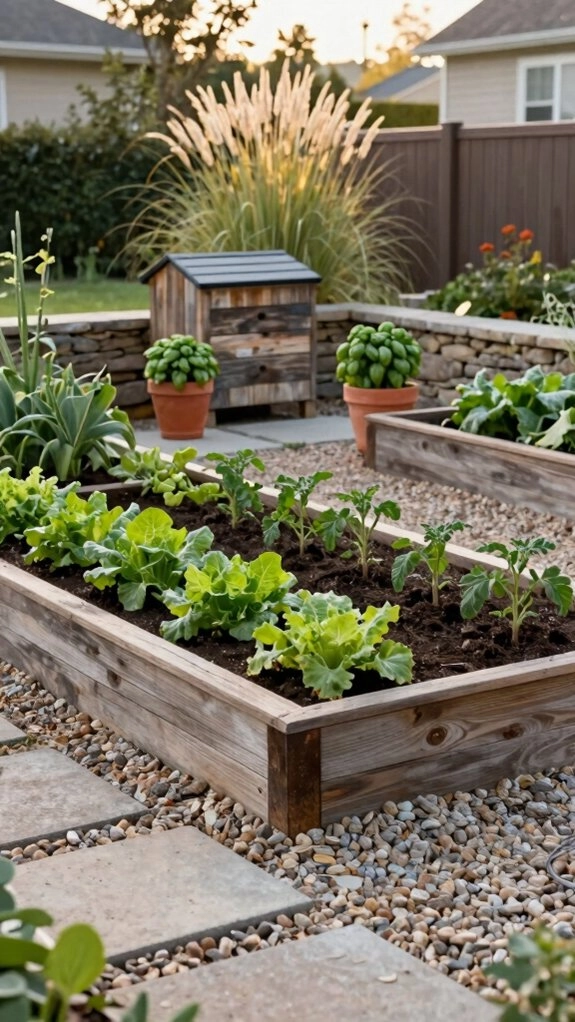
Before you buy seeds or haul home a pile of soil, take a good look at your yard—your garden’s location can make growing vegetables feel easy or like a daily wrestling match with a hose!
Start with a Sunlight assessment: choose eight-plus hours for most crops, then add shade planning for leafier areas.
Check hose access, complete a drainage check, and consider soil testing before planting.
Keep beds away from thirsty trees and shrubs.
Begin with a manageable beginner plot, such as a 4×8 raised bed, so gardening fits your life!
For a north south layout, place tall supports on the north side.
Mark paths now, and you’ll make crop rotation easier later!
Choosing Easy Vegetables
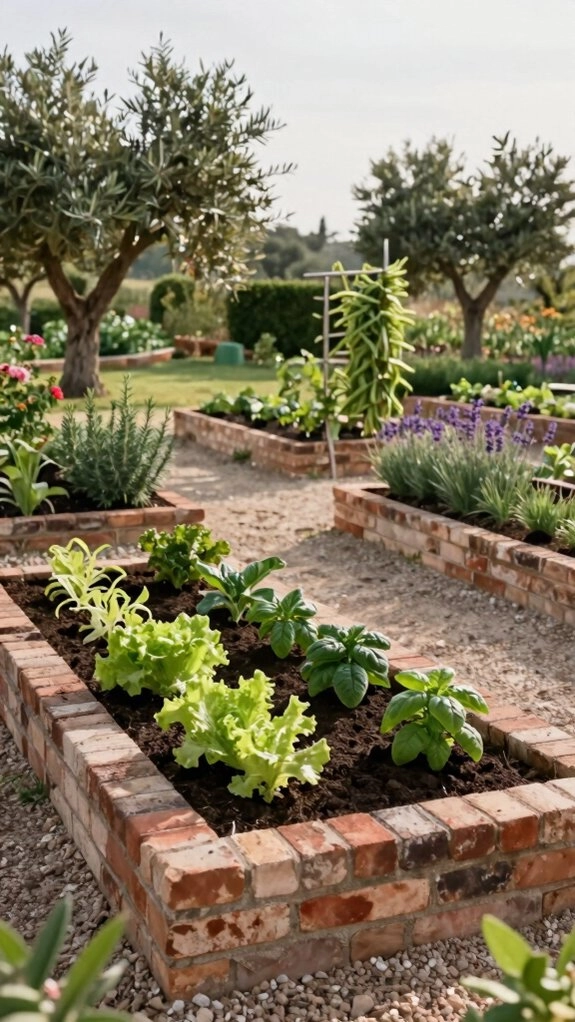
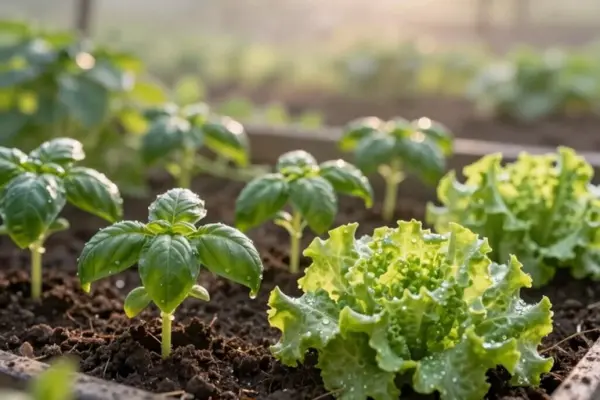
With your garden space mapped out, it’s time to pick vegetables that won’t make you feel like you’ve taken on a second job! Vegetable selection feels easier when you join the beginner gardener club with lettuce, radishes, green beans, zucchini, and tomatoes.
Choose beginner friendly varieties that fit your sunlight: most need eight hours, while lettuce manages with six. Check seasonal crop timing, too. Plant lettuce and radishes in cool weather, then wait until after the last frost for tomatoes and zucchini.
Direct-sow beans and radishes, giving plants room for airflow. For steady harvests, try simple succession planting: sow a little every one to two weeks!
Preparing Healthy Soil
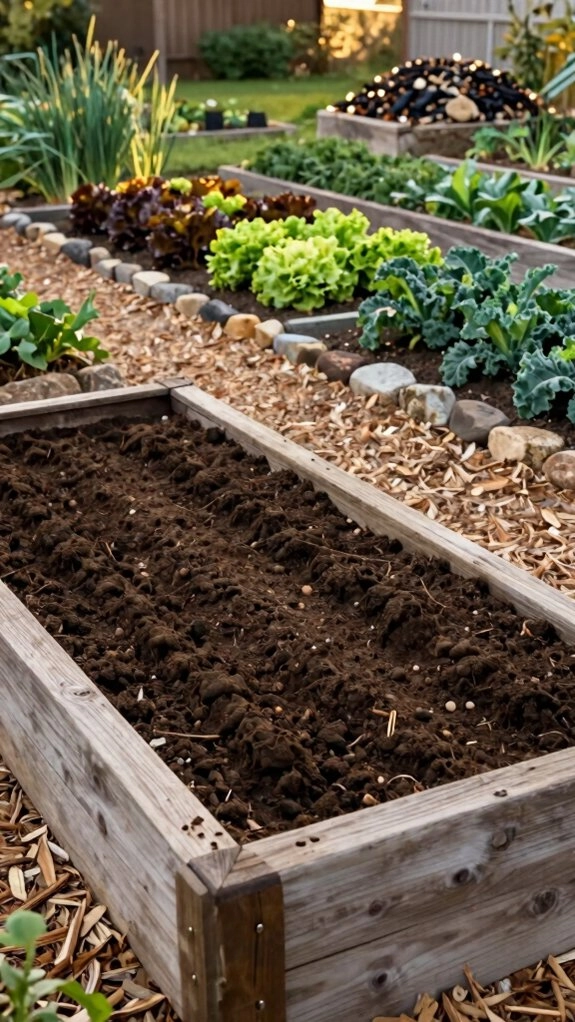
Great vegetables start with healthy soil, so loosen the bed with a garden fork and mix in a generous layer of compost or leaf mold—your plants will thank you!
Start with soil testing to check nutrients and pH before adding anything else. Follow the results for accurate pH adjustment instead of guessing with fertilizer.
You’ll also enjoy compost benefits, including richer texture and steady nutrients.
If water sits after rain, mix in organic matter for drainage improvement; soggy roots invite disease.
In containers, choose potting mix, not garden soil.
Add amendments before planting, and be patient—fertility may take several seasons to build.
Together, you’re growing stronger harvests from the ground up!
Raised Beds or In-Ground
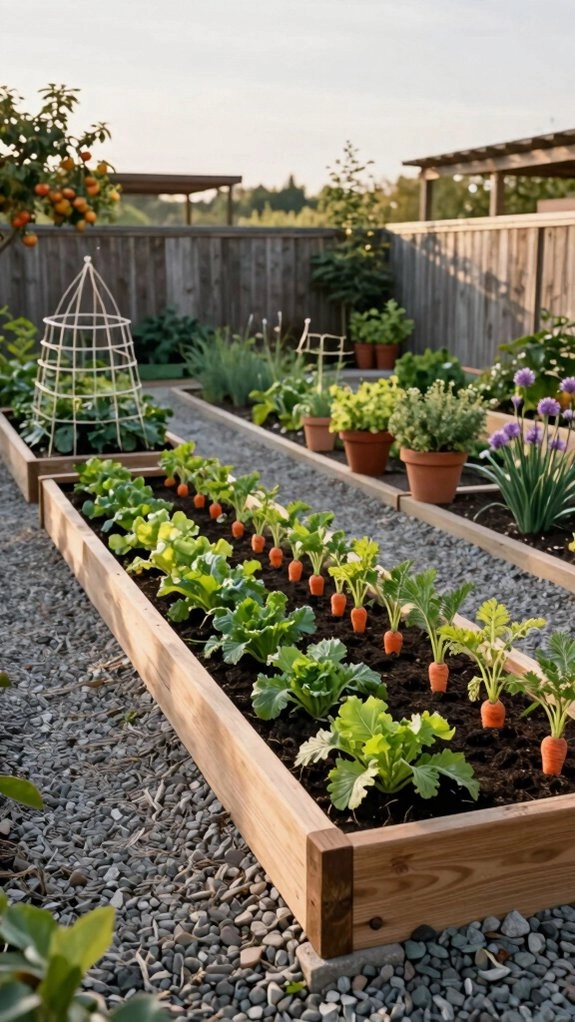
If you’re choosing your first garden setup, raised beds are often the easiest place to begin because they drain well, warm up quickly in spring, and let you control the soil from day one.
They’re also friendly for beginners!
Choose untreated lumber, never old railroad ties or pressure-treated wood.
A 4×4 or 4×8 bed keeps your bed layout simple and reachable.
Check sunlight needs first—most vegetables want 6–8 hours of direct sun.
An in-ground plot can work, too, but you’ll remove sod and weeds before improving existing soil.
Try soil testing, review irrigation basics, and remember: the best garden is one you’ll enjoy tending!
Watering the Right Way
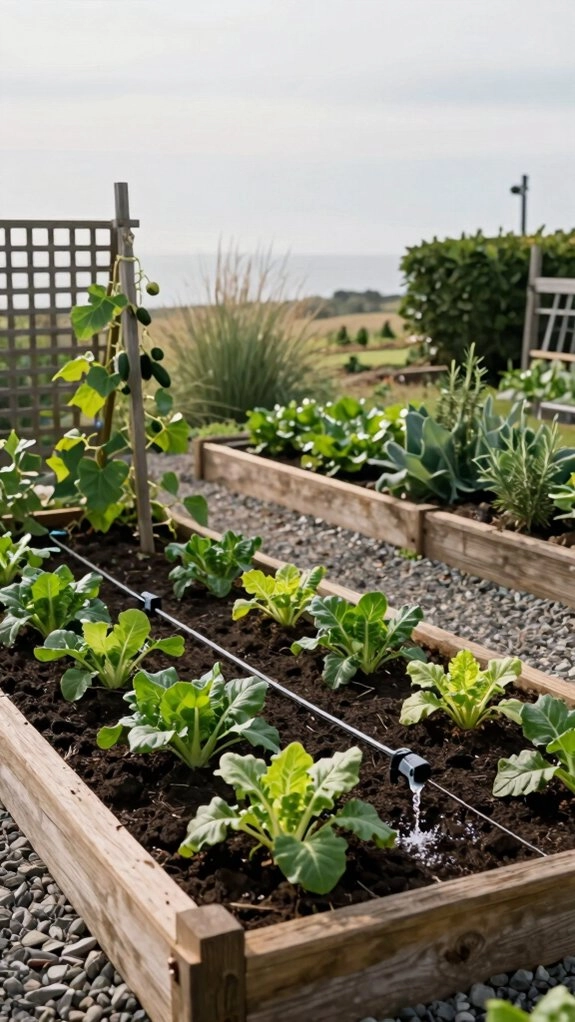
Water your vegetables at the soil line, not over the leaves, so moisture reaches the roots and wet foliage doesn’t invite disease—your plants will thank you!
Aim for about 1 inch weekly, adding more during heat. Sandy soil dries quickly, while clay-heavy soil holds water, so check soil moisture instead of following a strict schedule.
New seeds and transplants need daily watering without rain until established.
Water in the morning, keeping soil moist, never muddy. Watch for morning or evening drooping as a drought warning.
Try Drip irrigation or soaker hoses for leaf sparing watering and drought prevention.
Your garden—and your neighborhood growing crew—will thrive together!
Companion Planting Basics
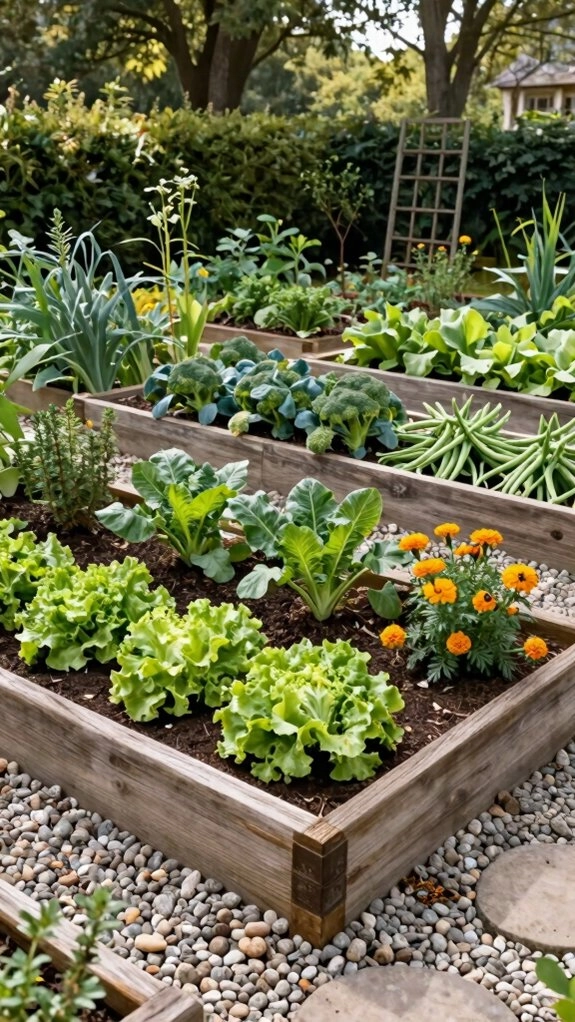
Companion planting means growing helpful plant partners side by side, so your garden can attract pollinators, discourage pests, and even crowd out weeds—nature’s little teamwork project!
Start with a simple companion planting chart, then choose Soil friendly plant pairs, such as basil near tomatoes or dill among vegetables. Their flowers welcome pollinators and helpful insects, making your garden feel like a friendly neighborhood!
Plant marigolds near crops that often attract aphids, and use Pest resistant crop spacing to give each plant room without leaving bare soil. Place taller plants where they won’t shade shorter ones.
Here’s the fun surprise: flowers throughout your garden can turn every row into a buzzing, balanced community!
Natural Pest Control
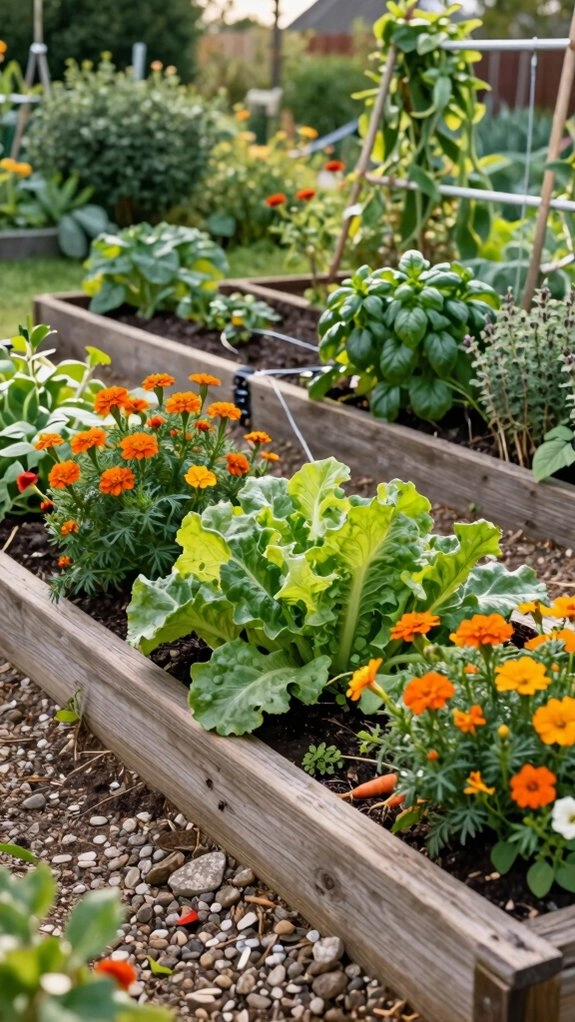
Healthy plants are your garden’s first line of defense, so give them 6–8 hours of sun, about 1 inch of water per week, and soil that isn’t constantly soggy—strong plants are much less inviting to pests and disease!
Water early with a soaker hose or drip line, letting leaves dry before evening. Then scout regularly, checking leaf undersides and nighttime beds for slugs, snails, and frass.
Welcome beneficial insects with marigolds, basil, or dill. If pests appear, try handpicking, netting, or a row cover—simple, low-cost barriers that work!
Save organic remedies for stubborn problems, and always follow labels. Your garden community will cheer those tiny victories!
Seasonal Planting Guide
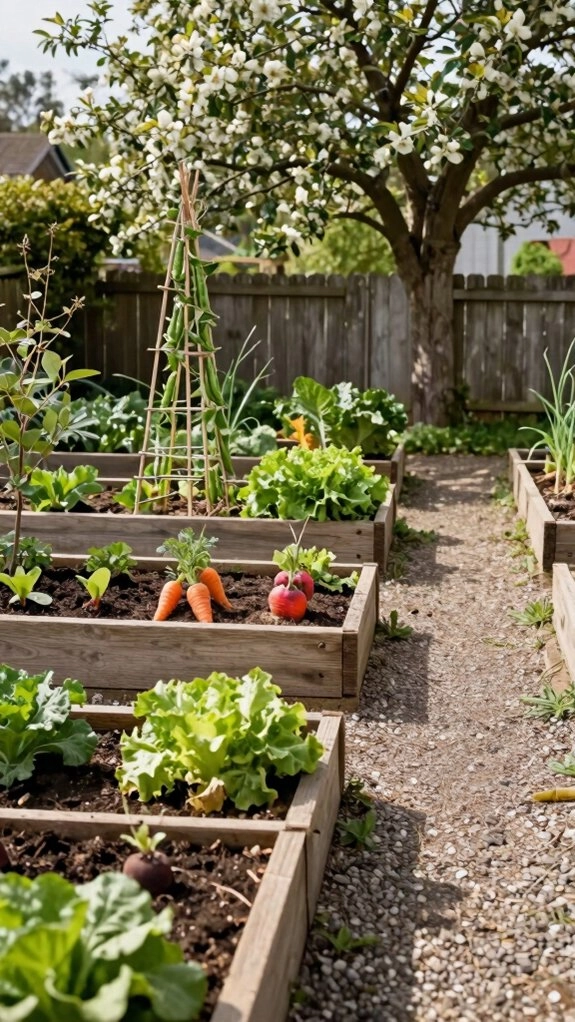
Once you’ve made your plants less tempting to pests, it’s time to plan when each crop should take the stage! You’re joining gardeners everywhere, so start with your ZIP code’s average last frost timing.
Plant lettuce, kale, chard, spinach, and peas in early spring. After frost passes and temperatures stay near 70°F, move in tomatoes, cucumbers, squash, beans, and peppers. Check soil temperature checks, too, because seeds won’t sprout in chilly ground.
In late summer, sow cool-season crops for fall, then establish freeze-tolerant plants in autumn. Winter favors kale and collards, protected by frost cloth or a cold frame.
Here’s the clever trick: succession-plant every one to two weeks for steady growth!
Harvesting Tips
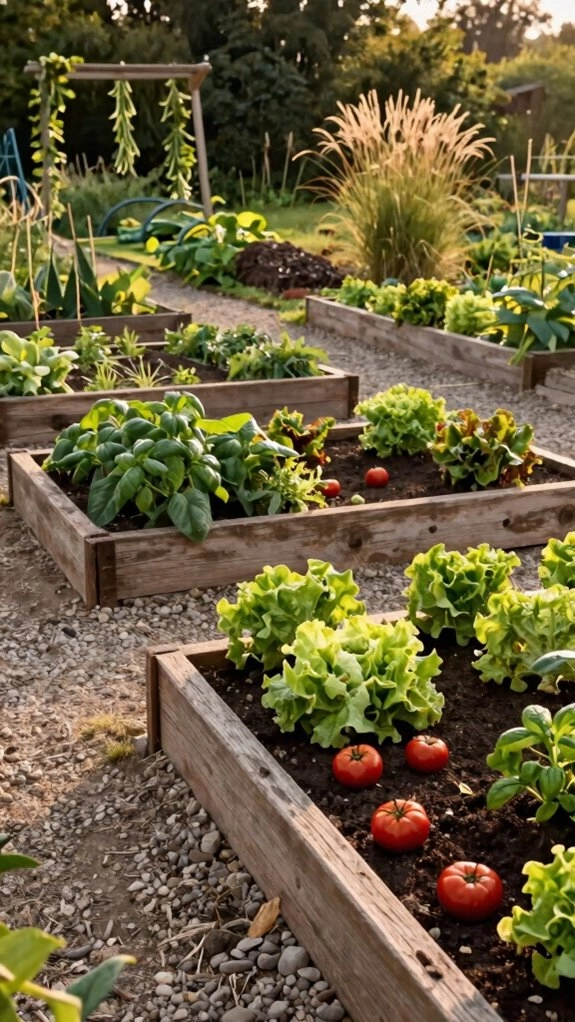
Harvest your vegetables regularly, preferably in the cool morning hours, when plants are less stressed and produce is crisp and full of flavor! Pick lettuce and herbs often to encourage fresh growth, while tomatoes and cucumbers taste best when fully ripe.
Check your garden frequently, removing over-mature produce before it slows new growth. Lift tender crops gently to prevent bruises, and practice Pest free handling by using clean hands and containers. Water consistently, but avoid late-evening watering, which leaves foliage damp overnight.
After harvesting, consider Composting timing: add spent plants when they’re healthy, then sow a replacement crop! Succession planting keeps your garden producing.
Common Beginner Mistakes
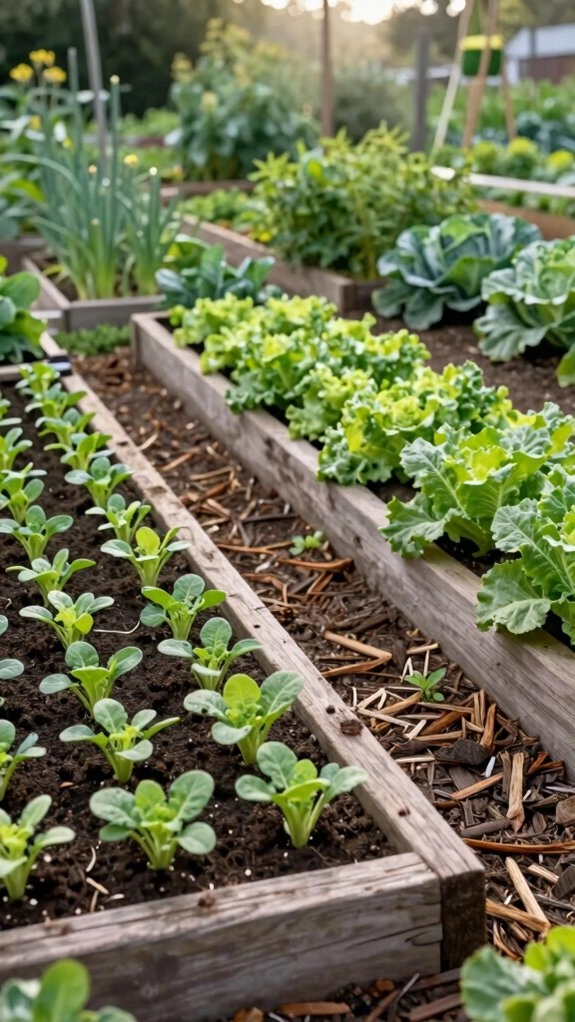
Common beginner mistakes can turn a promising garden into a crowded, soggy jungle—but they’re easy to avoid!
Start Seed Starting small: a Seed Packet may hold 30 seeds, but you don’t need to plant them all. Overcrowding Risks include weak growth, pests, and fewer vegetables, so follow spacing labels.
Next, check your soil before planting. A simple test and added compost can improve drainage and nutrients.
Watch Soil Moisture, too; most vegetables need about an inch of water weekly, including rain. Muddy roots invite disease!
Finally, avoid Timing Errors: plant cool-season crops in early spring and warm-season favorites after the last frost. Your garden—and fellow growers—will thrive!