19 Gravel Garden Ideas for a Stylish Low-Maintenance Yard
- 19 Gravel Garden Ideas for a Stylish Low-Maintenance Yard
- Key Takeaways
- Modern Gravel Courtyard
- Mediterranean Gravel Garden
- Japanese Gravel Landscape
- Gravel and Succulent Beds
- Decorative Stone Pathways
- Gravel Fire Pit Area
- Raised Gravel Borders
- Zen Seating Corner
- Mixed Gravel Textures
- Container Garden Display
- Dry Creek Bed Design
- Gravel Around Trees
- Outdoor Dining Space
- Minimal Front Yard
- Wood and Gravel Contrast
- Stepping Stone Walkway
- Gravel Water Feature
- Coastal Garden Style
- Low-Water Planting
You can build a stylish, low-maintenance gravel yard with ideas like a modern courtyard, Mediterranean beds, Japanese raked lines, succulent pockets, and stepping-stone paths. Start with yard fabric, overlap the seams, add edging, then spread about 3 inches of one gravel color for a clean look. Mix in lavender, grasses, or agave for easy color. Want extra charm? Try a fire pit, water feature, or pea gravel path, and a few surprises are coming up!
Key Takeaways
- Use one gravel color and clean edging for a modern, low-maintenance look.
- Lay landscape fabric with overlapped seams, then spread gravel about 3 inches deep.
- Choose drought-tolerant plants like lavender, sedum, grasses, juniper, agave, or yucca.
- Add stepping stones, pavers, or borders to improve structure and stable footing.
- Rake regularly, pull early weeds, and top up gravel every few years to keep it tidy.
Modern Gravel Courtyard
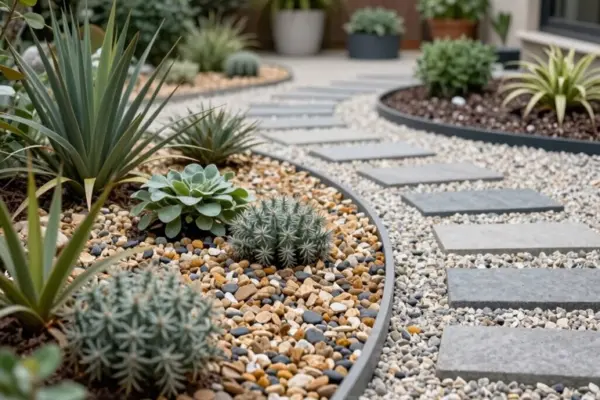
To make it feel truly modern, stick with one gravel color like tan, charcoal, gray, or white, and use metal, stone, or timber edging so the stones stay put instead of wandering off like tiny escape artists.
Start by leveling firm soil, laying landscape fabric with overlapped seams, then spread clean gravel about 3 inches deep and rake it smooth. Nice, right?
Add paver edging for a crisp frame and easier weed free maintenance.
In windy spots, choose larger stones, 3/8 inch or bigger, and pair the courtyard with a simple fire pit or pavers.
You’ll get a clean, welcoming space that feels polished fast.
Mediterranean Gravel Garden
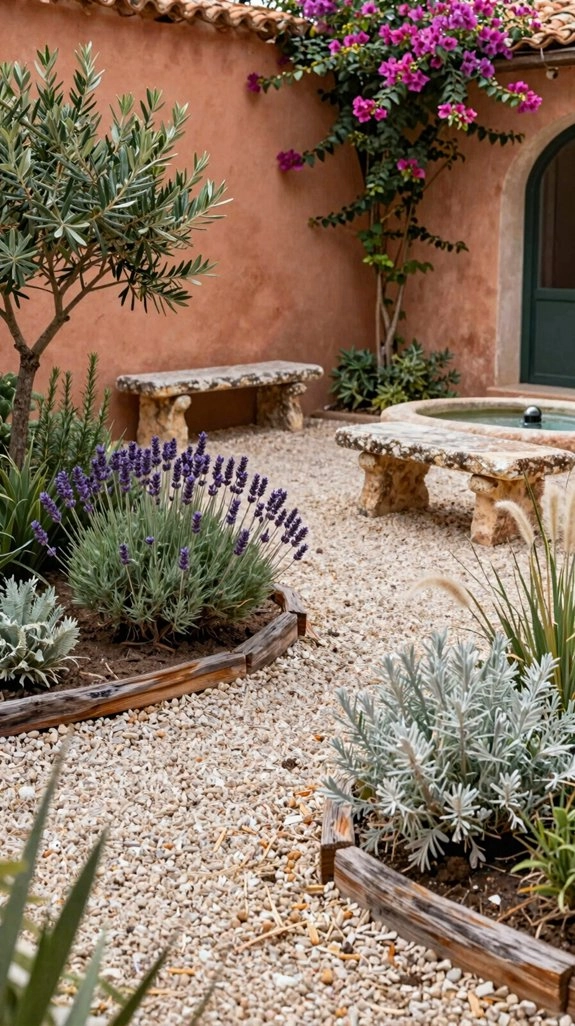
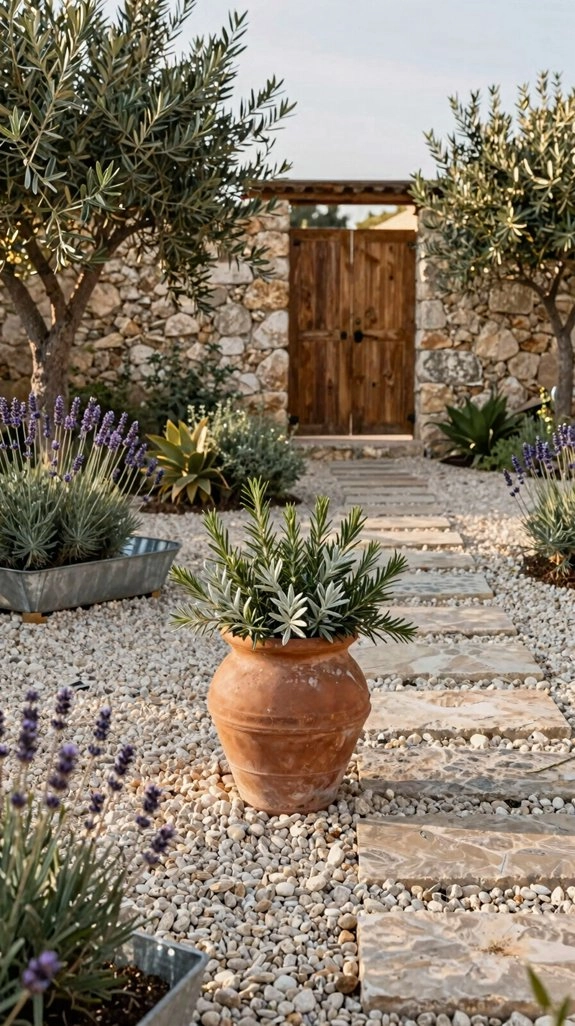
If you like the clean feel of a gravel courtyard, a Mediterranean gravel garden takes that same easy charm and warms it up with sun-baked color!
You can build it with tan gravel mulch, landscape cloth, and a thin sand layer for a level base.
Then add lavender, sedums, grasses, and shrubs like juniper or cistus for that lavender contrast and a true Mediterranean drought look.
Spread gravel about 3 inches deep, choose fine stones for a smooth finish, or chunkier ones if you want extra grip.
Water deeply, not often, and expect a few weeds early on, then easy weekends later.
Japanese Gravel Landscape
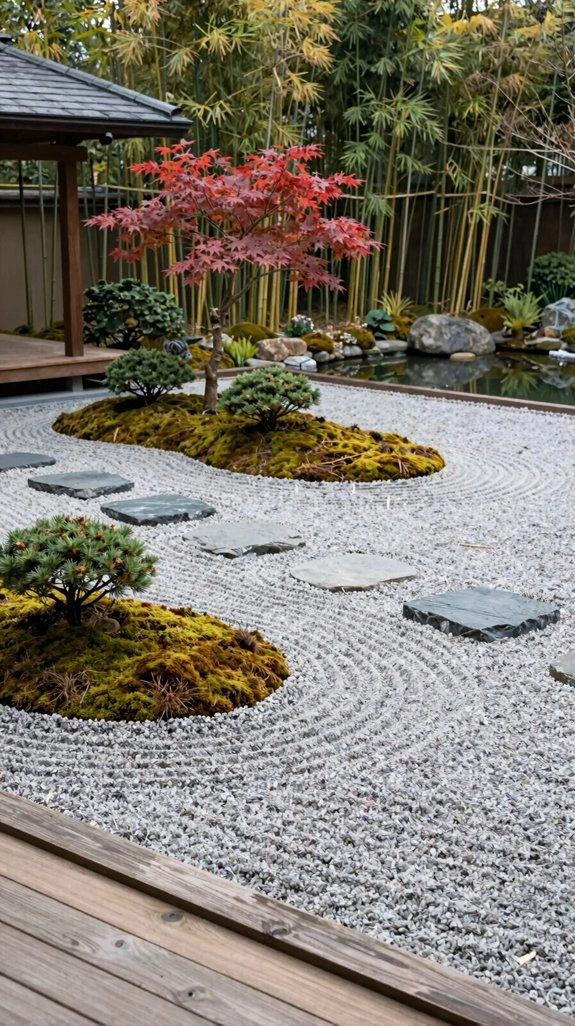
A Japanese gravel terrain brings instant calm, like stepping into a quiet garden scene that knows how to exhale! You can create that soothing look with tan or light gray gravel, raked into flowing dry-river lines.
Start with weed control fabric, cut it neatly, and overlap seams so weeds don’t crash the party. Next, do sand leveling with 1 to 2 inches of sand, then add about 3 inches of gravel and rake your wave patterns.
Keep a few drought-tough plants, like grasses or shrubs, spaced wide. Monthly raking and quick weed pulls keep it sharp, peaceful, and wow-worthy!
Gravel and Succulent Beds
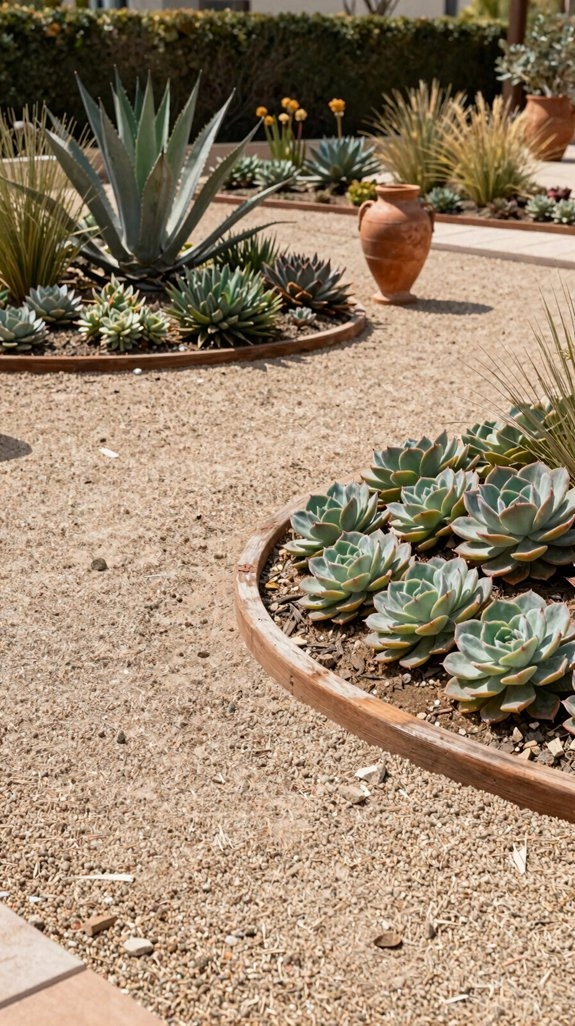
Gravel and succulents make a gorgeous pair, and they’re pretty forgiving too, which is a nice bonus for busy yards!
For gravel bed prep, lay garden fabric over cleared soil, then spread 2–3 inches of clean gravel in warm tan or brown tones. Choose 10mm gravel for a smooth look, or 20mm+ for extra texture and staying power.
Next, place agave, aloe, or yucca with smart succulent spacing so each plant can spread and shade out weeds. If leaves tend to drop around you, pick larger rock so it doesn’t disappear into the mix.
Top up gravel every few years—easy!
Decorative Stone Pathways
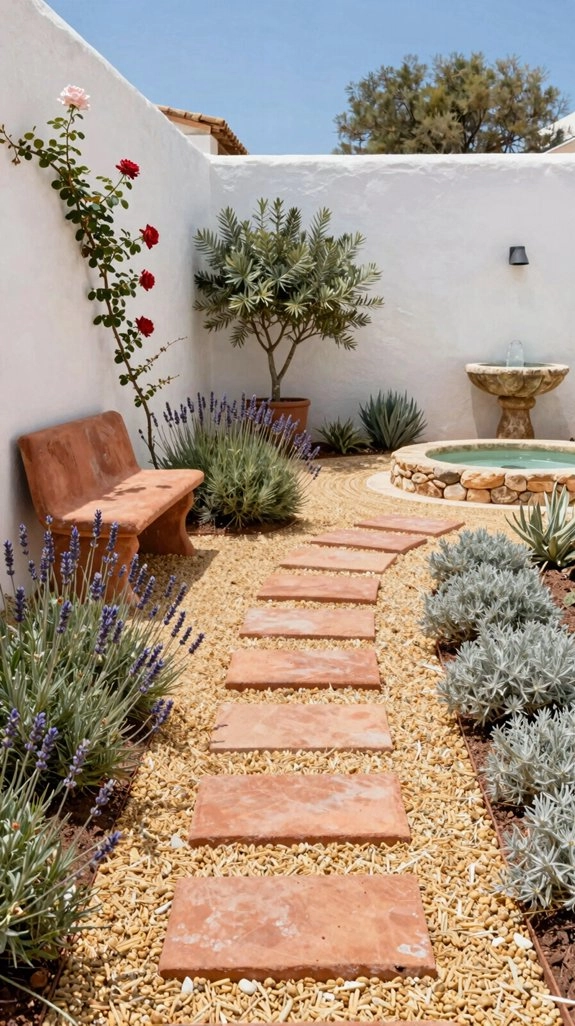
Stone pathways can give your yard that neat, finished look without turning into a full-time chore! You can use crushed stone or decomposed granite, and both compact well for busy feet. For a cleaner feel, decomposed granite brings a fine texture and still drains nicely.
Start with ground cover fabric, overlapping the seams so weeds don’t sneak in like tiny garden rebels. Then add 1 to 2 inches of base, finish with about 3 inches of gravel, and rake it smooth.
Durable edging keeps everything in line, while color matched stones and mixed sizes make your path feel polished, welcoming, and easy to love!
Gravel Fire Pit Area
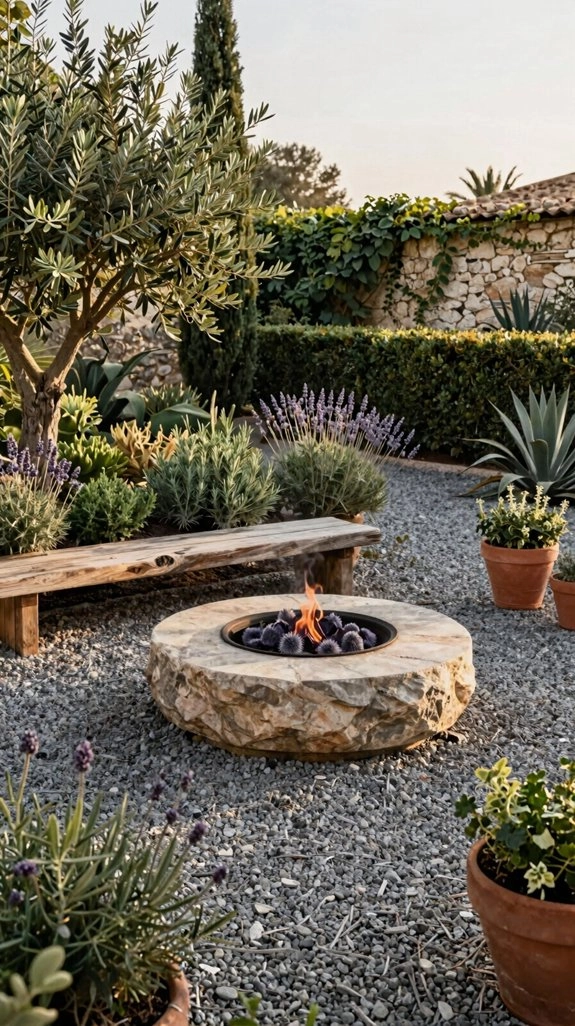
When you’re setting up a fire pit zone, the ground you choose matters just as much as the fire pit itself! For a cozy, barefoot-friendly spot, choose pea gravel; its smooth stones feel cooler and friendlier underfoot.
If your fire pit gets lots of action, use crushed stone, since its angular pieces lock together and stay steady.
Start with a weed-suppressing base, add about 3 inches of compacted decomposed granite or gravel, then rake it level.
Nice and easy!
This fire safe landscaping choice cuts exposed fuel, drains well, and looks natural.
Add low growing lighting, and top up thin spots every few years.
Raised Gravel Borders
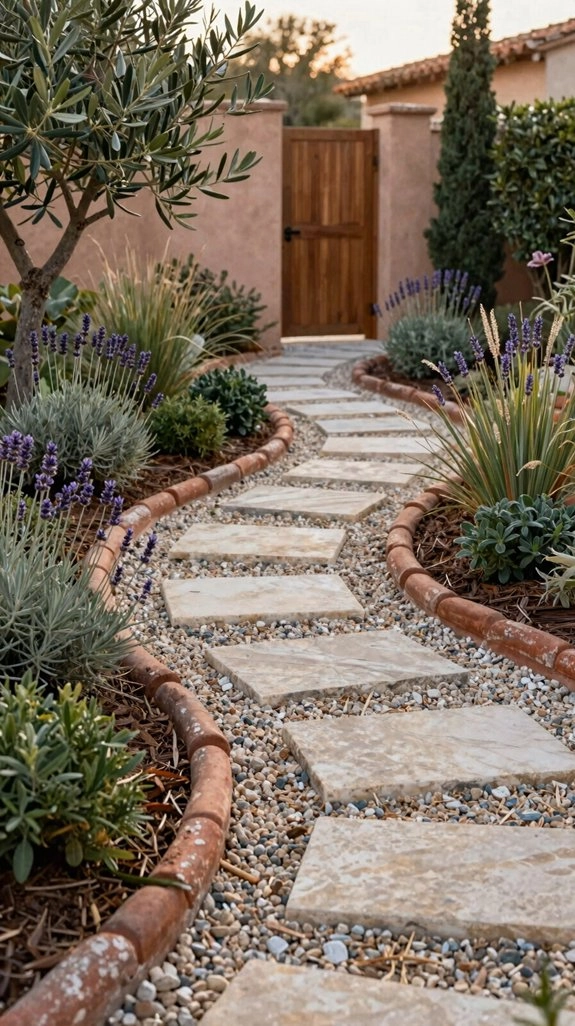
A tidy gravel border can make your whole yard look sharper in a snap! You can build one with metal edging, timber, or stone, and it’ll help keep gravel in place while defining beds with style.
Start with a firm base, add 1–2 inches of leveling material, then about 3 inches of gravel, and compact it well for a sturdy finish.
Mix tan, charcoal, and white stones, plus fine and chunky sizes, for depth and weed control.
Overlapping ground fabric gives smart drainage solutions, less erosion, and fewer puddles.
Top up thin spots every few years, and you’re set!
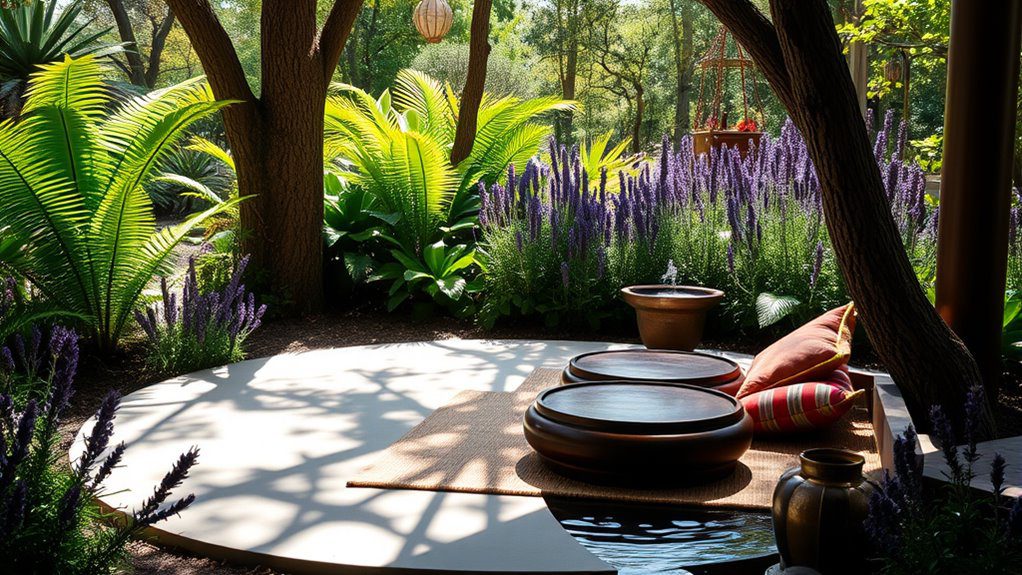
Zen Seating Corner
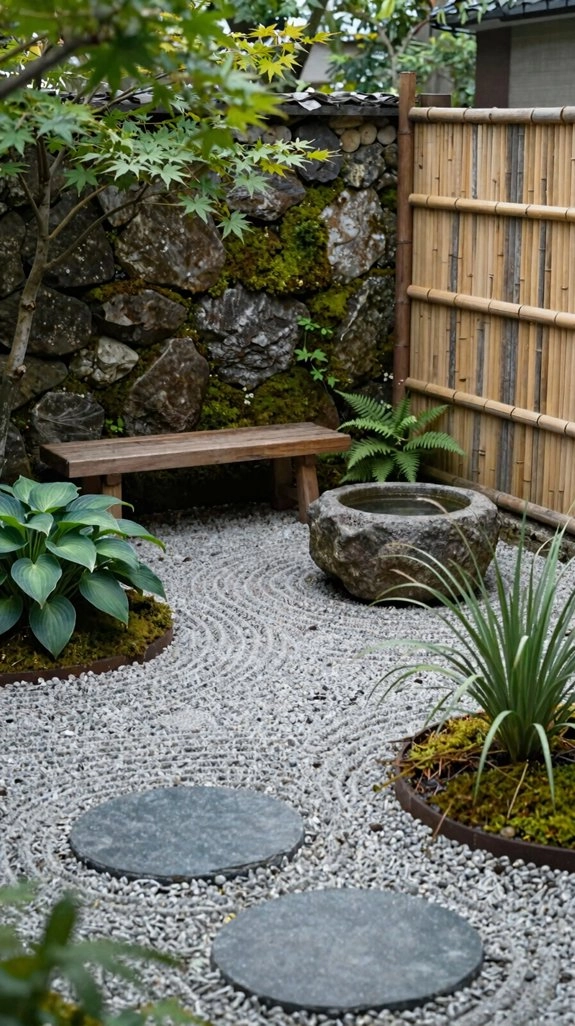
Turn a quiet corner of your yard into a mini retreat with raked gravel, and you’ll be surprised how peaceful it feels! You can build your own Zen seating spot without much fuss, and it’ll feel like your little club of calm.
- Level the base, add garden fabric, then spread about 3 inches of gravel.
- Set a stone feature, then tuck in evergreen or aromatic shrubbery for year-round charm.
- Finish with border edging, drought-tolerant plants, and a careful rake so the pattern stays crisp.
A bench or chair completes the vibe, and light upkeep means more relaxing, less weeding.
Mixed Gravel Textures
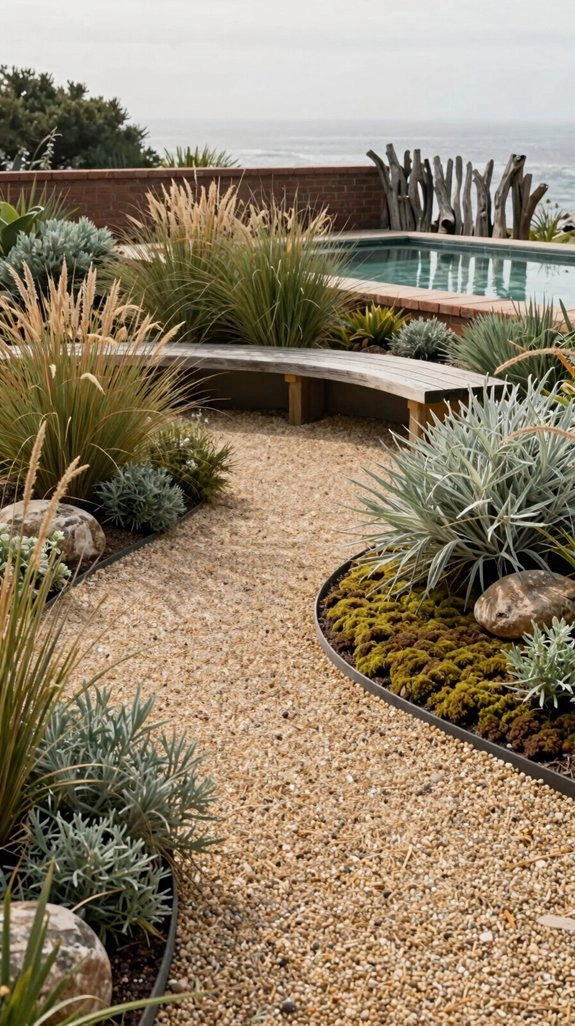
Mixing gravel textures can make your yard look polished fast, and it’s easier than it sounds!
You get color contrast and a friendlier feel when you blend tan, charcoal, and white stones.
Try pea gravel around patios for comfy steps, then use an angular mix near paths so pieces lock together and stay put.
Want more depth? Use size layering, pairing fine gravel with chunkier rocks for a fuller look and solid drainage.
For walkways, compacted decomposed granite feels neat, and larger edging stones keep it tidy.
It’s a low-cost trick that makes your crew look like pros!
Container Garden Display
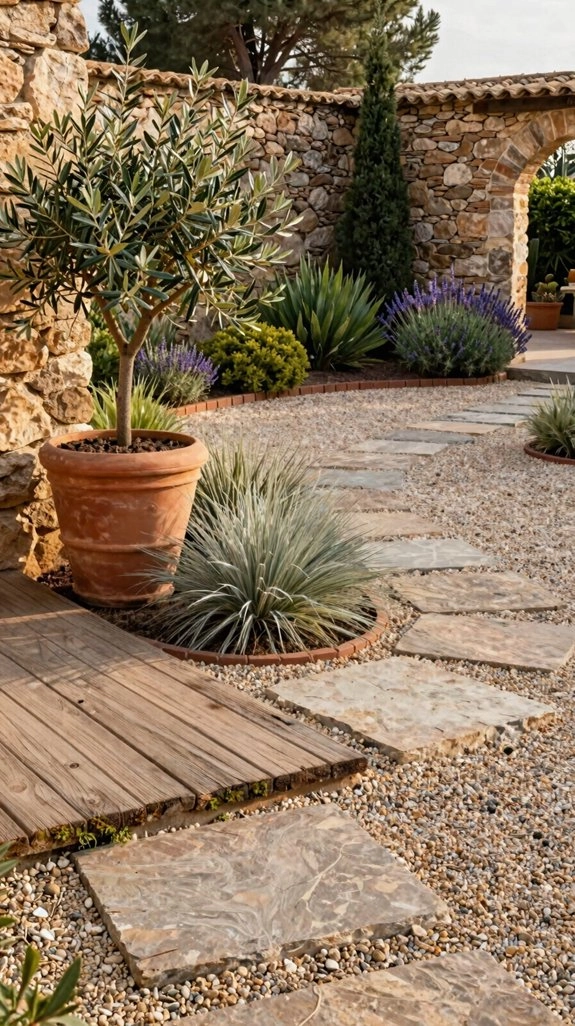
Gravel textures can set the stage, but containers are where the yard really starts to show off! You can build a crisp, friendly look with a 3-inch gravel base, a few bold pots, and almost no mowing. For Barefoot comfort, pick pea gravel near patios, since it stays cooler underfoot.
- Mix tan, charcoal, or white gravel with pot colors for extra pop.
- Lay landscape fabric first for weed control, then add metal or stone borders.
- Water deeply, not often, and let plants fill in.
You’ll get easy curb appeal, plus fewer weeds and less fuss.
Dry Creek Bed Design
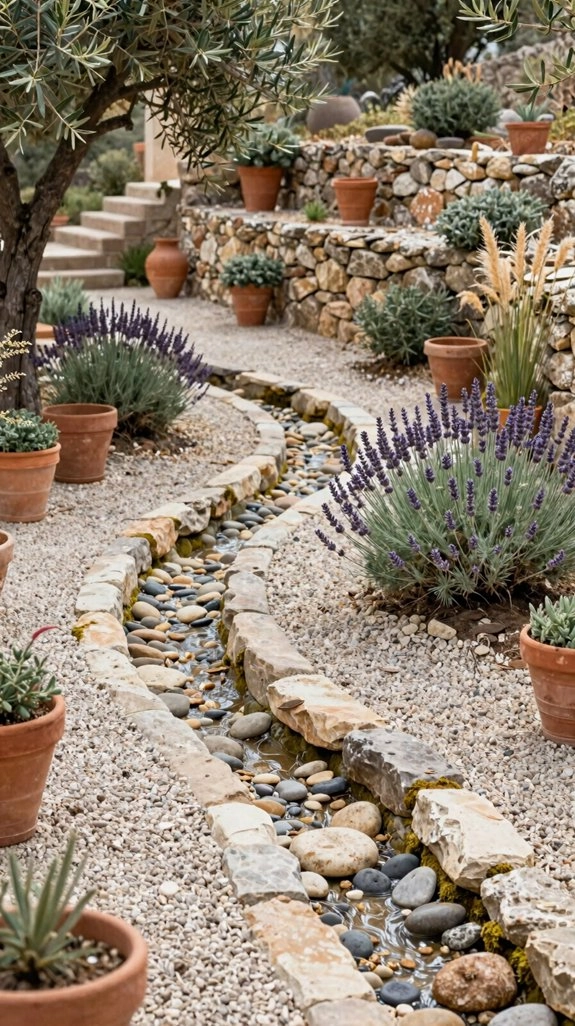
If you want a yard feature that looks like a little river without the splash bill, a dry creek bed is a smart little trick!
Start with garden fabric, then add 1 to 2 inches of leveling sand, and build the channel with compactable gravel or decomposed granite. That keeps it stable and helps drainage, too.
Choose 10mm stones for a smooth flow, then edge the banks with chunkier 20mm rocks for shape. Mix tan, charcoal, or white accents for a polished look.
Add drought-loving sedums, lavender, or grasses, spaced wide, and your soil free alternatives will feel tidy, friendly, and ready for seasonal planting!
Gravel Around Trees
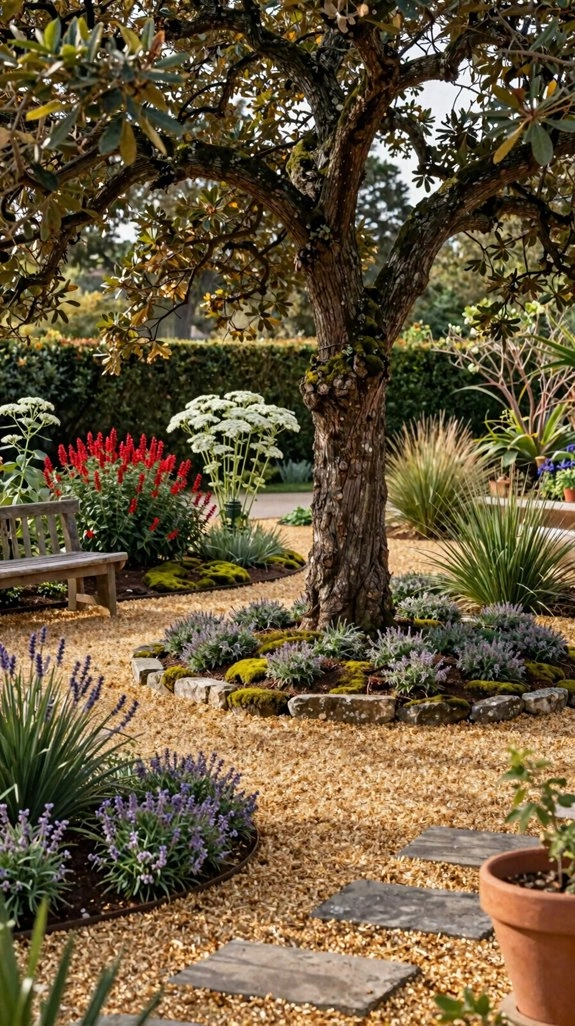
When you dress up the base of a tree with gravel, you get a neat, tidy ring that looks polished and cuts way down on weeding—what a win! You’ll fit right in with a garden that feels cared for, not fussy.
- Start with weed barrier basics: lay garden fabric, overlapping the edges so sneaky sprouts can’t slip through.
- Add about 3 inches of gravel, or compacted decomposed granite, for a stable finish.
- Pick the right texture and garden edging options—pea gravel for calm spots, crushed rock for busier ones, plus metal, timber, or stone edging.
Leave breathing room near the trunk, then rake and top up every couple years.
Outdoor Dining Space
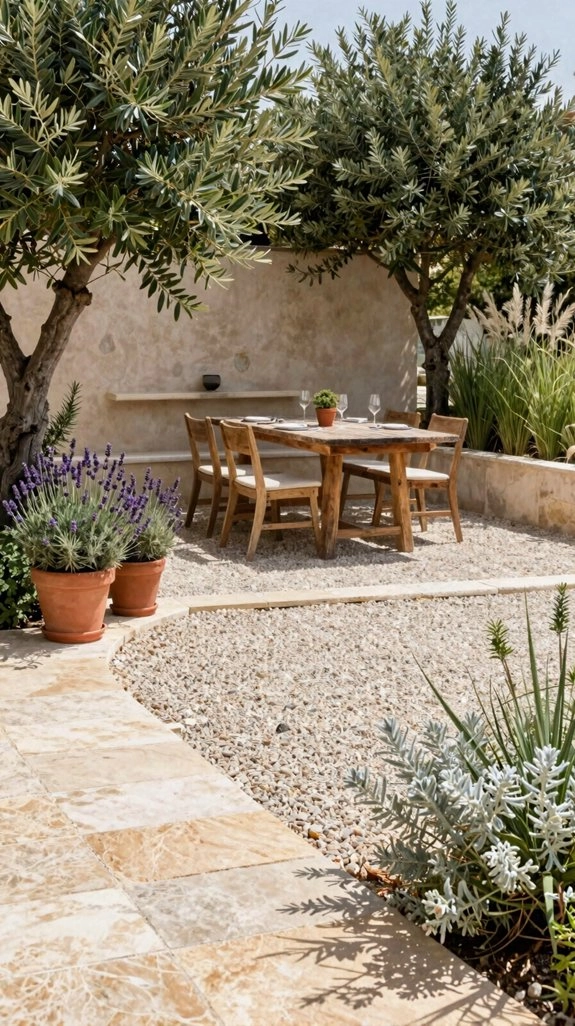
A gravel dining space can turn your yard into the kind of spot where dinner feels a little more fun, a little less formal, and way easier to keep up!
Start with landscape fabric over leveled soil, overlap the seams, then add a 3-inch compacted base and pea gravel for a barefoot-friendly feel.
Use metal strips, timber, or stone borders to keep things neat, and rake it smooth so chairs sit steady.
For busy spots, try angular crushed rock or decomposed granite, then add pavers or stone accents.
Finish with drought tolerant landscaping and seating area lighting—hello, cozy crew nights!
Minimal Front Yard
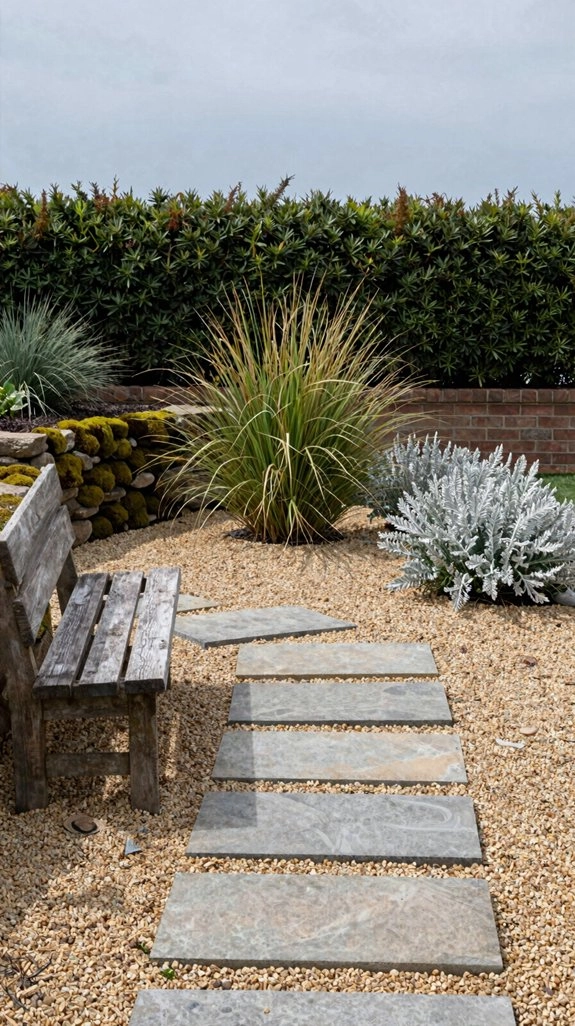
That same easygoing gravel vibe can make your front yard look crisp, calm, and beautifully low-fuss! You’ll feel right at home with a simple layout that welcomes guests without shouting for attention.
- Spread a 3-inch gravel layer over a weed barrier for a neat, unified floor.
- Pick one color family, like tan or charcoal, then mix sizes for quiet depth.
- Add a few drought-tolerant plants, spaced wide, so they grow in and help with gravel maintenance.
Use decomposed granite or crushed stone where you want firm footing. Light weeding early on, then just raking and a quick blow-off—easy!
Wood and Gravel Contrast
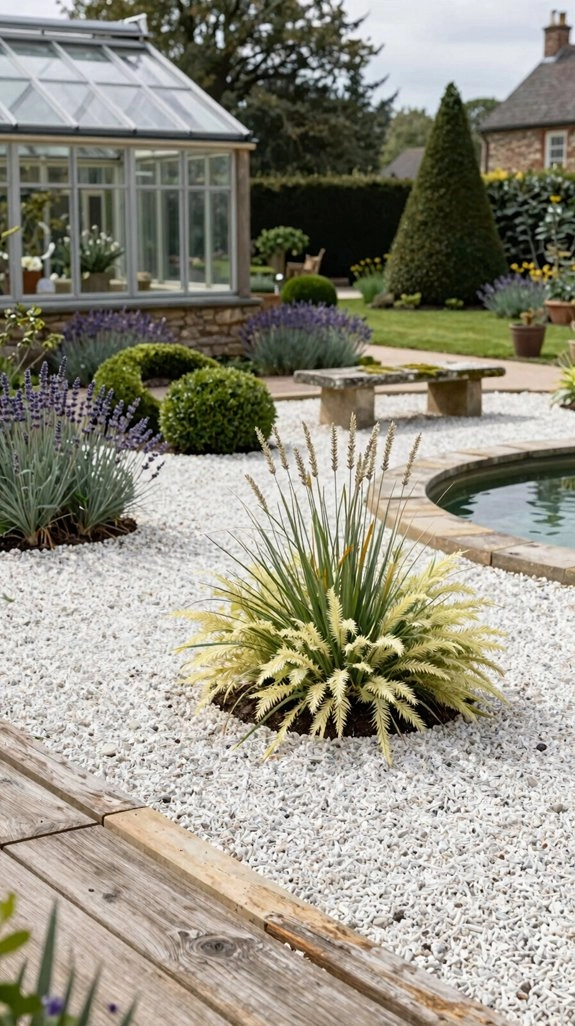
Pairing wood edging with gravel instantly gives your yard that clean, finished look, and it’s easier than it sounds! You’ll feel right at home with this combo, because it quietly frames the space and keeps the gravel from wandering off like it’s late for dinner.
Use sturdy wood edging, then lay a weed barrier with overlapped seams before adding crushed stone or decomposed granite.
These materials handle gravel compaction well, so the surface stays neat and level.
Pick warm tan gravel for a classic contrast, or charcoal for a sleek vibe.
Top up every 2–3 years, and your yard stays crisp.
Stepping Stone Walkway
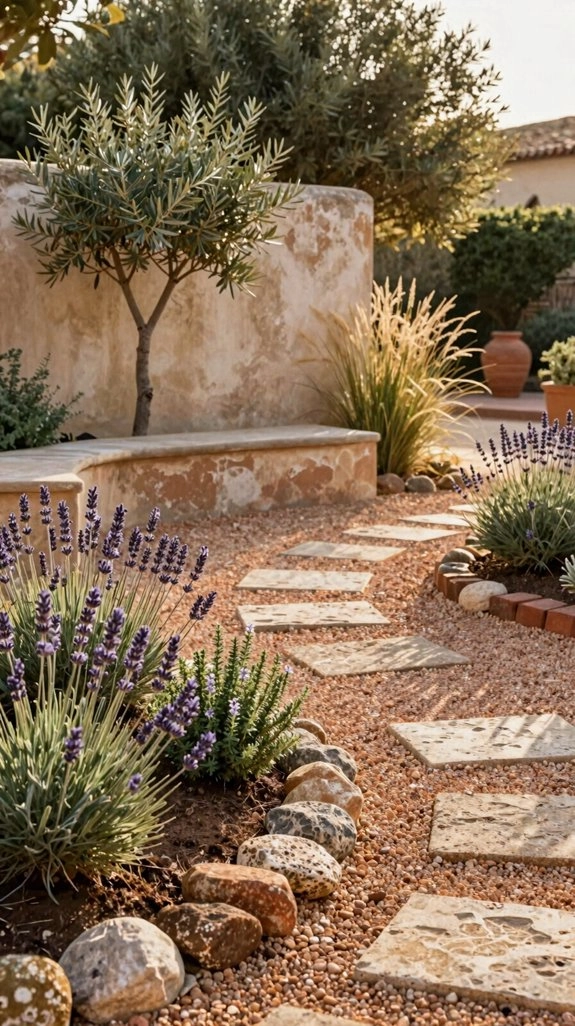
When you want a walkway that feels polished but still easygoing, stepping stones in gravel are such a smart move! You’re essentially building a friendly paver path that welcomes every step.
- Start with crushed stone or decomposed granite, then level each stone so it won’t wobble.
- Fill gaps with fine gravel, about 10mm or less, for a smooth, drain-friendly surface.
- Add gravel edging and outdoor fabric, then cut neat cross-slits for the stones.
Keep the gravel 1–3 inches deep, and top it up every couple years. Easy, stylish, and no grumpy sinking!
Gravel Water Feature
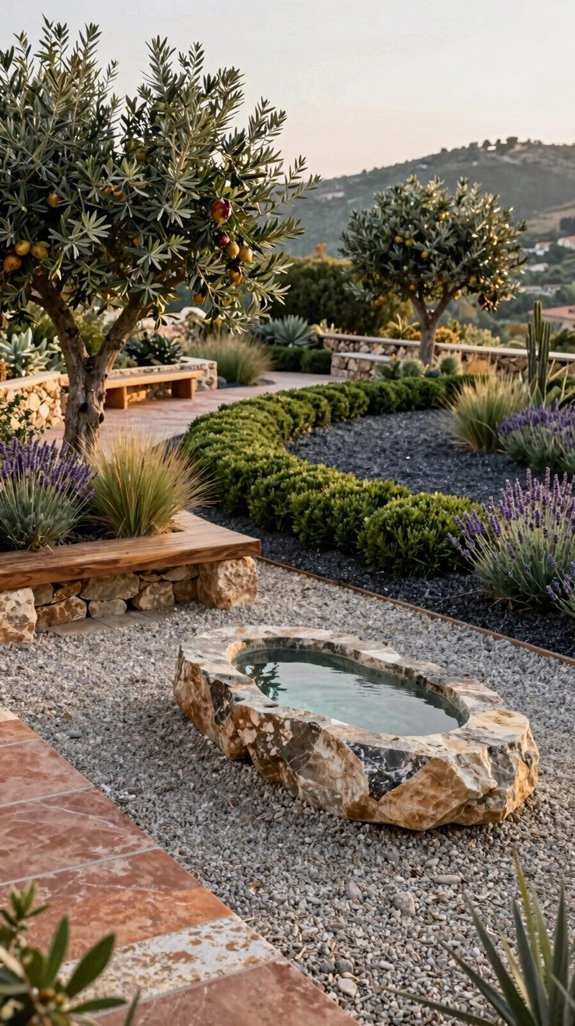
A gravel water feature can turn a plain corner into a tiny backyard oasis, and it doesn’t have to be fussy at all!
Start with smooth river rock or compacted decomposed granite for drainage planning, so splashes don’t make a mess.
Add garden fabric with overlapping seams, then cut neat slits for sedum, lavender, or grasses.
Spread about 3 inches of gravel, and you’ll cut weeds and mud fast.
For border stabilization, use metal, timber, or stone edges to keep gravel in place.
Near chairs, choose pea gravel; save angular rock for busier spots.
Top it up every few years—easy, right!
Coastal Garden Style
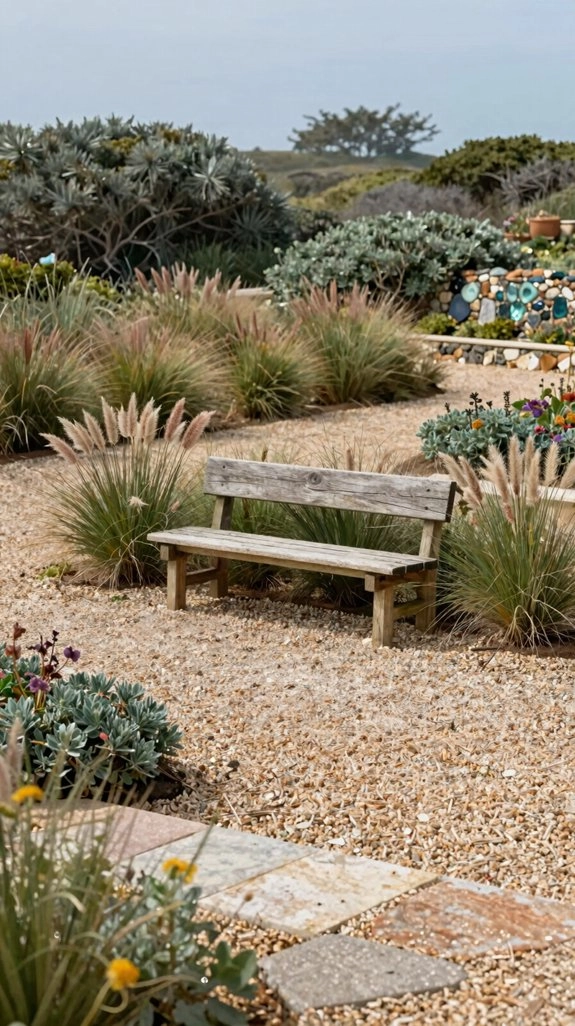
If you want that breezy seaside vibe without signing up for extra yard work, a coastal garden style can totally do the trick! You’ll fit right in with neighbors when you use warm, light gravel, natural stone, and coastal planting palettes that feel sun-washed and friendly.
- Start with pea gravel, it’s comfy underfoot and gives seafoam stone textures around paths.
- Plant hardy juniper, Cistus, or Ceanothus, spaced wide so they grow in and crowd out weeds.
- Lay landscape fabric, keep about 3 inches of gravel, and top it up every few years.
Drainage stays happy, and your yard looks beachy, not busy.
Low-Water Planting
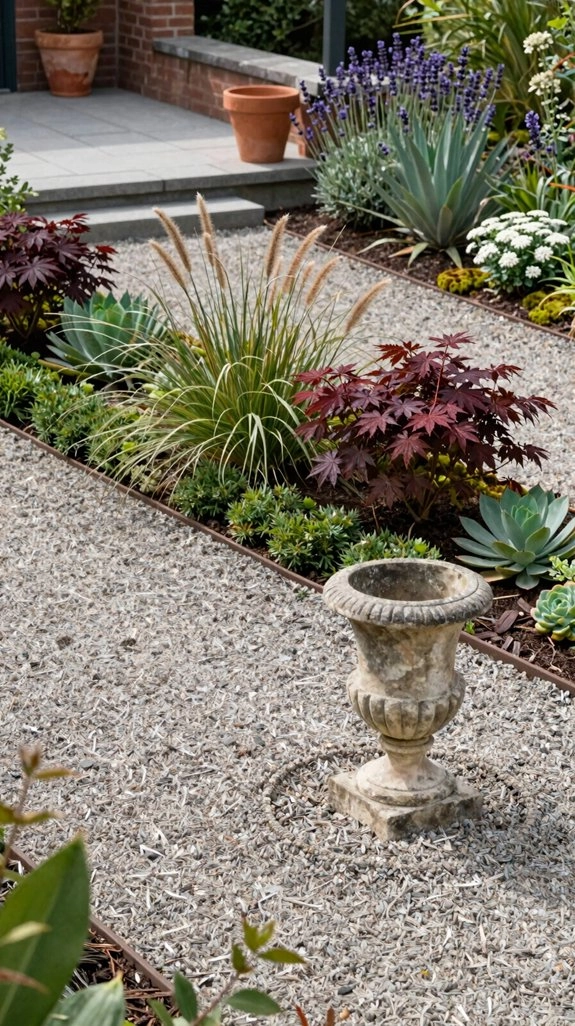
Mediterranean plants are your gravel garden’s best low-drama friends, and they’ll happily handle the dry, sunny spots that make other plants pout! Try lavender, sedum, ornamental grasses, and juniper for a drought tolerant look that feels welcoming and easy.
Space them wide, let them grow together, and you’ll get a soft, full edge that helps block weeds.
If you want extra help, add landscape fabric, cut X’s, and plant through them.
A drip irrigation line gives roots a deep sip, but only during long dry spells.
In clay soil, mix in organic matter first for better drainage.
Your xeriscape layout’ll thank you!