Tomato Hornworms and the Damage They Cause in Vegetable Gardens
- Tomato Hornworms and the Damage They Cause in Vegetable Gardens
- Key Takeaways
- How to Identify Tomato Hornworms
- Signs of Hornworm Damage
- When Hornworms Are Most Active
- Plants They Attack
- Natural Ways to Control Hornworms
- Hand Picking
- Beneficial Insects
- Garden Cleanup
- How to Prevent Future Infestations
Tomato hornworms are big green caterpillars with V-shaped stripes and a tail horn, and they can chew huge ragged holes, strip stems, and nibble green fruit fast! Check plants near sunrise or sunset for dark pellet-like droppings and missing leaves, especially near the tops. Hand-pick worms into soapy water, but leave any covered in white wasp cocoons—they’re getting natural pest control. Keep going for easy prevention tricks.
Key Takeaways
- Tomato hornworms are large green caterpillars with V-shaped side stripes and a tail horn, often hiding among tomato foliage.
- They cause rapid defoliation, leaving ragged holes, stripped stems, chewed blossoms, and occasional shallow bites on green fruit.
- Dark, pellet-like droppings called frass beneath damaged leaves are one of the clearest signs of hornworm activity.
- Hornworms commonly appear from late spring through early fall and may also attack peppers, potatoes, eggplants, and tobacco.
- Control them by hand-picking into soapy water, while leaving hornworms covered with white wasp cocoons for beneficial parasites.
How to Identify Tomato Hornworms
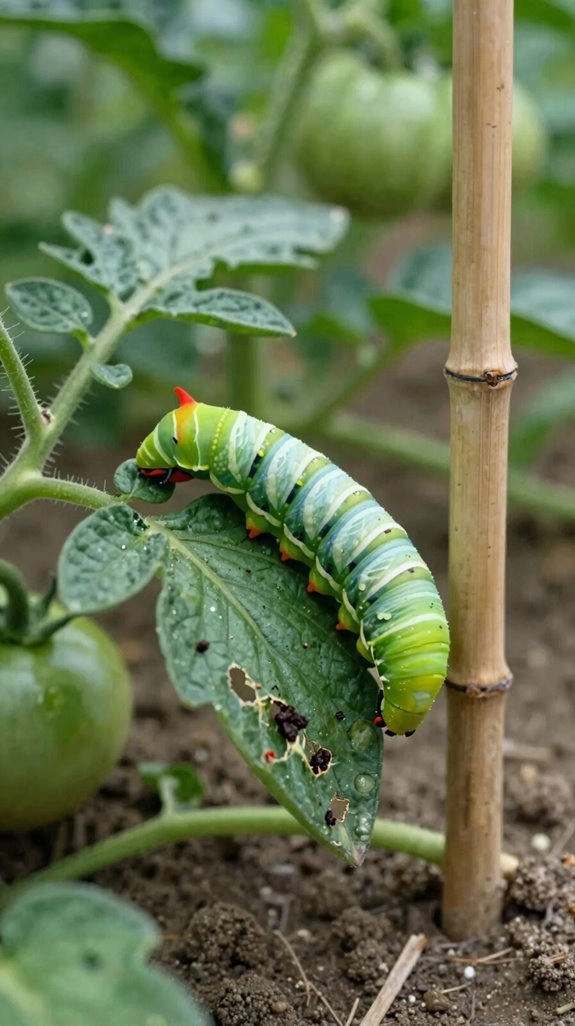
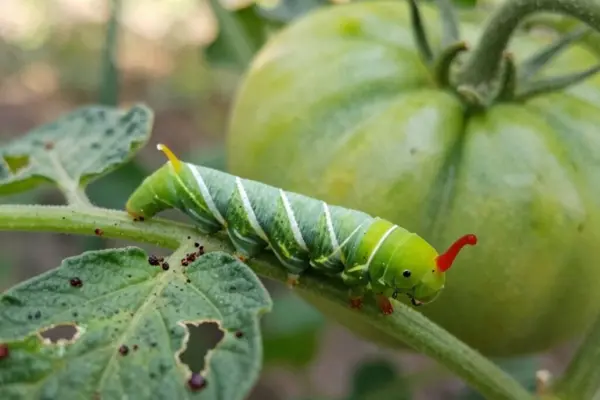
Tomato hornworms are big, bright green caterpillars that can grow nearly 4 inches long, yet they’re surprisingly easy to miss as they blend in like chunky little leaves!
You’re not alone if you overlook one at first.
Check tomato plants closely in the morning or near sunset, when a caterpillar may stretch or wiggle.
Look for a fat green body, V-shaped side stripes, and a tail horn.
Tomato hornworms have black horn markings, unlike tobacco hornworms, which carry red horns.
Their mimic leaf camouflage is impressive—nature’s tiny garden prank!
Gently part leaves and inspect stems, and you’ll soon recognize these sneaky visitors.
Signs of Hornworm Damage
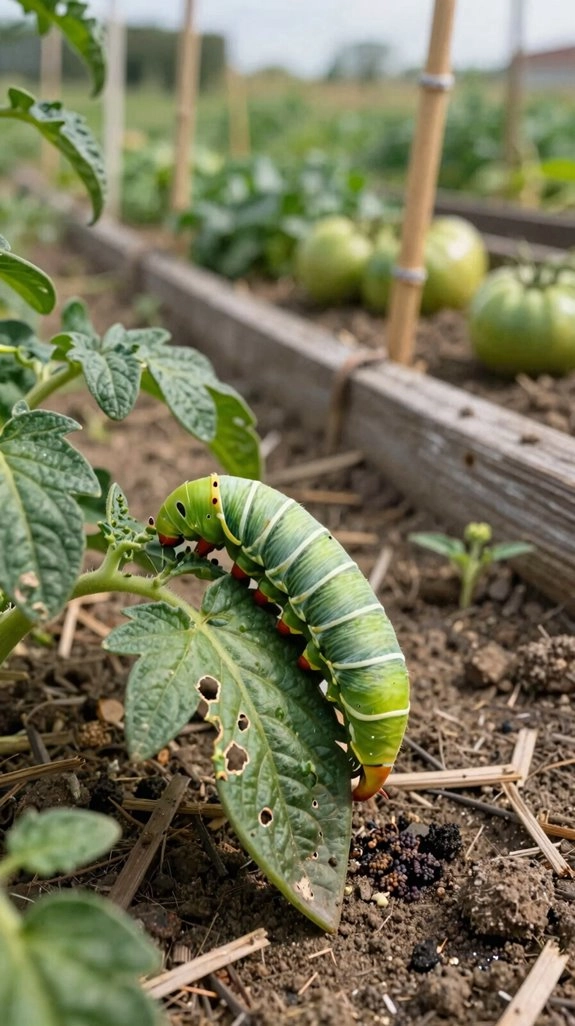
Why do healthy-looking tomato plants sometimes seem to lose leaves overnight? You may spot missing leaf sections, ragged holes, stripped twigs, and blooms or clusters that look partly chewed. It’s frustrating, but you’re not alone!
First, compare damage pattern mismatches: hornworms leave big, fresh chewing marks, not neat little bites. Look closely at upper leaves and nearby soil to check for frass presence—dark pellets that resemble tiny black grenades. That’s your strongest clue!
Also, identify feeding on fruit when tomatoes show shallow, uneven bites. To distinguish from slug injury, remember slugs often leave slime, while hornworms leave piles of pellets.
When Hornworms Are Most Active
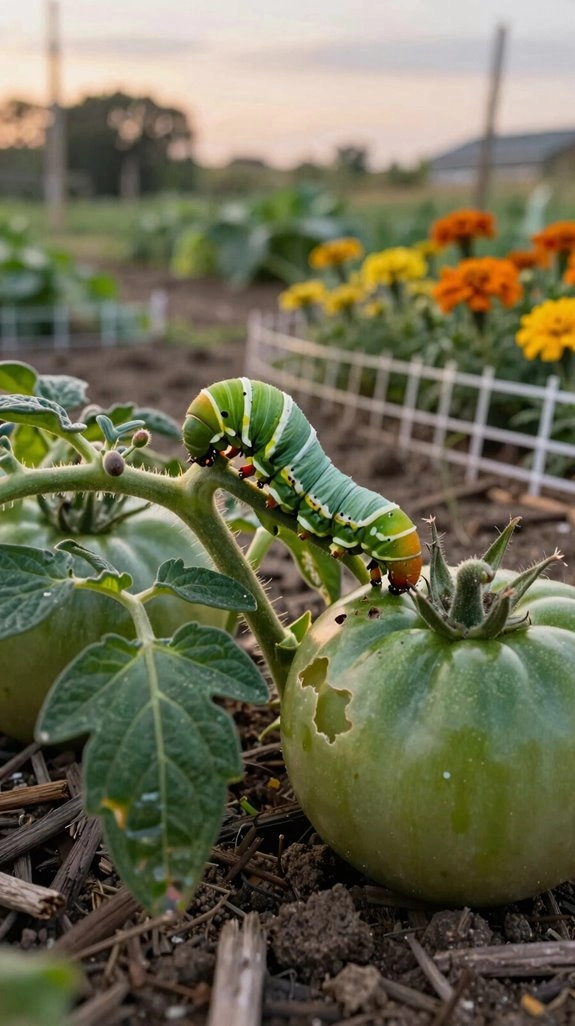
Timing can explain those sudden bare spots! Seasonal Timing runs from late spring through early fall, when moths lay eggs and hungry larvae hatch. In many gardens, you’ll notice trouble in late May or early June, often near the vine tops.
Join other watchful growers by checking plants in the morning or late evening. Those Feeding Periods make leaf-chomping easier to spot—no detective badge needed!
Over several weeks, these ravenous caterpillars can strip leaves and small twigs fast. Then, just when you think they’ve vanished, mature hornworms drop into the soil to pupate, preparing the next surprise cycle later in the season.
Plants They Attack
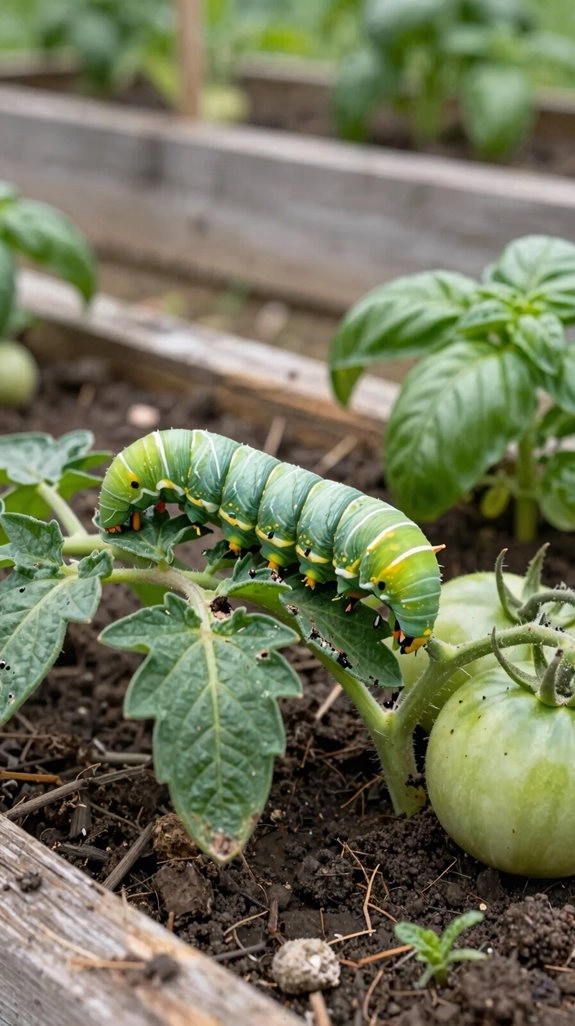
Hornworms don’t limit their appetites to tomatoes, so check nearby peppers, potatoes, eggplants, and even tobacco plants if you spot chewed leaves—these garden grazers love the whole nightshade family!
You’re not alone if damage seems to hop around your plot. Host crop overlap lets tomato and tobacco hornworms feed across neighboring plants, leaving bare stems and ragged leaves from the top down. Yikes!
During seasonal risk windows, inspect green fruit, too. A hungry hornworm may nibble tomatoes, peppers, or eggplants, turning a beautiful harvest into its personal buffet. Catching patterns across your garden helps your whole growing crew stay alert!
Natural Ways to Control Hornworms
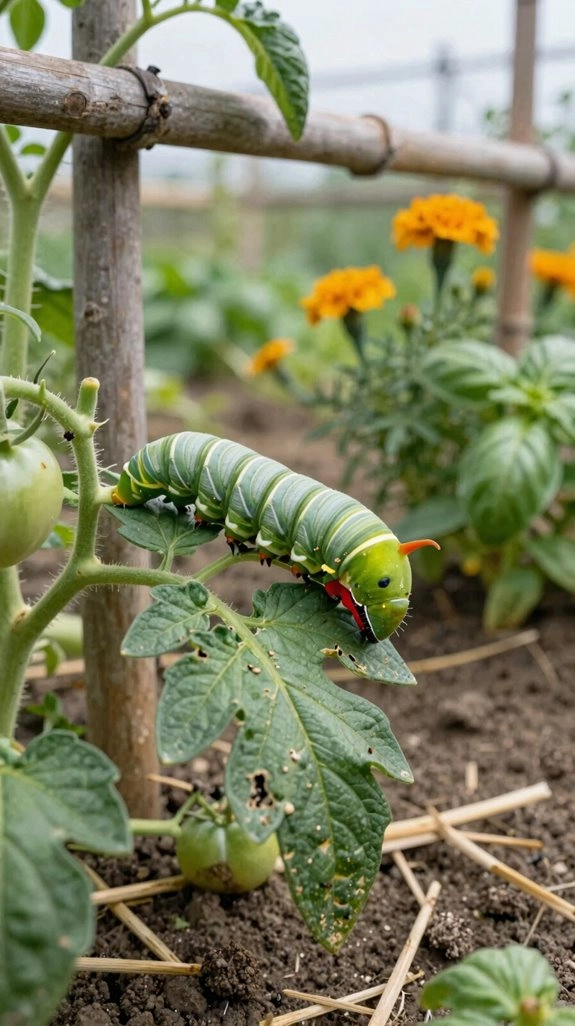
You can hand-pick hornworms in the cool morning or evening, then drop the big green munchers into soapy water—easy, cheap, and effective!
Keep helpful insects on your side, especially when you spot a hornworm covered in tiny white wasp cocoons; leave that one alone, because it’s doing undercover garden work.
Finally, clean up fallen leaves and check for dark “grenade” droppings, and you’ll catch these hungry caterpillars before they turn your tomatoes into salad!
Hand Picking
Hand picking is one of the quickest, cheapest ways to stop tomato hornworms, and it’s oddly satisfying once you know what to look for!
Check plants early or late, watching for black “grenades” of droppings and chewed leaves. Wear gloves, then lift the big green caterpillars into soapy water—bye-bye, leaf muncher!
Start at vine tops, where they often feed downward. Use chopsticks if they’re tucked in tight, or prune the damaged piece and seal it in the trash.
This simple habit supports garden sanitation alongside companion planting.
One important exception: leave any hornworm covered in white quills alone. Something helpful is happening there!
Beneficial Insects
Nature can help with the hornworm hunt, too—no extra sprays or elaborate gear required!
Build a welcoming mix of blooms and shelter, and you’ll invite native parasitoids, paper wasps, and other helpful neighbors into your pest management team.
Add nectar-rich flowers nearby for affordable lacewing habitat and lady beetle support. These predators snack on soft-bodied pests, helping reduce future trouble.
Here’s the amazing part: if you spot a hornworm covered with tiny white quills, don’t pick it!
Braconid wasps have already claimed it; their larvae will stop the caterpillar from inside. Leaving it helps protect your shared garden over time.
Garden Cleanup
Cleanup turns a mothworm realization into a real garden win! You’re part of a savvy growing crew, so act fast on egg hatch timing.
- Spot black, grenade-like droppings; check leaves a few inches above.
- Drop removed worms into soapy water, using composting precautions so they can’t crawl back.
- Recheck beds for several days—tiny eggs hatch quickly!
- Spray Bt on leaf tops and bottoms at dawn or dusk; hungry worms eat it and fade within days.
Here’s the surprising win: leave hornworms with white rice-like cocoons alone! Braconid wasps are already helping your garden. Till seasonally and use row covers to block moths.
How to Prevent Future Infestations

Regular checks are your first—and easiest—line of defense against tomato hornworms! Practice Seasonal monitoring weekly, and inspect sooner if you see chewed leaves or dark droppings. Catch eggs and tiny caterpillars before they stage a leafy buffet!
During late spring through early fall, use floating row covers as an egg barrier. Lightweight fabric, hoops, and clips are all you need; secure edges well so hawk moths can’t sneak in.
Next, add 2–4 inches of straw or wood-chip mulch, rotate tomatoes away from peppers and eggplants, and try a diversion plant.
Best of all, till soil at season’s start and end. You’ll interfere with hidden pupae before next year’s surprise party!