Small Shade Garden Ideas That Feel Bright and Inviting
- Small Shade Garden Ideas That Feel Bright and Inviting
- Key Takeaways
- Planning a Small Shade Garden
- Choosing Plants for Limited Light
- Flowering Plants
- Foliage Plants
- Layering Plants in a Small Space
- Creating a Woodland Feel
- Using Containers in Shady Corners
- Adding Color Without Full Sun
- Keeping a Small Shade Garden Easy to Maintain
Map your shade first: true shade gets under two hours of sun, while part shade gets two to four. Mix compost into clay, then layer hostas behind ferns, add burgundy heuchera, and edge paths with ajuga or lamium—easy, affordable color! A compact hydrangea adds structure, while a pot of golden Hakone grass brightens dark corners. Mulch with leaf mold and use a soaker hose. Keep going for more clever ways to make shade glow.
Key Takeaways
- Map sun exposure first: choose true-shade plants for under two hours of sun and part-shade plants for two to four hours.
- Brighten dim beds with golden Hakone grass, silver Brunnera, lime Lamium, and variegated hostas.
- Layer a compact hydrangea behind hostas and ferns, then edge paths with low Heuchera, Ajuga, or Lamium.
- Create contrast by pairing bold, glossy hosta leaves with airy ferns and deep burgundy Heuchera ‘Obsidian.’
- Use containers, reflective pale foliage, and 2–3 inches of mulch to make small shady corners feel lighter and lush.
Planning a Small Shade Garden
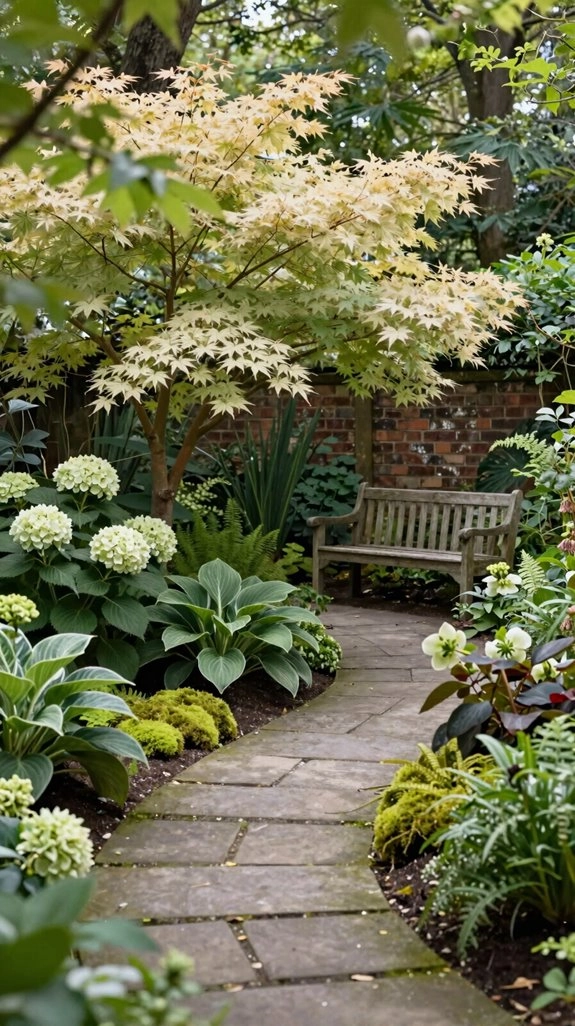
Before you buy a single plant, map the light in your small garden—this one simple step can save you from a sad, crispy “shade” plant later! Do a light assessment, noting sun hour targets: deep shade gets under two hours, part shade gets two to four without blazing afternoon sun.
Next, sketch your courtyard layout. Add compost or leaf mold to tired clay, then plan a simple structure with one evergreen focal point. You’re creating a cozy little room, not a crowded plant party!
Use planting massing: repeat a few textures in layered drifts, tall to low, and mulch two to three inches. Add drip watering, and your shared garden look feels calm, connected, and polished.
Choosing Plants for Limited Light
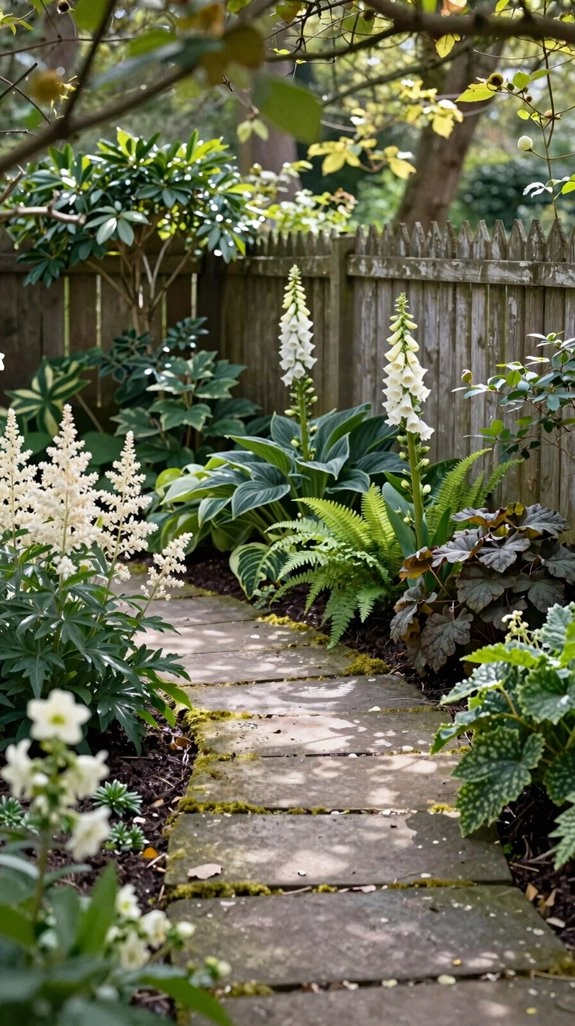
First, check your light: true shade gets under two hours of sun, while partial shade gets two to four hours without harsh afternoon rays—tiny courtyards can surprise you!
You can build a lush base with hostas, ferns, golden Hakonechloa ‘All Gold,’ and deep purple Heuchera ‘Obsidian,’ then add flowering color with Hydrangea serrata, Lamium ‘Purple Dragon,’ or Ajuga ‘Black Scallop.’
If a plant scorches, leans, or sulks like it pays rent, move it—small shifts can make limited light work beautifully.
Flowering Plants
Even a small, shady garden can bloom beautifully—you just need plants that match the light you actually have! In part shade, with two to four gentle hours of sun, you can welcome Brunnera’s blue flowers and roomy Bleeding Heart blooms in spring.
Then keep your little garden feeling like everyone belongs: add Astilbe or Goatsbeard for summer plumes, and tuck Ajuga along edge edging for spring color. Lamium helps flowers linger through the season.
Need easy gap-fillers? Pop Impatiens or Wax Begonias into pots, using container color to brighten dim corners. They’re affordable, beginner-friendly, and surprisingly cheerful—like tiny garden party guests!
Foliage Plants
Match choices to your light: deep shade needs tougher leaves, while part shade, with 2–4 gentle hours, allows richer color.
Try simple Layering Techniques: place bold hostas behind lacy ferns, then edge beds with mounding Heuchera or lamium. Repeat gold, lime, and purple-veined leaves for rhythm and Depth Contrast—your courtyard won’t feel like a green cave!
Plants may start modestly, but established foliage really shines next season.
Layering Plants in a Small Space
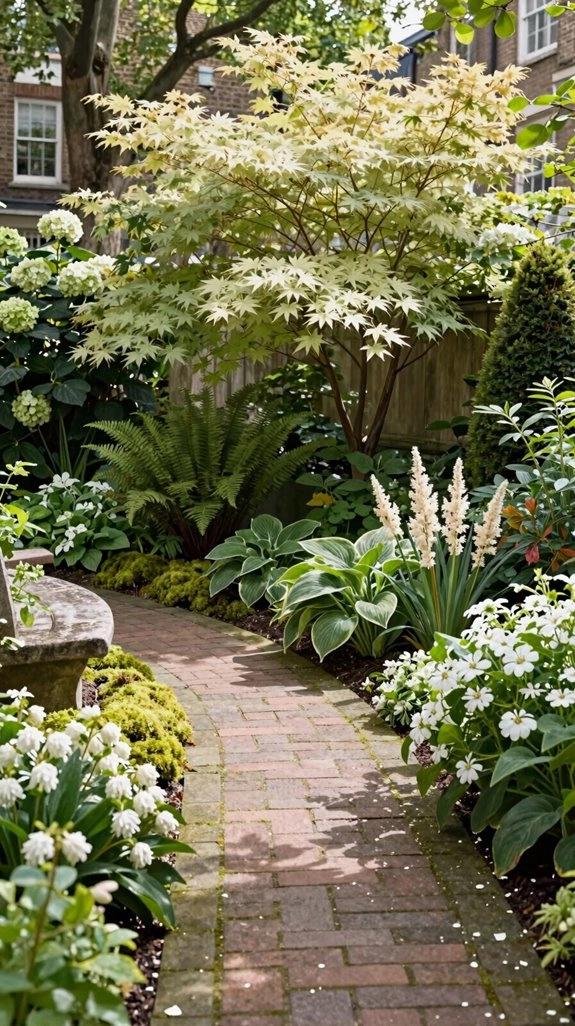
Think of a small shade bed as a tiny stage: place one compact structural plant, such as a hydrangea, toward the back, then build forward with rounded heuchera, airy ferns, and low, spreading lamium or ajuga.
For foliage layering, repeat plants at 18–24-inch centers so your little garden feels welcoming, not crammed like a plant sale cart!
Add glossy hosta or golden hakone grass beside lacy ferns for contrast.
Choose lime, silver, burgundy, or purple-veined leaves that suit your shade level.
Brunnera brings spring sparkle, astilbe adds early-summer flair, and heuchera carries seasonal interest long after blooms fade.
You’ll create a polished, shared-space look everyone can enjoy.
Creating a Woodland Feel
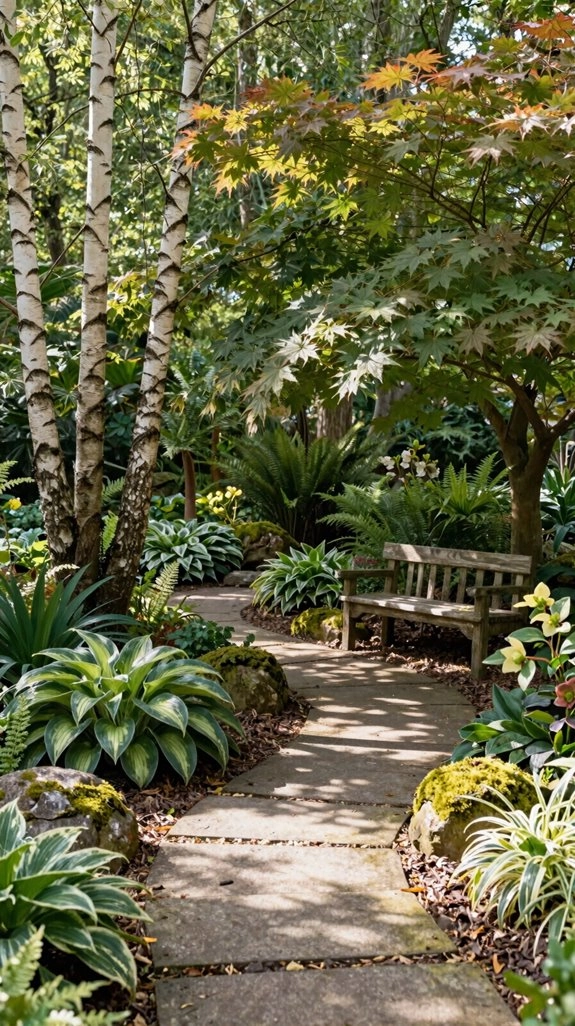
Once your layers are in place, give them a loose, forest-edge rhythm instead of lining them up like tiny soldiers!
Let evergreen structure sit behind hostas, heucheras, and lacy ferns, then repeat cool silvers, limes, blues, and burgundy for a shared, welcoming look.
First, check your dappled light: shade gets under two sun hours, part shade gets two to four.
Choose plants in keeping with this guidance, and they’ll actually thrive—magic without the wand!
For natural woodland edges, plant Lamium or Ajuga in gentle drifts, not rows.
Finish with 2–3 inches of leaf mold or shredded bark, keeping crowns clear.
Your small garden will feel like a friendly woodland clearing.
Using Containers in Shady Corners
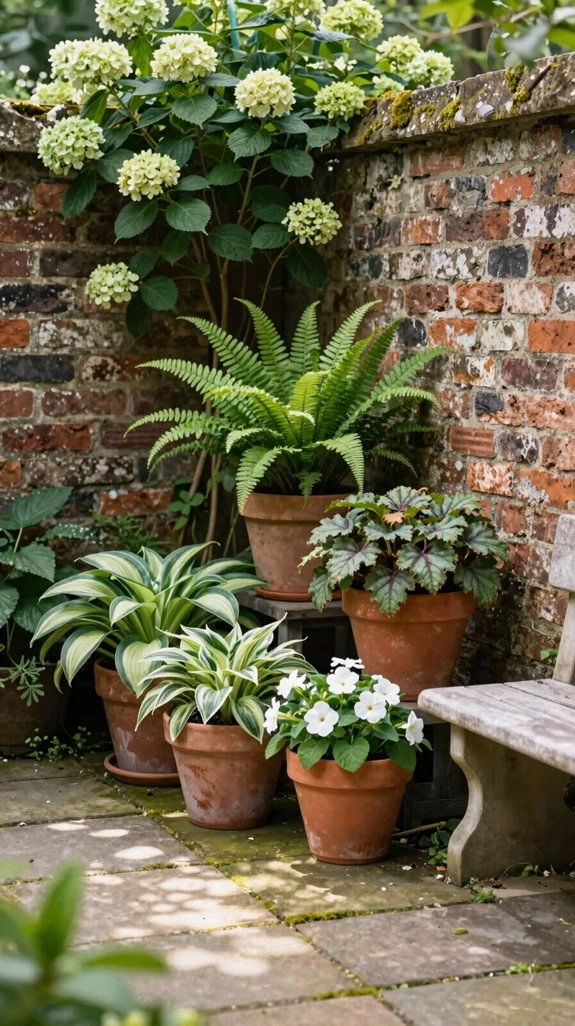
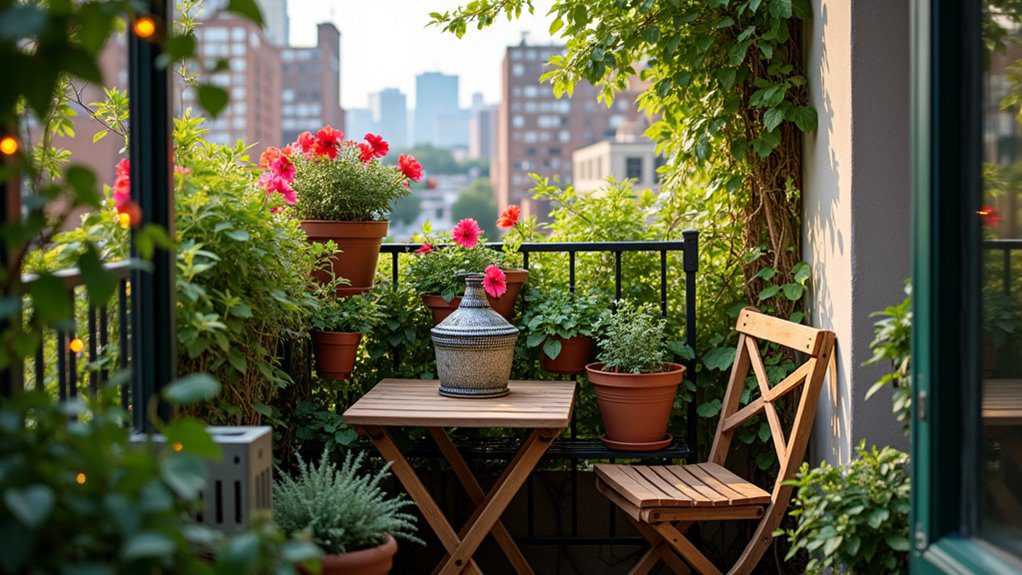
Brighten up that dim little corner with containers—they’re the easy, movable fix when tree roots or tight paving make in-ground planting a losing battle!
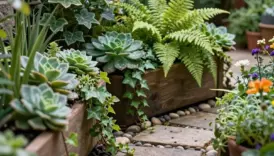
Choose pots that welcome you home, then pack them with caladium, coleus, New Guinea impatiens, and a fern for leafy layers.
Use quality potting mix, a light mulch, and drainage holes; keep soil evenly moist.
Set each pot in part shade or dappled light, since harsh afternoon sun can scorch leaves—rude, right?
Try a seasonal container rotation with annuals, while evergreen or perennial pots stay put.
For instant focal structure, add a glass orb or urn among the group.
Your corner suddenly feels like it belongs.
Adding Color Without Full Sun
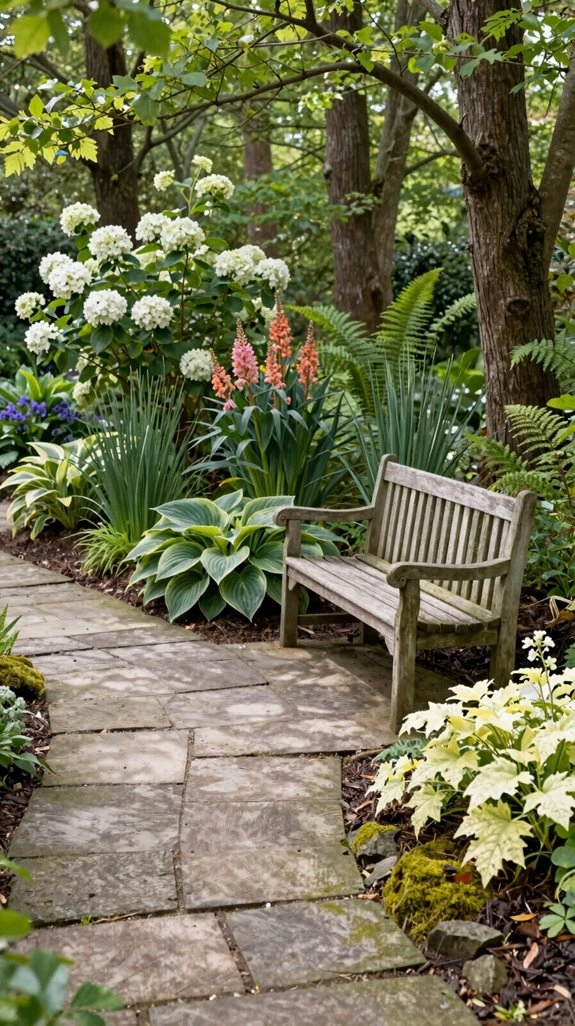
Color can still shine in a shady garden—no blazing noon sun required! You can create a welcoming little haven with shade color that feels like it belongs in your neighborhood’s prettiest yard.
- Pair nearly-black ‘Obsidian’ heuchera with golden hakone grass ‘All Gold’ for bright foliage.
- Add lamium ‘Purple Dragon’ and ajuga ‘Black Scallop’ for spring-to-summer blooms.
- Tuck impatiens or caladium containers along the bright edge, where they catch gentle morning light.
- Plant compact Hydrangea serrata ‘Tiny Tough Stuff™’ as your star, blooming May through August!
Give plants 2–4 hours of light, and avoid hot afternoons. Moving a “fried” plant isn’t defeat—it’s preventing scorch, smart gardener!
Keeping a Small Shade Garden Easy to Maintain
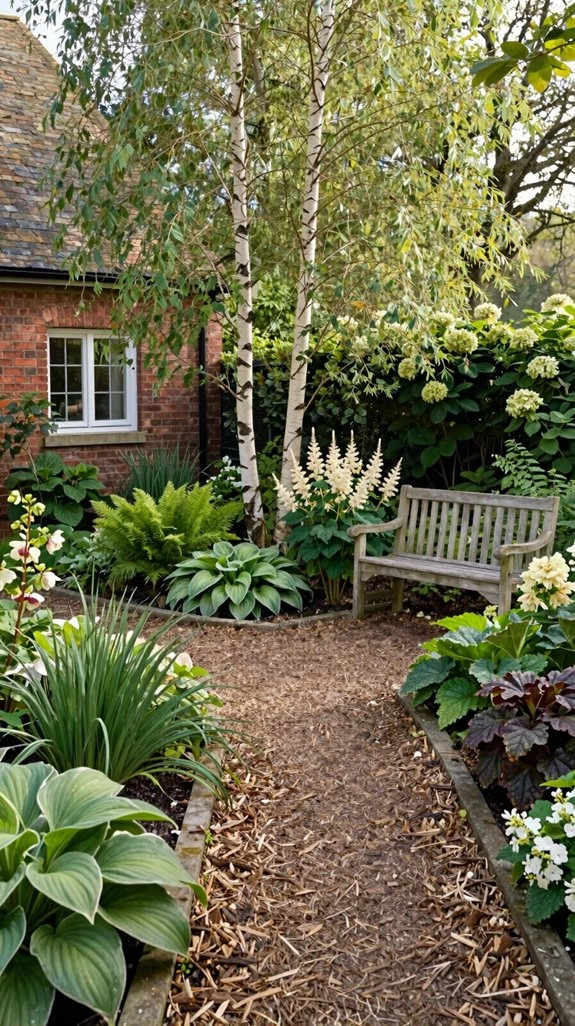
A small shade garden stays wonderfully low-fuss when you match each plant to the light it actually gets, especially in part shade with 2–4 hours of gentle, non-hot sun. You’ll join many happy gardeners by choosing hostas, heucheras, ferns, and ajuga, which knit together and crowd out weeds.
For an easy DIY boost, spread 2–3 inches of compost mulch, leaf mold, or shredded bark, keeping it off plant crowns. Add a soaker hose, and dry shade becomes far less dramatic—no tiny watering can marathon!
Use seasonal pruning to tidy old leaves, then apply organic slug bait in spring and late June. Let plants settle, edit strugglers later, and watch your little community thrive.