Large Patio Layouts Designed for Conversation and Flexible Seating

- Large Patio Layouts Designed for Conversation and Flexible Seating
- Key Takeaways
- Why One Patio Seating Area Falls Short
- Start With the Core Conversation Zone
- Add a Transitional Seating Zone
- Use Edge Seating to Invite Guests In
- Edge Seating Signals Welcome
- Let Guests Observe First
- Let Distance Shape Better Dialogue
- Angle Chairs for Easier Conversation
- Angle Chairs Inward
- Soften Conversation Distance
- Create Natural Invitation
- Use Shade and Warmth to Keep Guests Comfortable
- Create Visual Separation Without Walls
- Low Tables Define Zones
- Orientation Creates Separation
- Choose Modular Patio Seating for Flexibility
- Plan a Small-Space Friendly Layout
- Add Color to Large Patio Seating
- Colorful Pillows And Throws
- Bright Rugs And Layers
- Vibrant Accents, Softer Neutrals
- Mix Textures for a Lived-In Feel
- Build Around a Conversation Focal Point
- Pair Lounge Seating With Dining Space
- Use Slim Furniture to Keep Flow Open
- Make Seating Easy to Rearrange Later
You can turn a big patio into a great chat space by giving it zones, not one crowded huddle. Start with a deep sofa or angled chairs around a low table, add a few side chairs for quick hellos, and leave a 36-inch path so folks can move easily. Slim, modular pieces make rearranging simple, and a rug plus soft lighting keeps it cozy. The best part? A few smart swaps can change everything, and there’s more ahead!
Key Takeaways
- Create a central conversation zone with inward-angled chairs, a deep sofa, and a low coffee table to anchor the patio.
- Use low tables and rugs to define seating zones while preserving open sight lines and easy movement.
- Add edge seating with benches or single chairs near paths for quick chats, observation, and gradual guest entry.
- Keep at least 36 inches of clear walking space between zones to prevent crowding and support smooth circulation.
- Choose modular, weather-ready seating that can shift into L, U, or clustered layouts for flexible conversation groupings.
Why One Patio Seating Area Falls Short
One big patio seating area sounds simple, but it usually can’t do every job at once. You need space for long talks, quick hellos, and those comfy quiet corners where you can just breathe—nice, right?
When everyone crowds the same spot, some folks end up leaning in or talking louder, and your speech privacy gets shaky fast.
Different guests want different distances, so one setup can feel awkward for half the group.
Better crowd distribution helps you mix stay-and-go traffic, keeps the patio lively, and makes it easier for everyone to feel welcome without turning the place into one giant huddle.
Start With the Core Conversation Zone
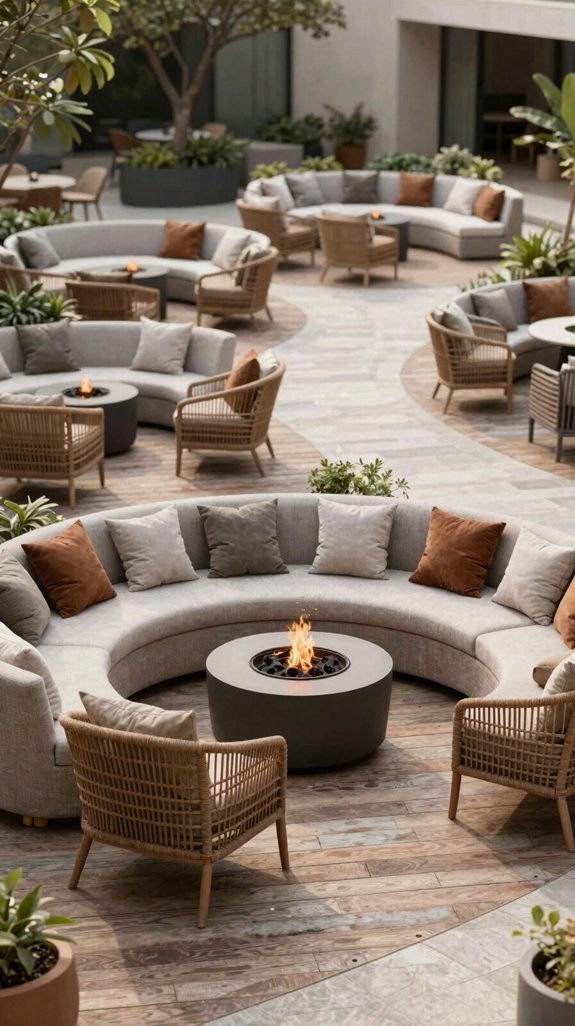
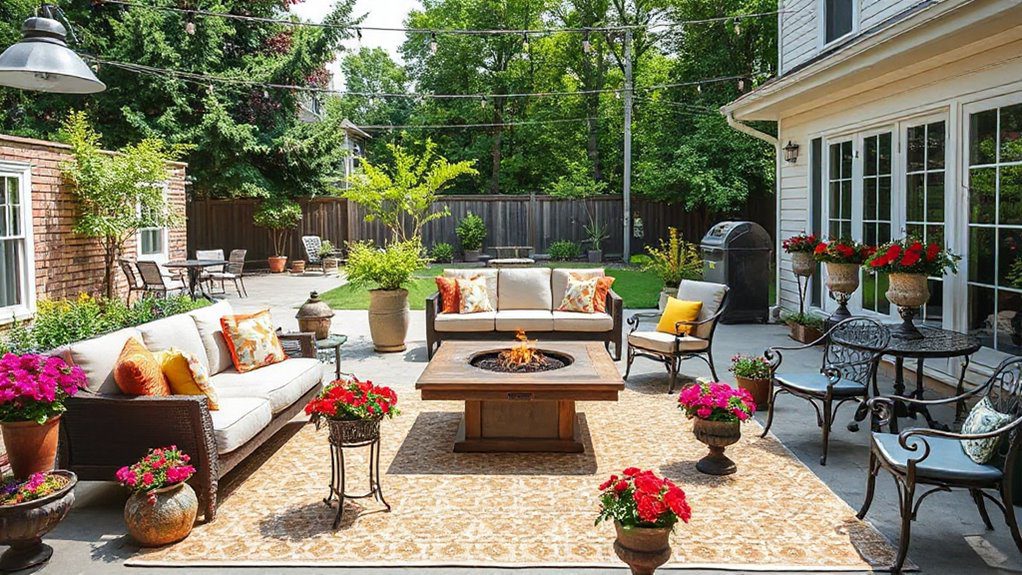
Start with a core conversation zone, and make it the spot people naturally drift toward! Build it with a deep sofa or inward-angled chairs, then add a comfortable coffee table so drinks, snacks, and stories stay within easy reach.
Choose cushions that feel supportive, and pick weather-ready materials so your setup lasts. Angle each seat slightly toward the group, and you’ll cut down on leaning, shouting, and awkward half-turns. Nice, right?
This core should feel calm and welcoming, like the patio’s happy heart. From there, your flexible seating plan can branch outward, but keep this first circle cozy, stable, and easy to gather around.
Add a Transitional Seating Zone
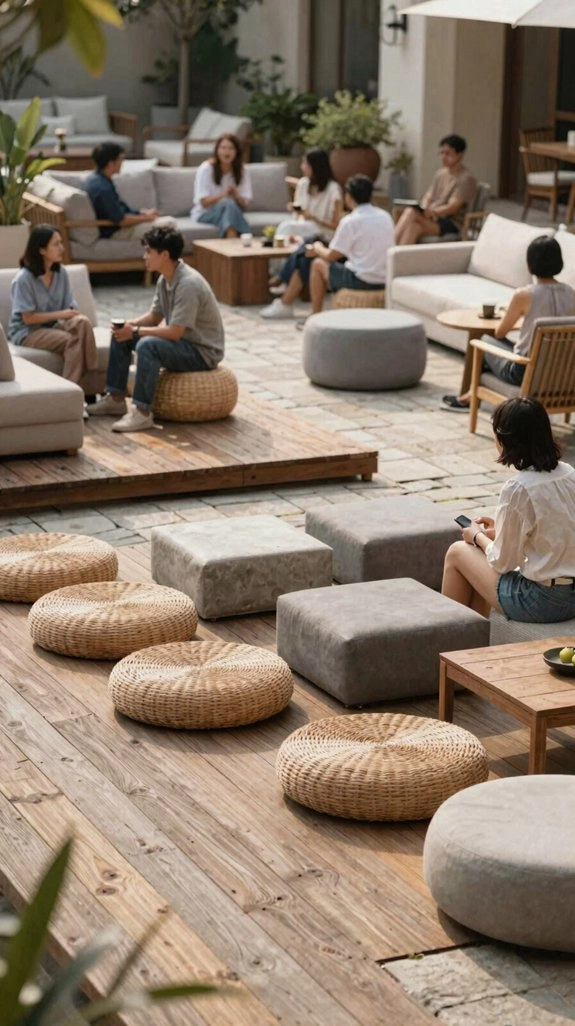
Once your core circle feels warm and easy, give it a little breathing room by adding a seating zone just outside it, where people can pop in for a chat or slip out without breaking the vibe.
Set out side chairs or lighter seats as your friendly bridge, and keep chair placement open so guests can join fast, move through, or pause for conversation prompts without crowding the main group.
Aim for a slightly shallower feel than the core, with a clear 36-inch walking lane, so the patio stays smooth, social, and easy.
Space seats a bit back, or angle them outward, and wow, the whole space feels less pushy and more like home!
Use Edge Seating to Invite Guests In
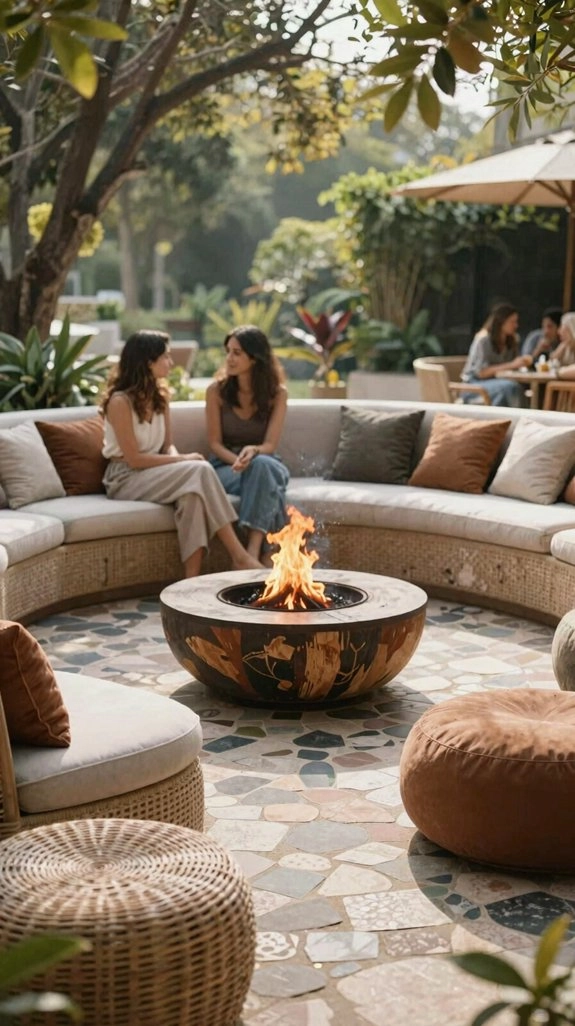
Edge seating sends a friendly message right away—you’re welcome here, even if you’re not ready to jump into the main chat yet!
Try placing benches or a couple of side chairs near a path, angled a bit toward the conversation zone, so guests can watch, smile, and ease in at their own pace.
It’s a simple move, and it keeps the patio feeling open, relaxed, and a little more social, which is exactly the vibe you want.
Edge Seating Signals Welcome
When you place a few chairs or a bench near the patio’s outer path, you quietly say, “Come on in!” without pulling anyone out of the flow.
That edge spot creates Icebreaker Moments and Casual Observation, so guests can ease in, smile, and feel part of the scene right away.
Try a bench, two side chairs, and a small table.
Turn the seats a little toward the patio room, and keep them just outside the tightest chat cluster.
Easy, right?
You get a comfy step-away zone, smoother movement, and less voice strain.
Best of all, nobody feels parked on the sidelines!
Let Guests Observe First
A few smartly placed seats can let guests arrive quietly, take a look around, and ease into the conversation at their own pace—no awkward “Hi, I’m here!” energy required.
Use observer seating like benches or single chairs near pathways, and you’ll give people a soft quiet entry.
Place edge chairs at the boundary of your main group, so one-on-one chats happen naturally, without crowding the center.
Keep them lined up with natural approaches, and add conversation cues like a planter or low table.
These boundary invites feel friendly, not pushy, and everyone relaxes fast!
Let Distance Shape Better Dialogue
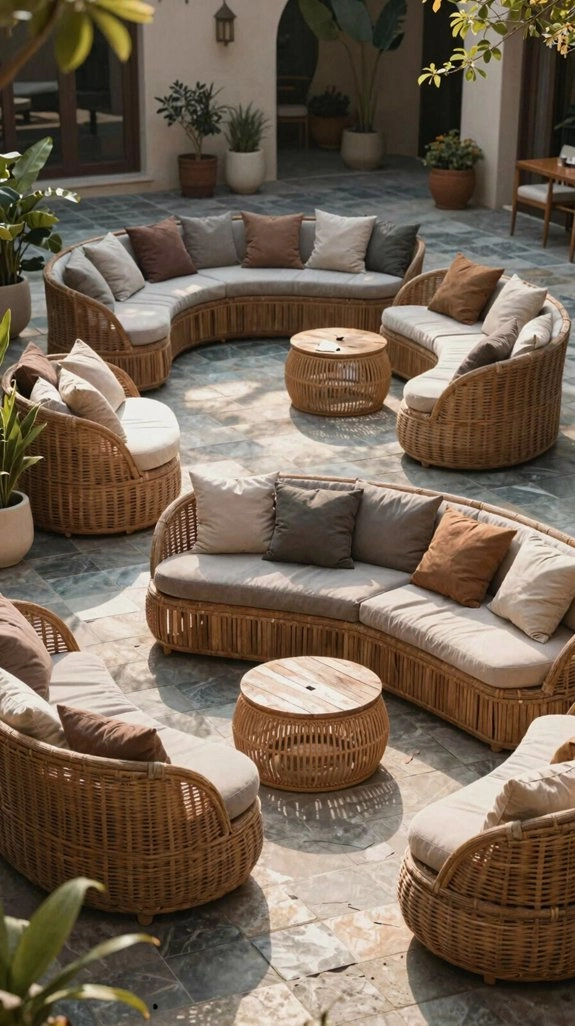
Distance can be your secret sauce for better patio chats! You don’t need everyone packed tight; give each conversation zone room so voices stay easy and Group pacing feels natural, with turn taking balance instead of chatter pileups.
Place a few shifting seats near the edge for quick hellos, then let deeper talks stay in the center.
At the perimeter, add a bench or single chair by a path for one-on-one moments and an easy step back.
Keep a 36-inch clear path behind guests, and slightly angle chairs inward.
That little shift helps everyone feel included, comfy, and ready to stay awhile!
Angle Chairs for Easier Conversation
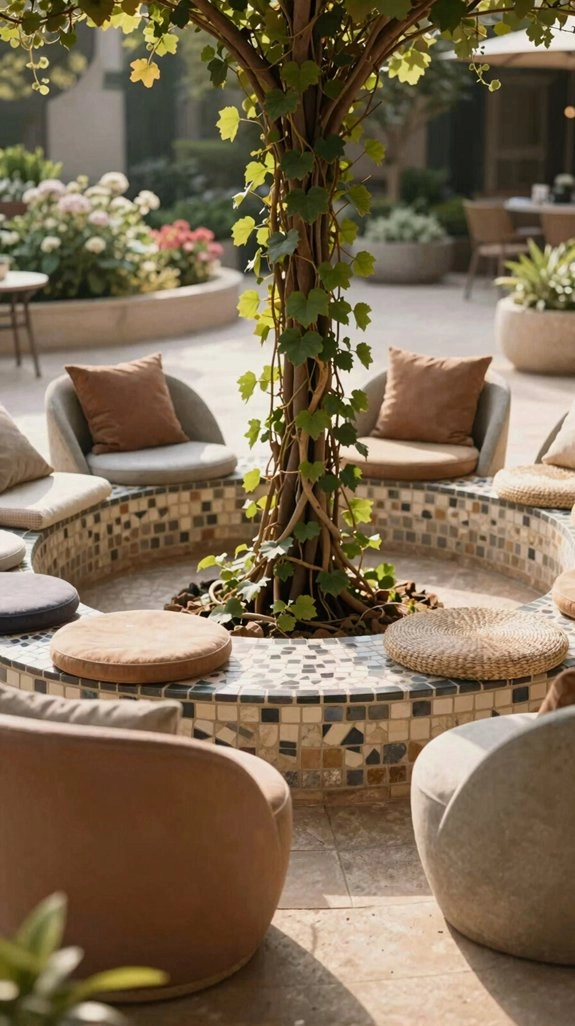
Angle your chairs slightly inward, and you’ll notice how quickly the talk feels easier, warmer, and way less shouty—nice!
You’re not forcing anyone to lean forward or crane around a table, so the whole seating area feels more like a friendly circle than a stiff lineup.
And here’s the fun part: when guests can face each other naturally, the setup quietly pulls people in, making your patio feel like it’s saying, “Come sit, we’ve got stories to swap!”
Angle Chairs Inward
When you want a patio chat to feel easy, turn your chairs just a little inward instead of lining them up like soldiers! That small shift improves conversation flow and keeps your seating alignment feeling friendly, not stiff. You’ll notice folks lean less, smile more, and keep eye contact without trying so hard—nice, right?
Try it with modular or swivel-friendly pieces, a coffee table, or a fire feature. Keep spacing steady, about 36–42 inches, so nobody feels squeezed. Aim each seat toward the center, and you’ll make room for easy join-ins, fewer “back-row” seats, and a layout that says, come on over!
Soften Conversation Distance
A patio chat feels so much easier if you tilt the chairs just a little toward each other, because nobody has to lean way in or shout across the table like they’re calling a cab! You get better eye contact comfort, and the whole group relaxes fast.
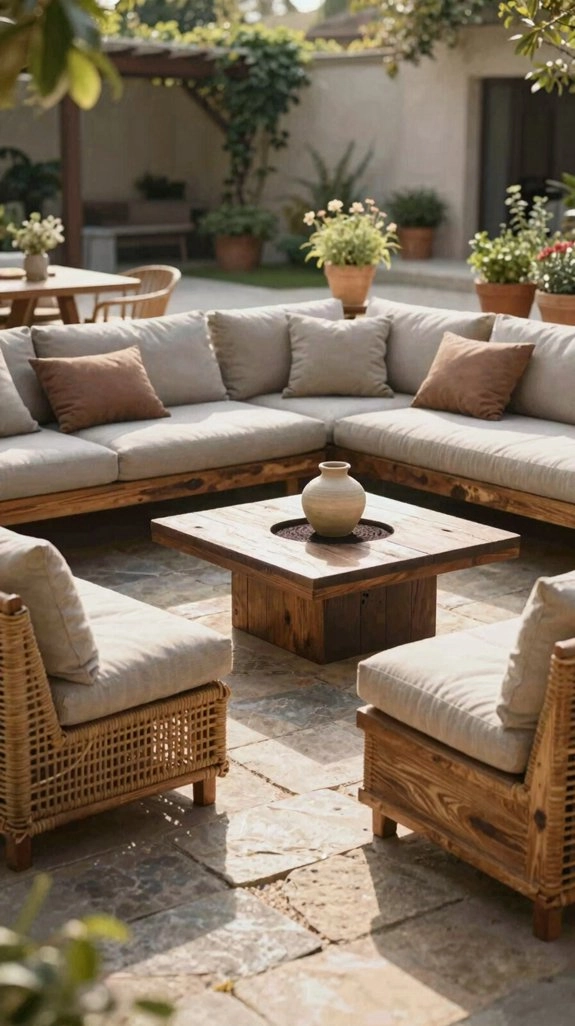
Try a teak or wicker sofa setup with sections you can rotate a bit, no big remodel needed.
In edge spots, turn seats inward too, so side chats still feel friendly.
Keep each zone angled the same way, and your conversation pacing stays smooth, balanced, and easy to join.
Suddenly, everyone feels included!
Create Natural Invitation
If your patio seating feels a little stiff, give the chairs a gentle inward tilt, because that small move can make the whole space feel like it’s saying, “Come on in!” You’ll boost conversation comfort right away, and guests won’t have to lean forward or shout over the table.
Try a simple setup: angle chairs toward each other, keep them at an easy conversational distance, and face them toward the fire pit or coffee table. That keeps eye contact easy and feels natural inviting.
If you use modular teak or wicker pieces, rotate them as needed, and turn any seat away from walkways so everyone feels relaxed and secure.
Use Shade and Warmth to Keep Guests Comfortable
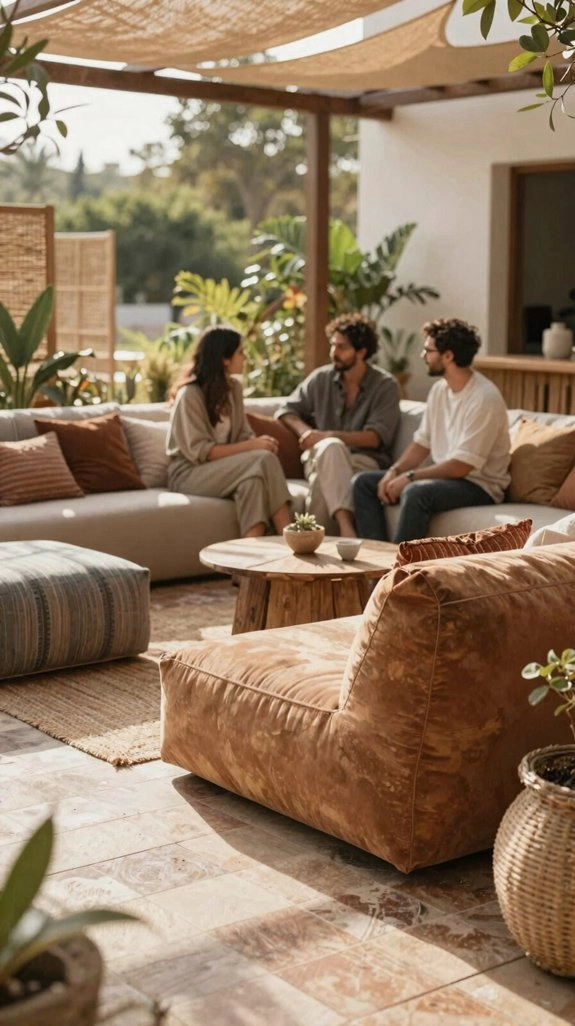
Even the best patio conversation can fizzle out fast if folks start squinting into the sun or shivering in a breeze, so you’ll want to build comfort right into the layout!
Place an umbrella or cantilever cover behind your seat midpoints, add firepit comfort, and tuck in outdoor heaters where people actually sit.
For a quick DIY boost, use waterproof lumbar pillows and roll-up towels at each chair, then hang crisscross string lights or a statement pendant over the main cluster.
It’s easy, low-cost, and wow, it keeps everyone cozy, chatty, and happily settled instead of drifting off when the evening cools.
Create Visual Separation Without Walls
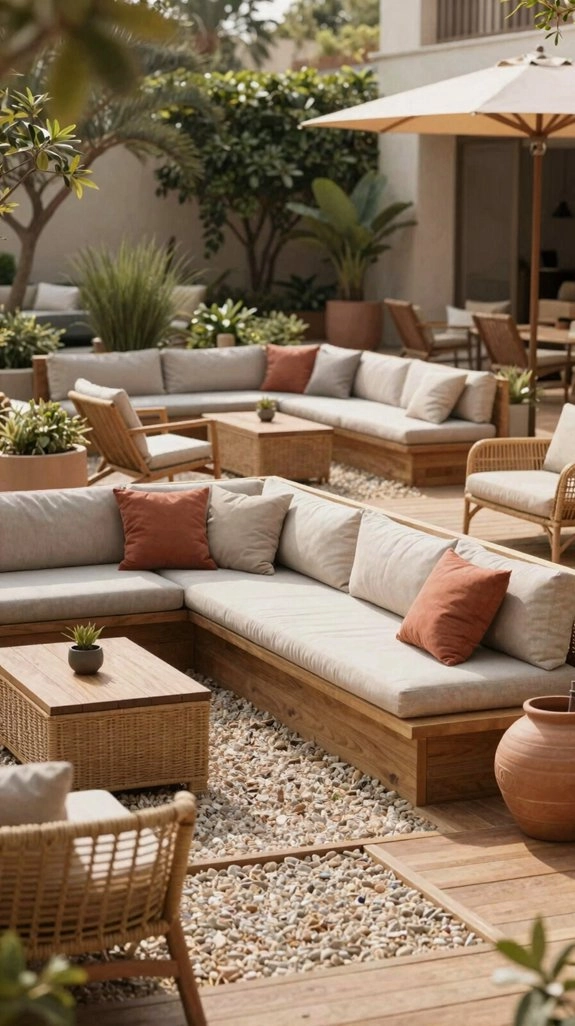
You can create a cozy, room-like feel on your patio without building walls, and that’s a pretty sweet trick! Start by angling chairs slightly inward, then let low tables, ottomans, or planters mark out each zone so the space feels organized, not boxed in.
For an even cleaner look, mix in different cushions, benches, or a soft glow from string lights, and keep a clear path between groups so everyone can move around easily, no awkward sidestepping required.
Low Tables Define Zones
A low coffee table can work like a tiny stage manager for your patio, quietly telling everyone, “Yep, this is the chat zone!” At about 18 to 20 inches high, it caps the seating area without blocking the view, so the space feels defined but still open and breezy.
Add outdoor lighting, weatherproof accents, and a rug, and your garden views stay front and center, not hidden behind a privacy screen.
Keep the table 14 to 18 inches from seat edges for easy reach.
Angle chairs inward, then swap table shapes or finishes, and watch the zone feel cozy, clear, and ready for laughs!
Orientation Creates Separation
When you turn sofas and chairs inward, the whole patio starts to feel calmer and more welcoming, like the seats are leaning in for a good story!
You create a cozy zone without walls, and guests stop feeling like they’re stuck in a back row.
Angle pieces slightly, not stiffly, so each group gets its own little room and a comfortable flow.
Add a low table or fire feature in the center, then keep 36 inches open between zones.
With outdoor lighting, the separate clusters glow softly, and your patio feels inviting, connected, and easy to wander through.
Choose Modular Patio Seating for Flexibility
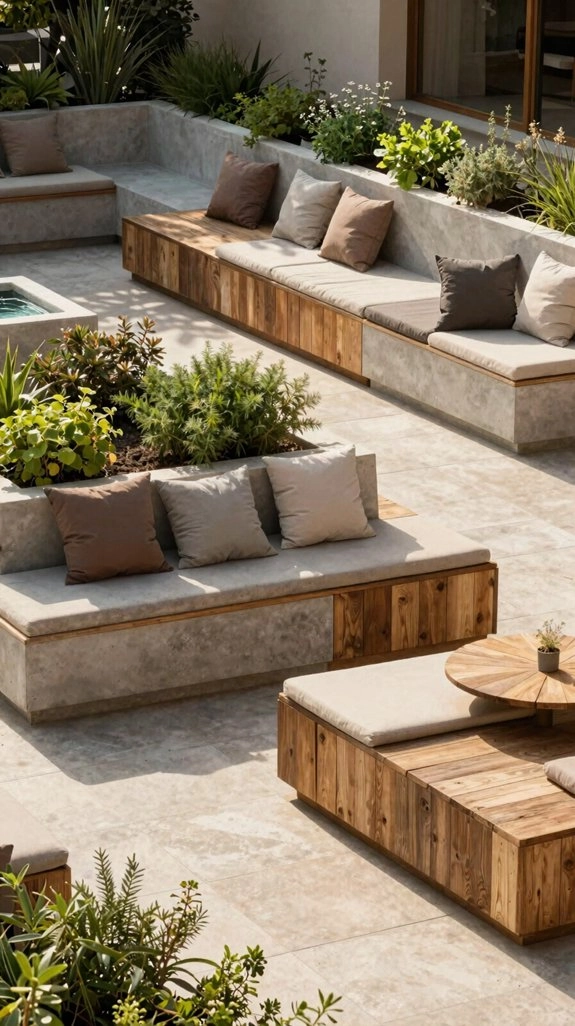
Modular patio seating is a game-changer for big outdoor spaces, because it lets your setup flex with the moment instead of bossing everyone around!
You can shift pieces into an L, U, or two-love-seat layout, so friends can chat, nap, or spread out without you buying new furniture.
Add reclining options and Swivel modules for extra comfort, and pick weather-ready frames with quick-dry cushions so the party lasts.
Build a cozy cluster with 5–7 pieces, plus ottomans, on a 6–8 foot rug, then keep a clear walking lane.
Suddenly, your patio feels welcoming, polished, and easy to join!
Plan a Small-Space Friendly Layout
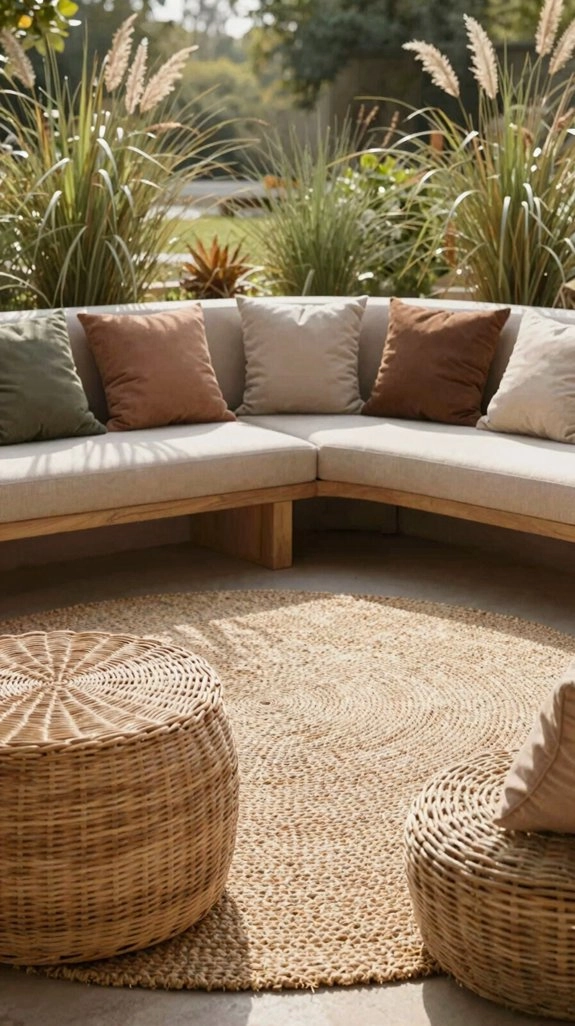
Tiny patios can still feel roomy and inviting if you keep the furniture slim and trim, not big and puffed-up like it’s trying to win a couch contest!
Start with scale vs flow: choose narrow chairs, then float them off the wall so people can slip behind them.
Keep pathway clarity with at least 36 inches for walking, and you’ll stop that awkward shuffle.
For seating comfort, use a small coffee table or fire pit as your conversation core, then angle chairs inward.
Need more room? Swap a loveseat for two club chairs.
Add an 8–10 ft rug for modular flexibility—wow, instant cozy!
Add Color to Large Patio Seating
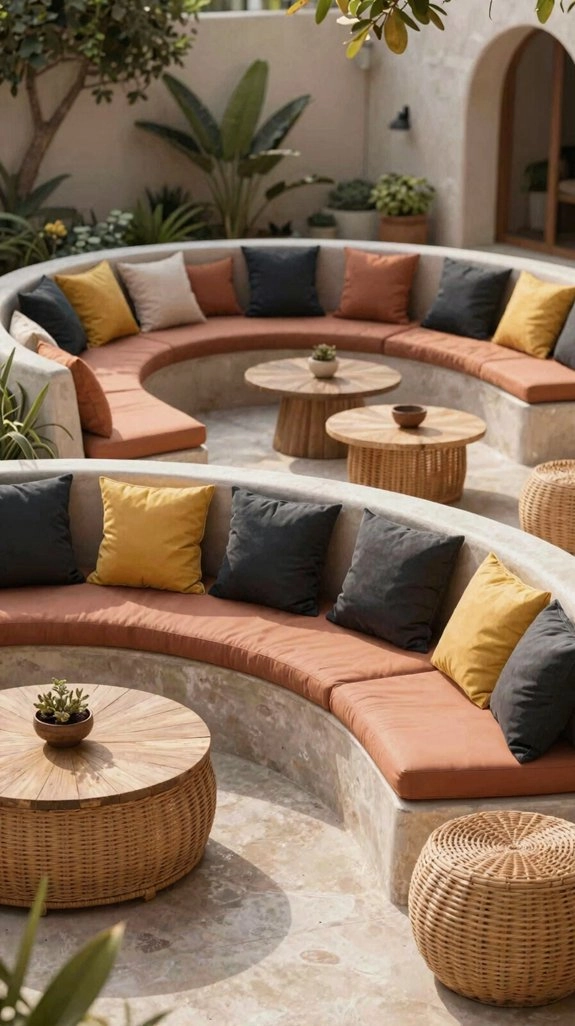
Colorful pillows and throws can wake up your patio fast, and they’re one of the easiest, low-cost swaps you can make—no power tools, no stress!
Then add bright rugs or layered outdoor textiles to frame your seating zones, so the space feels pulled together instead of big and a little sleepy.
If you want extra pop, mix in one vivid accent or a few bold pieces, while softer neutrals keep the look calm and cozy, like the patio’s wearing sunglasses and still smiling.
Colorful Pillows And Throws
Try a quick DIY-style refresh: grab a few outdoor pillows, a couple of weather-ready throws, and, if you want, a bright rug to tie it all together. You’ll boost conversation flow fast, and the seating rhythm feels warmer under outdoor lighting and soft mood lighting.
- Pick 2–3 bold colors, then repeat them across cushions for instant belonging.
- Mix a lumbar pillow with smaller accents, so everyone gets comfy without crowding the sofa.
- Drape a lightweight throw near fire features, and your patio reads cozy, intentional, and friendly from every angle.
Keep it simple, and guests won’t feel scattered—they’ll feel invited.
Bright Rugs And Layers
Underfoot, a bold outdoor rug can do a lot of heavy lifting for a big patio—it gives your seating area a clear starting point and makes the whole space feel pulled together, fast!
Pick one bright rug, then layer a second with a different weave or size for depth that still feels roomy.
Keep the palette to three colors, so your color coordinated cushions and a patterned tablecloth look friendly, not fussy.
Center the rug under your lounge cluster, let the edges frame the seats, and keep a 36-inch path around it.
At sunset lighting, your patio feels like the spot everyone wants to join—yay!
Vibrant Accents, Softer Neutrals
Soft neutrals make a big patio feel calm and roomy, but they don’t have to stay quiet for long! You can join the fun with cozy throw pillows, weatherproof textiles, and a few bold colors that invite people in.
- Add bright pillows on teak sofas for instant cheer.
- Blend rug color blending with one steady tone, so everything feels connected.
- Hang outdoor lighting overhead; it tethers the seating area and sets a friendly glow.
Try patterned cushions or a lively tablecloth, then repeat one accent shade across seats. You’ll get a warm, welcoming look that feels like your crew’s favorite hangout!
Mix Textures for a Lived-In Feel
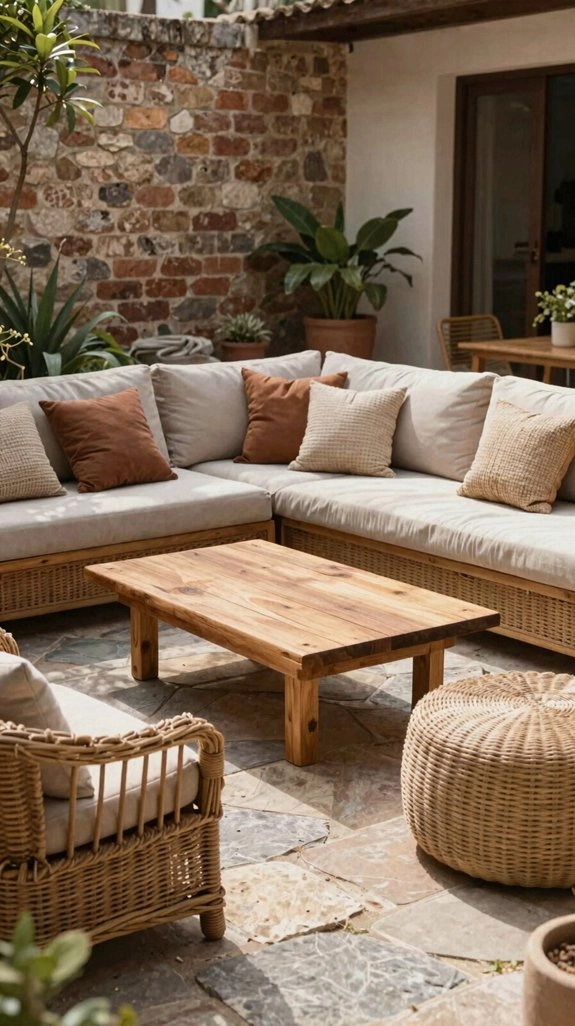
In a big patio, texture is what keeps the space from feeling like a furniture catalog exploded! You can mix sleek teak with handwoven wicker or resin so your outdoor seating feels warm, not stiff.
Pick Sunbrella-style cushions and pillows for weatherproof comfort, then layer a small lumbar, a bigger accent pillow, and a textured seat cover for flexible conversation that feels easy and welcoming.
Add a patterned rug under the lounge area, and let a side table or two bring more grain and shape.
Finish with throws or drapery, and suddenly the whole patio feels lived-in, cozy, and ready for friends!
Build Around a Conversation Focal Point
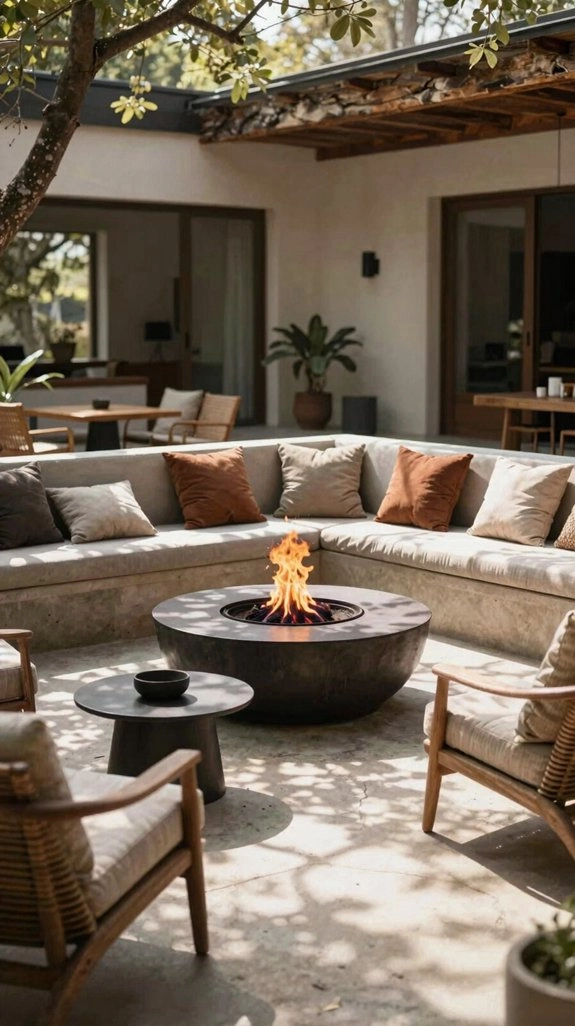
Around one clear focal point, your big patio suddenly starts to feel like a real hangout instead of a bunch of chairs doing their own thing! Pick a fire pit, centered table, or great view, then angle seats slightly inward so everyone feels included. Keep a 36-inch path open, and use shade planning plus lighting control to make the zone comfy day and night.
- A low center makes voices easy.
- A circle helps eye contact.
- A rug can pull the group together.
Try a modular island cluster with a 6–8 ft rug, and watch strangers turn into your crew fast!
Pair Lounge Seating With Dining Space
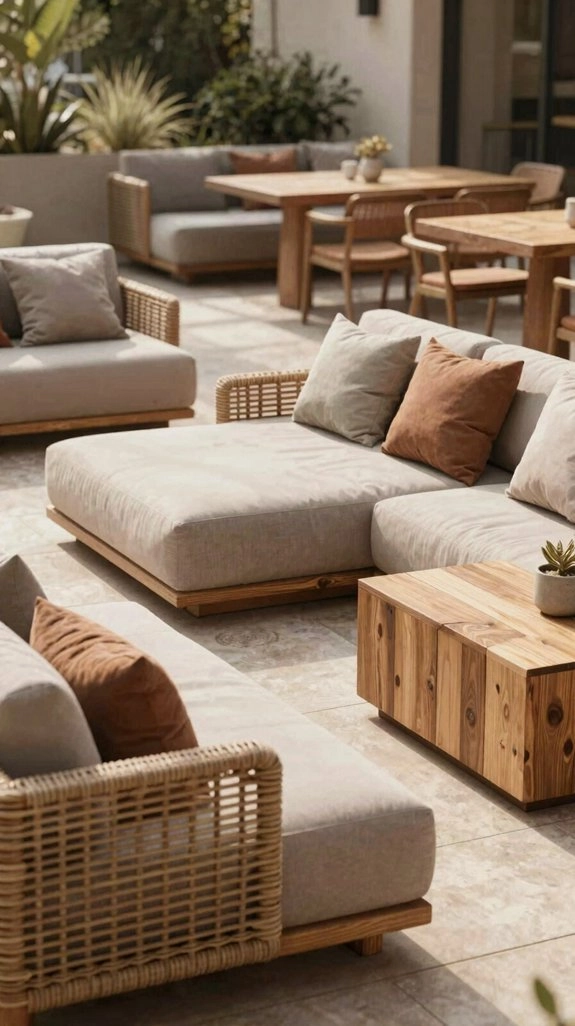
To make a big patio feel easy and fun, pair your lounge area with a dining space instead of letting them compete for attention. Keep the chat landing around a coffee table or fire feature, and place the dining table as the meal anchor with a clear serving path nearby.
For Porch flow planning, turn the table’s long side parallel to the house, and angle the lounge toward the conversation spot. Leave at least 36 inches between zones, then add Modular seating zones with a chair or bench on the edge.
The result? Easy check-ins, fewer bumps, and a patio that feels like one happy hangout!
Use Slim Furniture to Keep Flow Open
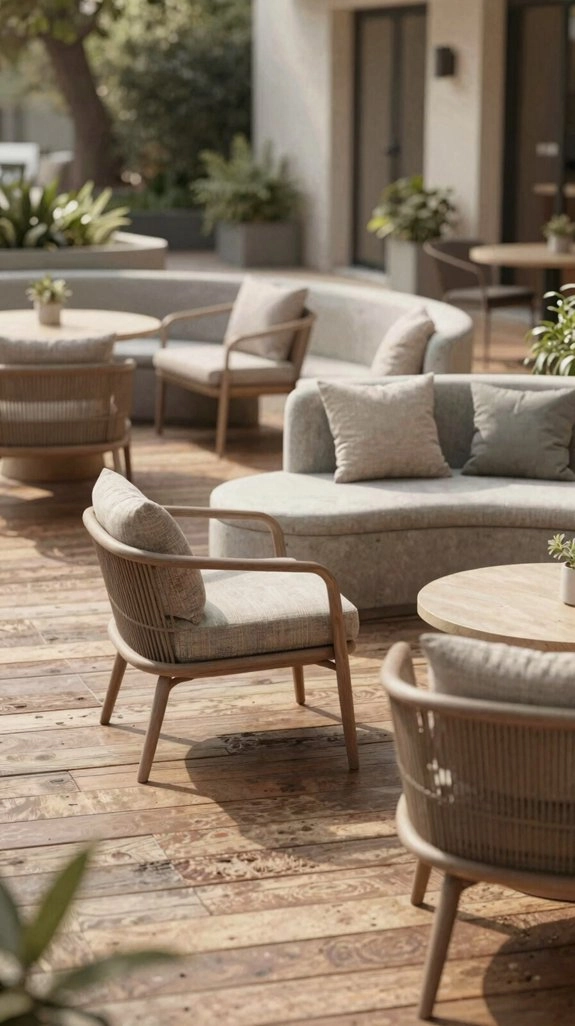
Once your lounge and dining spots are working together, the next win is keeping the whole patio feeling open and breezy, not like furniture has moved in and taken over! Choose slim seating, and you’ll keep open sightlines while still making a cozy conversation focal.
- Try narrow club chairs; they’re easy to place and won’t hog space.
- Mix in an armless modular pairing for flexible seating that still feels friendly.
- Add a low coffee table, about 18–20 inches high, so the view stays light and airy.
In tight corners, skip bulky shapes, because a slimmer setup helps guests flow through naturally, and everyone feels welcome.
Make Seating Easy to Rearrange Later
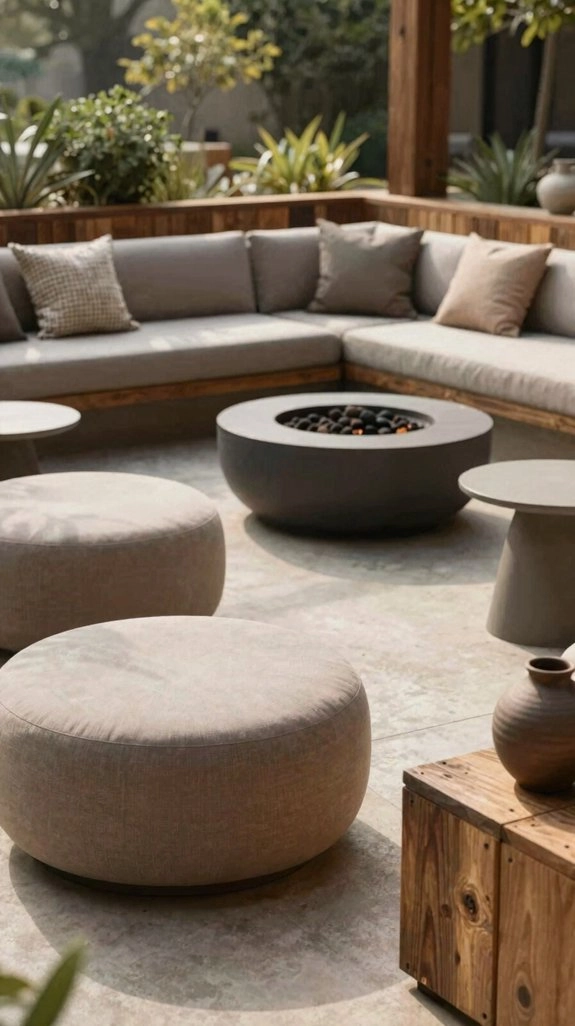
Keep your patio from getting stuck in one “permanent” pose by building a seating island that can shift when your plans do!
Choose 5–7 modular cubes and 1–2 ottomans, then test flexible conversation angles by forming an L, U, or two-loveseat setup.
Add a 6–8 ft all-weather rug, leaving a 12 in. edge frame so the zone still feels united.
Keep a 36 in. walking lane clear, and tuck C-tables under seats for easy swaps.
For future layout planning, use one pendant or string lights and a three-color pillow palette, so your modular styling updates always feel like home.