Swimming Pool Landscaping That Softens Hard Edges Naturally
- Swimming Pool Landscaping That Softens Hard Edges Naturally
- Key Takeaways
- What Makes Pool Edges Look Harsh?
- How Pool Landscaping Softens Hard Edges
- Choose Natural Materials Around the Pool
- Stone, Wood, and Gravel
- Earthy Textures for Balance
- Use Curved Shapes to Soften Pool Lines
- Add Natural Stone to Pool Landscaping
- Soften Pool Edges With Layered Plantings
- Use Grasses and Perennials by the Water
- Waterside Grass Borders
- Perennial Color Layers
- Softening Pool Edges
- Pick Plants That Thrive Near Pools
- Create a Natural Pool Waterfall Feature
- Blend the Pool Into the Surrounding Yard
- Organic Pool Edges
- Landscape Integration Tips
- Add Privacy With Trees, Screens, and Hedges
- Make Pool Decking Flow Into the Landscape
- Design a Natural Pool Regeneration Zone
- Regeneration Zone Plants
- Gravel Filtration Design
- Plan Pool Landscaping for Small Yards
- Create a Spa-Like Pool Retreat
- Soothing Water Features
- Natural Stone Borders
- Lush Lounge Zones
- Use Lighting to Warm Up the Space
- Keep Pool Landscaping Low Maintenance
- Match the Design to Your Home’s Style
- Avoid Common Pool Landscape Mistakes
You can soften hard pool edges by mixing curved planting beds, natural stone like bluestone or fieldstone, and easy grasses such as fountain grass or sedges. Start with a curved bed, tuck in low groundcovers, then add taller shrubs farther out for a smooth, layered look. Warm, low-voltage lights help too, while skipping shiny finishes keeps glare down. It’s beginner-friendly, not ornate, and the best tricks for that “always belonged here” feel are coming up next!
Key Takeaways
- Use curved planting beds and rounded islands to break up straight pool lines and soften the perimeter naturally.
- Replace harsh coping with natural stone like bluestone, fieldstone, travertine, or granite for a calmer edge.
- Layer low groundcovers, grasses, and taller perennials to create a gradual transition from water to yard.
- Choose matte, textured materials and avoid shiny finishes to reduce glare and make edges feel less harsh.
- Add moisture-tolerant plants near splashes and drought-tolerant plantings farther out for a balanced, easy-care look.
What Makes Pool Edges Look Harsh?
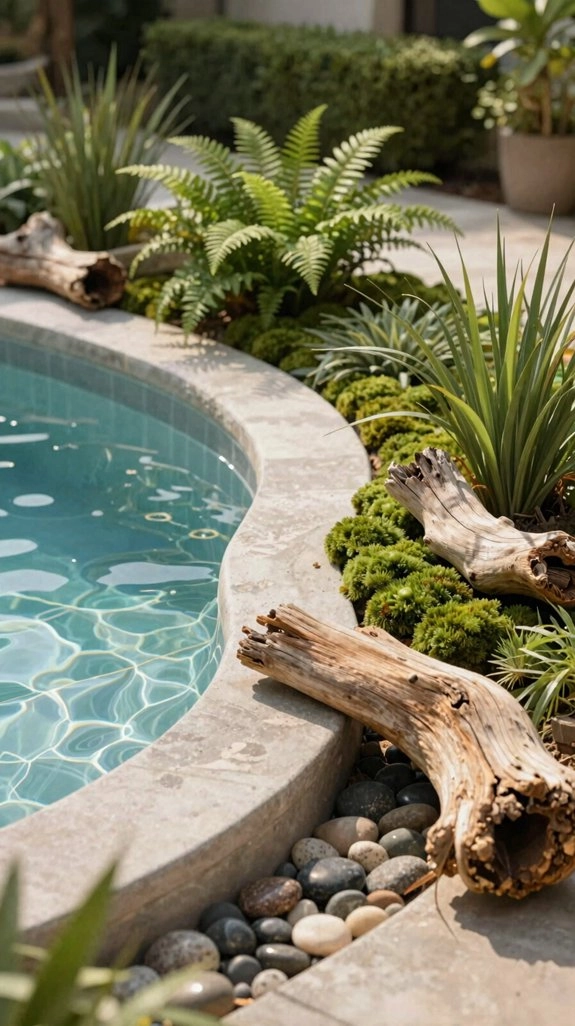
When a pool edge feels harsh, it usually comes down to how the hardscape draws a big, loud line around the water. You see straight coping, flat decking, and sharp corners, and suddenly the pool feels parked, not nested.
High-contrast coping color can shout even louder, and Lighting glare can turn every seam into a spotlight, yikes!
Planting gaps between the edge and the yard leave no soft shift, so the boundary feels busy and blank at once.
Even equipment mismatch, like a pad that jars with the rest, can make the whole area read as split apart.
How Pool Landscaping Softens Hard Edges
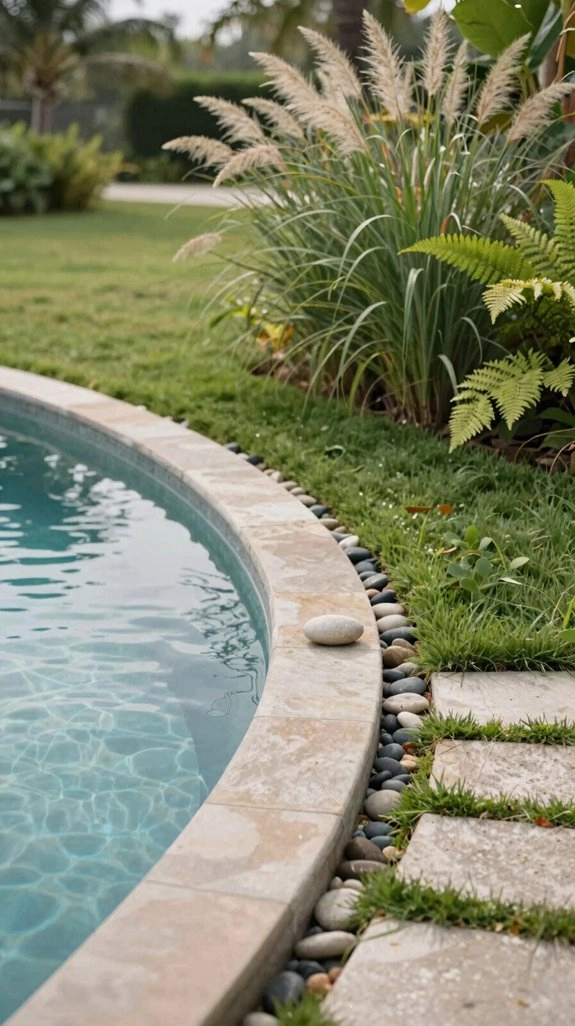
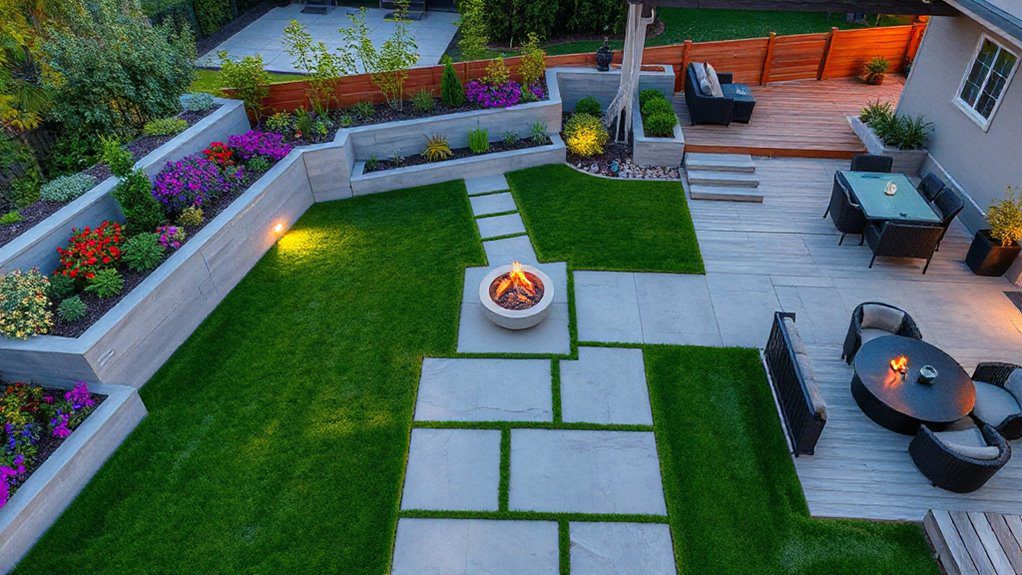
Softening those hard pool edges starts with making the eye wander a little, not stop dead at the coping line. You can do that with curved planting beds, not one stiff border, and tuck in fountain grass and native sedges for movement, wow!
Add Layered Mulch around moisture-loving plants like iris and native ferns, so the edge feels calm, not cranky.
Try small planting islands between deck areas, too; they break up big slabs fast.
Use fieldstone or granite, then finish with Seasonal Pruning to keep shapes loose.
The result? Your pool feels like it truly belongs!
Choose Natural Materials Around the Pool
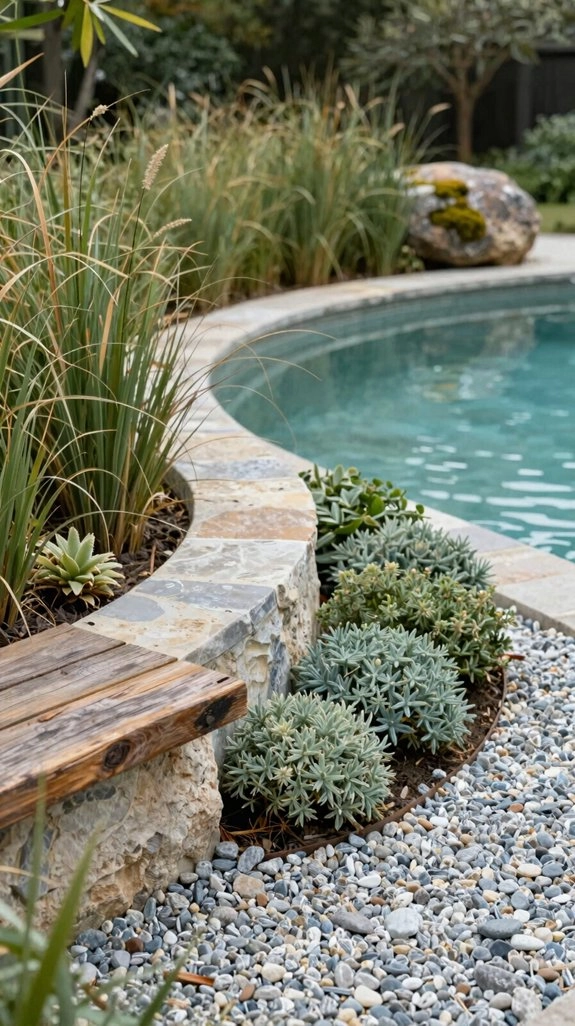
You can soften your pool’s hard edges by choosing natural stone, wood, and gravel that feel calm and earthy, like fieldstone, bluestone, travertine, or sandstone—nice, right?
These materials blend better with the water and yard, stay cooler than darker finishes, and textured pavers or rough stone also help keep slippery spots in check.
For the best effect, match the tones to your home and let the edging curve a little, because a pool that looks like it grew there beats a “floating island” any day!
Stone, Wood, and Gravel
Natural materials can make a pool area feel calmer almost instantly, and stone, wood, and gravel do that job beautifully!
You can swap harsh borders for fieldstone, bluestone, or granite coping, then round the edges where your feet land for better slip resistance.
Add cedar or teak nearby, and the waterline suddenly feels warmer, not colder.
For drainage planning, tuck gravel bands beside filtration zones so water moves away easily and the whole space feels less boxy.
Want even more charm? Mix in matte finishes and a few uneven stone runs, and your pool starts feeling like everyone belongs there.
Earthy Textures for Balance
When you want the pool area to feel calmer and more connected to the yard, earthy textures do the heavy lifting! Pick fieldstone, bluestone, granite, travertine, or textured pavers, and skip anything shiny. Those surfaces look natural, feel slip resistant, and help you belong in the space instead of staring at a hard border.
Mix a bluestone coping line with a pebble-like basin floor or gravel zone, and your pool starts to sink softly into the surroundings.
Add boulders near steps or lounge spots for that “hey, we were always here” vibe.
Bonus: they support runoff drainage, resist seasonal erosion, and keep your moss friendly flooring dreams realistic!
Use Curved Shapes to Soften Pool Lines
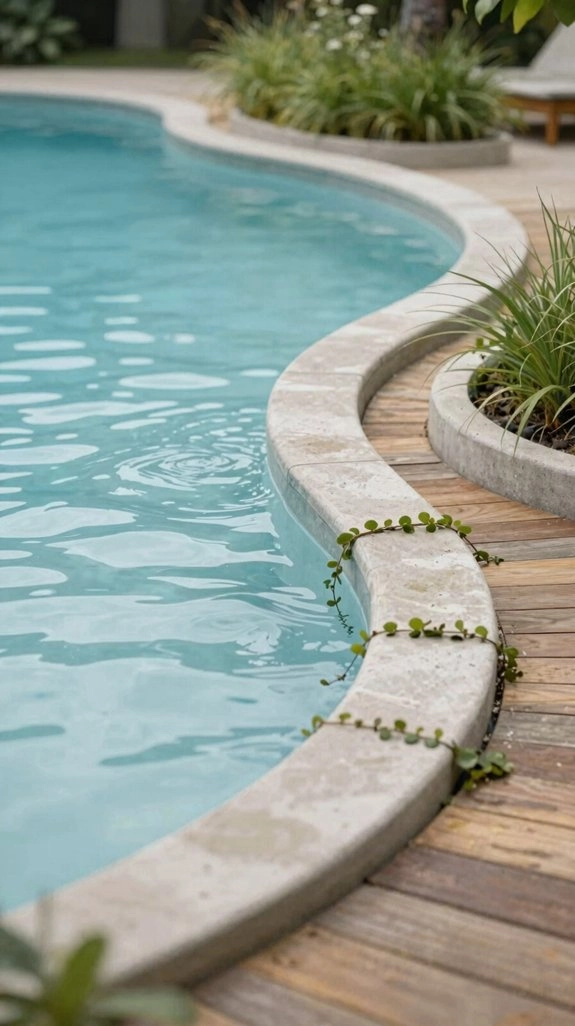
Try a soft, curving planting strip with wider spots where the view matters most.
Add rounded boulder groupings and looping stepping paths, so movement feels natural, not stiff.
If you have a tanning ledge, taper it with gentle corners—tiny changes, big wow!
Add Natural Stone to Pool Landscaping
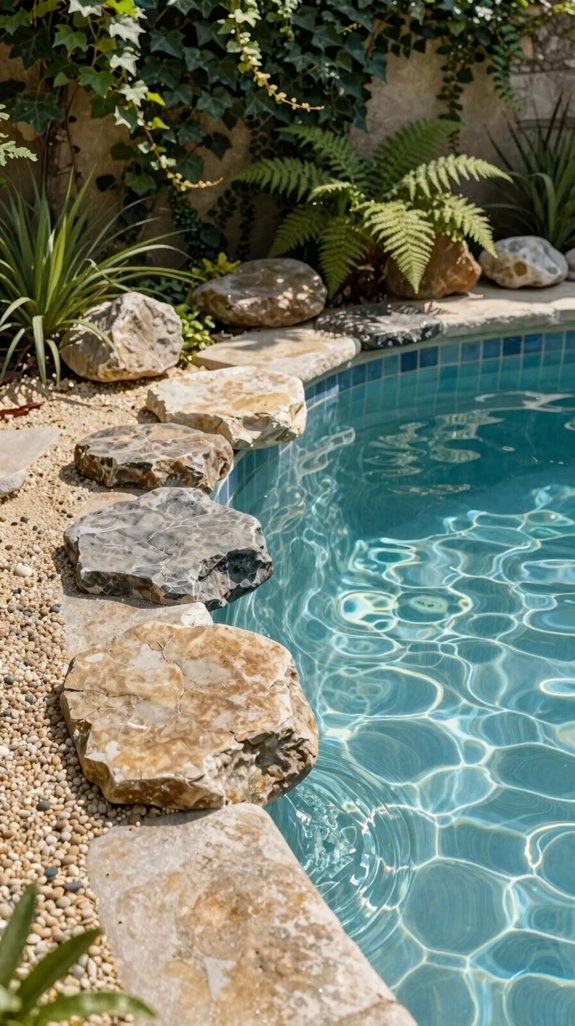
Stone can take those soft curves you just planned and make them feel even more natural, almost like the pool was formed by water long before the patio showed up!
You can use fieldstone, bluestone, or granite for coping and borders, and choose varied sizes, like cleft full color-range bluestone, to break up long hard lines.
Pick rougher finishes near steps, because better Pool coping texture helps when things get wet.
Then tuck small stone gaps for natural edging drainage, and match the tones to your roof or trim.
That way, your pool feels grounded, welcoming, and totally yours!
Soften Pool Edges With Layered Plantings
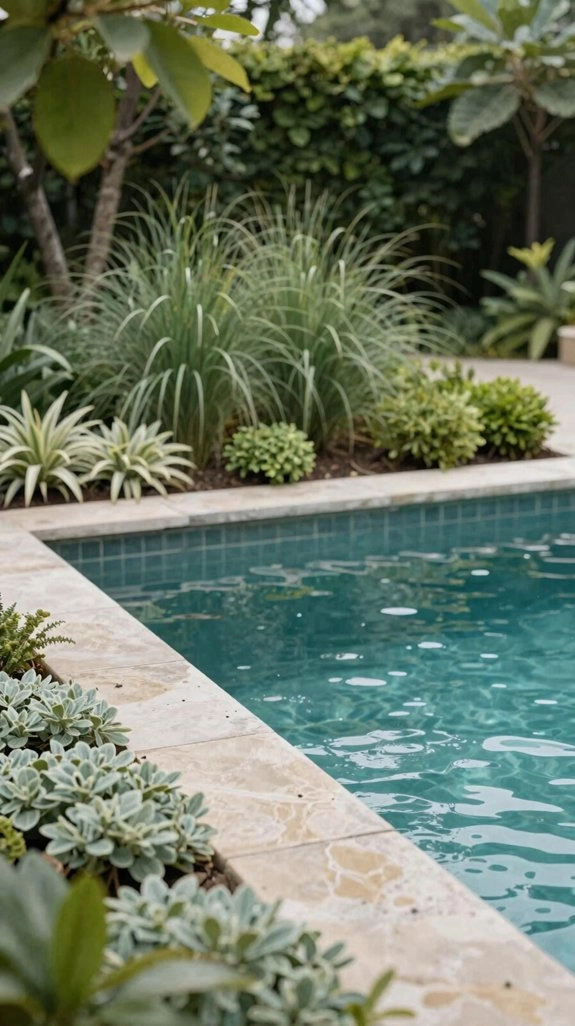
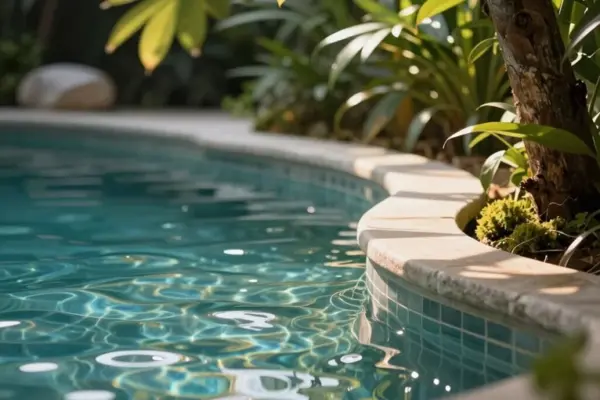
Around your pool coping, layered planting beds can do some serious magic, because they make the shift from water to hardscape feel slow and natural instead of sharp and boxy.
You’ll fit right in with a softer, friendlier pool edge!
- Start with low groundcover, then add mid shrubs for texture, and finish with taller accents.
- Choose moisture-tolerant plants like cardinal flower or native ferns near splashes, and use drought tolerant planting farther out.
- Try Wildflower edging and curving drifts of fountain grass or sedges for a relaxed, shoreline look.
Mix colors and shapes, and your pool starts feeling like a welcoming backyard hangout, not a concrete box!
Use Grasses and Perennials by the Water
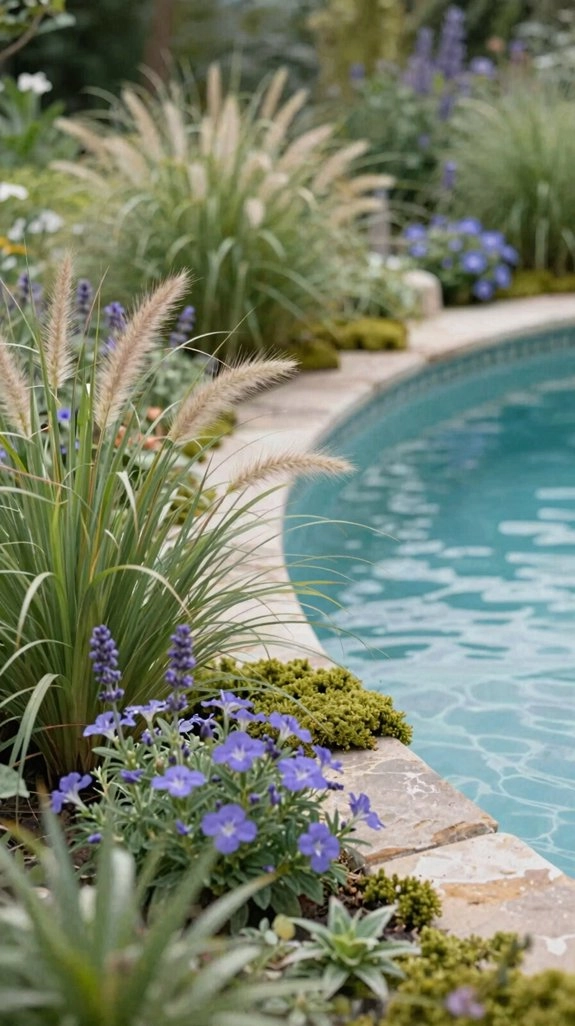
You can start by lining the water’s edge with grasses like fountain grass or native sedges, and wow, they make that hard pool border feel a lot softer right away.
Then tuck in water-loving perennials like blue flag iris, cardinal flower, or native ferns, so you get bright color layers right by the splash line without making the space feel elegant.
For the best effect, mix taller blooms with lower grasses in a gentle curve, and you’ll get a shoreline look that feels natural, calm, and a little bit elegant—without the designer price tag, which is always a win!
Waterside Grass Borders
Along the pool edge, waterside grass borders can do a lot of heavy lifting, and they make the whole scene feel softer right away! You’ll fit right in with a lagoon-like edge that welcomes everyone.
- Plant fountain grass or native sedges in drifts, and use root management to keep them tidy.
- Mix in cardinal flower, blue flag iris, and native ferns for shade tolerance, mosquito control, and winter resilience.
- Vary bed widths, then repeat fine blades in loose bands so the waterline sways and sparkles.
It’s an easy, friendly way to blur hard coping, and it looks like nature meant it.
Perennial Color Layers
When you layer plants by the water, the whole pool edge starts to feel softer, richer, and way less like a hard slab of concrete—nice, right! Start with low, water-tolerant groundcovers and sedges near the coping, then tuck in mid-height perennials, and top the scene with clumping grasses for that breezy, lived-in look.
Use Wildflower underplanting and seasonal bloom sequencing so something always pops, from spring to fall. Repeat blues, purples, and soft lavenders with greens, and plant in natural drifts, not neat rows. Fountain Grass and native sedges return yearly, so your crew feels intentional, not random.
Softening Pool Edges
As the pool edge meets the rest of the yard, grasses and perennials can turn that hard line into something soft, layered, and a lot more inviting—yes, even concrete can look a little less bossy!
- Choose moisture-tolerant grasses and sedges for the coping line; they love wet feet and blur the border fast.
- Mix in cardinal flower, blue flag iris, or native ferns for color and a pool planting rhythm that feels natural.
- Space clumps wider, keep a curved bed edge, and follow maintenance scheduling tips by renewing mulch yearly.
Soon, the splash zone feels like your own welcoming hideaway!
Pick Plants That Thrive Near Pools
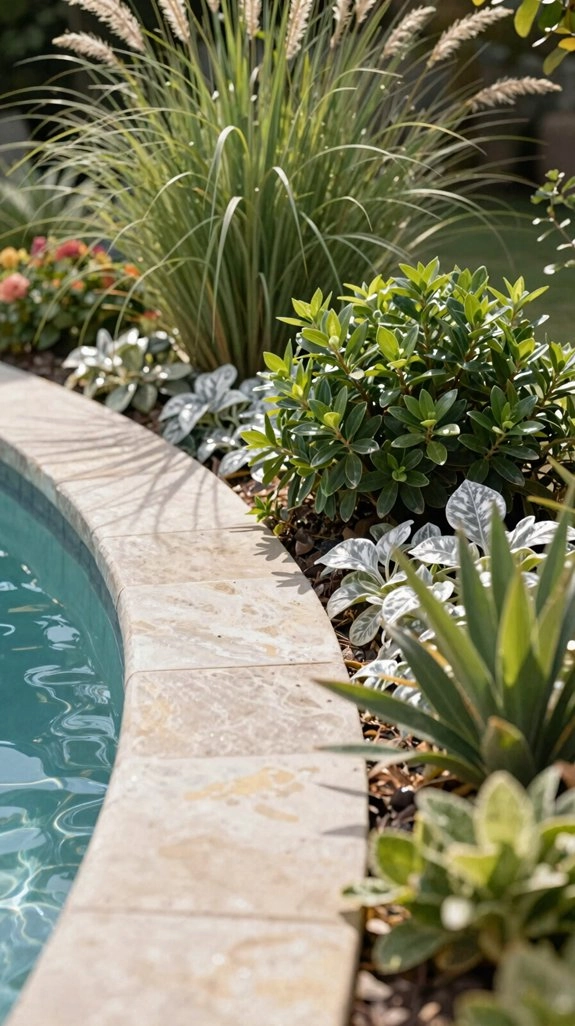
The right plants can make a pool area feel soft, calm, and way less boxy—without turning it into a jungle! Start by checking Cold tolerance zones and soil pH testing, then pick plants that match your site.
Go for moisture-loving natives like cardinal flower, blue flag iris, and ferns where splashes keep soil damp.
Use inkberry holly or mountain laurel for evergreen privacy, and add fountain grass or sedges to blur hard edges with easy movement.
For little gaps, choose tough groundcovers that handle wet-dry swings. They’ll hold soil, look tidy, and save you from the “why is this gap back again?” headache!
Create a Natural Pool Waterfall Feature
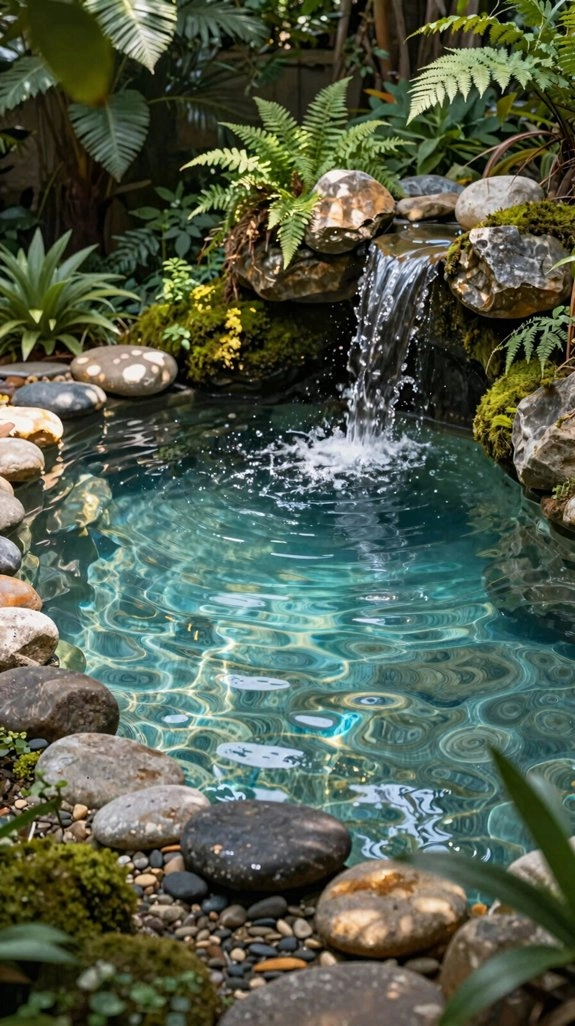
Because a waterfall can do more than just look pretty, you’ll want to place it with purpose, not just wherever there’s an open corner! Put it where the water lands in your shallow-entry or plant zone, so circulation stays lively and your pool feels like one happy crew.
- Use stacked stone, a recirculating pump, and a small weir for a steady sheet.
- Keep the fall gentle for splash control and perimeter safety.
- Tuck the landing edge near aquatic baskets, then finish with boulders, gravel, and moisture-loving natives.
That natural hush? It keeps water clearer and the whole scene feels inviting!
Blend the Pool Into the Surrounding Yard
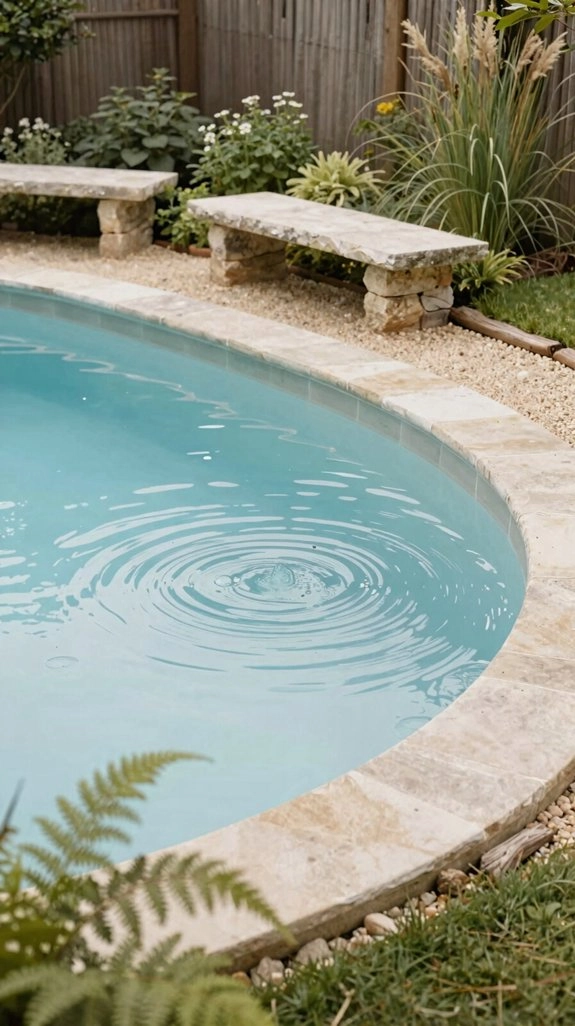
You can make your pool feel like it belongs in the yard, not like it landed there by accident, by softening the edge with curved planting beds, ornamental grasses, and native sedges that gently blur hard lines.
Try carrying the same stone tones from the pool border into walkways and garden edges, then tuck in moisture-loving plants near the water and tougher plants farther out for a look that feels natural and easy to maintain.
And here’s the fun part, hide equipment with dense evergreen shrubs and break up big hardscape spots with planted islands or gravel bands, so the whole space feels like one smooth, living scene!
Organic Pool Edges
If you want your pool to feel like it grew right out of the yard, start by softening those crisp edges with layered planting beds that change in width and fullness as they move around the perimeter. Use a native edge with moisture-loving plants, and you’ll get erosion control plus a look that feels welcoming, not stiff!
- Swap straight coping for curved fieldstone.
- Add sedges, iris, and fountain grass.
- Hide seams with inkberry holly or mountain laurel.
These easy moves cost less than a full redesign and work fast. Keep the pool form simple, maybe kidney-shaped, and the whole space starts saying, “Yep, you belong here!”
Landscape Integration Tips
Now that the pool edges are softened, it’s time to make the whole yard feel like one happy scene instead of a pool dropped onto the lawn like a shiny blue rectangle! You can build graduated planting beds beside the coping, then curve them a little so the stone melts into the yard. Add fountain grass, sedges, and blue flag iris for a natural flow.
Next, tuck in curved stone islands and keep drainage smart with French drains. For pool privacy, use hedge screening with inkberry holly or mountain laurel, so equipment disappears and your space feels cozy, welcoming, and connected!
Add Privacy With Trees, Screens, and Hedges
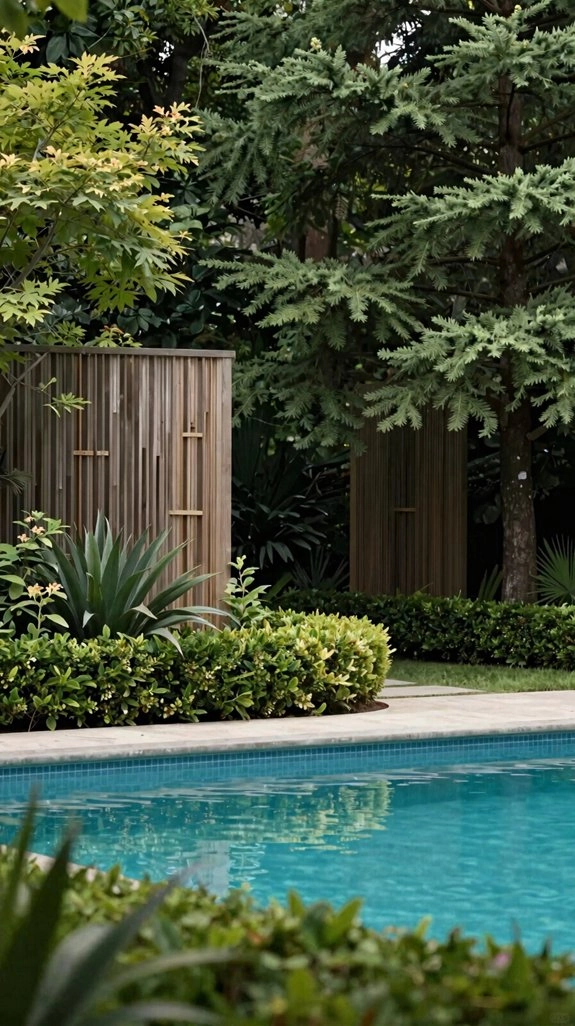
Adding privacy around a pool doesn’t have to feel like building a fortress, and that’s the fun part! You can create a friendly, tucked-in vibe with Screening height planning and neighbor sight control.
- Layer plants: tall evergreens behind, shrubs in the middle, edging plants at the waterline. It feels lush, not boxed in.
- Use inkberry holly or mountain laurel, spaced 3–5 feet apart. They knit together nicely, and yes, they’re year-round champs!
- Try trellis screens or vertical planters now, then let vines race ahead. Hide equipment with shrubs, but keep a clear service path—smart and neighbor-friendly!
Make Pool Decking Flow Into the Landscape
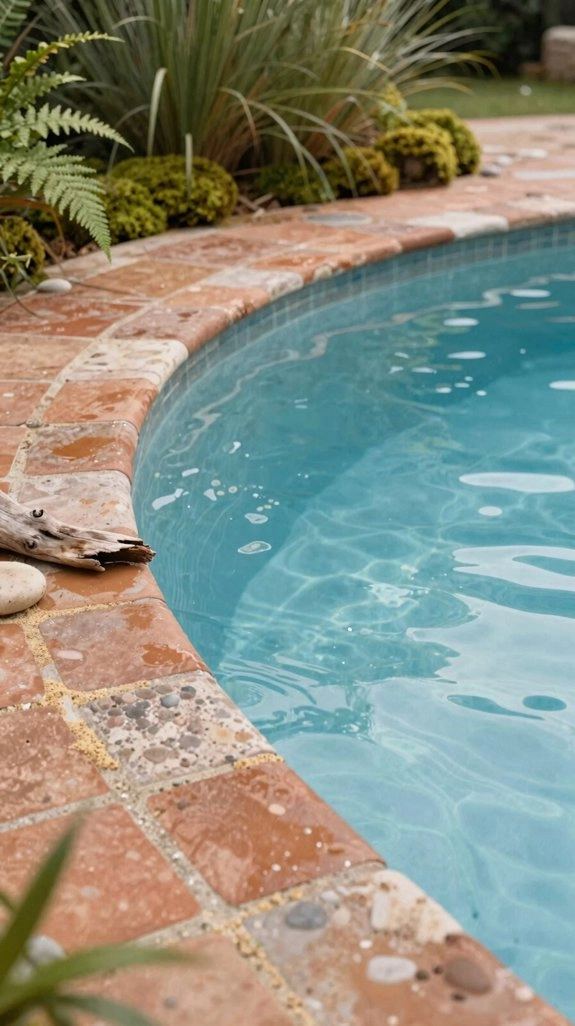
Around the pool, the deck shouldn’t feel like a stiff sidewalk—it should slip into the garden like it belongs there! You can mix natural stone, brick, and permeable pavers, then soften the edges with curved borders and Waterproof edging.
Keep the layout a little irregular, following your yard’s natural slope, so planted pockets and gravel islands tuck in neatly.
Heat resistant surfaces make sunny spots feel friendly, not scorching.
For a simple DIY win, repeat one material in each zone, like lounge to path, and add grasses or sedges between them.
The result? A deck that flows, so your whole space feels inviting and connected!
Design a Natural Pool Regeneration Zone
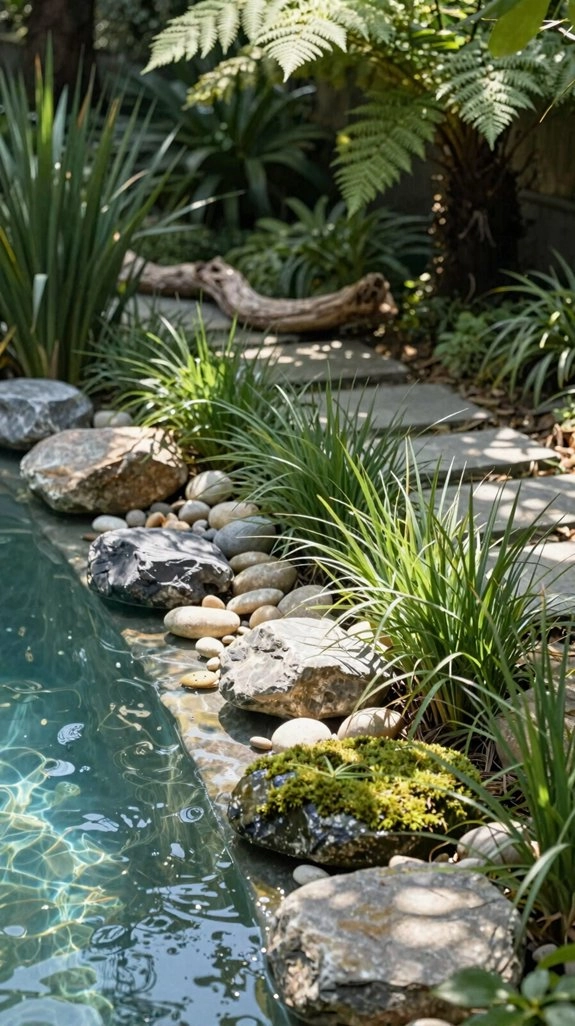
You can turn the shallow edge of your pool into a living filter, using a gently sloped gravel shelf where water moves slowly and plants get to work, nice and easy!
Try hardy natives like cardinal flower and blue flag iris, then mix in marginal grasses and dense roots to help trap nutrients, support good bacteria, and keep the whole zone looking lush instead of plain.
The cool part? A layered band of pebbles and gravel doesn’t just clean the water naturally, it also softens that hard pool edge so it feels more like a little water garden than a swimming hole.
Regeneration Zone Plants
When you build a natural pool regeneration zone, think of it like a shallow water garden doing serious behind-the-scenes work! Choose blue flag iris, cardinal flower, and native ferns, and group them in layered bands.
- Dense plant spacing helps with algae prevention and gives water circulation a friendly path.
- Mix emergent reeds, mid-depth bloomers, and edge-softening greens, and you’ll get seasonal care that’s pretty simple, too.
- Prioritize native plants in a wider gravel bed, and you’ll boost nutrient uptake, support bacteria, and keep your crew’s pool water clearer.
Honestly, that’s nature’s teamwork at its finest!
Gravel Filtration Design
If you want your natural pool to stay clear without turning into a chemistry lab, the gravel filtration zone is where the magic starts!
You build a shallow regeneration shelf beside the pool, then layer geotextile, graded gravel, and small stones for strong sediment control.
Water flows gently through the bed, so biofilm growth can do its job and scrub the water clean.
Add sedges or pickerelweed in wetter pockets, and they’ll help stabilize the media, soak up nutrients, and blur the edge.
Size the zone generously, around 10–30% of the pool area, and you’ll feel like you’re swimming in nature.
Plan Pool Landscaping for Small Yards
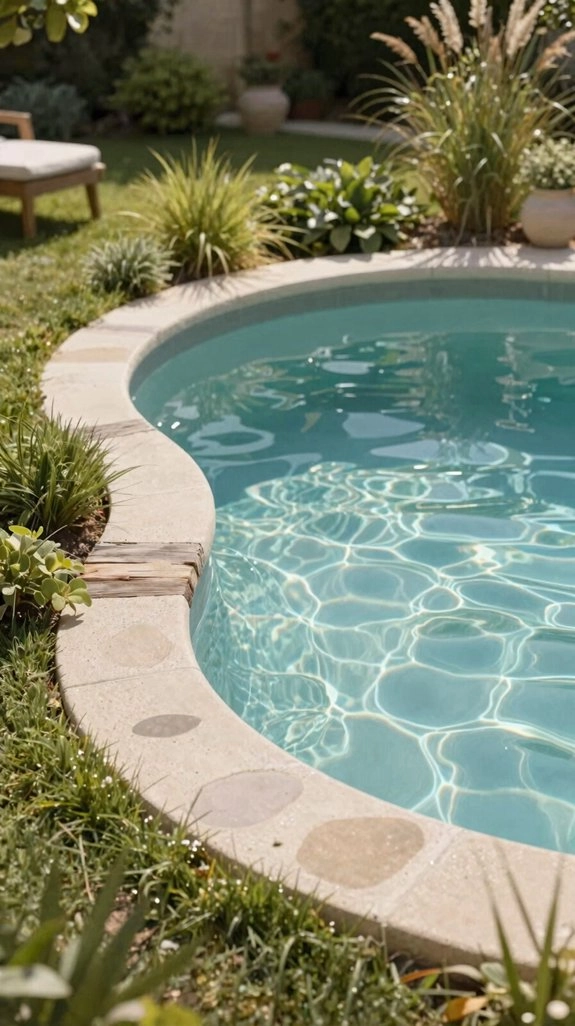
Even a tiny backyard can feel roomy and polished, so long as the pool shape works with the space instead of wrestling it. You’ll fit in better when the water curves gently, not boxy and bossy!
- Pick a kidney or soft curve, then add slim stone edging and a pebble bottom for a pond-like feel that saves room.
- Use plant placement tips: tuck in layered shrubs and grasses to soften walls without blocking views, and try Pool edge lighting for cozy glow.
- Build a Baja shelf, then plan drainage with permeable paths and edge drains, so plants stay close, dry, and friendly.
Create a Spa-Like Pool Retreat
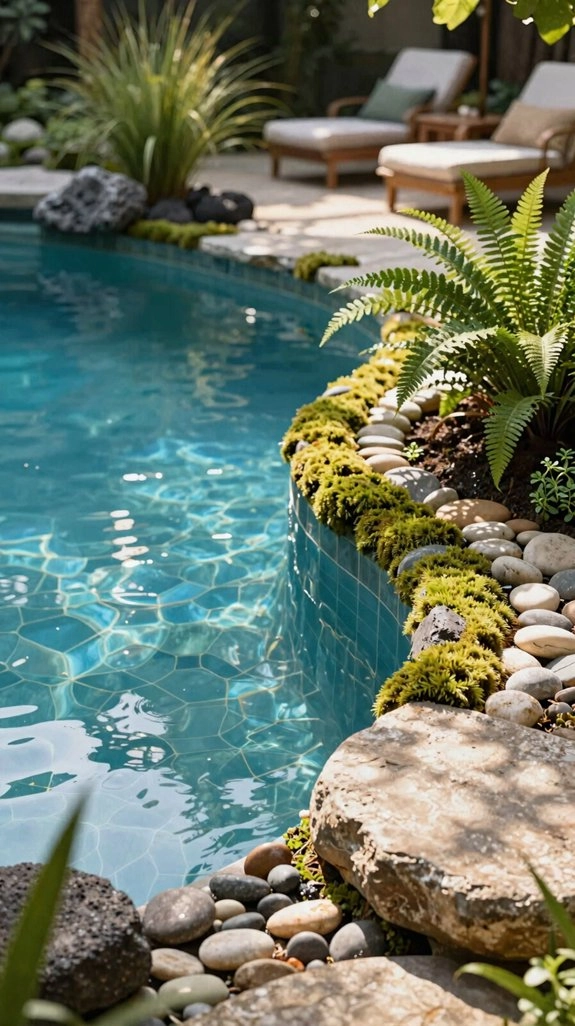
You can make your pool feel like a mini resort by adding a soft waterfall or bubbler, because that steady splash turns the whole space calmer in seconds—ahh, instant vacation vibes!
Frame the edge with natural stone, then tuck in lush grasses and evergreen plants so the hard lines fade into a cozy, green backdrop.
Finish with a lounge ledge and smooth, light-toned surfaces, and you’ve got a spot that feels relaxing, safe, and just upscale enough to make your neighbors peek over the fence.
Soothing Water Features
A pool can go from “nice” to “wow, this feels like a mini resort” with the right water feature, and the good news is, it doesn’t have to be elaborate or fussy!
You can create that vibe with a few smart touches:
- Add a small bubbler or waterfall along a rough stone edge for calming motion and sound masking.
- Build a baja shelf with a pebble bottom, then let the spillway pour into it for a lounge-like feel.
- Use tiered terraces, subtle lighting placement, and low-voltage lights so the whole space feels warm, safe, and welcoming.
Choose textured stone, and you’ll feel like you belong at your own resort!
Natural Stone Borders
Next, tuck in a thin band of grasses and moisture-loving plants, and let the stones echo onto a nearby patio strip or boulder accents.
The result? A calm, connected retreat that feels welcoming, natural, and just plain cool.
Lush Lounge Zones
Once the stone borders are in place, it’s time to make the pool feel less like a hard-edged slab and more like a mini getaway—hello, lounge zone! You belong here, so build comfort in layers.
- Add a shallow ledge with the same natural stone, a hose, and a few cushy seats; it’s cheap, simple, and gives you a spot to dangle your feet.
- Frame seating with rounded beds, evergreen shrubs, and warm wood or travertine; it feels private fast.
- Finish with textured steps, string lights, and water edge lighting for evening comfort, plus fewer slips, yay!
Use Lighting to Warm Up the Space
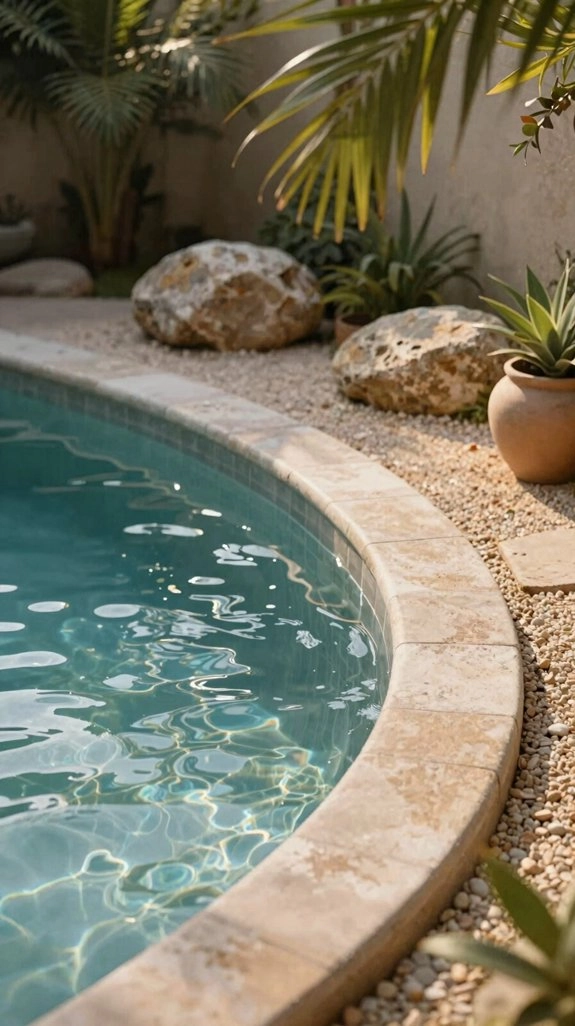
When the sun goes down, lighting can turn a pool area from “pretty nice” to “wow, I want to stay out here forever!”
Start with warm LEDs around 2700K in step lights, deck bollards, or grazing spots, and they’ll make stone, travertine, and wood glow like they’re part of the same happy crew.
Add dimmed downlights to catch the pool edge without glare, so swimming feels easy, not blinding.
Then space low path lights evenly, and aim uplights to wash Layered plantings and boost nighttime privacy.
The best trick? Let shadows soften hard lines, like magic!
Keep Pool Landscaping Low Maintenance
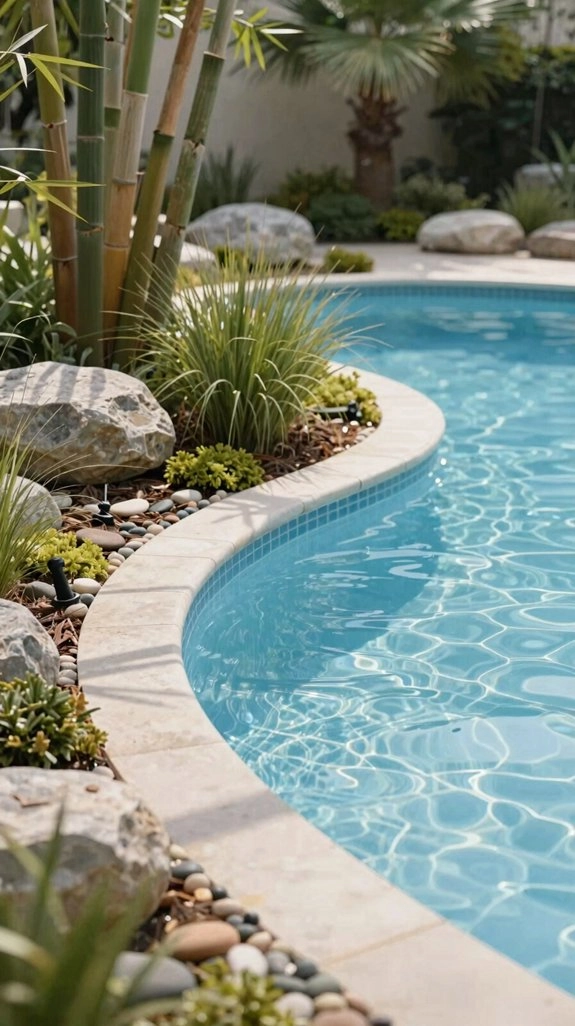
Keeping your pool landscaping low maintenance starts with smart plant choices, and honestly, that’s where the magic happens! You’ll feel right at home with a simple plan.
- Plant dense evergreens like inkberry holly for year-round screening, so you skip bare spots and constant replanting.
- Add native sedges, ferns, and ornamental grasses near the water for low debris, algae prevention, and easy seasonal trimming.
- Use travertine or textured pavers, plus gravel edges and waterproof lighting, for low odor care and fewer slick, messy surprises.
Hide equipment behind planted berms, and you’ll keep service access without the maintenance drama!
Match the Design to Your Home’s Style
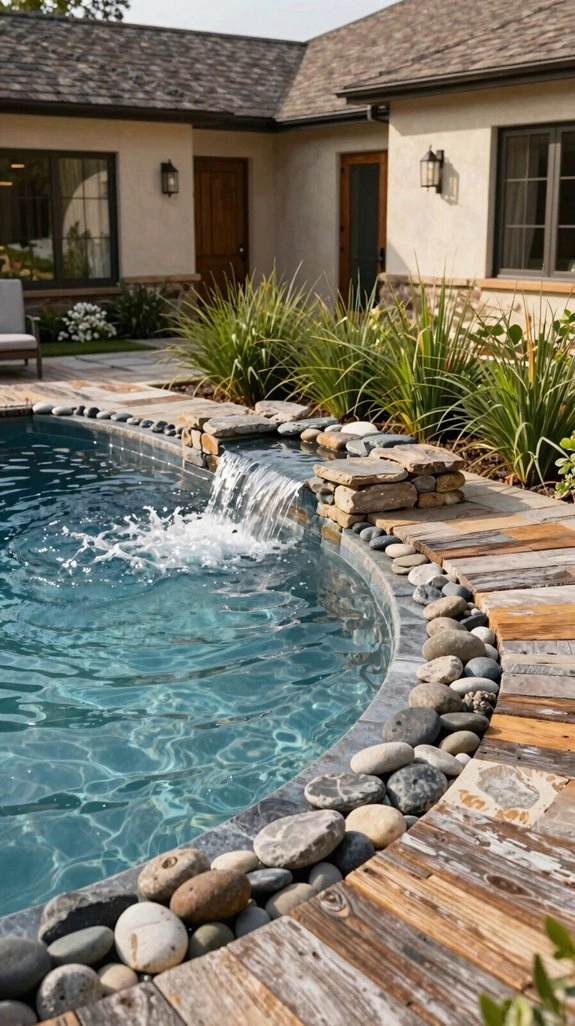
Got a modern home? Try smooth stone and grasses.
Cottage? Soft edges and blooming beds.
Coastal? Keep lines crisp, then tuck in lush greenery.
Desert style? Use succulents and xeriscape plants.
You’ll get a built-in look that feels warm, welcoming, and just right.
Avoid Common Pool Landscape Mistakes
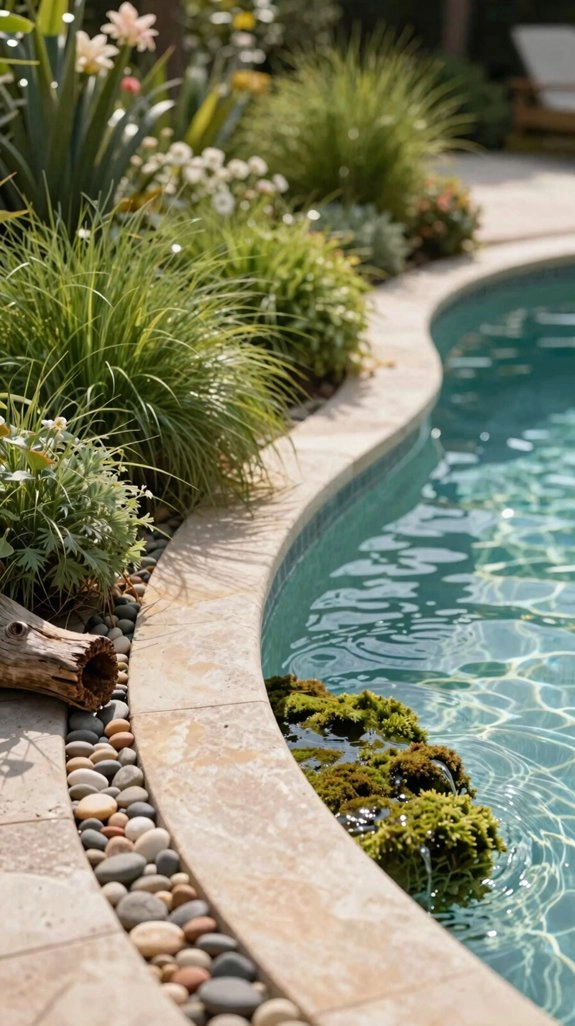
Even the prettiest poolside plan can stumble if a few common mistakes sneak in, so let’s keep yours looking smooth, safe, and easy to care for.
- Build maintenance friendly layouts with curved, graded beds, not one stiff border.
- Choose brushed concrete or textured pavers, because slick stone near splashing water turns into a slip-and-slide fast!
- Pick Wildlife friendly plants that won’t dump fruit or heavy debris, then tuck in evergreen screens like inkberry holly with room to service gear.
Add drainage first, with drains and a slight slope away from the pool. Nice, right?