How to Create an Eco Friendly Garden That Saves Water and Wildlife
- How to Create an Eco Friendly Garden That Saves Water and Wildlife
- Key Takeaways
- What Makes a Garden Truly Sustainable
- Smart Ways to Save Water Naturally
- Rainwater collection systems
- Drip irrigation basics
- Mulching for moisture retention
- Plant Choices That Support the Ecosystem
- Native plant advantages
- Pollinator-friendly flowers
- Drought-resistant varieties
- Natural Gardening Without Chemicals
- Organic soil enrichment
- Companion planting benefits
- Homemade pest solutions
- Upcycled and Low-Waste Garden Features
- Reused container ideas
- DIY compost systems
- Repurposed garden decor
- Designing a Low-Impact Outdoor Space
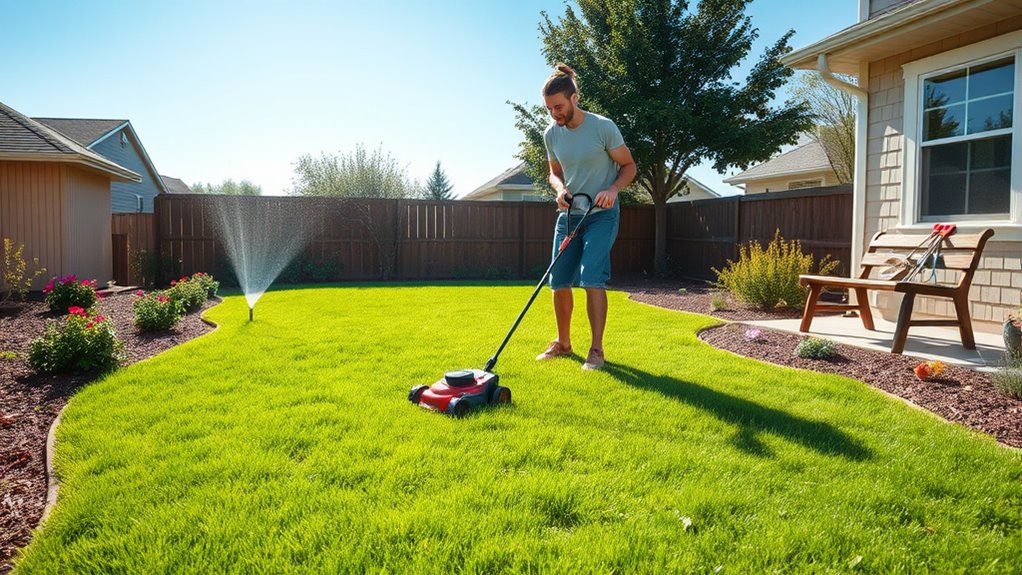
- Reducing lawn areas
- Creating wildlife habitats
- Using permeable pathways
- Who This Works Best For
- Frequently Asked Questions
I’d start with rain barrels under gutters, drip lines at the roots, and 2–3 inches of mulch, because my family’s beds stay greener with less watering and fewer weeds. Then I’d plant natives like California poppy, yarrow, milkweed, and ceanothus, plus a clover patch for the lawn-haters in the house. Add birdbaths, stones, and permeable gravel paths. It’s smart, simple, and a little magical—stick around, and you’ll see why.
Key Takeaways
- Install drip irrigation, soaker hoses, and rain barrels with first-flush diverters to water roots efficiently and reduce waste.
- Plant native, drought-tolerant species and group plants by water needs to match microclimates and limit irrigation.
- Replace lawn with layered native beds, pollinator plants, and habitat features like birdbaths, leaf piles, and sheltering shrubs.
- Improve soil with mulch, compost, and leaf mold to hold moisture, suppress weeds, and support healthy soil life.
- Protect beneficial insects by avoiding pesticides and using companion planting plus manual or biological pest control.
What Makes a Garden Truly Sustainable
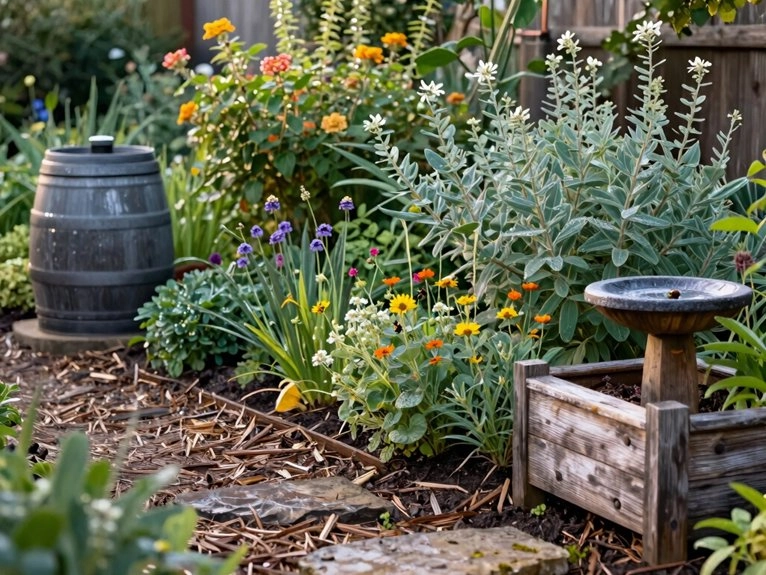
When I think about a truly sustainable garden, I think about one that works with nature instead of making me drag a hose around like I’m training for a weird backyard marathon. You can choose native, drought-tolerant plants, and once they’re settled, they need little extra water.
I’ve seen my own beds thrive with 2-inch mulch, compost, and leaf mold, which boosts soil biodiversity and helps soil hold moisture like a sponge. Add drip lines, morning watering, and smart water budgeting.
Then build habitat with food, cover, and nesting spots. Your garden feels alive, and you belong there.
Smart Ways to Save Water Naturally
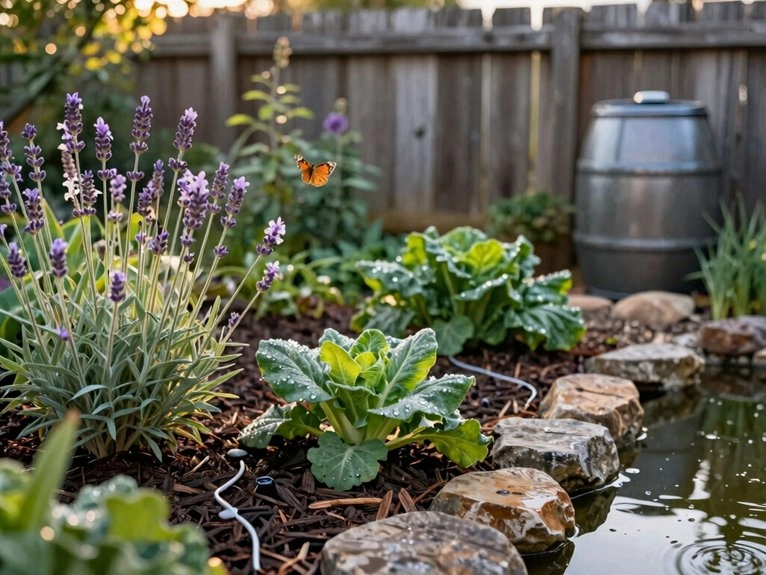
Most of the time, I start saving water in the garden by swapping thirsty lawn for tougher groundcovers like buffalo grass, white clover, sheep fescue, or blue grama. You’ll cut outdoor water use fast, and your yard still feels welcoming.
I mulch beds with 2–3 inches of shredded wood, straw, or leaf mold, which helps soil moisture stay put like it’s got a grudge. I also use drip lines, set timers for 5–9 a.m., and group plants by water needs. My family waters deeply, reuses greywater, and checks roots, not puddles, for the real story.
Rainwater collection systems
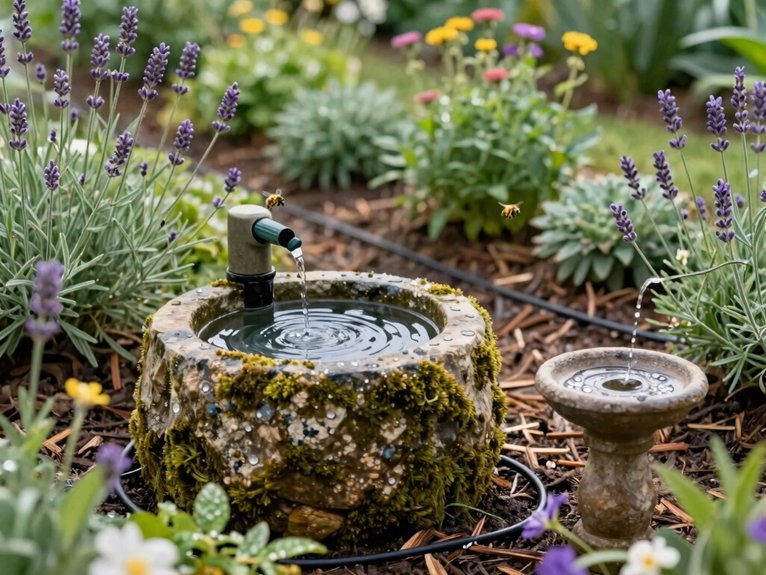
Rainwater collection systems are one of my favorite next steps after cutting back thirsty lawn and watering smarter, because they let me catch free water before it runs off the roof.
I use rooftop catchment with a 55-gallon rain barrel under a downspout, plus a screened first-flush diverter. That keeps grit out and my tomatoes happier.
I pick food-grade, opaque barrels, set them on a sturdy stand, and use the spigot for watering cans.
When my family needs more, I link barrels for seasonal storage. In freezing weather, I disconnect everything, because busted plastic isn’t charming.
Drip irrigation basics
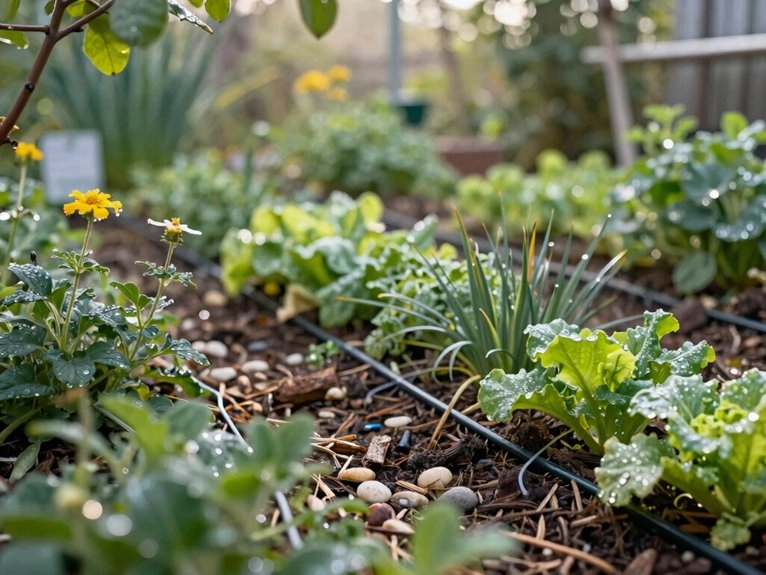
Drip irrigation is where my garden starts feeling smart instead of just thirsty. You place emitters or soaker hoses right at the root zone, usually 0.5–4 gph, so water goes where plants can use it.
I like pressure-compensating lines spaced 12–24 inches for shrubs and 6–12 inches for veggie rows. My family calls root zone mapping “garden detective work.”
Add a timer and rain sensor, then run it early, 5–9 a.m., for 20–60 minutes. Micro spray retrofits can help too, if you’re upgrading. Shorter bursts help new plants settle in without water drama.
Mulching for moisture retention
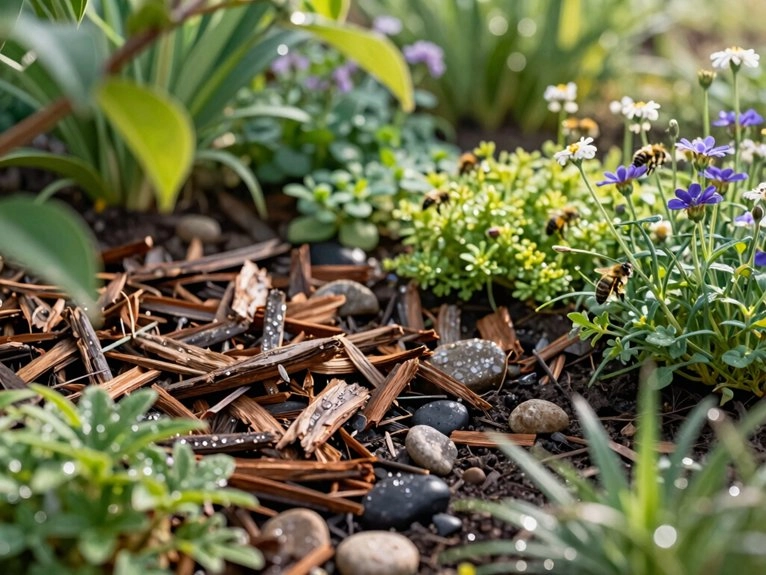
Once your drip lines are set, I like to give the soil a cozy blanket.
You can spread 2–3 inches of shredded bark, straw, or leaf mulch around each plant. It slows evaporation, blocks weeds, and helps water soak in.
Leaf mold and well-composted mulch can hold 4–5 times their weight in water, so you’ll water less.
I keep mulch a few inches from stems and trunks, but cover root zones well. My kids call it “garden pajamas.”
Refill yearly, and use local leaves. Soil microbes and mycorrhizal networks love it.
Plant Choices That Support the Ecosystem
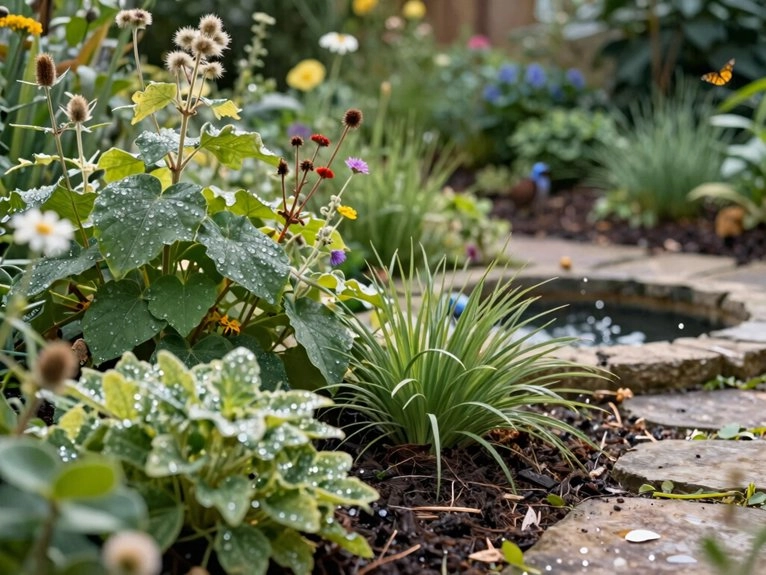
When I want a garden that feeds bees, butterflies, and birds without guzzling water, I start with plants that already belong here.
In my yard, I mix native perennials, shrubs, and trees for a seasonal bloomscape, so something’s always open for business.
I tuck in milkweed, ceanothus, and berry shrubs for caterpillars and hungry birds.
For dry spots, I use buffalo grass and white clover.
I group plants by water needs and run drip lines to beds. That keeps roots happy, protects the soil microbiome, and saves me from babysitting thirsty plants all summer.
Native plant advantages
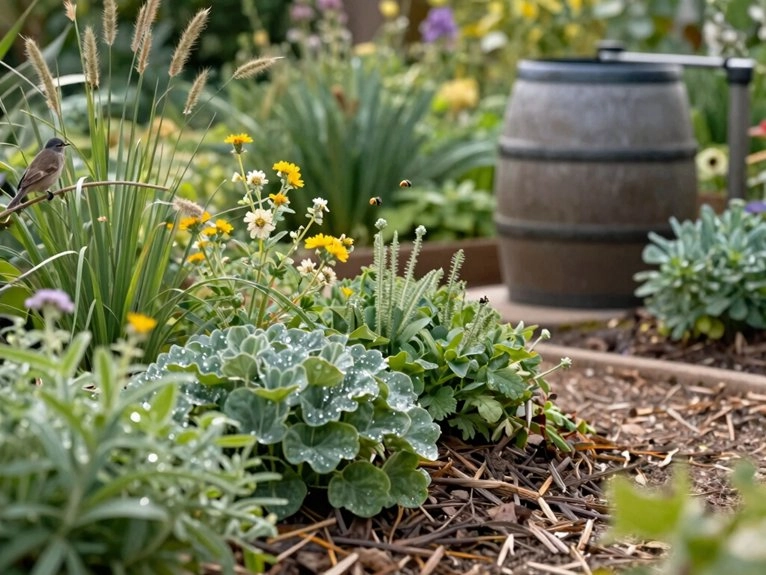
Native plants are the quiet MVPs of a water-smart garden. You’ll fit in fast with a yard that matches your region and rewards you with less work. After a year or two, many natives need little to no extra water, so your hose can take a nap. I’ve seen my own patch settle in with deep roots, fewer pests, and way less fuss.
Look for local provenances and careful seed sourcing, because that helps plants thrive and keeps them true to your area. Group similar thirst levels together, and you’ll save even more water. Best bonus? Birds and wildlife show up like neighbors.
Pollinator-friendly flowers
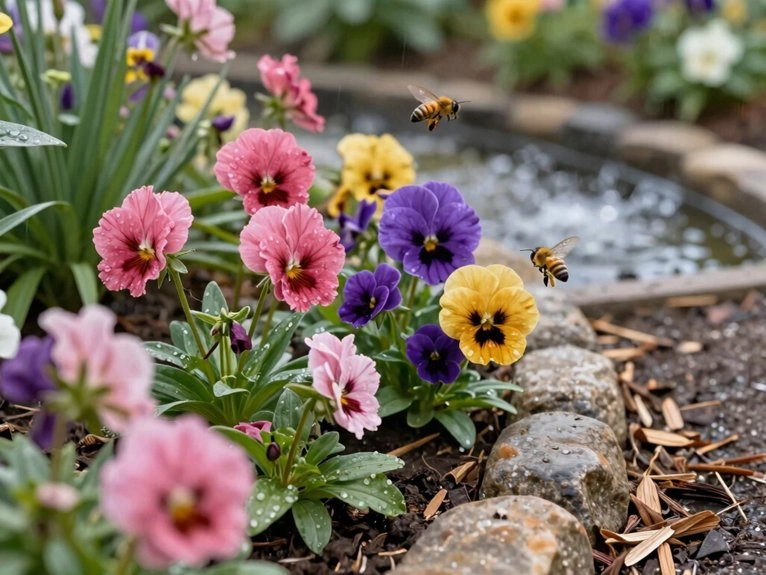
A healthy pollinator garden starts with flowers that actually feed the local crowd, and I’ve found that a mix of native, nectar-rich perennials does the trick beautifully.
You can plant California poppy, yarrow, and ceanothus for steady color, then tuck in milkweed, asters, and native willows so caterpillars get a real lunch too.
I like adding native orchids and night bloomers near the path; my kids spot moths at dusk and feel like nature detectives.
Skip pesticides. Group plants by water needs, use drip lines or mulch, and keep shallow water and flat rocks nearby.
Drought-resistant varieties
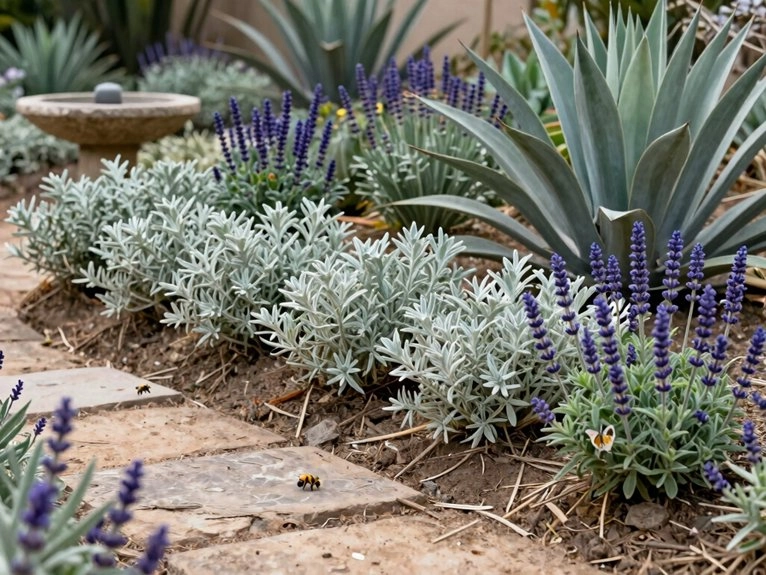
For a garden that sips instead of gulps, I lean hard on drought-resistant varieties that can handle hot days and forgetful schedules without throwing a fit.
I’ve had good luck with drought tolerant cultivars in our waterwise landscaping, and they make the yard feel easy.
- California poppy and yarrow bloom with little fuss.
- Buffalo grass and sheep fescue can cut lawn water use by 50–75%.
- Oak, ceanothus, and California lilac dig deep for moisture.
- Creeping thyme and native sedums cover bare spots nicely.
I group thirsty plants together, so I’m not dragging the hose everywhere like it’s a workout plan.
Natural Gardening Without Chemicals
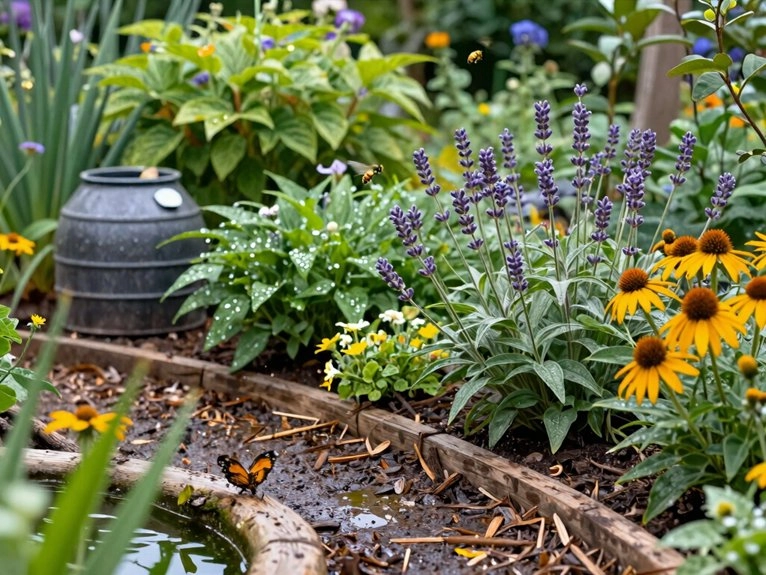
Once you’ve picked tough, drought-smart plants, you can keep the whole garden low-stress by skipping the chemical routine and working with nature instead.
I feed my beds with compost and well-aged manure, then mulch with shredded leaves or straw to calm weeds and hold water.
I watch for aphids, then hand-pick them or use sticky traps before they throw a party.
Ladybugs and bats help too, and my kids cheer them on.
Good soil ecology matters, so I compost scraps at a 3:1 greens-to-browns mix.
I also keep seed saving notes, and group plants by water needs.
Organic soil enrichment
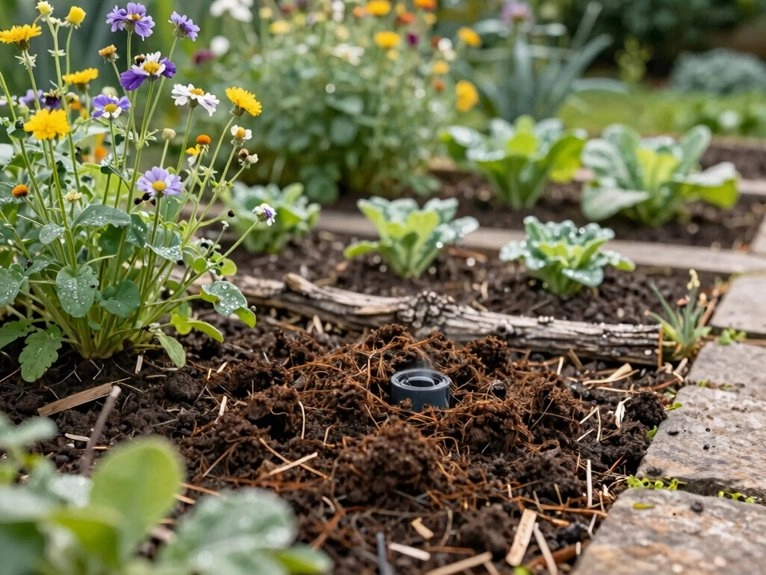
I start by feeding my beds, because tired soil can’t do much for thirsty plants. You’ll feel at home with rich earth that drinks better and holds water longer. I spread 3–6 inches of finished compost, then top-dress yearly. Build compost with a 3:1 mix of greens and browns.
- Add biochar or well-rotted compost to hard clay or sandy spots.
- Use worm castings in a thin ring.
- Try cover crops between seasons.
- Use mycorrhizal inoculation at planting.
Skip synthetic fertilizers; I lean on mulch, kelp, bone meal, and rock phosphate instead. My kids call it “soil soup.”
Companion planting benefits
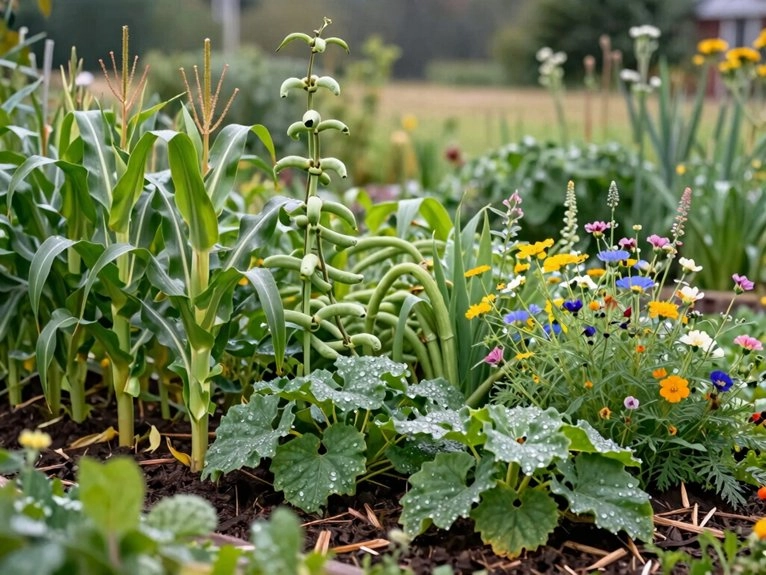
Companion planting is one of my favorite garden tricks, because the right neighbors can make your beds work harder without extra fuss. I tuck California poppies, lavender, borage, and yarrow beside tomatoes and beans, and the whole crew feels like a tiny block party. These beneficial insectaries feed bees and hoverflies, so pollination improves and harvests can jump 20 to 30 percent.
Marigolds near tomatoes help with nematodes, while clover and vetch shade soil, add nitrogen, and cut watering. I also mix deep roots with shallow ones for better root symbiosis, which keeps my family’s garden steady and cheerful.
Homemade pest solutions
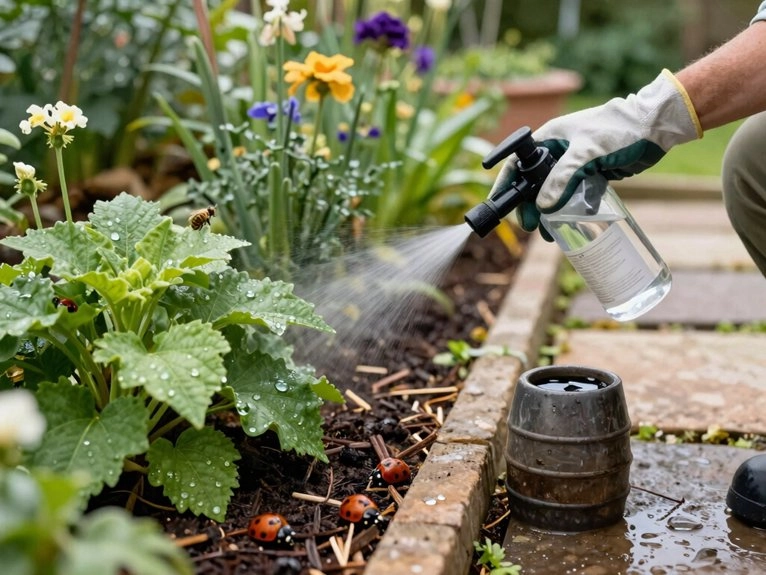
When pests show up, I like to roll up my sleeves and mix up a few simple fixes before I reach for anything harsh.
In my garden, you can join me with tried-and-true homemade pest solutions that work.
- Garlic spray: blend 2 garlic heads, 2 chilies, soap, and water; soak 24 hours.
- Neem mix: spray in early morning every 7–14 days.
- Castile soap spray: hit soft-bodied pests, not flowers.
- Beer traps: sink a shallow cup for slugs; refresh often.
These fixes help you protect your patch and keep good bugs around.
Upcycled and Low-Waste Garden Features
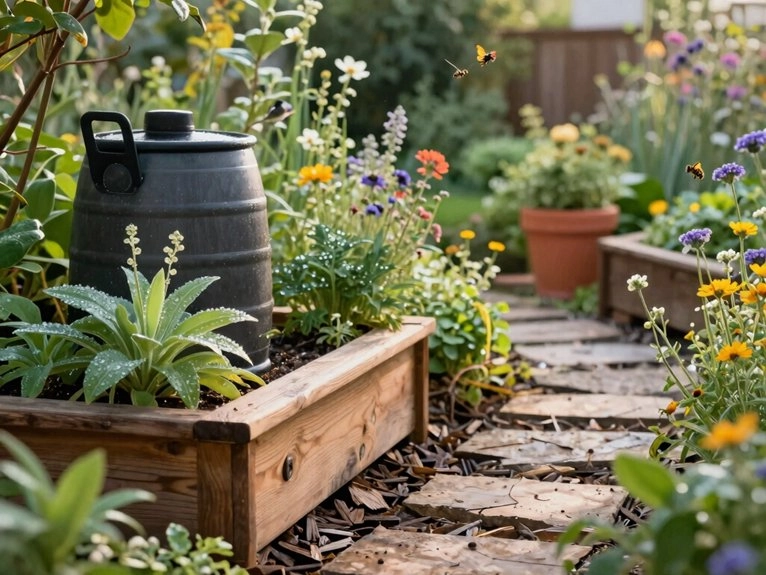
Let’s turn old stuff into garden gold. I’ve turned rain gutters and food-grade barrels into rain catchers that top off watering cans and drip lines; a 55-gallon barrel can save about 1,300 gallons a year.
My family also uses broken terracotta and shattered concrete for ollas and wick systems, so plants sip slowly instead of yelling for help. We spread shredded leaves and lawn clippings as mulch, then add 3–6 inches of compost to beds.
For wildlife, I’ve made a shallow tub pond with native plants. At seed bank swaps, I share wins; bottle terrariums keep kids curious too.
Reused container ideas
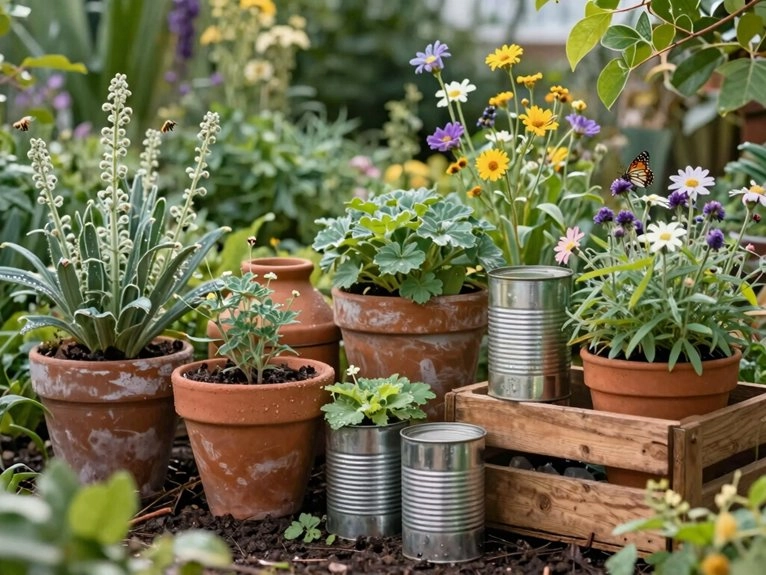
From scrap to setup, I’ve found that reused containers can do real work in the garden without looking fussy. I use a rain barrel under a downspout, and my family notices the water bill too. You can build a friendly, low-waste setup with a few smart picks:
- food-grade barrels for stormwater
- old ceramic pots with a terracotta wick
- pallet or wine-crate beds lined with fabric
- gutter or PVC troughs for herbs
I’ve even painted tire planters light colors. They stay cooler, hold soil, and help your crew grow more with less.
DIY compost systems
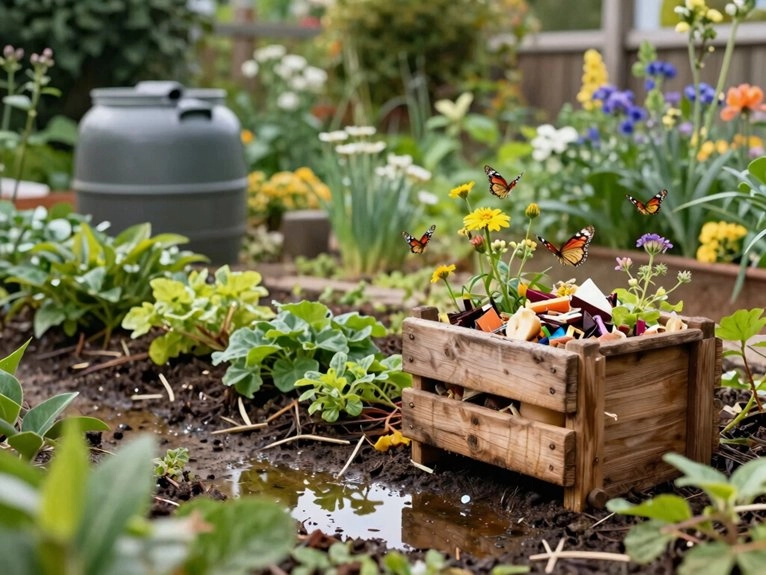
I like to keep the low-waste loop going, so after I reuse containers in the garden, I turn kitchen scraps and yard waste into compost too. You can build a simple 3-bin or tumbling bin and mix 3 parts greens with 1 part browns. Keep it damp like a wrung-out sponge, and turn it every 1–2 weeks. Aim for 120–160°F, skip meat, dairy, fats, and oils, and keep the pile at least 3 feet wide and high.
In my family, composting education and community workshops helped us start fast. Finished compost feeds beds; leaf mold saves water.
Repurposed garden decor
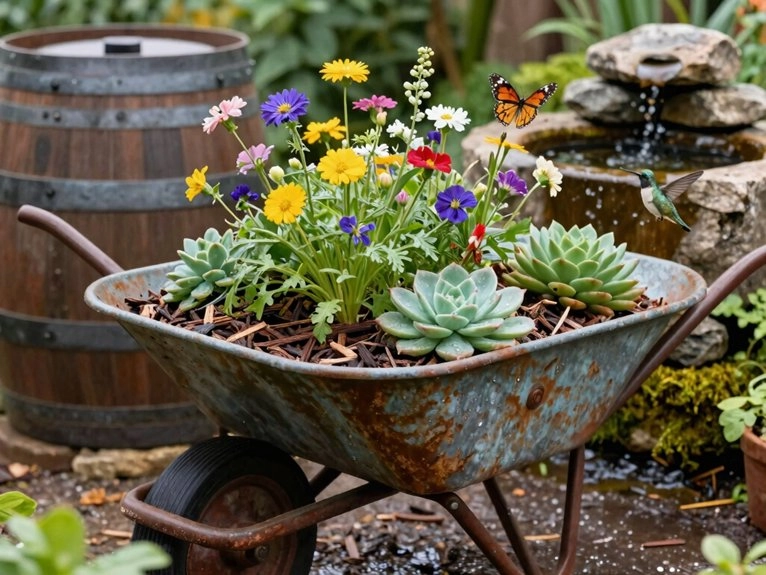
Old garden odds and ends can really pull double duty, and I love that kind of clever reuse. When you turn castoffs into repurposed sculptures, you make a space that feels like yours. My family’s favorite projects save water and invite bees, too.
- Hang old gutters as vertical mosaics for herbs.
- Stack broken terra-cotta pots into cascading planters.
- Fill a pallet planter with native plugs.
- Set a cleaned barrel under a downspout.
I keep a birdbath nearby, with stones for perches. Refresh it each morning. These touches work hard, look charming, and make your garden feel like the friendly block hangout.
Designing a Low-Impact Outdoor Space
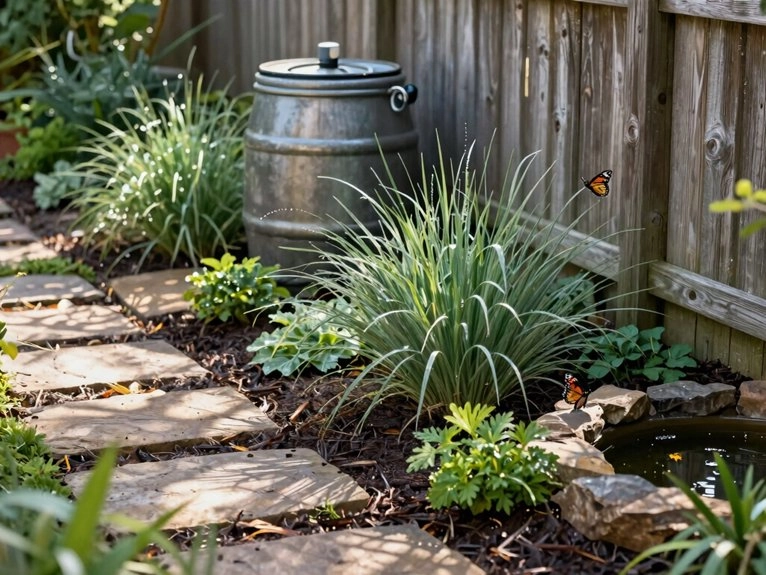
Those repurposed touches can do more than charm up a yard—they can point you toward a garden that sips, not gulps. I’ve found a sustainable layout starts with microclimate mapping: note sunny spots, shade, and windy corners, then place thirsty plants where they’ll thrive.
Group plants by water needs, and use drip lines or soaker hoses at the roots, not overhead sprinkles for the birds. In my family garden, mulch like shredded wood or leaf mold keeps soil damp longer.
I choose buffalo grass, blue grama, and native perennials, then set timers for dawn with a rain sensor. Pretty smart, right?
Reducing lawn areas
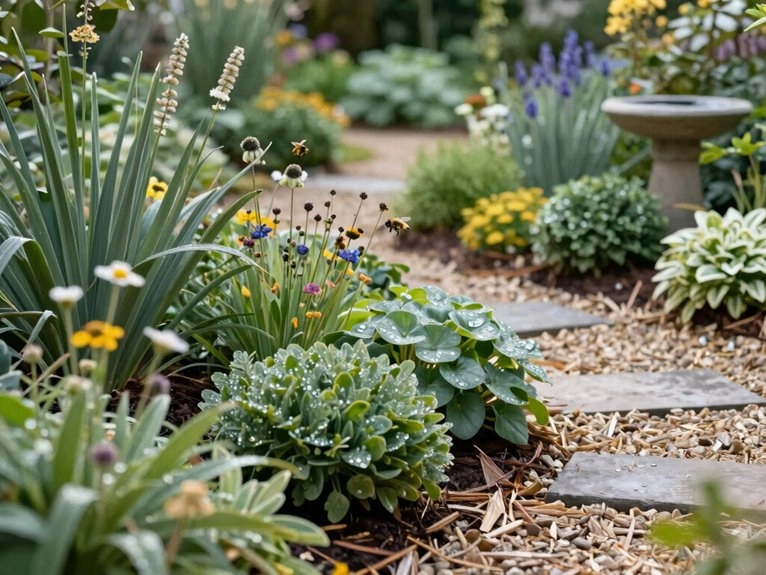
A smaller lawn can make a big difference, and I’ve seen it happen in my own yard. You can trim water use fast by swapping thirsty turf for buffalo grass, white clover, sheep fescue, or blue grama. That’s xeriscape principles in action, and it feels good.
- Map sunny, shady spots with microclimate mapping.
- Replace unused grass with paths, native beds, or veggie patches.
- Add 2–3 inches of mulch and low-water groundcovers.
- Group plants by water need, then water less over time.
I’ve phased changes with my family, and the mower finally got a break.
Creating wildlife habitats
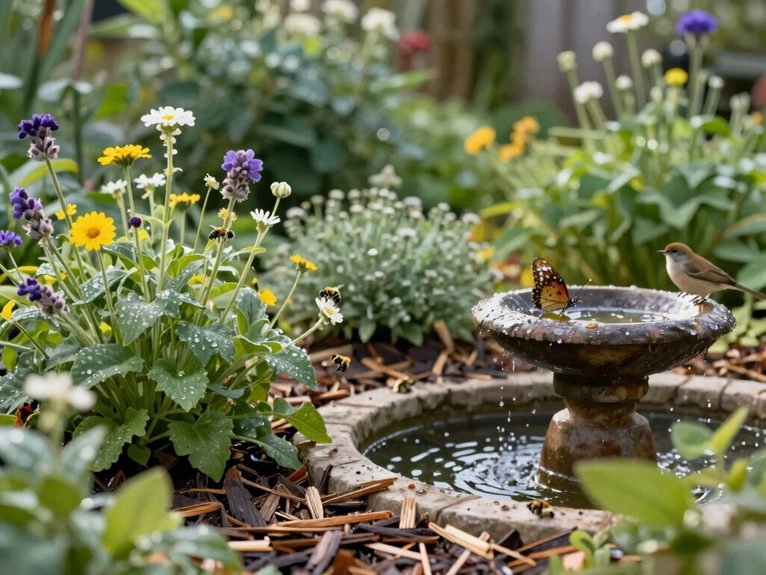
Once you’ve trimmed the lawn, you can turn those saved inches into a real backyard hangout for birds, bees, and butterflies.
I like mixing native flowers with at least three bloom times, so something’s always open for hungry guests. Add trees, shrubs, perennials, and groundcovers; that layered cover gives shelter and nesting spots.
I tuck in a shallow birdbath, leaf piles, and a milkweed patch, then skip pesticides, because nobody invited the bug zappers. Drought-tolerant natives help too.
At night, my nocturnal gardens and wildlife corridors keep the whole crew moving safely. My family loves watching nature settle in.
Using permeable pathways
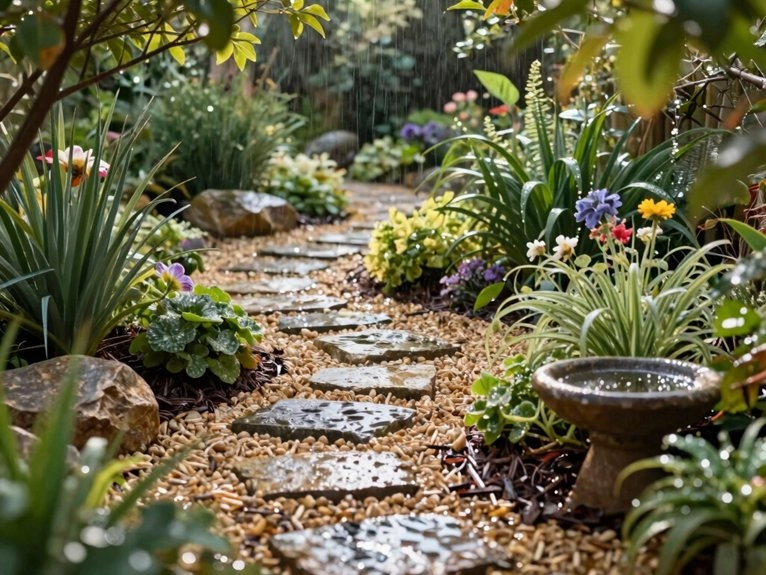
For the paths, I like to keep the water moving by letting it slip right through the surface instead of rushing off into the yard. I’ve learned this with my family’s garden, and it feels good when the whole space works together.
- Pick crushed gravel, permeable pavers, or porous concrete.
- Build a 2–3 inch washed-gravel base, then add decomposed granite or mulch.
- Grade gently, under 5%, toward planting beds or biofiltration swales.
- Use spaced edging, and keep permeable lighting clear of sealing goo.
I sweep off debris, refresh the top layer every few years, and let little life slip through happily.
Who This Works Best For
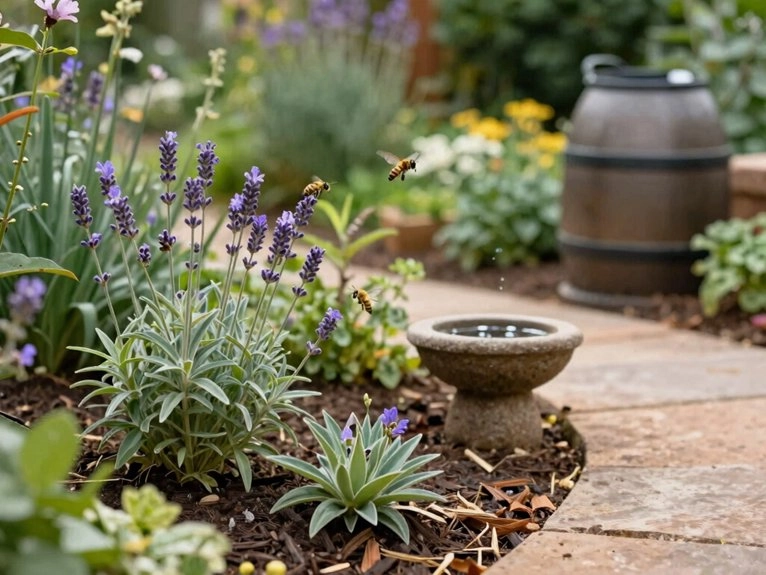
After setting up permeable paths, I usually look at who’ll get the biggest payoff from the whole water-saving garden idea.
If you live in a sunny, Mediterranean spot like California, you’re a great fit. You’ll also feel right at home if you’ve got a small yard, big water bills, or urban gardening space begging for seasonal adjustments.
I’ve seen turf swaps to buffalo grass, white clover, and native groundcovers cut mowing and thirst fast. If you’re ready to mulch, drip, and water at dawn, you’ll save more.
My family loves the wildlife-friendly bonus too—pollinators show up like they got the memo.
Frequently Asked Questions
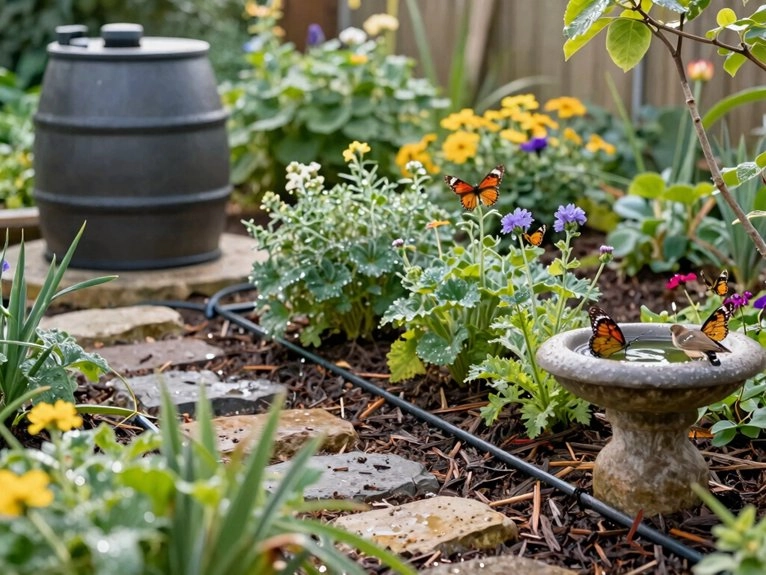
Got questions? I’ve asked them too, while helping my family build an Eco-Friendly Water-Saving Garden.
You don’t need a giant yard to fit in. Here’s the quick version:
- Swap turf for buffalo grass or white clover.
- Water deeply at 5–9 a.m. with drip lines or soaker hoses.
- Add 2–3 inches of mulch; leaf mold holds lots of water.
- Plant natives, add one water source, and build habitat corridors.
I collect rain in a 55-gallon barrel and use a watering can for spots.
That cuts runoff, saves money, and keeps your crew happy.