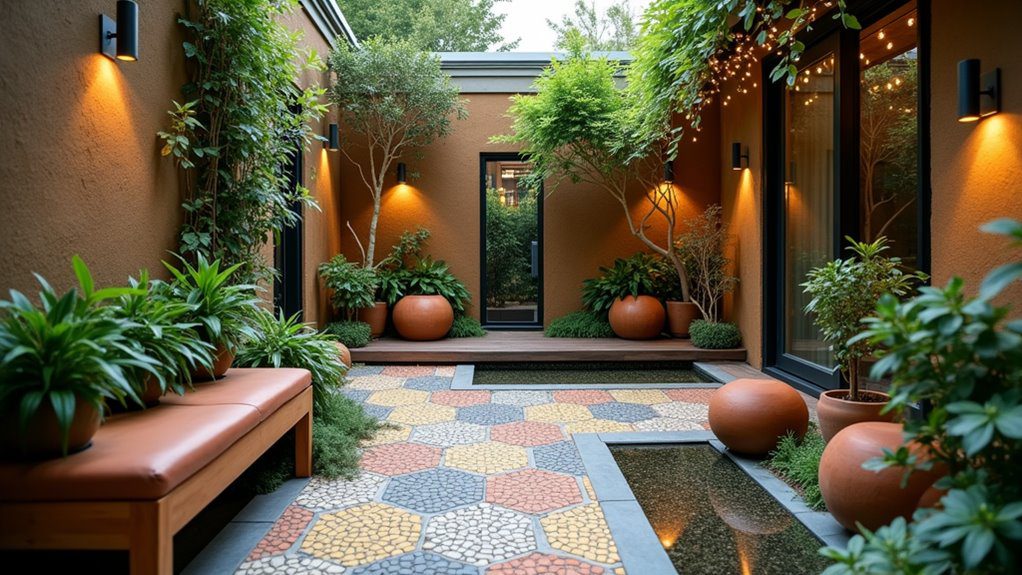
Modern Front Yard Plants That Deliver Year-Round Curb Appeal
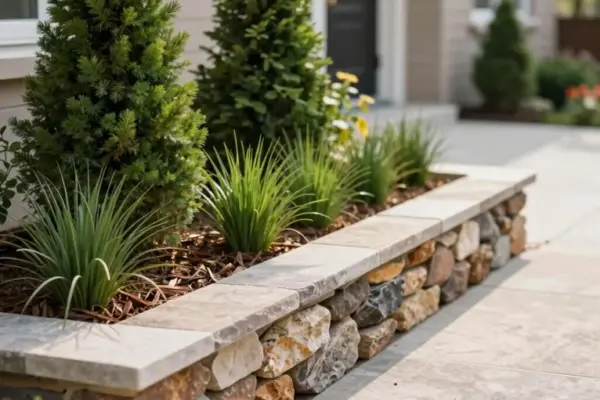
- Modern Front Yard Plants That Deliver Year-Round Curb Appeal
- Key Takeaways
- Boxwood
- Blue Fescue
- Japanese Maple
- Olive Trees
- Lavender
- Agave
- Feather Reed Grass
- Hydrangeas
- Dwarf Pines
- Coral Bells
- Salvia
- Sedum
Create a modern front yard with boxwood for crisp evergreen structure, blue fescue for cool steel-blue mounds, and lavender along sunny borders. Add a Japanese maple as your graceful focal point, then use sedum, salvia, coral bells, and dwarf pines to fill gaps with color and texture. Choose well-drained soil, match plants to sun, and mulch neatly—easy! For a surprising Mediterranean finish, try a potted olive tree; keep going for simple planting tips.
Key Takeaways
- Use boxwood for evergreen structure, keeping walkways and entry beds polished with lightly trimmed hedges or rounded accents.
- Pair boxwood with blue fescue for steel-blue mounds, drought tolerance, and subtle winter interest in sunny, well-drained beds.
- Plant a Japanese maple as a focal point, allowing ample room for its mature spread and layered seasonal foliage.
- Add dwarf olive trees in containers for Mediterranean texture, using fast-draining soil and moving pots to shelter during freezes.
- Edge sunny borders with lavender for fragrant color, silvery winter foliage, and low-maintenance curb appeal in sandy, fast-draining soil.
Boxwood
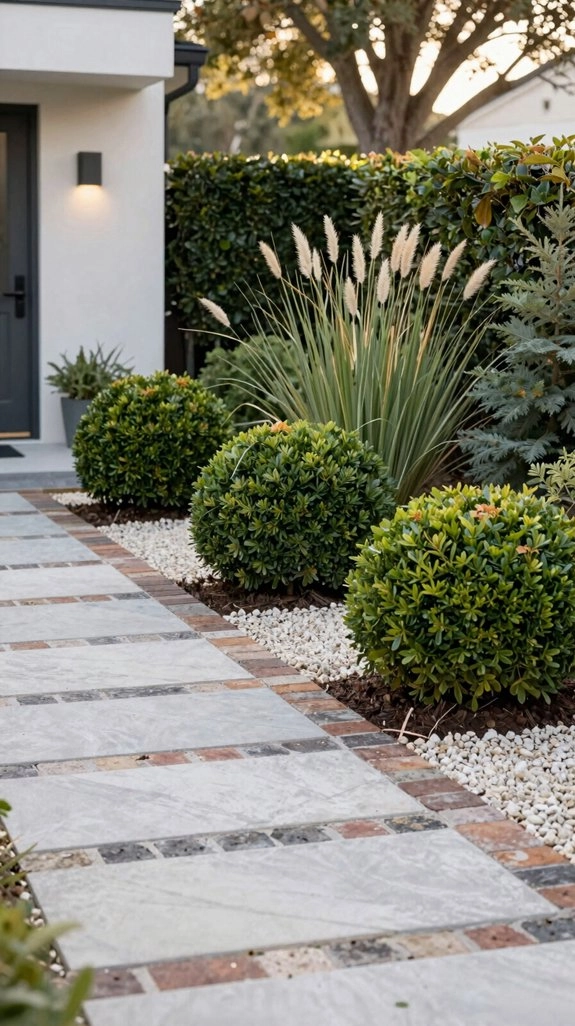
Boxwood brings that polished, “this front yard has it together” look in every season! You can use its bright green leaves as low hedges along walkways or rounded accents by your entry, helping your home feel welcoming and connected to the neighborhood.
Before planting, check Soil pH requirements: boxwood prefers moist, well-draining soil that leans alkaline.
Give each shrub room to reach 3–5 feet wide—don’t let the cute nursery pot fool you!
It grows in sun or part shade in Zones 5–8.
Want that crisp, tailored finish? Follow seasonal trimming tips and lightly shape it now and then.
Your front bed will look intentionally finished, not accidentally sophisticated!
Blue Fescue
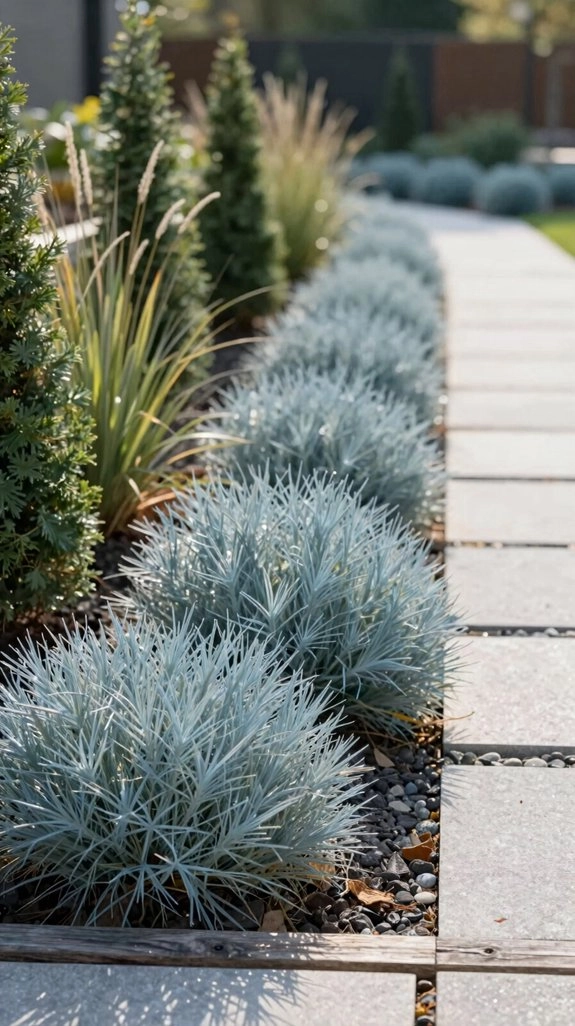
For a softer, more modern look beside boxwood’s tidy green structure, try blue fescue!
You’ll love its steel-blue blades, which form neat 8-to-12-inch mounds and keep your entry looking polished through much of winter.
Plant it in full sun and well-drained soil, spacing clumps 8 to 12 inches apart for a friendly, woven-together effect.
Once established, its drought tolerance helps you save water—hooray!
Cold, wet weather may cause slight browning, but don’t panic; it usually rebounds.
For an easy spring cleanup, lightly rake out dead blades.
That tiny refresh makes your front walk look surprisingly designer-worthy, without designer-level effort.
Japanese Maple
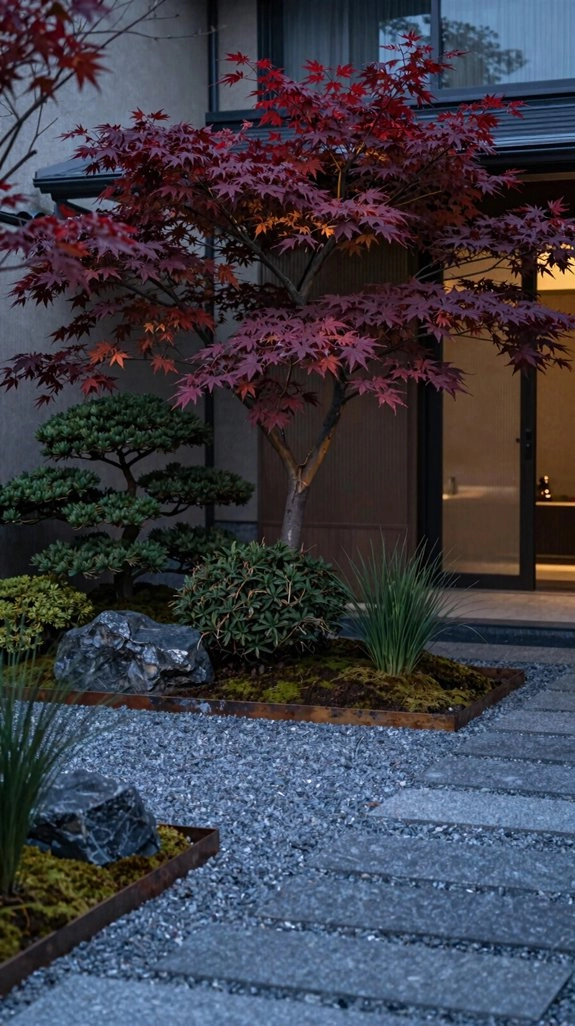
A Japanese maple brings instant elegance to a front yard, turning an ordinary bed or lawn island into a real “wait, is that your house?” moment!
You’ll love its graceful branches and layered purple, pink, red, or green leaves.
For smart Japanese maple placement, give it room: most grow 15–35 feet tall and wide, so don’t let it crowd windows.
Choose moist, neutral-to-acidic soil and sun to part shade in Zones 5–8.
Then enjoy the seasonal color progression!
Set yours near the entry or as a front-bed star where neighbors can admire its shape.
Suddenly, your whole block feels a little more polished—and yours leads the way.
Olive Trees
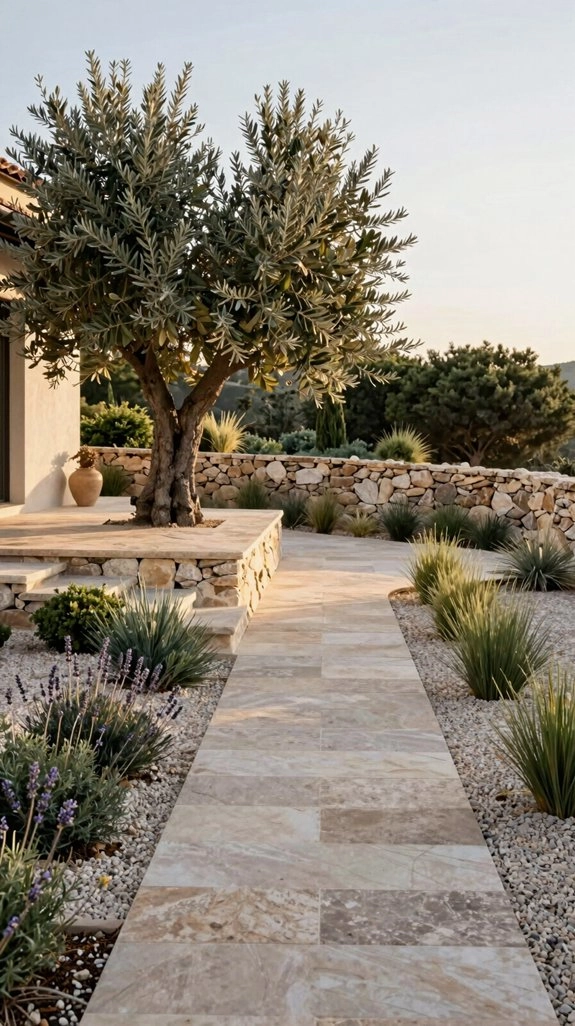
Olive trees bring a sleek Mediterranean vibe to your front yard, with silvery-green leaves that look polished in every season—no beach house required!
Choose a dwarf or slow-growing variety to frame an entry or walkway without crowding the neighborhood’s look.
Give yours full sun and fast-draining soil; soggy winter roots are their nemesis.
For Mediterranean curb texture, tuck the pot beside clean gravel or a modern bench—easy, welcoming, and wonderfully unfussy!
Winter container placement matters in chilly coastal areas.
Use a sturdy portable pot, then roll it into a sheltered spot during freezes.
You may even get fragrant blooms and edible olives—talk about a friendly front-yard conversation starter!
Lavender
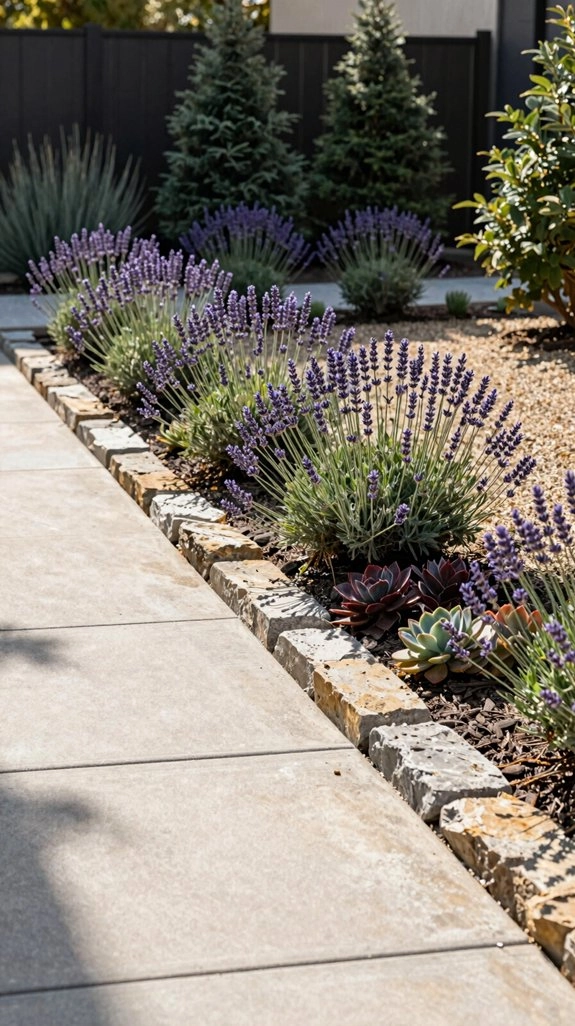
Lavender gives your front yard that neat, sun-washed look even after its purple blooms fade—plus, it smells amazing! You’ll love its silvery foliage, which keeps borders looking polished through winter and helps your home feel part of the neighborhood’s best-kept gardens.
Plant it in full sun with sandy, fast-draining soil, or tuck it into a raised bed—lavender hates wet feet!
For Deer resistance tips, choose a sunny spot near walkways, though hungry deer can still be nosy.
Need pruning timing guidance? Trim lightly after flowering, never into old woody stems.
Choose a Zone 5–8 cultivar, and you’ll get fragrant, low-water curb appeal year-round.
Agave
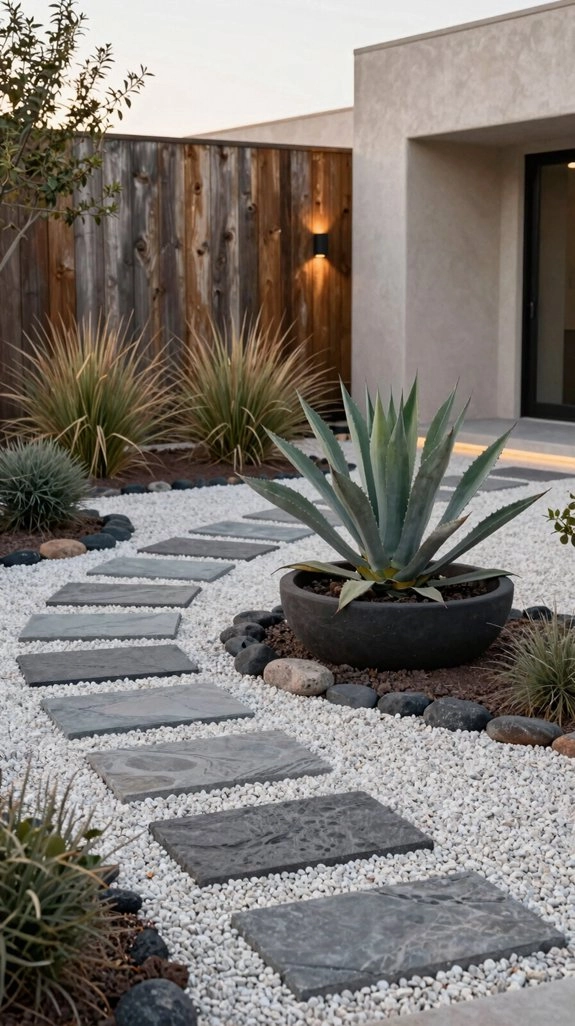
For a bold, desert-modern look that stays striking in every season, agave brings serious curb appeal! Its stiff rosettes give your yard the clean, confident structure that makes a neighborhood feel polished and welcoming.
For Heat tolerant landscaping, place agave in full sun with gritty, fast-draining soil. Choose a cultivar suited to your USDA zone, especially if winters turn chilly, and leave room for its slow-growing clump to expand.
These architectural drought tolerant plants need little fuss, but don’t crowd them near walkways or doors; those spines aren’t great handshakes! Use one as a standout specimen, and your front yard gets a sculptural focal point.
Feather Reed Grass
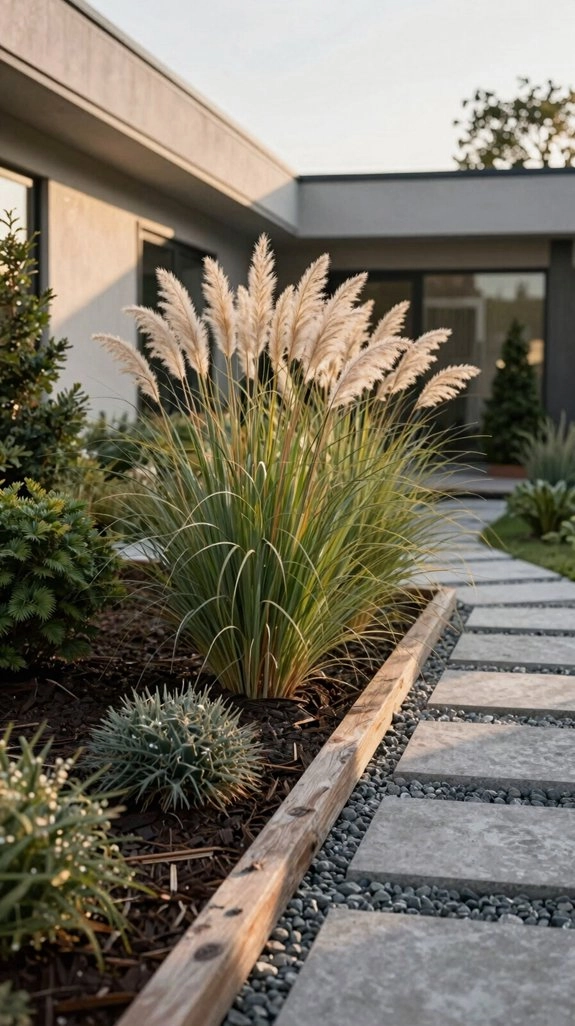
Feather reed grass brings tall, graceful movement to your front yard, and it keeps its neat, upright shape long after many flowers have called it quits! You’ll get tidy upright clumps, usually 3 to 5 feet tall, that make your home feel welcoming and well put together.
In spring and summer, fine blades and tan plumes sway in the breeze—no dramatic diva behavior required! Its full sun performance creates the tightest display, while the lasting seed heads add valuable Winter interest.
It’s wonderfully low maintenance: simply cut it back in late winter before new growth appears. In Zones 4–9, it gives your entry a polished, neighbor-approved finish.
Hydrangeas
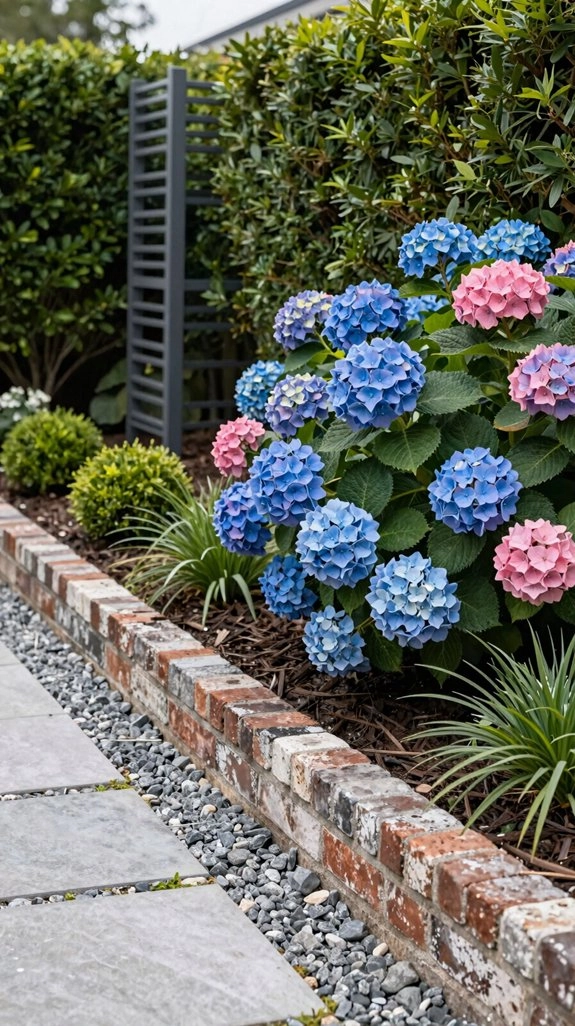
Hydrangeas bring the big, cheerful color that makes a front yard feel instantly more welcoming—like your porch got dressed up for company! You’ll love their bold blooms and full foliage, which keep your beds from looking bare after flowers fade.
For sunny Long Island–style exposures, choose dependable panicle hydrangeas. Give them room, check soil moisture during dry spells, and plan Pruning timing carefully so you don’t snip away next season’s show.
Set one as an anchor for layering height, with evergreen structure behind and low perennials in front. Spent blooms add fall charm and winter interest—proof your entry can feel polished, friendly, and neighbor-ready year-round!
Dwarf Pines
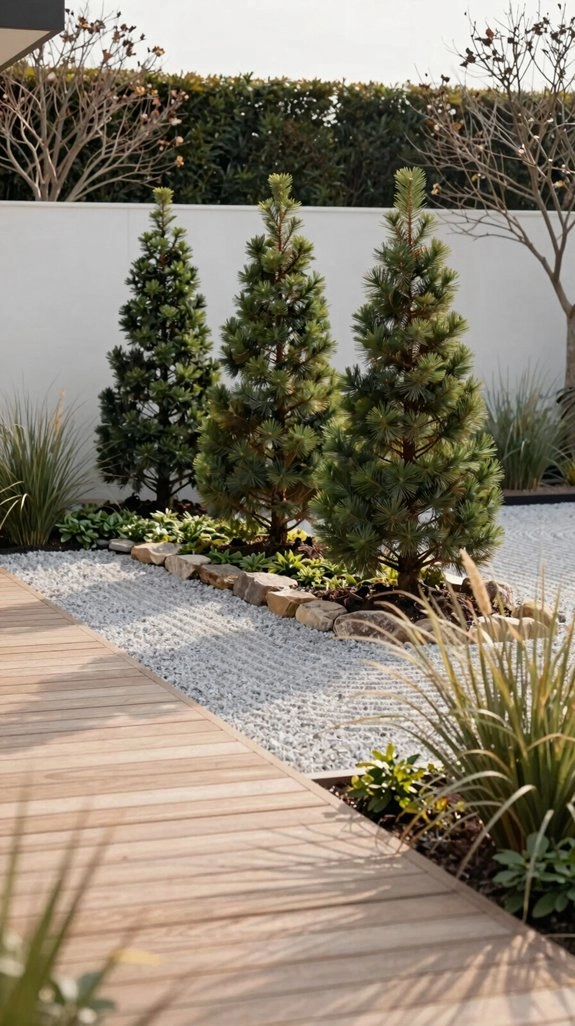
Dwarf pines give your front yard a calm, polished backbone all year long—no winter disappearing act here! You’ll love how these evergreens hold their shape and offer dependable winter color retention when the rest of the bed looks sleepy.
Choose Dwarf pine varieties sized from 1 to 6 feet, then give them full sun and well-drained soil. Smart foundation planting spacing keeps your entry looking welcoming, not crowded in three years—because plants don’t read your wishful thinking!
Their mounding, spreading, or upright forms pair beautifully with boxwood and layered perennials. Best of all, slow growth maintenance means less pruning, fewer surprises, and a tidy neighborhood-ready look.
Coral Bells
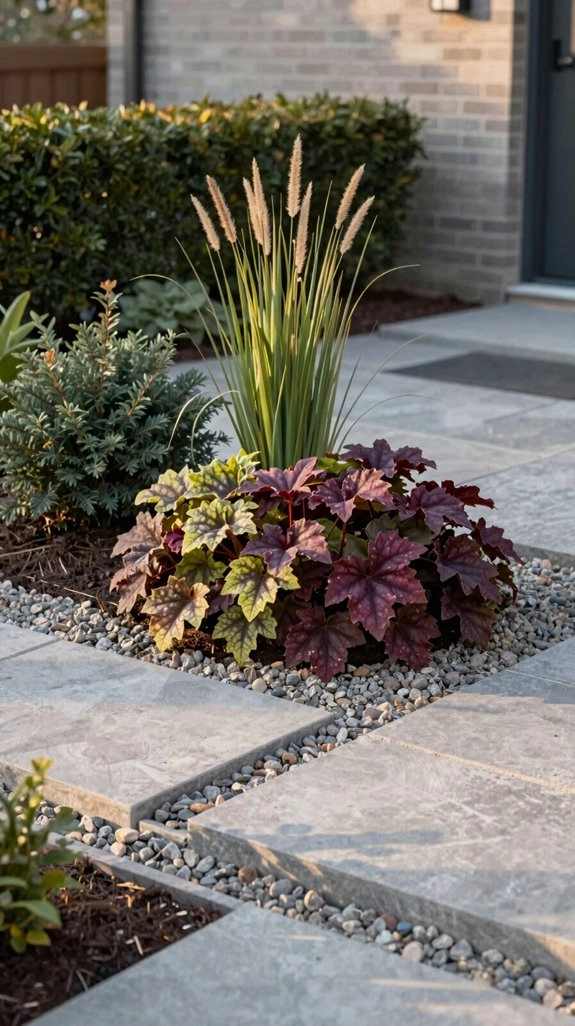
After the steady green structure of dwarf pines, coral bells bring the color party! You can tuck these Colorful foliage mounds along walkways or foundation beds for burgundy, purple, silver, or chartreuse leaves that make your home feel warmly connected to the neighborhood.
They’re easygoing, too. Plant them in well-drained soil, add compost, water them in, and let their compact mounds fill out. Their partial shade resilience helps prevent scorched leaves when your yard gets hot afternoon sun.
Then comes the sweet surprise: slender stems of tiny bell flowers float above the foliage in late spring. Deer often pass them by—finally, a plant with a little attitude!
Salvia
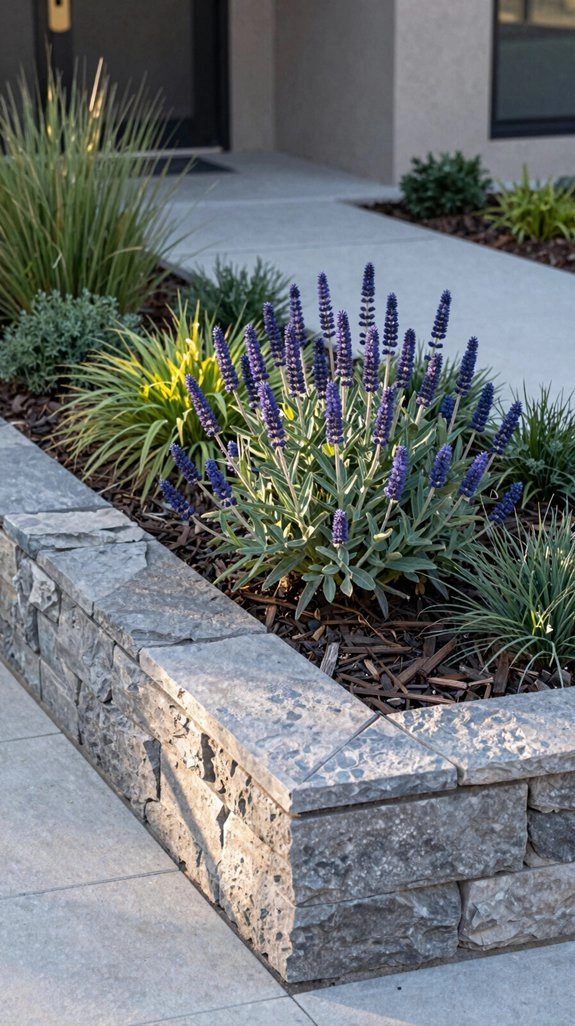
Salvia keeps your front yard glowing when other flowers start to fade, sending up neat purple, blue, pink, or white bloom spikes from late spring through summer.
You’ll love how these Drought tolerant perennials handle hot, sunny days once established—no daily watering drama!
Plant compact salvias in repeating drifts beside your walkway, where neighbors can enjoy the tidy rhythm.
Give them full sun or part shade, well-drained soil, and avoid soggy roots.
Then comes the lively surprise: Pollinator friendly blooms invite bees and butterflies to your yard!
Pair salvia with grasses and evergreens for a polished, welcoming look that feels right at home.
Sedum
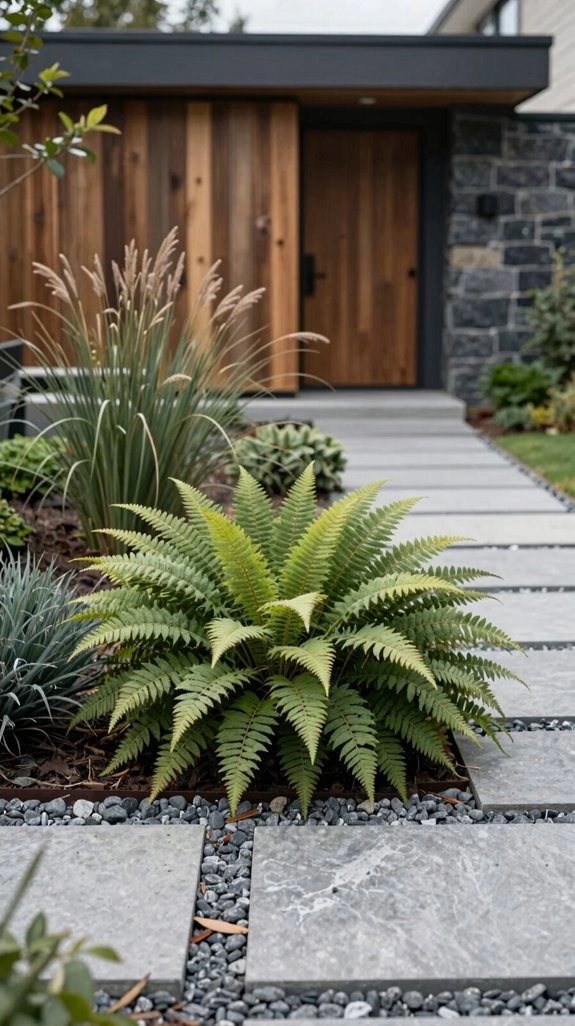
For a tough, tidy partner to those colorful salvia spikes, try sedum, also called stonecrop! You’ll love its dense, water-storing leaves, which stay handsome through summer and into fall without constant fuss.
Plant it in full to part sun and sharp-draining soil, then let this Drought proof groundcover spread along borders and fill bare spots.
It’s an easy way to make your front bed feel polished and welcoming—no *skilled* skills required!