Small Garden Design Ideas That Maximize Every Inch
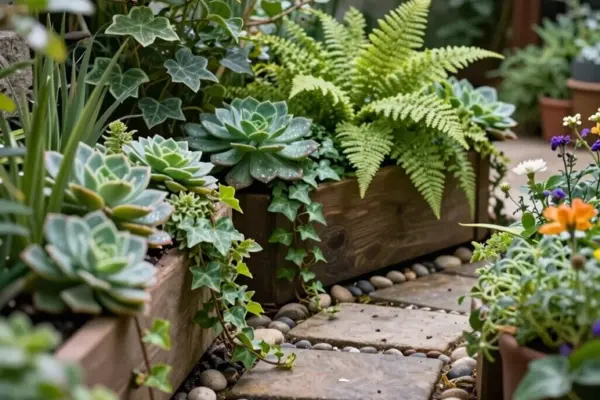
- Small Garden Design Ideas That Maximize Every Inch
- Key Takeaways
- Small Garden Design: Start With Purpose
- Plan Privacy With Hedges and Screens
- Place Plants by Sun and Shade
- Go Vertical to Free Up Floor Space
- Soften Fences With Climbers and Evergreens
- Build Year-Round Structure With Greenery
- Use Large Containers to Define Zones
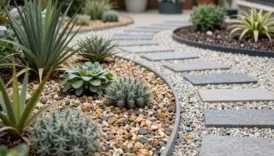
- Create Clear Zones With Paving and Borders
- Lay a Narrowing Path for Depth
- Keep Colours and Materials Simple
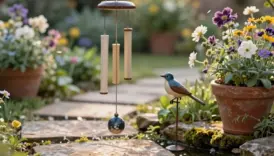
- Pick Hardy Paving That Ages Well
- Use Plant Scale to Make Space Feel Bigger
To enhance every inch, start by picking one main job, like dining or relaxing, then map sun and shade so you place seating and plants where they’ll thrive. Add privacy with hedge panels, ivy on a trellis, or a compact evergreen climber, and use large pots or vertical planters to save floor space. Finish with a narrow path and simple paving, and you’ll get a garden that feels bigger, calmer, and surprisingly clever—wait until you see the fence trick!
Key Takeaways
- Decide one main use for the garden, then zone dining, lounging, or play areas before adding extra features.
- Map sun and shade through the day so plants and seating go in the right spots.
- Use vertical space with trellises, arches, and hanging planters to free up floor area.
- Add screening with hedges, evergreen climbers, or panels near seating for privacy without crowding the whole garden.
- Use large containers, raised edges, and hard paving to define compact zones and make small spaces feel organised.
Small Garden Design: Start With Purpose
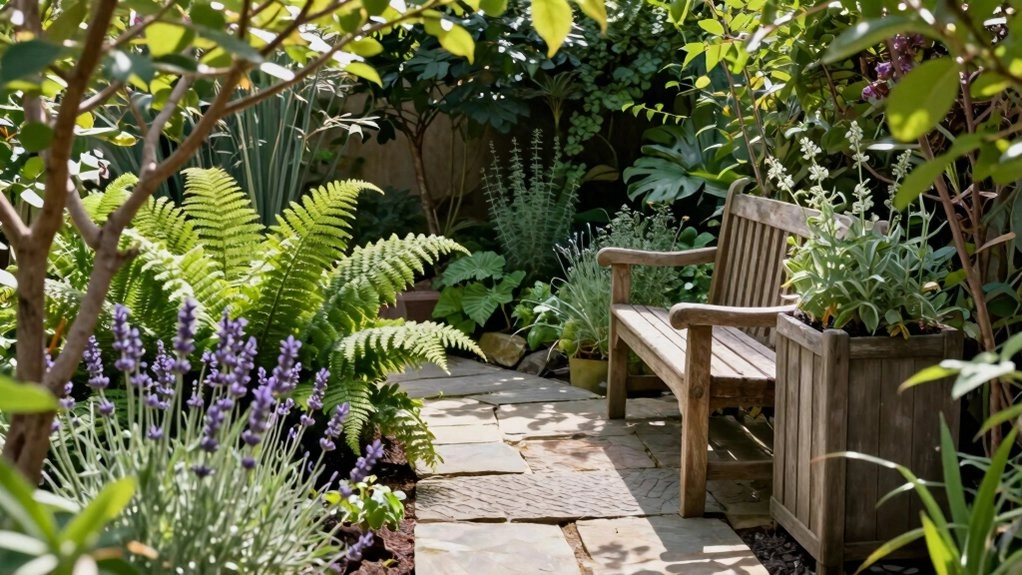
Start with one clear job for your small garden, and let that goal lead the way! You’ll feel less overwhelmed when you name the main purpose first, like dining, relaxing, or play.
Make a quick list of uses, then rank them. That Seating priority helps you protect table and chair space before adding extras that look cute but hog room.
A simple Zoning strategy, using pavers, gravel, or decking, gives each activity a clean spot and keeps the layout calm.
Next, check where sun lands through the day, so you place seating and planting where they’ll shine. Tiny space, big wins!
Plan Privacy With Hedges and Screens
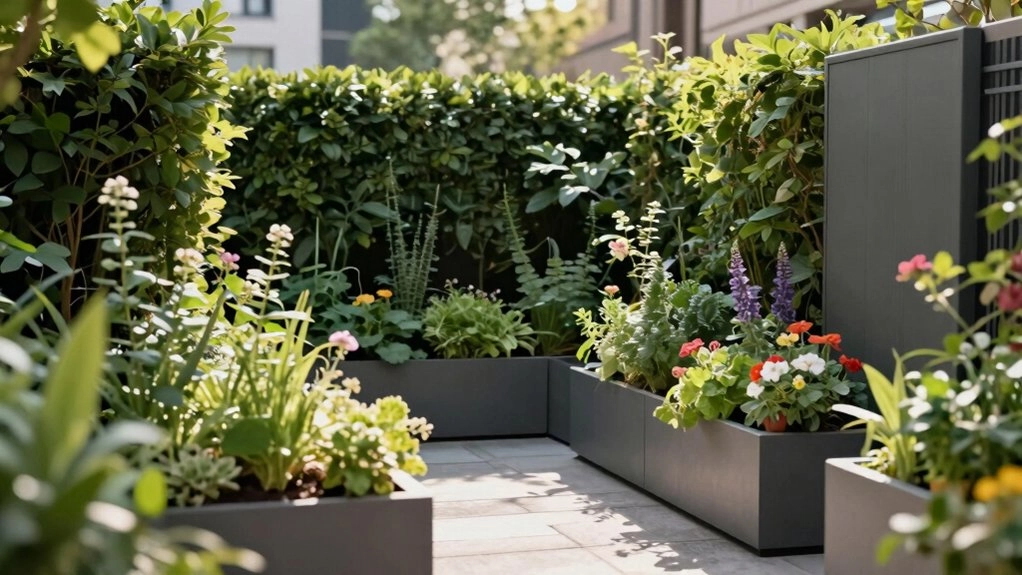
Once you’ve mapped out how you’ll use the space, it’s time to keep prying eyes from crashing the party! Choose hedges, screens, or evergreen climbers for year-round cover, so your cozy nook stays yours.
- Screen placement: Put panels near dining or seating spots, not everywhere.
- Planting layers: Mix hedge masses with ferns or other wispy plants, so the edge feels lush, not boxy.
- DIY helper: Add climbers like ivy on fences or walls with simple ties and a trellis; it’s cheap, easy, and keeps the floor open.
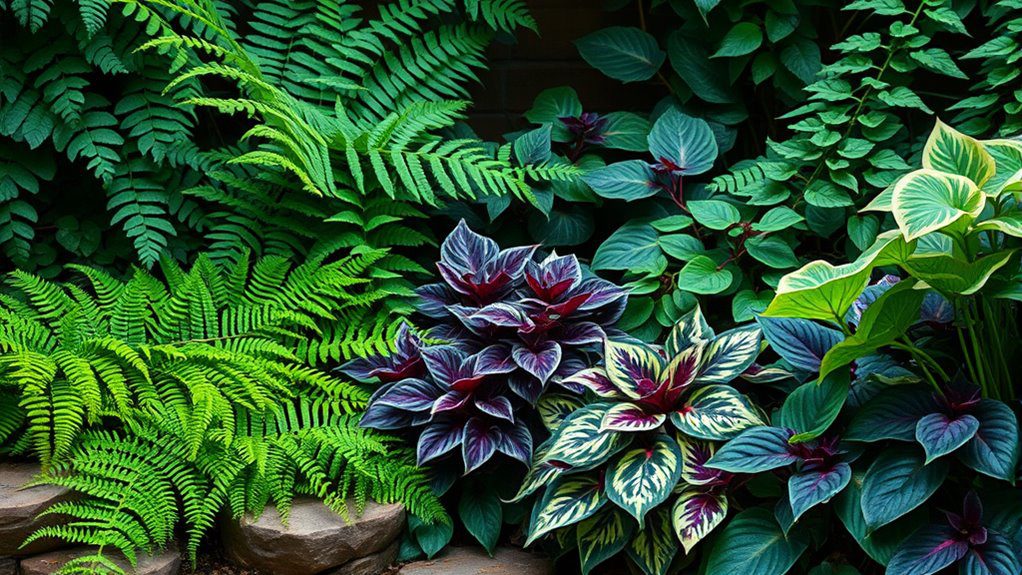
In shade, tuck in hostas or begonias. Nice, right?
Place Plants by Sun and Shade
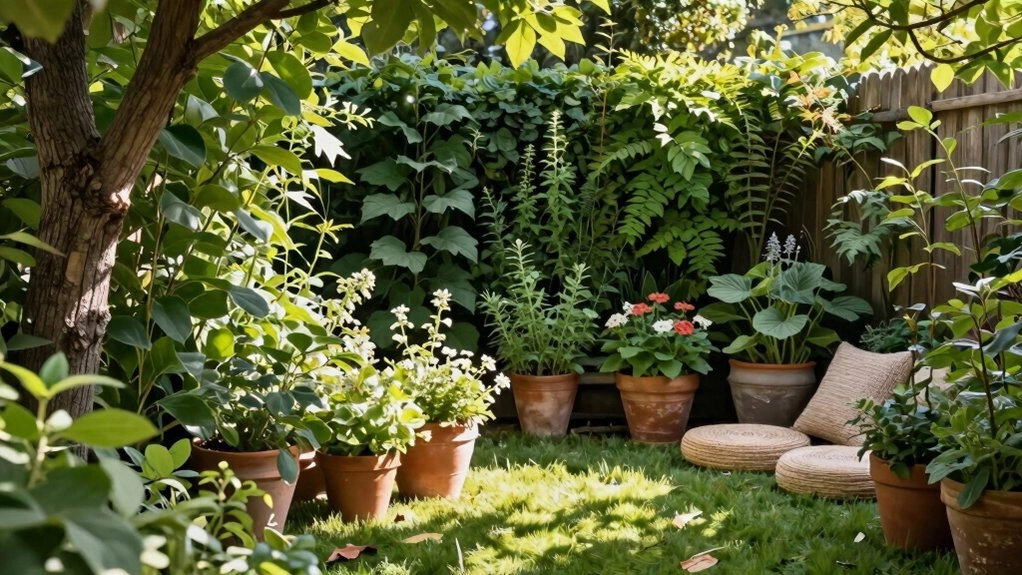
Before you plant a single flower, take a slow walk through your garden and watch how the light moves from morning to evening, because that tiny sun map can save you a ton of guesswork later!
Sun mapping helps you spot the brightest windows, and Shade zoning shows where cool, dappled spots naturally live.
Put sun-lovers in the hot zones, then tuck hostas, Tiarella, begonias, and hardy geraniums into shade where they’ll actually shine.
Group plants with similar water needs together, so care feels easy, not messy.
Best of all, claim a shady nook for a comfy seat, and your garden starts feeling like your crew’s favorite hangout!
Go Vertical to Free Up Floor Space
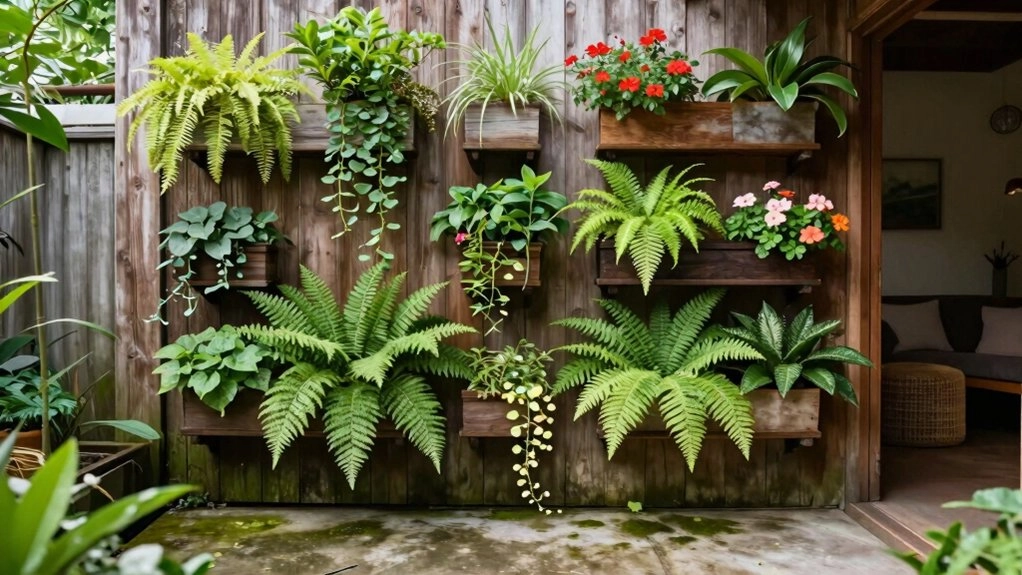
If your sun map already showed you where every bright corner and shady pocket lives, the next smart move is to let your plants climb, hang, and stack instead of spreading out like they own the place!
You’ll feel right at home with:
- Trellises and arches, which guide space saving climbers up instead of out.
- Vertical garden tiers, using simple stands or multi-level planters for more plants per square meter.
- Hanging baskets, best for balconies, but only on sturdy supports.
Choose compact evergreen climbers, like ivy or Clematis armandii, for lasting coverage.
Train roses, and boom—more floor space, less fuss!
Soften Fences With Climbers and Evergreens
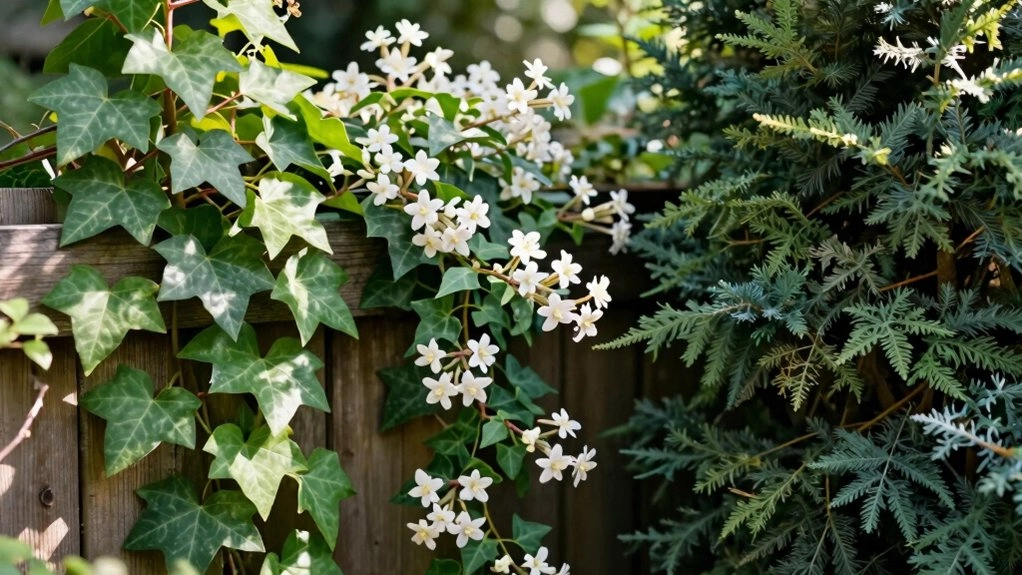
Along a plain fence, a few well-chosen climbers can work magic! You can train ornamental ivy or Clematis armandii on a simple trellis, and suddenly the edge feels friendlier, fuller, and more private. Use a fence-line backbone, then add evergreen layering so the screen stays lush without eating patio space.
For a little extra charm, tuck in ferns below the climbers, their soft fronds play nicely with wiry stems and add winter texture.
If you’d like blooms too, weave in a pale climbing rose on the same grid. It’s easy, affordable, and your garden gets instant hello-neighbor vibes!
Build Year-Round Structure With Greenery
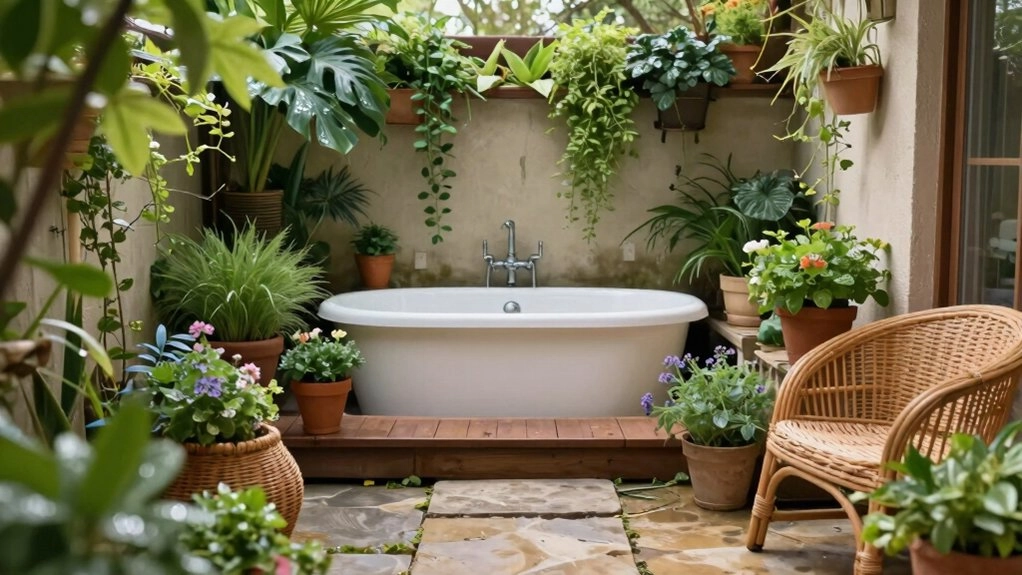
To keep a small garden looking lively all year, start with a green backbone that doesn’t quit when the flowers take a nap!
Choose an evergreen variety for compact planting, then build your foliage structure:
- Plant structural shrubs first, like ornamental ivy or Clematis armandii, for winter screening.
- Tuck in ferns where shade softens corners and adds plush depth.
- Train climbers up a trellis or wall, so your boundaries stay neat and green.
You’ll get steady shape, less empty space, and a garden that feels welcoming even in January. That’s the secret sauce, friend!
Use Large Containers to Define Zones
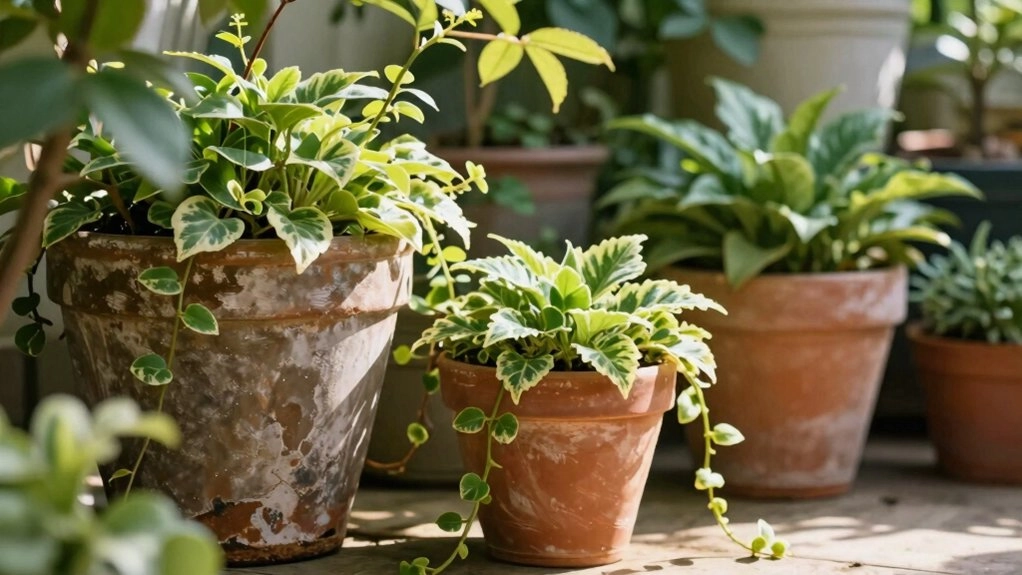
Big greenery gives your garden a strong frame, and now you can use that same idea in a more flexible way with large containers!
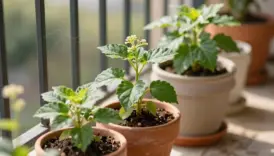
Place 2–4 oversized planters near dining or sitting spots, and you’ll get soft room dividers that keep your flexible layout open.
Choose rectangular, oval, or elliptical pots, then add one or two anchor plants in each, like an evergreen shrub or sculptural stem.
That creates Layered height and a wildlife friendly feel, too.
Keep saucers and drip trays under them, and use wheeled bases for a quick seasonal refresh.
Easy, right?
Your space feels tidy, cozy, and unmistakably yours!
Create Clear Zones With Paving and Borders
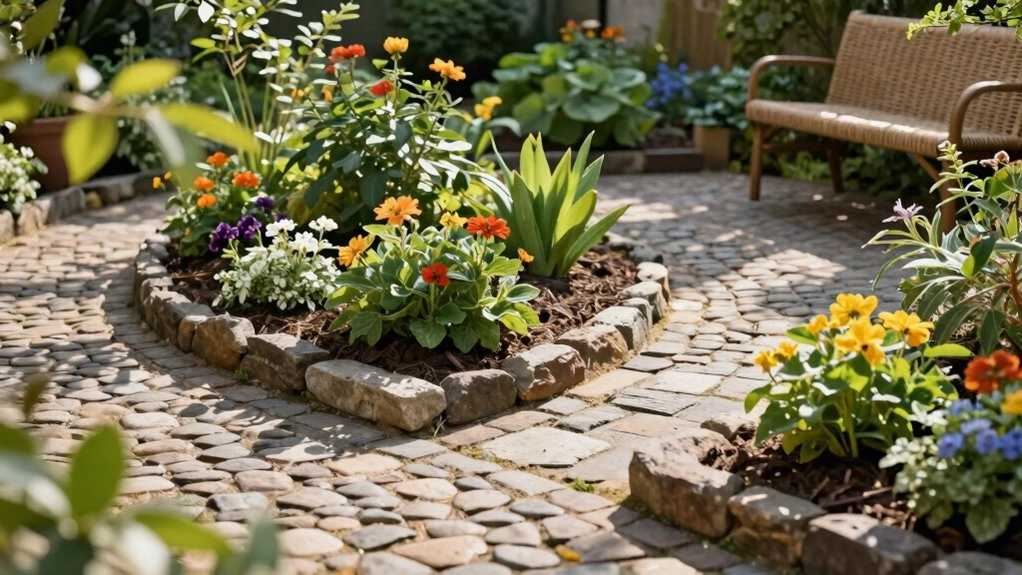
- Use raised edges or edging strips for clear lines.
- Mix decking-like paving only where you sit, then switch to harder paving for easy cleanup.
- Try darker York stone for texture contrast, seasonal interest, and less visible dirt.
A pergola or frame adds subtle lighting and a cozy vibe. Pair it with water smart planting, and your little retreat feels welcoming!
Lay a Narrowing Path for Depth
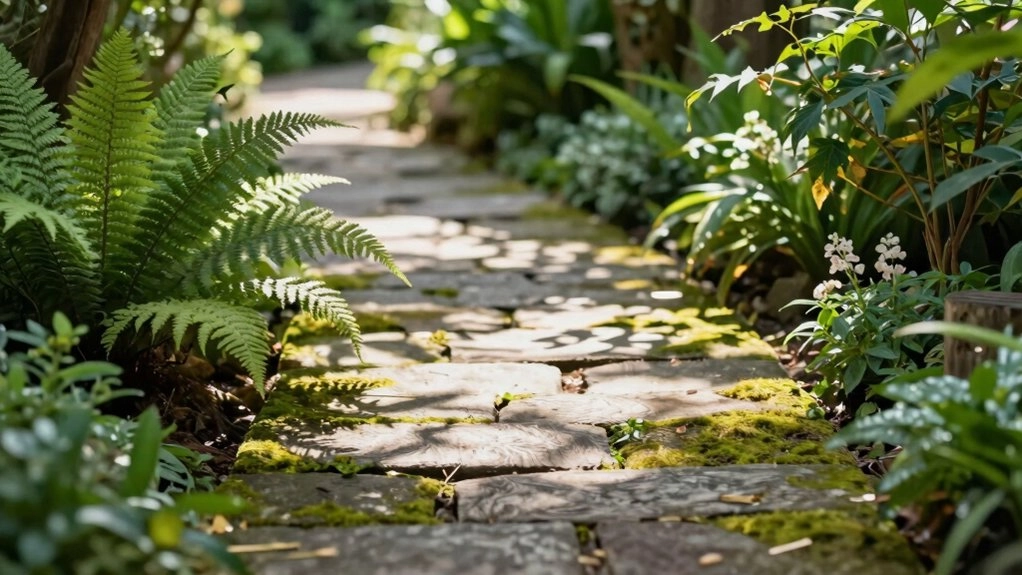
A narrow, gently tapering path can do some serious magic in a small garden, and it doesn’t need to be elaborate or pricey!
Start at your seating area or entry with a wider section, then let it slim down in a smooth, steady line so your eye reads a receding corridor.
Add Layered seating nearby, plus taller plants and bigger leaves close to you, then smaller foliage farther out for stronger depth cues.
A slight curve feels even longer than a straight shot, and if your space is rectangular, turn the path about 45 degrees.
Suddenly, your little garden feels bigger—nice trick, right!
Keep Colours and Materials Simple
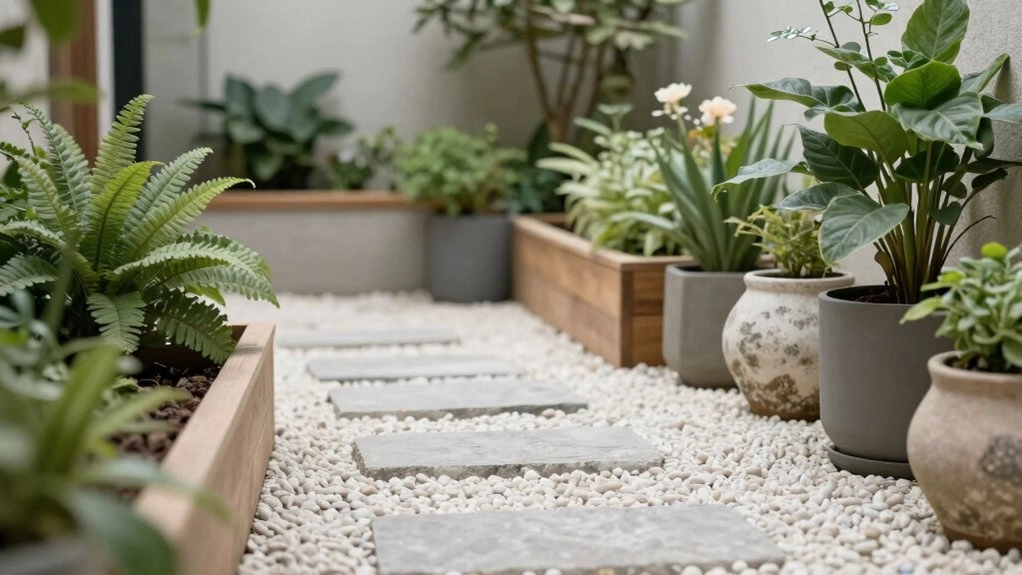
When your garden is small, too many colours and clashing finishes can make it feel busy fast, so keep things calm with a simple 2–3 colour palette plus green.
You’ll feel right at home when the space flows together, not like a patchwork!
Use colour repetition in pots, flowers, and cushions, and let matching finishes on furniture and planters echo each other.
- Choose a calm palette.
- Repeat cooler shades farther back, warmer ones near a focal point.
- Add cohesive edging in just one or two materials.
That simple mix keeps tight spaces light, neat, and quietly inviting—easy on the eye, and easy to love!
Pick Hardy Paving That Ages Well
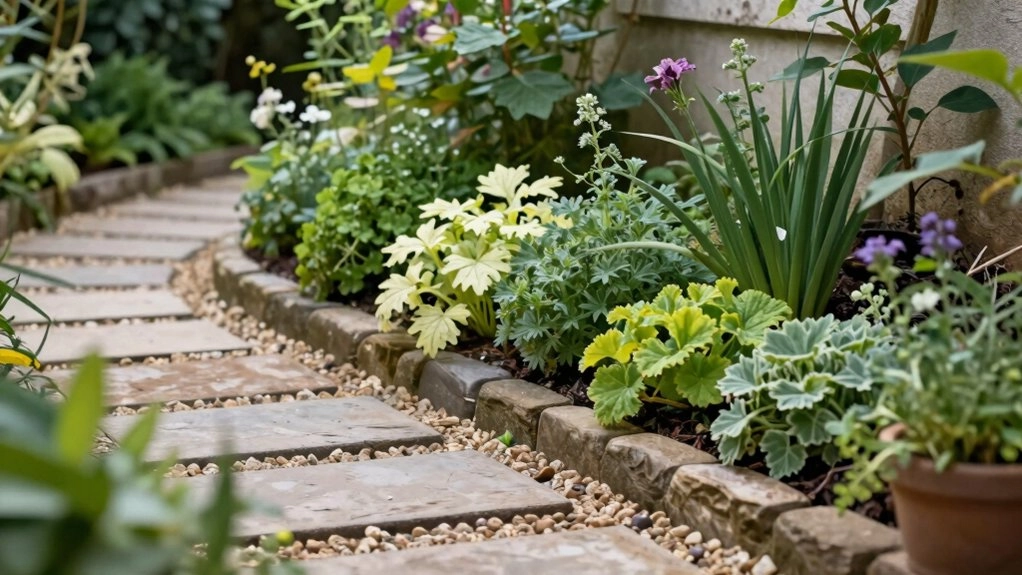
Because a small garden has to work hard, your paving should do more than just look nice—it needs to handle muddy shoes, spilled lemonade, and the odd burger drip without throwing a tantrum!
Choose hardy stones like reclaimed York stone, because it hides dirt, shrugs off weathering, and feels right at home.
Go for darker tones and low fade finishes, so stains don’t shout at you after every barbecue.
Keep the pattern calm, with two or three matching shades, and use durable textures to define your dining spot.
That way, your table sits on purpose, not by accident, and your patio stays welcoming for years!
Use Plant Scale to Make Space Feel Bigger
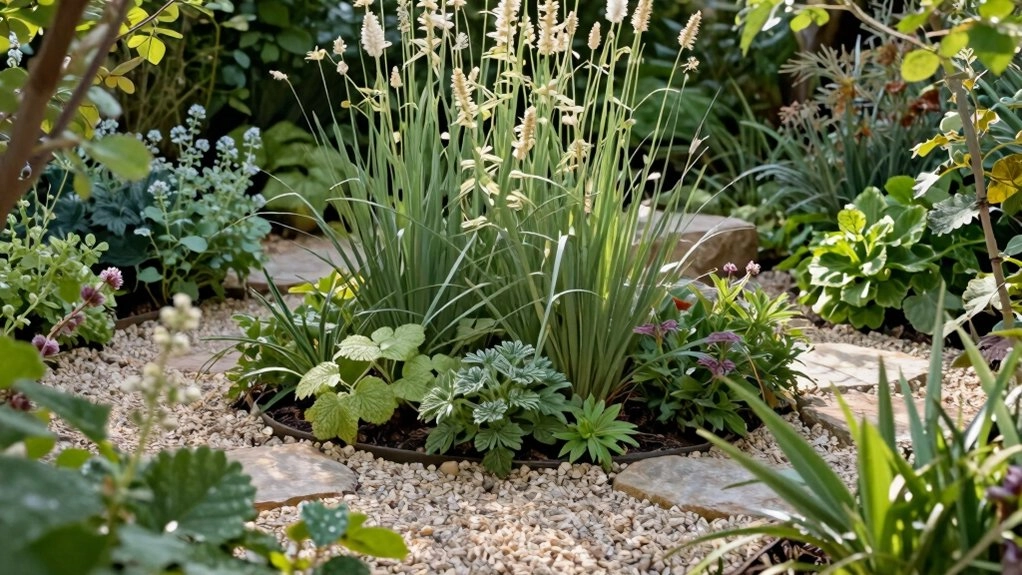
Hard paving gives your garden a solid base, but plant scale is what makes the whole space feel bigger and more inviting! You can join the club of smart small-space gardeners with a few tricks.
Try: 1. Put broad-leaf hostas or shrubs near the house, then smaller geraniums farther back for garden depth. 2. Add climbers on a trellis or slim trees for vertical layering. 3. Repeat pots and heights in a repeat pattern, using container height and scaled spacing.
Foliage contrast matters too, since chunky leaves up front and finer ones away build a roomier view.