Home Garden Ideas That Feel Fresh and Easy to Maintain
- Home Garden Ideas That Feel Fresh and Easy to Maintain
- Key Takeaways
- Low-Maintenance Garden Planning
- Ditch the Lawn
- Use Bigger Borders
- Choose Plants for Your Site
- Favor Native Plants
- Build Beautiful Dirt
- Mulch Deeply
- Water During Establishment
- Pick Shrubs and Evergreens
- Combine Foliage for Year-Round Interest
- Go Big With Pots
- Use Groundcovers to Block Weeds
- Make Lawn Edges Easy to Mow
- Add Drought-Tolerant Plants
- Choose Award-Winning Plants
- Let Plants Grow Gracefully
You can make your garden feel fresh and easy with simple swaps: shrink the lawn, widen beds, and pick plants that suit your sun, shade, and soil. Add compost, then mulch 2–4 inches deep to cut weeds and watering. Use native plants, tough ground covers like sedum or clover, and mower-friendly edging for a clean look. Choose reliable winners, let them reach their natural size, and the bed practically does the work for you—there’s even a smarter trick up ahead!
Key Takeaways
- Choose climate-matched natives and tough perennials that need less watering, feeding, and replacing.
- Reduce lawn area by turning unused turf into planting beds, gravel spots, or low-care ground covers.
- Simplify borders with broad beds, fewer edges, and mulch to suppress weeds and cut maintenance.
- Match plants to sun, shade, and soil conditions to keep them healthy with less stress and fuss.
- Use compost, drip watering, and 2–4 inches of mulch to help plants establish and stay low-maintenance.
Low-Maintenance Garden Planning
When you plan a low-maintenance garden, start by “sitting lightly on the earth” and choosing plants that actually like your climate, soil, and rainfall, because the right match makes everything easier from the start.
You’ll feel right at home with bioregional planting, which means picking natives and other tough plants that fit your place.
Add compost, then tuck plants into weed suppressing spacing so they knit together and crowd out troublemakers, nice and tidy!
For trees and shrubs, use drip lines at first, then let them coast.
Finish with layered perennials and evergreens that grow old gracefully—no diva plants here!
Ditch the Lawn
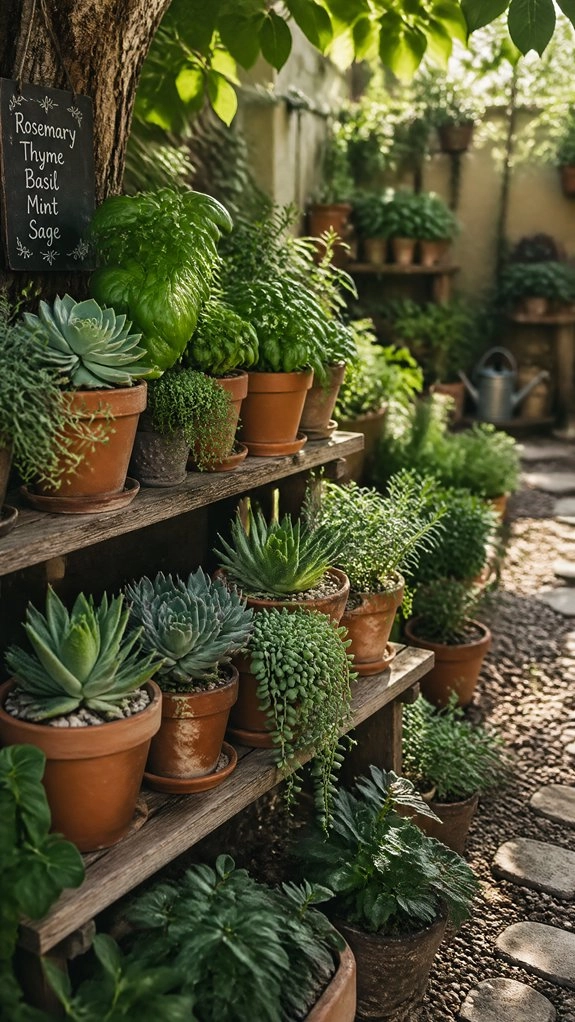
If your yard feels like a never-ending chore list, ditching the lawn can be a total game-changer! You’ll cut back on mowing, edging, watering, and feeding, and suddenly your weekends feel a lot freer.
Start by mapping where you actually hang out versus where you only work. Replace tired turf with bigger planting beds, a few paved or gravel spots, and tough ground covers like sedum or clover.
In wet-winter, dry-summer places, this shines! Choose smart perennial selection for seasonal color, and keep a small play lawn only if you really need it.
Easy, right?
Use Bigger Borders
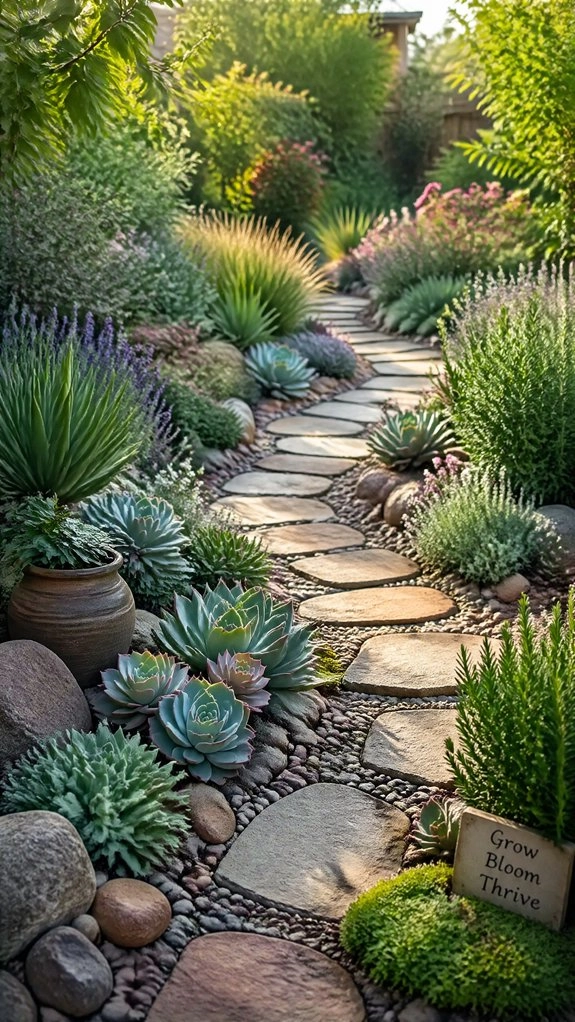
Start with broad beds, a shovel, mulch, and a simple plan. Keep Fewer Borders around lawn edges, and use low edging where turf stays. That helps Reduce Maintenance fast!
Then try Efficient Planting: mix evergreens, perennials, bulbs, and grasses so plants knit together and leave fewer weeds.
If you remove grass, mulch 4–6 inches deep each year. The result? A tidy, neighbor-worthy garden that feels easy, not exhausting.
Choose Plants for Your Site
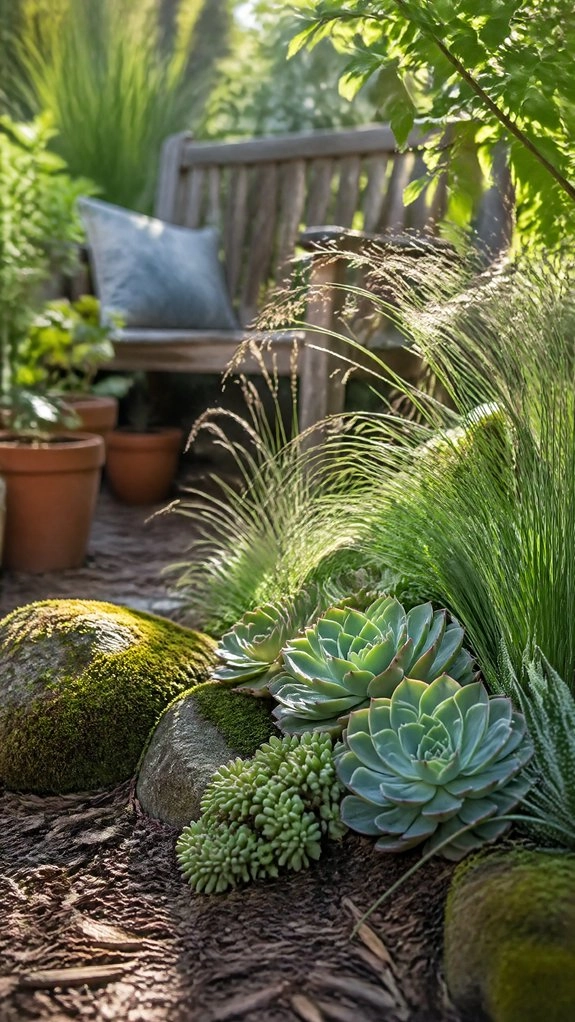
In your garden, the smartest plants are the ones that actually like where they live! Soil light matching helps you pick winners, so check sun, shade, drainage, and moisture before you buy.
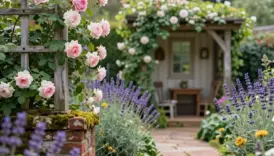
For hot, dry spots, try lavender, euphorbia “Diamond Frost,” or sedum “Lemon Coral” for easy color and hardly any fuss.
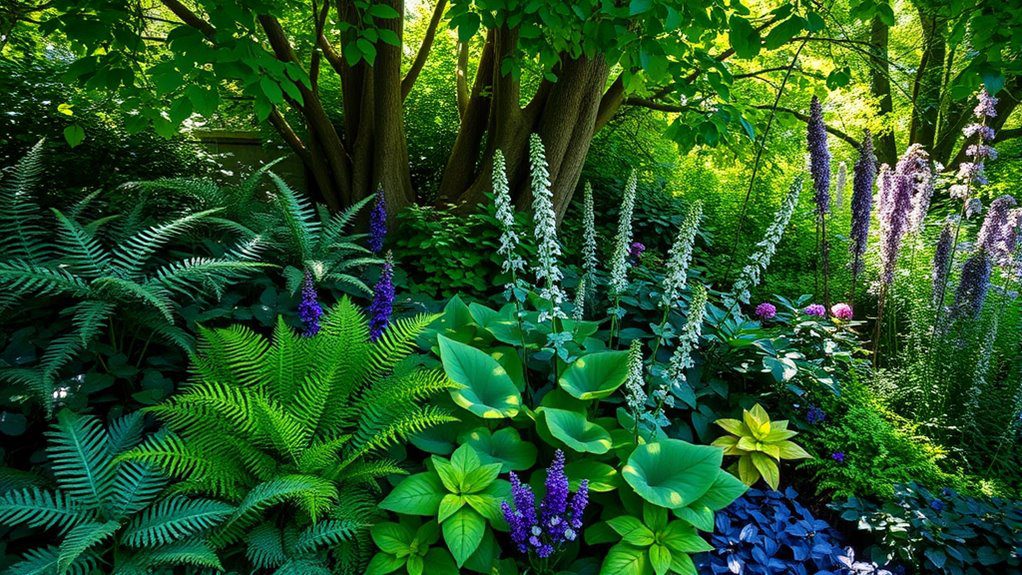
In shady corners, hostas with upright leaves can look tidy and handle gloom better.
Here’s the fun part: build your mix with bioregional native allies, then add a few climate-matched companions.
You’ll save water, skip stress, and end up with a garden that feels like it belongs.
Favor Native Plants
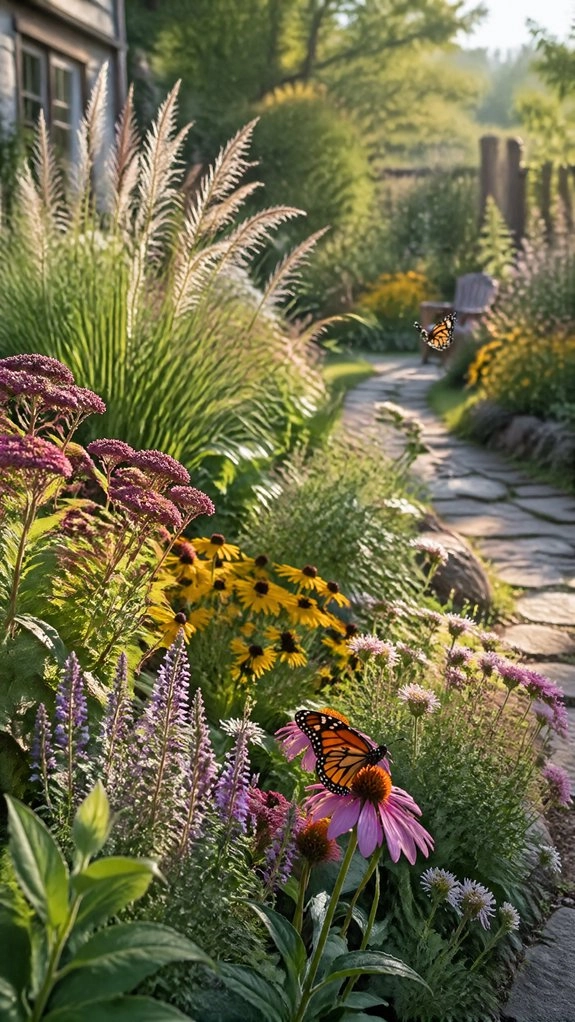
Native plants are your garden’s easygoing locals, and they usually need less water, less fertilizer, and way less fuss because they already know your climate, soil, and pest drama.
Start by matching plants to your bioregion, like a wet-winter, dry-summer pattern, so your picks feel right at home. You’ll get Planting resilience with less babysitting, and that’s a win!
Try a woodland-style tree skirt with a few natives and allied plants, then let them mingle like old friends. Many bring seasonal color too, while drought-tough choices like prairie serviceberry, meadow anemone, and anise hyssop can cut chores way down.
Build Beautiful Dirt
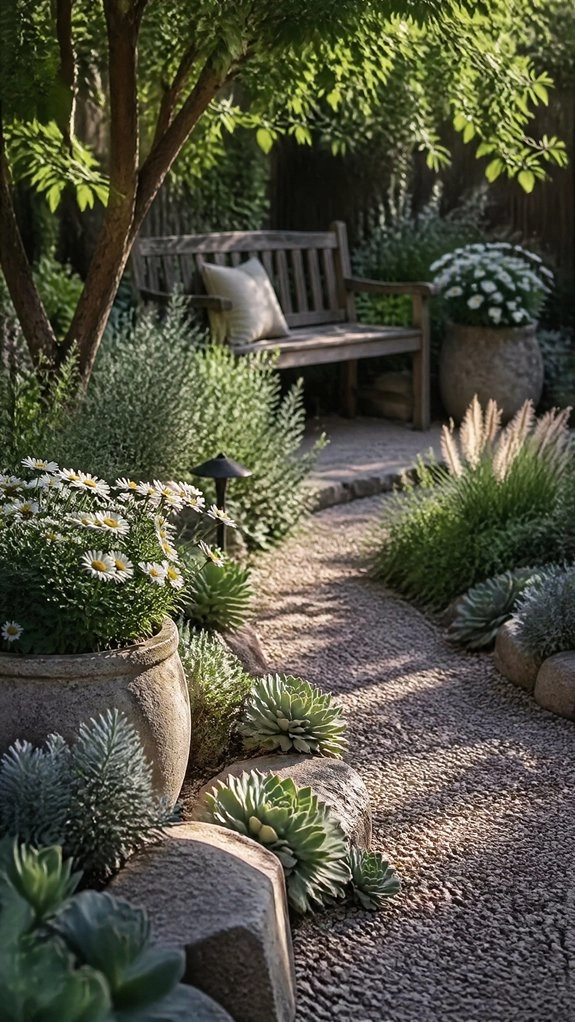
If you want a garden that almost seems to feed itself, focus on building “beautiful dirt” first, because rich soil does the heavy lifting for you!
You’ll belong to the happy crowd of gardeners who feed soil, not fuss over every plant.
Start with compost applications each spring; they boost microbial activity, improve tilth, and make nutrients easier to grab.
For a quick DIY boost, brew aerobic compost tea, spray poor spots, and smile when the soil perks up.
Then add a deep layer of compost-based mulch, about 4–6 inches yearly, to lock in moisture and keep weeds grumbling.
Mulch Deeply
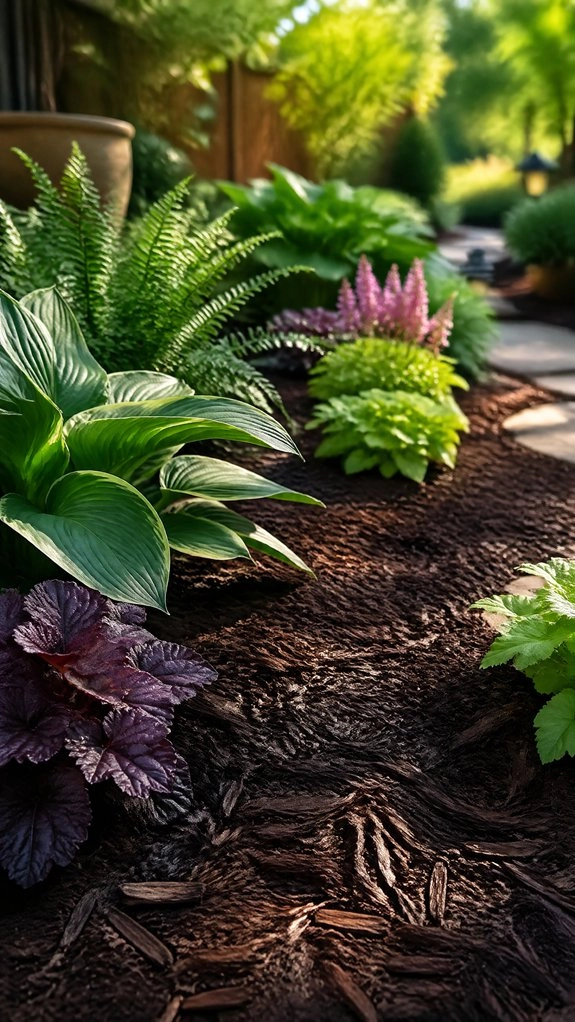
Once your soil is fed, mulch becomes the cozy blanket that helps it stay that way! You’ll love how Mulch timing matters: spread it in open, snowless months, October through April, before borders get packed in.
Aim for mulch depth of 2–4 inches, or 4–6 inches in a strong-results bed; use compost or well-rotted dairy manure, then keep it back from stems. This boosts soil moisture, cuts evaporation, and gives you satisfying Weed suppression too.
It’s low-cost, beginner-friendly, and honestly, your garden will look tidier fast.
Bonus: the compost keeps building lively soil under the surface!
Water During Establishment
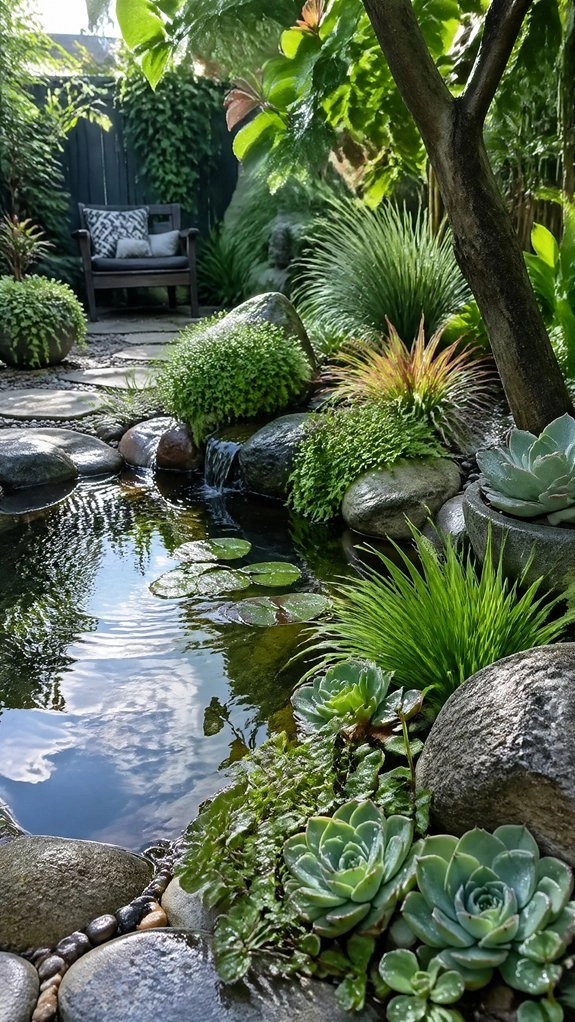
New plants are thirsty little folks, and for the first couple of years, they need your help to settle in! You’re not babysitting forever, just helping roots grow strong. Try this:
- Drip or soaker lines: cheap, easy, and they send water right to roots.
- Watering timing: water early, when heat won’t steal it fast.
- Mulch depth and soil: keep mulch even, then spread compost so soil holds moisture better.
Trees and shrubs may need 2–3 summers, perennials one season, and bulbs or herbs none. In dry Maritime Northwest summers, choose plants that fit your crew and you’ll relax sooner!
Pick Shrubs and Evergreens
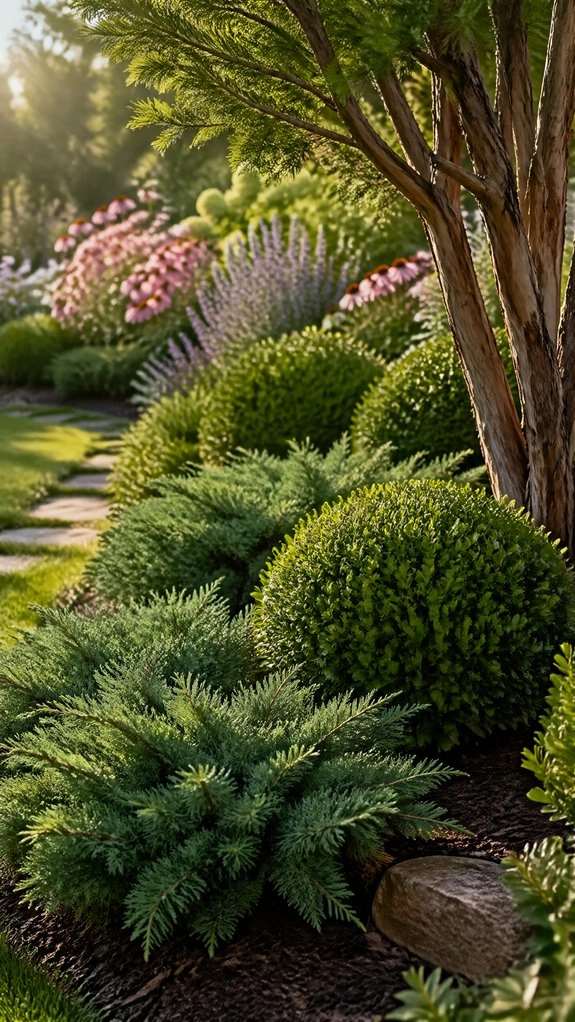
Shrubs and evergreens are the backbone of a low-work garden, and they keep things looking polished even when your flowers take a little nap for the season—nice, right? You’ll get year round structure with an evergreen backbone, so your bed still feels welcoming.
Choose low maintenance shrubs like inkberry holly or Tortuga juniper for tidy growth, or pick smooth hydrangea if you want re blooming habits and new growth flowering.
Match every plant to your sun soil match, then lean on drought wise choices like ‘Sunny Boulevard’ for easy care.
That mix feels like your crew, not a chore!
Combine Foliage for Year-Round Interest
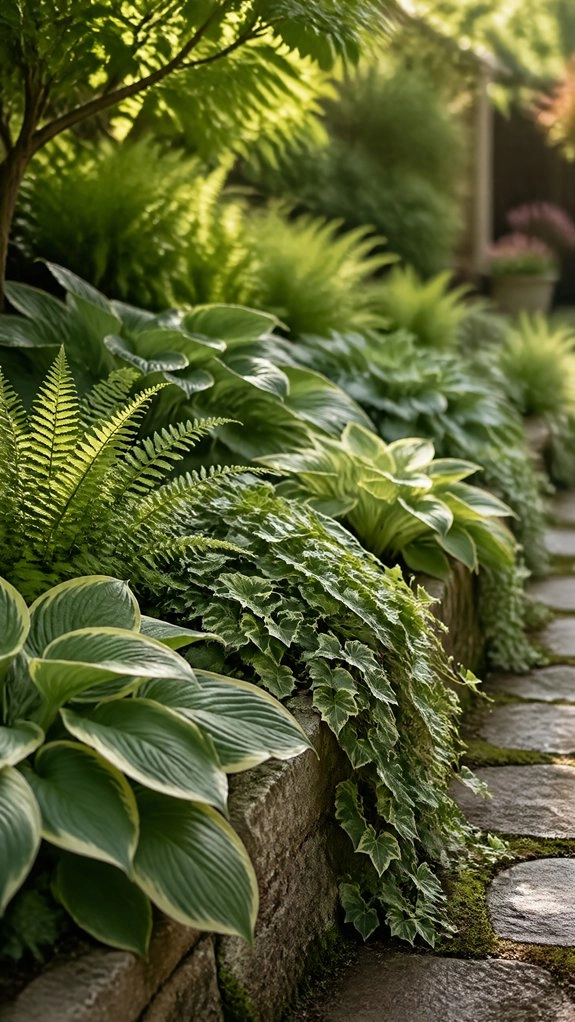
Even if your flowers fade for a bit, you can still keep the garden looking lively by mixing foliage with different textures and colors—now that’s a smart little trick! You’ll build layered textures that feel fresh all year, and your crew of plants will still look connected.
- Start with shape: use round, glossy leaves beside switch grass for a softer, finer edge.
- Keep evergreen structure: aim for about one-third evergreens, like inkberry holly, so the bed never feels bare.
- Add season shifts: try ninebark and a matrix mix of shrubs, ground cover, and bulbs.
Mulch well, feed with compost, and enjoy!
Go Big With Pots
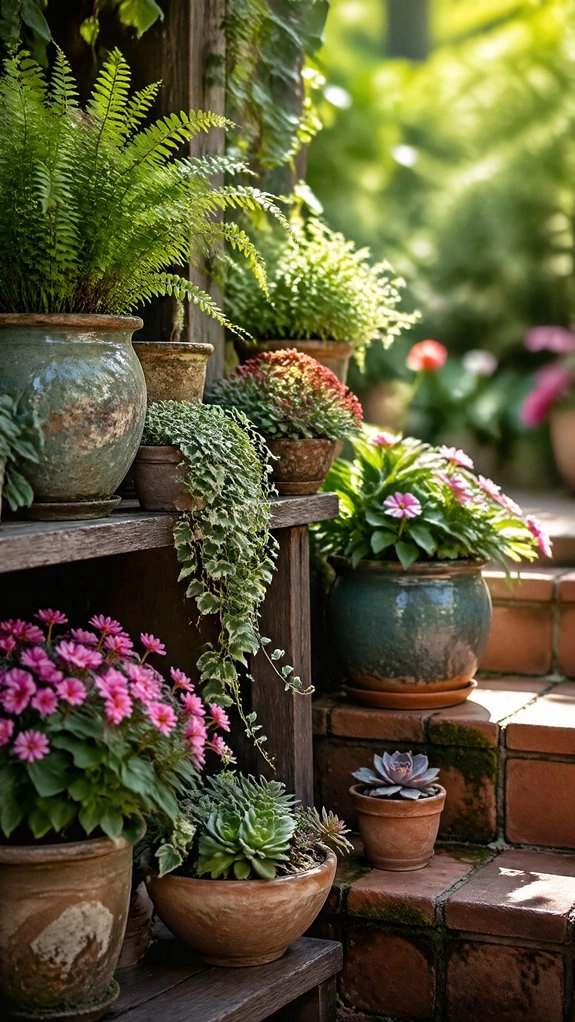
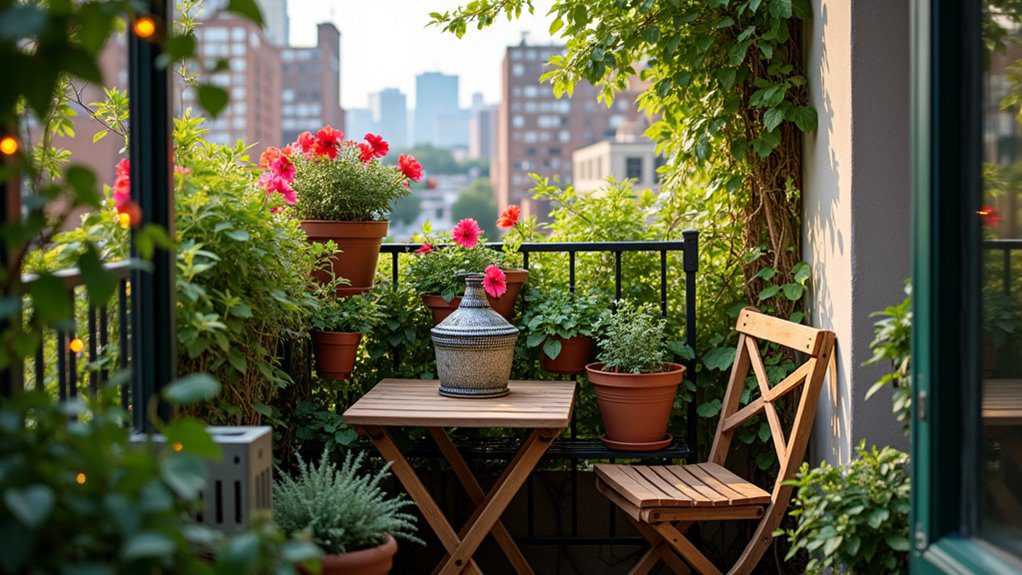
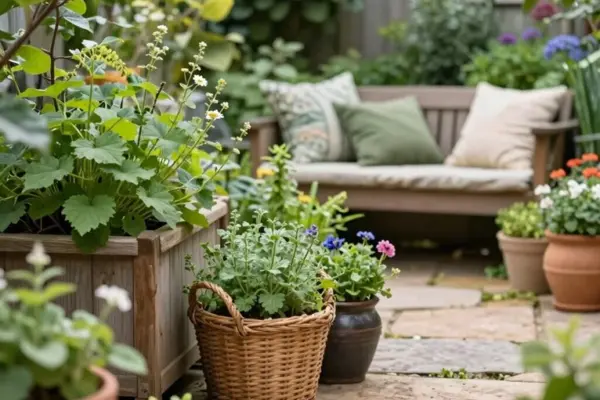
If you’ve been wrestling with tiny patio pots that dry out faster than you can say “oops,” go bigger instead! Large containers hold more soil volume, so roots stay cooler and you water less.
Pick plants that like container life, then tuck compatible pals into one roomy pot for a one-can-care setup.
Add self watering systems or oversized saucers if you want extra ease.
In urban yards, raised planters and modular groupings give you easy access for pruning and checking.
Choose sizes with growth in mind, and seasonal potting gets simpler, not scarier.
Best part? Fewer repots, fewer surprises, more happy, neighbor-worthy blooms!
Use Groundcovers to Block Weeds
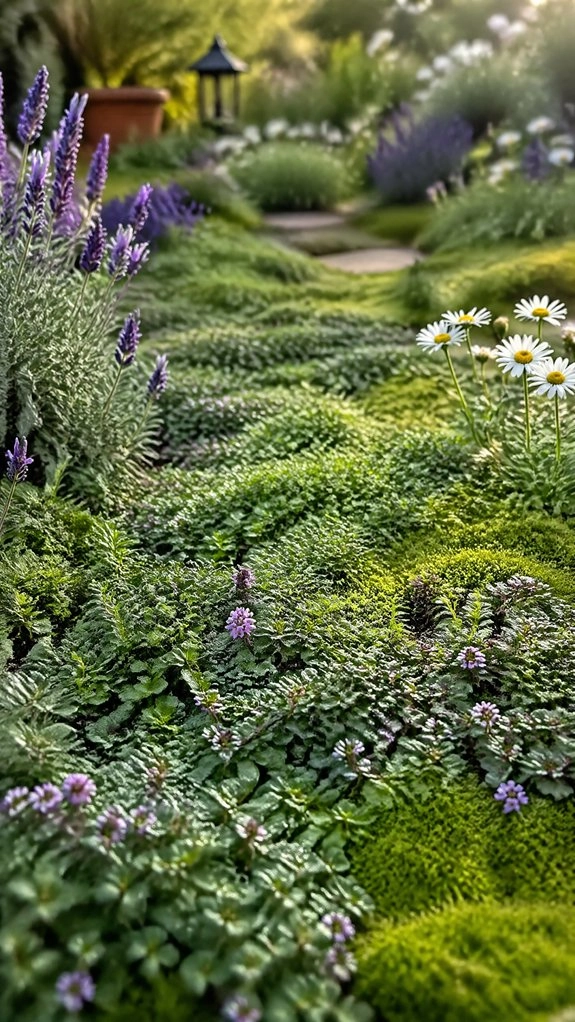
Groundcovers are your garden’s low-growing bodyguards, and they get to work fast by knitting bare soil together so weed seeds have a tougher time sprouting. You’ll feel like part of the smart-garden club!
- Pick drought-tough stars like sedum for easy care.
- Set Groundcover spacing so plants close gaps, with better soil coverage and weed suppression.
- Add 2–4 inches of mulch, then do a seasonal refresh each year.
Match plants to sun and soil, like lavender in dry, free-draining spots. The right fit means fewer holes, fewer weeds, and less nagging work.
Tiny borders can even pull extra duty, keeping the whole bed looking calm and tidy.
Make Lawn Edges Easy to Mow
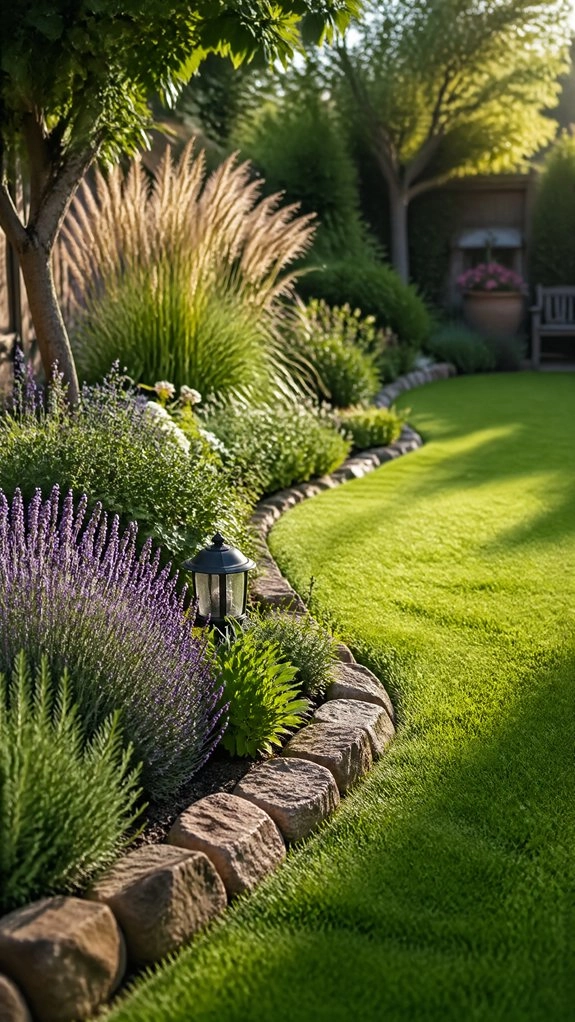
A tidy garden bed can do wonders for weeds, and your lawn edges can pull the same trick with a lot less fuss!
With smart lawn border planning, you can skip those awkward corners and tight curves that eat up your weekend.
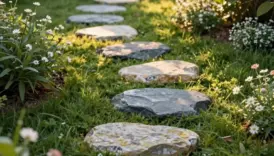
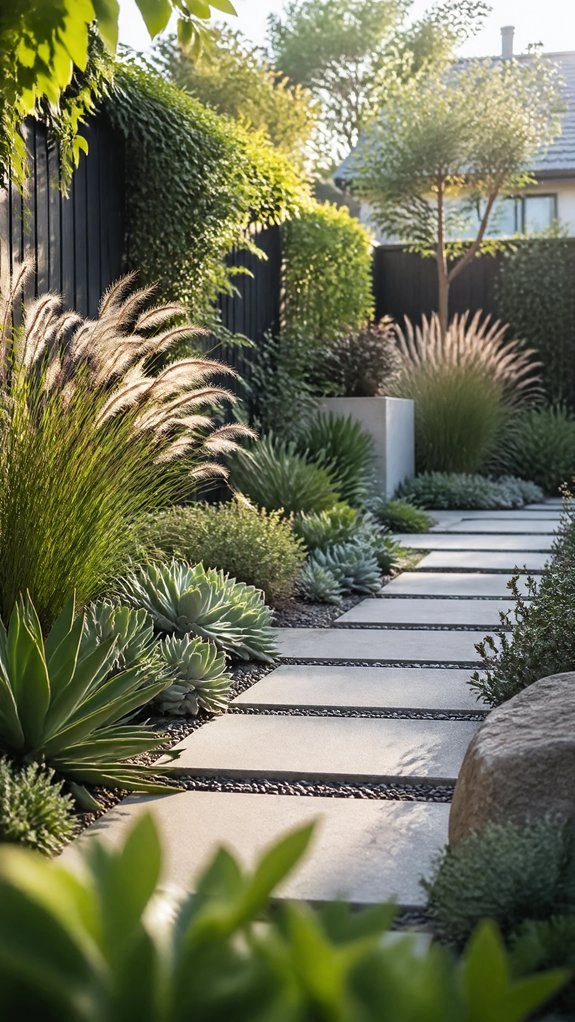
Try mower friendly edging, like brick or paving stones, so your mower glides right up to a clean line.
Want an even neater look? Add a low gravel strip below lawn level, and trimming gets easier fast.
Keep the edge height steady, then follow a simple mow-and-touch-up routine.
Nice, right?
Your yard’ll feel polished, not picky!
Add Drought-Tolerant Plants
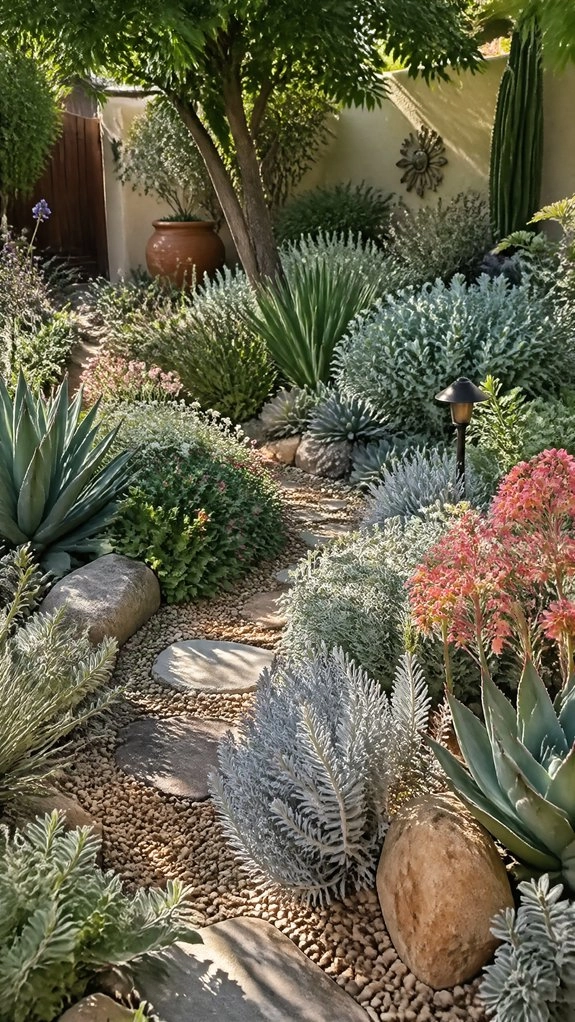
When your garden has hot sun, dry spells, and soil that drains fast, drought-tolerant plants can save you a ton of watering and worry!
You’ll fit right in with easy-care blooms that love your site.
- Pick plants for your light and soil, like lavender, native perennials, or region-adapted favorites.
- Layer ground covers and tough stars such as Euphorbia sedum and sedums for color, texture, and less fuss.
- Build in drought proofing planting with 4-6 inches of mulch, then water only while plants settle in.
After that, your garden can cruise on rain, not hoses.
Pretty nice, right!
Choose Award-Winning Plants
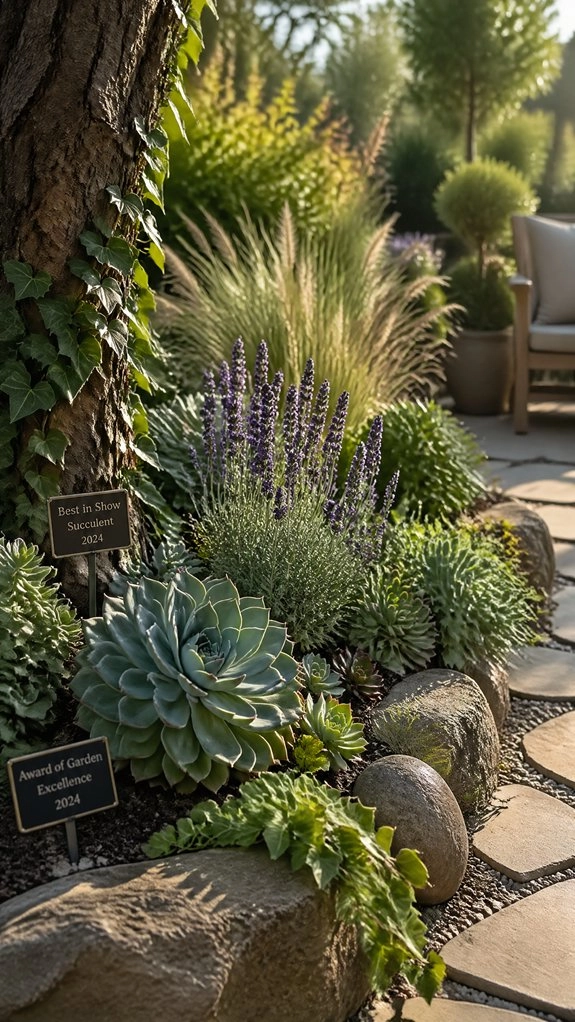
Because not every pretty plant is a champ, it pays to look for proven winners that can handle real garden life! When you shop, scan for the RHS Award of Garden Merit label, since it points you to plants that thrive in ordinary conditions without extra fuss.
Try Euphorbia diamond types for a bright, tough look, and pair them with petunia no deadheading picks like Supertunia Vista for nonstop color.
Add Russian sage such as Denim ’n Lace if you want airy blooms and full-sun reliability.
These award-winners save time, trim chores, and make your garden feel like your crew!
Let Plants Grow Gracefully
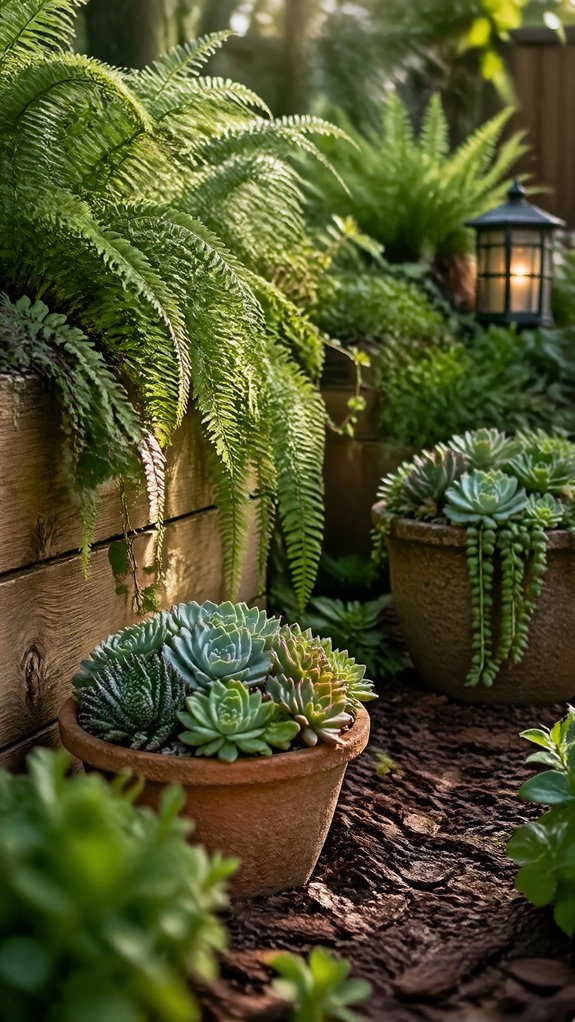
Instead of fighting your plants every season, let them settle in and do more of the work for you! Pick plants for their mature size, and build a tight mix of evergreens, natives, and companions so they knit together nicely.
- Evergreen placement: tuck anchors where they steady the bed year-round.
- Natural pruning: choose shapes that stay neat with little trimming.
- Match plants to your site, dry or wet, and feed the soil with compost.
You’ll get woodland-meadow waves, fewer weeds, and a garden that feels like your crew—easygoing, friendly, and alive!