13 Circle Driveway Landscaping Ideas That Make a Grand First Impression
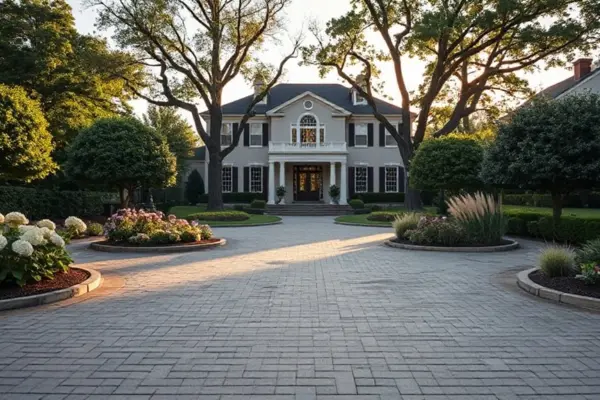
- 13 Circle Driveway Landscaping Ideas That Make a Grand First Impression
- Key Takeaways
- What Makes a Circular Driveway a Landscaping Opportunity Worth Doing Right
- Designing the Center Island: Scale, Height, and Focal Point Logic
- Getting the scale right
- Layering by plant height
- Choosing a single focal point
- What to Plant in the Center — Trees, Shrubs, and Seasonal Color
- Specimen trees and standards
- Evergreen anchor shrubs
- Perennials for color rotation
- Framing the Outer Edge: Borders, Edging, and Hardscape Accents
- Natural stone and cobble
- Metal and concrete edging
- Low border planting strips
- Matching the Design to Your Home's Architectural Style
- Colonial and traditional
- Modern and minimalist
- Mediterranean and Spanish
- Cottage and farmhouse
- Low-Maintenance Approaches That Still Look Polished Year-Round
- Landscaping Mistakes That Shrink Your Driveway (and How Pros Fix Them)
- Frequently Asked Questions About Circular Driveway Landscaping
You can make a circle driveway feel grand by giving it a clean center island, crisp stone edging, and one strong focal point like a Japanese maple, dwarf holly, or small fountain. I like low thyme or Ajuga near the edge, then shrubs and a single specimen tree in the middle. Keep plants spaced, add drip irrigation, and use warm uplights. My family notices the difference fast—your curb appeal can too, and the ideas ahead get even smarter.
Key Takeaways
- Use two access points, if possible, to improve traffic flow and create a more grand, balanced arrival.
- Frame the driveway with a simple center island, sized at 25–40% of driveway width, for strong visual hierarchy.
- Layer the island with low groundcover, compact shrubs, and one standout tree, fountain, or sculpture as the focal point.
- Choose materials and edging that match the home, such as brick, stone, cobble, or sleek concrete for a polished curb reveal.
- Plan drainage, drip irrigation, and lighting before planting to keep the driveway landscape healthy, clean, and low-maintenance.
What Makes a Circular Driveway a Landscaping Opportunity Worth Doing Right
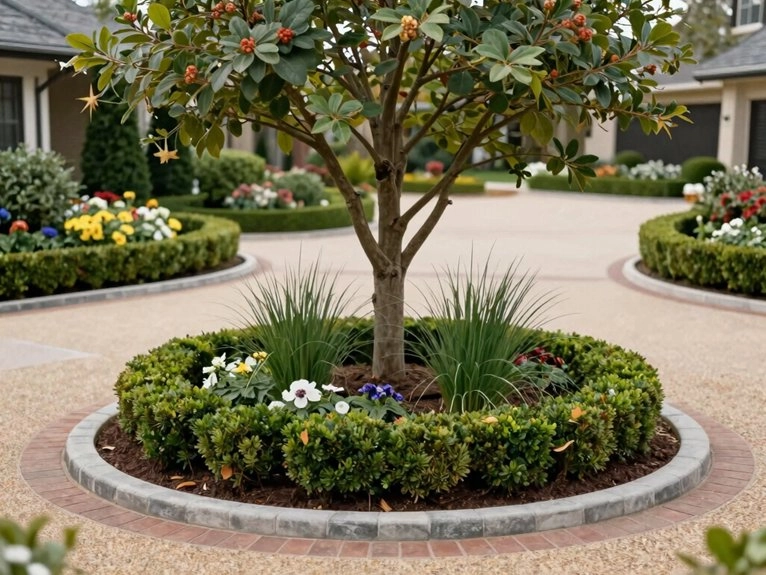
With a circular driveway, you’re not just dealing with a place to park—you’ve got a real landscaping opportunity right at the front of the house.
I’ve watched my own family breathe easier when traffic flow works: two access points mean fewer awkward three-point turns and less backing into the street. You also get instant visual hierarchy, because the drive naturally frames your home. I like using paver borders, low stone edges, and layered shrubs to soften hard lines.
On our block, a Japanese maple or serviceberry can make a narrow approach feel friendly, not fussy. Add path lights, and boom—your curb appeal keeps glowing after dinner.
Designing the Center Island: Scale, Height, and Focal Point Logic
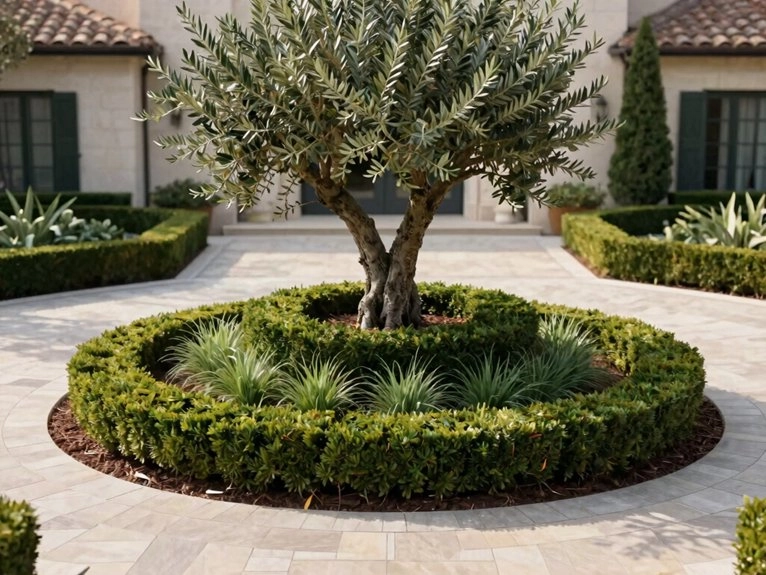
When you size the center island right, it stops looking like a random patch of dirt and starts acting like the star of the whole driveway.
I like to keep it around 25–40% of the driveway width, then build in layers: low groundcover near the edge, mid shrubs in the middle, and one standout tree, fountain, or sculpture at the center. That gives you traffic visibility from the road and the windshield.
I also plan drip irrigation, drainage, and low-voltage uplights first, because seasonal maintenance gets easier when the island isn’t fighting you like a stubborn wagon.
Getting the scale right
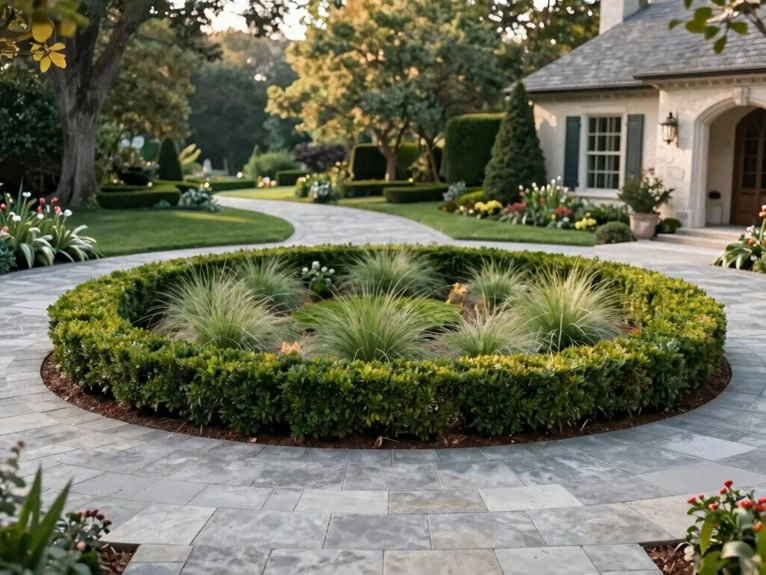
If your circle drive looks a little off, the scale is usually the culprit, and I’ve learned that the hard way after staring at a “tiny” island that made the whole front yard feel awkward.
I check visual scale by matching plants and hardscape to the home, not my wishful thinking.
On a 24-foot drive, I’d use one small ornamental tree or a pair of big shrubs, then keep border shrubs around 2–3 feet.
For narrow drives, I stick with low groundcovers.
I also do proportion testing with tape and chalk; my family calls it driveway dress rehearsal.
Layering by plant height
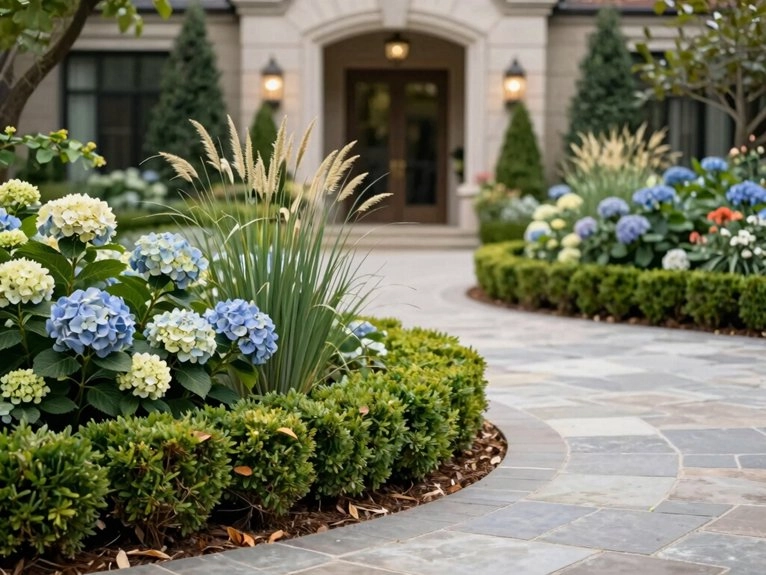
Once the scale feels right, I like to build the planting bed in layers, because a circle driveway can go from flat to polished fast. You’ll get layered texture and easier care when you keep the story simple and shared with your crew.
- Low thyme or Irish moss by the pavement
- Boxwood, hydrangea, or grasses behind them
- A Japanese maple or serviceberry for height
- Repeated colors for seasonal shifts
Keep groundcovers 6–12 inches apart, shrubs 3–6 feet apart, and trees roomy. I’ve found this 60/30/10 rhythm keeps everyone’s space clear, even when my family’s carpool chaos rolls in.
Choosing a single focal point
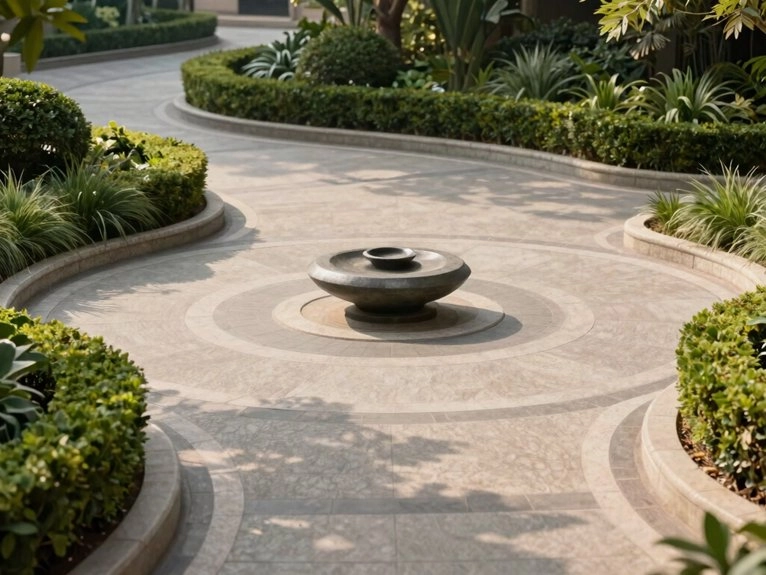
A single focal point can make a circle driveway feel calm instead of crowded, and I’ve learned that less really does more here.
I like one Japanese maple or flowering dogwood in the center, because it gives your home a friendly anchor from the street.
If your drive is narrow, a 3-foot fountain or stone sculpture works better than a giant anything.
I’ve seen our family stop and smile at a simple choice.
Add seasonal lighting, and keep the island raised with stone edging.
That also helps your wildlife habitat feel tidy, not wild-goose-level chaotic.
What to Plant in the Center — Trees, Shrubs, and Seasonal Color
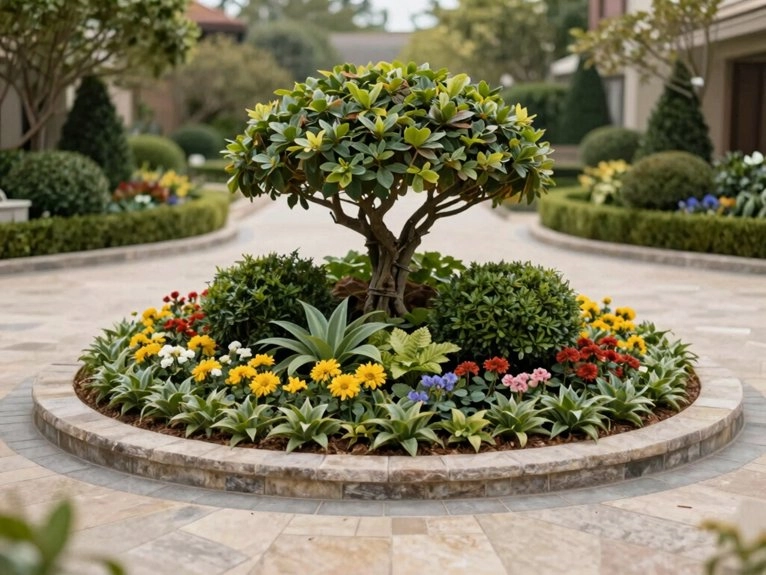
Planting the center island is where a circle driveway really starts to feel finished, and I like to keep it layered instead of busy.
I’d use a small Japanese maple or flowering dogwood, then tuck in dwarf boxwood or compact holly 18–36 inches out.
Add tulips, lavender, and sedum for color that keeps showing up for you, season after season.
- Edge with thyme, Irish moss, or Ajuga
- Include native grasses for soft movement
- Leave pollinator pockets for bees and butterflies
- For tiny islands, choose one small tree and a low birdbath. It won’t stage a root takeover, thankfully.
Specimen trees and standards
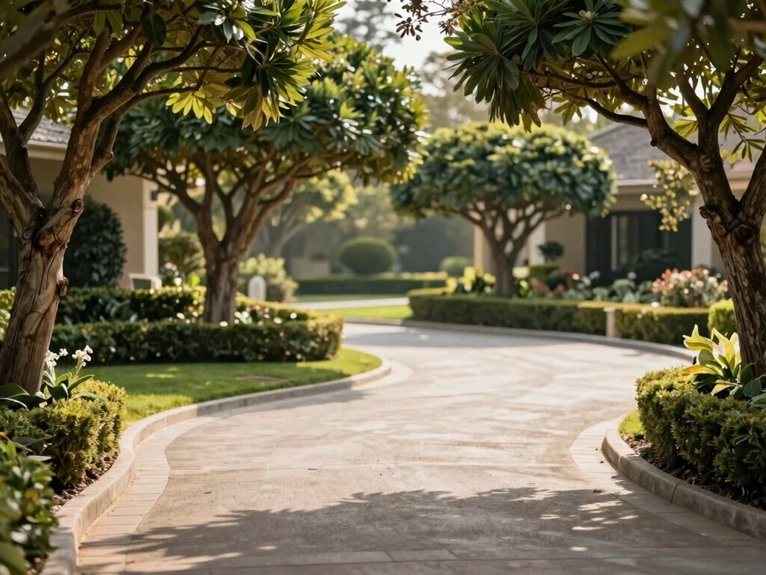
If the center island is the heart of a circle driveway, specimen trees and standards are the handsomely dressed relatives who make the whole thing look intentional. I’ve used a Japanese maple in the middle, and it felt like the whole driveway got invited to the good table.
Give it 10 to 20 feet from the driving edge, then add trunk protection with a 2- to 3-foot mulch ring. For entrances, I like standard boxwood or crabapple, spaced 12 to 15 feet apart. Pick seasonal contrast—spring bloom, summer leaves, fall color, winter form—so your curb appeal keeps showing up.
Evergreen anchor shrubs
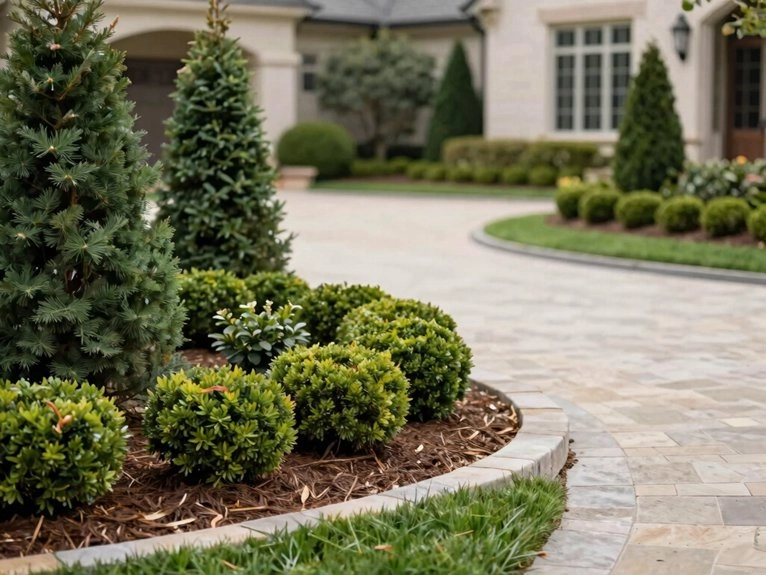
Evergreen anchors are the steady hands of a circle driveway island, and I rely on them when I want the whole space to feel finished in January, not just in June.
I plant boxwood and yew 3–6 feet apart, then add hollies or dwarf magnolias on wider drives for winter interest and strong shape. I keep root barriers in place where needed, because nobody wants roots acting like tiny rebels.
- Match shrub height to driveway width.
- Keep 10–12 feet clear of traffic.
- Prune for 6–8 feet of lift.
- Tuck dwarf juniper around them for neat layers.
Perennials for color rotation
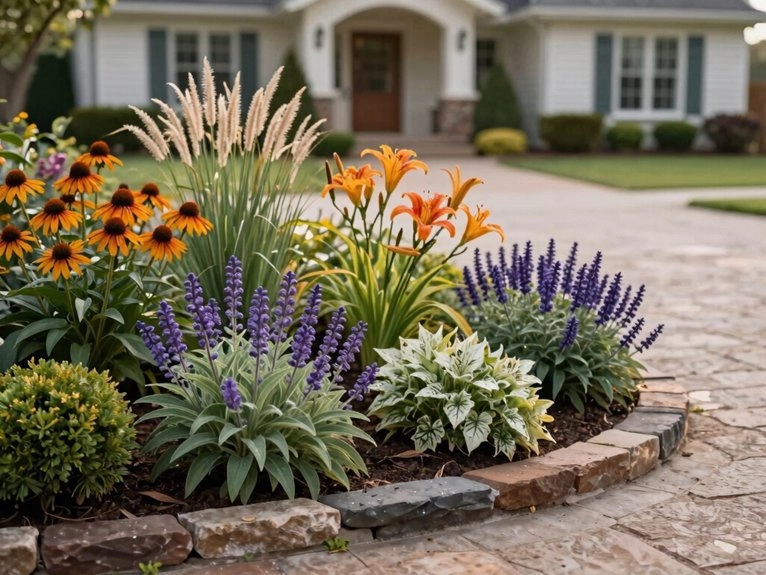
For a circle driveway island, I lean on perennials to keep the color changing all season long, kind of like a little parade that never quite stops.
I use succession planting with pulmonaria, hellebores, salvia, nepeta, daylilies, coneflowers, Russian sage, asters, and sedum.
That mix gives me spring-to-fall blooms and real color contrast.
I like tall grasses or Joe-Pye weed in back, mid-size flowers in the middle, and thyme or Ajuga low at the front.
In my family’s yard, drought-tolerant sedum and lavender save water and still look happy when the pavement gets cranky.
Framing the Outer Edge: Borders, Edging, and Hardscape Accents
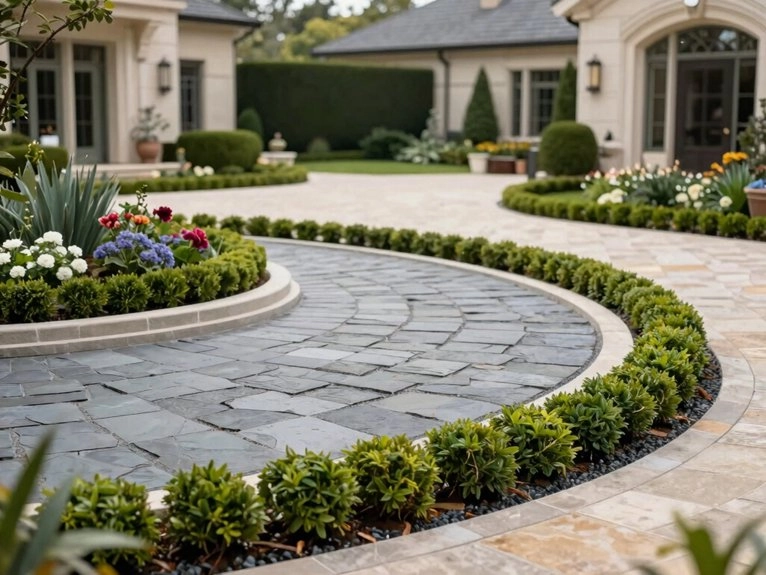
A crisp edge makes the whole circle driveway feel intentional, and I’ve learned that the outer border does a lot of heavy lifting.
You can use 4–6 in. pavers on compacted base, and your lawn won’t sneak in like an overgrown cousin. Try these moves:
- 6–12 in. cobblestone bands show the curve.
- permeable edging helps water drain, not pool.
- A 4–8 in. curb steadies sloped ground.
- Add decorative lighting and 24–48 in. piers at entries.
I like a 6–12 in. gravel buffer too; it saves my sanity at mowing time.
Natural stone and cobble
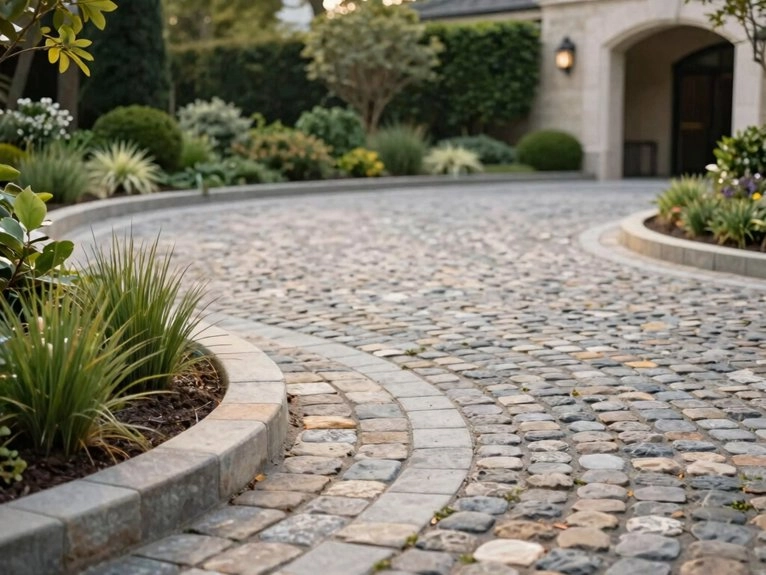
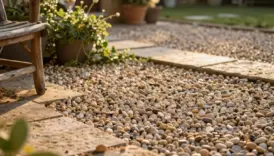
Add a permeable band over open-graded aggregate, and you’ll help water drain better, which my family noticed after a storm. Keep the base solid with crushed stone and geotextile.
For stone mosaics and seasonal planting, use curves that feel like they belong, because a good entrance should greet everyone with confidence.
Metal and concrete edging
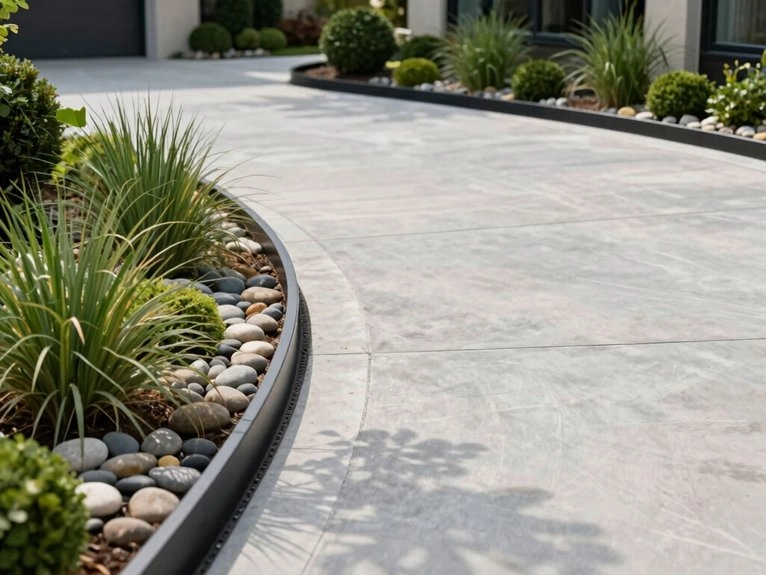
If stone and cobble gave your circle drive a warm, classic feel, metal and concrete edging can sharpen the whole scene in a really satisfying way. I like 14–18 gauge steel, especially corten, because it stays slim and tough.
- Use metal as hidden restraint.
- Add a shallow concrete ribbon for strength.
- Pick exposed aggregate for a neat finish.
- Choose galvanized or corten for freeze-thaw peace of mind.
You can bend both to match any radius, so your driveway feels like it belongs, not like it was forced to behave. My family noticed the cleaner line right away.
Low border planting strips
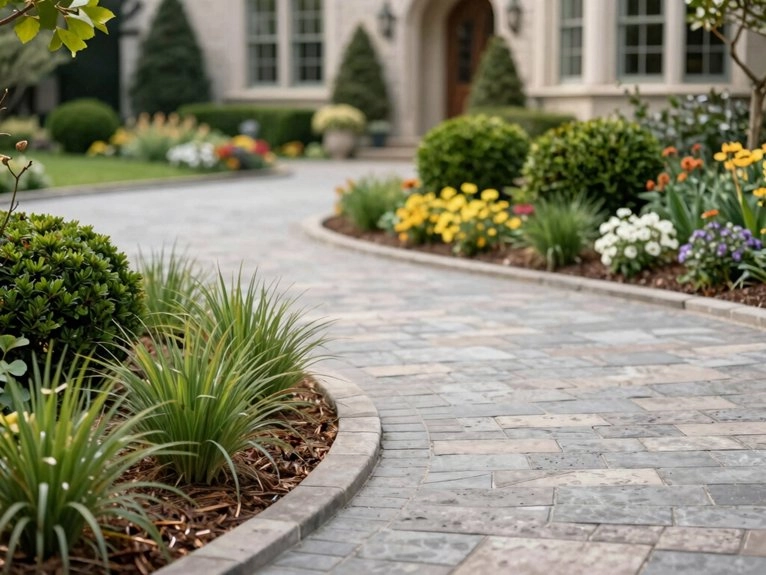
Tuck in a low border planting strip, and your circle driveway starts to look finished instead of just paved.
I’ve used 18–24-inch beds with Ajuga reptans, Irish moss, and creeping thyme, and they keep mulch in place while leaving clear sightlines for guests and kids on bike patrol. Space thyme 6–12 inches apart, or sedums 12–18 inches apart, and they’ll fill in fast.
I add 3–4 inches of weed-free mulch, plus 4–6-inch stone edging, so tires don’t bully the plants.
These drought tolerant groundcovers and seasonal flowering inserts stay neat, even when my family forgets to “be gentle” again.
Matching the Design to Your Home’s Architectural Style
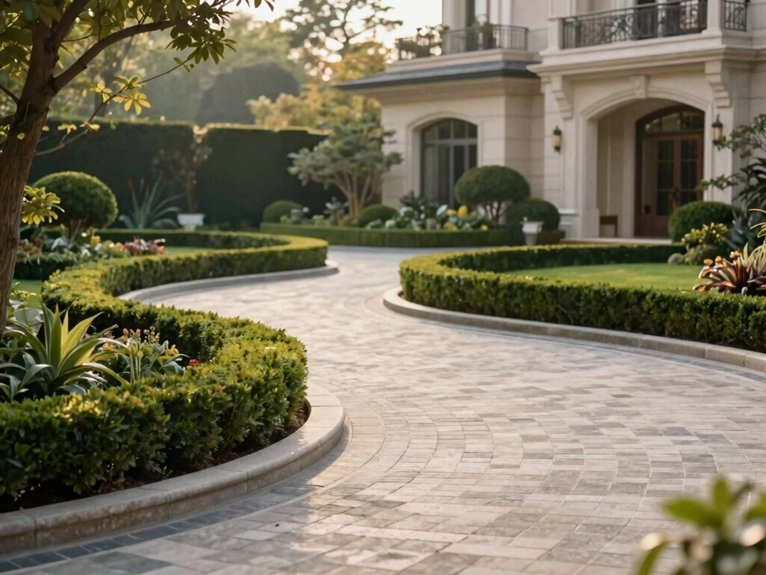
Once the low border planting strip is in place, I like to step back and ask a bigger question: does this circle driveway actually fit the house?
I’ve learned that your material palette should echo the roofline orientation and keep visual continuity from curb to porch. When I’m helping my family plan one, I check:
- clean concrete panels for modern homes
- formal pavers and central trees for balanced entry symmetry
- mixed stone textures for country places
- layered shrubs and curved edges for softer, angular facades
Pick plants and hardscape that feel like they belong together. That’s how your home greets people warmly, not awkwardly.
Colonial and traditional
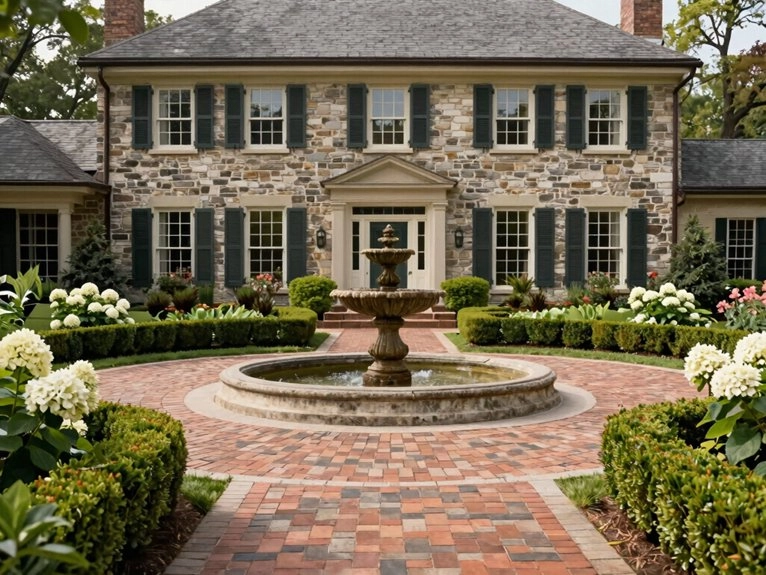
For Colonial and traditional homes, I like to lean into symmetry hard and keep the details crisp.
You and your family can welcome guests with paired specimen trees at both driveway entrances, then echo that balance with mirrored beds of yew or boxwood.
In the center island, plant a flowering dogwood or small maple, ring it with clipped boxwood, and tuck in seasonal annuals.
I’d use red brick edging and a cobble apron for charm.
Add low hedges, iris, or peonies, plus lantern-style period lighting and path lights.
It feels gracious, not fussy.
Modern and minimalist
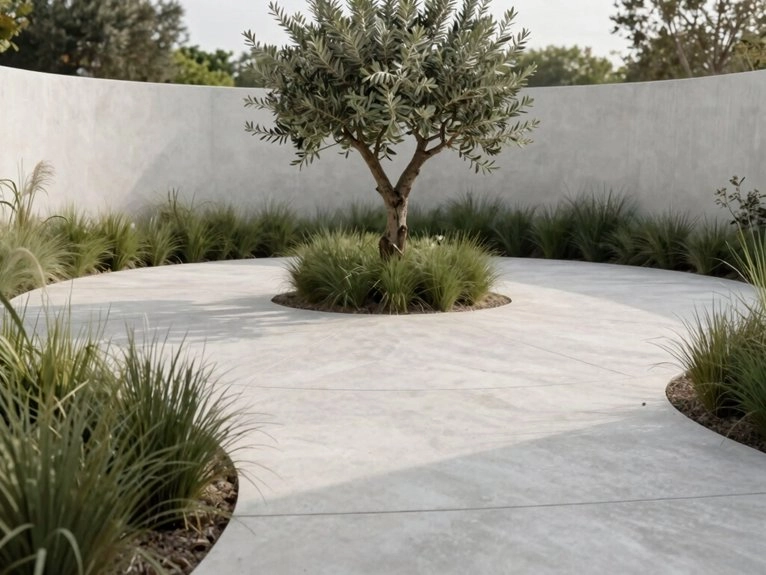
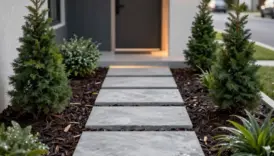
When I’m designing a modern circle driveway, I like to keep the whole look clean enough that it almost whispers. You’ll feel right at home with sleek paving in 2–4 foot concrete squares, set in a gentle arc with skinny dark joints. I’ve found these details calm the eye fast.
- Pick three evergreens only.
- Add one sculptural tree.
- Use minimalist lighting.
- Choose permeable pavers or reinforced gravel.
Then I’d edge the island with concrete and low gravel, so the space stays crisp, safe, and easy to care for—no extra fuss, no garden drama.
Mediterranean and Spanish
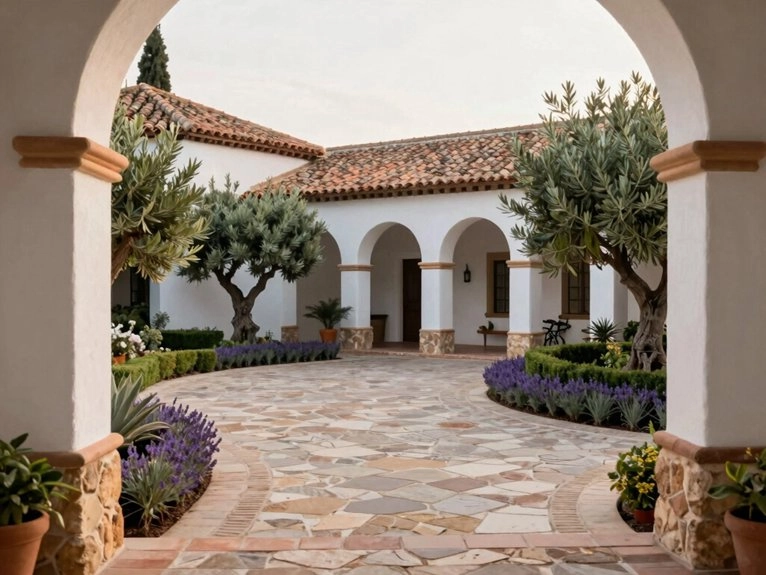
Sun-washed charm is the heart of a Mediterranean or Spanish circle driveway, and I love how quickly it turns an entrance into a little vacation.
I’ve seen families relax the moment they spot lavender, rosemary, and Italian cypress standing tall like polite hosts.
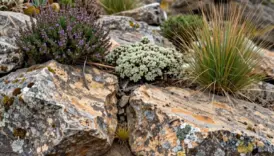
You can frame the island with dwarf oleander, Santolina, and gravel or decomposed granite for Mediterranean textures that drain well.
Add terracotta pavers, limestone edging, and a tiered fountain or olive tree for Spanish ornamentation.
I’d finish with amber uplights and warm path lights, because nobody wants to trip on elegance.
Cottage and farmhouse
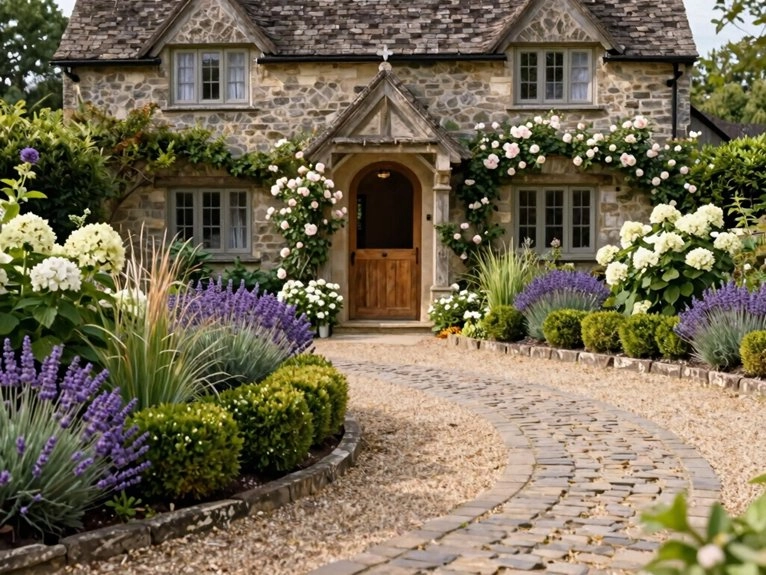
If you want a circle driveway that feels welcoming instead of showy, I always lean into cottage and farmhouse charm. I line the curve with lavender, salvia, and dwarf hydrangeas, then tuck in thyme and ajuga for edible borders and easy texture. Reclaimed brick or weathered pavers at the edge keep things honest and grippy, which my family appreciates on muddy days.
- Small apple or crabapple tree
- Warm rustic lighting
- Soft center island blooms
- Cozy, low stone edges
I add a flowering dogwood, then space low-voltage lights 10–15 feet apart. At night, it feels like home, not a parade.
Low-Maintenance Approaches That Still Look Polished Year-Round
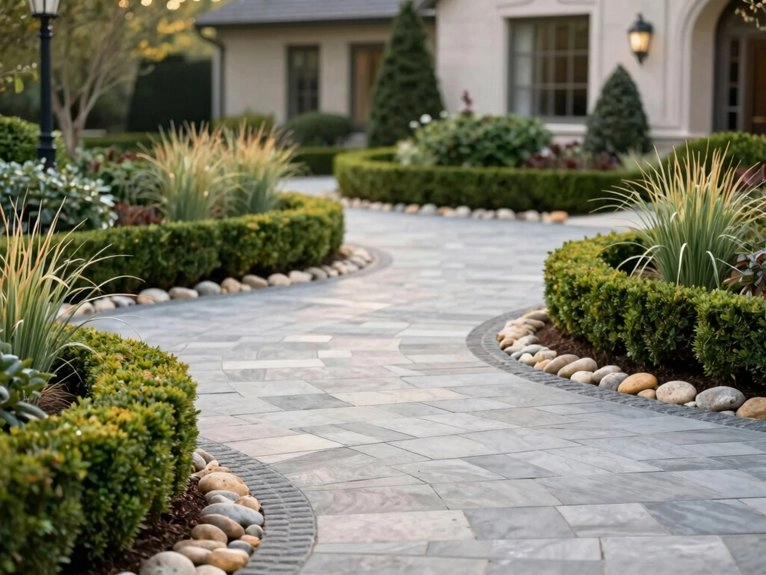
Keeping a circle driveway polished all year doesn’t have to mean signing up for endless yard work. I’ve found that evergreen boxwood, yew, and holly give you steady shape, while Festuca glauca and fountain grass add Year round texture without a weekend hostage situation.
For Low maintenance hardscaping, I like permeable pavers or sealed concrete with cobble edging; they cut weeds and help drainage. Around my own island, I’d plant one dwarf Japanese maple with thyme and ajuga. Add LED path lights, then drip irrigation on a smart controller. Your driveway stays welcoming, not bossy.
Landscaping Mistakes That Shrink Your Driveway (and How Pros Fix Them)
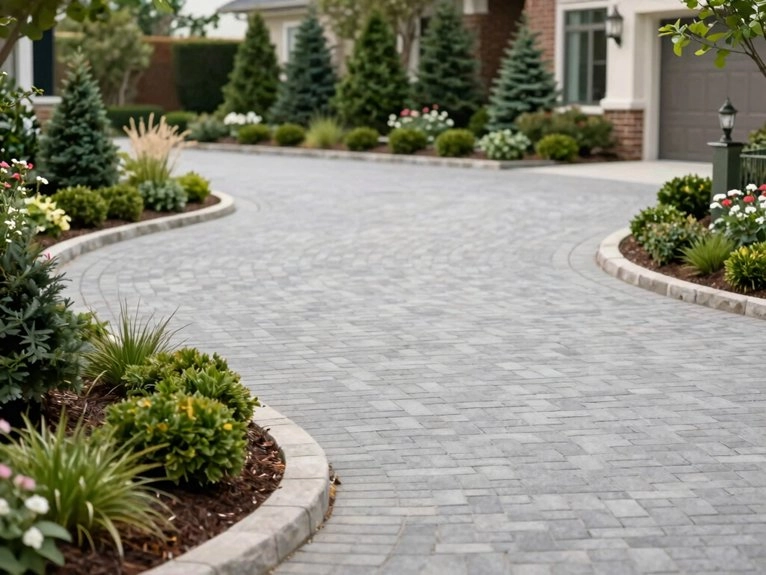
One of the fastest ways to make a circle driveway feel smaller is to crowd it with plants that act like they’re trying to move in. I’ve seen this at my own place, and my family noticed before I did. Keep big shrubs and trees 10–15 feet back, or you’ll get overgrown hedges and confusing signage from nature itself.
- Use low groundcovers near the edge.
- Add stone or paver edging with a clear reveal.
- Space shrubs 4–8 feet apart.
- Place low lights every 8–12 feet.
Pros trim, border, and light the curve so you feel welcome, not boxed in.
Frequently Asked Questions About Circular Driveway Landscaping
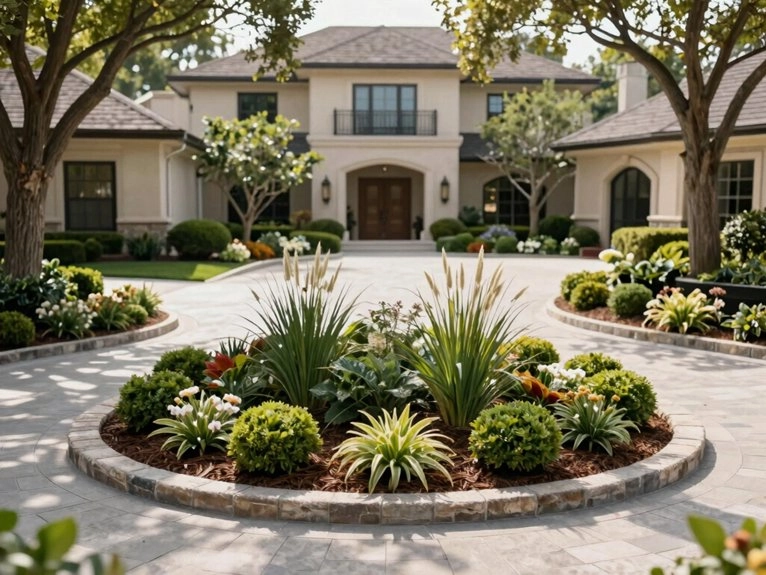
When people ask me how to make a circular driveway look polished instead of fussy, I usually start with the same answer: build the hardscape first, then let the plants do the talking.
You’ll fit right in when you keep the center island simple: 8 to 20 feet wide, with a Japanese maple, serviceberry, or a small fountain.
I like low groundcovers, mid-height shrubs, and privacy hedging along the edges.
Add security lighting and path lights 8 to 12 feet apart.
If you’ve got dual entries, you’ll glide in, not back up like it’s a bad parking quiz.